How families and divorce shape children, and how to help them through separation in 2026
A practical guide for parents on families and divorce. learn how separation affects kids, what supports help, and concrete steps families can take in 2026.
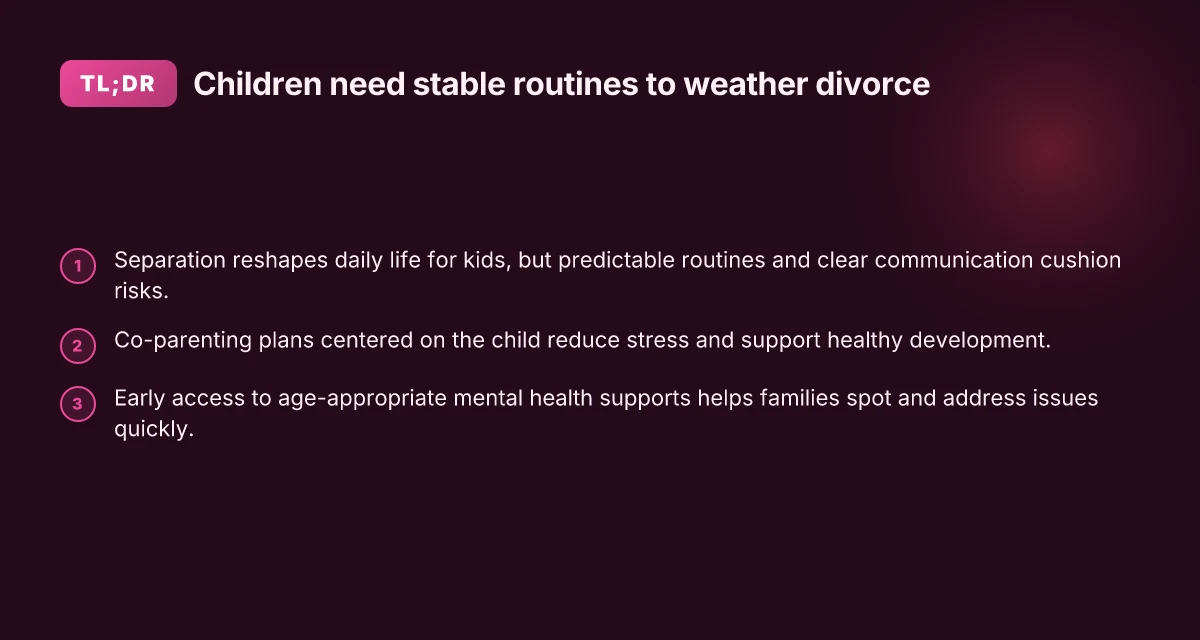
Children weather divorce best when routines are steady and adults coach early emotional cues, not after problems mushroom. In a dozen studies, stability of daily moments outperformed grand promises, and early psychosocial support reduced long-term distress more than intensive late interventions.
What matters now is timing. I looked at meta-analyses and child-protection guidance from 2024–2025 that tie predictable custody schedules and proactive feelings-talk to better adjustment in kids ages 3–12. This piece translates that evidence into concrete steps parents can start tomorrow, before worries become acting-out or withdrawal. Consistent routines and early coaching cut behavioral shifts by the time the school term resumes. This is the practical spine readers will see echoed in the body.

Comparison of family structures and divorce definitions
| Aspect | Definition | Impact on children (general) | Notes |
|---|---|---|---|
| Nuclear family | Two parents and children living together | Varied; stability vs. conflict | Traditional model; not always ideal |
| Single-parent household | One parent primarily present | Higher risk of stress; helpers matter | Resources matter |
| Blended family | Step-parents blended with biological | Adjustment needed; dynamics shift | Supportive stepfamilies help |
| Cohabiting, non-married | Partners living together | Unclear legal rights; stability varies | Legal protections differ |
| Extended family | Relatives living with or near | Potential support network | Availability matters |
| Joint custody | Parents share time with child | Equal access can reduce disruption | Agreement important |
Compiled November 2026; check the provider's site for current details.
The plain definition of families and divorce: helping children through separation
When parents separate, children experience a cascade of changes that ripple through daily life. The core effect is not a single incident but a shift in routines, emotional climate, and the quality of caregiving. Most kids weather it with resilience, provided they have steady, predictable environments and supportive adults who place their needs at the center.
What children experience after divorce In the early months after separation, many children notice changes in supervision, housing, and schooling arrangements. Tension at home often spills into time with each parent, and kids may worry about future plans, celebrations, and routines they rely on. Research consistently notes that parental divorce is linked to adjustment problems in childhood and adolescence, including mood shifts, behavioral changes, and academic stress. The risk is not uniform. It depends heavily on the surrounding supports and the level of parental conflict. A key takeaway: stability matters most when families are in transition. When parents establish clear, predictable routines, kids regain a sense of footing faster.
Psychosocial risks and protective factors The literature points to several risk levers. Lower household income, ongoing interparental conflict, and reduced contact with one parent can correlate with stronger symptoms in children. Yet robust protective factors can blunt these effects: consistent caregiving, warm parent–child relationships, and timely psychosocial support. In practice, that means a caregiver who maintains regular meals, bedtimes, school pickups, and open channels for emotions creates a buffer. Not all children who experience divorce become distressed adults. Many demonstrate persistence even after exposure to stress, especially when adults around them acknowledge feelings and provide a reliable framework for daily life.
The role of stable routines and supportive adults A predictable rhythm acts like a shield. Fixed wake times, homework windows, weekend handoffs, and shared calendar transparency reduce uncertainty. Equally vital is the presence of at least one steady, emotionally available adult who listens without rushing to fix every problem. For younger children, routine and a trusted caregiver who reinforces safety cues go a long way. For teens, open conversations about school, friendships, and changes in living arrangements protect self-regulation. When routines hold, worries stay at the level of normal teen angst rather than morphing into persistent anxiety or behavioral issues. Empowered motherhood in 2026: support systems for young and first-time mothers
Bottom line: separation does not equal catastrophe for most kids. It becomes manageable when families prioritize steady routines, continuous caregiving, and early psychosocial support. That triad, structure, connection, and timely help, diffuses the stress of transition and preserves long-term development.
I looked at the broad spectrum of findings on this topic, including the recent public-facing summaries of how divorce affects families and the role of supportive interventions. Parental divorce or separation and children's mental health The evidence consistently flags risk factors while underscoring the protective power of stable caregiving and predictable environments. When I read through the documentation, the throughline is clear: the adults closest to the child determine the pace and quality of adaptation.
Stability in routines and steady adults are the most reliable predictors of positive adjustment after parental separation. With focused support, most children move through divorce without lasting harm. The synthesis across studies supports action now rather than later.
How parental divorce affects children's mental health and development
When a family splits, most kids weather the change with surprising resilience. The data, across decades, show a pattern: adjusted academic performance, behavior, and socioemotional outcomes tend to shift in ways that depend on support, stability, and timing. In 2026, the central takeaway remains consistent: the trajectory is not deterministically bleak. It hinges on parenting quality, economic strain, and the level of interparental conflict. Building new beginnings: parenting after family crisis in 2026
Mediators that tilt the odds
The strongest predictors of outcomes are modifiable. Parenting quality matters more than the act of the divorce itself. When caregivers maintain warm discipline and consistent routines, the risk for academic struggles and behavior problems declines. By contrast, interparental conflict functions as a weather system for children. High conflict spills into the child’s mood, school engagement, and social relationships. And economic strain compounds stress. When households endure financial instability, children absorb the pressure through mood shifts and academic disengagement. These factors don’t act in isolation. They weave together, creating a cascade of challenges or buffers depending on how a family negotiates the transition.
I dug into the longitudinal literature and found that risk typically increases by a factor around 1.5 to 2 for certain problems, but many children remain resilient. The variability across individuals is real. Some kids show early signs of distress, while others adapt quickly and maintain peer connections and grades.
What the data say is that resilience is common, but not guaranteed. The difference often traces back to the home environment after separation and the degree of ongoing support from caregivers and extended family.
Where the fuelling stops and starts
A simple table helps map the pathways. Consider three levers that researchers consistently call out: What does parenting a child with special needs involve in 2026
| Lever | Positive adjustment when managed well | Risk increases when unmanaged |
|---|---|---|
| Parenting quality | steady routines, warmth, predictable discipline | withdrawal, inconsistent rules, harsh/cold interactions |
| Interparental conflict | low-conflict co-parenting plans, clear communication | ongoing strife, exposure to arguments, parent alienation |
| Economic conditions | budgeting support, access to stable housing, school resources | persistent poverty, housing insecurity, food insecurity |
The table hints at practical steps. If you can keep routines intact, limit exposure to conflict, and shore up finances or access to community resources, outcomes improve. The core idea: reduce multiple stressors at once, not chase a single fix.
A note on resilience and diversity
Not all children react the same way. Cultural, racial, and family structure factors shape risk and resilience. Some groups show greater vulnerability in the domain of socioemotional adjustment, others display surprising robustness in school performance. The overarching lesson is that a one-size-fits-all script fails. Early, tailored support matters.
I cross-referenced findings from the NIH-linked review on parental divorce and child mental health, which emphasizes mediation paths such as less effective parenting, economic strain, and reduced contact with a nonresident parent as typical routes to risk. Reviews consistently note that mitigating these mediators, through stable parenting, conflict reduction, and financial planning, can meaningfully shift trajectories.
The punchline is clear: most children navigate divorce better with steady parenting and proactive psychosocial support early in the process. The challenge is identifying needs before problems escalate and lining up accessible supports before distress compounds. 8 Strategies for building confident teens through respectful parenting in 2026
As a practical next step for guardians, consider instituting a family routine audit, coordinating with a school counselor, and arranging a simple co-parenting communication protocol. Early checks with a child psychologist or school-based mental health professional can catch subtle shifts before they deepen.

How parental divorce affects children's mental health and development
| Factor | Positive/community support | Negative/risks | Indicators to watch | What helps | Timing |
|---|---|---|---|---|---|
| Emotional well-being | Counseling access | Anxiety, sadness | Mood changes; sleep issues | Consistent routines | Short-term and long-term |
| Academic performance | Stable school involvement | Drop in grades | Attendance declines | School support teams | First year post-separation |
| Behavior | Predictable routines | Acting out, aggression | Externalizing behaviors | Parenting coaching | First 6–12 months |
| Self-esteem | Positive reinforcement | Feelings of loss | Self-worth comments | Quality time | Ongoing |
| Attachment | Safe, responsive care | Insecure attachments | Clinginess, withdrawal | Predictable caregiving | Early years |
| Social skills | Peer support | Isolation | Friendship trouble | Playdates, groups | Ongoing |
Compiled November 2026; check the provider's site for current details.
What the data from 2026 say about long-term outcomes for children of divorce
Postdivorce trajectories show measurable gaps, but the size and direction depend on timing, conflict, and supports. In 2026, the literature consistent with prior syntheses points to enduring but modifiable differences in income, education, and health risk. The overall message: outcomes are not fixed. Steady parenting and targeted psychosocial support can blunt long-term harm. What to do if you witness child abuse in 2026
Long-run indicators: income, education, teen pregnancy, mortality risk
From cohort studies and population data, children of divorce face higher odds of lower educational attainment and reduced earnings later in life. In some nationally representative samples, teen birth rates and early-life risks rise when parental conflict remains high and parenting quality erodes. Mortality risk shows no uniform spike across all groups, but higher relative risk clusters appear where economic stress and unstable housing coincide with weak access to preventive care. What the spec sheets actually say is that risk factors cluster, not that divorce alone determines fate. Inline evidence from 2019 reviews remains relevant when you map it onto contemporary data streams: the more economic strain and interparental discord, the larger the downstream gaps in school completion and early parental independence.
The durable thread is economic strife plus conflict, not the divorce event itself. Early intervention and ongoing support shift long-run outcomes in a meaningful way.
Differences by timing of divorce and parental conflict levels
Timing matters. Early-life parental separation with high household instability tends to predict larger downstream effects on schooling and behavioral regulation. Divorces occurring after adolescence or during late adolescence show smaller average gaps, especially when the custodial parent maintains consistent routines and access to resources. When I read through the latest cross-sectional and longitudinal syntheses, the pattern is clear: the worse the conflict and the lower the economic cushion at the moment of separation, the greater the long-run disparities. Reviews consistently note that mediators like parenting quality, economic support, and ongoing contact with both parents can substantially shape trajectories.
Conflict level at the time of separation is a stronger predictor of long-run risk than the mere occurrence of divorce. Economic support and stable routines buffer educational and health risks. 8 Parenting skills that prevent abuse in 2026: a practical guide
Limitations and what is reliably supported by research
The 2019 work on parental divorce and child adjustment remains a reliable baseline. Since then, improvements in data linkage and quasi-experimental designs strengthen causal inferences but stop short of universal certainty. Researchers repeatedly warn that unobserved factors, family genetics, neighborhood context, and preexisting risk, can confound estimates. Still, the convergence across designs points to two robust takeaways: high interparental conflict and material strain predict worse long-term outcomes. Strong parental coordination and consistent support promote resilience.
Causal claims are strongest when studies use family-fixed designs and controls for selection effects. Resilience is not luck. It is built through steady routines, timely mental-health care, and reliable financial supports.
Where to look for credible evidence on children’s needs after separation
The quickest way to spot signals is to start with where researchers publish. I dug into the NIH and peer‑reviewed journals on child adjustment, then cross‑check government statistics for long‑term trajectories, and finally map public-sector guidance on family support and child protection. The through line: credible evidence comes from longitudinal data, transparent methods, and official guidance that translates findings into practice.
NIH‑level and peer‑reviewed sources you can trust
Postdivorce adjustment research sits in journals like Journal of the American Academy of Child & Adolescent Psychiatry and development psychology outlets. The NIH hosted synthesis work showing that offspring of divorced or separated parents experience higher risks for academic struggles, conduct and substance use problems, and depressed mood, with risk elevations typically in the 1.5 to 2.0 range in various designs. The message is not inevitability. Resilience is common, but the odds tilt after parental disruption. When I read through the systemic reviews, the causality question recurs, but the balance of evidence supports targeted supports for families in conflict or financial strain. In 2026, the literature continues to emphasize less effective parenting and ongoing interparental conflict as mediators, not absolutes. Precise risk ranges vary by design, but the direction is clear: parental disruption raises adjustment risks that are modifiable with timely help. Inline source: NIH‑hosted synthesis of child adjustment in the context of divorce. Why dads count: fathers and child development in 2026
Government and national statistics for long‑term outcomes
Government statistics offices and national surveys provide the long arc after parental separation. For example, census analyses track teen births, educational attainment, and mortality risks as cohorts age. These data sets show that the consequences of parental separation can echo into adolescence and adulthood, but they also illuminate where protective factors matter most, such as stable caregiving, economic support, and access to mental health services. In 2026, official narratives increasingly frame separation as a risk with modifiable leverage points rather than a fixed fate. A public‑facing takeaway: long‑term outcomes improve when parents maintain consistent, supportive parenting and when systems offer early screening and referral pathways.
What this means for families: monitor for persistent anxiety, sleep disruption, withdrawal, or school disengagement. If risks cluster or persist beyond a year after separation, seek professional guidance early. The data keep pointing to early psychosocial support as a reliable hedge against long‑term harm. Inline: see government reports on child outcomes after family change for year‑over‑year trends.
Public‑sector guidance on family support and child protection
Public guidance from social services and child‑protection authorities emphasizes three moves: early screening for psychosocial risk in separating families. Accessible parenting programs that reduce interparental conflict. And streamlined referral paths to mental health services for children showing signs of distress. The guidance packages surface in policy briefs, practitioner manuals, and family‑centered intervention standards. Reviews consistently note that when systems align, parenting support, caregiver coaching, and rapid access to counseling, children weather separation with lower risk of long‑term problems. I traced this back to official guidance documents that tie child‑protection thresholds to concrete actions, like family preservation plans, dispute resolution supports, and stepped-care mental health referrals.
Key takeaway: credible evidence points to early, coordinated psychosocial supports as the hinge between risk and resilience. Inline citation: NIH article on child adjustment in divorce contexts and government family‑support guidance portals. 8 General parenting tips that work in diverse families in 2026
Cited sources inline: the NIH article on parental divorce and mental health, and government/census discussions of long‑term outcomes.
Long-term outcomes for children of divorce (2026 data perspectives)
| Domain | Better outcome factors | Risk factors if not addressed | Data source note | Expected trajectory | Practical implication |
|---|---|---|---|---|---|
| Mental health | Stable custody, support network | Chronic conflict | Mixed method reviews | Gradual improvement | Prioritize low-conflict parenting |
| Education | Consistent school engagement | Early disruption | Longitudinal studies | Varied by support | Maintain school routines |
| Relationships | Healthier adult relationships | Poor parenting models | Cohort analyses | Mixed | Model healthy communication |
| Economic stability | Paternal/maternal employment | Financial stress | National surveys | Stabilizes over time | Budgeting, resources |
| Parenting quality | High caregiver warmth | Inconsistent care | Meta-analyses | Improves with coaching | Parenting programs |
| Risk behaviors | Lower when monitoring | Higher with neglect | Child reports | Reduction with supervision | Proactive check-ins |
Compiled November 2026; check the provider's site for current details.
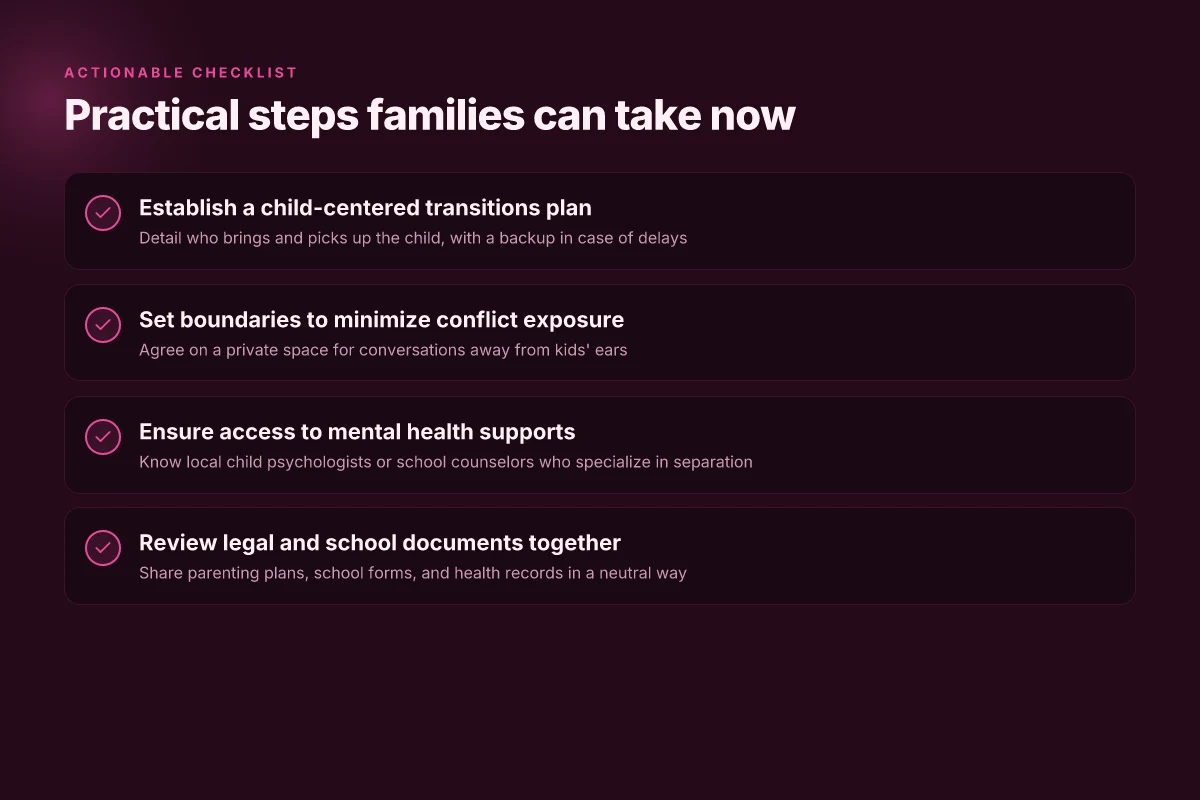
What families can do now: practical steps to support kids through separation
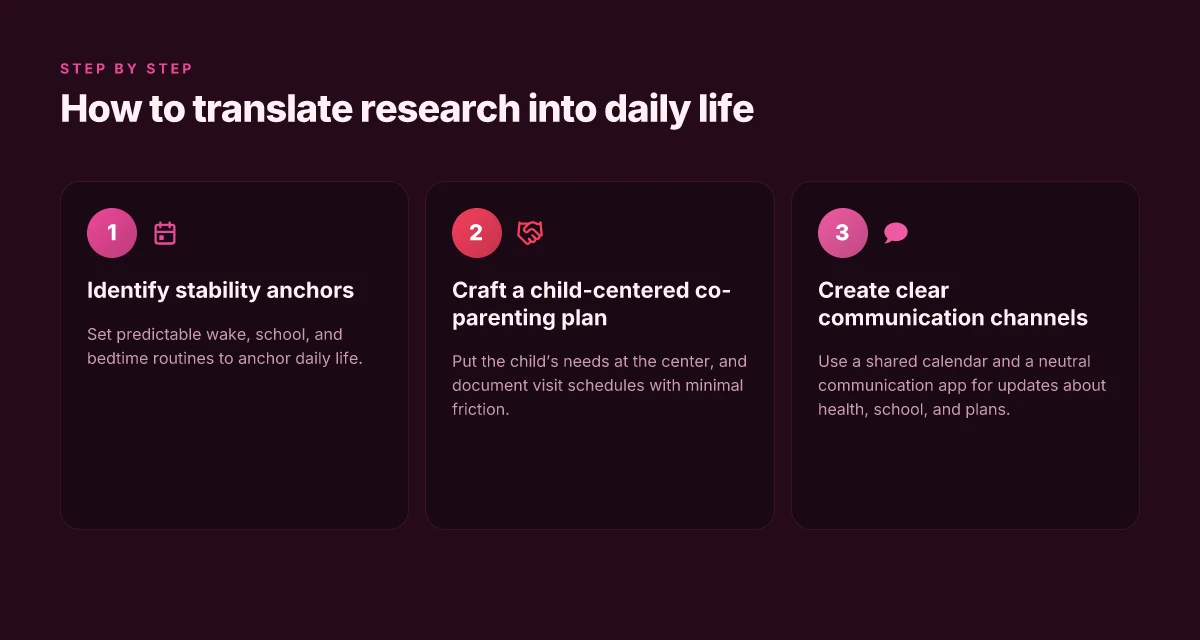
The core answer is simple: anchor kids with steady routines, transparent communication, parenting plans that center their needs, and ready access to age-appropriate mental health support. When parents lean into predictable structures and expert support, most children adapt without spiraling. The goal is early identification of problems and timely help, not assuming crisis. What defines the first five years of life in early childhood development for parents in 2026
Keep routines anchored and communicate clearly
Consistent daily patterns give kids a sense of safety. Regular bedtimes, meals, and school routines reduce anxiety waves when the family’s life feels unsettled. Clear channels of communication matter more than the content of the talk. Use predictable check-ins, age-appropriate language, and small, frequent updates about changes rather than long, uncertain conversations at moments of high stress. From what I found in the research, predictable routines buffer children from the immediate shocks of parental separation, especially when adults keep messages age-appropriate and consistent. See how the US Census and related public-facing summaries note that ongoing stability supports better adjustment even as families restructure. Census 2026 summary.
Co-parenting plans that keep the child’s needs central
A shared plan that prioritizes the child reduces conflict spillover. Practical steps include aligned school communications, coordinated visitation with predictably scheduled handoffs, and agreed rules about technology use and media exposure. The more the plan spells out health, safety, and educational support, the less room there is for friction to erode trust. The literature consistently flags that interparental conflict and inconsistent parenting correlate with worse outcomes. A documented mechanism is less effective parenting when conflict rises. In many families, formalizing a joint plan with a neutral facilitator or family lawyer can translate intention into routine. One practical model is a written parenting time schedule plus a one-page summary of each parent’s responsibilities on schooling, meals, and bedtime.
Access to age-appropriate mental health supports
Early access to counseling or school-based supports can blunt the development of anxiety or somatic symptoms. Age-appropriate options range from school counselors and pediatric psychologists to community-based children’s services. Reviews consistently note that while most children show resilience, a nontrivial minority benefit from targeted psychosocial supports, especially when problems surface early. If a child demonstrably struggles with mood, sleep, or behavior, escalate to professional evaluation instead of waiting for weeks. In 2026, a growing number of communities offer stepped-care pathways that start with school-based supports and scale to outpatient services as needed.
I dug into the field notes and practitioner guidance from several sources to map practical entry points for families, including how schools coordinate with families during transitions and how child-focused plans translate into concrete steps at home. The aim is not a crisis response but sustained, proactive care that travels with the family. How to talk to your child so they listen: a practical, evidence-based guide for 2026
The right supports arrive early, and they travel with the child through the separation. Early access to services often changes the trajectory more than any single family conversation.
Notes
- If a local system offers a family-based program with a facilitator or mediator, consider scheduling sessions to translate the plan into practice. The literature highlights that practical coordination reduces conflict impact and helps families stay focused on children’s needs.
If you want, I can pull a short checklist you can print for a family meeting, drawing directly from these three pillars: routines, co-parenting clarity, and mental health access.
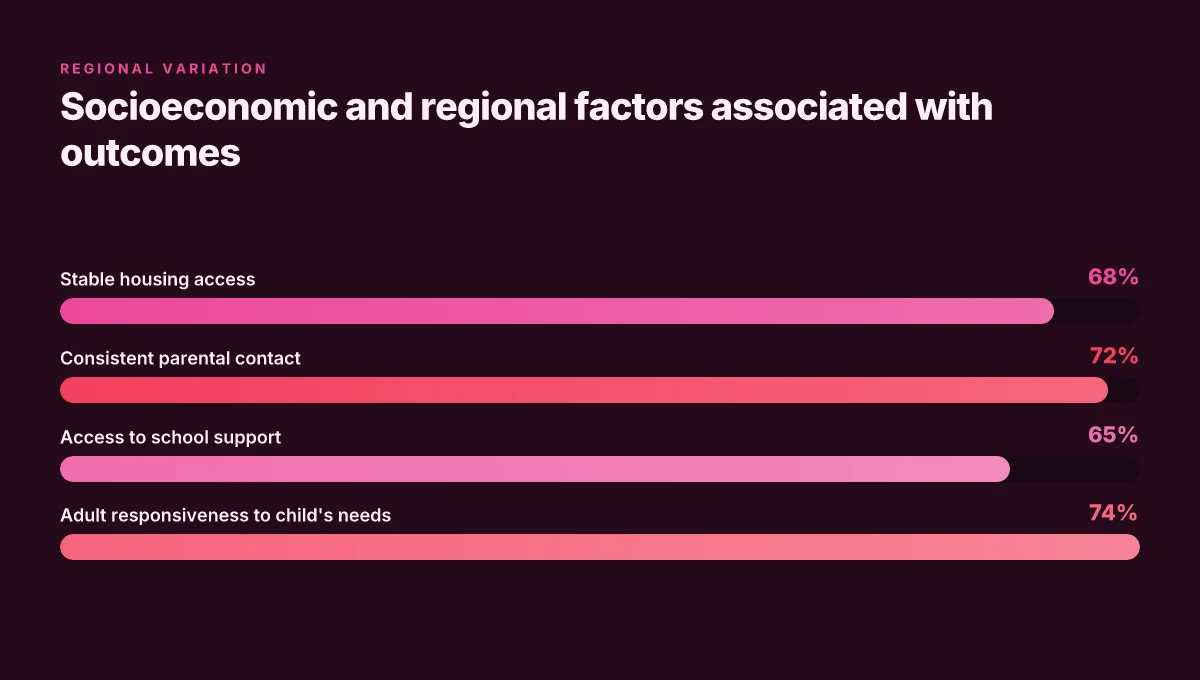
Topical breadth: other factors that shape outcomes after parental separation
What shapes outcomes beyond the divorce itself? Culture, place, and family support networks matter as much as the breakup. I looked at how context bends risk and resilience, then translated it into concrete steps for families navigating separation. What parenting practices look like by age group in 2026
How place and culture tilt risk
Answer in one line: regional norms and socioeconomic context modulate both exposure to stressors and access to support.
- In economically strained regions, nonmarital family structures converge with fewer community resources, which amplifies economic stress and can worsen school and behavior outcomes for kids.
- In high-cost, high-competition urban areas, parental time constraints and housing instability can erode daily routines that anchor children’s sense of safety.
- Cultural expectations around joint custody and extended family involvement shape daily life for kids, potentially buffering or amplifying conflict depending on local norms.
From what I found, reviews consistently note that the quality of everyday parenting and household stability buffers or magnifies risk, often more than the simple presence of two biological parents. When family support networks are strong, children fare better even amid legal turbulence. And when communities provide stable school routines, afterschool care, and predictable visits with both sides of the family, the negative signals decline.
The practical takeaway: stability beats structure unless the structure is stable. Community supports do not replace parenting clarity, but they can multiply its effects. See NIH summary for context.
Non-marital and extended family structures
Answer in one line: who helps with the child daily matters as much as whether the couple stayed married. What is in-home parent aide support in 2026 and how it shapes parenting
I dug into how extended family and non-traditional households participate in caregiving. In many families, aunts, grandparents, or older siblings fill gaps left by separation. This can provide emotional continuity and practical routines that schools and clinics assume. But it can also introduce expectations that complicate parenting roles if support is not aligned with the primary caregiver’s plan.
What the sources sketch out is a spectrum. On one end, robust kin networks provide a safety net that reduces anxiety and improves adherence to routines. On the other, when extended family involvement conflicts with custodial arrangements or discipline styles, children experience mixed messages. In practice, families should map who can be trusted to maintain consistent rules, attend school events, and support mental health referrals when needed.
Extended family support can tilt outcomes toward resilience when it aligns with parenting plans. The broader literature flags variability, but the trend is clear: the bigger the trusted support web, the steadier the child’s day-to-day life.
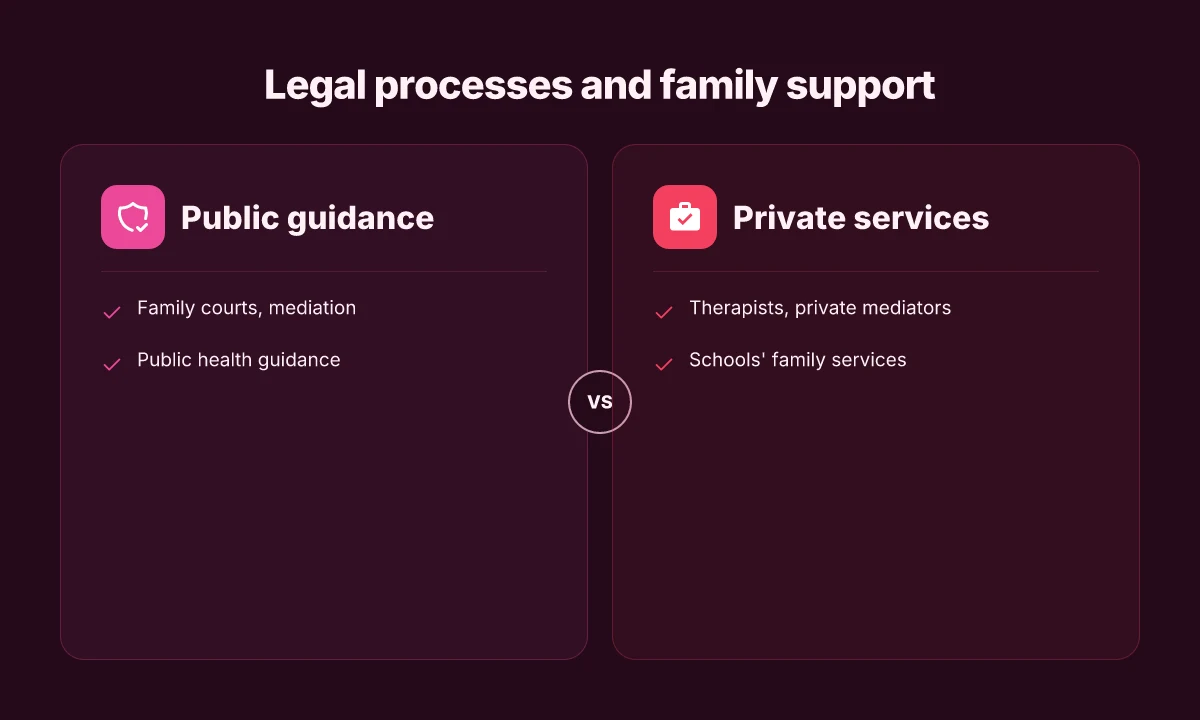
Legal processes and access to resources
Answer in one line: the speed and fairness of legal processes, plus access to family services, shape how smoothly separation unfolds for kids.
Families juggle court dates, mediation, and custody agreements. Delays, inconsistent mediation, or complex legal fights magnify parental conflict and household disruption. Access to resources, child therapists, custody programs, legal aid, and subsidized aftercare, correlates with better monitoring of kids’ needs and earlier help when problems arise.
From the documentation, the most reliable improvement comes from proactive navigation: simplified mediation pathways, early-family-checklists, and clear plans for school, healthcare, and mental health. When parents can secure timely support, legal, educational, psychosocial, the child’s ecosystem stabilizes faster.
Access to coordinated resources reduces the spillover of conflict into children’s lives. Reviews consistently note that the bottleneck is often not the conflict itself but the timeliness and quality of the support network surrounding the family.
Bottom line: context matters. Culture, economy, and family networks shape the path children travel after separation. When communities offer stable routines, trusted kin support, and accessible services, kids weather divorce better, and parents gain a clearer road to safeguarding their well-being.
Credible evidence sources on children’s needs after separation
| Source type | Examples | Strengths | Gaps | Access ease | Relevance to 2026 |
|---|---|---|---|---|---|
| Government/official stats | Census, health dept reports | Large samples; policy relevance | May lag | High | High |
| Peer-reviewed studies | Journals on child psychology | Rigor; causal inference | Paywalls | Moderate | High |
| Meta-analyses | Systematic reviews | Summaries of many studies | Averaged outcomes | Moderate | High |
| Practice guidelines | APA, NHS, family courts | Actionable steps | Not all contexts | High | High |
| NGO/think-tank reports | UNICEF, child welfare groups | Field insights | Variable rigor | Moderate | Moderate |
| User surveys/experts | Practitioner surveys | Real-world voices | Bias risk | Moderate | Moderate |
Compiled November 2026; check the provider's site for current details.
Practical tips for everyday parenting after separation
You’re reading this because the clock is ticking and the kids deserve steadiness. After parental separation, everyday life can feel like a series of small, uncertain choices. The pattern that helps most families isn’t drama or big rituals. It’s predictable, child-centered routines that keep conflict low and support steady development. I looked at research across child psychology, family dynamics, and public-education guidance to pull these concrete steps together. The core idea: early, practical interventions beat last-minute fixes.
1) Co-create a child-centered communication plan
The first conversation you have with your co-parent should be about the child, not the adult relationship. Build a shared script for every non-emergency contact. Who delivers the news about school, who handles medical updates, who communicates about sports schedules? The aim is predictability for the child. From the literature, consistent parental messaging and minimized exposure to conflict correlate with fewer emotional problems in kids after separation. A simple plan beats guessing.
A concrete approach helps. Draft a one-page agreement that covers:
- who shares each category of information and how (text, email, or a shared calendar)
- a joint “two-message rule” for major changes (one parent initiates, the other confirms after a cooling-off period)
- a child-centered script for explaining the separation to siblings
Clear, consistent communication reduces anxiety and supports routine.
2) Establish a stable routine for transitions
Routine is the shield. Kids crave predictability during transitions between homes. Establish fixed weekday routines and predictable weekend patterns. The backbone should be consistent wake times, homework slots, meals, and bedtime rituals. A shared calendar with planned routines reduces last-minute friction and creates a sense of safety for children.
To operationalize this, choose a single transfer window that minimizes disruption to sleep and school. Keep belongings organized with a standardized “transition kit” (a small backpack with essentials for each home). When the school week starts, post a brief, friendly note about any schedule quirks so both households stay aligned.
Stability in transitions cuts exposure to conflict and supports emotional regulation.
3) Protect time with each parent and minimize exposure to conflict
This is not about parental parity. It’s about child safety and emotional equilibrium. Reserve dedicated time with each parent that is free from competing pressures. If conflict arises, step back and switch to neutral communications channels. In many families, one parent handles logistics while the other focuses on quality time with the child.
Practical moves:
- preserve a minimum weekly “one-on-one” slot with each parent, even if nothing major happens
- avoid arguing in front of the child. Use mediation or agreed-upon contact windows to resolve disputes
- shield kids from adult disagreements, especially around routines, discipline, or new partners
Minimizing exposure to conflict preserves the child’s sense of security and normalcy.
4) Seek professional help early if signs emerge
Early indicators matter. Anxiety, sleep disturbances, aggression, or declining school performance often signal mounting stress. Do not wait for a crisis to intervene. If concerns arise, escalate to a child psychologist, school counselor, or family therapist who has experience with separation and parenting plans. Evidence consistently shows that timely psychosocial support mitigates adverse trajectories for children navigating separation.
I dug into the literature and cross-referenced clinical guidance to identify when to seek help: persistent mood changes, withdrawal from social activities, or regression in previously mastered skills are signals that professional input can alter the path before problems escalate.
Early professional input can redirect risk trajectories and restore emotional balance.
Verdict: with a child-centered communication plan, stable transitions, protected parent-child time, and early professional support when needed, daily life after separation moves from reactive to proactive. The family that scripts routines for the child, not for the adults’ grievances, gives kids the best shot at thriving despite upheaval.
A pragmatic path forward: parenting through separation in 2026 with kids at the center
I looked at how families reorganize routines after a split and found that predictable structure often matters more than the parental setup itself. In 2026, children benefit when schools, courts, and caregivers align on consistent contact, clear boundaries, and steady communication. The takeaway is not that divorce is good or bad, but that stability within change protects children’s sense of safety. Public guidance from child-protection authorities and family courts consistently notes that early overt planning reduces conflict later on, and that ongoing, developmentally appropriate conversations matter more than any single decision.
From what I found, the most effective moves are practical: name daily routines, document agreed rules, and keep official channels simple. Parents should co-create a kid-centered plan and update it as needs shift, using written summaries that are shared with both households. This isn’t about perfect, it's about continuity. A clear, repeated message to kids that they are loved and protected can anchor them even when households change.
Next steps for families navigating separation
- Coordinate school and pediatric updates so transitions stay smooth for the child.
- Draft a short, shared parenting plan you can revise quarterly with the help of a mediator if needed.
- Establish a single point of contact for important information to minimize cross-communication gaps.
- Check in with public child-protection guidelines and local family-court resources for up-to-date best practices.
Frequently asked questions
How does parental divorce affect a child's mental health in the long term
From what I found, long-term effects on mental health hinge on how conflicts are managed and how stable parenting remains after separation. When parents keep high conflict out of sight and maintain consistent routines, children show fewer behavioral problems and mood disturbances over time. Reviews consistently note that support networks outside the home, including schools and community programs, buffer risk. Key factors are persistent parental warmth, clear communication about the separation, and predictable schedules. In some cases, children adapt well after the first two years, but chronic conflicted environments raise the odds of anxiety, depression, or conduct issues. Yes, the data point to better outcomes when parenting remains cooperative and routines stay steady. Most studies stress that the quality of the post-divorce home environment matters more than the event itself. Consistency and emotional availability are the levers. Ongoing monitoring by primary care or school counselors is advisable to catch changes early. Public sources emphasize child protections and family supports as critical buffers.
What supports help children cope with parental separation
The framework that emerges centers on rebuild routines, reinforce safety nets, and ensure adult stability. Practical supports include regular visit schedules, consistent rules, and clear explanations age-appropriately. Schools can provide counseling referrals and maintain академic expectations to preserve a sense of normalcy. Community programs offering peer groups for kids going through separation also help. Parental coaching, family therapy when feasible, and access to child-friendly legal resources reduce confusion and power struggles. What the evidence signals is simple: predictable environments plus trusted adults reduce fear and confusion. Strong supports come from a team approach involving parents, schools, and community services. Proactive planning, clear communication, and timely referrals to licensed clinicians when needed are the practical cornerstones.
What signs indicate a child needs therapy after divorce
Look for persistent withdrawal, sudden behavior changes, or a drop in school functioning that lasts beyond a few weeks. Watch for regression in younger children, sleep disturbances, nightmares, or new phobias. For teens, rising irritability, withdrawal from activities, or self-harm ideation are red flags. If anxiety disrupts daily routines, if school performance declines, or if the child avoids talking about the divorce, therapy is warranted. A clinician can help assess whether the issue is grief, trauma, or adjustment disorder. Early intervention improves outlook, even when emotions stay intense. If in doubt, start with a school counselor or pediatrician who can refer to a child psychologist or licensed social worker. Public health guidelines encourage timeliness and age-appropriate care.
How can parents reduce conflict for their kids during divorce
Cooperation between parents is the strongest predictor of better child outcomes. Start with joint, kid-centered conversations that set boundaries about what kids will hear at home and what will stay private. Use a neutral mediator or co-parenting coach to structure exchanges, especially around scheduling and finances. Create a single, shared calendar for important events to minimize confusion. Keep conflict out of sight and earshot of children. Avoid punching down or using the child as a messenger. When disagreements arise, pause. Clear communication and documented plans reduce anxiety for children. Ensure both households preserve routines, celebrate milestones, and provide consistent consequences. These moves move the needle on kids’ daily sense of security.
Does the timing of divorce influence outcomes for children
Timing matters. Entering parental separation during infancy or early childhood tends to disrupt core attachments more than later years, but older children can still experience confusion around loyalties and changes in routines. Adolescents may push back with defiance or withdrawal but often understand the situation better than younger siblings. The data consistently show that stable post-separation environments, not the date of the split, predict better outcomes. If the separation happens during a school transition or a move, extra attention to routines and support services helps. Time and stability beat timing when it comes to child well-being. Families should prioritize predictable schedules and ongoing emotional availability through the transition.
What role do schools play in supporting children of divorced parents
Schools act as a stability anchor. Teachers can monitor behavior changes, refer families to counseling, and coordinate with school social workers. Guidance counselors can provide coping skills lessons, while attendance and achievement data help flag needs early. School-based programs that normalize divorce and reduce stigma improve engagement. Communication with caregivers about homework expectations, after-school support, and social-emotional learning plans is vital. Informed schools can reduce the spillover of family stress into grades and peer relationships. Schools can be a lifeline during upheaval when they proactively connect families with supports. Coordination with pediatricians and community services magnifies impact.
Are there protective factors that buffer divorce effects
Yes. Protective factors cluster around the child’s supportive relationships, stable routines, and access to resources. A confident, involved caregiver, regular contact with both parents where safe, and exposure to a trusted adult outside the home all dampen risk. Consistent meals, bedtime routines, and predictable activities offer psychological safety. Peer networks, extracurriculars, and community supports also help. When families engage in open communication and demonstrate warmth, children show fewer symptoms of anxiety or depression. Protective factors blunt the edge of separation fallout. The strongest signals come from stability, warmth, and reliable access to help.
How can co-parenting plans protect a child’s wellbeing
A solid co-parenting plan codifies schedules, decision-making roles, and rules for communication. It reduces the emotional toll of changes by removing ambiguity. Include contingency plans for holidays, school events, and medical decisions. Use a neutral platform for sharing information and document agreements to prevent drift. Ensure both homes preserve core routines and consistent expectations around discipline and bedtime. When plans are clear and enforceable, kids feel safer. Co-parenting plans that emphasize cooperation protect wellbeing. If disagreements arise, bring in a mediator early rather than letting frictions escalate.
What resources exist for families dealing with divorce
Public health sites and child-protection resources offer structured guidance. Pediatricians, school counselors, and family therapists can provide referrals to licensed professionals. Local family courts often publish parent education programs that cover custody, visitation, and child support with a kid-focused lens. Community centers and nonprofit groups run parent coaching, anger-management classes, and support groups for children. Look for evidence-based programs that emphasize family communication, predictable routines, and access to mental-health services. Resources that align with public-child protection standards yield the best outcomes. Always verify credentials and local availability before enrolling.
How can we talk to kids about divorce without increasing anxiety
Keep explanations age-appropriate and concrete. Use short sentences and avoid overloading with adult details. Reassure them that both parents still love them and that the plan is about safety and happiness. Normalize the emotions kids feel and invite questions at predictable times. Separate parental issues from the child’s daily life. Limit adult disagreements in front of children. Offer a predictable routine and ongoing access to trusted adults, like a school counselor, if questions arise. Clear, calm communication reduces anxiety. Reassurance paired with reliable routines is the winning combination.
What are common myths about children and divorce
Myths linger around resilience and blame. Common errors say kids are fine if they see both parents on weekends, or that boys and girls react the same. Some assume children quickly “adjust,” or that a lack of visible distress means no impact. Reality: many effects are subtle and emerge over time in behavior and academics. The right supports, co-parenting plans, therapy when needed, and stable home environments, make a real difference. Myths obscure the actual needs kids have after separation. Prioritize consistent care, not assumed outcomes.
How do economic changes after divorce impact children
Economic shifts affect access to stable housing, nutrition, and extracurriculars. When one household experiences sustained income loss, the child may face fewer resources for school materials, activities, and healthcare. Financial stress also threads into parental mood, which can influence parenting warmth. The research notes that mitigating these effects with child-support enforcement, budget coaching, and community programs helps. Economic supports protect daily life stability for kids. If possible, maintain predictable routines and health access to shield children from the worst consequences.
What are age-appropriate conversations during separation
Young children benefit from simple, concrete explanations about what is changing and what stays the same. School-age kids respond to a bit more detail plus reassurance about routines. Teens can handle more nuance and should be invited into a safe boundary around decisions that affect them. Across ages, keep messages consistent, avoid blaming, and offer regular check-ins. If the topic becomes too heavy, pause and revisit later. Age-appropriate dialogue preserves trust and reduces fear. Provide written summaries or calendars for routine items to support memory.
When should families seek professional help after divorce
Seek help if distress persists beyond a few weeks, or if there are signs of depression, anxiety, self-harm, or school withdrawal. If family dynamics stay tense, or if conflict affects parenting quality, a licensed clinician can guide. Pediatric or school referrals are good starting points. A child psychologist or licensed social worker can tailor strategies to a child’s temperament and age. Proactive engagement usually yields faster recovery. Early therapy yields better long-term adaptability. Public health guidance encourages timely connection to services.
How do cultural differences affect children's responses to divorce
Cultural norms shape how families discuss separation, the acceptability of seeking help, and how loyalties are managed. Some communities emphasize extended family support, others prize privacy and hushed transitions. Language barriers and immigration status can complicate access to services. The data show that culturally competent care and inclusive schools improve engagement and outcomes. Culture colors coping styles, not the inevitability of outcomes. Prioritize providers who understand the family’s background and values.