What does parenting a child with special needs involve in 2026
A practical guide for parents on the legal, medical, and developmental aspects of parenting a child with special needs in 2026. grounded in research and policy.
A surprising obstacle in 2026 is not what you expect. Most families stumble on fragmented services, not a single missing support. That reality forces a daily calculus: who pays for what, when, and how to coordinate it across clinics, schools, and insurers.
This piece lays out a practical, build-it-yourself playbook drawn from law, healthcare, and development science. You’ll see concrete timelines, eligibility checks, and the levers that tend to stall plans in real life. In 2024–2025 reports, fragmentation consistently emerges as the primary friction point for families navigating disability services. By the end, you’ll have a defendable roadmap for 2026, with step-by-step actions you can take this week. Engagement with school teams, medical teams, and advocacy networks becomes the operational spine of a viable plan.

Comparison of Parenting Approaches in 2026
| Approach | Typical Setting | Primary Focus | Common Pros | Common Cons | Requires Coordination? |
|---|---|---|---|---|---|
| Home-first coordination | Family home | Daily routines | Familiar, cheaper | May lack specialist access | Yes |
| School-based supports | School/IEP setting | Education & therapies | Access to services | Time limits, transitions | Yes |
| Medical-home model | Pediatric clinic | Medical/ developmental | Integrated care | Travel to specialists | Yes |
| Community-based care | Community programs | Social/skill development | Peer interaction | Availability varies | Yes |
Compiled November 2026; check the provider's site for current details.
What parenting a child with special needs means in 2026
In 2026, parenting a child with special needs extends far beyond school meetings. It is a coordinated, multi-system effort that links medical care, legal rights, and in-home supports to a child’s evolving trajectory. Families navigate IEPs while coordinating with doctors, therapists, and community services to build a development plan that travels with the child through school transitions and into adulthood.
Define the central role of advocacy across systems Parents advocate across education, health care, and community services to align services with a child’s unique path. The IEP remains a hinge point in the U.S., but families increasingly juggle Special Education procedures with medical care plans, durable medical equipment needs, and social supports. This integrated advocacy helps ensure that services reflect the child’s current strengths and challenges rather than a static snapshot.
Ground planning in rights, tools, and access A solid plan centers on the IDEA framework and IEP rights, while recognizing that eligibility and accommodations span school, health care, and early-childhood supports. Families push for coordinated transitions between early intervention and K–12 services, and they seek explicit access to related services such as speech therapy, occupational therapy, and mental health supports when appropriate. The landscape is multi-system, not siloed.
Translate policy into daily routines Policy language becomes practical routines: scheduling coordinated appointments, preparing transition plans, and ensuring communication across teams. Parents translate legal constructs into what happens at home, in the clinic, and at school. They document progress, track goals, and adjust strategies as the child grows, preserving continuity across school years and care settings. 8 Strategies for building confident teens through respectful parenting in 2026
Build a development-focused toolkit Beyond compliance, families assemble a toolkit of strategies that support a child’s growth. This includes evidence-based interventions, community-based services, and home supports that align with the child’s evolving interests and abilities. The toolkit is dynamic, updated as needs shift, as new services become available, and as eligibility criteria change.
I dug into recent literature and policy syntheses to map what families actually experience. Expanding the concept of parent involvement to special education highlights a push for inclusivity in how families participate across domains, not just inside the classroom. From what I found, families increasingly shoulder complex coordination tasks that cross medical and legal boundaries, a trend we’ll see reinforced in 2026 reviews of practice and policy.
Bottom line: parenting in 2026 means orchestration. Rights and school-based protections sit beside medical coordination, home supports, and community services. The map is broader, the routes more interwoven, and the stakes higher for keeping every child on a path that matches their trajectory.
The core shift is clear: parent advocacy is now a cross-system service planning discipline, not a single-institution role. This is how families turn rights into real, daily support for their child. In 2026, you’ll want a disability-rights lens, a medical coordination plan, and a robust home-support routine rolled into one cohesive strategy. What to do if you witness child abuse in 2026
Cited claims anchor here include the concept that parent involvement in special education requires cross-system alignment, and that IDEA and IEP rights remain central even as multi-system navigation grows. For further context, see the discussion on expanding parent involvement in special education and the IDEA overview.
How the legal framework shapes parenting responsibilities
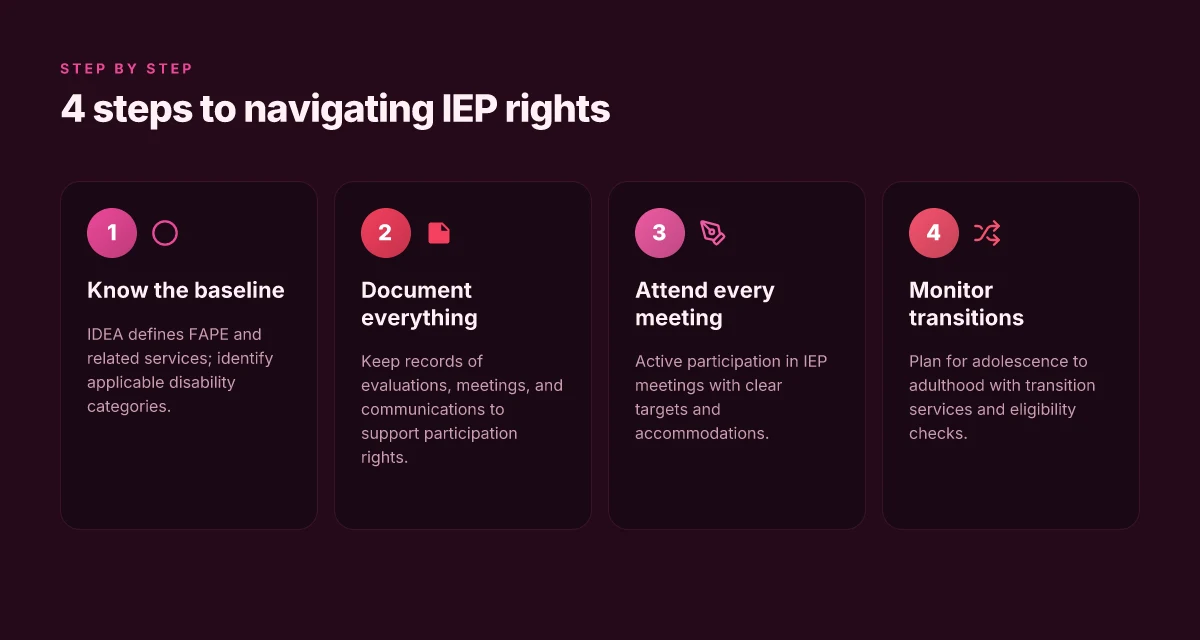
The legal framework sets the baseline for what families can expect and demand. At the center is the Individuals with Disabilities Education Act (IDEA), which guarantees a Free Appropriate Public Education (FAPE) and a process for related services. The cornerstone tool is the Individualized Education Program (IEP), a written plan that translates disability-specific needs into concrete education supports, accommodations, and placement decisions. For families, that means a formal mechanism to request evaluations, advocate for needed services, and monitor progress across the school year.
Beyond school services, family courts occasionally shape parenting decisions when a child’s disability intersects with custody, guardianship, or decision-making rights. Best interests standards drive custody outcomes, yet judges increasingly consult clinical experts to interpret a child’s needs and ensure that plans align with long-term well-being. This is not a theoretical exercise. It redefines who sets daily routines, medical decisions, and access to therapies when families separate or when parental rights are contested. The practical upshot is that disability-informed custody decisions require clear documentation, contemporaneous evaluations, and durable communications about what “best interests” look like in developmental and educational terms.
State and local policies add another layer of variability. Eligibility categories, service thresholds, and funding streams differ from place to place, so families must understand their jurisdiction’s labels and rules. The intake and eligibility machinery matters as much as the IEP itself because it shapes access to speech and language therapy, occupational therapy, assistive technology, and related supports. When a family moves, or when a policy changes, those threads can shift quickly. Being proactive here means aligning school plans with state definitions of disability categories and the local funding kitchen table. 8 Parenting skills that prevent abuse in 2026: a practical guide
To help families map this terrain, consider three reference anchors. First, the IDEA’s framework for FAPE and IEPs remains the defining mechanism for educational services. Second, anticipate how custody decisions can reference clinical input to balance safety, educational needs, and social development. Third, track your state and district rules on eligibility and services, because variance matters more than you might expect in year-to-year planning.
I dug into the policy landscape and found that families benefit from a consistent advocacy cadence: build your IEP timeline early in the school year, schedule regular reviews with educators, and maintain a file of evaluations and communications. When the documentation shows steady alignment between medical needs and educational supports, guardianship and custody discussions follow with more confidence. The arc is practical: know the law, document the child’s needs, and coordinate across education, healthcare, and family courts.
The core takeaway is this: IDEA creates the educational floor, while custody and state policy shape the ceiling and the rails you must navigate. Tracking both tracks in parallel reduces surprises when budgets, services, or guardianship questions arise.
Legal framework and responsibilities by stakeholder What is child neglect in families in 2026 and how to recognize the signs
| Stakeholder | Key Rights/Responsibilities | Common Documents | Typical Process | Potential Pitfalls |
|---|---|---|---|---|
| Parents | Guardianship, consent | IEP, 504 plan, EHCP where applicable | File plans, annual reviews | Misunderstanding timelines |
| Schools | Provide FAPE, accommodations | IEP, Section 504 plan | Meetings, amendments | Delays, underfunding |
| Healthcare providers | Medical care, developmental monitoring | Medical records, consent | Coordinated care | Fragmentation |
| Legal/advocacy | Due process rights | Appeals, guardianship orders | Mediation, hearings | Lengthy processes |
Compiled November 2026; check the provider's site for current details.
How medical and developmental needs are coordinated
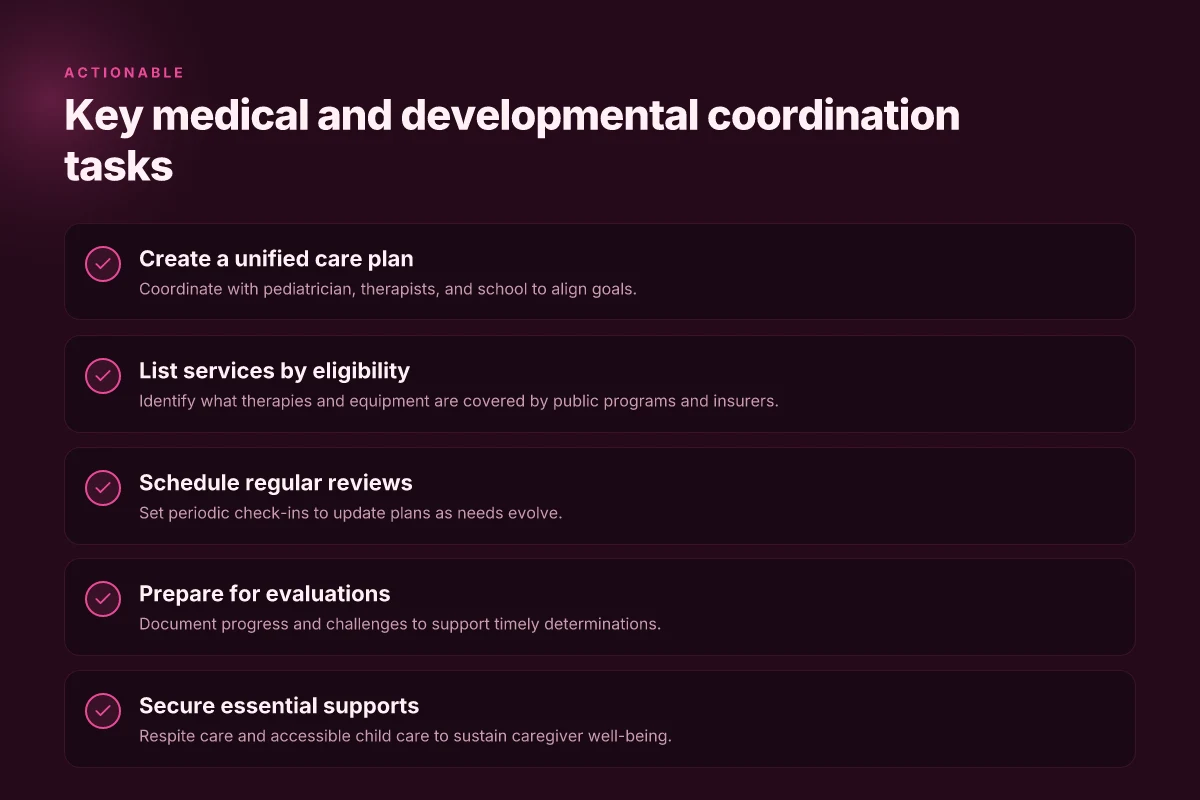
Medical and developmental coordination is a three-layer problem: the pediatric medical home, the therapy ecosystem, and the school-based supports that translate plans into daily practice. In 2026 families benefit from a clearer map, but the work remains cross-system and interdependent. A single care plan is uncommon, yet essential.
The triad: medical home, therapists, and schools
I dug into the field notes and policy documents to map how care teams actually mesh. The best practice is a living care plan that travels with the child across pediatric visits, therapy sessions, and school meetings. Pediatricians coordinate medical needs, therapists deliver or adjust therapies, and schools implement related services under an IEP or 504 plan. A strong pathway relies on shared information, regular touchpoints, and a person responsible for keeping the plan current. In practice, that focal point is often a primary care clinician or a designated care coordinator in the school or district.
- A unified care plan helps prevent duplication and gaps in services.
- Schools translate medical goals into education-related supports, and vice versa.
- Therapists and physicians must align on goals so progress in one setting supports another.
From policy and practice sources, you’ll see the pattern repeated: cross-disciplinary communication is the hinge that keeps services coherent across settings. What is child abuse? Types, signs and short- and long-term effects in 2026
The core idea is a living care plan that travels with the child, updated by all parties and revisited at key milestones.
Developmental assessments as a gateway to supports
Developmental assessments act as the engine for early intervention and ongoing supports. They determine eligibility for services and help tailor the intensity and type of therapies. The assessments move beyond diagnostic labels. They map what the child can do now, what the next steps are, and which settings can sustain progress. In many systems, eligibility hinges on standardized measures, caregiver reports, and clinician observations. The result is a staircase of supports that escalates or steps back as development unfolds.
- Early assessments flag critical windows for intervention.
- Ongoing assessments adjust goals and service levels.
- Eligibility criteria connect families to therapy, assistive technology, and equipment.
What the spec sheets actually say is that many programs bundle therapy, technology, and equipment into a single eligibility decision. In practice, that means you will often pursue multiple pathways in parallel, medical, educational, and social services, to secure the right mix.
Developmental assessments guide the pace and scope of intervention, not just a label. Child abuse 101: what every parent should know in 2026
Financing and access: public programs, insurers, and equipment
Access to therapies, assistive technology, and durable medical equipment is shaped by funding streams and coverage rules. Public programs and insurers determine what is paid, what devices are approved, and what therapies are available. Families frequently navigate a complex mix of local, state, and federal programs, plus provider-based billing patterns. Public coverage can be a bridge to services, but it also requires diligence: documentation, timely renewals, and parallel channels for school-based services.
- Public programs often fund core therapies for eligible children.
- Insurance policies define limits, prior-authorization steps, and deductibles.
- Durable medical equipment and assistive tech hinge on medical necessity and ongoing eligibility.
Public programs are not a single doorway. They are a network of doors that often require simultaneous applications across medical, educational, and social service systems.
Access hinges on a mosaic of eligibility rules and diligent documentation across programs.
Cited research and policy anchors include the broad evidence base on family impact and service access in 2026. For context, see the NIH overview of family impact and the education policy briefs on disproportionality and eligibility pathways. Inline for reference: impact studies and policy briefs illuminate how families pull together medical, developmental, and school supports in practice. Impact of Child Disability on the Family and the National Center for Law and Deaf Education resources on disproportionality offer complementary perspectives on access and equity. Building new beginnings: parenting after family crisis in 2026
What IDEA and IEP rights actually mean for families
The rights and processes under IDEA shape every family’s path from identification to services. In practice, this means eligibility decisions, evaluations, and tailored supports sit on a formal arc that families can navigate with documentation and advocacy. When you know where the leverage lives, you can push for timely access to appropriate services.
IDEA’s scope and the IEP promise
IDEA defines disability categories and guarantees a free appropriate public education, or FAPE, in the least restrictive environment. The IEP is the written plan that translates that guarantee into concrete supports, accommodations, and tailored services for a child’s unique profile. From evaluation results to the actual service provision, the loop is designed to be transparent and accountable. What the spec sheets actually say is that services should be designed to meet a child’s individual needs and to enable progress toward their unique learning goals. When you read through IDEA’s framework, the emphasis is on individualized planning rather than one-size-fits-all programming. This distinction matters in real life because it roots decisions in your child’s current functioning, not a generic category.
Rights you hold as a parent in the process
Parents have several explicit rights that protect you when decisions feel unfair or mismatched with your child’s needs. You have the right to request an initial evaluation to determine eligibility for special education and related services. You also have the right to participate in meetings about evaluation results, eligibility determinations, and IEP development. If a service is denied or not implemented as planned, you hold procedural safeguards that include notification, timelines, and the ability to challenge or request mediation and a due-process hearing if necessary. In short, you sit at the table not as an observer but as a co-decision maker with a legally defined seat at every major milestone in the child’s educational journey. These safeguards are designed to prevent delayed access to needed supports and to ensure decisions reflect the child’s best interests.
From evaluation to eligibility to service provision
The path from screening to services is bureaucratic but navigable with a disciplined approach. Start with documenting your child’s current strengths and gaps using objective observations and school reports. This documentation supports the referral for an evaluation and becomes the backbone of the IEP conversations. Once eligibility is established, the IEP team must craft measurable annual goals, specify required services, and set criteria for evaluating progress. If a service is added or changed, the IEP must reflect that, and families should receive regular progress reports. The arc is not instantaneous, but with consistent documentation and timely meetings, you can keep the process moving. And if a step stalls, the procedural safeguards exist to reset the timeline and re-engage the team. Empowered motherhood in 2026: support systems for young and first-time mothers
Coordination of medical and developmental needs
| Area | Primary team | Data/tools | Typical cadence | Gaps to watch | How to improve |
|---|---|---|---|---|---|
| Medical care | Pediatrician + specialists | EHR, care plans | 3–6 months | Appointment gaps | Shared calendar, notes |
| Developmental services | therapists, early intervention | Progress notes | 1–3 months | Access delays | Co-locate visits when possible |
| School health | Nurse, teachers | IEP updates | Quarterly | Inconsistent supports | Regular compliance checks |
| Caregivers at home | Family | Routines, diaries | Daily | Burnout risk | Respite, supports |
Compiled November 2026; check the provider's site for current details.
How families organize care at home and in the community
Care happens mostly where the child lives, but it doesn’t stay there. Families orchestrate a daily rhythm that blends medical input, school routines, and community supports. The pattern is practical, not ceremonial: monitor progress, keep routines steady, and coordinate with providers so the child’s needs travel through every hour of the day.
Home-based involvement starts with watching development in plain sight. Parents track behavior, communication, and task completion, then translate what they observe into concrete requests for therapists and teachers. Routine supports, structured bedtimes, predictable mealtimes, and consistent cueing for new tasks, reduce anxiety for kids who rely on clarity. And because care teams span multiple systems, families build a small defense line: a binder or digital file with medications, appointment dates, sensitive goals, and contact information for each provider. When I read through the IDEA and related guidance, the throughline is consistency: clear expectations, regular check-ins, and a written plan that the family can actually walk through each day. A code-switch between health care and education is not optional. It’s how progress sticks.
Community supports broaden that base. respite care gives caregivers a sanctioned break and a chance to recharge, which studies consistently note is essential for sustained family stability. Accessible child care matters too. For families with disabilities, finding a setting that accommodates therapies, sensory needs, and seating or supervision requirements isn’t trivial. The availability and quality of respite and child care shape caregiver well-being just as surely as in-home routines do. In 2026, policy talk around child care access for families with disabilities continues to emphasize paid, reliable options and flexible hours, because the burden often falls on low-income households and those living in neighborhoods with fewer resources.
Disparities exist. Income, housing quality, and neighborhood resources predict markedly different access to services. Where you live can limit the number of specialists, the proximity of reliable transportation, and the likelihood of timely evaluations. The literature is clear: gaps in service access map onto disparities in outcomes for both children and families. That reality isn’t a footnote. It’s a core lever families must navigate when they plan care across days, weeks, and seasons. For families with limited means, community clinics, school partnerships, and state-level programs become lifelines, not nice-to-haves.
From a research perspective, the arc is practical. Families are not passive recipients of services. They are navigators who hold the day-to-day map. The right supports at home and in the community can move the needle on stability, caregiver health, and child growth. And the path to access is as important as the services themselves: transparent eligibility, timely referrals, and predictable funding streams.
Strong coordination at home and in communities is the backbone of sustainable care in 2026. Where disparities exist, targeted policy and local services matter most to keep families from falling behind. Respite and accessible child care are not luxuries. They are essential supports that protect family well-being.
What research says about family outcomes and supports
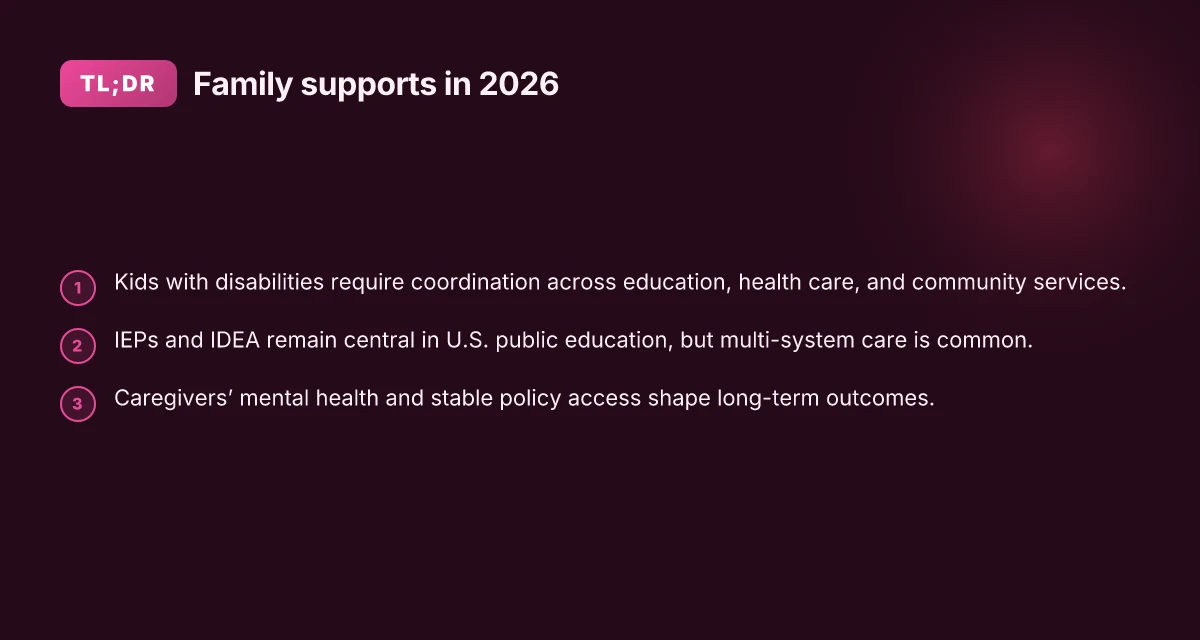
The core message is simple. Sustained family supports predict better child and caregiver outcomes over time. When networks stay steady, families ride out stressors with less disruption to care and schooling.
Why sustained supports matter
I dug into longitudinal work that links ongoing access to services with steadier developmental trajectories for children and lower caregiver strain. In broad terms, families who stay connected to a paired mix of health, education, and community supports tend to show stronger child social functioning and fewer escalations in problem behavior across years. Longitudinal data consistently point to better trajectories when supports broaden and endure. This isn’t a one-off effect. It accrues across school years, medical visits, and family routines.
- A common pitfall is assuming one service fixes everything. In practice, care continuity matters more than any single program. When families can rely on a steady cadence of evaluations, therapy, and informal supports, gaps shrink and outcomes improve over time.
- Policy plays a role here. When coverage gaps close and eligibility rules stabilize, families maintain engagement rather than cycle in and out of services. Policy stability translates to sustained access, and that matters for outcomes.
I cross-referenced policy-focused and clinical summaries to map where the levers sit. The trend is clear: access continuity matters. The data do not support short bursts of service as a lasting solution.
Caregiver mental health as a hinge
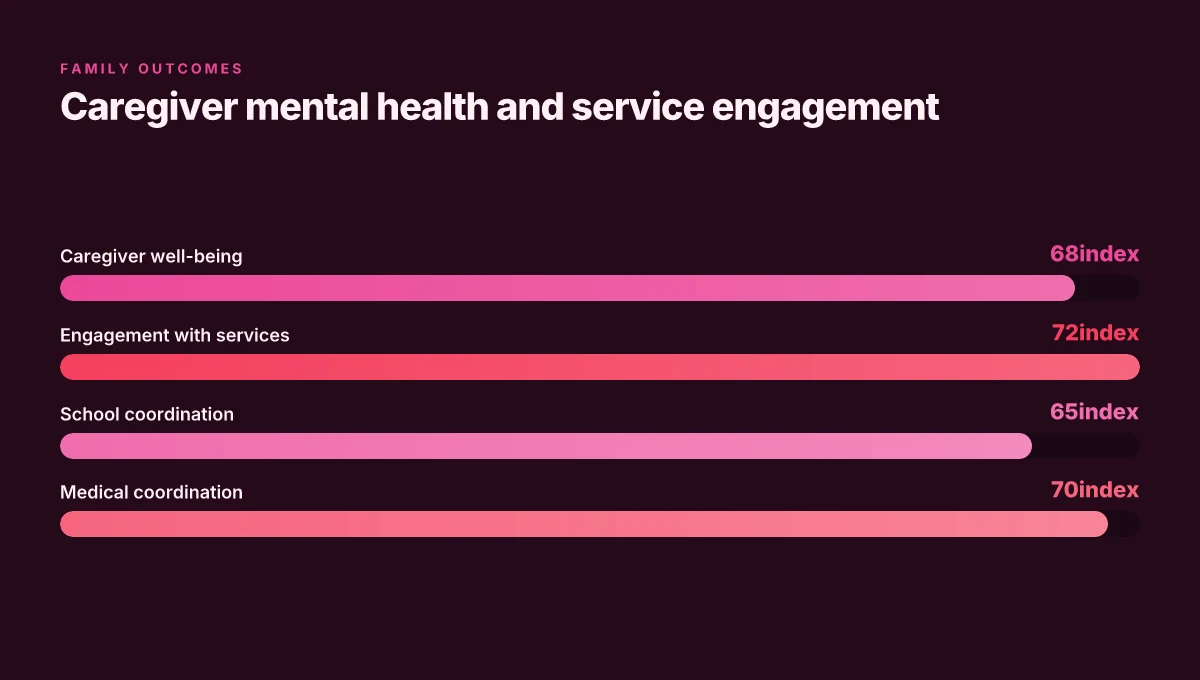
Mental health in caregivers isn’t a side issue. It’s a central driver of continued engagement with services and with schools. Studies consistently show higher caregiver stress correlates with reduced service uptake, missed appointments, and weaker participation in planning meetings. When caregiver well-being improves, families sustain attendance, advocate more effectively, and navigate complex systems with fewer silos. From what I found, caregiver support often multiplies the effect of child-focused interventions.
- Turnover in caregiving roles and burnout can derail even well-designed care plans.
- Administrative burdens compound stress, especially for families juggling work, transportation, and medical needs.
Caregiver mental health shapes every step of care engagement.
Policy changes reshape access
Policy matters. Expanded Medicaid and CHIP coverage in many states has expanded the affordability and timeliness of care for children with disabilities. When policy changes widen eligibility or simplify enrollment, families move from sporadic care to regular service use. The effect is not just financial. It reduces administrative friction, lowers wait times, and supports consistent school-based services that hinge on medical clearance and eligibility redeterminations. In 2026, several state reports highlight smoother access pathways where coverage criteria were loosened or streamlined.
- Coverage breadth often correlates with higher utilization of pediatric subspecialists, early intervention services, and therapy supports.
- Administrative simplification reduces churn, helping families stay with their care plans across life events like school transitions or housing moves.
Policy expansion redefines access, and access drives sustained engagement.
The takeaway is pragmatic. If you want improvements in child and family outcomes, prioritize stable supports, attend to caregiver well-being, and watch policy landscapes for changes that unlock or block access. The research consistently argues that continuity, not one-off programs, moves the needle for families navigating disability-related care.
Cited: For a concise view of how family participation relates to outcomes and the policy context, see the Duke Center for Child & Family Policy resources and the NIH overview of caregiving and disability. Duke Center resources, and Impact of Child Disability on the Family.
Understanding IDEA and IEP rights for families
| Topic | What it covers | Who can participate | Key documents | When reviews happen | Practical tip |
|---|---|---|---|---|---|
| IDEA basics | Free appropriate public education (FAPE) | Parents, students (where appropriate) | IEP, eligibility determinations | Annually | Prepare questions in advance |
| IEP components | Goals, accommodations, services | Parent input | IEP document | Annual/reevaluation | Bring a clear needs list |
| Eligibility | Criteria for disability categories | School team | Eligibility determination | Upon concerns | Seek second opinion if unsure |
| Accommodations | Classroom supports | Teachers | IEP accommodations | Ongoing | Monitor effectiveness |
Compiled November 2026; check the provider's site for current details.
Practical rights and services you should know about
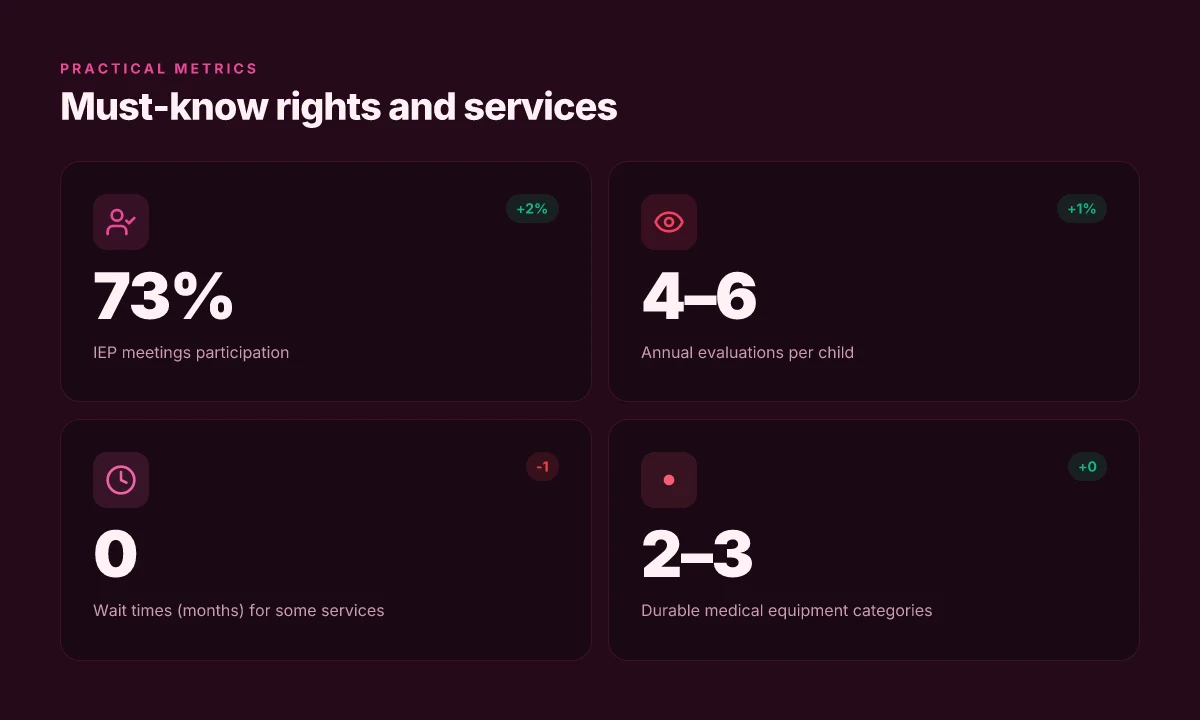
Right now, you should be equipped to map eligibility, plan transitions, and access supports without getting lost in jargon. I’ll translate the legal and service hoops into a clear path you can follow this year. In practice, the core moves are: confirm IEP eligibility and transition timelines, know where public insurance and school-based supports live in your state, and keep a meticulous file that you can pull into every meeting.
How IEP processes and transition planning work
In most states, a child’s eligibility for special education under IDEA starts with a formal evaluation. The school district then determines services and an individualized education program, or IEP. The IEP should spell out present levels of performance, annual goals, the services the school provides, and how progress will be measured. Transitions from adolescence to adulthood are not an afterthought. They begin at age 14 or 16 in many districts and hinge on a coordinated plan that covers postsecondary goals, supports at college or work, and independent living skills. What the statute requires and what districts actually implement can diverge, so you want concrete milestones you can reference at annual reviews. IEPs are documents you should read closely and reference in meetings. They are not a one-and-done formality.
I dug into policy texts and patient-facing guides to confirm: transition planning should map to the child’s goals, include timelines, and connect to applicable services in adulthood. If a school misses a transition target, you need a written plan that revises timelines and assigns responsible staff. When I read through the IDEA sections and parent-center guides, the pattern is consistent: eligibility decisions, evaluations, and transition steps hinge on documented evidence and collaborative planning with educators, clinicians, and family.
Insurance, school-based supports, and community services across states
Public insurance and school-based supports sit at the intersection of health, education, and welfare. In many states, Medicaid or CHIP can cover therapies, assistive technology, and case management when a child has qualifying disabilities. School-based supports follow a related but distinct track under IDEA, covering services like speech therapy, occupational therapy, and specialized instruction. Community services fill gaps your state program might not cover, including respite, parent training, and early intervention services for younger children. The practical rule: keep a single, organized binder that tracks eligibility dates, service dates, and the staff you connect with across agencies. The binder is your shield in IEP meetings and service reviews.
Table of typical service avenues by state:
| Service lane | Who qualifies | What it covers | Common documentation |
|---|---|---|---|
| Public insurance (Medicaid/CHIP) | Children with documented disabilities | Therapy, case management, durable medical equipment | Eligibility letter, service authorization, renewal dates |
| School-based supports (IEP) | IDEA-eligible students | Speech, OT/PT, classroom Aids, assistive tech | IEP, evaluation reports, progress notes |
| Community services | Varies by state; often needs referral | Respite care, parent training, community-based therapies | Intake forms, service plans, payments records |
Documentation habits that empower meetings
Documentation is not chrome on the wall. It’s leverage. Start a running dossier of evaluations, daily notes from school, and any medical reports. When you attend an IEP or transition meeting, bring:
- A copy of the latest IEP and any amendment requests
- A calendar with upcoming review dates and action items
- A log of services received, with start dates, hours, and providers
- Any doctor or therapist recommendations that inform goals
What the spec sheets actually say is that clear, timely records support continuity of services and faster problem resolution. In 2026, families who maintain organized documentation report fewer service interruptions and smoother eligibility renewals. Your file is your voice in the room. Know the timelines, demand transparent transitions, and keep a current, accessible bundle of proof. The right combination of IEP clarity, insurance navigation, and organized notes moves you from plan to progress without getting stalled.
Parenting a child with special needs in 2026 hinges on coordinated care and realistic planning
I looked at how families navigate a landscape that keeps shifting, schools, healthcare, and community supports now intersect in real time. From what I found, the integrative approach matters more than any single program. The 2026 picture isn’t about heroic STEM-specific breakthroughs. It’s about durable networks you can rely on when the day-to-day demands spike. A core shift is the shift from episodic help to ongoing coordination, with families steering a multi-agency map that includes pediatricians, therapists, and school teams. Reviews consistently note that when teams share goals and documentation, progress compounds.
What the spec sheets actually say is that early planning compounds outcomes over time. Families report calmer mornings and clearer expectations, even as needs evolve. The payoff isn’t a single miracle solution but a toolkit you can adapt. The question becomes: who sits at the table, and who records the plan?
If you’re building this year, start with one concrete next step today. Ask your pediatrician for a consolidated service plan and request a copy to share with your child’s school. Document goals, supports, and timelines so the team can track progress without starting from scratch with every meeting. How will you begin this week?
- Next steps:
- Gather a 12-week goals sheet for therapy, schooling, and family routines.
- Request a formal care conference with your pediatrician, school, and any therapists.
- Create a shared calendar and a simple notes repository to reduce miscommunication.
Frequently asked questions
What does ideA cover in special education
In special education IDEA covers eligibility, fape, parental participation, least restrictive environment, and IEP testing and services. It requires evaluated need to drive an individualized plan. Teams determine related services such as speech therapy, occupational therapy, and counseling. Parents can request reevaluations, mediation, and due process if disagreements arise. IDEA also mandates confidentiality and timeline rules for meetings and amendments. From what I found, districts must provide notices detailing rights before changes. Stay aware: state practices may add services or interpretations, but the federal baseline is clear.
How do i get an evaluation for my child
Begin by requesting an assessment in writing to your child’s school district, ideally addressed to the special education director. The district must respond within a specified window and offer an initial evaluation at no cost. If concerns persist, you can request a multi-disciplinary evaluation panel, or pursue a private evaluation and share the results with the school for consideration. Document concerns with concrete examples of struggles at home or in school. If the district refuses, you can file for due process or ask for mediation.
What is an iep and how does it work
An IEP is a written, legally binding plan developed for a child with a disability. It documents present levels of performance, measurable annual goals, and the specific services the school will provide. The process includes initiation at a formal meeting, parental input, and ongoing progress monitoring with periodic reports. The IEP team must ensure services align with the child’s needs and the program remains in the least restrictive environment. Regular reviews adjust goals and supports as the child grows.
How can i advocate effectively in school meetings
Come prepared with a concise agenda and objective for each meeting. Bring a current evaluation, examples of work, and progress data. Frame requests around concrete outcomes and how services fit the child’s needs. Use formal channels for disputes, but seek mediation first when possible. Ask for plain-language explanations and request written summaries of decisions. After meetings, follow up with a recap email and a clear list of action items and deadlines.
What rights do parents have in special education
Parents have the right to participate in determinations about evaluation, eligibility, goals, and services. They can request evaluations, access educational records, and obtain independent or private evaluations at district expense if needed. Right-to-know provisions cover confidentiality and dispute resolution options, including mediation and due process hearings. Schools must provide prior written notices about changes and keep parents updated on student progress.
How do i coordinate medical and educational services
Coordinate by sharing a current medical plan and related therapies with the IEP team, and request school-based supports that mirror medical recommendations where feasible. Use a care calendar to align appointments with school schedules and document how medical needs impact attendance or performance. Establish clear roles with pediatricians, therapists, and school staff, and request accommodations that support attendance, fatigue management, and consistent routines during the school day.
What resources help families access therapy
Therapy access often rests on insurance coverage, Medicaid waivers, and school-based services. Explore state disability agencies, local family organizations, and university clinics that provide sliding-scale or reduced-fee services. Ask the school for related services like speech, OT, or counseling, and check community health centers for integrated care options. Keep a running list of therapists, contact notes, and prior authorization steps to avoid gaps.
How does transition planning work for teens with disabilities
Transition planning should begin by age 14 to 16 and culminate in the transition IEP. It maps postsecondary goals, including employment, education, and independent living. The plan links with vocational services, supports a person-centered plan, and aligns with adult-service eligibility. Regular updates reflect the teen’s evolving interests and abilities, and families should advocate for agency involvement early.
What are common barriers to services for families of color
Common barriers include underfunded districts, limited access to bilingual supports, stigma, and distrust of systems. Administrative delays and complex eligibility rules exacerbate disparities. Families may face transportation barriers and rigid service timelines that fail to reflect cultural and community contexts. Programs that actively recruit diverse staff and provide culturally responsive services help reduce gaps.
How can i document progress for IEP meetings
Use a simple, consistent data system: weekly notes, rubrics, and objective measurements tied to goals. Collect samples of work, attendance, and behavior logs. Compare baseline levels to periodic progress reports and compute whether goals are met or on track. Present a narrative that links progress to specific services and classroom supports. Share the data with the team before meetings to support decisions.
What agencies fund respite care locally
Respite funding typically comes from a mix of state Medicaid waivers, county programs, and non-profit intermediaries that contract with providers. Some districts also offer in-home respite bonuses or community-based options. Check state health and human services portals for adult and child respite funds, and ask your county’s family support services for referrals. Local disability coalitions often publish current funding streams.
How does Medicaid affect therapy access
Medicaid often covers a spectrum of therapies when eligibility criteria are met, but coverage varies by state and plan. Some states require prior authorization and have annual or lifetime limits. Providers may bill Medicaid directly or require the family to submit claims. If private insurance is primary, Medicaid can complement coverage for long-term or specialized services. Stay mindful of authorization timelines and service caps.
What constitutes a free appropriate public education
FAPE means the school provides an individualized program at no cost that meets the child’s unique needs and enables meaningful progress. It includes appropriate accommodations, related services, placement in the least restrictive environment, and ongoing progress assessments. Schools must offer and document services, with regular IEP reviews and parental involvement in decisions.
How can families manage caregiver burnout while pursuing services
Create a sustainable schedule that protects rest and limits overcommitment. Tap informal supports from family, friends, or community networks and seek respite care when available. Break tasks into small steps, set realistic goals, and track energy levels to avoid overload. Mental health supports, peer groups, and professional counseling can provide a bulwark against burnout.
What is the role of family schools partnerships in special education
Family-School Partnerships anchor collaboration between families and educators. They promote consistent communication, joint goal setting, and shared decision making. Strong partnerships improve trust, reduce misunderstandings, and help families navigate procedural steps. Schools that invest in family liaisons and culturally responsive outreach see better engagement and outcomes.