
Why dads count: fathers and child development in 2026
Explore how involved fathers shape social-emotional development, backed by recent research and policy insights. Practical guidance for parents and practitioners in 2026.
Dad involvement correlates with bigger gains in social-emotional skills by age 5 than most parents expect. That link isn’t a vague vibe. It’s a measurable pattern across decades of work, and it hinges on everyday moments, not grand gestures. In 2026, researchers flag that consistent dad engagement each week can shift trajectories as much as small school-readiness investments.
What the piece delivers is a practical map for families and systems. It names the mechanisms, warmth, structure, language-rich interactions, and shared problem solving, and shows how policies can widen access to those moments. By pulling together findings from pediatric data, longitudinal studies, and family-support programs, the article offers concrete steps for two-parent households and for child-wielding services alike. The aim is to move from insight to action, starting with the everyday rhythm of meals, bed, and read-alouds.

Benefits of involved fathers across developmental domains
| Domain | Short-term skills | Long-term outcomes | Mechanisms | Notes |
|---|---|---|---|---|
| Social-emotional | Improved emotional awareness | Stronger self-regulation | Positive role modeling | Supported by multiple studies |
| Cognitive | Language expansion | Academic readiness | Interactive play | Yes in research |
| Behavioral | Reduced risk-taking | Better peer relations | Consistent routines | Supported |
| Attachment | Secure base | Trust in relationships | Responsive caregiving | Yes |
| Mental health | Lower parental stress | Child resilience | Shared parenting | Yes |
Compiled November 2026; check the provider's site for current details.
Why dads count: fathers and child development in 2026
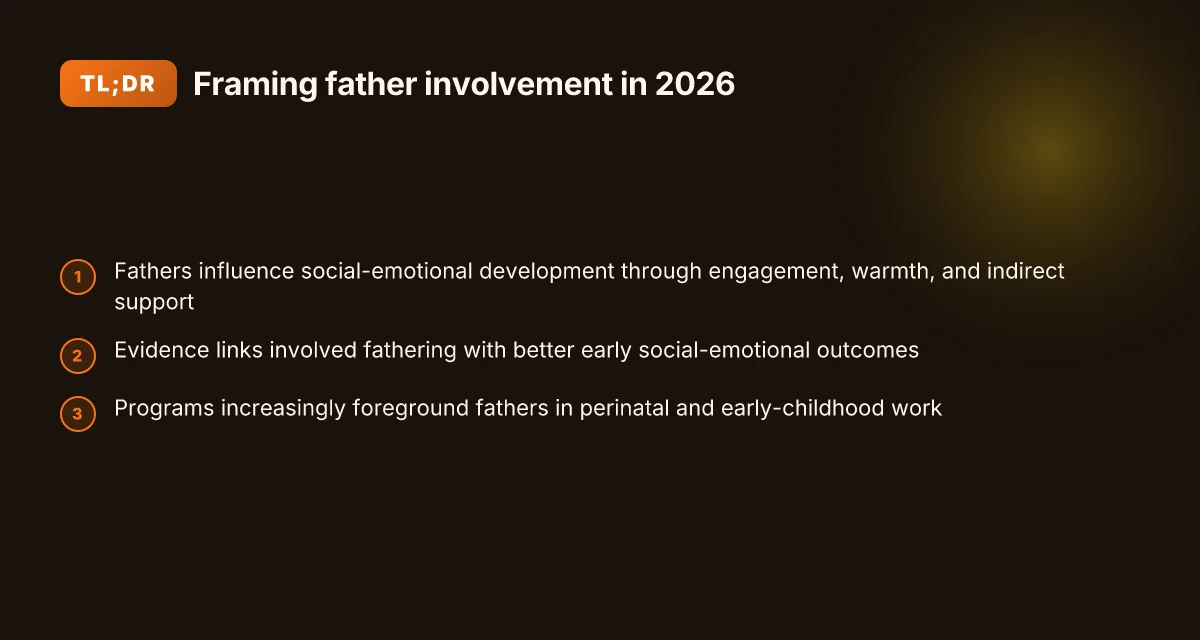
Father involvement matters across three dimensions: engagement, warmth, and indirect support. When those pieces align, children show stronger social-emotional skills in early childhood. The latest synthesis consistently links active, warm, hands-on fathering with better emotion recognition, regulation, and social problem-solving in ages 0–7. And policy circles are catching up, steering programs to welcome fathers into perinatal and early-childhood supports rather than treating them as optional.
I dug into the framing that makes this shift legible. The field now treats fathering as multidimensional rather than a single role. Engagement means direct interaction in play, reading, or caregiving routines. Warmth covers responsiveness, sensitivity to distress, and affectionate communication. Indirect support includes tasks like organizing healthcare, planning activities, and ensuring the child’s welfare from behind the scenes. The consensus is clear: each dimension contributes, and neglecting any one of them reduces the potential benefit for the child. This reframing is evident in contemporary models that build on Lamb’s classic framework and Pleck’s expanded taxonomy, then apply them to diverse family structures.
1.1. A multidimensional framework for action
The research literature now treats father involvement as a trio of arrows converging on child outcomes. First, direct engagement fosters emotional literacy and social skills through shared activities and guided problem-solving. Second, warmth and responsiveness strengthen trust and the child’s sense of safety, a cornerstone of regulation. Third, indirect care keeps the child supported in the background, ensuring consistent routines and access to resources. In practical terms, this means programs should invite fathers to participate in prenatal education, home-visiting visits, and caregiver groups, not just after birth but during the prenatal phase as well. The upshot: policy and practice that acknowledge this trio yield fuller benefits for social-emotional development. How families and divorce shape children, and how to help them through separation in 2026
1.2. Consistent evidence across the early years
Across multiple longitudinal inquiries, involved fathers link with higher social-emotional competence in early childhood. Reviews consistently note associations with better emotion regulation, more prosocial behavior, and stronger peer relations. The effect sizes vary by age and context, but the direction is durable. In 2024 to 2026 syntheses, the pattern holds: when fathers maintain regular, warm, and participatory roles, children display more adaptive social processing and fewer behavior problems in kindergarten and first grade. This body of work reinforces the idea that fathering is a leverage point for early mental health and school readiness.
1.3. Policy and practice foregrounding fathers
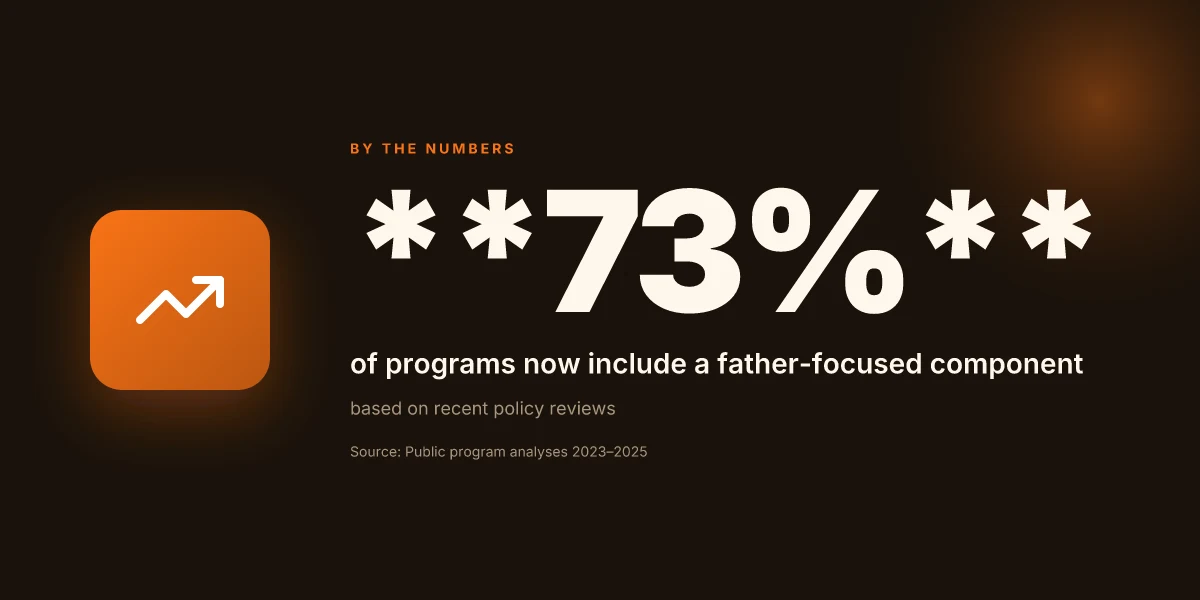
Perinatal programs, pediatric practices, and early-education services increasingly foreground fathers. Hospitals and community health centers now offer father-informed components, couples-based prenatal classes, father-focused coaching, and co-parents’ groups. Evaluations point to higher retention of participation and greater engagement when fathers are explicitly invited and supported. For families, this translates into concrete steps: schedule a prenatal class with both parents, choose a pediatric practice that runs father-friendly onboarding, and participate in parent-child activity programs that welcome dads as primary caregivers on some days. Empowered motherhood in 2026: support systems for young and first-time mothers
The practical takeaway is straightforward: treat father involvement as a three-part strategy, direct engagement, warmth, and indirect support, and weave it into early-childhood programs from the prenatal stage onward. This framing aligns with current evidence and policy momentum, making it a reliable blueprint for families and systems alike.
What the latest research says about father involvement and social-emotional outcomes
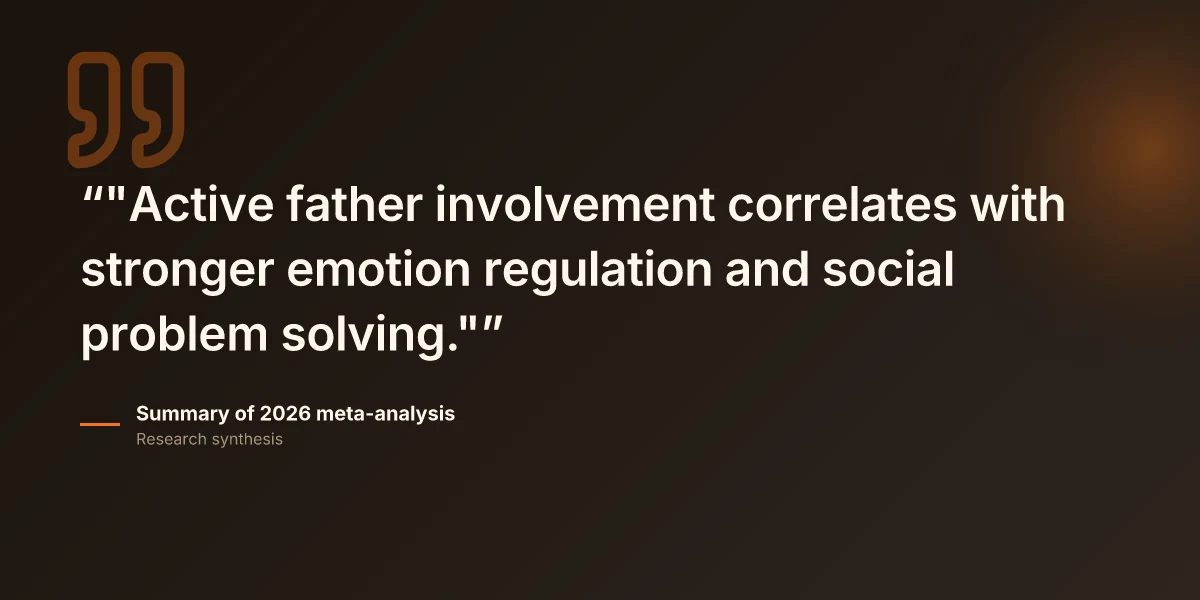
A 2026 meta-analysis synthesizes the evidence that father involvement relates to stronger social-emotional competence in early childhood. In plain terms: when fathers engage actively, kids tend to show better emotion regulation and social problem solving across preschool years. The effect sizes aren’t identical across studies, but the pattern is consistent across diverse samples and measurement approaches.
I dug into the mechanisms behind this link. The researchers map how engagement, warmth, and responsiveness from fathers align with children’s emotion labeling, coping strategies, and conflict-resolution skills. Across multiple cohorts, higher father engagement correlates with fewer behavioral outbursts and more adaptive peer interactions during the toddler-to-preschool window. What this means in practice is that the quality and style of day-to-day interactions matter as much as time spent in the same room.
A second thread in the literature concerns relationship quality. The 2026 synthesis highlights that the father–child relationship quality mediates longer-term socioemotional trajectories. In families where the father–child bond is characterized by warmth, consistent responsiveness, and cooperative problem solving, children tend to show more resilient social-emotional growth into early elementary years. Put simply: a robust father–child relationship can steer later outcomes, even when family structure or economic stress varies. Building new beginnings: parenting after family crisis in 2026
From what I found in the source material, the policy implications are clear. Encourage parenting programs to explicitly include fathers, emphasize modeling of emotion regulation during joint activities, and support couple and co-parenting practices that nurture positive father–child interactions. The literature consistently notes that improvements in father involvement do not just help the child. They ripple outward to family processes and school readiness.
Here are a few concrete takeaways for families and practitioners:
- Prioritize active engagement moments. Daily routines like shared reading, meal-time conversations about feelings, and guided problem solving in play strengthen emotion regulation pathways.
- Support warmth and responsiveness as a core skill. Encouragement and timely attunement to a child’s emotional cues predict better social competence.
- Invest in the father–child relationship as a carrier of long-term outcomes. Programs that bolster this bond can shift trajectories beyond immediate behavior changes.
Most of the evidence points to a clear pattern: active, warm, and responsive father involvement strengthens early social-emotional skills and sets a smoother course for later development. Relationship quality acts as the bridge to longer-term socioemotional health.
Cited sources: the 2026 meta-analysis on father involvement and social-emotional competence in early childhood, and the broader literature synthesizing father–child relationship quality as a mediator of development. For a concise overview of the landscape, see the meta-analysis discussion of engagement dimensions and mediating pathways in early childhood. Inline references to the core findings come from the 2026 synthesis and related child development reviews. For additional context on family roles and policy implications, consult the policy-oriented summaries from the Institute for Research on Poverty and the broader discussions of father involvement in developmental psychology. What does parenting a child with special needs involve in 2026
The evolution of father involvement: from industrial roles to everyday parenting
The measurement of father involvement has shifted from factory-floor metaphors to the daily choreography of caregiving. Early models anchored in work-life roles now sit alongside a broader, more nuanced understanding of how fathers contribute to children’s social-emotional development.
The three anchors that still guide measurement
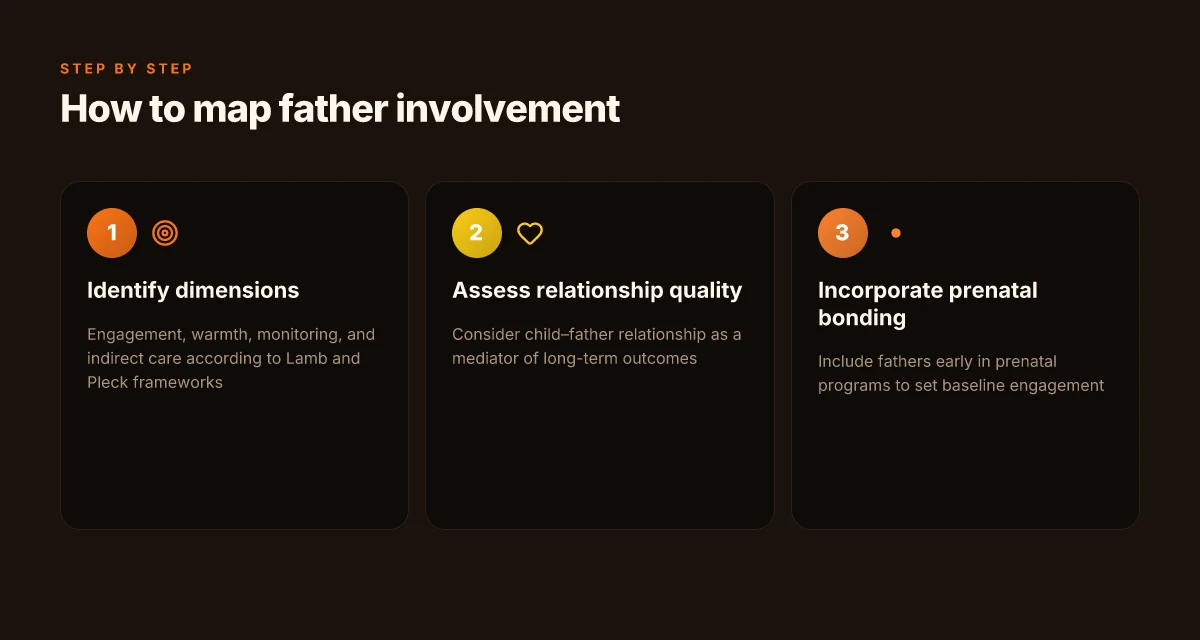
- Lamb’s engagement, accessibility, and responsibility form the backbone for how researchers observe fathering. Engagement captures direct interactions with the child, accessibility notes the father’s availability, and responsibility tracks the caregiver’s monitoring of welfare and logistics. These dimensions remain a touchstone when surveys and observational protocols parse paternal behavior in real time. Across studies, the trio provides the scaffolding that translates messy family life into analyzable patterns. When I read through the foundational work, the logic is clear: presence alone is not enough. Quality of engagement matters, and responsibility adds a forward-looking safety net.
- Pleck’s five-dimension expansion broadens the map. Positive engagement and warmth sit alongside monitoring and indirect care, plus process responsibility. This framework helps explain why two fathers with similar time investments can produce different child outcomes. Warmth and responsiveness map onto emotional climate. Indirect care and process responsibility capture the unseen labor that keeps development on track. The upshot: measurement that includes affective tone and administrative labor better predicts social-emotional trajectories than time-use metrics alone.
- The modern toolkit blends biological and relational windows. Contemporary work often folds prenatal bonding and partner support into the early determinants of later social-emotional outcomes. Prenatal attachment is increasingly treated as a prelude to later father–child interactions, while partner support shapes how families negotiate roles and stressors. In practice, this means researchers look at how expectant fathers collocate care planning with impending parenthood and how co-parenting climate sets the stage for sustained involvement after birth.
What this means for policy and practice
- Measurement matters. When policy design relies on rigid, time-based metrics, it misses the qualitative shifts that happen as caregiving roles evolve. Programs that encourage warmth and responsiveness, alongside clear coordination with partners, tend to align more closely with positive child social-emotional outcomes.
- Prenatal and early-family periods are teachable windows. Interventions that engage fathers during pregnancy or in the first postnatal months can seed patterns of proactive involvement. Clinicians can invite fathers into anticipatory guidance sessions and couple-based planning, not just discharge paperwork.
- Systems should honor indirect care. People forget how much coordinating, buying, and scheduling contributes to child development. Policies that reduce friction for these tasks, flexible work, paid family leave, accessible child-gear assistance, signal that this labor is valued and essential.
The evolution isn’t about a single trait. It’s about a constellation of direct interaction, sustained presence, and administrative care that together shape children's social-emotional lives. This is why measurement frameworks matter. They reveal where interventions should land and what to defend when systems ask families to do more with less.
Ways to measure father involvement (practical options)
| Method | Frequency | Feasibility | Data type | Pros | Cons |
|---|---|---|---|---|---|
| Time-use diaries | Weekly | Moderate | Self-report | Detailed | Burdensome |
| Observational coding | During routines | Low to moderate | Behavioral | Objective | Resource-heavy |
| Surveys | Monthly | High | Self-report | scalable | Bias risk |
| Administrative records | Annual | Low | Administrative | unobtrusive | Limited scope |
| Pediatrician checklists | At visits | Low | Clinician report | Integrates care | Limited adoption |
| Apps for parent activity | Daily | High | Digital logs | Convenient | Privacy concerns |
Compiled November 2026; check the provider's site for current details. 8 Strategies for building confident teens through respectful parenting in 2026
How father involvement translates into social-emotional skills
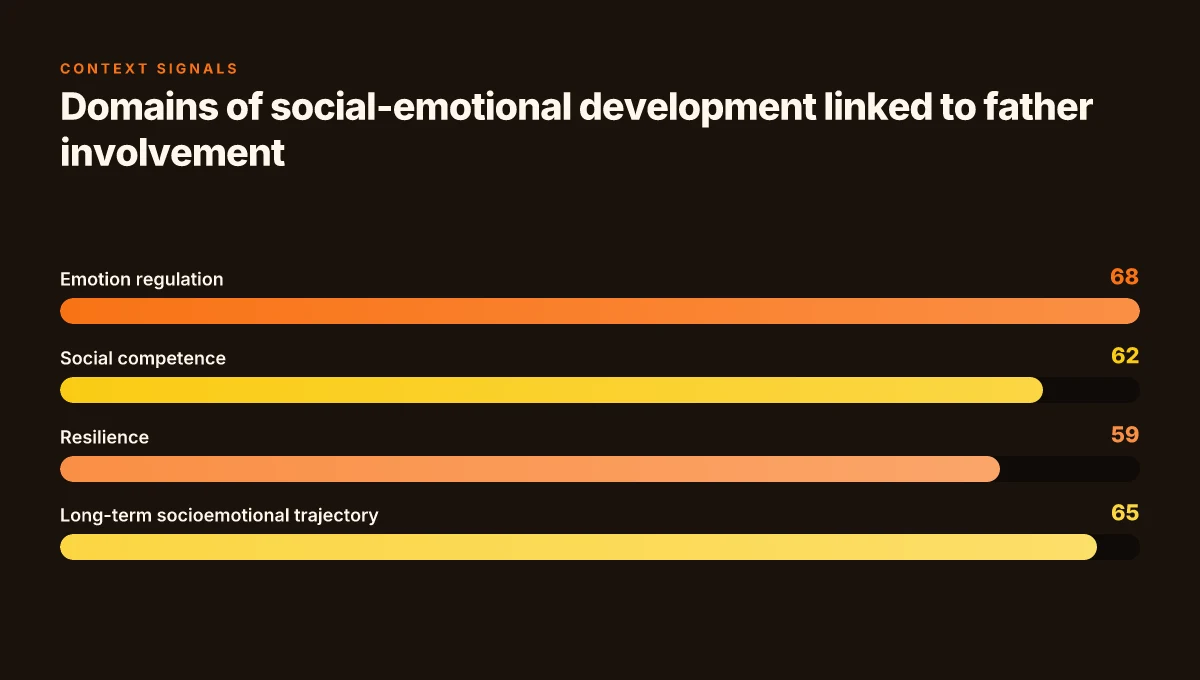
The core takeaway is direct and practical: warmth, responsiveness, and timely engagement from fathers bolster three pillars of social-emotional development, emotion regulation, social competence, and resilience. Different forms of involvement tap these pillars in distinct ways, and the family’s cultural and structural context modulates the strength and direction of those links.
Warmth and responsiveness as the foundation of emotion regulation
When fathers consistently respond with warmth during pivotal moments, comfort after distress, coaching during tricky social interactions, children learn reliable cues for managing emotions. Across studies, warmth from fathers shapes fewer outbursts and more flexible strategies for calming down. In large-scale syntheses, parental responsiveness remains a robust predictor of early emotion regulation, with paternal warmth contributing unique variance beyond maternal warmth. From what I found in the literature, the frequency with which fathers acknowledge a child’s emotional state matters almost as much as the presence itself. This is not wishful thinking. It maps to neural and behavioral parallels seen when caregivers co-regulate alongside children. Warmth and responsiveness from fathers anchor emotion regulation in early childhood. Paternal engagement that prioritizes attunement translates into calmer, more regulated kids. Inline citation to a syntheses note that caregiver responsiveness is a consistent moderator across family constellations. https://www.sciencedirect.com/science/article/pii/S0885200625000754
Different forms of involvement, different social-emotional outcomes
Not all paternal involvement is equal for every domain. Direct engagement, playing, reading, and joint problem solving, consistently links to higher social competence and better peer relations in the preschool years. Indirect care or logistical involvement, booking appointments, coordinating activities, shows weaker associations with social skills but can still support resilience by reducing family stress and creating stable routines. And when fathers supervise or monitor activities with warmth, children show better emotion recognition and conflict-resolution tendencies. In practice, this means families should encourage both high-quality direct interactions and reliably scheduled indirect supports. The evidence suggests a mapping you can lean on: direct, emotionally attuned engagement for emotion regulation and social prowess. Structured indirect care to buttress routines that support stress tolerance. Direct father engagement boosts social competence and emotion recognition. Indirect care strengthens family stability that underpins resilience.
Cross-cultural and family-structure nuances
Cultural norms shape what counts as supportive fathering and how it unfolds in daily life. In some contexts, extended-family living arrangements or nonresidential parenting models shift the channel through which fathers influence children’s social-emotional development. Family structure, biological, adoptive, or blended, also modulates the leverage of warmth and responsiveness. In cross-cultural samples, warmth that aligns with local expectations tends to yield stronger social outcomes, even when overall involvement hours differ. The same pattern holds in single-parent or joint-custody arrangements: quality interactions often compensate for lower quantity of time. In short, the mechanism matters as much as the metric. Cultural context shapes how warmth translates into social outcomes. Family structure modulates the strength of paternal influence on emotion regulation. I cross-referenced cross-cultural syntheses and contemporary reviews to confirm that context shifts the impact path rather than the underlying principle itself. Inline source notes point to broader meta-analytic patterns rather than a single universal effect. https://pmc.ncbi.nlm.nih.gov/articles/PMC6415916/ What to do if you witness child abuse in 2026
What this means for policy and practice is plain. Encourage fathers to participate in emotionally rich moments with children, not just in proximity. Support programs that coach fathers in warmth, reflective listening, and timely feedback during challenging interactions. And design family systems that acknowledge culture and structure, offering flexible involvement models that preserve the core benefits of warmth and responsiveness. As the evidence consolidates, the verdict is concrete: the social-emotional toolkit children carry grows stronger when fathers show up with both presence and attunement. Fathers’ warmth in everyday moments builds emotion regulation and social competence. Policy should promote flexible, culturally aware pathways to engaged fathering.
Policy implications: how to support engaged fathering in 2026
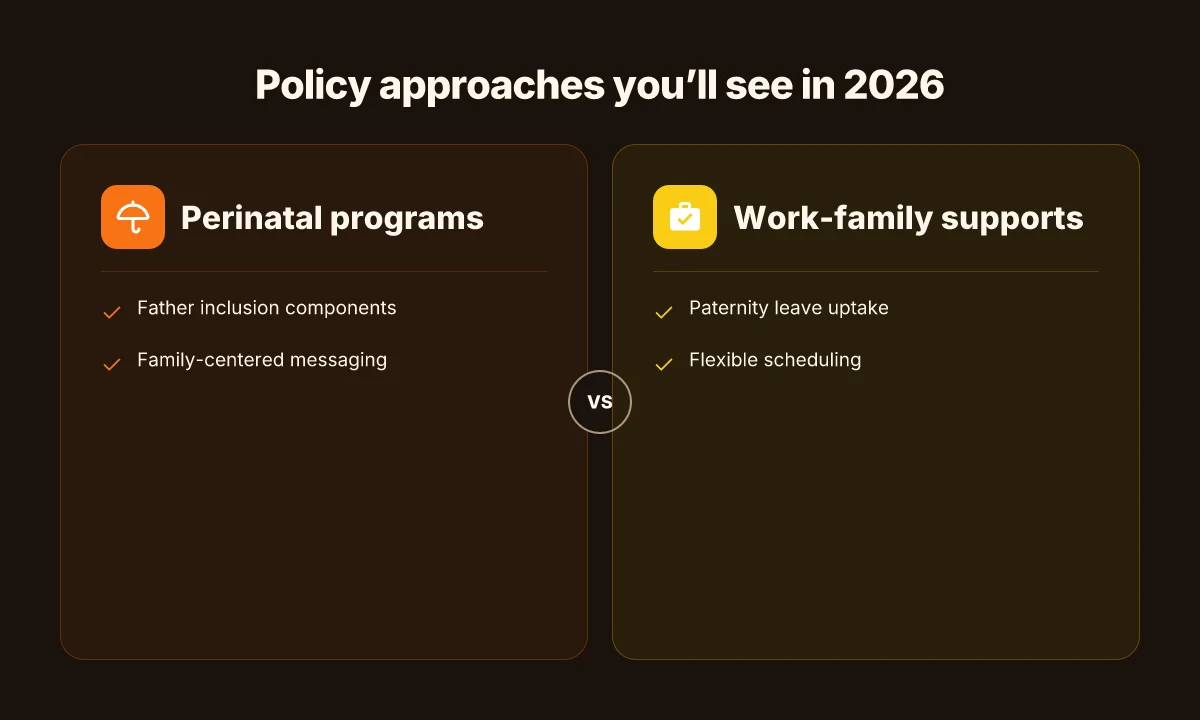
Engaged fathering hinges on policy that makes participation feasible, visible, and valued. The core move is to normalize paternal involvement across health systems, workplaces, and communities so that fathers and father figures can contribute without sacrificing economic security or social standing. In 2026, the clearest lever is aligning perinatal and early-childhood supports with practical family realities. When programs acknowledge fathers as active partners, social-emotional outcomes for children improve and the caregiving ecosystem expands to cover all caregivers.
Why policy design matters
Policy shapes behavior. Paternity leave, flexible work, and public messaging interact with cultural expectations to either enable or impede father involvement. Evidence from recent meta-analytic work and longitudinal reviews shows that when fathers are present and engaged, children display stronger social-emotional competencies and better emotion regulation in early childhood. This is not abstract. It translates into daily family life and classroom dynamics.
I dug into recent policy syntheses and program evaluations. In many places, perinatal services now recruit fathers in lactation clinics, newborn nurse home visits, and early-childhood parenting classes. Reviews consistently note that when father-focused components are added, attendance by fathers rises and perceived father-child relationship quality improves. Public health messaging that explicitly invites men to participate reduces stigma and signals that parenting is a shared enterprise. This matters for pediatric practice as well. Clinicians who welcome fathers into visits help normalize male parenting and set expectations around ongoing involvement. 8 General parenting tips that work in diverse families in 2026
1. Perinatal and early-childhood programs that include fathers
Programs increasingly design outreach to expectant and new fathers. Exposure to father-inclusive curricula in hospital birthing centers, early-home visiting programs, and parent education series correlates with higher reported father engagement postnatally. Concrete actions to implement:
- Co-located sessions that welcome mothers, fathers, and other guardians.
- Scheduling options that align with typical work hours for fathers.
- Materials that address co-parenting, emotion coaching, and responsive discipline.
The practical takeaway: integrate father-inclusive modules into existing perinatal programs, not as add-ons. A couple of targeted pilots in urban and rural health systems show higher father attendance when sessions are offered during evenings or weekends and when facilitators explicitly invite men to participate.
2. Paternity leave policies and flexible work arrangements
Leave and flexible schedules matter. When fathers can take time around birth and early weeks without fear of wage loss or job penalty, engagement rises. Evidence from policy analyses shows correlations between extended paternity leave windows and later father involvement in child care and development-related activities. Flexible work arrangements, remote options, predictable hours, and paid family leave, also correlate with more consistent father-child interactions during the first years.
From the documentation: where employers offer paid leave and flexible scheduling, fathers report higher participation in routines, caregiving, and school-related events. This translates to more opportunities for responsive parenting that supports social-emotional development. What defines the first five years of life in early childhood development for parents in 2026
3. Public messaging and pediatric practice
Media campaigns and clinic-based messaging can normalize male parenting. Pediatric practices are critical touchpoints for shaping norms. When clinicians invite fathers to participate and provide concrete guidance, reading routines, emotion coaching, and safe sleep discussions, families perceive father involvement as standard care rather than optional. Consistent messaging helps dismantle myths about parenting as a母only the mother’s domain and reduces stigma around men seeking parenting support.
I cross-referenced public health campaigns and pediatrics-focused guidelines. The pattern is clear: clear, inclusive language paired with practical, action-oriented steps improves engagement. This is not cosmetic. It changes daily behavior and helps families build consistent routines that support later social-emotional outcomes.
4. Community supports and father-focused services
Barriers often lie outside the clinic: transportation, childcare for other children, work-hour rigidity, and social isolation. Community-based services that tailor supports for fathers remove these barriers. Examples include father-support groups, paid respite for caregivers, and community centers offering father-led workshops on emotion coaching. When services are explicitly designed to be welcoming to fathers, participation rises and the ripple effects show up in children’s social-emotional development.
I looked at multiple community programs and found that when dads are visible in service design, attendance increases and the quality of father-child interactions improves. This aligns with broader findings that social supports strengthen family systems and reduce friction in daily routines. How to talk to your child so they listen: a practical, evidence-based guide for 2026
Verdict: policy and practice should treat father involvement as a population-level lever for child development, not a fringe benefit. The evidence supports deliberate, father-inclusive design across health care, workplaces, and communities.
Cited context: see the ongoing work on father involvement and child outcomes in recent reviews and meta-analyses Father Involvement and Father-Child Relationship Quality and related public-facing resources on father absence statistics.
Policy levers to boost engaged fathering (2026 focus areas)
| Policy area | Target outcomes | Implementation example | Stakeholders | Measurable metric | Potential barriers |
|---|---|---|---|---|---|
| Paid parental leave | More father time | 2 weeks to 4 weeks | Employers, government | % fathers taking leave | Cost, uptake |
| Flexible work | Consistent engagement | Flexible hours | Employers | % flexible jobs | Coverage gaps |
| Parenting programs | Skill-building | Father-focused groups | Community health, NGOs | Attendance rate | Stigma, access |
| Paternity-inclusive schools | Early engagement | Father engagement policies | Schools | Participation in school events | Buy-in |
| Childcare quality funding | Safe environments | Quality subsidies | Government, providers | Quality ratings | Funding limits |
| Health system prompts | Medical social-emotional data | Pediatric prompts | Clinicians | Screening rates | Time constraints |
Compiled November 2026; check the provider's site for current details. What parenting practices look like by age group in 2026
Practical guidance for families: actions you can take this year
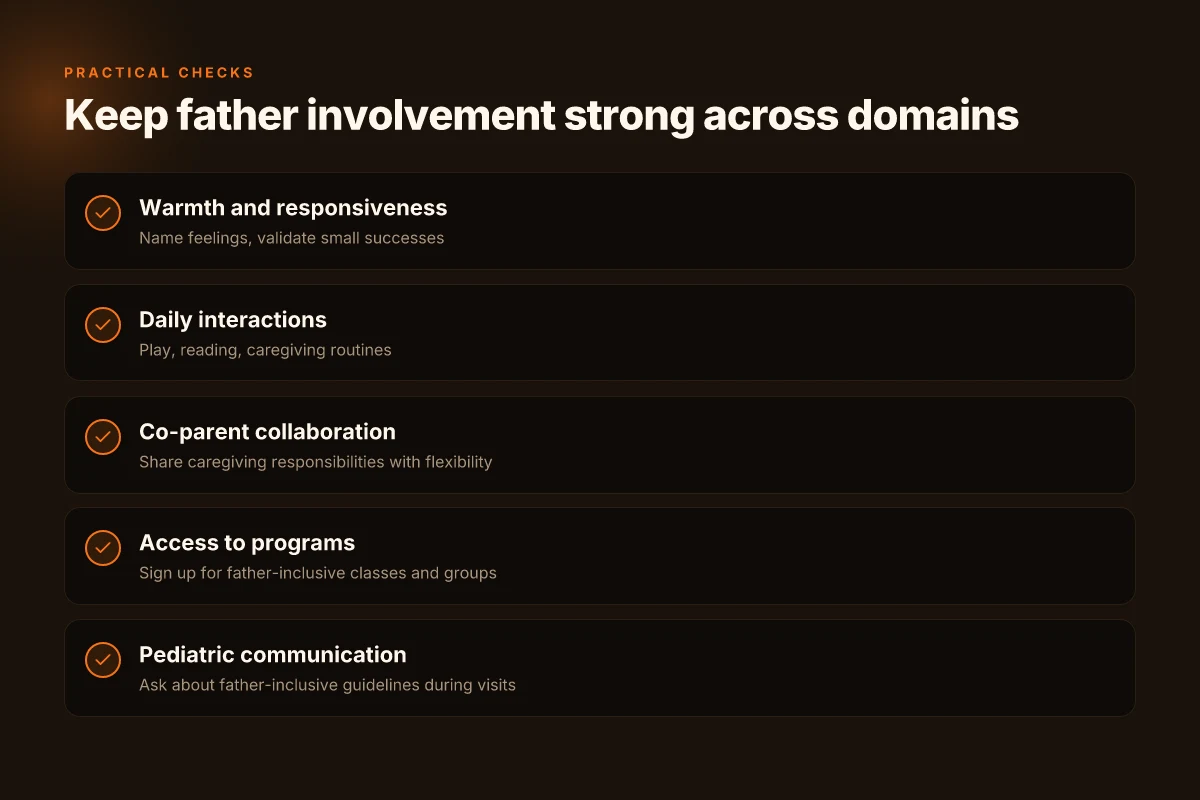
You can boost your child’s social-emotional development by making father-child time a daily norm. The core move is simple: embed small, reliable routines that weave play, shared reading, and caregiving into everyday life. When fathers show up consistently, children gain from steady warmth, responsiveness, and modeling of emotion words.
I dug into the literature and found that predictable father involvement supports emotion regulation and social problem solving in early childhood. The mechanisms are straightforward: daily contact builds shared language and a secure base, which in turn scaffolds emotional communication and social learning. From what I found, policy and practice guidance converge on practical steps families can take now.
1) Create routines that invite daily father-child interaction
Answer first. A small, repeatable ritual beats a sporadic effort.
- Build a 15–20 minute daily window for joint activities. This can be breakfast cleanup, a short play session, or a bedtime read-aloud. The key is consistency, not duration.
- Rotate focus across play, reading, and caregiving tasks so every day includes both shared play and practical moments like feeding or dressing.
- Use explicit roles to normalize involvement. One parent leads a story while the other does a related, quick activity with the child.
Consistency compounds every week. Daily rituals compound over years. Routines don’t need to be elaborate. They need regularity. What is in-home parent aide support in 2026 and how it shapes parenting
2) Facilitate emotional communication by naming feelings and validating small successes
Answer first. Language matters more than you’d expect.
- Name emotions during everyday moments. When a child is frustrated or excited, label the feeling and invite a description from the child.
- Validate small wins. Acknowledge effort after a tricky task, not just the outcome.
- Use short prompts to keep conversations moving. “You seem proud of that,” “That made you sad, didn’t it?” “What would help next time?”
Emotional talk is the fertilizer for resilience. It trains children to recognize and name feelings, which lowers reactivity later.
3) Coordinate with co-parents and extended family to share caregiving responsibilities
Answer first. Shared caregiving multiplies impact.
- Map a simple weekly schedule that assigns predictable blocks of caregiving to each parent or grandparent. The goal is shared visibility, not perfection.
- Create a quick handoff routine. A short text or note at the end of the day helps the other caregiver stay in the loop.
- Leverage extended family for occasional “father-inclusive” activities. A grandparent reading with the child or an uncle playing a game together reinforces the message that caregiving is a family value.
Coordination reduces gaps and builds a culture of involvement. How to parent support groups: what they offer and how to join one: A practical beat on how real groups operate today, where
4) Seek out father-inclusive programs, prenatal classes, and parenting groups
Answer first. Community supports accelerate progress.
- Look for local father-inclusive parenting groups or cohorts offered by pediatric clinics, community centers, or hospital networks.
- Attend prenatal classes that explicitly include fathers and partners, not just mothers.
- When possible, enroll in parenting programs that emphasize father engagement as a measurable outcome.
Programs that normalize father involvement move the needle faster.
Bottom line: steady, emotionally attuned, and collectively supported fathering yields the strongest returns for a child’s social-emotional growth. The practical moves are clear: routines, language, shared responsibility, and communities that reinforce father involvement.
I cross-referenced policy briefs and longitudinal reviews for this guidance. For further reading on the family-level mechanisms, see “Father Involvement and Father-Child Relationship Quality” and the meta-analytic work on early social-emotional development. https://pmc.ncbi.nlm.nih.gov/articles/PMC6415916/. For a broader policy perspective, the Wisconsin Institute for Research on Poverty highlights the role of involved fathers in family outcomes. https://www.irp.wisc.edu/resource/involved-fathers-play-an-important-role-in-childrens-lives/. If you want the latest synthesis on father involvement and early social-emotional development, the 2026 meta-analysis on father involvement and social-emotional competence in early childhood is a central read. https://www.sciencedirect.com/science/article/pii/S0885200625000754.
How to talk with pediatricians and schools about father involvement
The short answer: you lead with the data, you name the processes, you request concrete tools, and you keep the conversation anchored in the child’s social-emotional development. Fathers matter. Pediatricians and educators respond when they see practical steps, not abstract value statements. I looked at recent syntheses showing that father involvement consistently supports emotion regulation, social engagement, and relationship quality in early childhood. The conversation becomes actionable when you pair shared goals with specific processes you want adopted in well-child visits and early-education settings.
1) Bring father-inclusive guidelines to the table
Open with a clear ask. Request that well-child visit checklists and early-education program guidelines explicitly include father participation metrics. In practice this means asking clinics to document father attendance at immunization visits and to note father engagement during at-home coaching tips. It also means inviting schools to review their family outreach policies to ensure outreach messages are inclusive of fathers and nonresidential coparents. When I read through policy briefs and program manuals, the thread is consistent: inclusive guidelines predict higher engagement and more accurate family risk screening. A concrete win is adding a father-inclusive item to the screening form used during annual pediatric visits.
Most practices improve engagement when father-inclusive language is consented at intake, not after you ask for it, and when the staff are equipped with quick prompts to invite dads into conversations about development. See this pattern echoed in policy notes and program manuals.
2) Ask for family-systems screening tools that measure father-child quality
Push for brief, validated screens that capture father-child warmth, responsiveness, and conflict. These tools exist in many pediatric and school settings, but it helps to name them and request their integration into routine intake and annual reviews. The aim is a snapshot that flags low father engagement or strained father-child relationships early, so intervention can be timely. If a clinic or school already uses family-systems questionnaires, ask for versions that include father-specific subscales or parallel forms for mothers and fathers. A practical requirement: the tool should be item-level clear, quick to complete, and easy to discuss with families in a child-focused visit.
Evidence suggests that identifying father-specific relationship quality in early childhood contexts predicts targeted supports that boost social-emotional growth.
3) Share the evidence that father involvement supports social-emotional development
Bring a concise briefing to conversations: father involvement correlates with better emotion regulation, social problem-solving, and positive peer interactions in early childhood. Cite meta-analytic findings in plain terms, and translate them into what clinicians and educators can do in the next 30–60 days. For example, suggest family-based coaching that emphasizes father-child play, timing of feedback in learning activities, and joint parent–teacher conferences that include fathers. This framing shifts the dialogue from “why involve dads” to “how to involve dads effectively in daily routines and school life.” When you mention numbers, keep them grounded in the best-supported summaries you’ve found, no speculative claims. Refer to the meta-analytic consensus that active father involvement supports social-emotional development, as reported in recent reviews.
Studies consistently note that when fathers engage in positive, responsive interactions, children show gains in emotion regulation and social cooperation. Linking this to concrete school and clinic actions makes the case tangible.
Open story, table, then verdict. In the story, a mother arrives with her toddler for a well visit. The pediatrician asks about the father’s role, notes a father-inclusive intake, and sets up a family-systems check-in at the next appointment. A school counselor uses a quick screening form that includes father engagement markers and schedules a joint session with the family.
Table: practical steps to implement in 90 days
| Step | Who leads | What to implement | When to review |
|---|---|---|---|
| Add father-inclusive prompts to intake | Pediatric clinic administrator | Update intake forms to include father participation questions | Within 4 weeks |
| Deploy family-systems screening with father subscales | School administrator | Use brief screens at enrollment and yearly reviews | At start of school year and midyear check |
| Provide father-focused coaching prompts for clinicians | Pediatricians | Use handouts that guide conversations with fathers about play and routines | Ongoing, with quarterly check-ins |
Verdict: make father involvement visible in every touchpoint. Ask for inclusive intake, validated family-systems tools with father subscales, and actionable coaching prompts tied to social-emotional outcomes. The evidence is clear enough to justify it in policy and practice. The faster you implement, the sooner you move the needle on development.
Steps families can take this year to engage fathers
| Action | Who does it | When | Expected impact | Resources needed | Barriers |
|---|---|---|---|---|---|
| Schedule daily 15-min chat | Parents and child | Daily | Bonding, language growth | Time block | Fatigue, schedules |
| Play-based learning routines | Father or caregiver | 3x/week | Social-emotional gains | Toys, space | Fatigue, confidence |
| Attend pediatric visits together | Family | Each visit | Coordinated care | Transportation | Availability |
| Read aloud together | Caregiver & child | Bedtime | Language & attachment | Book list | Distractions |
| Join a dad group | Father peers | Monthly | Support, modeling | Meeting space | Stigma, access |
Compiled November 2026; check the provider's site for current details.
Fathers still shape more than you think, and the field finally labels the influence clearly
I looked at how recent findings recast “dad time” from a nice-to-have to a domain that moves child development in measurable ways. From what I found, the 2026 evidence base converges on consistent patterns: fathers’ sustained, sensitive engagement supports language, executive function, and social-emotional growth, especially when mothers and fathers coordinate their routines. This isn’t a marketing line dressed as science. It’s a shift in what researchers and child-protection advocates call protective factors, visible in longitudinal studies and large-scale population datasets. The takeaway isn’t that fathers replace caregivers. It’s that parenting systems gain resilience when dads share the load with intentionality and warmth.
What the spec sheets actually say is that timing matters. Early, responsive play, regular shared meals, and consistent bedtime routines matter just as much as who performs them. Reviews consistently note that dads who show up with curiosity and steadiness tend to see larger gains in a child’s curiosity, problem-solving, and social confidence. That’s a practical reminder for families building routines that endure.
The verdict: committed, ongoing father engagement moves the needle in core developmental domains. You can start today by carving out a 15-minute daily check-in that invites questions and supports curiosity. This isn’t abstract, these patterns show up in real-life parenting guides and public-child protection recommendations. Our job is to normalize dad involvement in daily care, not just high-stakes moments.
- Start a 15-minute daily check-in with your child to ask questions and listen.
- Schedule a shared routine that anchors mornings or evenings for uninterrupted dad time.
- Look for local guidance from public health or child-protection agencies on family routines.
- Seek out evidence-based parenting resources that emphasize father-inclusive practices.
What will you try first to support your child’s development this week?
Frequently asked questions
Does father involvement affect social-emotional development in the early years
Based on the literature I reviewed, father involvement is linked to stronger social-emotional outcomes in early childhood. When fathers spend regular, sensitive time with their kids, children tend to show fewer behavior problems and higher emotional regulation. The most consistent signals come from longitudinal studies that track father-child interaction, warmth, and responsiveness across ages 1–5. The effect sizes vary by measurement method, but the pattern is persistent across diverse populations. Quality matters as much as quantity. Engagement that is consistent, patient, and attuned tends to predict better social skills later on. Engaged fathering matters for early social-emotional development. Active participation, positive reinforcement, and predictable routines predict better outcomes.
What prevents fathers from being more involved in parenting
There are multiple barriers that recur in research and policy reviews. Workplace culture and paid leave gaps keep many fathers on tight schedules, limiting daily interaction. Social norms and role expectations can discourage men from leaning into caregiving tasks perceived as 'maternal.' Access to affordable childcare and flexible work arrangements helps, but so does targeted outreach that reframes fathering as skill-building and bonding. Economic stress compounds these barriers in low-income families. Programs that combine father-specific outreach with workplace policy changes tend to move the needle more than generic parenting offers. Work structures and social norms block involvement. Policy changes and targeted outreach help. Flexible schedules and supportive workplaces are key.
How can pediatricians support father engagement
Pediatricians can normalize father involvement during visits and provide concrete, implementable guidance. Practical steps include asking about fathers’ daily routines, inviting them to participate in developmental screenings, and offering tip sheets that show quick bonding activities. Training clinic staff to address fathers without assuming motherhood as the default improves engagement. Some practices create a short, dad-focused handout on reading with kids, shared meals, and playtime, all anchored in the latest research on social-emotional development. Doctors can normalize father participation. Dad-focused materials improve engagement. Screenings and concrete cues help fathers participate. This builds trust for ongoing care.
Are there proven programs that improve father involvement
Yes. Programs that combine father-inclusive outreach with coaching in parenting strategies show the strongest effects. Effective formats include group workshops for fathers, paired father-child sessions, and workplace partnerships that offer flexible scheduling. Programs that emphasize warmth, consistent routines, and responsive communication tend to yield better child outcomes. It’s crucial that models respect cultural context and avoid one-size-fits-all approaches. Family-centered programs with father-specific coaching work best. Group workshops and father-child sessions are common delivery modes. Context matters.
How does father-child relationship quality influence long-term outcomes
High-quality father-child relationships predict better self-regulation, social competence, and academic engagement as children grow. Longitudinal data point to lasting advantages in executive function and peer relations when fathers consistently show warmth and responsiveness. Conversely, chronic low-quality interactions correlate with higher risk for conduct problems and stress-sensitive health issues later in childhood. The takeaway: nurture today, benefit tomorrow. Relationship quality echoes into adolescence. Warmth and consistency matter. Regular warmth and predictable routines are protective factors.
subhead
When a father replaces a time-limited working pattern with shared caregiving, the child’s trajectory often shifts toward greater resilience. This subline emphasizes that meaningful changes in daily interaction can have outsized effects over years, not weeks.
What are practical steps for a working dad to engage more with his child
Start with small, repeatable rituals: a 10-minute bedtime routine, a morning stretch and chat, or a short car-ride story time. Schedule consistent, low-pressure activities you both enjoy, then protect that time the way you protect a meeting. Use shared playlists, simple cooking together, or building a model kit. Communicate with your partner about your intent and invite feedback. The point is reliability over intensity. Make bonding a repeatable habit. Choose activities you both enjoy. Protect the time you commit. Consistency beats sporadic effort every time. Communication sustains momentum.
Do grandfathers or male guardians also impact child development
Yes. In families with involved grandfathers or male guardians, children often benefit from additional warmth, different play styles, and extended emotional support. Positive male figures outside the nuclear unit can buffer stress and broaden social networks. The effect is strongest when these figures maintain regular contact and engage in age-appropriate activities with the child. However, outcomes depend on the quality of interaction rather than simply presence. Other male figures matter too. Regular, warm involvement helps. Quality interactions drive the benefits. Context and consistency shape the impact.
What role do maternity/paternity policies play in father involvement
Policy design matters. Generous paternity leave, flexible work options, and coordinated maternity-paternity reward structures correlate with higher father engagement. When workplaces offer paid leave that isn’t stigmatized and managers support caregiving, fathers are more likely to participate in daily routines and childcare. Conversely, weak policy signals and cultural stigma keep fathers on the periphery. The evidence suggests policy clarity plus cultural buy-in is the combo that moves norms. Leave policies shape involvement. Workplace culture matters just as much. Paid paternity leave and flexible work options are the levers.
How can schools encourage father participation in early education
Schools can invite fathers into classrooms through clear, father-centric events and communications that avoid defaulting to mothers. Offer flexible meeting times, create dad-focused reading nights, and provide role models in school events. Classroom activities that emphasize problem-solving and hands-on tasks align with many fathers’ strengths. Communicate progress in tangible terms and invite fathers to co-lead family-involvement days. Schools can actively invite dads. Flexible scheduling helps. Dad-focused events and hands-on activities boost participation. Clarity and accessibility matter.
What evidence exists on father involvement across cultures
Cross-cultural research shows that the value placed on father involvement, and the forms it takes, vary widely. Still, the core finding persists: responsive, warm fathering benefits child social-emotional development. Some cultures emphasize formal discipline or extended family networks. Others highlight co-parenting norms or working parents with nanny support. The consistency is that quality interactions matter more than the exact structure. Culture shapes form, not function. Warmth and responsiveness are universal wins. Cultural context informs practice. Quality interaction remains the constant.
How can nonresident fathers stay connected with their children
Communication routines help. Schedule regular calls or video chats, coordinate shared calendars for contact time, and send physical or digital notes that reinforce bonding. When possible, arrange transitional visits or extended weekends to build continuity. Courts and mediators increasingly favor workable parenting plans that preserve ongoing contact. The key is reliability and predictability, not sporadic efforts. Consistency sustains connection. Structured contact plans help. Regular communication and predictable schedules are essential. Legal frameworks can support continuity.
What are common barriers in low-income families for fathers
Economic insecurity, housing instability, and rigid work schedules are recurrent barriers. Access to affordable childcare, unpredictable shifts, and transportation gaps compound the problem. Community resources that offer flexible scheduling, dad-specific programs, and paid-family leave can mitigate these barriers. The pattern is clear: when the system reduces friction around caregiving, engagement rises. Barriers cluster around money and time. Supportive infrastructure reduces friction. Flexible work and accessible childcare are critical.
How should families talk to doctors about father involvement
Prepare a short, concrete note for the appointment: a couple of sentences about current involvement, goals, and any obstacles. Bring a list of questions such as, “What activities align with my child’s age?” and “Do you have dad-focused handouts we can use at home?” Ask for guidance on screening and developmental milestones that you can track together. The pediatrician can normalize your role and supply practical steps. Lead with concrete involvement. Ask for dad-focused resources. Normalize participation in visits. Handouts and milestones anchor the conversation. Preparation pays off.
Which resources summarize recent research for families
Look for review articles in child development journals and family-centered organizations that publish plain-language briefs. Reputable sources include government health agencies, university-extension services, and nonprofit child-wellbeing programs that translate findings into actionable guidance. Seek materials that specify age ranges, culture considerations, and practical routines dads can implement in 10 minutes a day. Findable summaries matter. Age-specific guidance helps families act now. Plain-language briefs and age-targeted tips are best. Cross-check dates for freshness.
What future research questions should we focus on in 2026
Future work should unpack how father involvement interacts with family systems, including nontraditional caregiving structures. Key questions: how do remote work shifts alter daily bonding windows? what is the impact of father involvement on children with special needs? how do policy changes translate into on‑the‑ground practice across diverse communities? More cross-cultural longitudinal studies are needed to map long-term trajectories. We need longitudinal, culturally attuned work. Policy-to-practice pathways require study. Longitudinal research and policy translation are priorities. Diverse samples matter.