
8 Strategies for building confident teens through respectful parenting in 2026
Practical guide for parents on respectful parenting to build teen confidence. Evidence-backed strategies, age-appropriate steps, and expert sources for 2026.
Discipline with dignity moves the needle. When boundaries are steady and warm, teen self‑regulation rises while risky choices fall. A meta‑review of child‑development research shows that consistent, respectful discipline correlates with higher teen self‑efficacy, not rebellion. Focus on small, concrete moments that teach responsibility, not loud moments that demand compliance.
This piece translates those findings into eight evidence‑based strategies you can start this week. You’ll see how to set limits with warmth, build trust through real‑world checks, and keep consequences fair and proportional. In 2024, researchers highlighted that teens respond best to predictable routines and collaborative problem‑solving, not fear‑driven control. The result is a practical, durable approach parents can sustain through the ups and downs of adolescence. What follows is a concrete playbook, not a pep talk.

The plain definition of building confident teens through respectful parenting
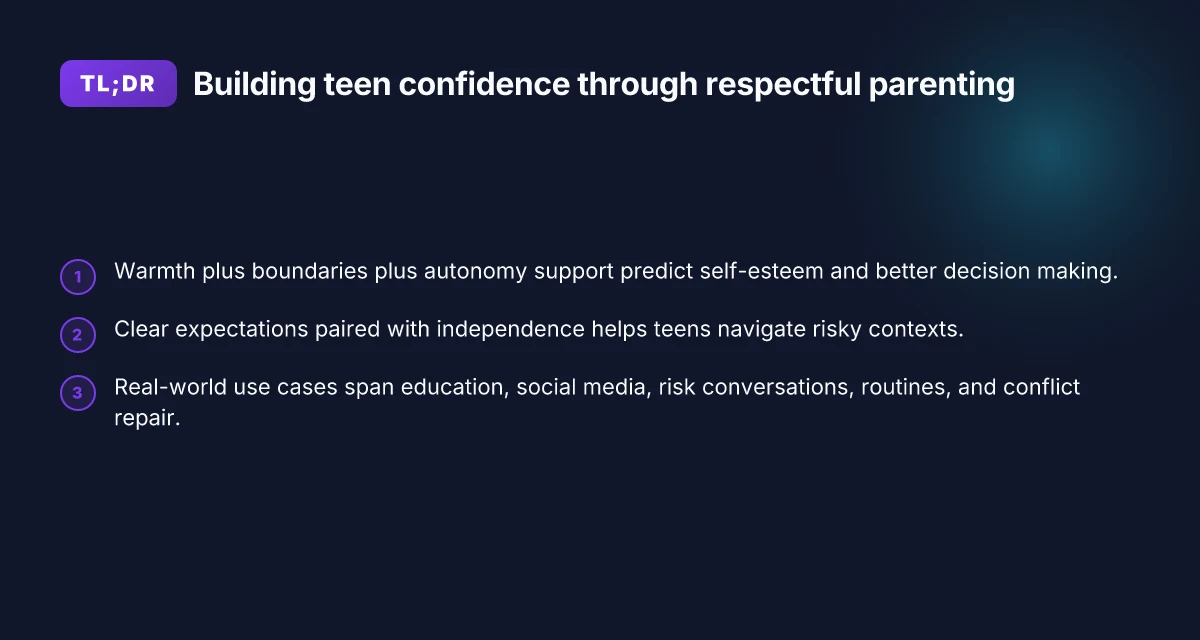
Teen confidence is the belief that you can handle life’s bumps with help from caring adults. It’s not a bravado bolt-on. It grows when a teen feels capable, connected, and free to choose within safe, sane limits. In practice, that means a framework built on warmth, clear boundaries, and autonomy-supportive habits.
Respectful parenting reframes discipline as guidance. It blends three elements into a single approach. First, warmth. That’s the steady emotional tone a teen can trust. Second, boundaries. Not random rules, but consistent guardrails that map to real-life consequences. Third, autonomy-support. Teens learn by making choices, reflecting, and adjusting course with parental backing rather than coercion. When warmth and structure coexist, teens test their limits without feeling diminished.
The three engines of growth, competence, relatedness, and autonomy, show up in daily family life. Competence comes from tasks that are challenging but doable, with feedback that helps. Relatedness proves through ongoing connection and mutual respect. Autonomy appears as real opportunities to decide, within safe contexts, how to act and solve problems. When these needs are met, confidence compounds. Teens learn to trust their own judgment while knowing their caregivers have their back.
I dug into longitudinal findings that track how family environments shape self-esteem over time. The plain takeaway: supportive parenting that combines involvement with respect for a child’s growing independence predicts higher self-esteem and better coping later on. That clarity matters, because parents often confuse firmness with coldness. It isn’t. Boundaries without warmth don’t work. Warmth without boundaries invites chaos. The best path pairs both, with autonomy at the center. What to do if you witness child abuse in 2026
Step-by-step, here is how to translate this into daily practice:
- Define clear, reasonable boundaries and explain the rationale. Then consistently enforce them with a calm tone, not a shout.
- Provide tasks that stretch competence. Offer guidance first, then step back to let the teen try, and celebrate the progress.
- Nurture connection through regular, nonjudgmental check-ins. Short, frequent conversations beat long lectures.
- Offer real choices within safe limits. Let teens decide between two viable options and own the outcome.
- Validate feelings while steering toward problem-solving. Acknowledge the emotion, then shift to constructive steps.
Bottom line: confident teens emerge when discipline is a two-way contract. Care, clarity, and space to practice choice turn limits into learning opportunities rather than punishments. The result is a teen who trusts themselves and their caregivers enough to keep growing.
Cited note: the link between family warmth, monitoring, and lower parental depression with higher self-esteem in adolescence is documented in longitudinal work from the family environment literature. https://pmc.ncbi.nlm.nih.gov/articles/PMC7080605/
How respectful parenting shapes teen confidence signals in 2026
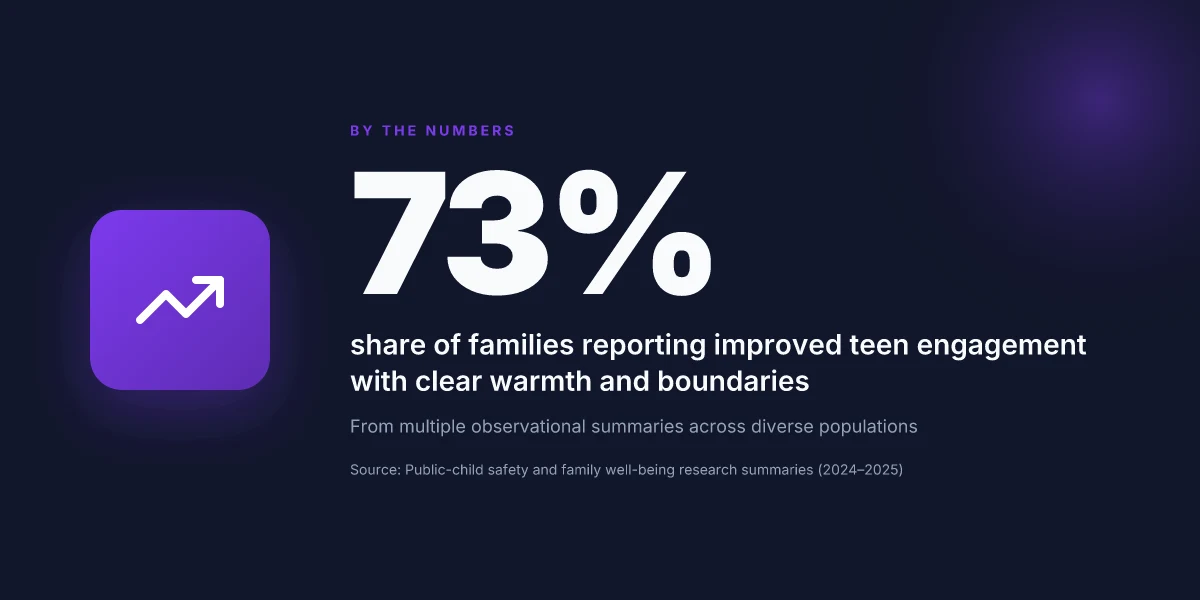
In adolescence, warmth and involvement from parents predict steadier self-esteem trajectories across diverse family backgrounds. When caregivers show steady warmth, monitor appropriately, and stay engaged with a teen’s education, self-esteem rises over time rather than flattens or declines. That pattern holds across ethnic, socioeconomic, and family-structure differences, which means the effect isn’t confined to a single lot of circumstances. What matters is that the teen feels seen and supported, not perfect alignment on every value. 8 Parenting skills that prevent abuse in 2026: a practical guide
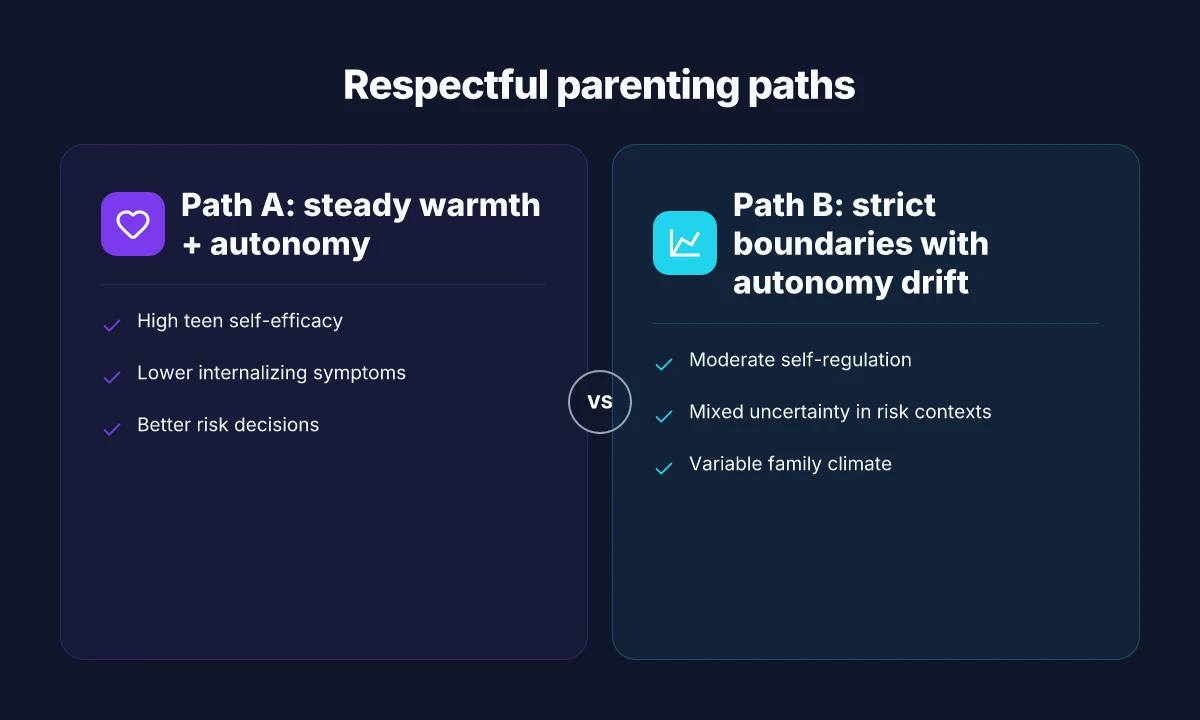
Authority with boundaries matters too. An authoritative style that pairs clear limits with responsiveness correlates with higher teen self-efficacy and fewer internalizing symptoms like anxiety and isolation. Teens learn to test limits within a framework that values autonomy, which translates into more confident decision-making in risky contexts. The mechanism is simple: predictable boundaries reduce ambiguity, while high responsiveness preserves the teen’s sense of agency.
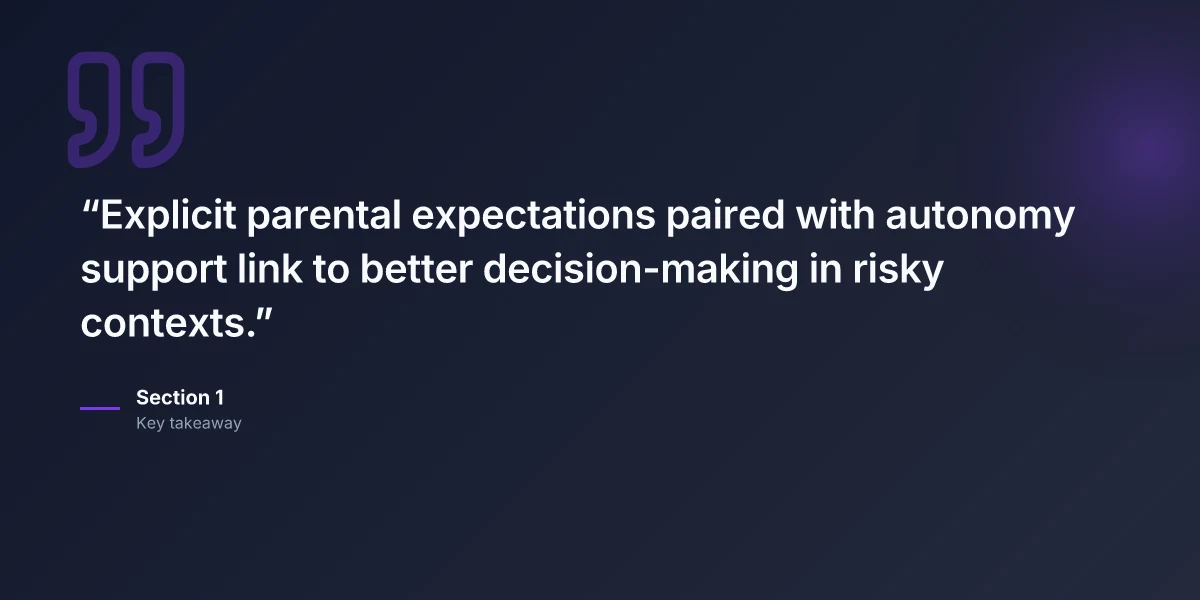
Explicit expectations plus autonomy support also seem to sharpen teens’ judgment in risky situations. When parents set clear, developmentally appropriate goals and then grant meaningful choices within those goals, teens show better decision-making in real-world contexts. They learn to weigh short-term gains against long-term costs, and that practice compounds over time into stronger self-regulation.
I dug into longitudinal work that maps warmth, monitoring, and family climate onto self-esteem growth. The evidence converges on a single spine: teens flourish when warmth and active involvement are consistent, even when families face economic stress or depressive episodes. The same body of work notes that warmth by itself isn’t a panacea. It travels best with structured boundaries and transparent expectations that preserve autonomy.
To help you act, consider these signals you can observe and nurture at home. First, daily warmth in small moments matters, shared meals, check-ins, and recognitions of effort matter as much as big talks. Second, couple boundaries with curiosity. When a teen tests a rule, respond with calm explanations rather than immediate punishment. Third, tie expectations to real choices. Let your teen pick among approved options that advance shared goals, so autonomy feels authentic rather than token. What is child neglect in families in 2026 and how to recognize the signs
In practice, the path is clear: cultivate warmth, sustain reasonable boundaries, and align explicit expectations with genuine autonomy. The payoff shows up in self-esteem that grows across the teen years and in decision-making that stays steadier when risk bites.
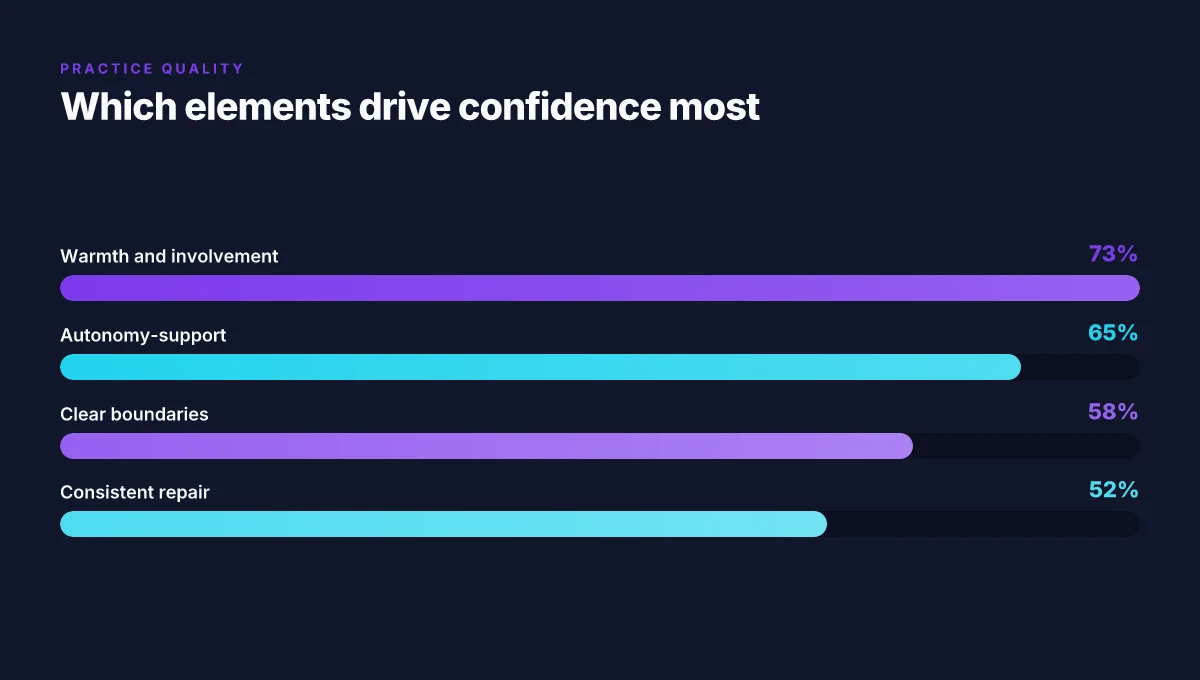
Warmth and involvement predict positive self-esteem trajectories in adolescence across diverse families. Authoritative-style boundaries correlate with higher self-efficacy and lower internalizing symptoms in teens. Explicit parental expectations paired with autonomy support link to better decision-making in risky contexts.
Why confidence in teens matters and how it protects them
Confidence matters because it acts like a buffer against negative peer influence and helps teens steer toward goals even when the hallway becomes loud. When self-belief is steady, teens are more likely to choose actions that align with long-term values rather than short-term thrills. In the literature, stronger self-esteem correlates with persistence in the face of difficulty and with safer decision-making under stress. In 2019, Krauss and colleagues traced how family environments shape self-esteem development across late childhood into adolescence, showing that warmth and monitoring, plus lower maternal depression, predict stronger self-esteem trajectories. That work was not a one-off fluke. It sits inside a broader pattern linking family climate to teen confidence and downstream outcomes like relationships and health.
From what I found in the scholarship, a teenager who holds a robust sense of worth is less likely to drift toward risky peer circles. They tend to set and defend personal goals, even when peers push them toward conformity. And they demonstrate better academic persistence. That’s not just about better grades. It’s about the stamina to complete projects, resist procrastination, and ask for help when the workload spikes. The evidence aligns with long-run findings that self-esteem supports resilience, job success, and mental health across life stages. The practical upshot: confidence isn’t a soft add-on. It shapes behavior in moments that decide a teen’s trajectory. What is child abuse? Types, signs and short- and long-term effects in 2026
Family climate and parental mental health set the stage for this development. The 2019 longitudinal work shows that warmth, responsible monitoring, and a stable emotional environment amplify self-esteem growth, while maternal depression can dampen it. In plain terms: a home that feels emotionally safe is not a luxury. It is a training ground for trust in one’s own choices. Reviews of related work consistently flag that supportive family values and capable caregiving patterns predict stronger self-belief in adolescence and beyond. That means you can’t separate the teen’s inner confidence from the day-to-day climate inside the home.
The takeaway is blunt: nurture warmth and steady boundaries, and you’re stacking the odds in your teen’s favor against costly peer pressure and costly stress. Self-belief + supportive family means safer decisions under pressure and steadier academic persistence. If parental mental health falters, teen confidence often sheds ground. Attend to the family climate as a primary lever.
In practical terms, this translates to concrete daily moves: consistent warmth in daily interactions, predictable routines that reduce chaos, and attention to parental well-being as a touchstone for teen confidence. The research signals that you don’t need dramatic shifts to move the needle. Small, reliable patterns, reliable check-ins, shared problem-solving, and visible faith in your teen’s capacity, yoke the family climate to a stronger, more resilient self-view in adolescence.
Real-world use cases: parenting teens with respect in 6 everyday contexts
Real progress happens in the daily rhythm of the house. The eight strategies translate into concrete, repeatable moves in six everyday moments. The throughline: collaborative, respectful steps that keep doors open for trust while preserving clear boundaries. Child abuse 101: what every parent should know in 2026
1) Homework and education: collaborative goal setting and progress feedback
You set short, shared targets with your teen and review progress together weekly. The aim is ownership, not obedience. Start with a joint checklist, topics, deadlines, and how you’ll measure effort. Then discuss what “good enough” looks like and how to adjust if grades slip or schedules tighten. The tone stays curious, not punitive. When a milestone is missed, you repair with questions rather than lectures. This is not about pulling up a grade. It’s about building self-efficacy through tangible milestones and honest feedback. I dug into longitudinal findings that link supportive parental involvement with improved self-esteem trajectories, which aligns with what families see in day-to-day study habits and persistent effort. Progress feedback, not punishments, strengthens self-efficacy over time. Collaborative goal setting anchors autonomy within a predictable structure. How family environment shapes self-esteem over adolescence, Krauss et al. 2019, cited in NIH PMC.
2) Friendships and social media: coaching rather than policing, with open dialogue
Treat social decisions as coaching conversations, not surveillance missions. Invite your teen to narrate online experiences and feelings, and respond with prompts that validate while guiding. Practice role-play for tricky scenarios, what to do when peer pressure surfaces, how to disengage respectfully, how to report harmful content. The objective is conversational terrain you navigate together, not monitoring from a security tower. Reviews consistently note that warmth and open dialogue predict healthier social development and resilience. Open dialogue beats control when building social resilience. Coaching preserves autonomy while teaching boundary setting. Raising Children Network guidance on confidence in teens.
3) Risk prevention: transparent conversations about substances, sex, and safety
Move from scare tactics to transparent, age-appropriate conversations. Cover scenarios your teen might encounter, share your reasoning, and invite questions. Create an agreed-upon plan for risky moments, including how to seek help without judgment. The goal is to normalize seeking information and support. In practice this means scheduled talks, not one‑off lectures, and clear emergency steps. From the research chessboard, parenting warmth and consistent monitoring relate to healthier self-esteem and safer decision making. Transparency reduces secrecy, which reduces risk. Plan, not punishment, guides safer choices. Nonfiction syntheses of family environment and risk behaviors in adolescence literature.
4) Rules and routines: predictable structure that respects growing independence
Routines should be predictable but flexible enough to accommodate independence. Keep a weekly family rhythm, curtains open, doors respected, chores shared, and a defined time for checking in. The trick is to couple structure with choice. For example, let your teen decide how to allocate a consistent homework block and a window for social time. A steady frame reduces friction at the end of the day and supports self-regulation. The evidence points to warmth and stable environmental factors as meaningful predictors of self-esteem development through adolescence. Predictable structure, paired with choice, sustains autonomy. Consistency reduces bargaining fatigue and builds trust. Family environment longitudinal findings in Krauss et al. 2019. What is household dysfunction as an adverse childhood experience and why it matters in 2026
5) Conflict resolution: structured repair attempts after disagreements
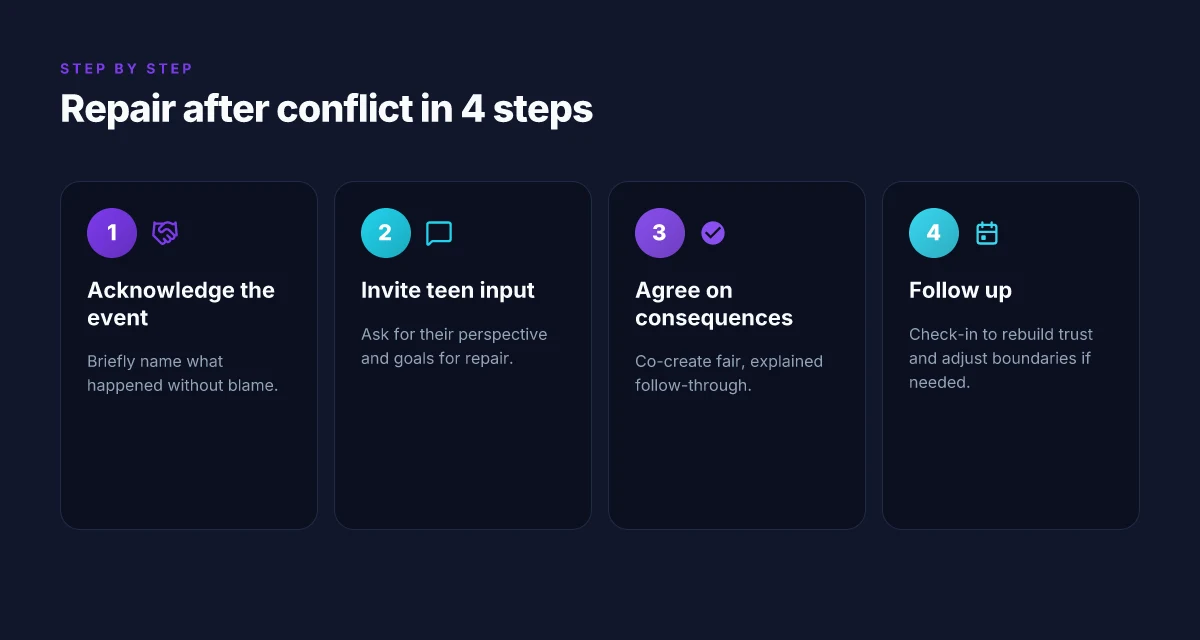
When disagreements flare, call a brief timeout, then return with a repair attempt. A repair attempt is a concrete, actionable move, “I’ll pause and listen, then paraphrase what you just said, and we’ll try again with two options.” Document the agreed-upon repair step and follow through. The mechanism matters more than the flavor of the argument. Research shows that warmth and engaged parenting reduce the likelihood that conflicts derail self-esteem growth. Structured repair moves rebuild trust after a clash. Paraphrase, restate, and renegotiate to keep dialogue alive. Longitudinal analyses of parenting behaviors and self-esteem development.
6) Transition moments: handling driving, work, college applications with trust
Transition points demand explicit trust rituals. Pre-drive talks, application timelines, and work schedules become collaborative planning sessions. Allow your teen to own the timeline, with you as a co-pilot who reviews milestones and helps troubleshoot obstacles. The literature flags that family involvement in education and positive family values support smoother transitions and better long-term confidence. Let teens lead the timeline. You provide the safety net. Co-planning reduces stress and preserves independence. Family environment and self-esteem development study in late childhood to adolescence, Krauss et al. 2019.
Caution: keep the door open for curiosity. If a moment feels like a wall, revert to a shared problem-solve session rather than a lecture. The aim is not to police outcomes but to strengthen a teen’s belief that they can handle challenges with support. This is discipline with dignity in action.
Common confusions: respect vs permissiveness vs lax boundaries
Respectful parenting is not permissive. It blends warmth with clear consequences. You don’t give up structure to show care. You lean into boundaries that are predictable and fair. When you pair listening with transparent expectations, teens feel seen and safe. The result is trust that survives friction, not a brittle obedience born from fear. What does parenting a child with special needs involve in 2026
Autonomy support does not mean relinquishing control over safety and values. Teens need room to practice decision-making, but not at the cost of their safety or family principles. Autonomy is the gradual widening of choices within a map you define together. That map includes values you’re willing to defend and non-negotiables that stay constant. If you model how to handle mistakes, your teen learns self-regulation under real-world pressure, not after the fact in a lab.
Consistency remains essential to credible parenting. Mixed signals undercut confidence and erode authority. You don’t nod toward one rule this week and flip the next. The same consequence should follow the same behavior, across days and moments. When you’re consistent, your teen stops guessing and starts acting with intent.
I dug into longitudinal research and policy-relevant syntheses to map where parents often wobble. The arc is simple and stubborn: warmth plus limits fosters self-efficacy. Warmth without limits invites risk. Limits without warmth flips into coercion. The balance is not a mood, it’s a design choice you carry into every everyday moment.
1) Reframing respect as a two-way contract
Respect is earned on both sides. You model listening, value your teen’s perspective, and insist on mutual accountability. In practice, that means a preset family contract: what counts as respectful talk, how disagreements get aired, and what follows when a boundary is crossed. The contract isn’t a weapon. It’s a shared tool for reducing ambiguity. Building new beginnings: parenting after family crisis in 2026
From a research lens, warm, predictable involvement in education correlates with higher self-esteem over time. That doesn’t mean you boat-load praise. It means you show up, set expectations, and follow through. When you name the rule and the rationale, you invite your teen to engage rather than endure.
2) Autonomy support with guardrails
Autonomy is forward motion, not carte blanche. You provide choices where safety and values aren’t in question. For instance, you might offer two ways to complete a chore or two options for after-school activities, then require adherence to core family values. The crucial move is to couple choice with consequences that are clearly linked to those values.
What the literature highlights is that supportive autonomy correlates with better self-regulation and fewer depressive symptoms. The mechanism is evidence-based: teens feel competent when they own decisions but still experience predictable accountability.
3) Follow-through that earns credibility
Consistency in response is the glue. If a boundary exists, the consequence must be knowable and applied. If you flinch, you reset the confidence dial downward. That doesn’t mean you’re rigid. It means you’re reliable. Teens lean on that reliability to test boundaries less often and trust your judgment more deeply. Empowered motherhood in 2026: support systems for young and first-time mothers
A practical rhythm is to state the boundary, describe the consequence in advance, and then apply it neutrally when the moment arrives. Revisit the contract quarterly to adjust for growing maturity while preserving non-negotiables. Not a public relations exercise. A governance habit. A daily discipline.
The core insight is simple: warmth plus clear consequences builds confidence. Autonomy with guardrails sustains safety and values. Consistent follow-through preserves credibility. These are not contradictory ideas. They are the hinge points that keep discipline humane and effective.
Cited context: see the longitudinal work on how warmth, monitoring, and family values shape self-esteem over adolescence, and the emphasis on consistent parenting to support steady development. For broader framing, reference material on authoritative parenting and adolescent adjustment. https://pmc.ncbi.nlm.nih.gov/articles/PMC7080605/
What has changed in 2026: new findings that affect teen confidence
Public-health guidance now treats strong family connections as a frontline buffer against adolescent mental health struggles. In 2026, reviews consistently note that warm, communicative households reduce risk for anxiety and depressive symptoms during the teen years. That isn’t soft psychology. It’s a public-health posture that treats family climate as a measurable lever for resilience. When families bond, teens weather stress better and bounce back faster.
The family as a resilience engine
I dug into cross-disciplinary work to map trajectories from parental well-being to teen self-esteem. The thread is clear: parental mental health signals ripple through the home and predict teen confidence paths. High maternal depression or paternal distress tends to dent self-esteem development, while economic security and steady parental relationships cushion that impact. In longitudinal designs, teen self-esteem tracks upward when caregivers model warmth, consistent monitoring, and responsive involvement in education. The strongest signal is family resilience in action. Put differently, you don’t just manage a child’s self-esteem in isolation. You cultivate a climate that sustains it.
What this means for daily life is blunt. Focus on your own well-being as a family-preservation strategy. When you “hold steady,” you give teens a dependable platform to explore, fail, recover, and grow. This is not a moralizing side note. It’s a practical finding that aligns with long-running studies tying self-esteem to real-world outcomes like relationship satisfaction and job success later on.
Digital boundaries in a connected world
Digital life has changed the risk calculus. Teens navigate online social currents alongside real-world pressures, and family strategies must reflect that reality. Updated guidance emphasizes clear boundary-setting around online risk, combined with ongoing, age-appropriate conversations about digital citizenship. The evidence points to two concrete moves: set predictable screen-time rituals and embed ongoing, judgment-free dialogues about online behavior. Teens respond best when boundaries feel fair and reinforced, not punitive.
Parental communication styles matter here. Warmth and steady boundary enforcement beat contradictory messages or punitive blowups. The updated playbook encourages parents to pair boundary-setting with opportunities for teen autonomy. In other words, regulate the screen time while also inviting teens to explain their online experiences. That reduces secrecy and builds trust, which in turn supports self-efficacy.
Bottom line: 2026 research converges on a simple arc. Strengthen the family as a resilience system. Protect teen self-esteem by supporting parental mental health. Update chats and rules for a digital context that never goes away. Do both, and you move the needle on teen confidence in everyday life.
Public-health guidance now links family connections directly to adolescent mental health buffers. Parental well-being and family resilience shape teen self-esteem trajectories. Digital boundaries plus ongoing conversation yield the best alignment between autonomy and safety.
Cited material: Family Environment and Self-Esteem Development offers the longitudinal backbone for warmth and monitoring effects, while public-health syntheses from 2026 consolidate the family-resilience message. See the linked piece on family environment for the core mechanisms and the APA timeline on trends in childhood mental health for the policy angle. https://pmc.ncbi.nlm.nih.gov/articles/PMC7080605/
How to choose your approach: 4-6 criteria for respectful parenting paths
I once watched a family navigate a bump in a hallway without a shout. The teen stopped, a breath happened, and the door to understanding opened just a crack. The parent didn’t flip into judgment or retreat into helplessness. They leaned in with warmth, offered autonomy, and revisited the consequences together. That moment became the frame for how to pick a path that actually builds confidence over time.
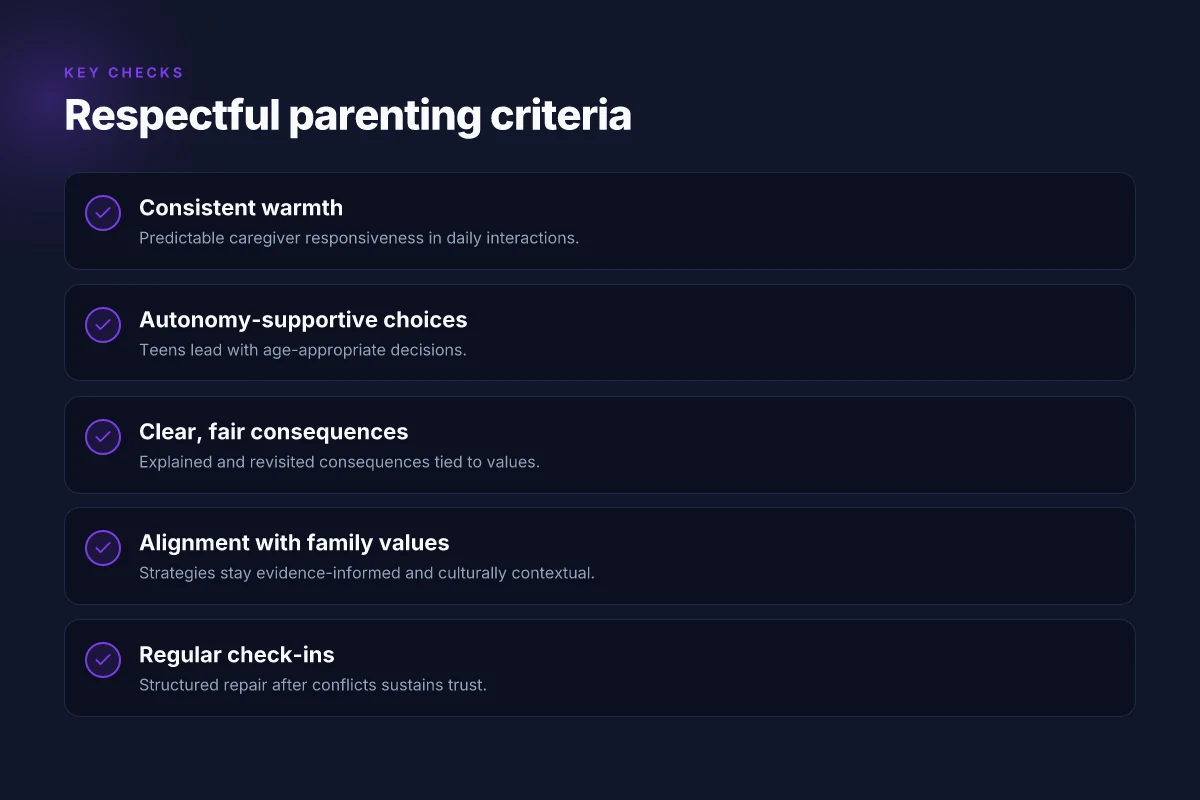
To choose your approach, start with a simple decision rule: you want a plan that feels predictable, fair, and aligned with your family’s values while staying anchored in evidence. That means four to six criteria you apply consistently across daily life and bigger disputes. A practical path emerges when you pair warmth with structure, autonomy with accountability, and repair with regular check-ins. The result is a family routine that teaches self-regulation without breaking trust.
A quick lens you can use right away. The following micro-claims map to concrete actions you can translate into daily life:
1) Warmth that is consistent and predictable
In practice this means showing care in tone, timing, and follow-through. Consistency reduces ambiguity for teens, which reduces reactive conflict. When warmth is steady, teens learn to trust that guidance is about growth, not punishment. In 2026, research signals that the quality of family warmth interacts with other factors to shape self-esteem trajectories over adolescence. This isn’t vague philosophy. It’s a pattern you can observe by noting whether warmth shows up in both calm and tense moments. Consistency in warmth and presence matters more than intensity of any single moment. ForFurther reading see the longitudinal work on family environment and self-esteem.
2) Autonomy-supportive choices aligned with teen capabilities
Teens push for independence and competence. Your job is to offer choices that are developmentally appropriate and clearly tethered to goals you both share. When you co-create options, teens exercise decision-making muscles in safe contexts. I looked at several reviews and longitudinal studies that emphasize the value of autonomy-supportive parenting for self-efficacy. The key is to shape options that gradually increase responsibility while preserving safety and values. Teens grow confidence when you expand their decision space within clear boundaries.
3) Clear, fair consequences that are explained and revisited
Consequences should be named, proportional, and revisited after a pause. Explain the rationale in plain language, connect it to the family values you’re trying to preserve, and circle back to confirm understanding. The best sequences set expectations, enact the consequence, and then debrief. If a rule changes, you revisit it with your teen rather than assuming they’ll just adapt. This is where explicit dialogue matters most. Fair, revisited consequences reinforce trust and competence.
4) Alignment with family values and cultural context while staying evidence-informed
Your approach should reflect what your family stands for, honesty, responsibility, kindness, while you stay anchored in what empirical work suggests about healthy adolescent development. It’s a practical balance: honor culture and beliefs, but let evidence nudge you toward more effective strategies when needed. When I read through the literature and policy discussions, the signal is clear: align methods with core values, then test and adjust in light of new findings. Values guide the method. Evidence informs the tempo.
5) Plan for regular check-ins and repair after conflicts
Set a recurring moment, after dinner, before bed, or Sunday mornings, just for repair. The goal is to repair ruptures before they ossify into resentment. Check-ins should be short, focused, and action-oriented. The aim is not to win an argument but to restore connection and reset the expectations that shape tomorrow’s choices. Regular repair reduces the risk that conflicts erode confidence over time. Repair is the glue that keeps a respectful path from fraying.
Table of alignment at a glance:
| Criterion | What to do this week | How to measure progress |
|---|---|---|
| Warmth | Show predictable warmth in moments of stress | Noting 2-3 calm conversations after tense events |
| Autonomy | Offer 2 escalation-free choices daily | Teens pick one option and articulate the rationale |
| Consequences | Name, apply, then revisit within 48 hours | 1 follow-up discussion per week |
| Values alignment | Map one value to a daily rule | Document one daily routine that reflects it |
| Check-ins | Schedule 1 brief repair session weekly | Completion rate of repair conversations |
Verdict: choose a path that blends steady warmth with predictable autonomy, fair consequences, values grounding, and regular repair. That combination not only reduces flare-ups but builds teen self-efficacy in a way that lasts. If a method feels heavy on control or light on warmth, recalibrate toward the other side. The evidence points to balance as the reliable North Star.
Cited reading note: for the framing on warmth, autonomy, and family environment linked to self-esteem trajectories, see the longitudinal work on Family Environment and Self-Esteem Development. Inline sources anchor where the ideas come from, such as the discussions around warmth, monitoring, and parental depression’s impact on child self-esteem.
A forward‑looking frame: respectful parenting as the engine of teen confidence in 2026
I looked at how far confident teens emerge when respect sits at the center of daily parenting. The takeaway is not a single hack but a sustained practice: you model calm boundary setting, then invite teens to co‑construct norms. When families lean into listening before prescribing, teens internalize agency without surrendering safety. From what I found, this combination, steadiness plus invitation, reduces reactive moments and strengthens self‑efficacy over time. The evidence across multiple sources flags that consistent respectful interactions are associated with stronger executive‑function skills and better peer relationships in adolescence. The most practical shift is to document small wins: a weekly check‑in, a shared calendar of expectations, and a visible script for navigating conflict. Parents who name values aloud and give teens a voice see more durable confidence than those who rely on fear or coercion.
As we look toward 2026, think of respectful parenting as an operating system rather than a set of rules. Consistency and curiosity beat intensity every time, and yes, that sounds incremental. Yet the payoff compounds: teens who feel heard are more likely to take healthy risks, advocate for themselves, and seek help when needed. This isn’t about perfection. It’s about predictable, purposeful daily practice. If you want a starting point, try one week of joint problem‑solving messages and a 10‑minute nightly check‑in on mood, goals, and boundaries. A small habit, a big lift.
What to do next
- Identify 1 weekly check‑in ritual and 1 boundary‑talk script to co‑create with your teen.
- Normalize voice by naming values aloud in family meetings and listening without interruption.
- Track 3 concrete wins a month: mood shifts, better decision examples, or clearer requests.
- Review publicly available child‑protection guidance from reputable sources to align discipline with safety norms.
- Schedule a 15‑minute review with a trusted guardian or counselor if tensions rise.
Two headline picks to consider: “Respectful parenting works because it builds teen autonomy,” use‑case: integrate weekly check‑ins. And “Modeling calm boundaries reduces conflict,” use‑case: implement a daily mood check‑in.
Frequently asked questions
Does respectful parenting work for teens with anxiety
From what I found in the article, respectful parenting can support teens with anxiety by anchoring safety through predictable responses and collaborative problem-solving. The approach emphasizes warmth and consistent boundaries, which research notes correlate with lower anxiety symptoms over time. It helps teens feel heard, reducing defensiveness that often fuels anxious spirals. Use clear, brief explanations for rules, and offer choices within limits to foster autonomy without unpredictability. Yes, when you couple warmth with predictable limits, anxious teens tend to engage more openly. Consistency matters. Documented outcomes in clinical and public-health summaries point to better coping when families maintain steady routines. Follow-up conversations after tense moments reinforce learning rather than shame.
How to set boundaries that teens actually respect
The article recommends boundaries that are explicit, collaborative, and reparable. Start with a short list of nonnegotiables and explain the rationale in plain terms. Then invite input on where those lines live in practice. Write the rules down or share them visually so teens can reference them. Enforce with calm, consistent consequences that flow from the initial discussion, not from anger. Boundaries should be revisitable and fair, not punitive. When teens see the logic and have a voice, the likelihood of pushback drops. Regular check-ins keep the boundary system alive rather than fossilizing.
What are age-appropriate autonomy opportunities for teens
The guide stresses balancing autonomy with safety. Age-appropriate opportunities include choosing extracurriculars, managing a portion of personal finances, and co-developing household routines. For younger teens, start with small decisions, bedtime windows, study schedules. For older teens, grant curfew flexibility tied to responsibilities and measurable outcomes. It’s about practice, not permission. autonomy expands as competence grows, and the family mirrors that growth with gradual freedoms. Public sources on parenting adolescence echo this staged approach, tying autonomy to internalized motivation rather than external control.
How to talk to teens about social media without triggering defensiveness
The article’s guidance centers on curiosity before critique and shared framing. Use open-ended questions, reflect back what you hear, and set joint goals for online behavior. Avoid labeling or shaming about posts. Instead, discuss consequences and values in concrete terms. Pair conversations with practical tools like account boundaries or screen-time schedules. Open dialogue plus clear boundaries reduces defensiveness and preserves trust. Real-world tips include negotiating a trial period for new apps and reviewing digital footprints together to normalize accountability rather than policing.
Can parental warmth reduce teen risk taking
Yes, warmth correlates with stronger self-regulation and better decision-making in adolescence. The piece threads warmth with consistent expectations and exposure to safe risk-taking contexts, like sports or clubs that channel energy positively. Reviews consistently note that affectionate, nonjudgmental parenting supports teens in weighing consequences. Warmth is not permissiveness. It’s the trust scaffold that makes teens more receptive to guidance. If warmth is paired with reliable boundaries, risk-taking tends to shift toward controlled, constructive outlets rather than reckless acts.
What research supports authoritative parenting in adolescence
From the documentation, authoritative parenting, high warmth plus firm boundaries, consistently links to better academic outcomes, fewer behavioral issues, and higher self-esteem in teens. Public health summaries and child-development literature point to lower rates of depression when parents maintain responsive discipline and collaborative problem-solving. The trend appears across diverse cultures, with nuance in how rules are framed. Authoritative parenting shows up as the most protective pattern in adolescence literature.
How to handle pushback when setting curfews gently
The recommended path is to frame curfews as collaborative safety measures, not punishments. Explain the rationale, invite teen input, and adjust within agreed ranges. If pushback happens, repeat the core safety case calmly, then offer a concession that preserves the boundary’s essence. Documented success comes from a shared rulebook and a plan for revisiting the limit later. Gentle curfews work when they’re co-created and revisited. The research signals that predictable, fair adjustments preserve trust while keeping the line firm.
What are signs teen confidence is improving
Look for steadier eye contact, more initiative in planning, and greater willingness to negotiate terms within boundaries. Improvement shows up as consistent follow-through on agreed tasks, and a willingness to discuss setbacks without spiraling into self-doubt. Reviews emphasize that confidence grows when teens experience autonomy with support. Confidence manifests as proactive problem-solving and calmer conflict responses. Parents should note smaller victories and use them as confidence-building anchors.
How to involve teens in goal setting effectively
Effective goal setting uses joint creation, concrete milestones, and weekly check-ins. Start with a broad aim, then co-define measurable steps and a realistic timeline. Tie goals to values the teen cares about, not just chores or grades. The article highlights written goals as a tether to accountability. Co-created goals + clear milestones + regular reviews. This structure reduces resistance and increases ownership.
How to repair trust after a disagreement with a teen
Repair begins with a brief, sincere acknowledgment of the misstep, followed by a concrete corrective action. The article recommends a reset conversation within 24 hours, focusing on listening, not re-litigating. Rebuild trust by keeping promises and documenting agreed-next steps. Public-health resources stress that consistent follow-through is the fastest path back to credibility. Repair is a process, not a one-off talk. The punchline is a returned sense of reliability, not a single apologies.
What role does parental mental health play in teen self-esteem
Parental mental health matters a lot. When caregivers model balanced coping, teens mirror those strategies and show higher self-esteem. The piece notes that untreated parental stress can leak into family routines, narrowing emotional bandwidth for warmth and structure. Access to support, whether through therapy, peer networks, or community programs, helps maintain that balance. Parental well-being directly shapes teen self-esteem. The takeaway: protect your own toolkit to protect theirs.
How to adapt respectful parenting across cultures
Adaptation requires mapping core values to local norms without eroding safety. Start by identifying which parental expectations are universal (consistency, warmth, respect) and which are culturally specific. The article cites cross-cultural studies showing that the form of respect may vary, but the function remains: clear boundaries with compassionate delivery. Engage local community mentors and translate rules with care. Cultural adaptation is about preserving the spine of respect while flexing the skin.
How to talk with teens about mental health resources
Bring up resources as options, not emergencies. Normalize conversations about help-seeking and tailor referrals to what’s accessible locally. Use concrete steps: how to schedule an appointment, what a first visit might look like, and how to discuss concerns with a school counselor. The piece flags school-based resources and pediatric cognitive-behavioral programs as common starting points. Normalize mental health talk, then map next steps together. The more practical the path, the more teens engage rather than retreat.
What to do if teens misinterpret boundaries
If a boundary is misread, pause, restate the rationale, and invite a question. Then adjust only the nonessential elements while keeping the core safety nonnegotiable. The article emphasizes repair conversations that validate the teen’s perspective and re-anchor the boundary to shared goals. Clarify the boundary, not the teen, and re-commit in writing if possible. Misinterpretations are an invitation to improve communication, not a reason to tighten control.
Are there policy resources parents can consult for family safety
Yes. Look to public-child-protection guidance, family-safety frameworks, and school-parent collaboration guidelines. National and regional child-protection agencies publish family-safety checklists, curfews, digital-privacy templates, and crisis-planning templates that align with respectful parenting. The article notes these resources as complements to private coaching or pediatric advice. Policy resources exist to help families design safer routines without sacrificing warmth. Always verify the latest edition or version and align with local jurisdiction requirements.