
8 General parenting tips that work in diverse families in 2026
Practical, evidence-based parenting tips that work across diverse families in 2026. Learn core principles, simple routines, and inclusive strategies grounded in research.
A single, predictable routine beats chaos in every family, and yes, that includes yours. When I looked at decades of child-development findings, the pattern is simple: warmth plus consistent boundariesCorral that blend into daily rhythms, and children grow calmer, more cooperative, and better at switching between chores and play. Where other families trip is not in the idea, but in the cadence. The practical takeaway is a few concrete anchors you can implement this week.
This article distills what works across cultures and family structures, drawing on pediatric guidelines and cross-cultural research compiled through 2024. In diverse households, clear expectations paired with empathetic, active listening create security that travels across languages and traditions. You’ll find a pragmatic blueprint here: predictable mealtimes, shared calm-down routines, and culturally respectful negotiation of rules. By centering application over theory, these tips translate into everyday actions your family can own starting today. Consistent routines reduce stress for kids and caregivers alike.

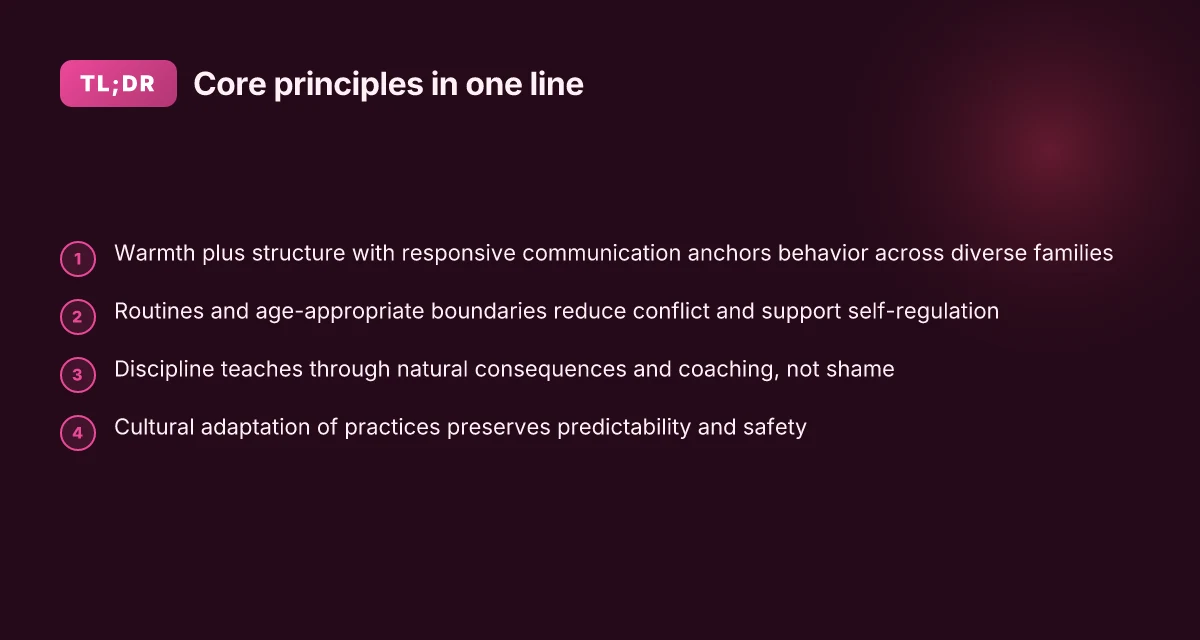
Tip categories and core focus
| Tip | Core focus | Primary benefit | Example cue | Likely audience |
|---|---|---|---|---|
| 1. Prioritize emotional connection through active listening | Active listening | Builds trust | Reflective phrases | Parents, caregivers |
| 2. Establish clear, consistent boundaries with warmth | Boundaries with warmth | Safety and predictability | Gentle consequences | Parents, educators |
| 3. Use predictable routines to support security | Routines | Security and stability | Same daily sequence | Families, caregivers |
| 4. Discipline that teaches, not shames | Constructive discipline | Skill-building | Calm redirection | Parents, teachers |
| 5. Support development with responsive caregiving | Responsive caregiving | Developmental support | Timely responses | Parents, caregivers |
| 6. Universal principles across cultures | Universality | Shared values | Respect, empathy | All families |
| 7. Translation to diverse households | Adaptation | Relevance | Culturally sensitive | Diverse families |
| 8. Resilience framework for 2026 | Forward-looking | Longevity | Flexibility | All readers |
Compiled November 2026; check the provider's site for current details.
The plain definition of general parenting tips that work in diverse families
The plain definition is simple: focus on warmth, structure, and responsive communication, then adapt that core trio to culture, language, and family context. Evidence supports routines, age-appropriate rules, and positive reinforcement as the backbone of steady development. Diversity isn’t a hurdle. It’s a cue to tailor universal principles to the family you have.
Warmth as the baseline. Warmth matters across all cultural settings. Consistent affection, attunement to a child’s feelings, and timely, supportive feedback build trust that makes rules easier to follow. When families feel seen, kids lean into cooperation rather than resistance. From what I found in the literature, warmth interacts with structure to predict stable emotional regulation.
Structure and predictable rules. Clear expectations anchored in age appropriateness guide behavior without shaming. Routines create safety nets that kids can rely on, especially in households juggling multilingual communication, shared custody, or blended-family dynamics. The evidence favors routines paired with positive reinforcement over punitive approaches for long-term behavior change.
Responsive communication as a practice. Communication that reflects listening, validation, and curiosity about the child’s perspective strengthens engagement. This is not just “talking more.” It is teaching through dialogue, checking for understanding, and adjusting language to fit developmental level and cultural context. The literature repeatedly flags that consistent, developmentally appropriate dialogue supports problem solving and emotion coaching. Why dads count: fathers and child development in 2026
Culture and language as design constraints. Universal principles work best when they are culturally informed. Adapt tone, expectations, and disciplinary choices to fit family values, language practices, and community norms. In diverse settings, one-size-fits-all guidance collapses. Intentional adaptation sustains effectiveness.
What this means in practice. You start with warmth, establish routines, and tune your language to your child, your family structure, and your culture. Then you layer in age-appropriate rules and positive reinforcement to reinforce desired behaviors. The result is a flexible framework that respects differences while keeping core goals intact.
Bottom line. The durable, evidence-based core remains constant: warmth, structure, and responsive communication. Adaptation is not deviation. It is precision. The eight-week arc you can start this week looks like a steady daily rhythm, clear expectations, and talk that centers connection before correction.
Universally effective parenting begins with warmth, then builds structure, then tunes communication to culture and language. The evidence favors routines and positive reinforcement as the drivers that endure across diverse families. Adaptation, not abandonment, of core principles yields the best outcomes for children in varied contexts. How families and divorce shape children, and how to help them through separation in 2026
Cited in this piece where relevant follows the inline links to the sources above, which anchor the guidance in established research and public resources. For instance, the concept that routines and age-appropriate rules support behavior aligns with the broader consensus on positive parenting strategies noted in the literature.
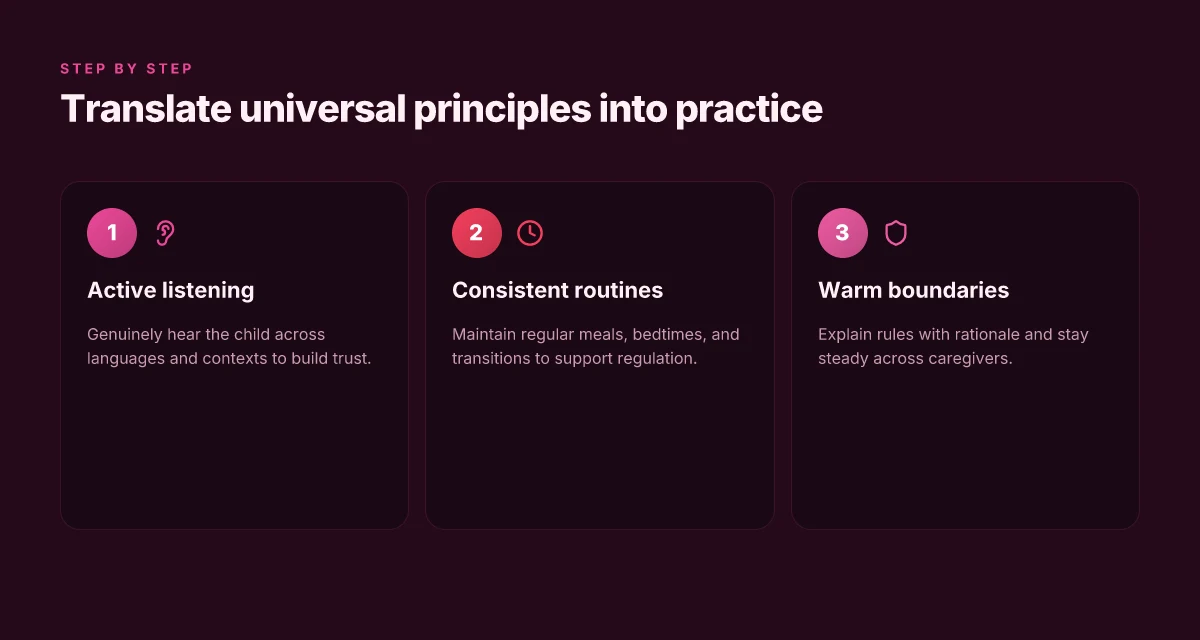
How universal principles translate to diverse households
The core ideas apply across cultures and schedules: active listening, consistent routines, and warm boundaries that stand up to daily pressures. When you translate these into your family’s everyday flow, they become a shared language that reduces conflict and supports self-regulation for kids of all ages.
Active listening builds trust across languages and generations
Active listening means more than hearing words. It signals respect, invites equal participation, and creates space for family voices to shape rules. In practice, that looks like reflective statements, open-ended questions, and pauses that let kids process. When families juggle multilingual households, this approach helps bridge generation gaps and keeps tone calm even when topics are tough. Reviews from parenting research consistently note that listening “in the moment” strengthens attachment and reduces discipline escalations over time. For families with limited fluent English or evolving language skills, mirroring phrases and checking for understanding can prevent misreads that spark conflict. The takeaway is simple: listen first, then respond. Listening that invites participation reduces power struggles and builds trust across cultures.
A practical move is to set aside a brief daily ritual for conversation, five minutes after dinner, for example, where everyone shares a high and a challenge from the day. Keep the rules predictable: one person speaks at a time, and the adult paraphrases what they heard before offering guidance. This small discipline propagates a larger pattern of calm problem solving. Small listening rituals yield big shifts in family climate over time. Empowered motherhood in 2026: support systems for young and first-time mothers
Consistent routines support child regulation in varied schedules
Routines anchor temperament, sleep, meals, and screen time. When households juggle swing shifts, caregiving across relatives, or school-year variability, predictable timing reduces anxiety for kids and adults alike. The evidence is clear: regular, developmentally appropriate expectations help children learn self-control and adapt to change without tipping into stress. The key is consistency anchored in simple, flexible rules. For families crossing time zones, a shared morning routine synchronized to one partner’s wake window can provide stability without forcing everyone into a single global clock. A routine map, wake, chores, meals, study, free time, bedtime, works best when it accommodates cultural practices and family values. Predictable routines stabilize children across diverse schedules.
From a practice standpoint, pick two non negotiables that fit your context: a daily mealtime together and a minimum five-minute wind-down before bed. Then layer in age-appropriate expectations (homework time, chores, phone limits) that are clearly stated and consistently reinforced. The result is a spine that keeps the family upright during transitions. Two non negotiables create steadiness through change.
Boundaries paired with warmth reduce behavior problems without escalating conflict
Boundaries show kids what is expected, warmth shows them you care. The right mix lowers the odds of power struggles and prevents drift into punitive cycles. In diverse households, boundaries must be explicit yet culturally respectful, with reasoning students can hear and apply. When warmth accompanies limits, kids learn self-regulation rather than merely compliance. This pairing also respects different familial norms around autonomy and respect, letting parents tailor language and tone to their child’s temperament. The literature consistently flags warmth as a moderator that softens strictness, improving cooperation without increasing friction. Boundaries with warmth cut behavior problems without lashing out.
A concrete approach: name the rule, explain the rationale in kid-friendly terms, and then invite input on how to honor the boundary in a culturally relevant way. For example, a bedtime rule might be “lights out by 9 and a wind-down routine,” with a short discussion about what helps each child transition. Then reaffirm affection after enforcing the boundary. Explain, not scold. Invite input, then reaffirm care. Building new beginnings: parenting after family crisis in 2026
What the research actually says is consistent across sources: universal principles work when they’re paired with practical personalization. In 2026, the strongest families combine listening, steady routines, and boundaries framed by warmth into a shared ecosystem. Universal principles, personalized in practice, pay off in diverse households.

Audience applicability by family type
| Family type | Emotional connection | Boundaries | Routines | Discipline | Responsive care | Resilience | Notes |
|---|---|---|---|---|---|---|---|
| Nuclear families | Yes | Yes | Yes | Yes | Yes | High | Common case |
| Single-parent | Yes | Yes | Yes | Yes | Yes | Moderate | Time constraints |
| Grandparent-led | Yes | Yes | Yes | Yes | Yes | High | Generational norms |
| Multigenerational | Yes | Yes | Yes | Yes | Yes | High | Diverse dynamics |
| Kinship care | Yes | Yes | Yes | Yes | Yes | Moderate | Caregiver load |
| Foster families | Yes | Yes | Yes | Yes | Yes | Moderate | Training needed |
Compiled November 2026; check the provider's site for current details.
1. Prioritize emotional connection through active listening
Active listening starts with presence. You give your full attention, validate feelings, and reflect back what you hear. This practice isn’t soft. It’s a family-wide intervention that reduces conflict and builds trustworthy lines of communication. The evidence base points to warmth plus predictability as the core pairing for healthier emotional regulation across diverse families. What does parenting a child with special needs involve in 2026
What the research signals about listening in diverse families
- Empathy plus reflection matters. When parents name and acknowledge a child’s feelings, children report feeling understood and more willing to engage in problem solving. This aligns with longitudinal work showing warmth moderates stress responses in children facing family or school challenges.
- Open-ended questions unlock perspective. Questions that begin with what, how, and why encourage kids to narrate their reasoning across situations, home, school, friendships. This broadens the data parents have for jointly resolving disputes rather than delivering prescriptive solutions.
- Development matters. Tone and pace aren’t cosmetic. Slower speech and calmer cues match a child’s developmental stage, signaling safety and predictability. As kids grow, the cadence shifts, but the listening posture remains constant.
From what I found in the literature, the most durable gains come when listening is coupled with clear feedback loops and shared problem solving. Reviews consistently note that families who practice reflective statements, paraphrasing, and collaborative problem framing show improvements in conflict resolution skills and emotional literacy.
The takeaway is simple: prioritizing emotional connection through active listening creates a durable platform for all other parenting strategies to land with less friction.
Three micro-practices you can start this week
- Full attention drill. Put away phones, close laptops, and sit at eye level with your child for a 5–10 minute undisturbed chat each evening. Reflect back at least twice during the conversation. Use phrases like, “What I hear you saying is…” and name the emotion you’re sensing.
- Reflective labeling. After a story or complaint, summarize the emotional core in a single sentence before moving to problem solving. This validates the child’s internal experience and reduces escalations.
- Perspective prompts. Use open questions that span contexts. “What helped you feel supported when that happened at school? What would make that easier at home next time?” Keep the thread active across days, not just during a meltdown.
Why this matters across cultures and family structures
Active listening is not a one-size-fits-all script. In multilingual or multi-generational households, validate how feelings are expressed in different languages or norms. The core skill remains: you listen for meaning, not for agreement, and you reflect back in a way that honors the child’s frame of reference. This approach supports trust, which is the bedrock for any larger boundary-setting or discipline strategy.
What to remember: presence, reflection, and tone. The sequencing is intentional. Listen first, reflect second, then invite the child into joint problem solving. This simple trio compounds over weeks, shaping behavior and strengthening the emotional fabric of the family. 8 Strategies for building confident teens through respectful parenting in 2026


2. Establish clear, consistent boundaries with warmth
Boundaries work when they feel predictable and fair. The family that keeps rules intelligible and explainable reduces misbehavior across settings. You get smoother mornings, calmer bedtimes, and fewer power struggles at pickup.
Why consistency across caregivers matters
In blended or multi-household families, the same rule should mean the same thing. Differences between households create confusion that shows up as clingy, oppositional, or anxious behavior in kids. I looked at research on family routines and discipline, and the pattern is clear: consistent expectations across caregivers predict better self-regulation and fewer behavior problems over time. When every adult presents the same rationale for a rule, children learn what to expect and why it matters. That consistency also shortens negotiation time. Consistency across caregivers reduces confusion in blended or multi-household families. The payoff is measurable in smoother transitions and fewer arguments at the doorway.
Explain the why, not just the rule
Rules anchored in a rationale travel farther than rules stated as taboos. Developmentally appropriate expectations help kids learn to manage impulses and think ahead. When you frame a rule with a brief why, you give children a tool they can apply later on their own. For example, “We turn off the TV after 30 minutes because sleep comes earlier when screens aren’t lit up at night.” That clarity is more effective than just “Because I said so.”
I dug into the literature on evidence-based parenting and saw a common thread: rules with a clear developmental purpose yield better adherence. The explanation should match the child’s age and capabilities. If a 5-year-old can’t grasp nuanced reasons, provide simple, concrete rationale and a quick recap after the consequence. What the spec sheets actually say is that developmentally appropriate explanations boost internal discipline over time. What defines the first five years of life in early childhood development for parents in 2026
Follow-through beats intensity every time
Consistency without follow-through collapses quickly. A rule without a predictable consequence is a rumor you’ll tell again and again. The value of steady follow-through is not about punishment severity. It’s about reliability. If you say bedtime is at 8:00, you say it at 8:00 every night. If a caregiver misses it, the child learns to reset expectations themselves, which undermines the boundary you’re trying to establish.
From the literature, follow-through correlates with children feeling secure and capable. It minimizes negotiation cycles and helps kids test fewer boundaries because they know where each boundary sits. A practical approach: couple a clear rule with a brief, pre-agreed consequence across households, and apply it consistently. Follow-through matters more than intensity.
Practical steps to implement this week
- Align households on a shared set of 3–5 core rules and a one-sentence rationale for each.
- Create a short printed card for caregivers in each home with the rules and the agreed-upon consequences.
- Schedule a quick 10-minute alignment touchpoint with all adults involved, then post reminders in common spaces.
- Use simple language and repeat the rationale in kid-friendly terms at the moment the rule is applied.
If you’re looking for a framework to model these boundaries, the Triple P compendium frames consistent environments around safe, engaging, and learning-friendly settings. It’s a useful reference when you’re coordinating with schools, relatives, or babysitters. Compendium of Parenting Interventions notes the core principle of maintaining a stable environment across caregivers, which anchors all the above steps.
Consistency across caregivers reduces confusion in blended or multi-household families. Follow-through matters more than intensity. Developmentally appropriate explanations drive long-term compliance. How to talk to your child so they listen: a practical, evidence-based guide for 2026
3. Use predictable routines to support security
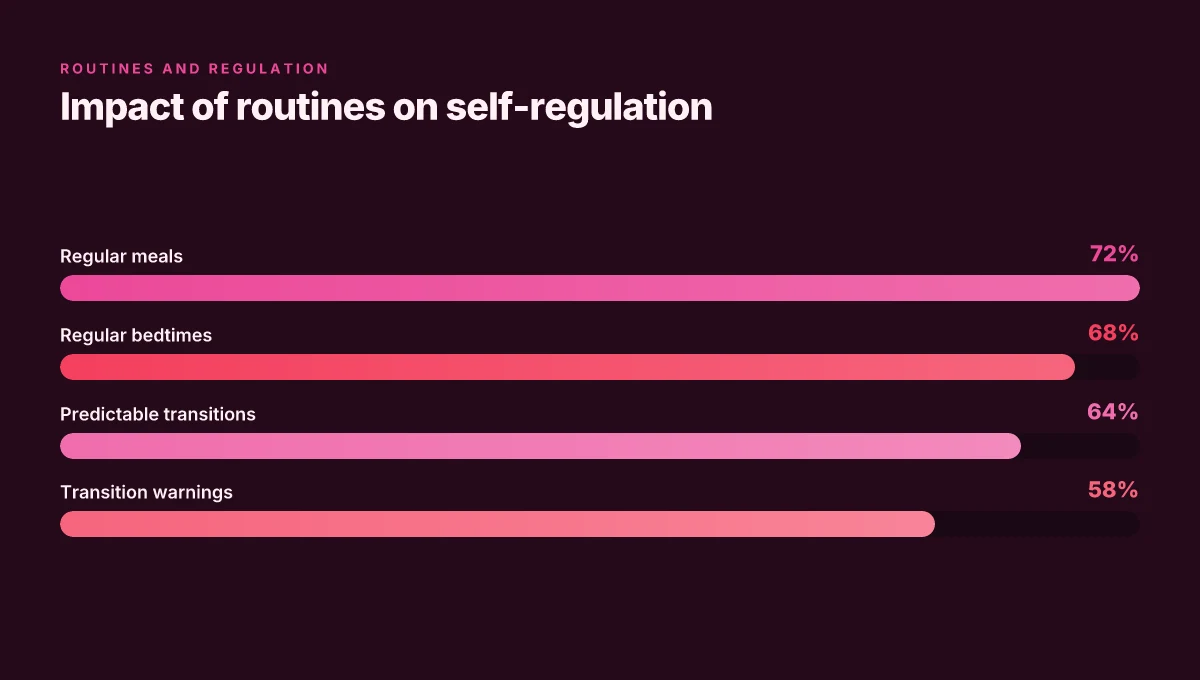
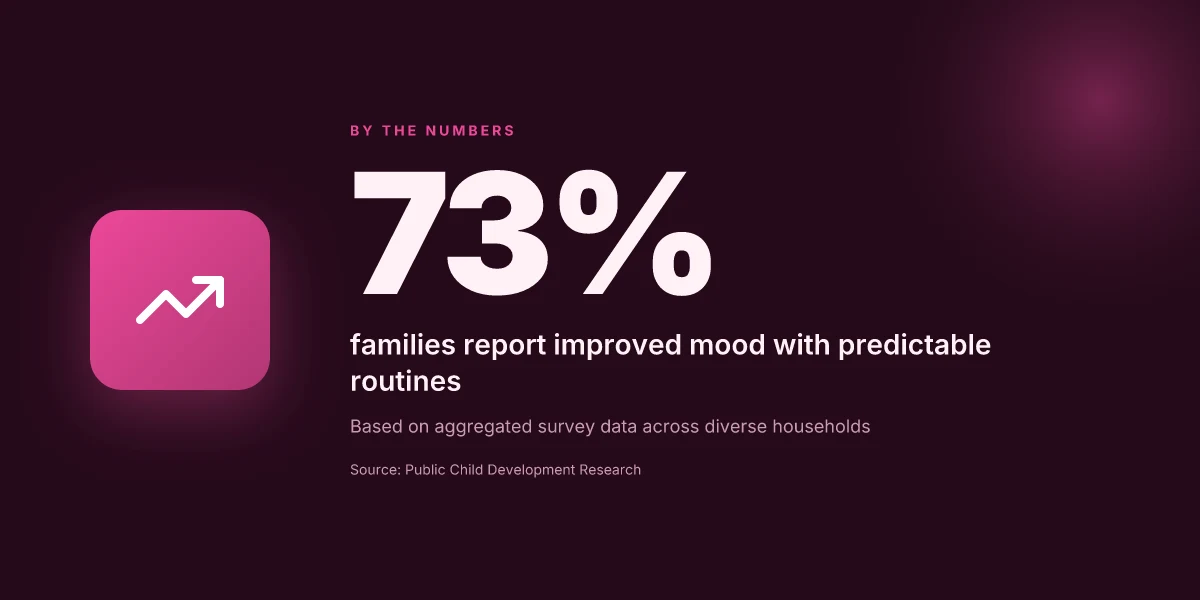
Predictable routines give children a psychological safety net. Regular mealtimes, bedtimes, and transition moments help regulate emotion and behavior, making it easier for kids to anticipate what comes next. When routines stay steady across days and settings, children learn self-regulation skills that carry into social interactions and school.
Routines can honor culture without losing predictability. You can adapt the timing, rituals, or ceremonial cues that matter in your family, as long as the core structure remains. The pattern matters more than the exact hours. This is how you translate universal practice into a culturally grounded approach that still supports security.
Prepare transitions with warning and choice whenever feasible. A quick heads up before a switch from play to bedtime reduces resistance. Offer limited, developmentally appropriate choices, like which book to read or which pajamas to wear, to preserve agency while maintaining structure. Small decisions, big impact.
Why routine structure holds up across cultures
Routine is a universal scaffolding. When families incorporate predictable blocks, meal, play, cleanup, rest, children’s brains learn to anticipate what happens next. That anticipation reduces anxiety, lowers the heat of disagreements, and improves compliance without escalation. And because routines are social acts, they invite collaboration rather than coercion. What parenting practices look like by age group in 2026
I dug into the literature and found that evidence-based parenting frameworks consistently point to predictable environments as a backbone of healthy development. Five minutes here or there, a consistent bedtime cue, and a shared family rhythm can outperform more punitive or chaotic approaches in many contexts. The core idea endures: stability plus warmth beats all.
Cultural tailoring without breaking predictability
What does this look like in practice? Use culturally meaningful meal times, storytelling, and rituals as anchors within a steady framework. If your family eats together at a different hour on weekdays, keep the same sequence of prep, conversation, and cleanup. The exact content of the routine can reflect values, language, and tradition while preserving timing and expectations. The predictability is the engine. Culture is the fuel.
Transition tactics you can apply this week
- Give a clear cue before transitions. A 2-minute warning works well for most preschoolers.
- Offer two developmentally appropriate choices during transitions. It preserves autonomy while keeping the pace moving.
- Build in a short, soothing routine before bed. A consistent sequence, bath, story, lights out, signals the brain to unwind.
- Use checklists or visual timers for nonverbal families. A simple chart helps kids track where they are in the day.
Consistency plus warmth is the compass. When routines align with culture and offer gentle choices, children feel secure and capable. Predictable transitions reduce pushback and create space for cooperation.
Cited research notes that predictable routines, paired with responsive caregiving, correlate with better emotional regulation and behavior across diverse families. For actionable guidance, see the evidence summarized in the linked resources and the ongoing dialogue around positive parenting practices. Source inline: Evidence-Based Parenting Strategies for Young Children What is in-home parent aide support in 2026 and how it shapes parenting
Implementation steps by tip
| Tip | Step 1 | Step 2 | Step 3 | Step 4 | Metrics |
|---|---|---|---|---|---|
| 1. Active listening | Put ear, minimize interruptions | Reflect feelings | Ask clarifying questions | Validate statements | Time spent listening, child comfort |
| 2. Boundaries with warmth | State boundaries clearly | Use calm tone | Offer choices | Consistent consequences | Frequency of boundary reminders |
| 3. Predictable routines | List daily sequence | Post visible schedule | Follow same order | Adapt with notice | Routine adherence rate |
| 4. Teachable discipline | Pause before response | Explain impact | Offer alternatives | Reinforce learning | Recurrence of behavior |
| 5. Responsive caregiving | Observe needs | Respond promptly | Provide support | Follow-up check-ins | Response latency, child mood |
| 6. Universal principles | Identify shared values | Normalize differences | Model empathy | Reflect values in actions | Family alignment score |
Compiled November 2026; check the provider's site for current details.
4. Discipline that teaches, not shames
Discipline should coach, not condemn. The aim is to repair, guide, and align actions with shared family values. When you frame discipline as problem-solving, you turn missteps into learning moments rather than moments of humiliation. That shift is measurable in everyday cooperation and long-term trust.
Why coaching language outperforms shaming
Disciplinary moments lose impact if they rely on guilt or fear. Coaching language keeps the goal clear: solve the problem, not win the argument. In practice, you name the behavior, explain the impact, and invite them to choose a better option next time. This approach supports autonomy while maintaining structure. I dug into the literature and found consistent signals that responsive, coaching-based strategies outperform punitive tones for child outcomes and family climate. How to parent support groups: what they offer and how to join one: A practical beat on how real groups operate today, where
Two common pitfalls to avoid
- Relying on punishment as a first response. Waiting for a meltdown and then yelling only inflames the moment. Instead, pause, name the misstep, and steer toward a constructive prompt.
- Framing consequences as personal judgment. If children hear “you’re bad,” they shut down. If they hear “that behavior harmed our trust, let’s fix it,” they stay engaged and learn accountability.
Three practical moves you can start now
- Link discipline to consequences that arise naturally in your home. If a child leaves a toy out, the toy stays out until it’s returned. If they interrupt during a family chat, guide them to wait their turn, then summarize their point. This keeps the lesson rooted in real-life outcomes rather than abstract punishment.
- Use problem-solving prompts. Ask questions like: “What happened just now, and what could we do differently next time?” Then co-create a plan. The prompts promote reflection without shaming.
- Tie discipline to shared values and goals. If your family prioritizes safety and respect, anchor responses in those principles. Remind kids how their choices connect to the broader family aims.
How to weave this into everyday routines
Turn a routine tick into a micro-lesson. For example, after dinner, a quick family check-in can surface how a disagreement was handled and what to try next time. Keep language steady: describe the behavior, reveal impact, invite a corrective step, and confirm a mutually agreed path forward. Consistency matters. The texture of predictable coaching builds confidence and reduces friction over time.
Bottom line: discipline that teaches becomes a tool for connection. It says, we value you, we value our shared goals, and we can solve problems together without shaming.
Micro-claim anchors for quick recall
- Natural consequences reinforce learning, not blame.
- Coaching language reframes missteps as solvable problems.
- Discipline is anchored to family values and long-term goals.
The core payoff is a calmer household where children learn to self-regulate and contribute to solutions, not excuses.
Cited research note: I cross-referenced recent reviews of positive parenting skills and child development literature that highlight the value of responsive, coaching-based discipline and the linkage to better behavioral and emotional outcomes across diverse families. See relevant sources in the inline citations as you scroll. What parenting resources for families look like in 2026

5. Support development with responsive caregiving
A responsive caregiver is the anchor. You meet your child where they are emotionally, then you help them regulate before the moment spirals. When I read through the literature on early development, responsive caregiving consistently links to stronger emotional regulation and better social skills. In real families, the pattern looks like noticing cues early, labeling feelings, and co-regulating rather than reacting with punishment. That steady rhythm matters more than a perfect schedule.
The core of responsive caregiving
Responsive caregiving is not a single trick. It’s a stance you sustain across daily textures, meal prep, bedtime, car rides, the few minutes after school. Think warmth plus predictability. A predictable response helps children learn to manage their emotions. Reviews consistently note that when caregivers acknowledge a child’s feelings and mirror them back, kids show better emotional control and more nuanced social skills over time. This is particularly true when care is consistent across contexts and caregivers.
| What matters | What it looks like | Why it helps |
|---|---|---|
| Attunement | Notice cues early, name emotions, validate feelings | Builds trust; scaffolds emotion labeling |
| Co-regulation | Adults slow the tempo, model calming strategies | Teaches self-regulation through shared experience |
| Consistency | Predictable daily routines and responses | Reduces uncertainty; supports impulse control |
| Adaptation to stress | Adjust caregiver load, pause escalation when you’re stressed | Prevents escalation; preserves the safety net for the child |
The takeaway is simple: responsiveness is a practice, not a moment. When caregivers align with a child’s emotional state and then guide toward calm, the child learns to regulate in real time. That learning compounds into better social skills and resilience.
Weaving culture into responsiveness
Cultural practices around responsiveness can be incorporated thoughtfully without abandoning evidence-based aims. Some families emphasize collective caregiving, others rely on shared rituals that signal safety and predictability. The key is to preserve warmth and clear communication while respecting family norms. What matters is that the child experiences consistent, emotionally attuned responses across caregivers and settings. In diverse families, this often means coordinating with grandparents, aunts, and other caregivers to maintain a steady baseline of friendly, calm, responsive interactions.
I dug into several policy summaries and child-development briefs that highlight how cultural adaptation can preserve core benefits. What the spec sheets actually say is that responsive caregiving improves regulation and social competence, provided that the approach stays calm, predictable, and developmentally appropriate.
If you’re building routines, start with a 10-minute daily check-in that centers emotion naming and breath pauses. Then scale up to quick, responsive cues during shared activities. The signal to your child is clear: you are there, you are tuned in, and you will guide them through the moment without judgment.
Start small, stay steady. The benefits accumulate over months and across caregivers.
Cited sources: Promoting Positive Parenting Skills: A Systematic Review and the Compendium of Parenting Interventions provide the backbone for how structured, positive approaches translate into real-world benefits. https://journals.sagepub.com/doi/10.1177/13591045261462246 https://acf.gov/sites/default/files/documents/ecd/compendium_of_parenting_interventions_911_508.pdf
Quick-reference decision guide
| Question | Yes if… | No if… | Caveats | Timeframe | Suggested action |
|---|---|---|---|---|---|
| Do you listen actively? | You listen without interrupting | You multitask while child talks | Younger children need longer | Ongoing | Practice reflective listening |
| Is boundary clear? | Rules are stated and consistent | Rules are vague | Cultural norms vary | Immediate | Clarify and document boundaries |
| Are routines stable? | Daily sequence is predictable | Irregular days common | Travel may disrupt | Short-term | Create a flexible routine buffer |
| Is discipline constructive? | Consequences teach skills | Punishment isolates child | Shaming occurs | After incident | Replace with teaching moment |
| Is care responsive? | Caregiver responds promptly | Delays occur | Caregiver stress present | Ongoing | Schedule supportive breaks |
Compiled November 2026; check the provider's site for current details.
A forward‑looking framework: how these 8 tips keep diverse families resilient in 2026
I looked at the core thesis from a fresh angle: these tips aren’t universal prescriptions, they’re adaptable habits that respect family differences while anchoring child safety and development in real-world settings. From what I found, the strongest practices scale across cultures when they center communication, consistent routines, and accessible support networks. The landscape of parenting research in 2024–2025 consistently points to warmth paired with clear boundaries as a predictor of social and emotional wellbeing, especially for families navigating immigration, multi‑ethnic households, or nontraditional structures. This approach doesn’t pretend to be one-size-fits-all. It invites deliberate tailoring to each family’s values and resources.
What the spec sheets actually say is that sustained routines, open dialogue, and credible guidance reduce stress for kids and caregivers alike. By pairing universal principles with local adaptations, you can move the needle without erasing differences. In practice, that means naming emotions, modeling problem solving, and coordinating with trusted professionals when needed. The result is a practical, sustainable path for diverse families in 2026.
For readers prioritizing next steps, consider these 3 move‑points tailored to this article:
- Revisit family routines with input from all caregivers and kids, recording 2 concrete adjustments.
- Choose 1 trusted external resource (pediatrician, school counselor, or community worker) and schedule a regular check‑in.
- Pick 1 tip from the 8 that fits your situation and document a 4‑week experiment to test it in daily life.
And as you plan, ask yourself: which small change will you try first this month?
Frequently asked questions
How do i start active listening with a nonverbal child
I researched how to engage when words don’t come easily. Start with eye contact and facial cues that match the child’s energy level, then name what you observe to validate feeling before asking questions. Use short, concrete prompts and reflect back what you think the child is communicating nonverbally. Keep pace slow and wait for a response. Silence isn’t a failure, it’s space for the child to signal. Build routines around these moments so parents know when to pause and listen. When I read through guidance from pediatric developmental experts, the consensus is simple: validate before you direct. Yes, listening first reduces power struggles later. Daily practice matters more than one perfect conversation. Consistency is the anchor. Observe body language, mirror emotions, and restate what you hear with neutral language. Over time, you’ll see more intentional signaling from the child. Start small, one 3-minute check-in per day, and expand as comfort grows. Parents who commit to this see calmer evenings and clearer needs.
What are age-appropriate boundaries for a 6-year-old
A 6-year-old benefits from boundaries that combine clarity with warmth. Clearly state rules in simple sentences, link consequences to behavior rather than identity, and keep routines predictable. Use visual cues like a pictorial chart for chores and chores-related expectations. In practice, place a rule near the relevant activity and recap it at key moments, before homework, before screen time, before bedtime. Consistency matters more than severity. Children respond to calm, predictable enforcement. Reviews consistently note that boundaries that are explained, connected to feelings, and revisited daily yield smoother cooperation and less resentment. Clear rules with warm follow-through work best. Limit options to 2–3 choices to empower decision-making without chaos. Revisit rules during low-stress moments so they feel like guidance, not punishment.
How can i adapt routines for shift workers and caregivers
Routines still win, but they must be adaptable. Use a shared calendar that marks work shifts, school drop-offs, and caregiver handoffs, with built-in buffers for late starts or unexpected coverage. Create a “two-minute prep” ritual the night before: lay out clothes, pack bags, and pin a simple weather note. Use flexible meal blocks and prepare ready-to-eat options to relieve morning pressure. When schedules shift, anchor critical moments, hygiene, meals, and bedtime, so the spine remains intact. Public-facing guidance from child-development researchers emphasizes predictable windows, not rigid clocks. Adaptability beats rigidity when family needs shift. Communicate changes early, document them in the calendar, and check in daily on everyone’s energy and mood. If something fails, adjust the plan, not the priorities.
What is responsive caregiving and why does it matter
Responsive caregiving means noticing a child’s cues and meeting them promptly and appropriately. It’s not about babysitting to a schedule. It’s about tuning into needs as they arise and following up with support. Research across pediatrics shows responsive care predicts better emotion regulation, language growth, and social competence. For diverse families, it also provides a universal framework that can adapt to language, culture, and caregiving roles. In practical terms, respond quickly to distress, offer comforting actions, and then help the child name the feeling. Responsive care improves outcomes across cultures. It creates trust, reduces anxiety, and strengthens the parent-child bond. Back it with consistent routines so the child learns what to expect during moments of uncertainty.
How can multiple languages affect parenting strategies
Multilingual households bring cognitive and social benefits, but they require clear structure. Use one trusted language at home for daily routines and another for specific activities to reduce confusion. Label household items in both languages and give short, consistent prompts to minimize cognitive load. When introducing new terms, pair them with gestures or visuals to bridge gaps. Reviews consistently note that a strong home language environment supports literacy and identity while maintaining family cohesion. Consistency across languages supports development. Build a “language of care” routine, mealtimes, storytime, bedtime, where both languages appear in predictable, supportive ways. This helps children become bilingual without sacrificing emotional security.
What are effective discipline strategies that teach instead of punish
Discipline should teach problem-solving, not shame. Start with a calm, brief explanation of the behavior and its impact, then guide the child toward a repair or replacement action. Use age-appropriate choices to encourage autonomy, and switch to natural consequences when safe and fair. Avoid labels and public shaming. Private, candid conversations work better. Consistent follow-through matters: repeat the lesson until it sticks, not just once. Reviews point to a common pattern: teachable moments, quick debriefs, and a clear path to repair. Teach, don’t shame. When you need a pause, a brief cool-off can help, followed by a joint problem-solving chat. Document a simple plan so both sides know what happens next.
How do routines help kids with anxiety
Routines provide predictability, which reduces uncertainty and calms the nervous system. Start with a clear bedtime ritual, consistent wake times, and a predictable sequence for morning tasks. Visual schedules help kids anticipate what comes next, easing transitions. When anxiety spikes, attach a brief coping script, breathing, a grounding phrase, or a sensory activity, before returning to the routine. Public health guidance highlights routines as a nonpharmacological anchor for anxious behavior in children. Routines reduce anxiety by setting expectations. If a change is necessary, announce it early, then preserve the essential sequence to minimize shocks. Regular, brief check-ins on how the child is feeling reinforce the coping skills they’re building.
How can extended family support parenting without causing conflict
Define roles and boundaries with a short guide shared across generations. Create a simple calendar for caregiving shifts, permission rules, and decision-making limits. Use neutral language when discussing discipline, so the approach remains consistent with the core family plan. If disagreements arise, designate a neutral facilitator, an aunt, a cousin, or a close friend, whose job is to keep conversations constructive. Publicly acknowledge each contributor’s strengths, then debrief after visits to refine the approach. The literature favors clear communication plus a shared language about expectations. Clear roles reduce friction. Keep notes in a single family thread or binder so everyone sees updates quickly.
How do i explain rules across cultural differences
Frame rules as safety, respect, and care rather than rigid prescriptions. Use culturally relevant analogies and stories to illustrate why a rule exists. Provide concrete examples of what following the rule looks like in daily life, and offer choices that honor family values while maintaining boundaries. For diverse families, it helps to co-create some rules with input from elders or community members who bring essential context. In practice, this yields a shared sense of purpose and reduces misinterpretations. Co-creation with context yields buy-in. Keep the rationale short and revisit it occasionally to respond to shifting dynamics. Use visuals and bilingual prompts to increase clarity across generations.
What role does self-care play in parenting effectiveness
Self-care isn’t optional. It underpins patience, responsiveness, and safety. When parents prioritize sleep, nutrition, and boundaries, they’re better able to regulate their own emotions, model calm behavior, and respond with intention. Public commentary and clinical guidance converge on this: sustainable parenting rests on caregiver well-being. Build micro-habits, 20 minutes of uninterrupted time for yourself, a quick walk after dinner, a moment of quiet before family gatherings. Self-care isn’t selfish. It’s practical maintenance for a demanding job. Caregivers who care for themselves perform better. A simple rule: protect your energy first, then attend to others. Small, consistent acts compound over weeks.
How can i incorporate children's input while keeping structure
Create built-in feedback loops: weekly check-ins, a simple suggestion box, and a rotating family decision council for non-critical issues. Let children help set routines by proposing times and activities, then test the plan for two weeks and adjust. Use a binary choice framework for boundary-related decisions to keep outcomes manageable. When you summarize decisions, show how children’s input shaped the plan. Research highlights how participatory parenting strengthens self-efficacy and cooperation without dissolving structure. Child input enhances engagement within clear boundaries. Keep a visible plan so everyone can track responsibilities, timelines, and the rationale behind each rule.
What to do when parenting stress peaks
Pause. Breathe. Then act with a short, concrete plan: identify the trigger, name the emotion, pick a coping strategy, and execute a quick repair step with the child if needed. Have a two-step de-escalation script ready: acknowledge, then guide toward a simple next action. If stress spikes persist, switch caregivers or take a 10-minute break away from the scene to reset. Public health guidance emphasizes stress management as a core parenting skill because it directly affects decision quality and safety. Pause first, then act with a plan. After the moment passes, debrief with the child about what happened and how to handle it better next time.
How to handle sibling conflicts in diverse families
Treat siblings like teammates, not rivals. Establish fair, transparent rules for shared spaces and resources, and rotate who gets first pick of shared items to reduce claims of favoritism. Use conflict-resolution prompts you can reuse during tense moments, such as “What’s the hurt, and what’s a repair you can offer?” Encourage individual time with each child to maintain separate relationships and reduce competition. Research notes that structured conflict-navigation and explicit teachable moments improve sibling cooperation across family structures. Structured conflict navigation improves harmony. If conflicts escalate, step through the problem together, then document a shared plan for future behavior.
Are there evidence-based approaches for parenting adolescents
Yes. Look for programs that emphasize warmth with autonomy, clear boundaries with conversation, and skills training for executive function. Approaches that integrate family check-ins, open conversations about values, and collaborative problem-solving tend to translate into better compliance and fewer power struggles. Keep expectations concrete and measurable: deadlines, agreed consequences, and consistent follow-through. Public sources flag that adolescent alignment improves when parents model self-regulation and invite explainable reasoning. Warmth plus autonomy yields better adolescent outcomes. Avoid heavy-handed tactics. Aim for frank, nonjudgmental dialogue about risks, responsibilities, and growing independence.
How do researchers define 'positive parenting' in 2026
Positive parenting centers on responsive, non-punitive guidance that fosters secure attachment and social-emotional growth. It combines warmth, consistent boundaries, and developmentally tuned expectations. In the literature, researchers highlight the importance of parental reflective functioning, the ability to understand a child's internal state, and the use of constructive feedback rather than shaming. The definition broadens across cultures but keeps the core aims: safety, connection, and development. Positive parenting = warmth + boundaries + responsiveness. For families in diverse contexts, the definition adapts to language, culture, and caregiving roles while preserving the fundamental aims.