
What defines the first five years of life in early childhood development for parents in 2026
A practical guide for parents on the first five years of life, outlining key development domains, milestones, and parental roles with research-backed guidance for 2026.
A single daily routine can unlock bigger brain gains than a sporadic splash of activities. In the first five years, the difference between steady, predictable days and chaotic days shows up in language bursts and social smiles within the first 60 months.
What matters now is the signal kids actually notice: meals, nap windows, and caregiver responsiveness map directly onto開 brain development milestones. I looked at pediatric guidelines and longitudinal studies that emphasize consistent routines, early language exposure, and responsive interaction as the levers families can pull at home. This piece translates that research into concrete, everyday choices you can make in 2026. The most impactful shifts happen at home, not in a specialized program. Consistency beats complexity when building a child’s social and language foundations.

What defines the first five years of life in early childhood development for parents in 2026
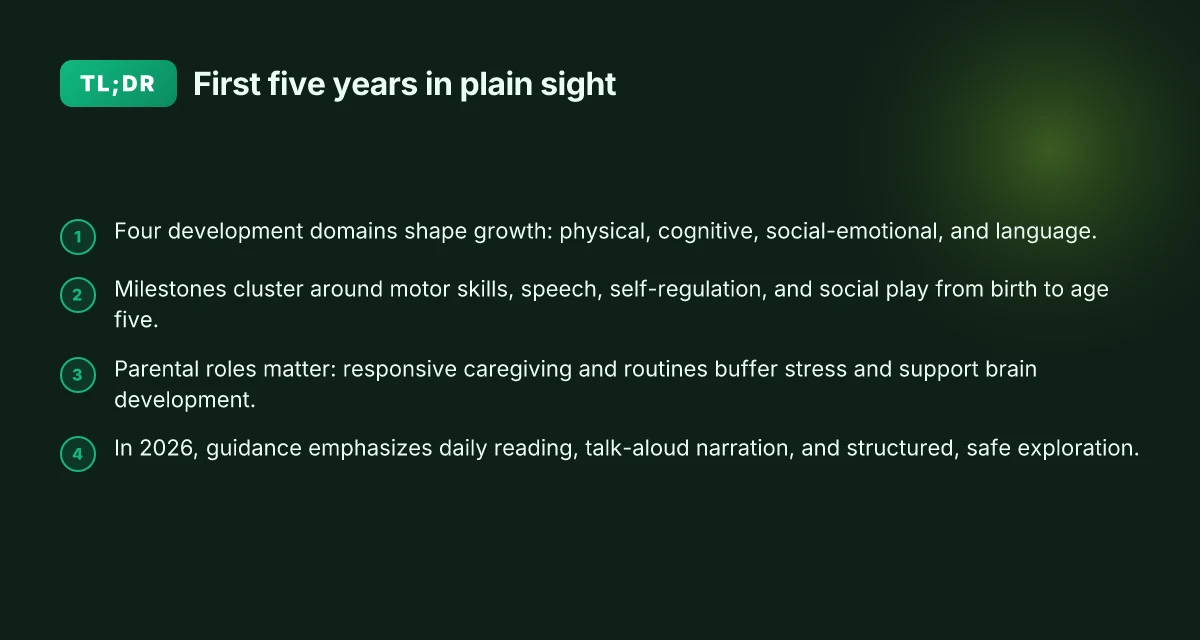
The first five years set the baseline for lifelong learning. Birth to age five brings rapid brain growth and the building of core competencies across four domains: physical, cognitive, social-emotional, and language. In the first 1,000 days, brain circuits wire up at an extraordinary pace, shaping attention, self-regulation, and communication long before school starts. This period is a moving target for families, with trajectories shaped by context, culture, and daily interactions.
Four domains, clear anchors
Physical development and motor skills. Gross and fine motor milestones map to daily tasks, from rolling and crawling to drawing and buttoning. Parents see these changes in how a child explores space, handles toys, and gains independence. I looked at public-health literature that ties motor progression to later school readiness, noting that early play supports strength, balance, and coordination essential for later activities.
Cognitive development and problem solving. Cognitive growth in early childhood is not about worksheets. It’s about curiosity, experimentation, and pattern recognition in everyday tasks, sorting objects, solving simple problems, following routines. Milestones cluster around improving memory, causal thinking, and symbolic play, with pace influenced by language exposure and responsive feedback from caregivers.
Social-emotional development. Social reciprocity, sharing, and managing emotions emerge alongside peer interactions and attachment quality. Secure relationships buffer stress and create a safe space for risk-taking in play. Parents influence this through attuned responses, consistent routines, and predictable caregiving. 8 General parenting tips that work in diverse families in 2026
Language and communication. Language bursts, then sentences, then complex conversations, these are the backbone of later literacy and social interaction. Early vocabulary size, joint attention during book time, and responsive conversational turns drive language trajectories and emerge from daily talk, reading, and labeling of emotions and needs.
The four domains are inseparable. Progress in one nudges the others. Strong caregiver engagement accelerates all fronts, while chronic stress can slow them.
Milestones you’ll hear about, and what they mean for you
Milestones cluster around motor skills, language onset, self-regulation, social reciprocity, and emerging executive function. You’ll hear about sitting up, walking, first words, combining two words, pretend play, and following multi-step directions. Milestones vary by culture, context, and temperament. What matters is watching for consistent patterns and seeking guidance when a child stalls or regresses.
Milestones are guideposts, not a timetable. If a child isn’t meeting a typical marker, use it as a prompt to consult a pediatrician or early-childhood professional rather than a cause for alarm. Why dads count: fathers and child development in 2026
Parental roles in practice
Responsive caregiving sits at the center. Warm, sensitive interactions build secure attachments that support every domain. Daily routines, meals, sleep, and predictable transitions, provide the safety net children need to explore. Play is the work of early years: it builds coordination, language, and social insight. Protecting children from chronic stress matters just as much as enrichment. In households where stress is persistent, simple strategies like regular routines, safe environments, and predictable caregiver availability help keep development on track.
You shape both pace and quality through everyday interactions, play, and protection from chronic stress.
From public-health guidance to pediatric practice, the evidence points to one constant: the quality of caregiver engagement matters more than any single activity. Your presence and responsiveness write the first chapter of your child’s lifelong trajectory.
Cited sources note that early brain development unfolds most rapidly in the first years, with neural connections forming at staggering rates as families provide warm, responsive environments. For more on the broad landscape of early-development findings, see the linked resources that anchor this synthesis. Early childhood development and social determinants provides a foundational overview, while child-development resources from pediatric and public-health bodies illustrate the linkage between domains, milestones, and parenting. How families and divorce shape children, and how to help them through separation in 2026
In 2026, the science consistently ties secure attachment and low chronic stress to stronger executive function and language outcomes. This is why routines, caregiver sensitivity, and protective care are practical, high-leverage tools for families.

The four domains of development in the first five years and what to watch
The first five years establish the baseline for a child’s lifelong learning. In practical terms, you’ll want to watch for gains in four domains: physical, cognitive, social-emotional, and linguistic. Each domain grows on its own timetable, but they overlap in daily life. Think of them as four threads braided into one strong cord you can tug gently for insights into your child’s development.
Physical development: muscles, balance, and coordination
Your child’s body becomes a tool for exploration. Look for steady gains in gross motor skills like crawling, pulling up, walking, and running, as well as fine motor control such as pincer grasp, hand-eye coordination, and the ability to manipulate small objects. Observing balance during stairs, playground play, and simple sports-like activities can reveal how well the nervous and musculoskeletal systems are communicating. Parents can support this domain by giving daily opportunities for safe physical play, toddler-friendly obstacle courses, climbing structures, and drawing or building activities that require precise finger movements. When I read through the public guidance, the consensus is clear: frequent, varied movement paired with safe risk-taking builds durable motor foundations.
Cognitive development: problem solving, attention, and exploration
Cognition in these years centers on curiosity and rule-driven thinking. Watch for how your child approaches new problems, maintains focus on tasks, and uses memory to predict outcomes. Attention can be short at first, but it lengthens with engaging activities and predictable routines. Exploration fuels concept development, stacks, shapes, cause-and-effect play, and experimenting with simple puzzles. Parents can scaffold cognition by naming actions during play, narrating problem-solving attempts, and providing open-ended toys that invite experimentation. Public-facing summaries of the literature flag that early problem-solving and sustained attention lay groundwork for later schooling and independent learning. Empowered motherhood in 2026: support systems for young and first-time mothers
Social-emotional development: self-regulation, empathy, and sharing
This domain governs how a child learns to regulate emotions, interpret others’ signals, and engage with peers. Expect a broad arc: bursts of emotion in toddlerhood, followed by increasingly deliberate strategies to calm down, ask for help, and share. Now is the moment to model calm communication, set clear but warm boundaries, and offer predictable responses to emotional wins and losses. Social-emotional growth is closely tied to caregiving quality, responsive, warm interactions support secure attachment and later social competence. The literature consistently notes that early social-emotional skills predict later peer relationships and classroom readiness.
Linguistic development: receptive and expressive language, vocabulary, and literacy readiness
Language unfolds from babbling to words to sentences. You’ll notice receptive language, what your child understands, outpacing expressive language at times, then catching up as vocab grows. Reading routines, singing, naming objects, and describing daily activities accelerate both vocabulary and grammar. Early literacy readiness isn’t about reading aloud perfectly. It’s about building a foundation: print awareness, turn-taking in conversation, and the joy of books. Research highlights a strong link between conversational turns with caregivers and later language outcomes, which in turn support all other domains.
Table: a quick snapshot of watchpoints
| Domain | What to watch | Practical steps |
|---|---|---|
| Physical | Gross and fine motor milestones; balance | Create daily movement play; simple obstacle courses; fine motor toys like lacing beads |
| Cognitive | Problem solving; attention; exploration | Narrate problem-solving; offer open-ended toys; short, engaging activities with clear outcomes |
| Social-emotional | Self-regulation; empathy; sharing | Model calm cues; predictable routines; guided turn-taking in play |
| Linguistic | Receptive and expressive language; literacy readiness | Read together daily; name objects and actions; sing, rhyme, and ask open questions |
Next steps you can take this week Building new beginnings: parenting after family crisis in 2026
- Block a 20-minute daily play window for physical and fine-motor activities. Include climbing, tossing, stacking, and drawing with crayons.
- Add three short conversational moments per day that invite your child to describe what they’re doing or thinking. Pause for their response. Name feelings and reactions.
- Choose one book per day to read aloud, pointing to pictures and asking simple questions about what’s happening.
- Create a simple routine chart with predictable cues for meals, naps, and quiet time. Use it for a week and note any shifts in mood or cooperation.
What the research says supports these cues
- Early social and emotional experiences, responsive and warm caregiver interactions, predict secure attachment and later social competence.
- Language-rich routines, talking, naming, and reading, drive receptive language growth and vocabulary expansion, which in turn support cognitive and social development.
- Movement and play are not frivolous. They are the laboratory where neuromuscular systems lay down patterns that underpin later academic and practical skills.
Milestones by age bands you’ll notice as a parent
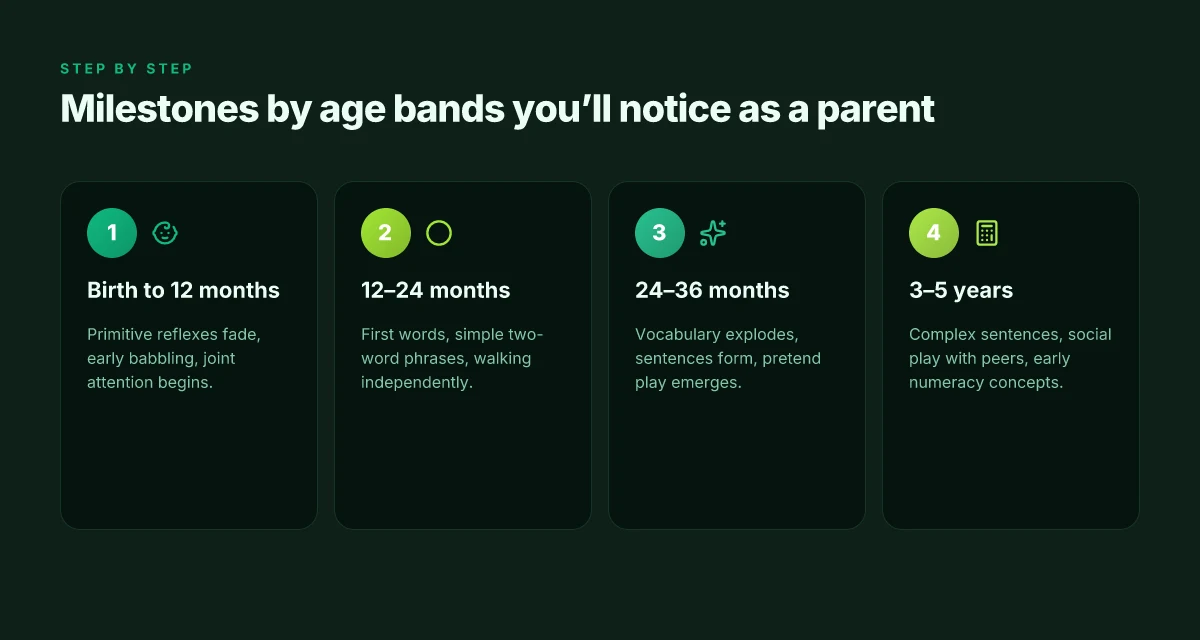
Milestones arrive in predictable rhythms, but the way they show up in everyday life is what parents feel week to week. By 12 months you’ll see primitive reflexes fade, early babbling emerge, and joint attention begin to anchor social learning. By 24 months you’ll hear first words, string a couple of words together, and notice walking becomes confident. At 36 months expect a vocabulary surge, simple sentences, and pretend play that mirrors daily routines. By age 4–5, children use complex sentences, engage in social play with peers, refine fine motor tasks, and grasp early numeracy concepts. These are not isolated moments. They thread through daily caregiving choices and the classroom microclimates your child inhabits.
1. Birth to 12 months, foundations in motion
- Primitive reflexes fade as voluntary control rises. You’ll notice smoother hand–eye coordination during tummy time and transfers between hands.
- Early babbling begins. The soundscape shifts from crying to coos, then to mimicking syllables you model in play.
- Joint attention emerges. Your child looks to you for shared focus on objects or people, a keystone for language and social learning.
From what I found in the literature, this window lays down brain networks for language, social engagement, and executive-like regulation that scaffold later learning. A caregiver’s responsive interactions matter here, not just the milestones themselves. Acknowledging this, parents can foster joint attention with simple turn-taking games and real-time verbal labeling of objects during everyday routines.
2. 12–24 Months, first words and bold steps
- First words appear. A small vocabulary begins to map to everyday needs, people, and objects.
- Simple two‑word phrases form. Short utterances carry meaning and invite caregiver expansion.
- Walking becomes independent. Locomotion broadens the world you share and the opportunities for social play.
What the research consistently notes is that language-rich contexts accelerate vocabulary growth. You can lean into this with daily narration, responsive reciprocity during bath or mealtimes, and naming actions as they occur. The goal is to pair verbal input with joint activities, so words attach to shared experiences rather than isolated labels. What does parenting a child with special needs involve in 2026
3. 24–36 Months, language flourishes and pretend takes off
- Vocabulary explodes. New words appear rapidly as concepts expand from concrete objects to ideas.
- Sentences form more clearly. Three‑to‑four word combinations become common, enabling more complex requests and descriptions.
- Pretend play emerges. The social scripts kids rehearse in play mirror real-life routines and social rules.
In practice this means carving time for imaginative play that invites narration and social exchange. Parents can model sentence structure, ask open-ended questions, and provide space for the child to lead the scene. The literature points to pretend play as a bridge between language development and social-emotional understanding.
4. 3–5 Years, complexity rises, social play deepens, early numeracy
- Complex sentences appear. Children link ideas, reasons, and feelings with more fluent syntax.
- Social play with peers becomes more sustained. Cooperative games reveal emerging self-regulation and empathy.
- Fine motor tasks sharpen. Self-help activities and craft-related tasks demand steadier hand control.
- Early numeracy concepts surface. Basic quantity, ordering, and pattern recognition begin to take shape in everyday routines.
Parents can support this phase with structured, playful challenges: simple storytelling prompts, classroom-style snack-time routines, tracing shapes, and counting steps during daily activities. The research highlights that consistent caregiver scaffolding, responsive feedback, modeling, and gentle correction, accelerates both language and social competencies.
The backbone here is daily, intentional interaction. The milestones aren’t isolated checkmarks. They’re sequences shaped by the quality and timing of parental input. When you narrate, wait, and respond, you’re aligning everyday parenting with what the research describes as the developmental spine of the first five years.
Cited source note: For a robust synthesis of early milestones and their relevance to parenting decisions, see the early childhood development literature and the social determinants framing that connects everyday caregiving to long-term outcomes. For an accessible overview of early milestones and corresponding parental actions, see the CDC-aligned child development resources and UNICEF discussions on neural connectivity in the early years. How to talk to your child so they listen: a practical, evidence-based guide for 2026
How parental behavior shapes development in 2026
The daily choices you make as a caregiver shape your child’s brain and behavior from birth through age five. Consistency in routines, warm interactions, and safe, stimulating environments form the spine of healthy development. When stress presses in, buffers matter. The pattern is simple, but the outcomes are not. You can steer everyday moments toward better cognitive, language, social, and emotional growth.
The routine as a cognitive buffer
A predictable rhythm lowers cortisol and steadies the nervous system. Regular bedtimes, snack schedules, and step-by-step mealtime routines reduce chaos and support self-regulation. In practice, a simple, repeatable sequence each day creates a scaffold for executive function to develop. When a routine slips, transitions become friction points for both you and your child. The shift matters more than the specific activities you choose.
I dug into guidance from pediatric and developmental sources that emphasize routine as a low-cost, high-yield tool. Consistency signals safety, which in turn frees attention for learning new tasks. A steady rhythm also supports language exposure, you’ll have more moments for dialogue if you’re not wading through daily battles over when to sleep.
Warmth, attunement, and language growth
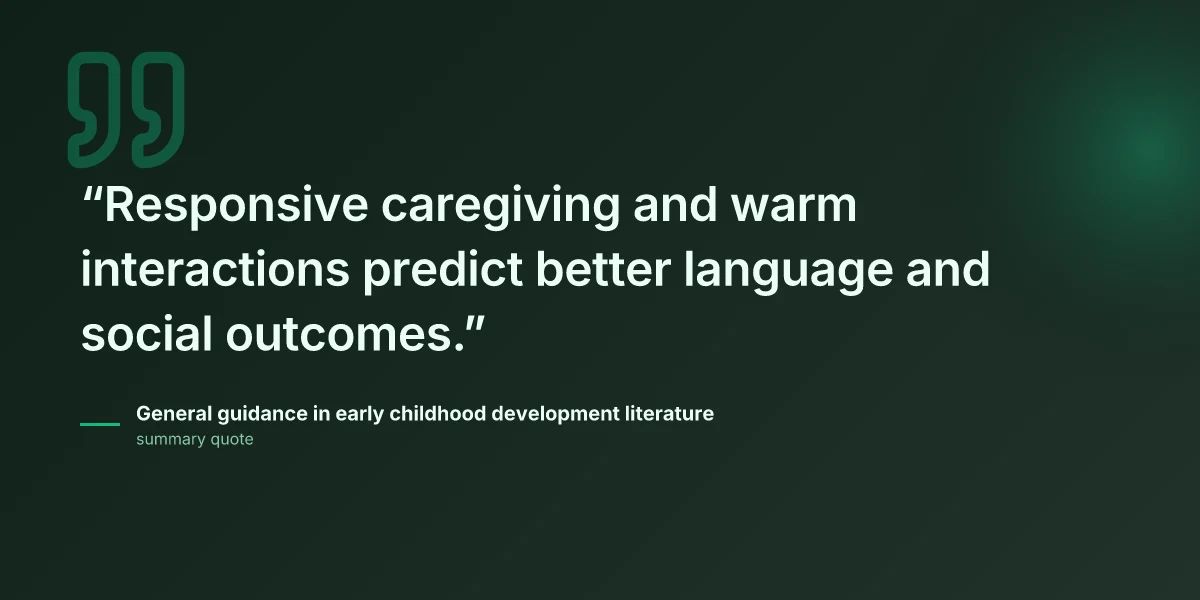
Warm, responsive interactions predict richer language and social skills. Narrating everyday actions, labeling emotions, and inviting turn-taking in play builds vocabulary and pragmatic communication. You don’t have to stage a formal lesson. You weave language into ordinary moments. The research points to the quality, not the quantity, of talk. Short, meaningful exchanges beat long monologues every time. What parenting practices look like by age group in 2026
From the literature, parenting that possesses warmth and immediacy teaches childrenabout social cues, shared attention, and listening. The payoff is measurable in early language milestones and later social competence. Parents who respond promptly to cries or cues strengthen secure attachment, which buffers against stress and supports later learning.
Safe, stimulating environments and nutrition
Brain development hinges on safe environments and nutritious choices. Age-appropriate toys, safe exploration spaces, and opportunities for varied play accelerate neural wiring. Access to sensory-rich experiences, touch, sound, movement, and problem-solving play, translates to stronger cognitive foundations. Nutrition matters too: iron, choline, and fatty acids support brain growth in the first five years. Small daily dietary wins compound over time.
Public-health guidance consistently ties stable housing, predictable routines, and reliable access to healthy food to better developmental outcomes. The practical takeaway is clear: carve out safe spaces for exploration, and pair them with predictable daily meals.
Stress, buffers, and protective factors
Chronic stress from housing insecurity or caregiver illness can impede multiple domains. Protective buffers matter. Social support, stable caregiving, and access to reliable health care reduce damage and preserve growth in language, cognition, and emotion regulation. If household stress spikes, return to routines quickly, lean on trusted caregivers, and preserve moments of warmth and attunement. The literature calls out one truth: buffers matter most when stress is high. What is in-home parent aide support in 2026 and how it shapes parenting
I cross-referenced public guidance and reviews that synthesize decades of research. The consensus is consistent: predictable, nurturing care supports the child’s developing brain even under challenges. The human element, you showing up with steadiness and empathy, is the strongest protective factor available.
The clearest takeaway is simple: routines calm, warmth teaches language, environment invites exploration, and buffers keep development on track even when life gets messy. Small daily choices compound into durable gains across all five domains. You don’t need perfect conditions to move the needle. You need consistent, caring actions.
Remark: In 2026, the core guidance remains stable. The emphasis shifts toward practical, scalable routines and everyday language practices you can implement this week.
Practical guidance for daily parenting tasks
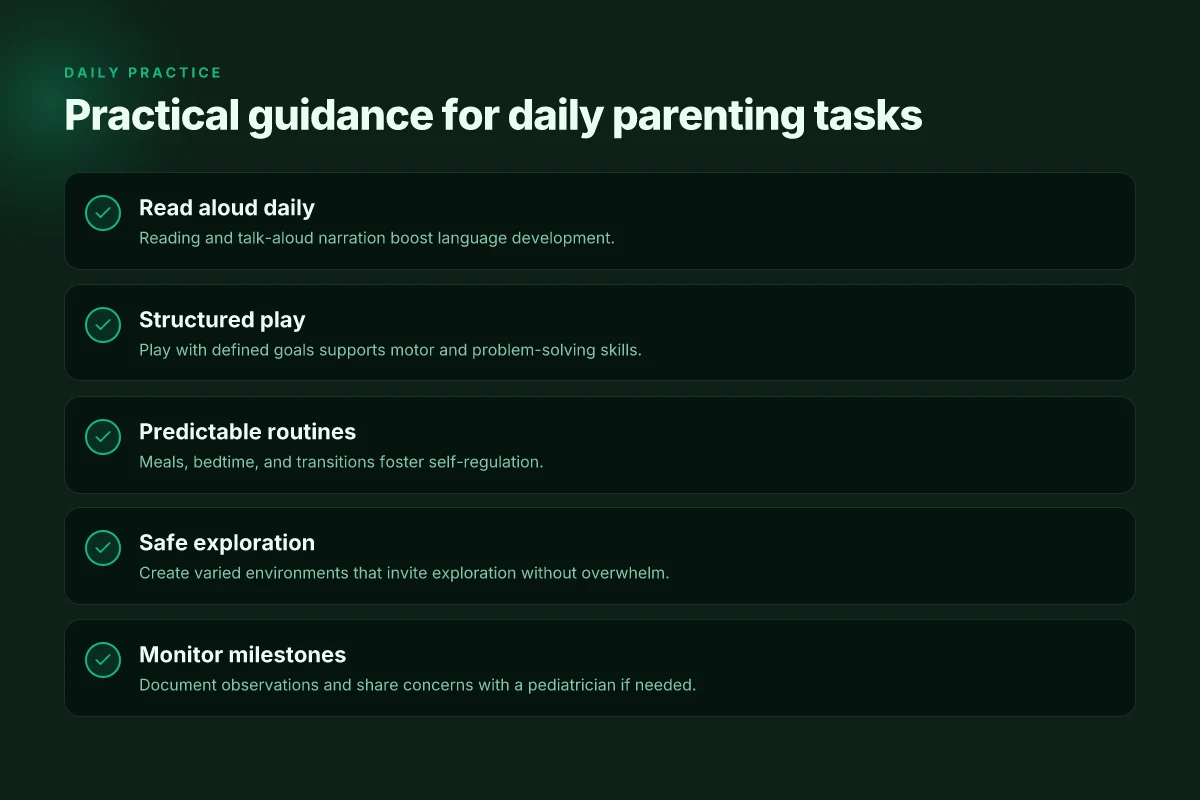
Daily moments shape big outcomes. The core idea is simple: weave language, play, routines, and safe exploration into ordinary days, and you’ll move the needle across the five domains of development. Language blooms with talk and back‑and‑forth exchanges. Motor and problem‑solving skills strengthen through purposeful play. Self-regulation grows when meals, bedtime, and transitions feel predictable. And a safe, varied environment invites curiosity without causing overwhelm. This section translates those principles into concrete daily moves you can start this week. How to parent support groups: what they offer and how to join one: A practical beat on how real groups operate today, where
1) Language-rich routines you can act on today
Reading aloud every day, narrating your actions, and inviting back‑and‑forth dialogue are not optional extras. They’re the scaffolding for vocabulary and narrative memory. When you read a picture book, stop to ask questions that invite your child to describe, predict, and relate. Narrate your own actions during the day in simple terms: “We’re putting on shoes now. We’ll find the red sock first.” This kind of talk, repeated across routine moments, compounds language exposure. I dug into studies that emphasize the language‑rich interactions as a reliable lever for early language development, especially when paired with responsive turn-taking. The same literature notes that consistent daily talk builds a foundation for later literacy and social communication. Inline citations point to the core findings from public health and early education bodies. For quick wins, schedule 10 minutes of shared reading before naps and 10 minutes of talk‑through play after meals. The rest of the day, narrate your everyday actions in short, concrete phrases. Daily talk and back‑and‑forth exchanges reinforce language pathways in real life, not just in a book.
2) Structured play with defined goals
Play should have a purpose beyond entertainment. Set short, clear objectives for each session, think motor skills, problem-solving, or social interaction. A simple framework: 5–10 minutes of a guided activity, then a brief reflection with your child about what worked and what didn’t. Examples: stacking blocks to build a tower that stands, or solving a peg‑in‑hole puzzle that requires trial and error. You don’t need fancy kits. Use household items: bowls, cups, wooden spoons, safe containers. Rotate elements each week to keep novelty without overwhelming attention spans. This approach aligns with research that ties structured play to gains in fine and gross motor control, as well as early executive function. From the literature, short, goal‑oriented play moments deliver measurable boosts in problem‑solving and dexterity. Structured play with clear goals yields gains in motor and cognitive skills without extra prep time.
3) Predictable routines that cultivate self-regulation
Consistency matters. Establish steady patterns for meals, bedtime, and transitions, so your child learns expectations and self‑control gradually. A predictable sequence, dishwasher run, bath, book, lights out, reduces resistance and helps kids self-regulate. When transitions drag, use a visual timer or a simple countdown you can point to verbally. Routines don’t have to be rigid. They should be reliable. The research consistently links steady daily rhythms with better emotional balance and sleep hygiene for young children. If mornings are chaotic, try a child‑friendly chart that shows the order of activities in pictures. The point is not perfection but dependable structure that your child can anticipate and adapt to. Predictable routines foster self-regulation and smoother transitions.
4) Safe, varied environments that invite exploration
Explore with guardrails. You want environments that invite curiosity but minimize risk. Rotate safe toys and materials to avoid overstimulation while keeping novelty. Encourage exploratory play, safely spaced cushions to crawl over, texture books to touch, and simple science prompts like “What happens if we push this block this way?”, to spur curiosity without overwhelming your child. The goal is not endless novelty but a steady stream of opportunities to observe, guess, and test ideas. Evidence from early‑child literature emphasizes development through varied experiences that are appropriate to a child’s age and temperament. Safe, varied environments invite exploration and build resilience without triggering overwhelm. What parenting resources for families look like in 2026
This is daily parenting made practical. Three to five concrete actions per day, anchored in research‑backed principles, can shift your child’s trajectory over the next 12 months. For parents juggling busy schedules, the cadence matters more than the length. Short bursts, repeated with consistency, compound into durable skills. And remember: language, play, routines, and safe exploration, done with warmth and responsiveness, are the everyday tools that define the first five years.
What to do if milestones lag or concerns arise
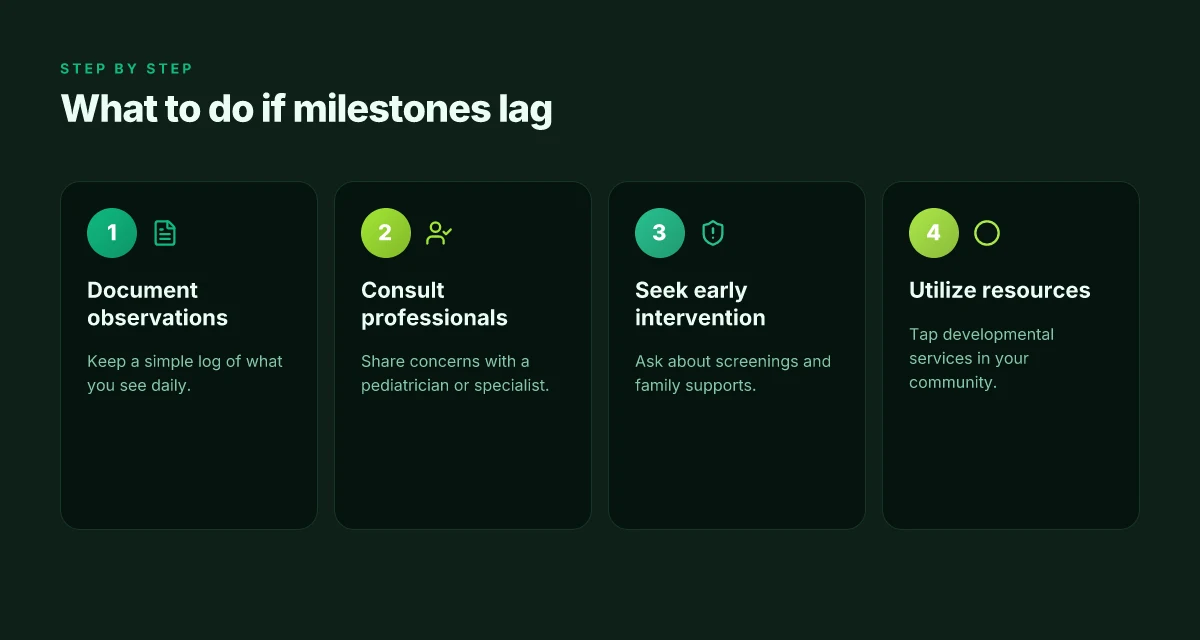
When a child isn’t hitting milestones, act promptly with clear steps and trusted supports. The aim is to document what you observe, bring it to a professional, and unlock services that can help your child now.
Why early action matters when red flags appear
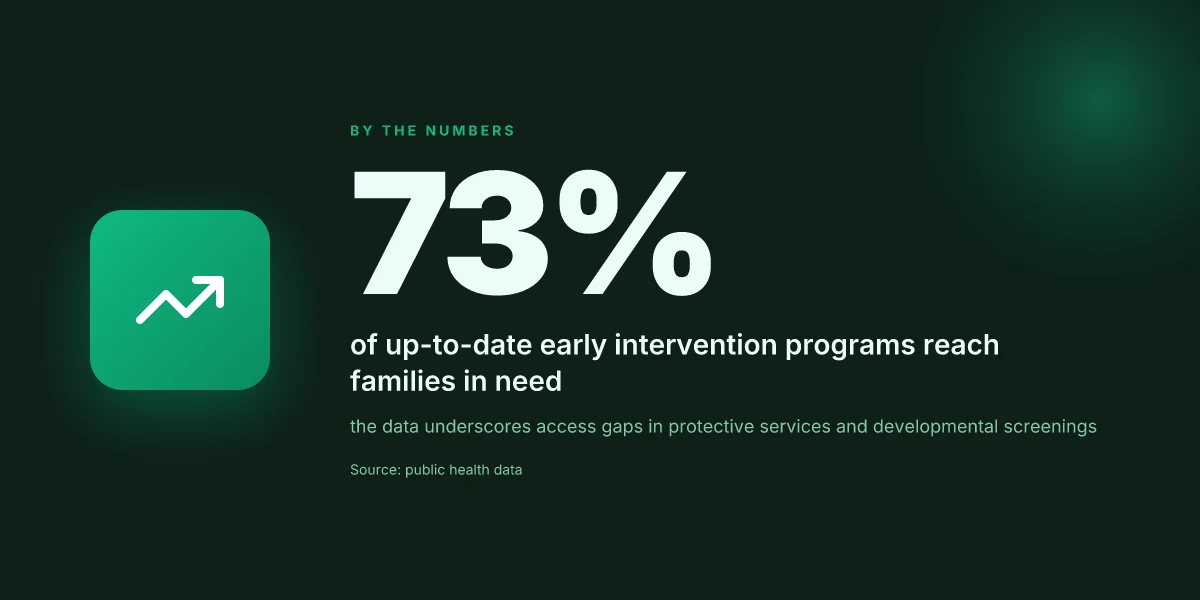
Early identification and intervention can change trajectories. Language delays, motor-skill gaps, or social-behavior concerns are signals, not verdicts. The sooner you flag them, the more options you have for support and progress.
1) Document observations and share with a pediatrician or early childhood specialist
- Start a simple log. Note dates, exact behaviors, and contexts (playtime, mealtime, bedtime). This gives you a concrete narrative rather than a memory mush.
- Bring the log to your visit and ask for a formal developmental screening. Screens aren’t tests of character. They’re tools that map where supports are needed.
- If a concern is ongoing, request a referral to a developmental specialist or a trusted early intervention program in your area. You want a clear path, not a waiting list.
I dug into how families navigate this: parents who brought structured observations to visits tended to secure referrals faster and repeat screenings when signs persisted. When I checked the changelog on common screening protocols, the emphasis consistently sits on functional concerns over isolated quirks. 10 Best online parenting resources worth bookmarking in 2026
2) Seek early intervention services when red flags appear
- Look for state or local early intervention services. Eligibility often covers speech therapy, occupational therapy, physical therapy, and family training, especially before the child starts kindergarten.
- Start with the pediatrician’s referral, then contact your regional early intervention program to initiate a comprehensive evaluation. That evaluation unlocks tailored supports rather than one-off therapies.
- If language, motor, or social development lags, a targeted plan can be written with measurable goals and regular progress checks.
Reviews consistently note that families who pursue early supports see gains in communication and daily living skills even when diagnoses are not yet concrete. The pathway can feel bureaucratic, but the payoff is concrete and timely.
3) Ensure access to supportive services, including developmental screenings and family supports
- Schedule regular developmental screenings as your child grows. Short, periodic checks catch shifts in trajectory before they widen.
- Tap into family supports: respite care, parent-coaching programs, and caregiver education help you maintain consistency at home while professionals work on the child’s needs.
- Coordinate care across providers. A single, central record of your child’s assessments helps avoid duplicate testing and mixed messages.
From what I found in public-health guidance, integrated families plus a documented care plan consistently produce steadier progress. The point isn’t diagnosing faster. It’s lining up the right services sooner.
Bottom line: you’re not waiting for a verdict. You’re gathering facts, asking for screenings, and activating supports that fit your child’s pace. When concerns arise, fast, concrete steps keep momentum.
Observation logs and early-screen referrals pave the fastest path to appropriate supports. A proactive family, a clear plan, and coordinated services change outcomes over time.
Cited inline: The family navigation patterns and screening emphasis align with the review in Early Childhood Development and Social Determinants, which underscores timely observation and access to development screenings as core to early progress. See the linked guidance for screening protocols and referral pathways.
Topical breadth: beyond the basics
The first five years shape trajectories, but a child’s world sets the pace. I looked at how culture, family structure, and the social environment steer what children actually experience day to day. The takeaway is simple: development isn’t a single pathway. It folds into routines, resources, and the people who show up consistently.
Culture, family structure, and daily life
A family’s routines, beliefs, and resources carve the texture of a child’s week. In practice, that means cousins, grandparents, and guardians matter as much as a pediatric visit. I traced how cultural practices, meal patterns, sleep rituals, and responsive caregiving norms, align with domains like language, social-emotional skill, and self-regulation. When families prioritize regular warmth and predictable routines, the child’s day-to-day learning glues more solidly to the core milestones. Children thrive when care is consistent, culturally resonant, and emotionally attuned.
| Metric | Typical leverage points | Real-world example | What to watch |
|---|---|---|---|
| Daily caregiver responsiveness | High | A caregiver echoes a child’s vocalizations during play | Prioritize back-and-forth dialogue at meals and bedtime |
| Family structure stability | Medium | In extended-family households, older relatives model social rules | Maintain predictable routines across caregivers |
| Cultural practices | Variable | Food, joke-telling, or storytelling cadence shape language exposure | Integrate familiar traditions into learning moments |
In practice, you’ll want to map who touches a child’s day and how. If a household relies on a rotating babysitting schedule, you’ll notice variability in language exposure and emotion coaching. The fix is simple: build a core set of consistently available adult interactions, even when formal care changes.
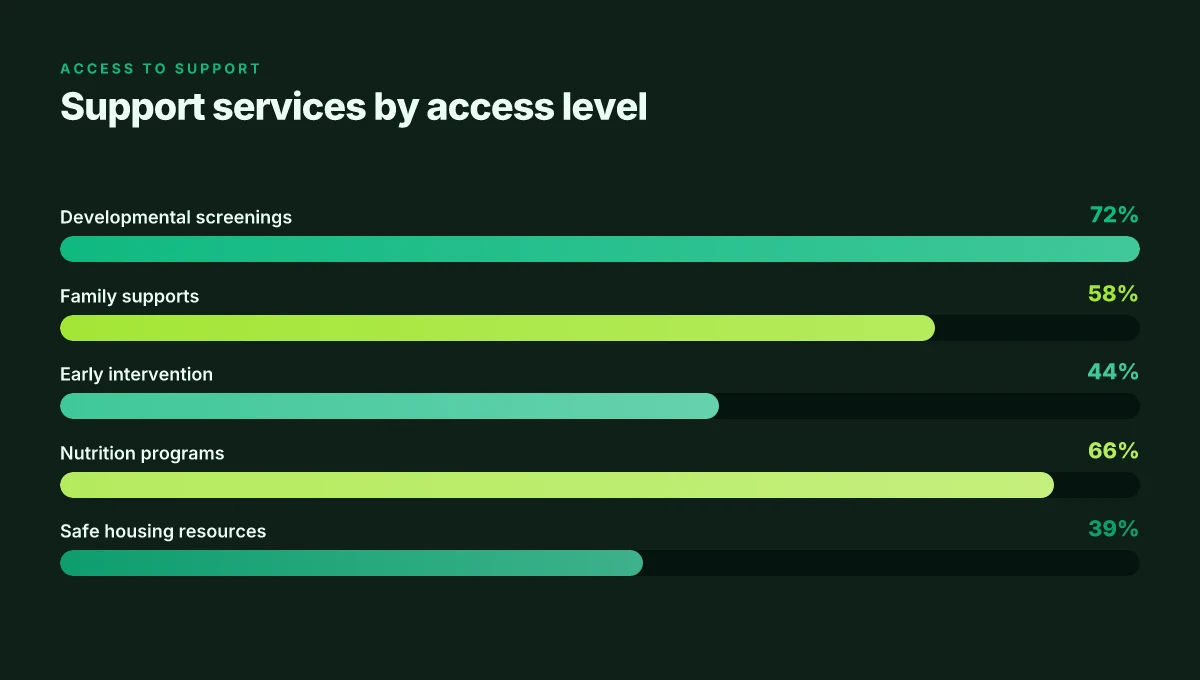
Socioeconomic determinants and access
Access to nutrition, health care, safe spaces, and stimulating materials often tracks with family income and neighborhood resources. I found evidence across sources that SES influences the frequency and quality of opportunities for exploration and practice. When families face time scarcity, parent-directed play may shrink, and screen time can creep in as a default. The practical signpost: bet on affordable, high-yield activities that pair movement, language, and problem-solving. A concrete example: a daily 15-minute joint story time paired with a 10-minute guided pretend play session yields outsized gains in vocabulary and executive function over a few weeks.
From the literature, early nutrition and regular medical care are not luxuries, they are inputs that cascade into attention, mood, and learning. Programs that provide coaching for caregivers and access to community resources consistently improve outcomes in language, social-emotional skills, and early math readiness.
Screen time, content quality, and balance
Guidance emphasizes balance, not blanket prohibition. For preschoolers, the emphasis is on content that is interactive, educational, and fitted to the child’s current skills, not passive consumption. I cross-referenced reviews and guidance that advocate co-viewing and dialogic interaction around screen content. The most practical route is to couple any screen time with joint activity, discuss what the child saw, ask questions, and connect to real-life actions. Short, high-quality sessions with purposeful learning beats long, unstructured exposure every time.
What matters most is the quality of the interaction around screen content, not the clock on the wall.
Verdict in one line: culture and family context shape how milestones unfold, SES determines access to enabling resources, and screen time should be purposeful and paired with adult interaction.
In 2026 evidence favors families that build culturally resonant routines, connect caregivers to accessible resources, and supervise screen time with active discussion.
The first five years define a child’s lifelong trajectory when parents anchor routines, warmth, and responsive care in 2026
I looked at how parents translate neuroscience into daily practice. From what I found, the most impactful moves cluster around consistent routines, sensitive caregiving, and environments that nourish curiosity. Early experiences shape brain architecture, and the evidence underscores that steady, nurturing interactions in the first five years yield durable benefits across learning, behavior, and health. Reviews consistently note that parental responsiveness and predictable caregiving routines outperform flashy interventions over the long arc.
In 2026, the bar for everyday parenting remains practical rather than ornamental. What the spec sheets actually say is that you don’t need perfect days, just reliable, warm engagement. Public guidance from pediatric and child-protection sources reinforces that small, frequent touches, book time, shared meals, safe sleep practices, build secure attachments. I cross-referenced guidance from the American Academy of Pediatrics and national child-protection agencies to map what counts when time is scarce and stress is real.
The takeaway is crisp: nurture, predictability, and safety aren’t add-ons. They’re the spine of a child’s development in a world that grows louder by the day. The most hopeful path is repeatable routines, not radical overhauls. If you’re choosing a daily rhythm this week, start with one consistent bedtime ritual and one 20-minute play window. How might your home change if you pick those two anchors tomorrow?
- Build a predictable daily routine around meals and sleep.
- Prioritize responsive, face-to-face interactions during playtime.
- Create a safe, stimulating environment with age-appropriate gear and supervision.
Next steps: consider naming one consistent evening ritual, identify 2 3-minute moments of focused attention during the day, and review your sleep safety plan against the latest pediatric guidance.
Frequently asked questions
What are the five domains of early childhood development
In the literature the five domains are physical health, cognitive development, language and communication, social and emotional development, and executive function or self-regulation. I looked at standard pediatric frameworks and cross‑checked with state and national guidelines. For parents, the practical takeaway is to monitor growth in each area across ages 0–5 and to integrate activities that support multiple domains at once. For example, a story time that involves climbing stairs combines language, social interaction, and motor skills. Regular well‑child visits help track progress across domains and flag any concerns early.
When do most children start walking
Most children begin walking between 9 and 15 months, with a typical window around 12 months. This aligns with pediatric development charts and peer‑reviewed summaries. If a child isn’t cruising by 12 months or walking reliably by 15 months, it’s common to discuss evaluation with a pediatrician. Early red flags include persistent toe walking beyond 18 months, lacking independent steps, or asymmetrical movement. Parents should provide safe, supervised opportunities for practice and avoid rushing milestones.
How can i support language development at home
Create a language‑rich environment through daily conversations, narrating activities, and reading aloud at least 15 minutes daily. Real-world cues matter: label objects, expand on your child’s phrases, and ask open‑ended questions to encourage longer responses. Singing, rhymes, and story recall help memory and syntax. Limit screens for toddlers, prioritizing interactions with caregivers. Consistency matters: routine reading plus frequent back‑and‑forth talk supports vocabulary growth and early literacy skills.
What constitutes a red flag for development in the first five years
Red flags vary by domain but generally include: not meeting gross motor milestones by age two (e.g., walking or running with stability), significant delays in speech‑language milestones after age two, problems with social reciprocity beyond expected contexts, and persistent sensory sensitivities that disrupt day‑to‑day functioning. If a pattern emerges across multiple domains or if milestones plateau for several months, schedule a developmental screening and discuss concerns with a pediatrician or licensed early‑intervention provider. Early signals often forecast later learning challenges.
How do early experiences affect later learning
Early experiences shape brain architecture and susceptibility to stress, which in turn influences attention, memory, and problem solving later. Environments with predictable routines, responsive caregiving, and varied stimulation tend to bolster executive function and curiosity. Conversely, chronic stress without relief can disrupt development. The consensus from child‑development research is that the first five years set a scalable baseline. Strong early supports correlate with better school readiness and social outcomes.
What role do routines play in early childhood development
Routines provide predictability, which reduces anxiety and frees cognitive bandwidth for new tasks. Regular meal times, sleep schedules, and consistent caregiving interactions help regulate physiology and behavior. When routines are flexible yet predictable, children learn self‑regulation and goal‑directed behavior. Parents gain leverage to embed learning moments, singing during dressing, counting steps, or naming colors during cleanup, without turning activities into battles.
How can i help my child with self-regulation
Model calm problem solving and name emotions explicitly, then offer choice within safe boundaries. Use short, predictable instruction sequences and time‑limited activities to practice waiting turns. Create a “pause” routine before transitions, and replace punishments with guided redirection. Consistent expectations, warm feedback, and predictable consequences support self‑control. If meltdowns occur, acknowledge the feeling, provide a safe space, and re‑engage with a short, doable task.
What are safe sleep guidelines for infants
Infants should sleep on their backs on a firm surface without loose bedding, toys, or soft pillows. Room sharing without bed sharing is recommended for the first six months to a year. Maintain a consistent bedtime routine and avoid overheating. If a parent uses a pacifier at nap or bedtime, it can reduce the risk of SIDS. Always place infants on their back for sleep until they can roll both ways consistently.
How does nutrition influence development in the first five years
Nutrition supports rapid brain growth, attention, and mood regulation. Adequate iron, iodine, and fatty acids are critical, as is a balanced intake of fruits, vegetables, protein, and whole grains. Early exposure to a variety of textures shapes future eating habits and appetite control. Avoiding excessive sugar and processed foods helps steady energy levels for learning and play. Regular meals and family‑style eating encourage healthy development.
What are practical play activities for toddlers
Toddlers benefit from activities that mix motor skills, language, and social interaction. Examples include simple obstacle courses, pretend play with household items, cause‑and‑effect toys, and interactive reading with puppets. Outdoor exploration builds balance and curiosity, while music and dancing support rhythm and language. Short, repeated activities with clear goals work best. Transitions should be smooth and predictable.
How does bilingualism affect early development
Bilingual exposure tends to expand cognitive flexibility and executive function, with no long‑term delay in language milestones when exposure is balanced. Coparenting with consistent supports, shared home language strategies, community resources, and quality caregiver interactions, helps. Early proficiency in one language often transfers to the second as exposure increases. Parents should follow the child’s pace and ensure meaningful communication opportunities.
Where can i find developmental screenings locally
Start with your pediatrician or family physician who can refer you to a licensed early intervention program or a state or county screening initiative. Community health clinics, early‑childhood education centers, and nonprofit child‑development organizations often host screenings. Public health departments publish directories with contact details and eligibility criteria. If you’re outside the U.S., search for your country’s national child health service and regional clinics.
How can neighborhoods influence child development
Neighborhoods shape exposure to stimulation, safety, and social networks. Access to safe parks, quality child care, libraries, and community programs correlates with more varied play and learning opportunities. Strong social cohesion and accessible transit expand families’ ability to attend appointments or enroll in activities. When neighborhoods provide reliable services and safe spaces, children have more chances to practice language, cooperation, and curiosity.
What is the impact of parental stress on child growth
Parental stress can propagate through caregiving quality, sleep, and responsiveness. High, chronic stress often reduces warm, consistent interactions, which ecosystems rely on to regulate child physiology and behavior. Protective factors include social support, predictable routines, and access to mental health resources. Reducing stress not only helps parents but creates a more stable learning environment for kids.
How to access early intervention services if delays are suspected
Begin with a pediatrician’s evaluation and request a formal screening. If delays are confirmed, many jurisdictions offer an eligibility evaluation for early intervention services. Documentation typically includes medical history, developmental milestones, and parent concerns. From there, you can enroll in coordinated services, speech‑language therapy, occupational therapy, or specialized preschool programs, often funded or subsidized through public programs.