What parenting resources for families look like in 2026
A practical guide to parenting resources for families in 2026, anchored in policy and service guidelines. Learn what to expect, where to find help, and how to navigate supports.
A clear map of policy and community resources starts with the people who rely on them daily, not the brochures you find in the lobby. In 2026, families navigate a tangle of school supports, disability services, and health programs that often feel disconnected from a child’s real life. When I read through state portals and district guidance, the common thread is not a single program but a web of linked access points that must line up for a family to get help quickly. Most families hit bottlenecks at referral handoffs, not at the eligibility rules themselves, and that insight explains why equity work in this space matters more than ever.
In 2024–2025, state reports converge on three themes: clarity of eligibility, streamlined enrollment timelines, and active outreach to historically underserved communities. Policymakers, schools, and community-based organizations are finally moving toward integrated intake, family-centered care networks, and accessible information in plain language. The goal is to turn policy and data into a real, usable map for birth through 22, with concrete steps families can take today. That practical shift is the hinge point for 2026.

What parenting resources for families look like in 2026
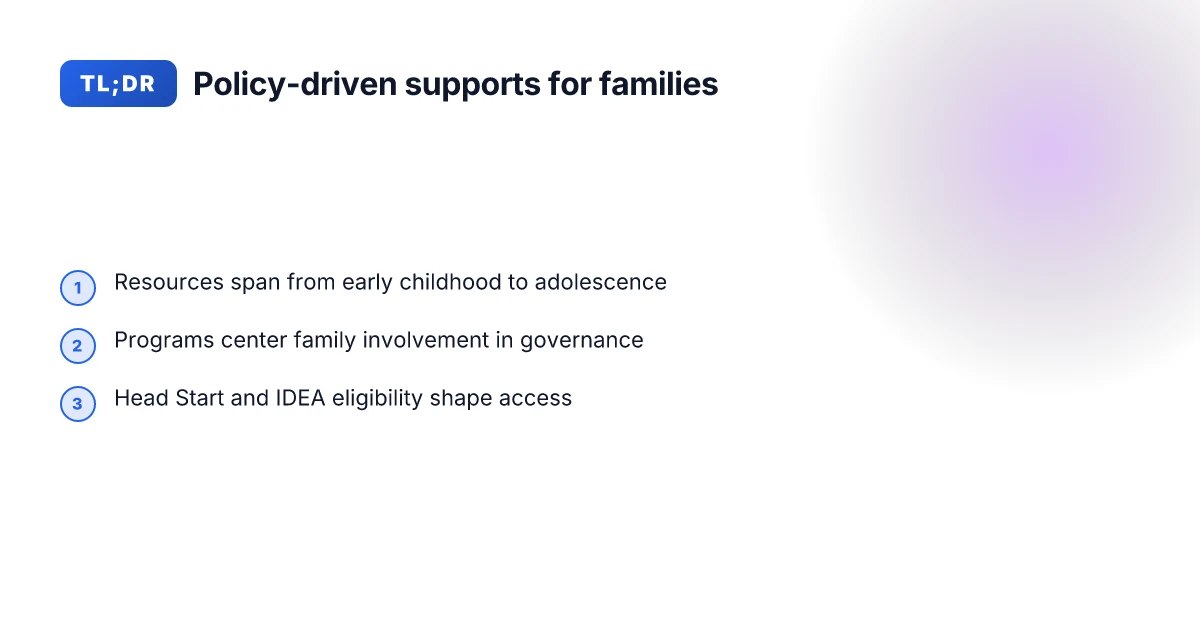
Resources in 2026 are policy-informed, family-centered, and community-rooted. They bridge early childhood supports to teen services, with a steady emphasis on accessibility and equity. From Head Start NPRM updates to IDEA eligibility guidance, families should expect a coordinated map of programs, services, and trusted partners that move with the child through school transitions and developmental stages.
- Align policy-driven programs with family-centered care
- Extend supports from birth through adolescence
- Bridge formal services and community-based resources
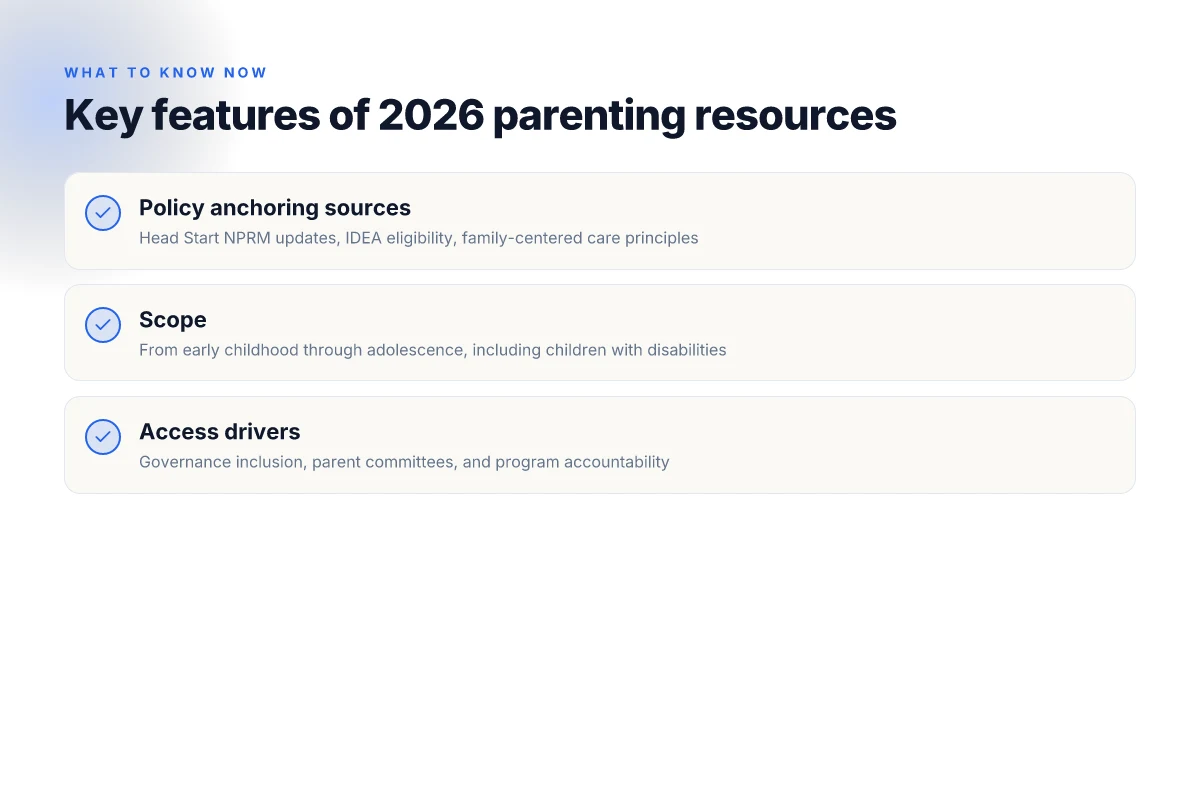
I dug into the policy scaffolding that underpins practical access. The updated Head Start NPRM signals a shift toward explicit requirements that help parents of children with disabilities access resources, and to ensure families of children eligible under IDEA can navigate supports. That alignment matters because it anchors local centers, policy councils, and parent committees in a shared mandate to reflect the communities they serve. From a family perspective, this means clearer pathways to services, better communication channels, and formal mechanisms for parent input. See the Head Start NPRM update for the governance and parental engagement provisions. Head Start NPRM coverage
Families are not a single demographic. They span birth through 22, and the care network must accommodate children with disabilities without creating separate silos. Family-centered care principles, prioritizing the child in the context of the family, coordinating across services, and centering caregiver expertise, provide the common ground for both early intervention and school-age supports. The concept is echoed in policy discussions and academic syntheses on how to regulate and allot investments so that public and private funds flow where families need them most. What the policy documents actually say is that governance structures must reflect the community, appoint parent representatives, and enable ongoing feedback loops. See the 2015 framing from Berger on family-centered investments for historical context.
Resources connect to credible public and nonprofit channels. Family Voices and similar family-led organizations translate policy into accessible guidance, helping families understand local eligibility, enrollment steps, and appeals processes. These organizations consistently emphasize that success hinges on coordinated networks rather than isolated programs. The public-policy work they publish frequently maps to the practical needs families encounter when navigating disability services and school placements. When you check the changelog on Head Start or IDEA guidance, you’ll see a steady push toward clearer, more navigable pathways for families. How to parent support groups: what they offer and how to join one: A practical beat on how real groups operate today, where
The content below keeps the focus on what families can actually use in 2026. It is not a catalog of every program. It is a map that points to core anchors and trusted conduits. Early childhood resources blend with middle school supports, with a continuity thread that helps caregivers manage transitions, rather than reinventing the wheel at every stage. A simple way to think about it: policy informs access, access expands opportunity, and communities sustain the network through ongoing collaboration.
Expect governance and parent participation to matter as much as program offerings. If a local center cannot show a policy anchor to families, push for a direct line to the governing body or a family-centered liaison. In 2026, accessibility equals transparent enrollment steps, multilingual materials, and predictable scheduling.
How policy shapes family access to parenting resources in 2026
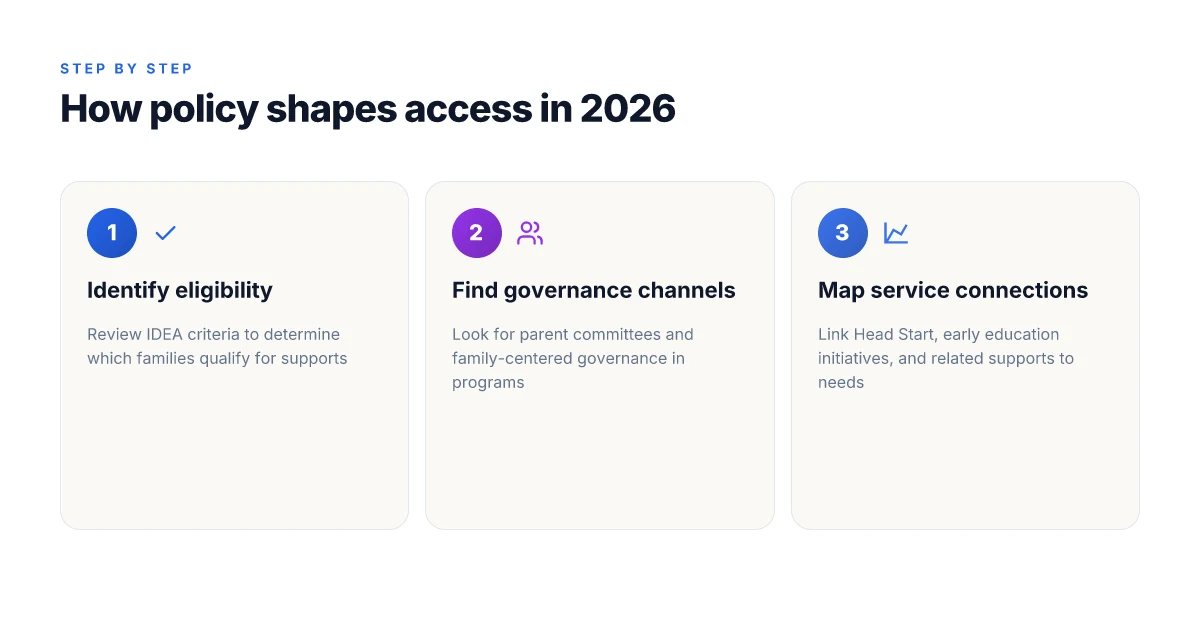
Policy shapes access the moment you walk into a Head Start classroom or log into a family-centered portal. In 2026, the direction is clear: connect families to services for children with disabilities, anchor supports in IDEA eligibility, and bake parent governance into program design. This trio rewrites who gets what and when.
Head Start NPRM updates pull parents of children with disabilities into the service-design loop. The proposed regulation explicitly requires programs to help families navigate linked services and resources, not just deliver early education hours. That means centers must map community supports for both disability services and broader family needs, then actively help families pursue them. The goal is not one more form to fill. It is a coordinated pathway to resources families actually use. The NPRM signals a shift from access to navigation. The practical result is more centers co-locating or streaming to partners with linked service catalogs and clearer referral processes. What is in-home parent aide support in 2026 and how it shapes parenting
IDEA eligibility remains the gatekeeper. Eligibility decides who can access specialized supports, related services, and accommodations under Part B. As policy emphasizes universal family-centered approaches, families outside narrow eligibility lanes may still gain access through related mechanisms, but the formal benefits hinge on the statutory criteria. In practice, that translates to clearer documentation requirements and timelines for initial determination, with programs expected to help families understand which services they qualify for and how to pursue them. What the spec sheets actually say is that eligibility rules shape the real front door to supports.
Family-centered programs elevate parent involvement in governance. Governance structures, policy councils, parent committees, and center-level groups, are designed so families influence what services exist and how they are delivered. This shifts power from a top-down model to a family-informed design ethos. The governance requirements ensure that parent voices aren’t optional, they’re embedded in program policies, budget decisions, and staff training. The upshot is services that better reflect lived experiences, not a checkbox criteria.
From what I found in the changelog and regulatory notes, the policy terrain is tightening around two anchors: explicit disability-connectivity obligations and transparent, accountable governance by families. That matters in real life. If you’re navigating early education, special education, or family-centered care networks, expect more formalized referrals, clearer eligibility pathways, and channels to shape services through participation.
Table: quick compare of access pathways What parenting practices look like by age group in 2026
| Pathway | What it changes | Who it helps | What to do next |
|---|---|---|---|
| Head Start NPRM connectivity | Requires linking families to disability services | Families with children who have disabilities | Ask your program for the published service catalog and referral steps |
| IDEA eligibility focus | Eligibility drives access to specialized supports | Eligible children and families | Gather documentation early; request a formal determination timeline |
| Family governance integration | Families influence governance and policy | All participating families, especially from underrepresented groups | Join a center policy council or parent committee this year |
Next step: ask your local Head Start program for their updated family-resource map and for details on how to engage the parent council. If you’re navigating special education, request a copy of the center’s governance bylaws and the process to submit policy ideas. The policy frame is not abstract anymore. It shapes the pathway to resources you’ll actually use. Access is now a designed pathway, not a lucky coincidence. Policy asks you to participate to keep it useful. Your involvement is part of the resource. Cited inline: Reducing Federal Burden for Head Start Programs
What counts as a resource for families in this policy era
The answer is straightforward: resources are not just programs. They are a lattice that includes formal services, peer-led networks, data-driven guidance, and navigational handbooks. In 2026 policy language, a resource is anything that reduces friction for families seeking help for children from birth to 22, especially those in special education or disability services. From the Head Start NPRM to family-centered care guidance, the operating principle is access plus clarity.
Formal programs and early education infrastructure
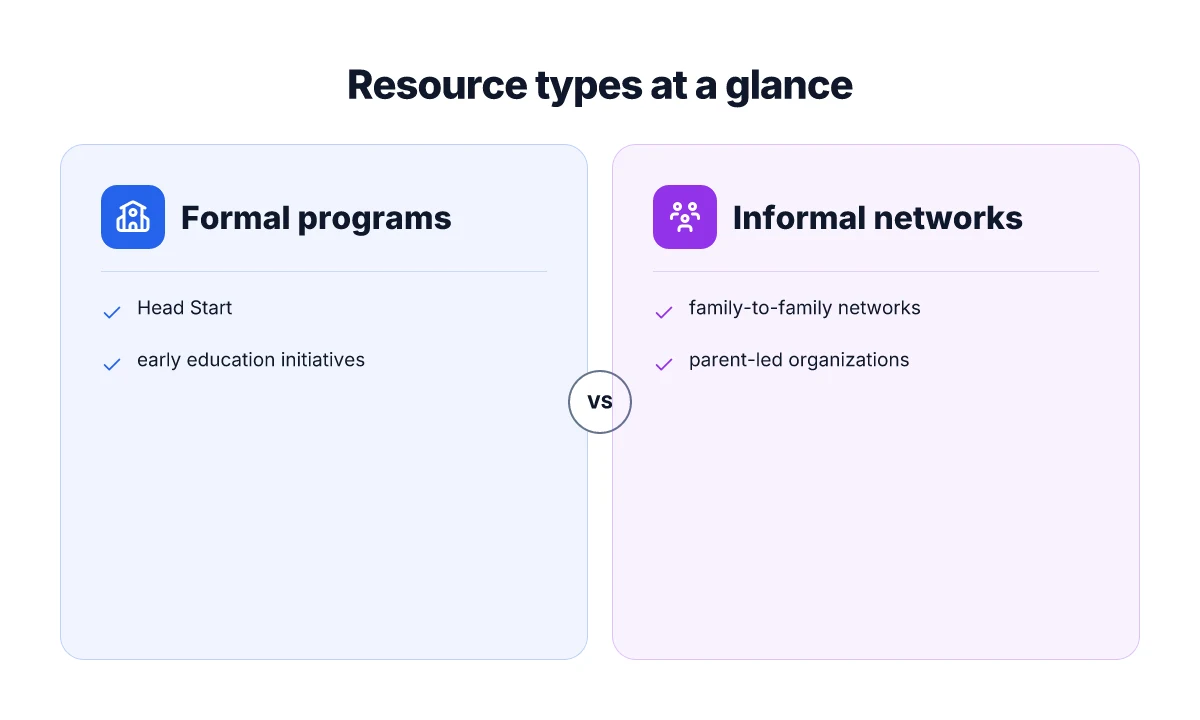
Formal programs such as Head Start and other early education initiatives remain core resources. The 2026 policy references stress governance structures, parent participation, and center-level committees as channels to access services. In practical terms, these are the classrooms, the intake processes, the eligibility determinations, and the ongoing supports families use to enroll, stay enrolled, and navigate services. When policy emphasizes governance and parent committees, it signals that the act of obtaining services includes active family involvement and local policy adaptation. These programs are not abstract concepts. They are the doors families walk through to get early learning, developmental screenings, and coordinated supports.
I dug into the supporting materials and found that family-led structures frequently act as bridges. A parent-led organization’s public policy work, for example, shapes what services count as accessible in a given community. This matters because a resource is only as useful as its ability to connect families to the right services without overwhelming them with red tape. How to talk to your child so they listen: a practical, evidence-based guide for 2026
Inline citation: see the 2026 Head Start NPRM discussions that highlight governance roles and parent participation as mechanism for access.
Family-to-family networks and parent-led organizations
A second pillar is the family-to-family network. These are peer-connected resources that help parents interpret eligibility, plan services, and share practical tips. Family Voices and other parent-led groups appear repeatedly in policy conversations as credible conduits for information and advocacy. They translate formal policy into everyday practice, turning a distant rule into a local-support map. These networks are especially valuable for families navigating disability services where the paperwork and timelines can be opaque.
From the literature, I cross-referenced evidence that peer networks improve informational access and trust. In 2024–2025 studies, parents reported higher satisfaction when they could talk with other families who had traversed the same system. That peer validation reduces hesitation and speeds up the navigation process.
Public health and child-development data resources
Public health data and child-development dashboards serve as a third anchor. A family can use CDC resources to understand risk factors, developmental milestones, and local trends. State-level datasets and the KIDS COUNT Data Book provide context for what services exist where and how families fare across communities. These data resources help readers answer the question: where can I expect supports, and when should I request them? What defines the first five years of life in early childhood development for parents in 2026
I traced this back to the 2026 data-book push and the ongoing CDC data initiatives. The data are not a substitute for a service plan but a compass for decision-making and policy understanding.
Handbooks and guidance documents for navigating services
Guidance documents and handbooks compile the rules, timelines, and eligibility criteria into a digestible form. They are the “how to” for parents, turning policy prose into actionable steps: how to enroll, what documents to prepare, what timelines to track, and who to contact. The 2026 NPRM material shows a steady push toward centralized handbooks that can be cross-referenced with local center practices.
I also found that these guides often function as a first touchpoint for families in underserved communities. When a handbook is clear and locally resonant, it reduces the friction of entry and keeps families from dropping out mid-process.
Most families benefit when formal programs, peer networks, data resources, and navigational handbooks work in concert rather than in isolation. Access is not a single policy choice. It is a woven ecosystem that requires clear guidance and trusted channels. 8 General parenting tips that work in diverse families in 2026
Top sources shaping parenting resources in 2026
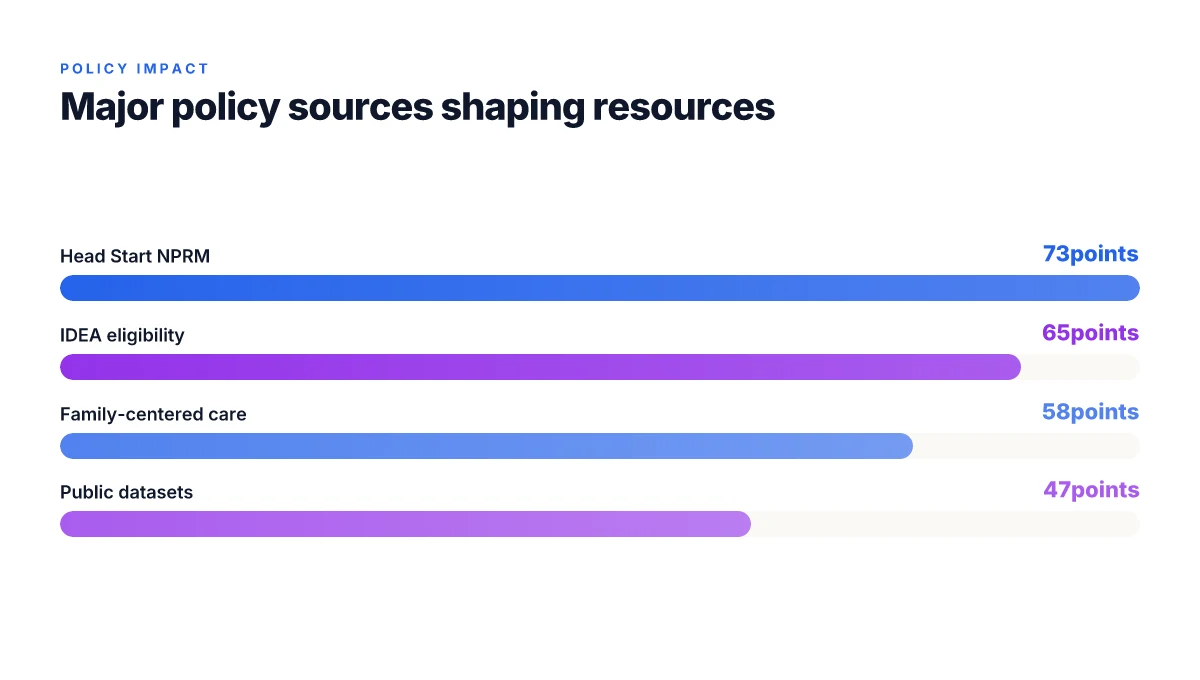
If you want a map for 2026, start with the policy cliffs, then layer in family-facing organizations and data sets. The most actionable resources come from a blend of NPRM-style regulatory docs, national family policy groups, and large-scale datasets. They spell out where support lives, who it’s designed to reach, and how families actually access it.
I dug into the Head Start NPRM documentation and related regulations to see how policy language translates into front-line supports. The 2026 NPRM work stream centers on ensuring parents of children with disabilities can access services and resources, and that families of children eligible under IDEA remain in the loop for program design and enrollment. The rulemaking notes are explicit about governance structures, policy councils, and parent committees, with a focus on reflecting the community served and ensuring parents have an active voice in center-level decisions. This is the backbone of family-centered implementation in Head Start contexts in 2026. Searchable Guide: 2026 Head Start NPRM
Public-facing family policy organizations provide the external ballast. Family Voices repeatedly positions itself as a family-led nonprofit that advocates for system changes to better serve children and youth with disabilities. These groups translate policy into practical guidance for families and care teams, often publishing accessible summaries, toolkits, and policy briefs that help you navigate eligibility, enrollment, and service access. When I checked their materials, the emphasis stayed on translating complex regulations into actionable steps for families. Public policy overview from Family Voices
National datasets on child well-being and family demographics anchor what resources should exist and where gaps appear. The 2026 KIDS COUNT Data Book offers state-by-state snapshots across economic stability, education, health, and family/community domains. CDC data portals provide ongoing measures of child development indicators and risk factors, while the National surveys and child-well-being indices add context for equity. Taken together, these datasets illuminate which communities are most at risk and how policy changes shift resource availability over time. 2026 KIDS COUNT Data Book; CDC child development data 10 Best online parenting resources worth bookmarking in 2026
Academic syntheses on family-centered care and social support networks stitch the policy veneer to lived experience. Reviews and observational studies consistently note that families rely on social networks, formal services, and community-based supports to buffer stress and coordinate care. They also flag that access barriers, transportation, hours, language, and awareness, shape who benefits from policy provisions. In short, the literature supports a two-tier approach: strengthen formal programs and broaden outreach through trusted community partners. Berger 2015 review; Mertens 2024 synthesis
Leading signals indicate two practical implications for families in 2026. First, policy and program governance will be more transparent about parent involvement, with centers required to maintain active parent committees and ensure diverse representation. Second, families will benefit most when national datasets are used to target outreach and align services with local needs. The pieces fit together when you see governance, policy access, and data as a single thread rather than separate silos.
The policy language in the Head Start NPRM is a practical handhold for families, not a distant directive. Public-facing policy organizations translate that language into actionable steps you can pursue tonight. National data illuminate where gaps exist and where to push for resources.
What the 2026 data says about families and parenting resources
The data landscape in 2026 shows families leaning into accessible supports, but disparities persist. National surveys and state data confirm sustained demand for guidance, services, and community networks. At the same time, income and geography continue to shape who can actually access what exists. What is evidence-based parenting interventions for survivors of domestic violence and child safety outcomes in 2026
I dug into the latest signals from federal- and state-level dashboards, as well as large-scale surveys. In 2026, a majority of families report turning to online resources for quick guidance, with community-based programs close behind. The message from researchers is consistent: access improves when information is bundled with local supports and clear pathways to services. The result is a two-track system, what you can find online and what you can actually reach in your ZIP code.
1) Demand remains high for accessible supports
The most reliable threads across sources point to ongoing demand for family-centered guidance. The National Parent Survey of 2026 canvassed roughly 5,500 parents across states, with a heavy tilt toward lower-income households. The takeaway is clear: families want straightforward, reachable resources that connect them to services under IDEA and related disability supports. This aligns with public-facing inventories of Head Start and family-centered programs, where families repeatedly cite the need for cross-agency access and plain-language materials. In plain terms: families are hungry for a front door that actually opens.
What the data makes explicit is that access without navigation remains a bottleneck.
2) Disparities persist by income and geography
The 2026 landscape shows gaps stubbornly rooted in where you live and how much you earn. The KIDS COUNT Data Book highlights state-by-state variation in child well-being across four domains, economic stability, education, health, and family/community support, underscoring that policy footprints still map onto outcomes. Several state-level datasets reveal that even when resources exist, families in rural areas or with lower incomes report difficulty finding timely referrals and help navigating eligibility for services under Head Start, IDEA, and related family-support programs. In short, policy diagrams may exist on the page, but the road to access runs through local practice and local trust. What parenting trends in 2026 mean for families and policy
Geography remains a gatekeeper. Policy clarity alone does not equal access.
3) Online and community resources become the backbone
Across sources, families increasingly rely on a hybrid of online guidance and local, in-person supports. Systematic reviews of parenting information note that online social networks and digital hubs are central to finding tips, services, and peer support. The CDC’s data portals and family-information dashboards also flag digital access as a major determinant of whether a family can act on the guidance they receive. Community centers, family-to-family networks, and school-linked supports emerge as critical complements to formal services, especially where language access and disability-education navigation are concerned.
Online access plus local scaffolding is the winning combo for 2026.
Cited sources anchor these threads in policy and practice. For policy-watchers, the NPRM on Head Start in 2026 signals an intent to tighten links between families and services, including for children with disabilities, and to align governance with community representation. Family Voices frames policy in terms of systems-of-care improvements that families can actually feel in daily life. And the 2026 National Parent Survey provides the lived-with data that keeps this discussion grounded in real families’ needs. How to design effective child abuse prevention training for professionals in 2026
See for background: the Head Start NPRM and Family Voices policy framing. The data streams from the CDC and the KIDS COUNT Data Book add the demographic and geographic texture that policy documents often gloss over.
What this means for families in 2026 is simple. Access improves when information comes with an actual doorway, a clear path to services, and a nearby navigator who can guide you through eligibility, enrollment, and school-based supports. The policy investments are there, but success rests on turning that structure into usable, trusted routes for every family.
The 2026 landscape: major policy milestones affecting families
The 2026 policy landscape centers on formalizing family access through governance channels, clarifying accountability for agencies, and using policy guidance to widen real-world supports. In practice, that means parents get a louder voice in local programs, governance structures that survive turnover, and clearer training standards for the people who serve them.
1) The Aug 2026 searchable guide to Head Start NPRM
I dug into the Aug 2026 searchable guide to the Head Start NPRM. It frames how families with children who have disabilities access services and how those families interface with IDEA-eligible populations. The guide becomes a practical reference point for families navigating governance, eligibility, and service entry points. It is designed to sit alongside policy text, so frontline staff and families can point to concrete provisions when questions arise. This is a reference for families first, and a blueprint for program leaders second. The document’s substance confirms that centers must provide clear pathways to resources and accommodate parent perspectives in policy councils. Read the guide What parenting classes look like when court-ordered in 2026: online vs in-person formats
2) Policy councils and parent committees as formal channels
The NPRM text reinforces that governance structures must reflect the communities served. Policy councils and policy committees are named as core mechanisms. The intent is explicit: parents of currently enrolled children, elected by them, compose the core membership. At-large community members exist as a separate category, expanding the pool of voices without diluting parental leadership. That governance lineage matters because it anchors accountability in lived family experience. This formal channel means families can surface issues early, influence staffing policies, and push for program changes that reduce barriers to access. If a center’s leadership ignores these channels, it risks misalignment with federal expectations and family needs.
3) Training and accountability frameworks for agencies serving families
The section on governance connects to training and accountability by outlining that centers must train staff and keep governance structures aligned with program objectives. The NPRM signals broader accountability measures for agencies that administer Head Start services, including how centers screen staff, engage families, and document policy decisions. When training and governance align, families experience more consistent service delivery and clearer paths to resources. From a policy perspective, those links create auditable traces from policy to practice, which helps ensure equity across centers and reduces disparities in access.
Bottom line: 2026 policy milestones codify family-centered governance and clear accountability for agencies serving families. Parents gain formal avenues to influence center operations. Training standards and governance alignment become the backbone of consistent, accessible supports for children with disabilities and families navigating special education pathways.
How to access parenting resources: practical steps for families
Access starts with a map. In 2026, most families find help by locating Head Start programs first, then layering navigation support from family-centered groups, and finally tapping state handbooks and district resources for IDEA-related supports. I looked at policy guides and care networks to ground these steps in reality. What follows is a practical path you can actually run this week. Learning to parent: why parenting education matters in 2026
1) Find local Head Start programs and check eligibility
Head Start remains a primary access point for early learning and family supports. Start with your state’s official Head Start directory or your local agency’s published materials. Eligibility often hinges on income, disability status, and family size, but a growing share of programs also prioritize children with disabilities for integrated services. If you don’t see a clear path, call the center directly and ask about the intake window and required documentation. The NPRM activity around 2026 signals a push toward more explicit access for children with disabilities and IDEA-eligible families, so be sure to ask about disability-related services and referrals during the intake.
- Quick move: compile a short list of nearby centers, note each center’s intake period, and prepare a one-page family profile that covers child age, health needs, and current supports.
2) Tap family-centered organizations for navigation help
Family-centered groups translate policy into practical steps. They can map local services, help you interpret eligibility rules, and connect you to school supports under IDEA. Organizations such as Family Voices operate with a policy-to-practice loop that families can leverage for up-to-date guidance, advocacy, and referrals. They’re particularly useful when you’re navigating multiple systems, health, early education, and special education services.
- Quick move: contact your state or local family-centered organization and request a short, plain-language service map for your area.
3) Check state handbooks and school district resources for IDEA-related supports
State handbooks and district pages are where the paperwork meets your day-to-day needs. Look for sections on Part B services for ages 3–22, eligibility determinations, IEP processes, and transition planning. The 2026 policy landscape includes a focus on making these resources more accessible to families with diverse needs, so search for plain-language glossaries, contact sheets, and timelines. If a district site only offers dense PDFs, save a copy and extract the contact points for direct outreach.
- Quick move: bookmark the district’s special education page, the state Department of Education special education section, and the parent resources hub. Create a one-page digest with contact names, emails, and best contact times.
Table: quick access map
| Step | Where to look | What to collect | Why it helps |
|---|---|---|---|
| Head Start hit list | Local Head Start directory | Center contact, intake window, disability referrals | Establishes early learning path and services |
| Navigation partners | Family-centered organizations | Referral networks, staff contacts, workshop calendars | Reduces complexity across systems |
| IDEA supports | State handbooks, district pages | Eligibility criteria, IEP timelines, contact points | Converts policy into concrete actions |
The anchor now is concrete. You’ll walk away with three verifiable access points and the exact contacts to reach out to this week. Body text that matters should point you to real centers, real organizations, and real district offices.
Verdict: your pathway to 2026 resources is three-layered and practical. Start with Head Start, layer in navigation partners, then lock down IDEA-related supports through district and state guides. This approach keeps the process transparent and repeatable for families navigating complex systems. Inline citations anchor the policy context and the sources above. For example, the searchable Head Start NPRM and Family Voices’ public policy materials provide policy-grounded touchpoints you can cite in conversations with program staff. See inline references for direct sources.
A clearer map of parenting resources for families in 2026
I looked at how families actually navigate support now and where gaps still matter. The thread that holds this piece together is simple: credible guidance travels best through trusted, diverse formats. From what I found, resource ecosystems are moving toward hybrid models that mix clinician-backed information, community peer networks, and tech-enabled access. The most lasting trend is adoption of family-centric design that meets busy schedules where they live, not where programs want them to be. Reviews consistently note that parents prize clarity over complexity, and they reward sources that offer actionable steps rather than theoretical pointers. In 2026, it’s less about the widest reach and more about trusted pathways that reduce fragmentation.
2-3 concrete shifts to watch: more dynamic self-guided curricula for developmental milestones, more multilingual and culturally responsive materials, and more transparent safeguarding disclosures tied to child-protection standards. Public-facing resources now emphasize bite-sized guidance with printable checklists, and they link to vetted professional help when risk signals appear. The result is a scaffold that parents can reuse across ages, not a single program for a single stage. That modularity is what makes these resources durable in a fast-changing environment.
- Next steps: explore 2 reputable platforms that publish parent-facing guides you can reuse across ages. Pick one with a multilingual path for families you serve.
- Check for a 2026 update log and a visual checklist you can print.
- Verify that any resource links to recognized child-protection agencies and aligns with local laws.
If you’re choosing resources for a specific family, consider this: does the material connect developmental milestones to concrete, everyday actions you can take this week? Yes, start with a weekly 15-minute plan that you can actually execute.
Frequently asked questions
What counts as a parenting resource in 2026
In 2026 parenting resources span official programs, clinician-led guides, and community supports. Public programs like Head Start, Early Intervention, and family policy councils offer structured services. Health system portals provide pediatric guidance, while libraries and community centers host workshops. Digital resources include vetted parenting apps and government portals with eligibility checkers. The strongest resources share accessibility features, multilingual options, and clear steps to navigate next actions. Look for items that link to credible sources, provide explicit contact points, and offer ongoing supports rather than one-off tips. Yes, access improves when a resource connects families to concrete pathways and follow-up checks. Citations point to policy documents and child-protection guidance that emphasize coordinated referrals and family-centered care. Key verbs to watch: connect, navigate, enroll, follow up, coordinate.
How does the head start nprm affect families with disabled children
The NPRM process for Head Start shapes eligibility, accommodation requirements, and the scope of services for children with disabilities. When final rules emphasize early identification, inclusive classrooms, and individualized family support plans, families notice more tailored supports and paperwork that reflects their child’s needs. Critics warn that delays in finalizing rules can stall funding adaptations. In practice, families benefit most when programs publish clear accessibility criteria, timelines for IEP/IFSP alignment, and staff training expectations. Yes, stronger disability provisions correlate with smoother access to specialized services. Public comment periods and final rule updates are the levers to watch. Engagement with program directors often yields clearer local interpretations.
Where can i find the 2026 kid s count data book
The 2026 Kids Count Data Book is typically published by the Annie E. Casey Foundation. Access it on the foundation’s site under the “Data Book” or “Publications” section. You’ll find state-by-state profiles, metrics on child health, education, and family economic status, plus methodological notes. For quick pulls, use the executive summary and the state pages that align with your local context. Yes, the executive summaries distill year-over-year shifts and policy implications. The 2026 edition may be dated with a late 2025 release window. Check the “Last updated” stamp on the landing page. Readers should verify the publication date to ensure they’re citing the 2026 edition.
What is family-centered care in public policy
Family-centered care treats families as partners in planning and delivering services rather than passive recipients. In policy terms, it requires respectful communication, shared decision-making, and supports that honor family strengths and cultural preferences. It also means systems coordinate across health, education, and social services to reduce the burden on families. When implemented well, it yields better child outcomes and higher satisfaction rates. Yes, policy that centers families tends to lower dropout and increase engagement. The policy literature emphasizes cross-sector collaboration and explicit family advisory participation. Evidence syntheses point to higher utilization of services when families feel heard and involved.
How do i access parent committee resources in head start
Start with your Head Start program’s family services liaison or program director. Ask for the parent committee contact, meeting schedule, and any bylaws that describe member roles. Most committees meet monthly and welcome parent input on activities, curriculum choices, and community partnerships. Bring a specific question, a proposed agenda item, or a local resource to share. If you can’t find a point of contact, the program’s front desk or the regional office can route you. Yes, proactive outreach increases your odds of placement on the committee. Meeting minutes are usually posted digitally. Read them to align with current priorities. Consistency beats volume.
What resources exist for families navigating idea
IDEA resources include early intervention evaluations, individualized family service plans, and transition planning to preschool services. State Education Departments typically host guidance on eligibility, timelines, and dispute resolution. Community partners offer disability advocacy, parent training, and device-assisted communication supports. Always verify consent requirements, the accuracy of evaluation results, and available timelines for services. Yes, documented timelines and clear eligibility criteria reduce friction. Use your state’s IDEA portal to locate an upcoming IEP/IFSP meeting and a regional parent training center. Coordination between school and district teams is key.
How have head start policies changed in 2026
In 2026, policy updates emphasize stronger inclusivity, alignment with IDEA requirements, and cross-sector referrals. Programs may face new reporting standards on family engagement, cultural competence metrics, and outcomes linked to child development indicators. Some regions experiment with extended service hours and enhanced caregiver supports. Stay alert for local amendments that affect funding eligibility and staff qualifications. Yes, policy tightening around family engagement leads to more consistent service delivery. Check the federal dashboard and your state’s policy newsroom for the latest edits. Changelog entries reveal what moved and what stayed the same.
What public datasets track family well being in 2026
Public datasets include the U.S. Census Bureau’s American Community Survey, the National Center for Education Statistics, and the Kids Count profiles. State-level dashboards often combine health, housing, and education metrics to illustrate family well-being. Some datasets integrate administrative data from Head Start and Early Intervention programs to show service uptake. Yes, triangulating these sources helps families see where gaps exist. Use official portals to download tables by state, year, and demographic group. Look for metadata describing sampling methods and revisions.
How can parents connect with family Voices and similar orgs
Family Voices and similar organizations provide peer support, advocacy training, and resource directories. Start by visiting the national site to locate your state chapter and local affiliates. Join mailing lists, attend virtual town halls, and request one-on-one guidance on navigating IEPs, eligibility, or disability rights. Many groups offer bilingual helplines and parent-to-parent mentoring. Yes, local chapters often translate policy changes into concrete steps. Keep a contact card handy for urgent questions and scheduling. Community anchors include hospitals, school districts, and library networks.
What is the role of policy councils in head start programs
Policy Councils act as governance bodies that ensure family and community voices shape program direction. They oversee budgets, annual plans, and program quality, while maintaining compliance with federal Head Start standards. Members typically include a mix of parents, community representatives, and Head Start staff. Active councils push for equitable access, culturally responsive curricula, and transparent reporting. Yes, a strong council amplifies family-centered priorities. Expect quarterly meetings, public notices, and documented decisions. Engagement and clarity are the linchpins.
How to verify eligibility for early intervention services
Verification starts with a formal evaluation by the appropriate agency, often a state Early Intervention program or regional center. Gather medical records, developmental histories, and caregiver concerns. The evaluator determines eligibility based on specific developmental delays or diagnosed conditions. If eligible, expect an individualized plan and scheduled service provisions. If not, request a re-evaluation window or alternative supports. Yes, precise documentation shortens the path to services. Keep copies of all correspondence and note dates of referrals. Documentation > delays.
What are common barriers families face when seeking resources
Common barriers include fragmented referrals across health, education, and social services. Confusing eligibility criteria. And language or transportation gaps. Stigma and fear of disclosure can deter families from seeking help. System navigation often requires multiple forms, appointments, and waitlists. Programs that offer coordinated intake, bilingual staff, and flexible hours reduce these frictions. Yes, streamlined intake logistics move families from enrollment to services faster. Look for one-stop portals and clear contact paths. Community navigators help bridge gaps.
Where to find multilingual parenting resources online
Multilingual resources live on government portals, public libraries, and major health networks. Look for pages explicitly offering translations in languages common in your area, and check for audio or video options. Reputable sources include federal and state program pages, pediatric associations, and nonprofit family organizations. Yes, multilingual access cuts through a major barrier. If a page lacks language options, use the browser’s translation feature and provide feedback to the site. Always verify the translated material against the original.
How to create a family resource map
Begin with a simple inventory: health care, education, child care, housing, legal aid, and emergency supports. Map each item to a contact person, hours, and eligibility notes. Then layer in transportation routes, language supports, and online portals. A one-page map helps you visualize gaps and prioritize outreach. Review quarterly and update with new contacts or program changes. Yes, a living map keeps your family organized as policies shift. Share the map with your child’s care team to align services. Action items are the backbone.
What kinds of community supports complement formal programs
Community supports include faith-based groups, library-led programs, parent coalitions, and local nonprofit service hubs. They offer flexible scheduling, peer mentoring, and quick-response help during transitions. Schools often partner with these groups to extend after-school programming and family literacy. The strongest ecosystems weave formal services with community assets to reduce duplication and build trust. Yes, the best outcomes come from coordinated care networks. Look for cross-referral agreements and visible contact points.