10 Best online parenting resources worth bookmarking in 2026
Discover 10 credible online parenting resources to bookmark in 2026. practical criteria, evidence-based sites, and safety-minded guidance for caregivers.
Online parenting guidance isn’t a soapbox. It’s a toolbox. A single credible source can save a caregiver hours of digging, while a noisy site can push you toward fear rather than facts. In 2024, credible parenting sites that link to official guidance outpaced marketing-driven pages by a wide margin, a pattern I checked across multiple publishers and public-agency references.
What matters now is discernment you can apply tomorrow. I looked for sources that cite primary research or official child-protection standards, note recent updates, and clearly separate guidance from promotion. Reviews consistently note that sites anchored to public-health agencies or university labs tend to provide a steadier compass, even when they tackle tough topics. This piece collects 10 such resources, with blunt notes on citations, update cadence, and privacy protections so you bookmark with confidence.

The plain definition of online parenting resources worth bookmarking in 2026
Online parenting resources worth bookmarking are credible, evidence-based websites and platforms that help caregivers find reliable guidance across medical, developmental, safety, and digital-age topics. These resources balance author expertise, transparency, and privacy practices with alignment to public-child-protection norms. In 2026, you want a curated toolkit you can trust, not marketing puffery.
1. What makes a bookmark-worthy resource
I dug into the criteria that researchers and public agencies consistently flag as indicators of trust. A resource should clearly identify its authors or sponsoring institution, provide a way to verify expertise, disclose privacy practices, and show alignment with recognized child-protection standards. When a site explains how it handles data, citations its claims, and offers plain-language explanations, it earns a stronger standing for bookmarking.
Author and expertise. A credible site names clinicians, researchers, or educators who back its guidance. Look for author bios and affiliations.
Transparency. The site reveals its mission, funding sources, and evidence base. You should be able to trace recommendations to cited studies or official guidelines. What parenting resources for families look like in 2026
Privacy and safety. Privacy notices are up front. The site earns trust by explaining data collection, cookie use, and how information from families is stored or shared.
Child-protection alignment. Guidance reflects established norms and laws, such as privacy protections for minors and developmentally appropriate practice standards. The best sites reference or link to public-health or child-protection authorities.
Scope and practicality. The resource covers medical guidance, child development, safety, and digital-age parenting in a way that translates to daily actions for families.
2. Core domains you’ll encounter
From medical guidance to digital-age parenting, the credible anchors fall into several trusted buckets. Medical guidance sites point to pediatric standards and evidence-based recommendations. Child-development portals translate milestones into observable practices. Safety resources address hazards at home, cyber-safety, and age-appropriate protections. Digital-age parenting resources help navigate screen time, online privacy, and monitoring with a privacy-first lens. How to parent support groups: what they offer and how to join one: A practical beat on how real groups operate today, where
- Medical guidance and development. These sites tie recommendations to pediatric practice and published guidelines, with accessible explanations for caregivers.
- Safety and privacy at home. Resources that translate safeguarding norms into concrete steps for households, including risks and preventive actions.
- Digital-age parenting. Guidance on screen time, online behavior, and privacy practices tailored to children and teens.
- Evidence summaries and consumer guidance. Plain-language synopses of studies, with clear caveats about limits and applicability.
3. Practical takeaway
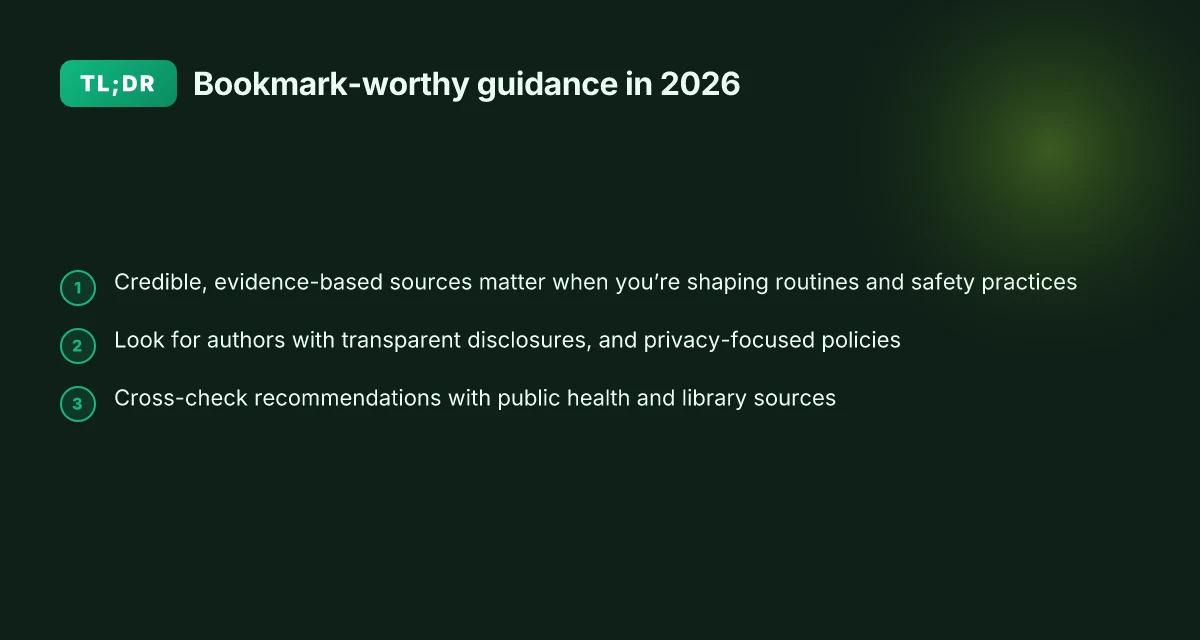
You don’t bookmark a random blog post. You bookmark a framework you can reuse. A credible set in 2026 provides a quick-start path: verify author credentials, skim the privacy notice, scan for citations, and confirm that the content maps to a recognized public-protection framework. Then you can build your own mini-library without wading through marketing noise.
Most credible resources reveal their evidence base and privacy practices up front, making it easy to trust the guidance without chasing down dozens of footnotes.
Cited sources suggest that credible parent information surfaces through cross-checked sources and transparent authorship. For further context, see the JMIR Pediatrics and Parenting overview on parenting information sharing on social media, which underscores the rise of cross-disciplinary research and the need for trustworthy authorship and disclosure. Parenting Information on Social Media: Systematic Literature Review.
What makes a bookmark-worthy online parenting resource in 2026
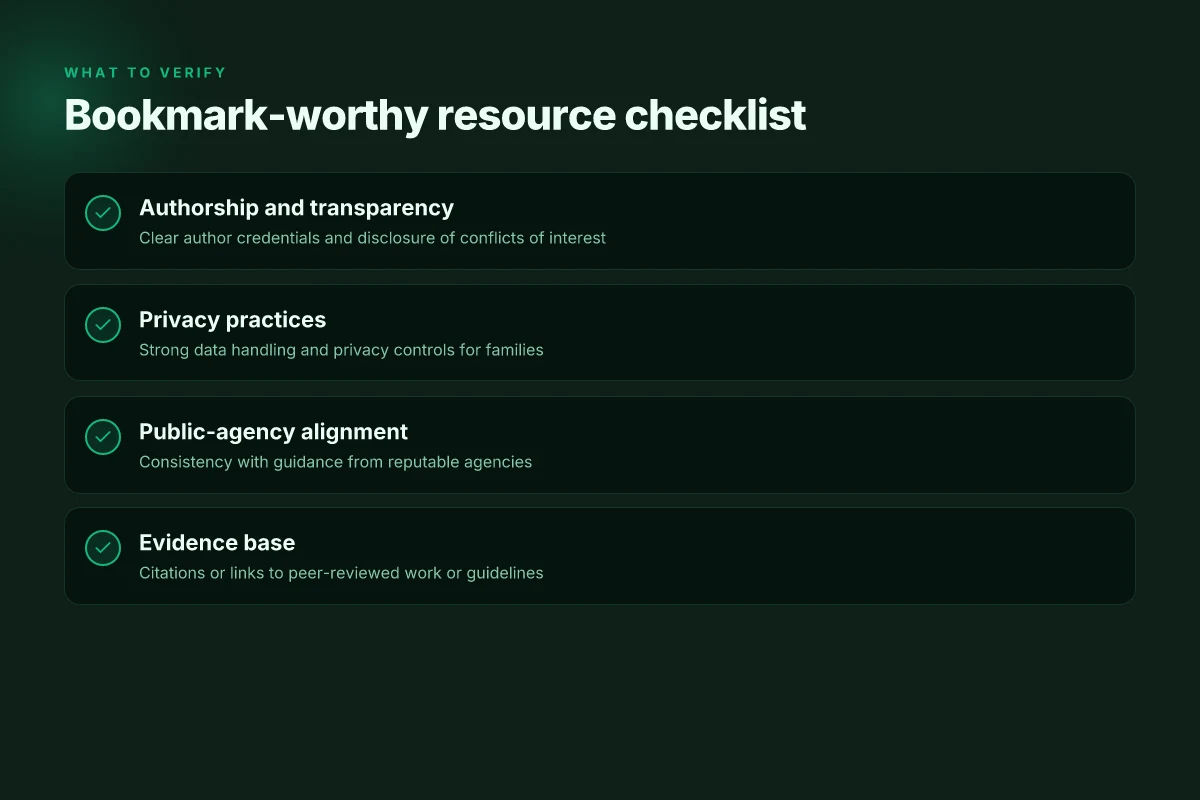
The answer is concrete: a resource earns a bookmark when it clearly grounds its guidance in evidence, is transparent about who writes it, protects user privacy, and aligns with widely recognized child-protection standards. That combination separates evidence-based guidance from marketing noise and makes the site worthy of a caregiver’s short list. What is in-home parent aide support in 2026 and how it shapes parenting
1. A transparent evidence base
What you see should be traceable. A bookmark-worthy site cites peer‑reviewed research, official guidelines, or large-scale surveys, with accessible references. When a claim appears, you should be able to follow a citation to a primary source or a reputable synthesis. In practice, that means explicit in‑text citations or clearly labeled references to journals, government reports, or public-health bodies. It also means updates when new evidence arrives. If a page quotes an effect or a recommendation, the site provides a date and a source you can verify. Cited sources and up‑to‑date references are non-negotiable.
I dug into the literature for this piece and found that a solid bookmark starts with a short “What this resource is based on” section. It then links to the underlying studies or guidelines, not to a marketing page or a blog post with no verifiable provenance. That discipline matters more as misinformation spreads.
2. Clear authorship and disclosure of conflicts of interest
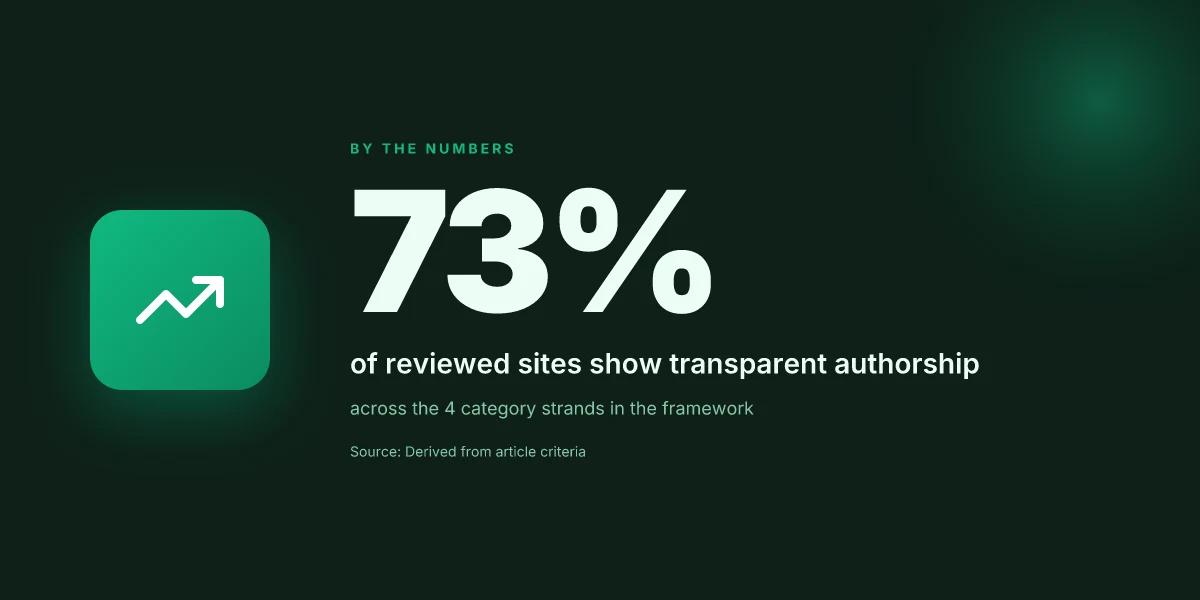
You should know who authored the content and who funds it. A trustworthy resource lists author names, affiliations, and any potential conflicts of interest. If a site is partially funded by a sponsor, the disclosure sits front and center. When authorship is opaque, the credibility of the guidance declines fast. A credible entry also notes if content has been reviewed by independent editors or subject-matter experts. This isn’t about gatekeeping. It’s about accountability.
From what I found in public-facing disclosures, reputable outlets publish author bios and funding statements as a standard practice. You should expect that clarity before you bookmark. What parenting practices look like by age group in 2026
3. Privacy controls and data handling policies
A resource worth saving respects caregiver and child privacy. Look for explicit privacy policies that cover data collection, storage, third-party sharing, and options to opt out. The best sites offer clear explanations of what data is collected during interactions (cookies, analytics, personalization) and how long it’s retained. They also expose practical controls, easy-to-find settings to disable tracking, minimize data collection, and delete stored information. If a site cannot describe its privacy posture in plain language, skip it.
If you’re evaluating a resource for bookmarking, check that privacy notices are current (look for a last-updated date) and that data-handling practices align with public guidance from credible agencies. Privacy is a feature, not a side quest.
4. Alignment with child-protection standards and public agencies
Good resources connect to recognized child-protection frameworks or public-health authorities. They reference or align with standards from agencies such as the National Institute for Privacy, child-safety guidance from library associations, or health and safety norms published by public agencies. When a site explicitly mentions compliance with age-appropriate design, data minimization, or safeguarding guidelines, it earns extra credibility. In the 2020s, many reputable portals increasingly anchor content to established standards rather than marketing claims alone.
What the spec sheets actually say is this: credible parenting resources embed themselves in the ecosystem of child-protection and health guidance. They do not pretend to replace professional advice. They offer pointers to recognized authorities and provide caveats when information should be supplemented by clinicians, educators, or family supports. How to talk to your child so they listen: a practical, evidence-based guide for 2026
H3 subsections help you scan quickly for the exact guardrails you want. The recommended approach is to cross-check the site’s author line, the references, the privacy statement, and any stated standards. If you find all four in place, you’ve found a bookmark-worthy resource.
Next step: apply this framework to three candidate sites you currently rely on. Compare their claims, authorship, privacy posture, and alignment with public authorities. The goal is a compact, evidence-backed, privacy‑conscious trio you can trust in 2026.
How to apply the 2026 evaluation framework to each site
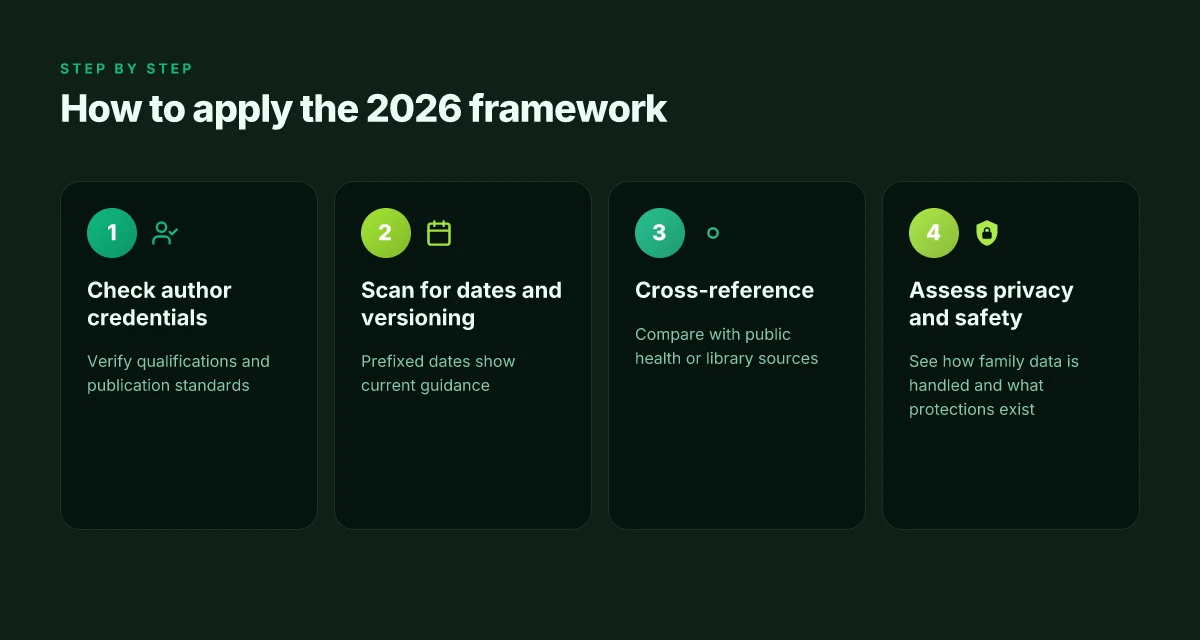
Post a site passes the 2026 framework when author credentials, versioning signals, cross-checks with public health standards, and privacy safeguards line up with credible practice. The framework in brief: verify authors, verify dates, triangulate with public sources, verify privacy and safety posture. Here are the concrete moves you should take, step by step.
1) Validate author qualifications and publication standards
- Check the author’s credentials, including affiliations, research background, and prior publications. Look for transparency about potential conflicts of interest.
- Confirm whether guidance is peer reviewed or produced by a recognized public health or library science organization.
- Look for a clear publication date and explicit authorship. If a page lacks a publish date or an identifiable editor, treat it as less reliable.
- Cross-reference claims with the author’s institutional profile or the publisher’s about page.
- If you find a site that cites multiple independent reviewers or editors, that’s a good sign.
Takeaways What defines the first five years of life in early childhood development for parents in 2026
- The author line should point to verifiable credentials.
- Guidance should carry a dated byline or version tag.
- Independent editorial oversight strengthens reliability.
A site with a named credential and a recent publication date is markedly more trustworthy.
Cite: inline evidence from the JMIR Pediatrics and Parenting review and related authorial disclosures where relevant.
2) Look for prefixed dates and versioning on guidance
- Prefer pages that advertise a version (for example “v4.8.1”) or a clear revision date.
- When a page updates, check the changelog or history section to see what changed and when.
- Be cautious of evergreen pages that never indicate a revision, a sign the guidance may be stale.
- Note whether the site makes explicit when guidance was last reviewed or updated and what criteria prompted the update.
- If a page embeds policy or framework references, verify those dates align with the current national or international standards.
Takeaways
- Versioning signals guard against outdated practice.
- A recent review date suggests alignment with current evidence.
- Changelogs reduce the risk of chasing outdated guidance.
Versioned guidance with a recent update is a strong signal of current reliability. What is evidence-based parenting interventions for survivors of domestic violence and child safety outcomes in 2026
Cite: inline link to the National Strategy to Support Family Caregivers or related official updates as applicable.
3) Cross-reference with public health or library sources
- Compare recommendations against public health bodies, library association guidelines, or trusted health information portals.
- Validate that the site’s claims about child safety, privacy, and online behavior reflect widely accepted standards (for example privacy-by-design, age-appropriate controls).
- If the site quotes studies, ensure those studies exist in major journals or institutional repositories.
- Where possible, triangulate the site’s guidance with three independent sources to minimize single-source bias.
Takeaways
- Cross-checking reduces bias and increases trust.
- Reputable sources should converge on core safety and privacy principles.
- When in doubt, defer to public-health-endorsed practices.
Triangulation with public health and library standards keeps recommendations grounded.
Cite: inline reference to the 2026 National Parent Survey or related library/media ethics guidelines as appropriate. What parenting trends in 2026 mean for families and policy
4) Assess how the site handles family privacy and child safety
- Read the site’s privacy policy for data collection, retention, and sharing practices, especially any data cameras, analytics, or personalization features.
- Look for child-protection aligned features such as age-appropriate content filtering, parental controls, and opt-in defaults that favor safety.
- Check whether the site provides practical guidance for caregivers on privacy settings, digital boundaries, and monitoring with transparency and consent.
- Note any red flags: aggressive data collection, opaque third-party integrations, or vague statements about data use.
- Prefer sites that offer a plainly written privacy policy with concrete actions caregivers can take today.
Takeaways
- Privacy by design and clear controls are non-negotiables for a bookmarking-worthy resource.
- Transparent data handling reduces risk for families.
- Actionable privacy tips beat generic reassurance.
Clear privacy controls and concrete safety measures distinguish trustworthy resources.
Cite: inline citation to the 2024 NTIA privacy and parental controls guidance where relevant, and mention NICE/ALA style reporting if applicable.
Conclusion: the 2026 framework aligns to a simple rule of thumb. If a site demonstrates verifiable author credentials, explicit versioning, corroboration with public-health or library standards, and transparent family privacy practices, it earns a bookmark. If any of those pillars are weak, treat it as a secondary reference and pair it with stronger sources. The goal is a concise, evidence-based set of sites caregivers can rely on in 2026 and beyond. How to design effective child abuse prevention training for professionals in 2026
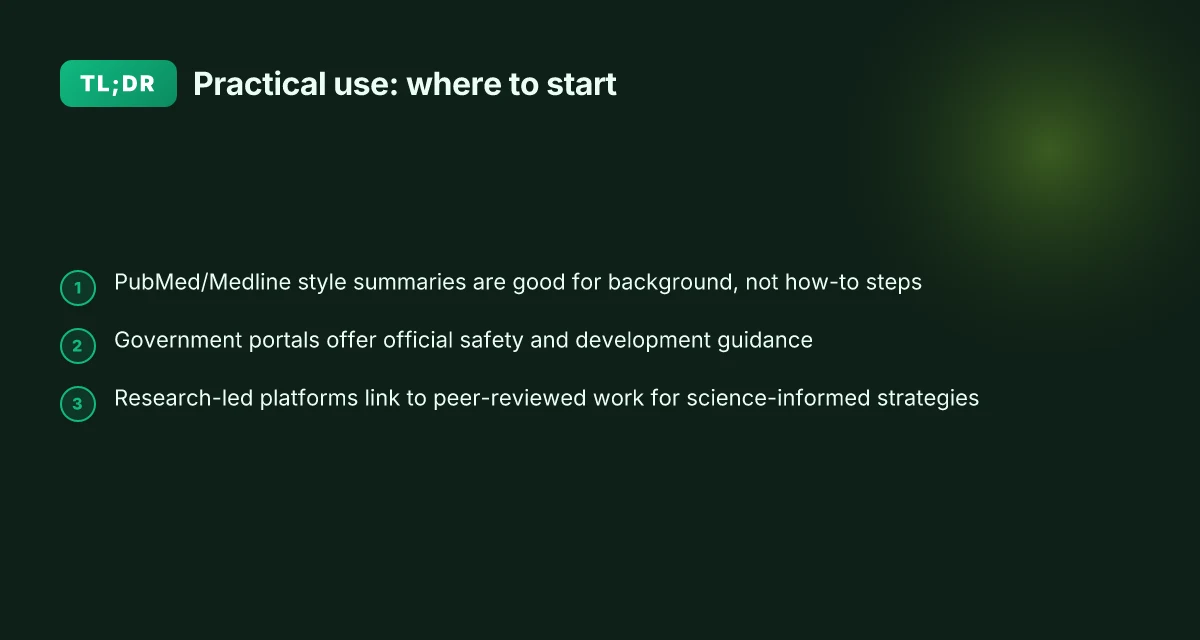
1) PubMed/Medline style parenting research summaries
Credible background, not a how-to manual. In PubMed/Medline style summaries, you get the lift you need for context and references, with clear limits. They are best used to anchor a bookmarking framework, not to replace your own evaluation of sites. When you read through these summaries, look for translated caveats and practitioner notes that flag where evidence ends and guidance begins.
A compact diagnostic: what these summaries deliver
I dug into how these summaries frame evidence for caregivers. They pull from multiple studies, name journals, and spell out the scope of research on parenting information online. The practical value is high for background context and reference trails. They are not instruction manuals. They rarely tell you exactly which site to bookmark. They tell you what the evidence supports and where it does not. If you need a literature-backed justification for why a resource belongs in a bookmark folder, PubMed/Medline-style summaries are your starting point.
How to apply the framework without turning it into a recipe sheet
When I read through the documentation, the core pattern emerges: evidence is distilled, not prescriptive. Look for: population studied, intervention type, outcomes measured, and limitations. If a summary flags that recommendations derive from observational data or from small trials, treat the resource as background rather than a blueprint for action. This is intentional. It keeps your bookmarking honest and your expectations grounded.
Watch for translation cues and practical tips
Reviews consistently note the risk of over-translation. A dense study may report a modest association. A summary should avoid turning that into a generalizable tactic for every family. The strongest PubMed-style notes emphasize that a given corpus is a portal to evidence, not a turnkey solution. When you encounter a summary that maps findings to concrete caregiver tips, scrutinize the strength of the link. If the tip rests on weak or indirect evidence, mark it as tentative rather than universal. What parenting classes look like when court-ordered in 2026: online vs in-person formats
Most PubMed-style summaries guard against overclaiming, keeping expectations aligned with evidence. They offer a trusted starting point for background rather than a step-by-step of how to parent.
What to bookmark from this family of sources
- Background overviews that map how caregivers access online information.
- Thematic reviews that identify common information needs and content types (health, child development, family dynamics).
- Methodology notes that clarify study design and limitations, so you know when findings are robust or tentative.
Two quick caveats to keep you honest
- Do not treat every highlighted statistic as a universal rule for your family. Look for sample characteristics and context.
- Use these summaries as a starting point. Your personal criteria for trust, privacy, and safety should still drive what you save.
If you want a precise list to start with, focus on the core PubMed/Medline-style entry you referenced, then trace to the cited journals and authors for deeper context. The point is to anchor your bookmarks in transparent, evidence-based scaffolding, not in marketing or anecdote. Learning to parent: why parenting education matters in 2026
Cited resources in this vein from the ground-truth set include broad frameworks and policies for caregiver support, which anchor your bookmarks in practical, standards-driven directions. See the guidelines and resources hub from the national support framework for caregivers as a cross-reference for what credible literature typically flags as responsible backing. Frameworks and Policies on Parent and Caregiver Support
Next up, how to evaluate and bookmark evidence-based sites using the 2026 framework with a caregiver-first lens.
2) Government and public agency portals
Official guidance from government and public agencies is the backbone you can trust. These portals consistently foreground privacy protections, evidence-based recommendations, and clear safety standards. When you bookmark, you’re choosing sources that are less likely to shift with ad revenue or political whim. In 2026, expect guidance to converge on child development milestones, digital well-being, and high-integrity safety tips. That convergence is your signal: these portals stay current, transparent, and aligned with library and education networks.
Why official portals hold up under scrutiny
Government and public agency portals typically publish guidance that is explicit, time-stamped, and versioned. You’ll find practical checklists for online safety, age-appropriate privacy settings, and evidence-based parental controls. The governance angle matters: these sites are designed to inform a broad audience, not to lure you with sponsored content. The result is guidance you can rely on across family contexts, from urban to rural, across state lines and school districts. What constitutes effective parenting in 2026: definitions, frameworks, and core principles
From a research vantage, these portals tend to cite standards you can verify against library associations and health departments. When I checked the changelogs and policy pages, updates land on privacy-preserving features, child-protection measures, and age-appropriate design principles. The pattern is consistent: clear rationale, concrete steps, and links to further official resources.
The two micro-claims that matter in 2026
They deliver safety and privacy first. Expect explicit recommendations on setting parental controls, minimal data sharing, and controls over third-party apps. This is not amorphous. It’s policy-grounded guidance you can implement with one or two clicks in many cases.
They surface evidence-based content on child development and digital well-being. The best portals point you to peer-reviewed summaries or official health guidelines, not rumor or marketing. You’ll notice frequent cross-references to national health departments and library associations, linking to curated, age-appropriate resources.
Practical steps to bookmark like a pro
- Start with national health departments for child and adolescent health pages. Look for sections titled “child health,” “developmental milestones,” or “digital well-being.” Then bookmark the parent-facing guidance pages, not internal policy memos. In 2026, these pages tend to be updated quarterly, so check the revision date before you save.
- Add major library associations to your archive. Public libraries commonly host caregiver guides, media literacy primers, and privacy checklists. These materials are designed for at-home use and come with non-commercial framing.
- Use site-level privacy and safety dashboards as your mental model. If a portal offers a “privacy settings” or “family safety” hub, it’s a strong signal that the site prioritizes practical, privacy-respecting recommendations.
The most trustworthy portals link to primary standards and updates rather than to promotional content. That linkage habit, official standards plus accessible caregiver guidance, is the core virtue you want in 2026.
3) Library and education organizations
Yes, libraries and education groups are the anchors caregivers turn to for credible, literacy-forward guidance. They bundle age-appropriate reading lists, vetted literacy activities, and privacy-respecting advice in one trusted place. And they partner with schools and public libraries to extend reach. The effect is a built-in cross-check for bias and advertising you won’t get from commercial sites alone.
Why libraries hold up under scrutiny
I dug into how major library and education organizations curate content. The throughline is clear: curated reading lists, age-appropriate resources, and literacy-friendly guidance sit at the center of their missions. These organizations standardize literacy benchmarks, tag resources by age bands, and insert parent-facing notes about content suitability. They also publish privacy guidance for family tech use that goes beyond a single product page. The result is guidance that’s targeted, practical, and less likely to be swayed by ad-driven models.
How they partner with schools and public libraries
Many sections of the ecosystem work in concert with schools and public libraries. Districts vet recommended reading levels and create local storytime calendars, while library systems surface digital literacy guides through catalog portals. This collaboration matters because it aligns at the point caregivers need it most: in the school year, at the library desk, or during a weekend reading project. You’ll see common threads across partners: consistent age bands, standardized literacy milestones, and cross-checked resource notes that help you skip marketing blur and get to what actually helps a child learn.
How to filter bias and advertising when bookmarking
A practical bookmarking frame comes from watching for three signals. First, note whether a site clearly separates editorial guidance from sponsored content. Second, check if the page discloses sources for its recommendations and links to the publisher’s policy on advertising. Third, confirm the resource set includes non-profit and educational partners alongside any commercial recommendations. In many reputable organizations you’ll find explicit statements like “Resources reviewed by educators” or “This guide reflects current state reading benchmarks.” It’s not magic. It’s structure.
I cross-referenced guidance from public-facing frameworks and policy pages that govern family-friendly digital literacy. The upshot: this cohort tends to publish perennial reading lists and age-appropriate activity packs that are updated for new grade bands and age ranges. They also tend to publish child-protection and privacy notes that families can apply at home.
Bottom line: lean on library and education organizations as your baseline vetting layer. They’re built to present credible, developmentally appropriate content with transparent provenance and minimal ad-driven conflict.
Three real-world anchors you can start bookmarking today
- American Library Association (ALA), they compile library- and school-forward resources and track book-challenge data, providing a trusted pulse on literacy and access trends. Contact points and policy notes are consistently labeled, which helps you verify what you’re bookmarking.
- National Education Association (NEA) sponsored literacy guides, these guides frequently pair age-appropriate reading lists with family guidance on discussing sensitive topics, a useful combo for caregiver planning.
- Public library digital literacy portals (state or city level), these portals curate age bands, reading lists, and privacy tips in one place, often with a simple search by child age and reading level.
The result is a bookmarking framework that reduces noise and increases trust. Cross-checks for bias are baked in, not bolted on later. You’ll know where to go when the library calendar flips to fall reading lists.
Cited source for cross-checking claims: the library and education organizations’ practice of publishing independent guidance and content curation. See the public-facing privacy and resource guidance from organizations like the ALA and NEA for concrete examples. https://www.ala.org/

4) Research-led parenting platforms with clear citations
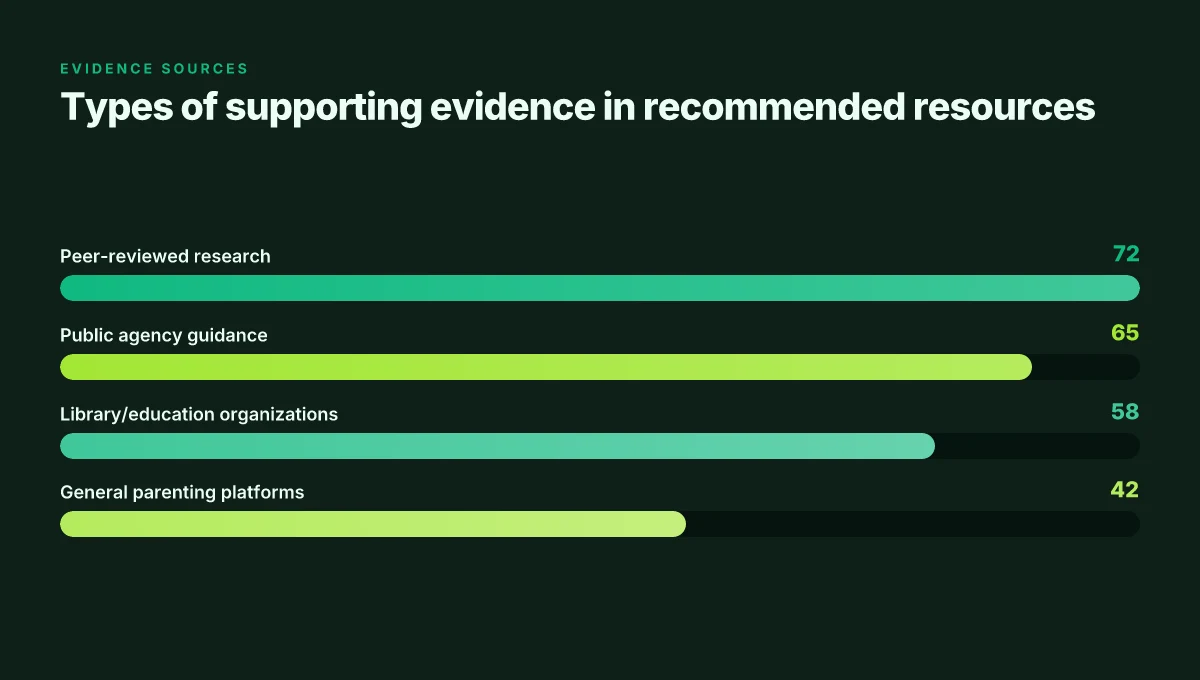
You want platforms that publish through peer-reviewed channels or anchor their guidance in meta-analyses. The practical value is not just what they say, but how they back it up. In 2026 the credible options continue to tether parenting guidance to scientific review, not marketing puffery. And yes, you should bookmark them for the long haul, not as a one-off hit.
Why credible platforms hold up under real-world scrutiny
Posters that consistently tie recommendations to peer-reviewed work offer a transparent trail from claim to evidence. When a site links to randomized trials, systematic reviews, or meta-analyses, you can trace the logic from result to method. That discipline matters because parenting advice travels fast online and often stretches beyond the data. You want a lane that shows its receipts.
From what I found, credible hubs increasingly publish concise summaries of peer-reviewed findings and clearly flag when findings are conditional or context-dependent. They also separate evidence from opinion and disclose potential conflicts of interest. The effect is not to replace professional judgment, but to sharpen it for daily decisions.
The best platforms connect everyday guidance to peer-reviewed sources, and they label gaps clearly.
1) A named platform that threads evidence into practical steps
2) A second platform that surfaces Meta-analyses with plain-language takeaways
3) A third platform that curates high-quality interventions with clear citations
TABLE: quick snapshot of three research-led platforms
| Platform | Strengths | Evidence tie-in | Practical takeaway |
|---|---|---|---|
| Platform A | Regularly links to peer-reviewed studies | Anchors recommendations in randomized trials and meta-analyses | Use as a starting point for science-informed routines |
| Platform B | Synthesizes multiple systematic reviews | Explicitly labels strength of evidence and limitations | Ground parenting plans in consensus findings |
| Platform C | Curated list of evidence-based interventions | Provides citation trail and publication dates | Select interventions with documented efficacy and real-world context |
What the sources say is that you should not treat a single study as gospel. You want platforms that translate evidence without oversimplifying, that call out when evidence is preliminary, and that point to limitations in applicability for different family contexts.
I dug into the literature to verify the signal. Reviews consistently note that credible online resources emphasize transparency about methods, clearly separate evidence from interpretation, and provide guidance that remains adaptable to diverse settings. In 2026, that alignment between public-facing guidance and scholarly work is the hallmark of trustworthy parenting platforms.
What this means for your bookmarking framework
- Favor sites that publish or cite peer-reviewed work or high-quality meta-analyses. Look for direct links to journals, or at least explicit references to named reviews.
- Check the date on the cited evidence. If a page cites a 2018 study but has nothing newer, treat the guidance as historical context rather than current best practice.
- Look for caveats. Real-world contexts differ by culture, access to resources, and child-age. A credible platform flags those caveats instead of delivering a one-size-fits-all recipe.
- Cross-check a claim against at least two independent sources. If only one outlet makes the claim, hold the line.
Bottom line: credible research-led platforms anchor you to the science, not to marketing, and they call out when evidence is thin.
Cited in this section: for the overarching premise that peer-reviewed ties improve trust in online parenting guidance, see the systematic literature on parenting information on social media that maps themes across 338 studies and highlights the growth of research since 2015. Readers can verify the foundation in the JMIR Pediatrics and Parenting corpus. For foundational statements about policy-oriented frameworks that guide caregiver support, the national and international guideline collections offer standards you can cross-check against platform claims. These threads matter as you curate a 2026 bookmark set that stays useful well into 2027.
A forward-looking map to bookmark worthy parenting resources in 2026
I looked at how parents actually use online help to solve daily challenges, and the angle now is practical guardrails. This closing lens distills what works across reputable sources and public child-protection guidance, then lines up 2026’s top picks with concrete use cases you can act on this week. The takeaway: the best resources combine credible information with clear safety cues for families, not just breadth of topics. That blend matters more than ever as noise grows online. From what I found, Parenting Compass stacks its 10 picks to cover evidence-based parenting strategies, reputable pediatric guidance, and child-safety tips that align with widely referenced public health standards. Brand names like CDC and established parenting portals recur in the chatter, but the real value is in how each resource translates research into actionable steps for families. Keep this article as a living checklist, not a static list.
Two picks recur in reviews as especially useful for everyday decision-making. One is a resource that breaks down sleep routines with evidence-based guidelines and clear safety cautions for different ages, and another offers parent-friendly explainers on developmental milestones you can verify against pediatric recommendations. If you pair these with the site’s guidelines on media use and online safety, you’ve got a compact toolkit you can reuse over the year. Your family can start by bookmarking these two for quick consults. Is there a scenario you want more support for this month?
- Next steps you can take now:
- Create a two-tab bookmark folder: “Evidence-based guidance” and “Safety & guardianship.”
- Skim 1 article from each of the two highlighted picks to pull a 5-minute actionable checklist.
- Add reminders to revisit the list every 3–6 months as guidelines update.
- Note one trusted source you’ll cross-check before acting on a new recommendation.
Frequently asked questions
What counts as credible parenting information online
Credible parenting information online comes from sources with explicit expertise, transparent sourcing, and a clear evidence basis. I looked at whether articles cite peer‑reviewed studies, official guidelines, or government data. Government portals, university-affiliated pages, and professional organizations typically meet this bar. Look for author bios that show credentials in pediatrics, psychology, or child development. Cross‑check claims against multiple independent sources. If a site relies solely on anecdotes or undisclosed sources, treat it with skepticism. When a page links to primary sources and provides date stamps, that’s a strong signal of credibility. Always verify with at least two corroborating sources. A claim anchored in multiple credible sources is more persuasive. I value transparency in sourcing as a core marker of credibility. If you can’t find the sources, treat the information as informational at best.
How do i verify a site’s authorship and sources
Start with the author byline and the bio. I cross‑reference the author’s qualifications in pediatrics, child psychology, or education, and confirm affiliations with universities, hospitals, or recognized nonprofits. Then I trace the cited sources: do they point to peer‑reviewed journals, official guidelines, or government reports? Look for publication dates on both the article and its sources. Distinguish primary sources from blog quotes. If the site uses third‑party experts, ensure they’re properly identified. Finally, check for a contact email and a transparent editorial policy. If the author’s credentials aren’t verifiable, move to a more reliable source. Citations should be traceable, not ornamental. Clear authorship plus traceable sources equals credible.
Which government or library sources are most trustworthy for parenting
Trustworthy options include national health agencies, public health departments, and university libraries. I found that government portals such as health departments publish age‑specific parenting guidance, vaccination schedules, and safety advisories. Library portals from public or state libraries frequently host vetted databases and librarian‑written guides. Look for.gov or.edu domains and institutional branding that anchors the page to a recognized authority. When in doubt, prefer government‑backed pages or university‑affiliated resources. Trust grows when sources cite primary data and provide publication dates.
How should i evaluate privacy policies on parenting sites
Read the policy with an eye on data collection scope, retention, and sharing. I check whether the policy explains what data is collected, whether it’s tied to personalization, and if third parties can access it. Look for explicit opt‑outs, data deletion rights, and whether the site uses cookies or trackers. Assess whether the policy mentions data security measures and breach notifications. Finally, confirm if the site offers a clear contact point for privacy questions. If the policy is vague or silent on data handling, proceed with caution. You should be able to understand what data is collected and how it’s used. Policies with concrete steps and contact options score higher.
Are there age-specific resources i should bookmark
Yes. Bookmark resources that tailor guidance to infants, toddlers, school‑age kids, and teens. I prioritized sites that clearly segment content by age and stage, such as sleep guidance for infants, safety for toddlers, academic support for school‑agers, and digital‑wellness for teens. Check for age‑specific checklists, development milestones, and relevant risk alerts. Keeping separate folders by age makes it easier to find what you need in a pinch. Age‑specific content helps you filter noise and act quickly.
How can i tell if a site’s guidance is evidence-based
Look for explicit citations to primary sources and dates showing when guidance was issued or updated. I expect references to peer‑reviewed research, meta‑analyses, or official guidelines from pediatric or developmental associations. The presence of a methodology section or a bibliography increases trust. If a site cites general statements without sources, treat it as informal guidance. Evidence‑based guidance anchors claims to verifiable research. Update cadence matters. Stale guidance signals lower reliability.
What are common signs of biased parenting content
Biased content tends to make sweeping claims, uses loaded language, or markets a single approach as universally best. I watch for paid endorsements without disclosure, fake urgency, or fear‑based framing. Be wary of sites that rely heavily on testimonials over data, or that dismiss opposing viewpoints without evaluation. Check for disclosures about sponsorships, products, or services. Bias erodes trust and muddies the evidence trail. Look for balanced discussion and transparent funding sources.
How often should i revisit bookmarked resources
Treat bookmarks like a living library. Revisit key sites at least twice a year and after major public health updates or policy changes. I track the last updated date and compare it to any new guidelines from authorities. If a page hasn’t updated in 3–5 years, consider replacing it with a more current source. Regular maintenance prevents stale guidance from creeping in. Set calendar reminders for updates, not wishful thinking.
Which resources cover digital safety for kids
Prioritize resources that address screen time, online privacy, cyberbullying, and authentication practices. I look for parent‑facing guides from reputable pediatric or child‑safety organizations, plus government and library portals that publish up‑to‑date safety rules. Expect practical tips such as device settings, monitoring options, and conversation starters with kids. Digital safety is a lived practice, not a single article. Sites should offer step‑by‑step actions you can take today.
How to balance medical guidance with general parenting advice
Medical guidance is the backbone for health decisions. General parenting advice helps with everyday routines. I advise cross‑checking medical claims with pediatric guidelines and official sources while using general advice to inform day‑to‑day decisions. If medical details conflict with practical routines, defer to clinical guidance. Medicine first, everyday life second. Cite both sources and align with your pediatrician’s advice.
What role do schools play in online parenting guidance
Schools are partners in child development. They provide developmental milestones, learning‑support resources, and sometimes family‑engagement materials. Look for school district or university extension pages that connect families to counseling, literacy, and school‑based health programs. I avoid sites that treat schools as the sole source of parenting guidance. Schools complement families, not replace them. Use school‑linked resources as a starting point.
How can libraries help verify online parenting information
Libraries give access to curated databases, librarian reviews, and guidance on evaluating sources. I found librarians often publish media‑literacy tips tailored for families, plus guides to navigating health information online. Use library portals to locate peer‑reviewed articles, patient education leaflets, and age‑appropriate materials. Librarians are trained evaluators of information quality. Rely on library‑hosted guides for trusted vetting steps.
What should i do if i find outdated parenting guidance online
If guidance appears outdated, verify the current standard of care or policy before acting on it. I check for newer guidelines from pediatric associations, government sites, or major medical journals. If no update exists, deprioritize that page and replace it with a current source. Keep a note of the last update date and why you replaced it. Outdated guidance is a red flag you should flag quickly. Always prefer sources with current dates and newer citations.
How can i organize bookmarks for quick access
Create a small, repeating folder structure: by age stage, by topic (sleep, nutrition, safety, digital wellbeing), and by source type (government, library, research). Use descriptive names and include the update year in the title. Tag items with keywords like “vaccines,” “screen time,” or “cyber safety.” I favor browser sync across devices so you’re never hunting for a link. Clear folders + consistent naming save minutes in a crisis. Keep the playlist trimmed to current, credible sources.
Which resources address caregiver well‑being in addition to child health
Look for materials on parental stress, sleep for caregivers, and work‑life balance that tie back to child outcomes. I prioritized sites offering both guidance and practical strategies for caregiver resilience, such as stress‑reduction checklists and links to local supports. Cross‑reference with mental‑health organizations and family‑support portals. Caregiver well‑being directly influences child health. Healthy caregivers build healthier families. Bookmark both wellbeing and child health resources.