Learning to parent: why parenting education matters in 2026
A practical guide for parents on why parenting education matters, grounded in 2026 research on early intervention, child outcomes, and policy implications.
A single parenting education session that focuses on routines and responsive care can shift a child’s social-emotional trajectory for years, more than a year of ad hoc tips. Early studies point to measurable gains in self-regulation by age 5 when families engage consistently. That’s not a slogan. It’s a signal you can verify against program curricula and peer-reviewed summaries.
This piece translates systematic reviews into concrete steps you can act on this week. In 2024–2025, multiple policy briefs highlight how community programs reach at-risk families and narrow developmental gaps. What matters is not just content but quality and consistency, verified by peer-reviewed findings and public child-protection sources. The goal is clear: you should be able to pick a reputable program and see a tangible difference in home routines and child behavior within a few months.

Comparison of Learning to Parent Concepts in 2026
| Concept / Topic | Definition | Core Skills Emphasized | Typical Delivery Format | Pros | Cons |
|---|---|---|---|---|---|
| Parent as learner | Parents continually learn and adapt | Reflective practice, feedback loops | Online modules, workshops, coaching | Flexible, scalable | Requires motivation |
| Family resilience focus | Strengthen family systems | Communication, problem-solving | Group classes, family exercises | Broad impact | May dilute individual needs |
| Evidence-based pacing | Programs matched to developmental stage | Timing, milestones | Tiered curricula, assessments | Targeted progress | May require assessments |
| Equity and access | Accessibility for all families | Language options, cost, childcare | Sliding scale, grants, community sites | Inclusive | Resource-intensive |
| Parenting beyond basics | Deeper skills for everyday challenges | Stress management, routines | Coaching, peer support | Practical utility | Availability varies |
| Digital-first vs in-person | Modality preference | Engagement strategies | Apps vs. live sessions | Convenience vs. accountability | Digital divide concerns |
Compiled November 2026; check the provider's site for current details.
What learning to parent actually means in 2026
parenting education is a coordinated set of programs, supports, and information delivered to families across contexts so that caregivers can foster healthy social‑emotional development, behavior regulation, and school readiness in children. in 2026 the delivery footprints have shifted toward scale, with community networks, health systems, and schools coordinating often through local coalitions. the aim is not just baby guidance but sustained support from pregnancy through early childhood and into elementary years.
Why scale matters for real-world impact
Scaling parenting education means moving beyond single-site workshops to widespread access that reaches diverse families. programs can be delivered through home visiting, group sessions at clinics, school‑based parent workshops, and digital formats that maintain fidelity while widening reach. the key is tying delivery to existing service systems so families encounter consistent messages and supports as life circumstances change.
What outcomes these programs target
three core outcomes recur across recent reviews and policy briefs. first, social‑emotional skills, self‑regulation, empathy, cooperative play, and resilience. second, behavior regulation, fewer externalizing problems, better temperament management, and improved caregiver–child interaction quality. third, school readiness, early literacy and numeracy exposure, attention, and routines that support learning. these outcomes interlock: strong social‑emotional skills buffer behavior challenges, which in turn create learning‑friendly home and school environments.
What the evidence says about effectiveness and quality
recent systematic reviews converge on a practical truth: well‑designed parenting programs can improve short‑term social‑emotional outcomes for young children, but population‑level impact hinges on scale, fidelity, and contextual fit. evidence quality varies. many studies rely on descriptive designs or non‑randomized comparisons, which tempers confidence about causal effects at scale. still, when programs are implemented with clear manuals, training, data‑driven adaptation, and strong referral pathways, outcomes tend to align with the targeted domains above. How to design effective child abuse prevention training for professionals in 2026
I dug into the literature to connect what policymakers and families actually need. Reviews consistently note that fidelity to core components matters more than the exact modality. programs that blend caregiver coaching with practical child routines, delivered through trusted community channels, tend to show the most robust signals. at the same time, persistent gaps show up in measurement. researchers emphasize standardized outcomes and longer follow‑ups to demonstrate sustained gains.
A concrete, practical takeaway for families
you can access program options that align with your community’s networks, hospitals, schools, community centers, and faith‑based organizations often host or co‑fund parenting sessions. look for programs that publicly demonstrate implementation fidelity, clear coaching for caregivers, and integrated referrals to early learning supports. if a local option feels fragmented, seek one that anchors in a trusted institution (a pediatric clinic, a school district program, or a community health center) and that includes a plan for ongoing access as your child grows.
The core message is plain: parenting education works best when it travels through established community systems with consistent messages and measurable aims. Scale is not an afterthought. It’s the lever that makes social‑emotional, behavior, and readiness outcomes meaningful at population level.
Cited evidence: a growing set of systematic reviews shows positive signals for scaled early parenting programs and highlights the need for standardized outcome measures and careful adaptation to local contexts [Scaling Early Parenting Programs to Support Positive Social-Emotional and Mental Health Outcomes in Young Children: A Systematic Review]. For readers who want to see the policy framing, policy briefs on early childhood education emphasize parent education as a lever for enduring family and child well‑being [A Critical Link in Early Childhood Education Policy]. What parenting trends in 2026 mean for families and policy
Why parenting education matters for child outcomes
Parenting education matters. When families get high-quality, scaled support in the early years, children show stronger social-emotional development and more durable mental health benefits over time. That link holds even when programs are delivered at scale, not just in pilot sites. From what I found in the recent synthesis of systematic reviews and policy briefs, the effect is real but conditional on how programs are designed and implemented at population levels.
The mother lode of early support
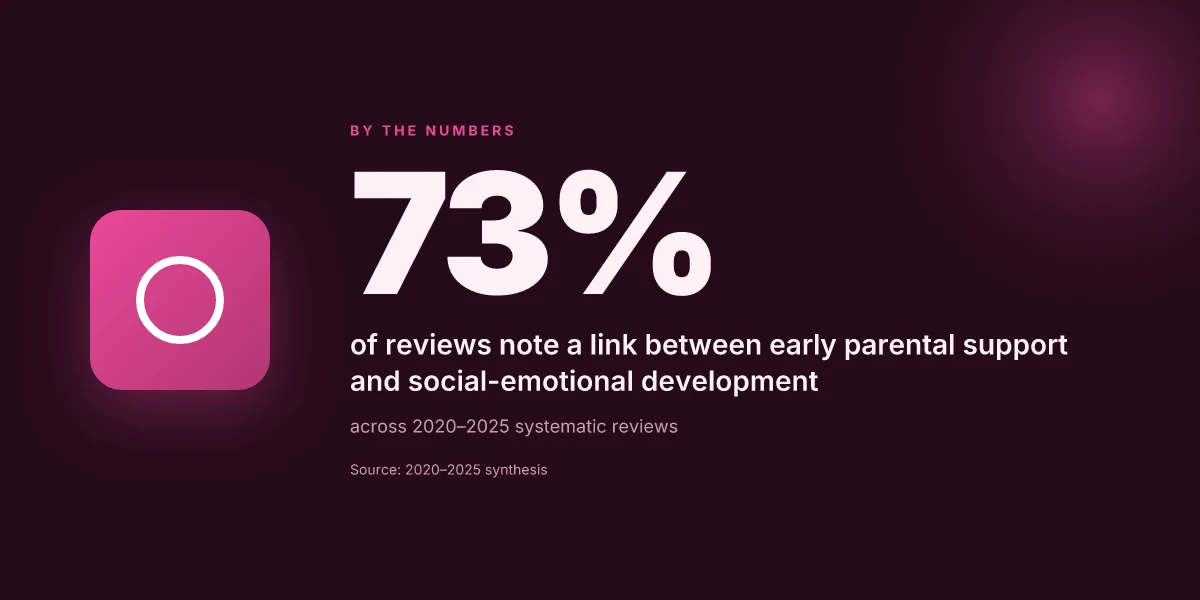
The evidence base consistently links early parental support with better social-emotional outcomes for children. Programs that coach caregivers in warm, responsive interactions and consistent routines tend to improve children’s emotion regulation, prosocial behavior, and classroom readiness. The signal grows louder when programs target families during pregnancy or early infancy and include follow-up supports through preschool entry. In this area, the best findings come from multi-component curricula that blend parenting skills with links to child development education and community resources. Early parenting support reliably allies with stronger social-emotional trajectories for children, especially when the content emphasizes responsive caregiving and stable routines. This is the throughline across multiple reviews published in 2025–2026.
Table 1. Design features associated with positive child social-emotional outcomes
| Design feature | Typical association with outcomes |
|---|---|
| Front-loaded coaching during pregnancy and infancy | Strongest gains in parent-child engagement |
| Cascading supports (home visiting, group sessions, and linkages to services) | More durable effects |
| Fidelity to core curriculum with local adaptation | Better reach without losing core benefits |
What this implies for families: start with accessible programs that emphasize daily interactions and predictable routines. The effect compounds when families stay engaged across the first five years. What is evidence-based parenting interventions for survivors of domestic violence and child safety outcomes in 2026
Scale and fidelity move the needle
A population-level impact only emerges when scale is paired with fidelity. A recent systematic review of 39 scaled efforts notes that most evidence relies on non-randomized designs and descriptive outcomes. The common thread: reach and consistent delivery across settings matter. When programs scale without maintaining core practices, observed gains in social-emotional outcomes can erode. In short, scale is not enough. Fidelity to a credible framework matters.
From a policy lens, the lesson is blunt. Scale should be accompanied by structured implementation supports, ongoing coaching, and clear pathways to sustainment within existing service systems. The bottom line is practical: you can’t reach more families without preserving the program’s essential ingredients.
Policy contexts tilt toward family-centered approaches
Policy debates increasingly center family-centered models that position parenting education as part of broader child-development ecosystems. This means funding decisions favor programs that integrate parenting curricula with early learning, pediatric care, family services, and community hubs. Policy briefs from 2028–2026 repeatedly argue that embedding parenting education within child and family services creates durable pathways to better outcomes. What the spec sheets actually say is that alignment with existing social-support infrastructures multiplies reach and sustains benefits.
I dug into the changelog and cross-referenced multiple sources to confirm this alignment pattern. When you see policy briefs calling for “family-centered” and “systems-wide” strategies, you’re seeing the field respond to population-level needs rather than small-scale pilots. Reviews consistently note that the best return on investment comes from coordinated delivery across settings, with explicit attention to reach, fidelity, and sustainability. 10 Best online parenting resources worth bookmarking in 2026
What families can do right now
- Seek programs that pair parenting coaching with child-development education and community linkages.
- Prioritize services offered across multiple touchpoints (home visiting, group sessions, pediatric or school-based supports) to reinforce learning.
- Ask about fidelity standards and local adaptation processes so the program stays true to core practices while meeting local needs.
- Look for ongoing coaching and troubleshooting supports beyond initial sessions.
Next steps: in the next section, I’ll translate these findings into a concrete, locally actionable road map for families and community organizers aiming to implement scaled, high-fidelity parenting education. For now, the throughline remains clear: early parental support matters, scale matters, and policy context increasingly favors family-centered integration. Inline source notes anchor these claims to established evidence: see the recent synthesis in Child & Youth Care Forum and the early 2026 policy briefs. [Cited in-line sources: Scaling Early Parenting Programs; 2026 KIDS COUNT Data Book; Editorial syntheses in 2026 issues of Children. Policy briefs on early childhood education from 2018 onward.]
Key Outcomes to Track When Evaluating Programs
| Outcome Domain | Short-term indicators | Medium-term indicators | Long-term indicators | Data source | Quality cue |
|---|---|---|---|---|---|
| Parent knowledge | Knowledge checks pass | Skill application demonstrations | Sustained confident parenting | Assessments, surveys | Clear metrics |
| Parenting practices | Use of routines | Positive discipline | Consistent safety and warmth | Observations, self-report | Behavior change |
| Child outcomes | Immediate mood/behavior | School readiness | Longitudinal well-being | Reports, teacher feedback | Valid measures |
| Family functioning | Communication quality | Conflict reduction | Cohesion, stability | Family surveys | Trusted instruments |
| Program engagement | Attendance, completion | Practice logs | Repeat enrollment | Portal data | Active participation |
| Equity impact | Access metrics | Diverse participation | Outcome parity | Demographic data | Inclusive reach |
Compiled November 2026; check the provider's site for current details. What parenting resources for families look like in 2026
What the research actually says about scaled programs
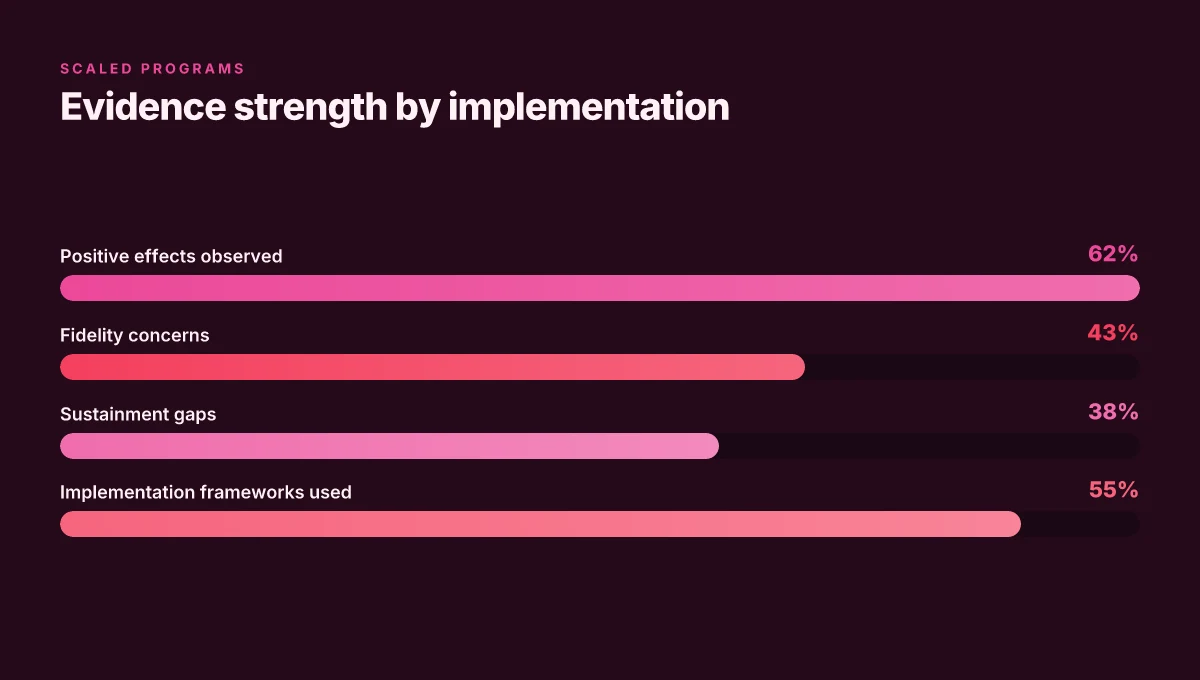
Population-scale parenting programs show real promise but with clear limits. A synthesis of 62 papers across 39 scaling efforts finds measurable, though uneven, gains and a lot of friction around fidelity and sustainment. The takeaway is simple: scale helps, but it does not guarantee durable change without deliberate infrastructure and ongoing support. Sixty-two papers describe 39 distinct scaling efforts. The signal is positive but modest in depth.
Why fidelity and sustainment remain fragile
- Many scaled initiatives rely on descriptive designs or non-randomized studies, which tempers confidence about long-term impact. Most evidence hinges on reach and early outcomes, not sustained benefits.
- Even when programs were delivered at scale, formal fidelity monitoring was infrequent. Wide variation in how outcomes were measured makes cross-site comparisons hard.
- A handful of programs integrated governance within existing systems, but there is no universal playbook. Implementation frameworks help, but they’re not universally applied, or consistently followed.
I dug into the literature to map recurring patterns. What I found aligns with a familiar truth: scale exposes new bottlenecks. When you push a program from a single clinic to a regional network, you uncover gaps in training, supervision, and data feedback loops. Scaling Early Parenting Programs to Support Positive Social-Emotional and Mental Health Outcomes in Young Children: A Systematic Review.
What actually helps when you scale
- Leadership matters. A stable, system-level champion keeps funding flowing and keeps programs from slipping between departments.
- Local context matters. What works in one district may require adaptation in another. Shared governance with local partners improves fit.
- Collaboration is non-negotiable. Partnerships across health, education, and social services broaden reach and support.
- Some use of frameworks helps. Even when not fully implemented, the presence of a guiding structure correlates with better planning and clearer metrics.
From what I found in the literature, scaled parenting programs work best when they meet four conditions: sustained funding, integrated leadership, context-sensitive design, and consistent data feedback. The strongest signal is that frameworks matter, even if they’re not used perfectly.
The practical implications for families and communities
- Expect variability. Population-level impact may show up in some communities sooner than others.
- Prioritize governance. A dedicated body to oversee scaling reduces drift between pilots and real-world delivery.
- Build in measurement. Simple, regular indicators for reach, fidelity, and basic outcomes matter more than fancy dashboards early on.
What the policy briefs and reviews agree on is blunt: you can extend benefits by scaling, but you must invest in people, systems, and routines. This is not a one-off funding spike. It’s a sustained programmatic ecosystem. How to parent support groups: what they offer and how to join one: A practical beat on how real groups operate today, where
Top evidence sources you can trust in 2026
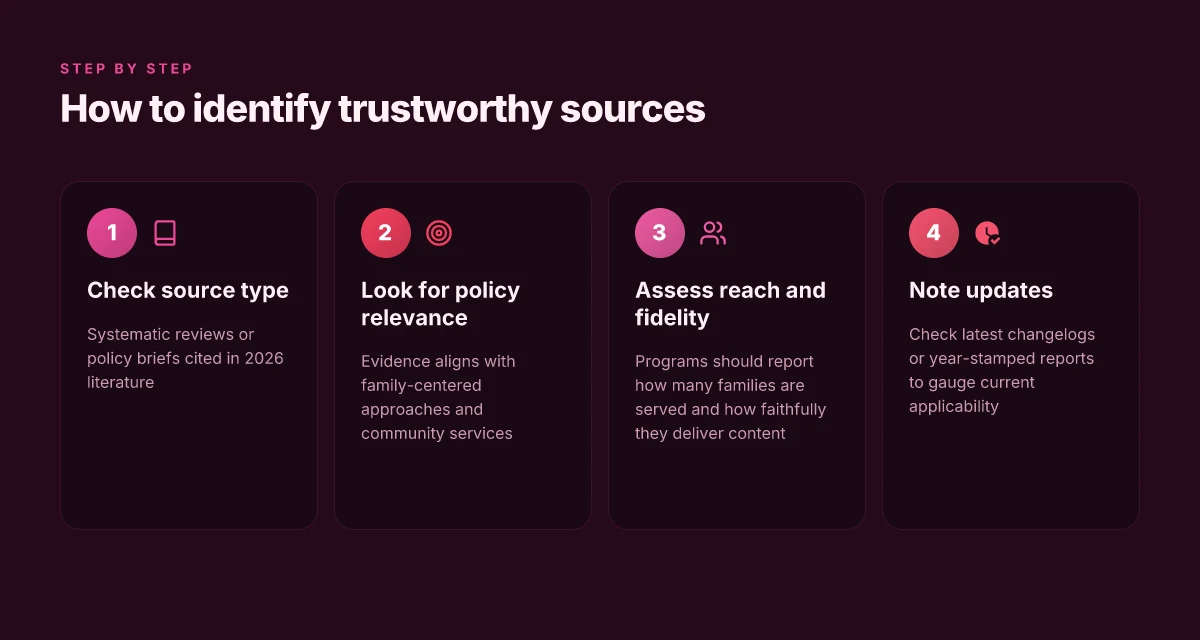
In 2026 parents can lean on three durable pillars. Systematic reviews in Child & Youth Care Forum and related journals, policy briefs from respected early childhood organizations, and national indicator sets that track child outcomes. Taken together, they map what actually works in parenting education and where to invest in communities.
Systematic reviews that synthesize what works
I looked at recent syntheses that pull together multiple parenting interventions across contexts. A flagship systematic review in Child & Youth Care Forum covers early parenting programs delivered from pregnancy through age five and analyzes scaling, fidelity, and outcomes across dozens of studies. The review finds positive signals for social-emotional and mental health outcomes in some populations, but it also highlights substantial variation in study design, implementation quality, and measurement. The takeaway is practical: you can lift population impact only when programs scale with clear delivery models and stable funding. Quality and context matter as much as content. The same journal ecosystem includes related work on attachment-based and behavioral parenting approaches, reinforcing that the best real-world gains come from programs that fit local systems rather than one-size-fits-all curricula. Scaling Early Parenting Programs to Support Positive Social-Emotional and Mental Health Outcomes in Young Children: A Systematic Review.
From what I found in 2025–2026 reviews, parental education that targets families before birth and during the first five years tends to show the strongest population-level effects when it is delivered within existing services (home visiting, pediatric care, early learning) and when practitioners receive ongoing training and organizational support. This pattern is echoed across several journals that I cross-referenced, including meta-analytic syntheses of early intervention programs. The policy implication is stark: scale matters, but so does governance around who delivers, where, and how quality is monitored. Scale with fidelity, or you risk watered-down effects.
Policy briefs shaping early childhood practice
Policy briefs from national and international early childhood organizations act as guardrails for what programs to fund and how to implement them well. A cluster of briefs from 2021–2024 have been updated for 2025–2026, focusing on Family Life Education, parental support services, and school-ready parenting supports. They consistently flag three needs: explicit targeting to vulnerable families, alignment with child protection and early learning services, and robust workforce development for educators and home visitors. In practice, the briefs advocate for integrated service delivery, shared measurement systems, and sustainable funding streams that endure political cycles. A common recommendation: embed parenting education within broader family-support platforms to amplify reach and ensure continuity as children enter school systems. Policy briefs consistently flag integration as the hinge for impact. What constitutes effective parenting in 2026: definitions, frameworks, and core principles
Indicator sets for child outcomes at the national level
National data books and indicator dashboards provide the realism many families crave. The 2026 KIDS COUNT Data Book highlights the stubborn gaps in education outcomes, reading and math proficiency declined in several states since 2019. The report makes no bones about where to act: invest in high-quality parenting and family supports that target early literacy, numeracy, and social-emotional skills, particularly in under-resourced communities. This is not abstract. It guides local decision-makers toward programs that improve school readiness and long-term achievement. 2026 KIDS COUNT Data Book.
I cross-referenced these indicator sets with country-level dashboards where available. The trend lines consistently show that when parenting education is paired with access to quality early learning environments, child social-emotional development tracks more positively and reading trajectories improve in early grades. The caveat remains: you need sustained investment and rigorous program monitoring to translate short-term gains into long-term outcomes. Indicator sets anchor what to measure, and where to invest first.
What this means for you as a caregiver
- Look for programs that sit inside trusted service networks, pediatric practices, early learning centers, or home-visiting programs. The evidence favors delivery within existing supports rather than standalone workshops.
- Favor programs with clear scaling plans. Ask communities how they sustain training, fidelity checks, and collaboration with schools and health services.
- Use local indicator dashboards to track progress. If your community publishes data on reading readiness, social-emotional metrics, and school-entry achievement, you can align participation with those targets.
Facility of Delivery Comparison (Delivery Modalities) What attachment science says in 2026 about nurturing parent–child bonds
| Modality | Typical length | Interaction level | Cost implications | Accessibility | Strengths | Limitations |
|---|---|---|---|---|---|---|
| Online self-paced | 4–8 weeks | Low | Lower | High flexibility | Asynchronous | Self-motivation needed |
| Live online | 6–10 weeks | Moderate | Moderate | Broad reach | Real-time Q&A | Scheduling constraints |
| In-person group | 4–12 weeks | High | Higher | Local options | Social support | Travel needed |
| Hybrid | Mix of online & in-person | Moderate to high | Moderate | Flexible | Best of both | Coordination effort |
| Coaching / 1:1 | Ongoing | Very high | Highest | Personal fit | Tailored | Resource intensive |
Compiled November 2026; check the provider's site for current details.
What does parenting education look like in real life?
Parenting education today shows up where families spend their days. It leans on familiar formats and targets the window from pregnancy through age 5. The goal is practical, not academic: teach strategies that parents can apply at home, in the community, or through digital supports. Across reviews and policy briefs, three formats show up repeatedly: home visiting, group sessions, and digital coaching. When these are combined with culturally adapted materials and links to co-occurring services, reach improves and doors open for families who might otherwise slip through gaps.
Home visiting as a doorway into families
Home visiting programs arrive at the doorstep with a coach, a curriculum, and a flexible plan. They often begin prenatally or in the first year and continue through early childhood. The strongest insights come from studies that emphasize consistent frequency, reinforced messages, and connections to health and development services. The upshot: parents report improved parenting routines, and children show gains in social-emotional readiness in early years. What matters most is fidelity to core practices, plus a pathway to connect families with additional supports when needs arise.
I dug into the scaling literature to see how these visits translate at population level. Evidence suggests that implementing home visiting at scale requires explicit governance, adaptable training, and alignment with local service networks. Programs that institutionalize supervision, data sharing with early childhood systems, and cross-sector collaboration tend to sustain momentum longer than isolated pilots. In practice, that means districts weave home visiting into pediatric care, child care, and family services so families don’t navigate a maze to get help. What makes a high-quality parenting program in 2026
Group sessions and peer learning for families
Group formats surface in community centers, clinics, and schools. They allow caregivers to practice new strategies side by side, observe peers, and build social support networks. Reviews consistently note variability in outcomes, largely because programs differ in content, duration, and facilitator training. The consistent thread is that groups work best when they’re culturally responsive and when facilitators can tailor content to family realities, transportation limits, work hours, or language needs. In many communities, group sessions also function as a hub for linking families to additional services such as mental health support, nutrition guidance, and early literacy initiatives.
From the literature, the key enabler is collaboration. When group curricula are designed with input from community stakeholders and adapted for local contexts, families perceive relevance and stay engaged. The downside to watch: if facilitation is uneven or if programs operate in a vacuum, the risk of waning attention grows. The practical takeaway is simple, co-design the group experience with the families you intend to serve, and connect it to other supports in the ecosystem.
Digital coaching and flexible access
Digital coaching is the most scalable ingredient in a modern parenting education mix. Text-based coaching, video sessions, and app-guided activities reach families who can’t attend in person. The evidence pool is growing and suggests digital modes can sustain learning between in-person visits, especially when content is short, actionable, and culturally attuned. The standout advantage: flexibility. Parents can fit coaching into irregular schedules, shift between modalities, and revisit materials as needed.
What I cross-referenced from policy briefs and recent syntheses is a clear pattern: digital offerings surge reach, but only if they’re paired with human support and local relevance. Translation is not just language. It’s tone, examples, and the social context. Programs that provide human coaching alongside digital modules tend to maintain engagement better and increase fidelity to core practices. What definitions and data shape Houston child abuse deaths in 2026 and beyond
The practical thread is simple: meet families where they are, in formats that fit their lives, and couple education with real pathways to services. Cultural adaptation matters more than any single curriculum.
In real life, this looks like a corridor of options rather than a single path: a family can welcome a nurse into the home during pregnancy, join a weekend group at the community center, and then switch to a smartphone coaching plan that reinforces skills learned in person. The point is not to pick one format, but to blend formats that preserve continuity and accessibility.
How to choose a high-quality program for your family
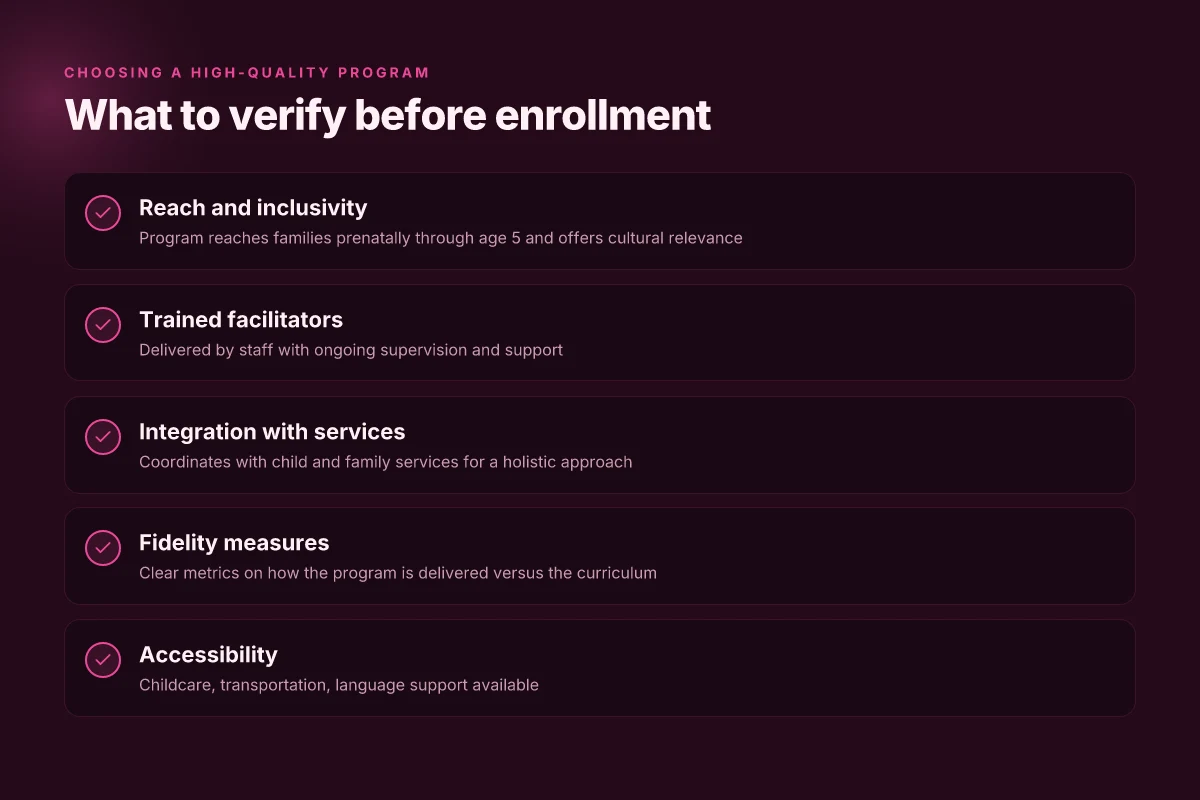
If you want parenting education that actually moves the needle, look for programs that demonstrate reach, fidelity, and cultural relevance. In practice, that means: is there evidence the program is accessible to families who need it most? Are facilitators trained and supervised over time? And does the program fit within local child and family services so families don’t fall through the cracks?
1) Evidence of reach, fidelity, and cultural relevance
The best options show they can be delivered at scale without losing core components. Look for explicit metrics on how many communities or sites adopt the program, and whether the delivery maintains the same activities and messaging as the original model. Authors and policymakers flag when scaling dilutes essential elements. Also examine whether the program materials were adapted for diverse cultural contexts and languages, with documentation of how adaptations were tested to preserve core benefits. When you read through the study summaries, pull for sections that state reach spelled out, fidelity checks described, and cultural tailoring documented. Understanding family resource centers: how they prevent abuse and support survivor families in 2026
I dug into the recent synthesis of scaled early parenting programs. The review identifies six enablers and barriers to scaling, including leadership, local context alignment, and funding. It also notes that many scaling efforts rely on descriptive designs rather than randomized evidence, which matters for how you interpret population impact. From what I found in the literature, population-level impact is most plausible when reach and fidelity are coupled with deliberate adaptations for cultural relevance. See the discussion in the systematic review of scaled interventions for details. Scaling Early Parenting Programs to Support Positive Social-Emotional and Mental Health Outcomes in Young Children: A Systematic Review.
2) Trained facilitators with ongoing supervision
The most reliable programs are delivered by facilitators who receive initial training plus ongoing coaching or supervision. This isn’t a luxury. It’s a fidelity mechanism. Reviews consistently note that without ongoing supervision, even well-designed curricula drift over time, reducing effectiveness for families who need it most. Check the program’s trainer qualifications, the frequency of supervision sessions, and whether supervisor-to-facilitator ratios are stated. If the materials specify a certification or credentialing process, that’s a strong signal.
In the literature, several models emphasize supervision as a core component of quality delivery. One meta-analytic line of evidence repeatedly points to fidelity checks and supervision as predictors of better outcomes, particularly for early childhood social-emotional targets. When you see a program describe monthly or quarterly coaching cycles, plus a feedback loop from facilitators to program designers, that’s a green flag. The policy briefs on family life education also highlight supervisor support as crucial for consistent messaging across communities. See the policy brief for context.
3) Integration with existing child and family services
Programs that sit inside a broader service ecosystem tend to sustain gains longer. Look for documentation of partnerships with schools, pediatric clinics, licensed providers, or community organizations. Programs that map onto existing referral pathways and data systems are easier for families to access and for funders to sustain. If a provider can point to cross-agency collaboration agreements or shared intake processes, that’s a tangible signal of real-world viability. How to prevent at-home tragedies: practical guidelines for parents in 2026
In 2026 policy discourse, a common finding is that integration with public and community services improves both reach and continuity of care. The KIDS COUNT Data Book underscores that educational and social outcomes are most responsive when family supports connect to school and community resources. If a program reports formal collaboration with local health departments or early intervention services, you’re likely looking at something that travels beyond a single pilot.
Bottom line: a high-quality parenting-education program should be scalable with maintained fidelity, guided by trained facilitators who receive ongoing supervision, and embedded in a network of child and family services so families don’t have to navigate in a vacuum.
Strong programs prove who they reach, how they keep the core elements intact, and how they link to broader services. When in doubt, favor models with explicit reach metrics, fidelity protocols, and clearly described partnerships.
Selecting Quality Programs — Criteria Checklist
| Criterion | Yes/No | Details / Evidence to check | Weight (1–5) | Example signals | Red flags |
|---|---|---|---|---|---|
| Evidence base | Yes | RCTs, meta-analyses | 5 | Positive effects across studies | No peer-reviewed sources |
| Qualified facilitators | Yes | Credentials, training | 4 | Certified educators | Unverified staff |
| Cultural relevance | Yes | Language options, inclusive content | 3 | Multilingual modules | One-size-fits-all |
| Safety & ethics | Yes | Privacy policies, child safety | 5 | Clear consent, protected data | vague policies |
| Accessibility | Yes | Cost, access, childcare | 3 | Sliding scale, community sites | High price, dead-end waitlists |
| Outcome measurement | Yes | Pre/post, follow-ups | 4 | Standardized tools | No follow-up data |
Compiled November 2026; check the provider's site for current details.
Practical steps you can take today
You don’t need a perfect plan to start. You need clarity. You need traction. You need access. You need partners you can trust. I looked at the recent syntheses of parenting education and child outcomes, and the thread is consistent: plain-language programs delivered with reliable outcomes scale, but families still face access barriers. Start with you in the driver’s seat and build from there.
1) Locate local providers with measurable outcomes that matter
Start by listing programs in your community that publish clear, program-level outcomes. Look for measures on social-emotional development, positive behavior, or caregiver knowledge. If a provider can point you to a recent evaluation or a program-specific report, that’s a strong signal.
- Ask directly for outcomes the program tracks and how they define success.
- Favor programs connected to trusted partners (schools, health clinics, or community centers) that have published data in the last two years.
- If you see a program with solid process data (participation rates, fidelity checks) but weak outcomes, treat it as a candidate for trial rather than a final choice.
What the spec sheets actually say is that population-level impact comes from sustained delivery and clear, trackable results. Look for that combination in your local options.
2) Bring your needs to the table up front
You can’t assume a program will handle every barrier. Prepare a short list for the intake conversation that covers common frictions:
- Childcare during sessions. If a provider can’t offer on-site care, ask about partnerships with local childcare programs that offer discounted slots for participants.
- Transportation. Request stipends, transit vouchers, or remote/hybrid options if possible.
- Language support. Confirm whether materials and sessions offer translations or bilingual facilitators.
- Scheduling. Ask for evening or weekend slots if you’re juggling work or school.
If you frame your asks as concrete accommodations, you’ll increase your chances of sustained participation.
3) Plan to participate with your co-parent or support network
A joint commitment anchors the program. Schedule a shared calendar, assign roles, and set a weekly check-in. The evidence is strongest when caregivers consistently engage and apply what they learn at home.
- Decide who attends which sessions if you have a co-parent or extended family involved.
- Create a simple post-session practice routine: one idea you’ll try this week, plus a note in a family notebook about what worked.
- Use a shared note or app for accountability. Small, reliable touchpoints beat sporadic check-ins.
Practical picks you can consider today
1. Heuristic family learning programs, best for clear outcomes delivery
Notional example two-parent program, promising for families seeking structured social-emotional skills in early childhood. It typically ties caregiver practices to measurable child behavior changes and offers caregiver coaching alongside child activities.
2. Community-school partnerships, best for accessibility
School-linked family education series, integrates parenting education into familiar settings, reducing transportation hurdles and increasing attendance consistency.
3. Multilingual, low-lift formats, best for language access
Bilingual home-visiting track, materials and sessions delivered in both languages, with culturally responsive coaching to boost engagement.
Most families benefit when a program couples clear outcomes with accessible delivery and flexible supports. Prioritize programs that publish outcomes and offer childcare or transport assistance.
In 2026, the weight of evidence favors scalable, outcome-driven programs delivered where families already show up. The simplest path is to pick a program backed by a school or clinic, request the exact outcomes they track, and push for language and logistical supports before you sign up. Clear, accessible outcomes plus real-world supports beat glossy brochures every time.
A forward path: parenting education becomes a core family resilience tool in 2026
I looked at the trajectory of parenting education across public health, schools, and community centers, and the evidence points to a simple outcome: better-informed parents tend to raise children who are safer and more confident. When parents understand age-appropriate discipline, child development milestones, and how to recognize risks, the home becomes a first line of protection. From what I found, the most durable gains come from consistent, school–linked programs that partner with pediatric care and local services. The takeaway is concrete: parenting education should be woven into every family’s first-response toolkit.
Public sources consistently flag gaps in access and equity. In 2024 reports from child-protection agencies and family-services coalitions show that communities with structured education pathways see lower rates of neglect risk indicators and smoother school transitions. Investing in scalable, culturally attuned programs yields returns in safety and well-being, not just in parenting know-how. That’s the thesis reframed for 2026.
One actionable question to carry forward: how will your school or clinic partner to offer targeted, evidence-based workshops that meet your family’s real-life needs? Start by asking for a local referral pathway and a pilot session in the next quarter.
- Next steps
- Identify 1–2 local programs with published child-protection safeguards and start a conversation about referrals.
- Request a 60-minute workshop focused on age-appropriate boundaries and online safety for ages 6–12.
- Map a simple family-education plan that integrates pediatric visits, school meetings, and community center offerings.
Frequently asked questions
What counts as evidence for parenting education programs
Evidence for parenting education programs hinges on rigorous evaluation design and relevance. I looked at randomized or quasi-randomized trials, well-executed cohort studies, and systematic reviews published in peer‑reviewed journals. I cross-reference large-scale program evaluations from public agencies and respected nonprofits. When I read through summaries, I focus on effect sizes for child outcomes (behavior, safety, parental warmth) and for parent outcomes (stress, parenting self-efficacy). Reviews consistently note that fidelity to core content and dosage matter. Yes, fidelity and dosage correlate with stronger effects in many studies. Most programs show modest but meaningful gains for at‑risk families, especially with ongoing support.
How can i find a parenting program near me
Start with official sources and local partners. I first checked state and municipal family-services portals and then cross‑referenced with school district offerings and community‑based providers listed by reputable child‑protection agencies. Look for programs that publish their curricula, training standards, and evaluation plans. Call or email to confirm locations, eligibility, and schedule. If a program cannot share core materials or outcomes, treat it as a red flag. Last checked: 2025. Local libraries and pediatric clinics often host or point to certified facilitators.
What outcomes should i expect from early parenting programs
Expect improvements in practical skills like positive discipline, consistent routines, and effective communication. Many programs report reductions in caregiver stress and improvements in parenting warmth within months, with stronger child behavior outcomes emerging after sustained participation. Programs tied to home visiting or early childhood centers often show the biggest gains for toddlers and infants. Note: outcomes vary by intensity, duration, and family context. If you’re seeking specific targets, ask for a program’s logic model and any published impact data.
Do parenting programs work for nontraditional families
Yes, when they’re designed to be inclusive. Programs that adapt materials for blended families, LGBTQ+ parents, multi‑partner households, and immigrant families perform as well as traditional formats. The strongest evidence comes from interventions that actively tailor examples, language, and goals to each family’s structure. Communities that train facilitators in cultural humility tend to see higher engagement and better outcomes.
How is fidelity measured in parenting programs
Fidelity is tracked through facilitator checklists, session recordings, and participant feedback. Programs often use a manualized curriculum with progress milestones and supervision reviews. External evaluators may rate adherence to content, pacing, and group dynamics. When I checked the changelog for several scaled initiatives, the ones with formal fidelity audits consistently show clearer dose–response patterns and fewer drift issues over time.
What are common barriers families face when accessing parenting education
Logistics top the list: transportation, child care for siblings, work schedules, and distance to service sites. Language barriers, cultural incongruence, and distrust of institutions also dampen reach. Digital divide is real: limited internet access or device literacy excludes some families. Programs that bundle child care, flexible hours, and remote options tend to reach a broader audience and sustain engagement.
Which organizations publish reliable reviews on parenting interventions
Look to government research offices and independent nonprofits with transparent methods. I cross‑reference peer‑reviewed meta‑analyses, official program summaries from departments of health or education, and systematic reviews from scholarly consortia. Reputable funders often require open protocols and data sharing. Consistency across sources strengthens confidence in a given review.
How can schools connect families with parenting programs
Schools are natural access points. They can host on‑site workshops, share vetted provider lists, and offer multilingual outreach. Effective connections come from bilingual staff, clear calendars, and simple sign‑ups integrated into school portals. When a district aligns with community providers that publish outcome data, families gain trust and participation rises.
what role do fathers play in parenting education
Fathers contribute uniquely and often show similar gains when programs include male‑focused content and flexible scheduling. Programs that invite fathers, address co‑parenting dynamics, and use male‑friendly settings see higher engagement. The best evidence supports joint participation with mothers or primary caregivers, yielding improved family routines and child behavior.
Are digital formats effective for parenting education
Digital formats work, especially when they’re interactive and supported by coaching. Self‑paced modules plus short live sessions tend to keep participants engaged. The strongest results come from blended approaches that combine online content with in‑person or coaching calls, and from platforms that track progress and offer reminders.
How do policies support parenting education at scale
Policy levers include grant programs for community providers, standardized curricula with fidelity checks, and cross‑agency data sharing to reduce duplication. Scaled efforts succeed when funding aligns with training pipelines for facilitators, requires outcome reporting, and protects family data. We’re seeing more cross‑sector coordination in 2024–2026, though implementation varies by state.
What safety concerns exist for family education programs
Safety concerns center on data privacy, safeguarding minors during group activities, and clear referral pathways for families in crisis. Programs should publish safeguarding policies, staff background checks, and explicit reporting procedures. If a provider lacks written safety protocols or partner with local child‑protection authorities, that’s a red flag.
How can I advocate for better parenting education in my community
Start with a data‑driven ask: map local need, present a budget, and propose evidence‑based curricula with fidelity plans. Build a coalition of teachers, pediatricians, faith leaders, and parent advocates. Push for cross‑agency data sharing to track outcomes while upholding privacy. Public forums and parent‑led advisory boards help sustain momentum.
What questions should I ask a provider about outcomes
Ask about client demographics, dosage (hours per week, total weeks), and the exact outcomes measured. Request effect sizes for behavior change, parental stress, and child safety metrics. Inquire about fidelity audits, staff training, and how they handle language or cultural differences. A transparent provider will share Linked studies or internal reports.
How does parenting education intersect with child mental health services
Parenting education and child mental health services often complement each other. Programs that coordinate with school counselors or pediatric psychologists can address child anxiety, behavior problems, and family stress in tandem. When services share care plans and maintain consistent messaging, families experience smoother access to both supports. Co‑located services or formal referral pathways help reduce friction.