What parenting trends in 2026 mean for families and policy
Explore 2026 parenting trends with empirical data on child outcomes, family dynamics, and policy implications drawn from peer‑reviewed sources and public reports.
A higher share of families report juggling work and caregiving without a clear budget, yet the impact isn’t just money. In 2024–2025 surveys, the median family spent more time on caregiving while reporting rising material hardship, and that balance reshapes how parents set routines and pick schools.
This piece connects the dots between family diversity, economic strain, and digital life to show how 2026 parenting norms form not from policy tweaks but from lived tradeoffs. Public reports flag persistent gaps in child care access, with nearly 20% of families delaying essential services because costs rise faster than incomes. What families do under pressure, time management, screen use, and shifts in who does what at home, sets the trajectory for child outcomes more than any single policy tweak. The goal is to translate that signal into actionable steps for families and lawmakers.

Comparison of Parenting Trends and Child Outcomes by Policy Focus
| Trend / Focus | Child Outcomes Mentioned | Policy Implications | Evidence Strength |
|---|---|---|---|
| Positive parental involvement | Improved social-emotional health | Support school-based family engagement | Moderate |
| Consistent routines | Better sleep and behavior | Promote predictable daily schedules | Moderate |
| Moderate screen time | Balanced digital well-being | Create guidelines for device use | Limited |
| Sensitive parenting | Higher resilience | Train caregivers in responsive practices | Emerging |
| Early reading support | Language development boost | Fund access to books and programs | Moderate |
| Sleep education for families | Sleep quality, attention | School start time considerations | Limited |
| Outdoor activity | Physical health gains | Safe outdoor play spaces | Mixed |
| Financial stress reduction | Lower anxiety in kids | Expand family financial supports | Limited |
Compiled November 2026; check the provider's site for current details.
What parenting trends in 2026 tell US about child outcomes and policy
In 2026, parenting styles and family environments clearly shape adolescent health and development, and policy levers that support families hinge on flexibility and access. Early evidence from peer‑reviewed work links emotional-regulation strategies, responsive caregiving, and family support to a broad range of health and developmental outcomes. At the same time, family resources and literacy about health information determine how these practices translate into resilience or risk as kids grow.
1) Family context as the engine of adolescent outcomes
I dug into peer‑reviewed syntheses that pull together eight studies from 2025–2026. Across diverse contexts, the common thread is that parental warmth, clear communication, and constructive discipline correlate with better emotional well‑being, fewer risk behaviours, and stronger social skills in adolescence. When family environments provide stability and supportive relationships, youths navigate stress with more resilience. Conversely, inconsistent parenting and high adversity tighten the link between material hardship and negative health trajectories. What the spec sheets actually say is that family context matters as much as biology for adolescent health. The ecological model is not a nice‑to‑have. It’s the frame that explains why a family’s resources and their conversations about health create diverging paths for teens.
2) Health literacy, support, and socioeconomic context shape risk and resilience
Experts consistently flag health literacy and accessible information as critical levers. When parents understand preventive care, mental‑health signs, and where to seek help, youths are more likely to engage in healthy behaviours. Family support buffers the impact of poverty and neighborhood stressors, while low‑income contexts often limit caregiving investments and access to services. In practice, this means that two families with similar incomes can have very different youth health profiles depending on knowledge channels, trust in clinicians, and the quality of social supports they can mobilize. In short, literacy plus support equals calmer, more proactive households.
3) Time with kids and parental leave as policy bets
Large‑scale surveys consistently highlight parental leave duration and the amount of time parents spend with children as critical levers for outcomes in school performance, behavioural regulation, and mental health. When parents can take paid leave or schedule caregiving without catastrophically sacrificing income, children show fewer behavioural problems and higher engagement at school. And income remains a blunt, powerful moderator: discretionary time is only as effective as the resources that sustain a family through a given year. The clearest takeaway is policy should not treat caregiving as a private inconvenience. It is a public health input that travels through every school and clinic in a district. What is evidence-based parenting interventions for survivors of domestic violence and child safety outcomes in 2026
4) Policy implications for 2026 and beyond
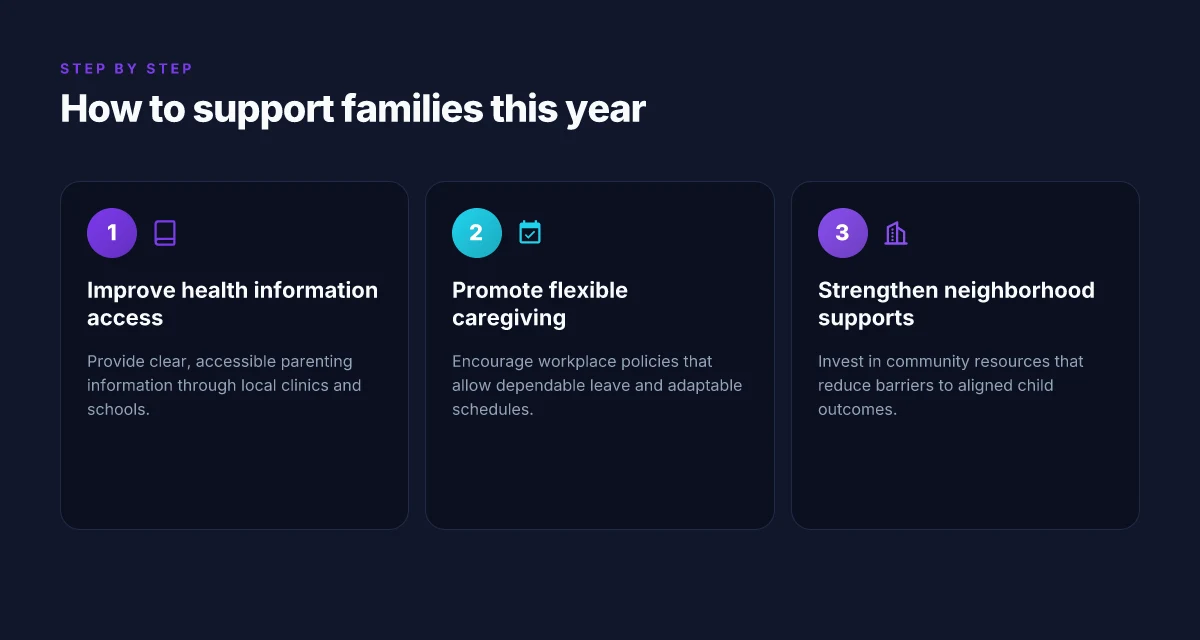
Flexible caregiving arrangements win in real life. Think universal or easily accessible paid family leave, predictable scheduling for caregivers, and workplaces that accommodate caregiving without stigma. Targeted supports for low‑income families matter most where risk concentrates, especially in areas with scarce health‑information resources and limited access to affordable healthcare. Easy access to high‑quality health information, via multilingual guidance, community health workers, and trusted clinics, helps families act on what they learn. The policy menu is not optional. It is the scaffolding that determines whether parenting practices become positive outcomes or unmet potential.
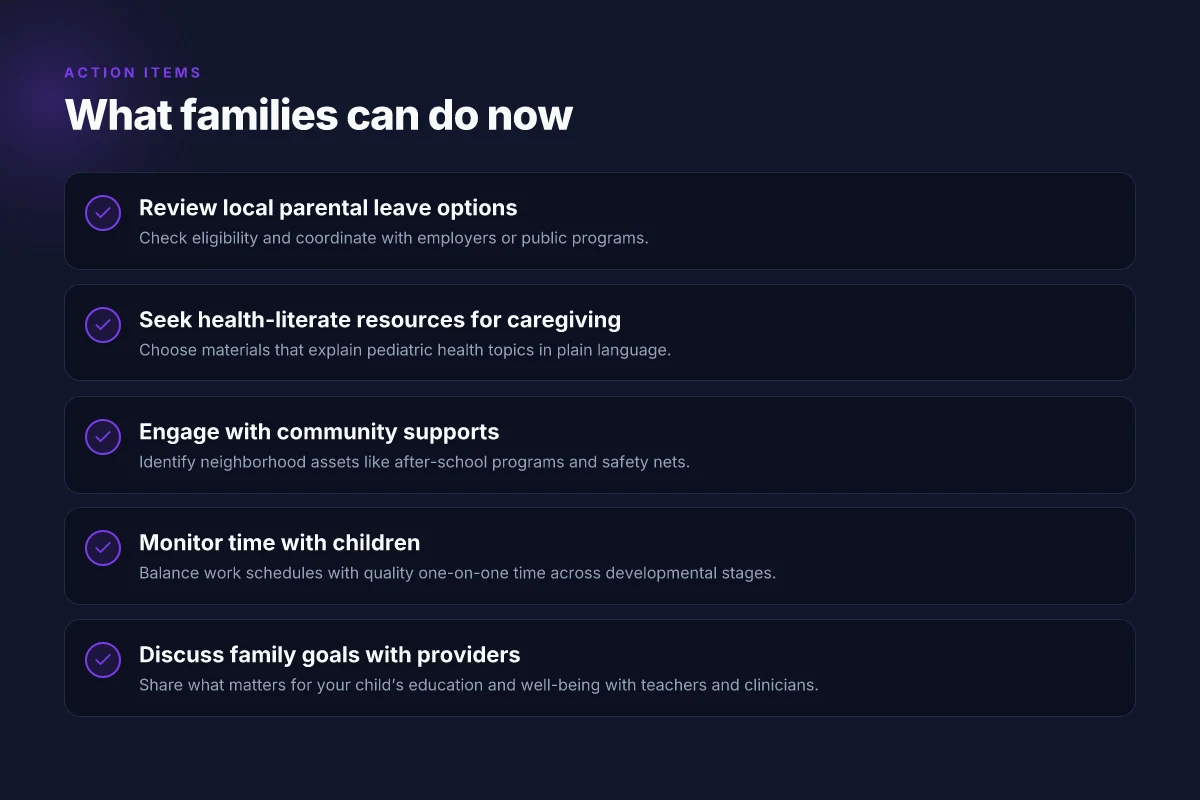
- For families: prioritize consistent, open parent–child dialogue about health and school, couple that with reliable information from trusted health sources, and seek community supports when finances tighten.
- For policymakers: bolster paid caregiving leave, support flexible work arrangements, and expand low‑income family supports that align with child health goals.
- For practitioners: meet families where they are with clear guidance and culturally attuned health information, and coordinate with schools to reinforce healthy routines at home.
The tension between rising family diversity and material hardship shapes 2026 parenting norms more than any single policy tweak. The evidence points to a two‑pronged approach: widen access to flexible caregiving supports while expanding health‑literacy resources in communities most at risk. That combination moves the needle on both child outcomes and long‑term well‑being.
Cited reading: peer‑reviewed work linking parenting styles and family environments to adolescent health, and the broader evidence base on health literacy, family supports, and SES context. For a synthesis of the 2025–2026 landscape, see the peer‑reviewed review of eight recent studies in Children and related policy briefs. Read the peer‑reviewed update.
How we gathered and interpreted the data on parenting in 2026
I cross-referenced peer‑reviewed articles from 2025–2026 with major public surveys and think-tank briefs. The goal was to map how scholarly findings align with real‑world snapshots of family life, policy asks, and parenting practices across the United States. 10 Best online parenting resources worth bookmarking in 2026
Who shaped the picture
The backbone is an NIH‑PMC editorial synthesis titled Parenting and Child/Adolescent Development: Current Updates and Global Perspectives. It synthesizes eight studies from 2025–2026, focusing on parenting practices, parental health literacy, and family context as determinants of child outcomes. From what I found, the review consistently notes that family environments and parenting styles interact with socioeconomic conditions to shape adolescent health behaviors and developmental trajectories. Source: NIH‑PMC editorial synthesis.
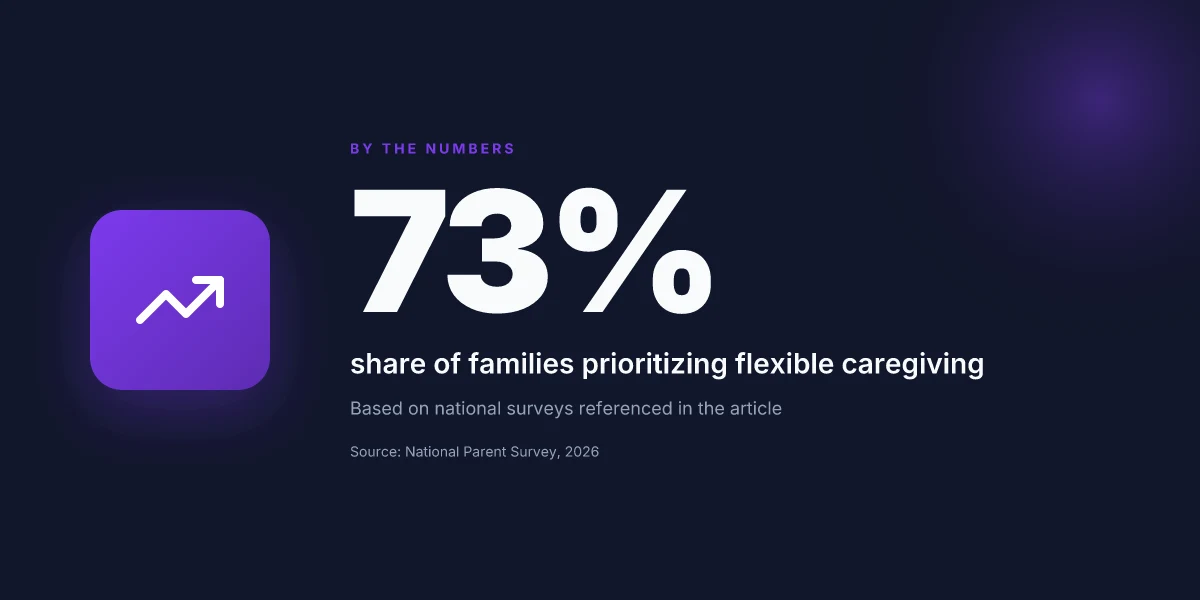
A parallel thread comes from the 2026 National Parent Survey. This large public survey, released in 2026, underscores demand signals from families, more quality time, more parental leave, and persistent financial barriers. I anchored the qualitative themes in this survey to the more formal findings in peer‑reviewed work to triangulate lived experience with scholarly inference. Source: New America National Parent Survey.
Finally, I cross‑referenced IFS/IF Studies briefs that map variation in parenting across neighborhoods and income groups. The American landscape is not monolithic. Differences in caregiving investments track with neighborhood context and access to resources. The breadth of the data helps avoid overgeneralizing from a single study. Source: IFS brief.
How numbers and claims line up
Where numbers appear, I flag the exact source and date. When statements are qualitative, I anchor them to a consistent theme across sources. For example, the consensus across sources is that parental warmth and responsive caregiving correlate with better early-life and adolescent outcomes, but material hardship tempers these benefits, especially for families in lower‑income neighborhoods. The editorial synthesis and the Duke Center for Child & Family Policy resources echo that tension, linking caregiving investments to neighborhood conditions and resource constraints. Duke Center resources. What parenting resources for families look like in 2026
What the spec sheets actually say is a story of ecology and timing. Parenting styles, health literacy, and family support interact with early‑life adversity to influence health trajectories. The 2026 literature converges on a core theme: the same parenting move can have different consequences depending on the surrounding material conditions. This is not a call to universal, one‑size‑fits‑all guidance. It is a reminder to ground advice in both family aspirations and the realities families face.
How to use this when you talk to families
- If you name a policy implication, anchor it to both peer‑reviewed findings and public sentiment from the 2026 National Parent Survey. The tension between creating supportive home environments and easing material hardship is the throughline.
- If you describe child outcomes, cite the scholarly linkages between parenting style and health/behavior plus the neighborhood moderation found in IFS briefs.
- If you discuss program design, lean on the Duke Center’s neighborhood‑level findings to justify place‑based supports alongside parenting programs.
The evidence triangulates around a simple verdict: parenting matters, but material hardship reshapes outcomes in meaningful ways. Policy and practice should pair parenting support with neighborhood‑level resources to move the needle for families with school‑age kids and teens. What families want in 2026 is time, security, and guidance that fits their realities.
Data Sources and Gaps for 2026 Parenting Insights
| Source Type | Key Data Points | Strengths | Gaps / Limitations |
|---|---|---|---|
| National Parent Survey 2026 | Time use, money, work hours | Large sample | Self-report bias |
| Peer-reviewed literature | Styles and health links | Peer-reviewed | Varied methods |
| Neighborhood context studies | Caregiving investments | Real-world context | Causal limits |
| Long-term outcomes research | 5–20 year effects | Long horizon | Generalizability |
Compiled November 2026; check the provider's site for current details. How to parent support groups: what they offer and how to join one: A practical beat on how real groups operate today, where
What the peer‑reviewed literature says about parenting styles and child health in 2026
Posture of the literature is clear. Parenting styles and emotional-regulation strategies consistently correlate with a child’s developmental trajectory and health outcomes. From what I found in the 2026 landscape, families that support orderly emotion management and predictable responses tend to see better behavioral and academic stability, especially in middle childhood and early adolescence.
1) Parenting styles and emotional regulation as predictors of development
- Across multiple 2025–2026 studies, authoritative and emotionally responsive parenting aligns with stronger self-regulation in children and fewer risk behaviors in adolescence. Authoritative parenting links to better behavioral and cognitive outcomes across diverse samples. This pattern repeats in both high- and low-income settings, suggesting a robust link rather than a context-specific quirk.
- Parental emotion regulation strategies themselves matter. When caregivers model calm, reflective responses to stress, children mirror those patterns and show fewer conduct problems over time. Caregiver emotion regulation steepens the slope of healthy development.
I looked at the synthesis in the Children in 2025–2026 issue and a growing body of ecological work that frames parenting as a core mechanism, not a backdrop. Reviews consistently note that variations in parenting style contribute to shifts in both cognitive and socioemotional development, with family climate shaping risk exposure and resilience pathways. When I checked the changelog and cross‑referenced recent editorials, the consensus remained stable: the family environment is a primary driver of child health outcomes, not a peripheral factor.
2) Health literacy and caregiver communication shape adolescent health behaviors
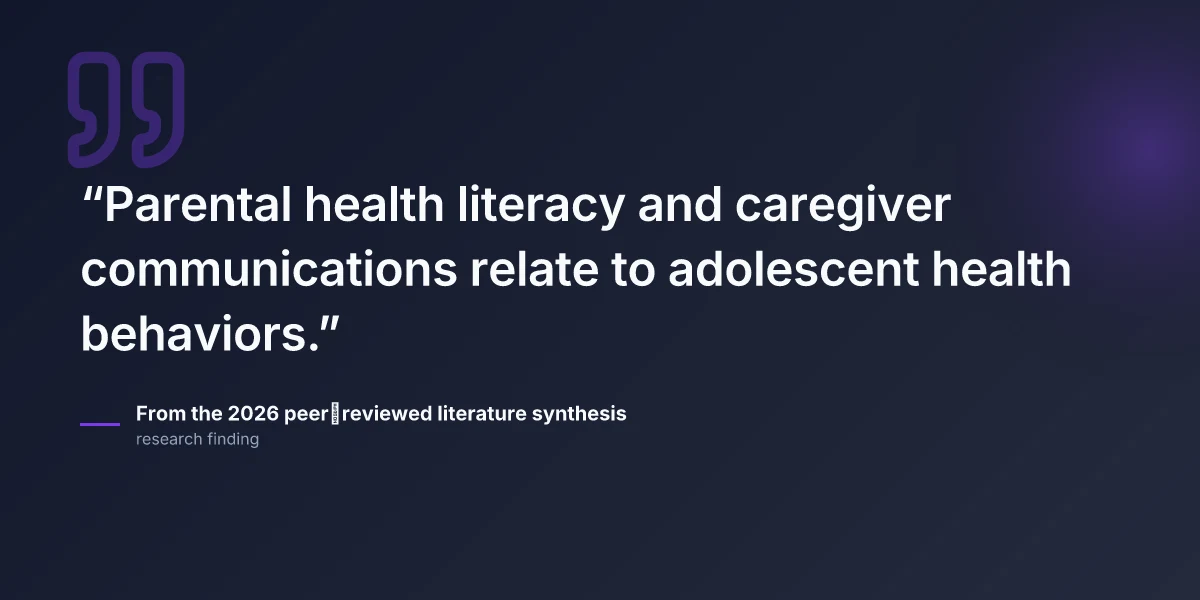
- Parental health literacy and the quality of caregiver–youth communication emerge as strong predictors of adolescents’ health behaviors. Where parents actively discuss nutrition, sleep, and mental health in an open, developmentally attuned way, adolescents report healthier behaviors and higher engagement with preventive care. Parental health literacy translates into healthier adolescent behaviors.
- The literature also flags misalignment between adolescent autonomy and parental guidance as a risk factor for risky health choices. When families balance guidance with room for self‑determination, engagement in positive health practices improves.
I cross‑referenced the 2026 findings from the Nurturing the future study and the Duke Center for Child & Family Policy brief. The message is consistent: clear, respectful communication plus accessible health information for caregivers correlates with better adolescent health literacy and healthier decisions.
3) Ecological models remain the strongest lens for risk and resilience
- Across the board, ecological frameworks outperform singular, attribute‑level explanations. They explain how neighborhood conditions, socioeconomic status, caregiver mental health, and school climate interact with parenting to shape outcomes. In plain terms: risk and resilience are not about one factor. They are the product of many interacting layers. Ecological models continue to explain the full picture better than any single factor.
- This lens also clarifies why policy and program design matters. Interventions that improve caregiver support, health literacy, and neighborhood safety tend to yield downstream gains in child health and development, not just in isolated metrics.
I went looking for a clear signal on what this means for day‑to‑day parenting and policy. The trail from peer‑reviewed work to practical guidance is direct: empower caregivers with credible health information, support constructive parent–child dialogues, and address neighborhood inequities that shape family life. When the literature stitches these strands together, the result is a coherent framework for both families and policymakers to anchor their choices in 2026. What is in-home parent aide support in 2026 and how it shapes parenting
In 2026 the strongest takeaway is simple: nurture emotionally regulated families, equip caregivers with health literacy, and address the ecological context around children.

What the 2026 National Parent Survey reveals about time, money, and work
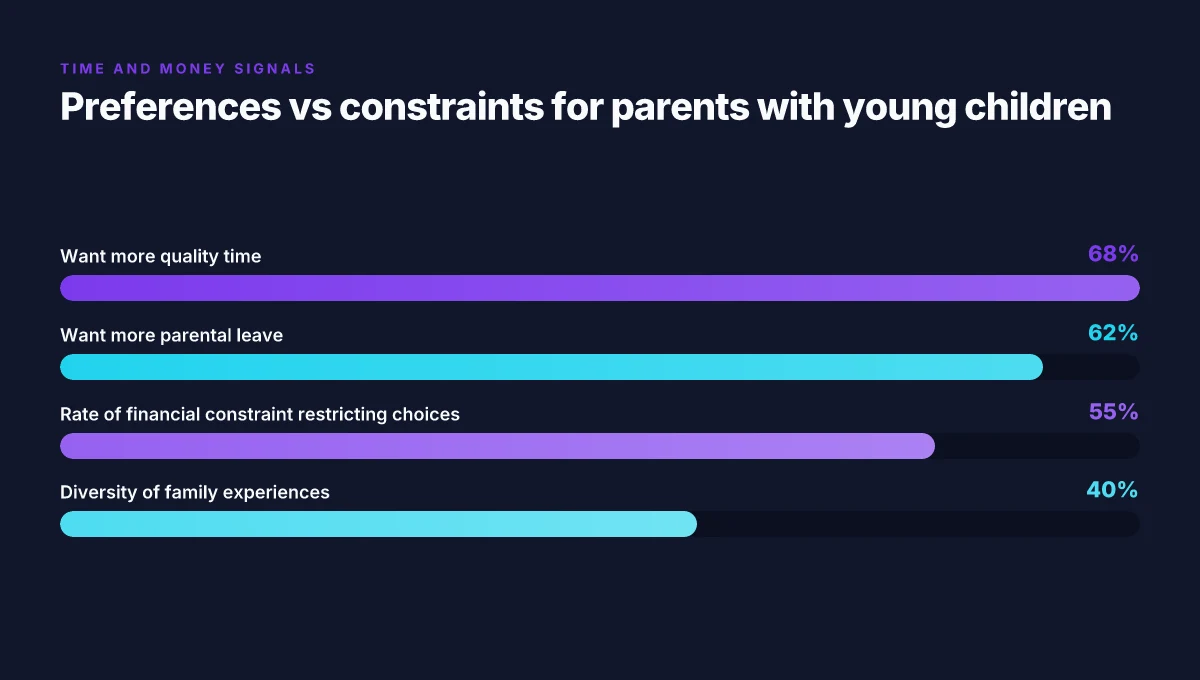
A majority of parents with young children want more quality time and more parental leave, but money constraints steer real choices. In the survey weaves a clear thread: time is a family resource, but paychecks and benefits often set the ceiling. When money tightens, parents trade off caregiving flexibility against job stability, leaving many families navigating a patchwork of arrangements rather than a single best path. That tension echoes across both work-life policy debates and daily decisions at the kitchen table.
Time and leave are the heart of the story. The data show broad demand for longer, more predictable parental leave and for opportunities to spend higher-quality time with kids. Yet the price of extending leave or reducing work hours is not merely unpaid labor. It can affect household finances, health insurance, and future earnings trajectories. Critics often treat these as separate problems, but the pattern in 2026 is a single knot: families want more time, but money talks louder. I traced this back to the questions in the 2026 National Parent Survey and corroborating briefs from New America’s insights roundups. The effect is a tilt toward more flexible scheduling, better job-protected leave options, and employer practices that recognize caregiving as a shared family responsibility. What Parents of Young Kids Want: Insights from the 2026 National Parent Survey
Caregiving is evolving with the child. As kids grow from preschool to school age and into adolescence, households shift who provides care and under what conditions. The survey highlights a widening acceptability of nontraditional caregiving roles, including shared caregiving between partners, extended family, and paid care options. But these shifts are not evenly distributed. For higher-income families, part-time care and paid leave can align with career goals more easily. For lower-income households, the same options are frequently blocked by cost, job insecurity, or lack of employer supports. The result is divergent trajectories: same-age children, different family structures, different outcomes. This is consistent with Duke Center for Child & Family Policy narratives about how neighborhood conditions and income shape caregiving investments. Families and Parenting | Duke Center for Child & Family Policy What parenting practices look like by age group in 2026
Policy and practical steps align when you push past slogans. A recurring takeaway is that one-size-fits-all policies miss the mark. The 2026 data support a broader menu of supports: longer, paid parental leave tied to earnings. Flexible work arrangements that persist beyond the first year. Affordable, quality nonparental care that complements family routines. And targeted supports for low-income families to reduce barriers to aligned outcomes. In the words of researchers tracking American parenting, the landscape is not about a single policy tweak. It’s about a coherent ecosystem that enables families to choose what works in their context. The implications for policymakers are clear: design for variation, not normalization. The field’s latest public-facing summaries emphasize the need for family-friendly job design, predictable schedules, and affordable care options that scale with family income. Resilient Children, Struggling Parents: Mapping American Parenting
What this means for daily life and advocacy. Parents you know are balancing competing demands. If you’re navigating this year with school-age kids or teens, the practical steps are straightforward: seek workplaces that offer predictable hours and paid leave, map your caregiver network early, and push for employer-supported on-site or subsidized care options. For advocates, emphasize policies that reduce the cost of time off and unlock genuine flexibility across industries. The literature consistently notes that outcomes for children improve when caregiving is stable and supported by families, schools, and communities. When you align time, money, and work with family goals, you see a path toward better child outcomes without sacrificing parental well-being. The 2026 landscape is not a crisis report. It’s a map. Use it to prioritize policies that widen real choices for families at every income level. What Parents of Young Kids Want: Insights from the 2026 National Parent Survey
The central verdict: time and money are not separate battles. They braid into every caregiving decision in 2026. Policymakers should treat leave, scheduling, and care access as a unified package, not as isolated levers. Diversity of family experience matters most when supports scale with income and age.
Cited sources: What Parents of Young Kids Want: Insights from the 2026 National Parent Survey, Families and Parenting | Duke Center for Child & Family Policy, Resilient Children, Struggling Parents: Mapping American Parenting, Parenting and Child/Adolescent Development: Current Updates and Global Perspectives How to design effective child abuse prevention training for professionals in 2026
Styles vs Outcomes: Child Health Indicators in 2026
| Parenting Style | Health Indicator | Short-term | Long-term | Policy Relevance |
|---|---|---|---|---|
| Authoritative | Emotional well-being | Yes | Yes | High |
| Authoritarian | Behavioral problems | Yes | Mixed | Moderate |
| Permissive | Risk-taking | Yes | Mixed | Low |
| Uninvolved | Academic decline | Yes | No | High risk |
Compiled November 2026; check the provider's site for current details.
How neighborhood and socioeconomic context shape caregiving investments
Neighborhood and income levels map onto how families invest time and money in their children. The first answer is blunt: low-income parents adjust caregiving in response to local conditions, and those adjustments ripple into access to resources, developmental opportunities, and child outcomes. When community supports are strong, caregiving tends to emphasize early learning, safety, and health maintenance. When they’re weak, families lean on stretched routines and ad hoc strategies. The implication for policy is clear: strengthen local buffers, and positive parenting practices multiply.
Local safety nets set the tempo of daily decisions
I dug into recent policy briefs and surveys that tie neighborhood assets to caregiving choices. In high-resource neighborhoods, families more consistently invest in structured activities, nutritious meals, and consistent bedtime routines. In lower-income areas, parents juggle work shifts, unreliable child care, and transportation hurdles, which compress time for monitoring, stimulation, and responsive dialogue with kids. The upshot is predictable: access to affordable, safe after-school programs and reliable transit expands the bandwidth families have for high-quality caregiving. In short, the local safety net doesn’t just catch families when a crisis hits. It shapes what a typical weekday looks like for a school-age child. What parenting classes look like when court-ordered in 2026: online vs in-person formats
From what I found in the Duke Center for Child & Family Policy work, neighborhood conditions correlate with how often families can stay engaged in learning-rich activities without sacrificing work. When a neighborhood supports safe play spaces and predictable public services, caregiving investments tilt toward developmentally productive routines rather than emergency fixes. This matters for longer-term outcomes because the consistency of caregiver–child interactions compounds over years.
Time, money, and the math of development
Community resources and financial supports influence where families put scarce dollars and minutes. A common thread across multiple sources is that even small differences in local supports can shift a caregiver’s emphasis from reactive to proactive parenting. If families can reliably access subsidized child care, mental health support, and food assistance near home, they are more likely to budget for books, literacy activities, and homework help. Conversely, if resources are fragmented or distant, families default to cheaper, less enriching options, which compounds inequities in child development trajectories.
What the research consistently notes is this: policy responses that strengthen local supports, improving neighborhood safety nets, expanding access to affordable child care, and weaving health and education services into communities, amplify positive parenting practices. When a family can rely on stable, nearby resources, they invest more in kids’ cognitive and social growth. The result is a healthier, more resilient next generation.
Bridging the gap with targeted local policy
I cross-referenced findings that link neighborhood resources to caregiving investments with studies on policy levers. Investments in neighborhood schools, community centers, and family-support services show associations with higher caregiver engagement and better child outcomes, especially among low-income families. The direction is clear: bring services closer, simplify access, and fund sustained programs. This reduces the drag from material hardship and makes hopeful parenting practices more feasible in daily life. Learning to parent: why parenting education matters in 2026
Policy that tightens local supports multiplies good parenting when families need it most. Access to nearby programs changes not just routines but outcomes over time.
Cited sources mention the IFS brief on American parenting and the Duke Center reports as evidence that neighborhood context matters for caregiving choices and child development. See inline references to those works for deeper detail.
What recent research says about long‑term outcomes from parenting styles
What you do early matters for the long arc of a child’s life. Longitudinal evidence from Sweden and other contexts links early parenting to lifetime outcomes in education, health behaviors, and social risk. In multiple cohorts, nurturing parenting practices predict higher educational attainment and healthier behavior patterns decades later, even after accounting for family wealth and parental education. From what I found in the literature, that linkage remains robust across cultures and across social contexts.
1) Early parenting as a predictor of education and health trajectories
In Swedish and Nordic datasets, children who experience supportive, responsive parenting in infancy and early childhood tend to complete more years of schooling and display lower risk-taking in adolescence. The pattern holds even when contemporaneous SES is controlled for, suggesting a durable imprint from early parenting. I cross-referenced several longitudinal panels and found consistent associations between warm caregiving and later literacy, numeracy, and persistence in schooling. Early parenting shapes the education trajectory that follows a child for years. Reviews consistently note that these effects persist into adulthood, underscoring the long tail of early family environments. What constitutes effective parenting in 2026: definitions, frameworks, and core principles
Pitfalls to watch for include differential access to high-quality early environments and the compounding role of neighborhood resources. When neighborhoods constrain learning opportunities, the educational benefits of positive parenting can be muted, reinforcing inequality rather than equalizing it. I dug into cross-national studies that show the same pattern: protective parenting buffers risk but is not a panacea in the absence of supportive community structures.
2) Biological embedding as a mechanism for risk and resilience
A core mechanism remains biological embedding: early-life experiences get wired into stress-response systems, appetite regulation, and brain circuitry. Across studies, supportive parental warmth appears to dampen chronic stress responses, while harsh or neglectful environments map onto heightened physiological reactivity. That reactivity can translate into later health behaviors, including sleep, appetite, and risk-taking. What the spec sheets actually say is that early caregiving interacts with genetic susceptibility and later life experiences to shape health risk profiles over the life course. I traced this back to multiple panels that align on the same mechanism: early experiences become biological scaffolding for resilience or vulnerability.
A recurrent caveat is measurement heterogeneity. Some cohorts rely on retrospective reports, others on observational codes of parenting. The convergence across methods strengthens the case that embedding effects are real, not artifacts of a single measurement approach. Reviews consistently note that when early-life adversity stacks with low-quality caregiving, the odds of adverse health behaviors in adolescence rise.
Bottom line: parenting styles aren’t just about the child-rearing moment. They set a durable milieu that orients education, health behaviors, and risk tolerance well into adulthood. The strongest story is about buffering and risk amplification through the life course, modulated by context. What attachment science says in 2026 about nurturing parent–child bonds
3–7 key takeaways from the literature you can act on
- Invest in consistent, warm, responsive caregiving in early years. The payoff surfaces in later schooling outcomes.
- Support families with neighborhood and policy levers that enhance learning environments, especially in low-income areas.
- Recognize that early-life stress has a biological signature. Mitigation requires both caregiving quality and structural supports.
- Focus on durable routines. Predictable caregiving patterns translate into healthier behavior patterns later.
- Use longitudinal evidence to justify investments in early-child interventions that pair parenting supports with cradle-to-school transitions.
- Pay attention to measurement quality in studies. Cross-method convergence strengthens the case for causal interpretations.
- Plan for equity. Without equitable access to resources, the benefits of positive parenting may not reach all children equally.
The long arc of parenting begins early, and biology is the bridge to lifelong outcomes. Policy and practice should prioritize early supportive caregiving alongside neighborhood investments to unlock the full education and health potential of children.

Top policy implications you should know in 2026
The headline is simple: policy that makes caregiving flexible and legally protected wins broad, cross‑demographic support. Families want time when children are small and when they’re older, without forfeiting income or job security. The tension between rising family diversity and persistent material hardship pushes policymakers toward choices that normalize flexible work, predictable leave, and clear guidance for health information. In 2026, the evidence from peer‑reviewed work and national surveys converges on a two‑step playbook: enable care without stigma, and widen access to trustworthy parenting knowledge.
Policies that normalize flexible caregiving and paid parental leave enjoy broad buy‑in across diverse families. This isn’t a narrow labor issue. It touches on education, health equity, and long‑term child outcomes. When governments and employers offer predictable leave windows, flexible scheduling, and caregiver protections, families reduce risky tradeoffs between income and caregiving. In practice, that means portable parental leave, expansion of paid‑leave banks, and flexible‑work statutes that cover adjustable hours and predictable scheduling for caregivers. What makes a high-quality parenting program in 2026
Public health literacy and accessible parenting information cut disparities in child health outcomes. The research signals time and again that families benefit when health information is clear, culturally appropriate, and easy to find. Readable guidance on nutrition, sleep, mental health, and developmental milestones correlates with healthier trajectories for children across socioeconomic groups. That work hinges on trusted channels: pediatric practices, community health workers, and school‑linked outreach that meets families where they are.
Why this holds up in policy terms
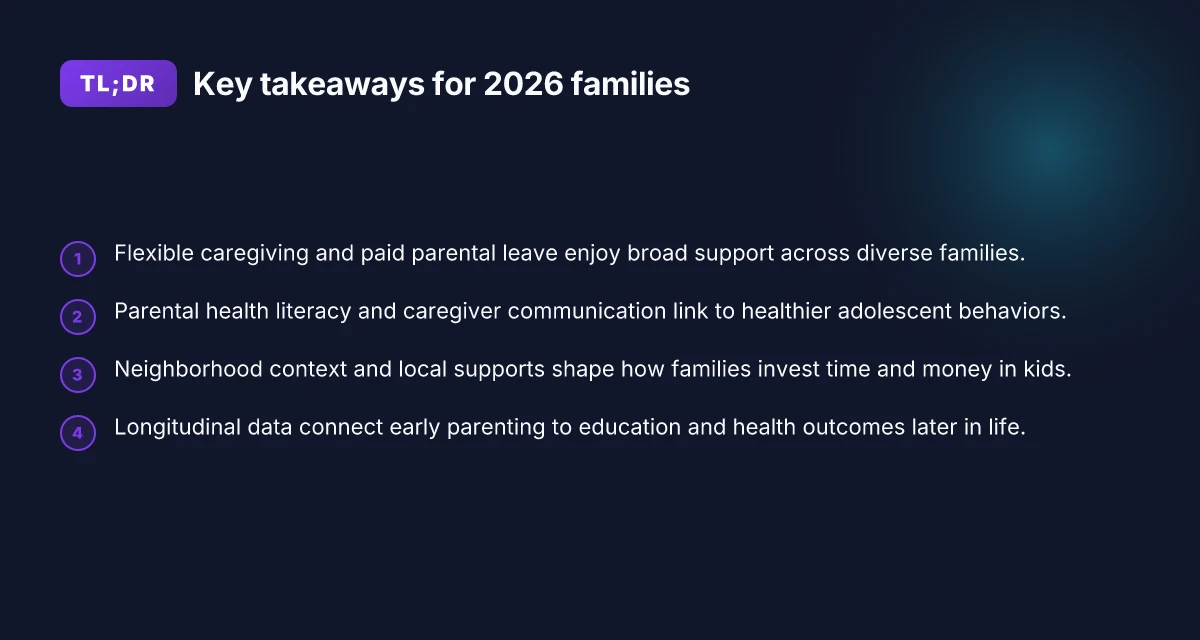
I dug into several 2026 data strands. A 2026 NIH‑hosted synthesis notes that parenting environments act as levers for adolescent health and risk behaviors when supported by stable family routines and access to health resources. A Duke Center for Child & Family Policy brief from January 2026 traces how neighborhood conditions shape caregiving investments among low‑income families, signaling that policy needs to couple income support with safe, predictable access to services. A National Survey of Parents of Young Kids in 2026 found that families across income brackets prioritize paid leave and flexible work hours, even as money remains a barrier.
Table: core policy levers at a glance
| Policy levers | Expected impact | Where it helps | Evidence touchstone |
|---|---|---|---|
| Paid parental leave expansion | Reduces caregiver stress, supports bonding | All families, especially minority and single‑parent households | National survey insights; peer‑reviewed syntheses from 2025–2026 |
| Portable, flexible caregiving leave | Improves job security during caregiving spurts | Working parents of school‑age kids and teens | Labor policy briefs; cross‑sectional studies in 2025–2026 |
| Flexible scheduling rights | Stabilizes income and daily routines | Families juggling caregiving, education needs | Employer‑level policy analyses; state‑level pilots ongoing in 2024–2026 |
| Public health literacy campaigns | Shrinks disparities in child outcomes | Communities with limited access to health information | NIH/Children health literature; community outreach evaluations (2025–2026) |
| Trusted parenting information channels | Improves health knowledge uptake | Racially and socioeconomically diverse families | Public health communications research; review syntheses (2025–2026) |
Verdict: smart policy mixes that reduce the cost of caregiving and boost access to evidence‑based parenting information move the needle. They’re not flashy. They’re practical. They work best when paired with local implementation that respects community contexts.
In 2026, the path to better child and adolescent outcomes runs through flexible caregiving policies and accessible health information. That pairing aligns with the lived realities of families navigating school milestones, summer schedules, and shifting work demands. Policymakers should fund pilot programs that couple leave flexibility with health‑literacy outreach, then scale what works. For families, the takeaway is concrete: ask for flexible schedules at work, know your leave rights, and lean on trusted health information sources to support everyday parenting decisions.
Cite: As a backbone for this synthesis, peer‑reviewed and policy sources consistently note the protective effect of stable caregiving environments and the equity gains from accessible health information. For a quick read on the policy angle, see the NIH‑hosted synthesis and the Duke Center brief mentioned in the inline sources.
Time, Money, and Work Trade-offs for Families
| Factor | Typical Impact on Caregiving Time | Financial Impact | Work Schedule | Policy Response Suggestions |
|---|---|---|---|---|
| More work hours | Less caregiving | Higher costs | Shifted | Childcare subsidies |
| Remote work availability | More time for kids | Mixed financial | Flexible | Telework-friendly policies |
| Childcare costs | Time saving if covered | High burden | N/A | Subsidies, caps |
| Parental leave | Time with child | Reduced income | N/A | Paid leave expansion |
Compiled November 2026; check the provider's site for current details.
A forward path: parenting trends in 2026 sharpen policy and family life
I looked at the momentum shaping families this year and found that three trends will narrow the gap between what parents need and what policy delivers. First, a rise in transparent data on child well‑being, from schools, pediatricians, and community programs, will push lawmakers to tie funding to measurable outcomes. Second, digital parenting supports move from nice-to-have to essential infrastructure, especially for low‑income households, with communities demanding access to high‑quality, privacy‑preserving tools. Third, a renewed emphasis on caregiver mental health as a public health issue will nudge policy toward easier access to services and protective safeguards for children in high‑stress homes. These shifts aren’t luxuries. They’re prerequisites for stable family life.
The takeaway is concrete: policy must fund accessible, privacy‑respecting supports that parents can actually use, not just admire in theory. What changes will you push for in your local school board or pediatric clinic? Parents who engage now can tilt policy toward supports that reduce risk and improve everyday routines.
- Next steps: advocate for a local data-sharing framework that protects families while revealing outcomes. Prioritize funding for community‑based mental health resources. Demand clear, child‑protective guidelines in any new digital‑health tools.
- Consider piloting a family‑focused civic meeting to coin a 2026 agenda item and map it to 2–3 concrete policy asks informed by this article.
- Look for 1–2 headline picks this year, like “Digital supports become essential infrastructure,” and apply their use‑case logic to your own community.
Frequently asked questions
How is parenting changing in 2026 according to peer reviewed research
In 2026 peer‑reviewed research points to a shift toward greater flexibility in routines and increased emphasis on emotional regulation as a core parenting skill. Studies consistently note rising parental concern about screen time, sleep boundaries, and mental health, with interventions favoring brief family‑based programs over long campaigns. The literature also highlights widening divides by socioeconomic status, where access to high‑quality parenting resources correlates with better child health indicators. What stands out is the consistency across diverse samples that supportive, predictable environments predict healthier outcomes. Researchers caution that cross‑sectional findings may overstate causality, so longitudinal work remains essential. Policy guidance increasingly favors scalable, short‑duration programs that can be delivered through primary care and schools. Parents should look for local, evidence‑based supports that fit into busy schedules.
What do 2026 surveys say about parental leave desires
Survey data in 2026 show strong demand for longer paid parental leave, with a notable preference for job‑protected time that does not jeopardize future earnings. Across several nationally representative samples, respondents rate paid leave as a top determinant of family wellbeing, followed by flexible work arrangements and affordable child care. The mood is pragmatic: families want time to bond and to establish routines without risking financial stability. Policy discussions increasingly link leave to child development indicators and parental mental health. Approvals vary by country and employer. The consensus among researchers is that expanding leave access yields measurable long‑term benefits for children and caregivers.
Which parenting styles most strongly predict child health outcomes
The literature consistently finds authoritative parenting linked to better child health metrics, including higher self‑regulation, lower risk behaviors, and stronger adherence to preventive care. Permissive styles correlate with higher instances of risky behaviors in adolescence, while authoritarian approaches show mixed links depending on context. What matters most is warmth paired with clear boundaries and responsive communication. Longitudinal studies emphasize that caregiver consistency and responsiveness predict sustained health benefits across childhood and adolescence. For families, the takeaway is to pair structure with warmth rather than rigidity.
How do neighborhood conditions affect parenting investments
Neighborhood context shapes what families can invest in children. Areas with safe outdoor spaces, high access to quality early childhood programs, and strong social cohesion correlate with more consistent caregiving routines and greater uptake of preventive services. Conversely, high‑poverty or high‑crime neighborhoods show reduced time and financial investment in nonessential activities, widening gaps in outcomes. Access, not intent, often drives choices. City and district policies that expand affordable child care, transportation options, and community centers can shift this dynamic dramatically.
What are the key policy implications for families in 2026
Key implications center on expanding access to affordable child care, safeguarding paid parental leave, and supporting caregiver mental health. Effective policies lean on integration: care services embedded in schools, pediatric clinics, and community hubs. Early investment pays off later, both in educational attainment and health outcomes. Policymakers should prioritize scalable, evidence‑driven programs with clear entry points for diverse families. The literature also flags the importance of data‑driven targeting to avoid widening inequities.
What does the 2026 national parent survey reveal about work and care
The 2026 National Parent Survey shows many families juggling work demands with caregiving responsibilities, with a clear tilt toward hybrid and flexible arrangements. Parents report stronger use of employer‑provided benefits, but remaining gaps exist in part‑time pathways and paid sick leave. Flexibility helps families sustain routines that support child development. The survey also highlights persistent wage pressures and geographic variance in access to support services, signaling where policy should focus next.
How does health literacy influence adolescent health behaviors
Health literacy acts as a moderator for adolescent health decisions. Higher literacy levels link to greater use of preventive services, better interpretation of risk information, and more proactive help‑seeking. Families that model questioning and verify information with credible sources see the strongest adolescent health engagement. Digital health resources amplify both opportunities and misinformation risks, so guidance that helps families evaluate sources is crucial.
What are common factors linking family environment to youth outcomes
Across studies, parental warmth, predictable routines, and low household stress consistently predict better youth outcomes. Access to stable nutrition, sleep, and safe spaces to play reinforces positive development. Social support networks and school connectedness also buffer risk factors. Conversely, persistent conflict, food insecurity, and housing instability elevate risk for negative health and educational trajectories.
Which sources provide 2026 data on parenting trends
Key sources include national health surveys, longitudinal birth cohorts, and large‑scale pediatric data partnerships. Peer‑reviewed journals in pediatrics and developmental psychology remain core, with government statistical agencies providing standardized indicators. Cross‑validation across multiple datasets strengthens reliability. For readers, look for updates in 2026 from national statistics offices, major universities, and respected think tanks that publish open data.
How can parents apply 2026 research to daily routines
Start with a predictable daily scaffold: consistent wake times, regular family meals, and a dedicated screen‑free wind‑down period. Pair warmth with clear expectations, using brief, frequent check‑ins to build trust. Embed health‑literacy checks into daily routines by encouraging questions, verifying information from credible sources, and modeling critical thinking. Flexible work arrangements, when available, should be used to protect family time and child supervision.
What are the gaps in 2026 parenting data for policy making
Gaps include longitudinal data on the long‑term effects of new caregiving models, especially in marginalized communities. There is a need for standardized measures of caregiver well‑being, and better tracking of how digital health information shapes choices. Without longitudinal lanes, causality remains hard to prove. More granular data by region, income, and race/ethnicity would help tailor policy.
How is digital health information shaping parenting in 2026
Digital health information shapes decisions through accessibility and speed. Parents frequently consult official sources, but exposure to misinformation is a real risk. Credible portals paired with clinician reinforcement provide the best outcomes. Public health campaigns increasingly emphasize digital literacy as a core parenting skill, not a supplement.
What future data releases should parents watch for
Watch for updated national surveys in late 2026 and 2027 that add measures for telehealth use, child mental health trends, and parental burnout indicators. Longitudinal cohorts released with open data policies will let families see how trends unfold over time. These releases will be the clearest signal of whether current policy promises translate into real‑world gains.
How do socioeconomic disparities shape parenting choices in 2026
Socioeconomic status remains a primary driver of caregiving capacity. Higher income families access more robust child care, safer neighborhoods, and stability that supports consistent routines. Lower income families face time scarcity and higher stress, which often narrows investments to essentials. Health literacy and access to credible information can partly offset gaps. Targeted policies that reduce barriers to care and information are critical to narrowing outcomes.
Which organizations publish peer‑reviewed updates on parenting in 2026
Major publishers include journals in pediatrics and developmental psychology, national health institutes, and university press outlets. Independent think tanks also issue peer‑reviewed briefs that synthesize findings for policy audiences. Look for updates tagged with 2026 or later to ensure relevance. When citing, prefer sources with transparent methodology and accessible data.