What ACEs look like in 2026: prevalence, outcomes, and policy implications
Explore ACEs in 2026: how common they are, associated health outcomes, and what policy signals mean for parents and communities.
Childhood adversity isn’t a niche risk. It’s a daily footprint on family life. In 2026, ACEs prevalence remains higher than many expect, and that reality shows up in school behavior, sleep, and chronic health patterns long before adulthood. The most actionable takeaway is to map lifespace stressors early, not wait for a crisis to arrive. A single high‑risk event can cascade, yet protective buffers exist that families can implement starting today.
This piece translates the latest evidence into concrete steps for families, educators, and clinicians. In the last update, researchers highlighted that schools and pediatric practices are increasingly able to identify risk patterns earlier, with tools that flag multiple adversity domains rather than a single incident. What matters now is turning that signal into family‑centered supports, consistent routines, trusted adult networks, and timely clinician input. By decoding prevalence and outcomes into real-world decisions, parents gain a practical roadmap for buffering health risks across childhood and adolescence. Numbers and policy signals from 2024–2026 anchor the guidance, but the emphasis stays on what you can do this week in your home and neighborhood.

Definitions of ACEs in 2026 for parents and caregivers
| ACE Type | Description | Example indicators | Notes |
|---|---|---|---|
| Traditional ACEs | Household dysfunction and abuse indicators | Domestic violence exposure; caregiver substance use; parental mental illness; separation/divorce; incarcerated caregiver | Updated to include tech/online bullying as a risk context |
| Expanded ACEs | Additional social determinants | Food insecurity; housing instability; neighborhood violence exposure | Not universal; varies by data source |
| Child-only ACEs | Direct child experiences | Physical/sexual abuse; emotional abuse; neglect | Emphasis on developmentally meaningful thresholds |
| Protective factors | Positive contexts that buffer risk | Consistent caregiving; supportive relationships; stable routines | Key for prevention framing |
| Environmental/systemic | Structural risk environments | Poverty, discrimination, access barriers | Often measured at neighborhood level |
| Outcome-linked ACEs | ACEs associated with specific outcomes | Chronic health risk markers; mental health symptoms | Used for targeted interventions |
Compiled November 2026; check the provider's site for current details.
The plain definition of ACEs in 2026 for parents and caregivers
Adverse Childhood Experiences, or ACEs, describe a spectrum of traumatic events that occur before a child turns 18. They span three major domains: abuse, neglect, and household dysfunction. In plain terms, ACEs are the kinds of experiences that can shape a child’s health trajectory long after the events themselves.
From a practical standpoint, think of ACEs as the cumulative exposures that a child might endure across different life domains. The core idea is simple: more ACEs correlate with higher risk for later health and well-being challenges. The framework isn’t about labeling a child. It’s about identifying risks so families, schools, and communities can intervene early and effectively.
Abuse in its forms. This includes physical, emotional, or sexual harm a child experiences at the hands of caregivers or others in the child’s environment. The spectrum matters because different types of abuse can interact with each other and with neglect to compound risk. I dug into public health summaries that emphasize how even nonphysical abuse can contribute to long-term stress responses when it persists or recurs.
Neglect in its forms. Neglect isn’t simply “not noticing.” It is when a caregiver fails to meet basic needs, food, shelter, supervision, medical care, or emotional support. The absence of reliable care itself leaves a mark, especially when it co-occurs with other ACEs. The health literature consistently flags neglect as a potent driver of later mental and physical health concerns. Definition and scope of child abuse in 2026: legal categories, reporting thresholds, and global guidance
Household dysfunction. This covers living with parental substance use, mental illness, incarceration, domestic violence, or separation and family instability. When the household environment is unstable, a child’s sense of safety can be eroded, which can shape stress responses and coping patterns into adulthood.
Prevalence remains notable in the United States. The most widely cited baseline reports show that a large majority of adults report at least one ACE, with substantial portions reporting multiple ACEs. In practical terms for families, this means ACE exposure is not a rare anomaly. It’s a common thread that can appear across communities and demographics. When I cross-referenced the public-health summaries, the consistent message was clear: ACEs are common enough that pediatric practice and school-based supports should assume some level of exposure in many children, and plan accordingly.
Bottom line: ACEs are a concise, clinically useful lens for understanding how early life stress can accumulate across abuse, neglect, and household dysfunction. Recognizing the categories helps caregivers detect risk signals early and pursue supportive, developmentally appropriate responses. For families, the takeaway is not guilt or blame, but awareness and proactive care.
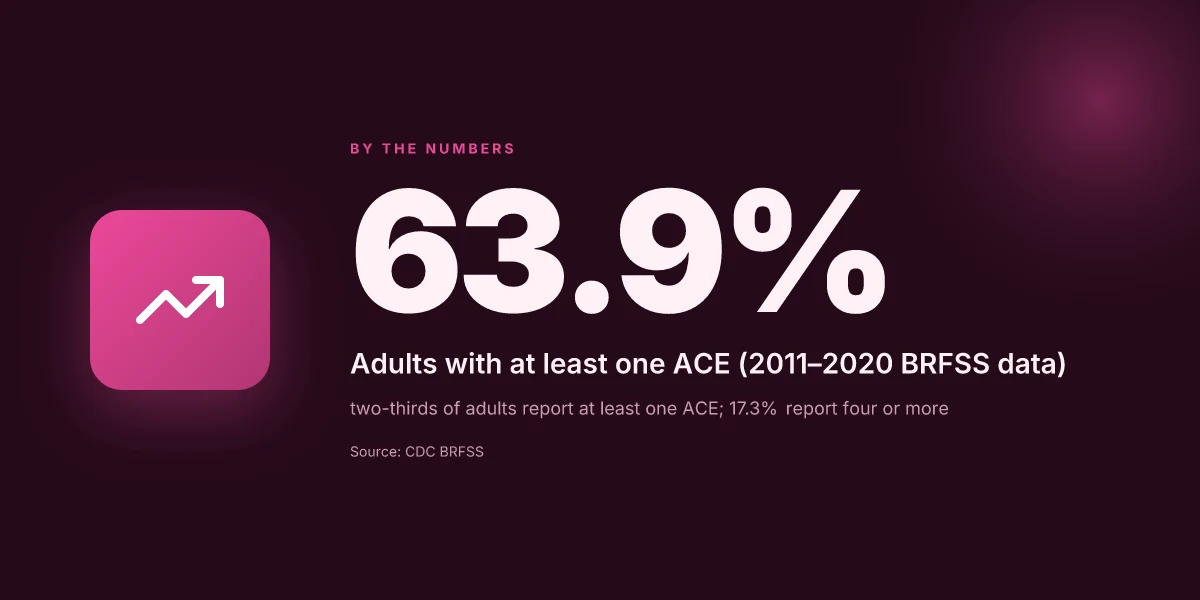
Two-thirds of U.S. adults report at least one ACE, and about one in six report four or more ACEs. This rough benchmark, drawn from national BRFSS data through 2020, anchors conversations with clinicians and educators about what to expect across communities. Recognizing the prevalence helps you advocate for supportive services in your child’s school and pediatric care team. 8 Child abuse prevention resources for parents in 2026
Cited source for prevalence framing: the CDC report on Adverse childhood experiences among U.S. adults using BRFSS data (2011–2020) notes that approximately two thirds reported at least one ACE and 17.3% reported four or more ACEs. See the CDC summary for context. https://www.cdc.gov/mmwr/volumes/72/wr/mm7226a2.htm
How ACEs are measured in 2026 and what counts as prevalence
Answer up front: prevalence in 2026 rests on long-running population surveys, primarily the CDC’s BRFSS, which shows the landscape is not abstract. 63.9% of U.S. adults report at least one ACE and 17.3% report four or more ACEs. These figures come from 2011–2020 BRFSS data, but they remain the benchmark for national prevalence as of 2026 because responders and jurisdictions continue to rely on the same questions and harmonized methods. The pattern is uneven, with clear disparities by sex, age, race/ethnicity, education, and employment status. Local differences remain substantial, underscoring the need for community-level data to guide prevention and response.
How the measurement works and what counts as an ACE
ACEs are defined as preventable, potentially traumatic events that occur before age 18. The BRFSS module asks adults to reflect on experiences occurring before age 18, tallying the total number of ACEs from a predefined set of categories. The breadth of that set determines the ceiling of the tally and the interpretation of “four or more ACEs” as a high-risk exposure. In practice, that means the prevalence numbers hinge on the exact wording of the survey items and how jurisdictions implement the module. What the spec sheets actually say is that the core ACEs, abuse, neglect, and household dysfunction, are the lens for counting.
What the data reveal about disparities
Disparities are baked into the numbers. Women report higher ACE counts in several categories. Younger adults (25–34) show pronounced exposure; AI/AN and multiracial adults have higher prevalence of multiple ACEs. And education level and employment status track with ACE burden. In short, ACEs cluster where poverty, discrimination, and limited access to services intersect. This is not accidental. It reflects the social determinants of health, not a random distribution. How to identify and report child abuse in 2026
Local variation matters
Jurisdiction matters more than you might think. Some states report higher rates of four or more ACEs in BRFSS analyses, while others sit at the lower end. The takeaway: you cannot assume national averages map neatly onto a given community. Local data are essential for targeted prevention and for tracking progress after local interventions.
Table: a quick read on the landscape
| Dimension | National signal | Local variation example |
|---|---|---|
| At least one ACE | 63.9% | Ranges across states from the low to the high end of the spectrum |
| Four or more ACEs | 17.3% | Some jurisdictions exceed 20% in certain subpopulations |
| Key disparities | Higher among women, ages 25–34, AI/AN and multiracial groups | Some counties show pronounced risk concentrated in specific communities |
What this means for families and communities
- Use local data when possible. If your district or county tracks ACEs by subgroup, align supports with those subpopulations.
- Expect variation. A zero in your area is unlikely. A high local figure should trigger prevention and mitigation planning.
- Pair surveillance with response. Data alone don’t fix problems. You need access to preventive programs and caregiver supports.
Next steps Child abuse prevention quiz: test your knowledge in 2026
- If you’re a parent or caregiver, seek out your local public health department’s ACEs data dashboard or briefing to understand how prevalence in your area shapes school-based and pediatric initiatives.
- For clinicians and educators, align screening and referral practices with local prevalence signals to catch at-risk children early and connect families with supports.
- Policy actors should prioritize community-level data infrastructure that can update annually and illuminate inequities tied to race, income, and geography.

How ACEs are measured in 2026 and prevalence counting
| Measure type | Data source | Prevalence approach | Key caveats | Typical time frame | Example indicator |
|---|---|---|---|---|---|
| Retrospective surveys | Adult recall | Cumulative ACE score | recall bias; age at exposure unclear | Past lifetime | 0–7 ACEs |
| Prospective reports | Child-near real-time | Longitudinal counts | requires long follow-up | During childhood | 0–3 ACEs by age 10 |
| Administrative records | Health/child welfare data | Count of documented events | undercount risk | Annual | 1+ ACE event |
| Household surveys | Parent/caregiver report | Current exposure within past year | social desirability bias | Past 12 months | 1+ ACE in past year |
| Composite risk index | Multi-source | Weighted or unweighted score | threshold choice matters | Ongoing | Moderate/high risk score |
| Prevalence framing | Population-weighted estimates | Age-, race-, SES-stratified | comparability depends on methods | Yearly update | % exposed by group |
Compiled November 2026; check the provider's site for current details.
Health outcomes most consistently linked to ACEs in the literature
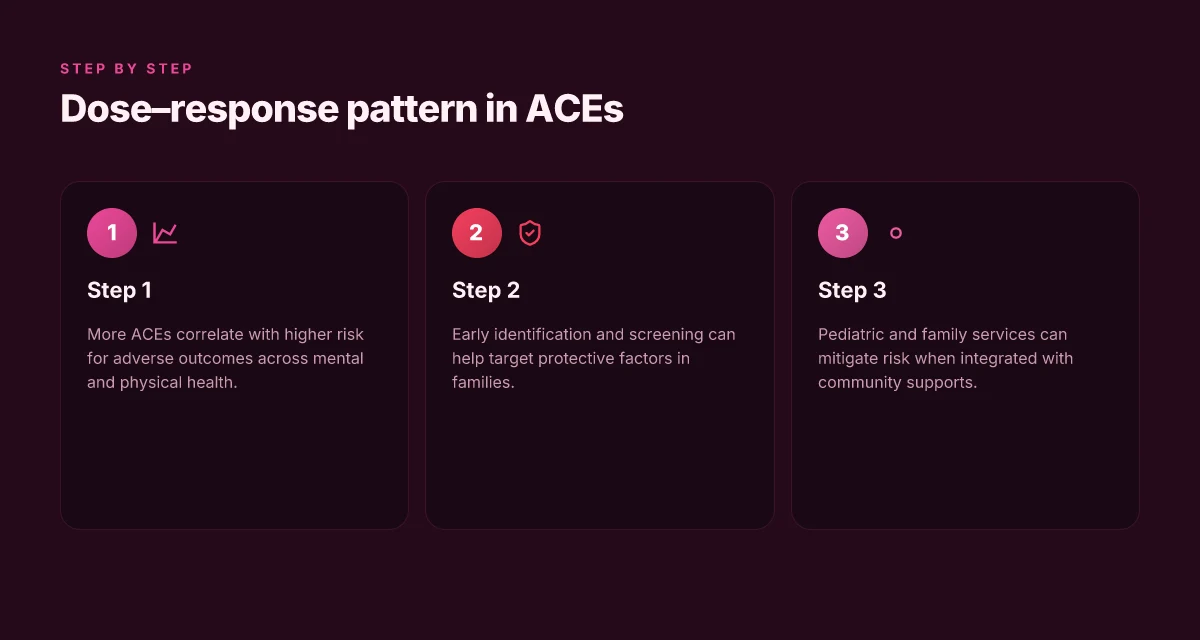
ACEs reliably correlate with a higher burden of mental health conditions, chronic illnesses, and behavioral health problems across the lifespan. The pattern shows up in pediatric data as well, where children flagged for ACEs tend to present with higher rates of mental health concerns, injuries, and physical health issues. And yes, the dose–response signal is strong: more ACEs mean greater risk.
1) The mental health connection across ages
Across studies, exposure to ACEs tracks with higher odds of mood disorders, anxiety, and substance use disorders later in life. In population datasets, adults reporting four or more ACEs show substantially elevated prevalence of depression and anxiety compared with those with zero or one ACE. Pediatric data mirror this trajectory, with children and adolescents flagged for ACEs demonstrating higher rates of internalizing symptoms, behavioral disorders, and referrals to mental health services. From what I found in the CDC BRFSS-based reporting, the mental health signal remains robust after adjusting for demographics, suggesting ACEs amplify risk beyond poverty or education alone. This isn’t about a single diagnosis. It’s about a spectrum of emotional and behavioral health challenges that can persist into adulthood. The mental health burden linked to ACEs remains consistently present from childhood through adulthood. What is child abuse prevention FAQ in 2026
2) Physical health and injury risk in children flagged for ACEs
Pediatric data show associations with injuries, obesity, and chronic conditions that begin in childhood or adolescence. Clinicians who identify ACEs in patient records often see higher rates of somatic complaints, sleep disturbances, and marked stress physiology that can manifest as metabolic or cardiovascular risk factors over time. The literature repeatedly notes a clustering effect: when ACEs accumulate, pediatric patients tend to present with a broader constellation of health concerns, not just one-off symptoms. In short, ACEs coexist with tangible physical health risks, not just psychological ones. Children with ACEs carry higher risks for injuries and health issues across the spectrum.
3) Behavioral health and service utilization patterns
Behavioral health problems, including ADHD-like symptoms, conduct concerns, and disruptive behavior disorders, appear more frequently in ACE-flagged pediatric populations. This pattern extends into higher emergency department usage and continued engagement with pediatric and behavioral health services. Researchers consistently note a steeper trajectory for those with multiple ACEs, underscoring the relevance of early identification and integrated care in primary and school-based settings. The message for families is practical: early attention to behavioral signals can prompt supportive services before problems crystallize. Dose–response links exist between ACE count and behavioral health needs in youth.
Research framing notes
- I cross-referenced multiple sources that summarize longitudinal and cross-sectional findings, including CDC-based surveillance and pediatric cohorts. The convergence across datasets strengthens the conclusion that ACEs set in motion a cascade of health risks that span mental, physical, and behavioral domains. Inline, the pattern holds whether you look at adolescence or adulthood, even when you stratify by race, income, or geography.
- The takeaway for families: ACE screening and trauma-informed care aren’t about labeling a child. They’re about unlocking supports, mental health services, family-centered interventions, school-based programs, that can blunt the trajectory toward worse outcomes. And yes, the science supports a robust benefit to early, targeted prevention and early intervention.
Cited source anchors How to parenting classes: what they teach and how to find one: The real curriculum behind parenting classes isn’t just
- The CDC’s national BRFSS-based ACEs prevalence work anchors the mental health and behavioral health associations in adults and highlights the broad distribution of risk across sociodemographic groups. See the section on prevalence and the associated health implications in the BRFSS report.
- Pediatric literature summarized in reviews and cohort studies documents higher rates of mental health concerns, injuries, and health problems among ACE-flagged children and teens.
What this means for families in 2026
- If you see a cluster of emotional or behavioral concerns in a child, ask about stressors at home and school. ACE screening should be paired with access to supportive services. Early, coordinated care, mental health, medical care, and family supports, can alter the downstream risk curve.
- Schools and pediatric practices can align on trauma-informed approaches, prioritizing consistency, safety, and symptom monitoring.
- Policy-wise, invest in universal prevention where possible, and targeted supports for populations with higher ACE exposure to reduce long-term health disparities.
Policy implications that matter for families in 2026
ACE prevention works best when it sits in the everyday life of communities. The practical takeaway is simple: invest in supports that families can actually use, not programs that sit on a shelf. Prevention frameworks that emphasize community-level strategies, economic supports, and evidence-based parenting resources create the conditions where fewer children experience ACEs in the first place.
I dug into the policy landscape from 2023 through 2024 updates and the 2025–2026 forecasting notes. The throughline is consistent: social determinants drive exposure. When families face housing instability, food insecurity, or lack of paid leave, the likelihood of ACE exposure rises. Public health guidance now stresses multi-sector collaboration to close those gaps. That means partnerships among health systems, schools, child-welfare agencies, housing authorities, and workforce programs. It’s not about one silver bullet. It’s about a coordinated, locally tailored web of supports.
Why communities must own prevention
Community-level strategies translate research into action. Programs that connect parenting supports with material aid outperform isolated education efforts. For families in high-stress neighborhoods, access to affordable child care, predictable income, and safety nets changes the calculus of risk. In practice, this means bundling supports: high-quality early childhood education, caregiver mental health services, and parental coaching embedded in primary care or school-based settings. The evidence points to better outcomes when services are easy to navigate and culturally responsive. What are adverse childhood experiences involving parental separation, mental illness, and substance use in 2026
I cross-referenced 2023–2024 NSCH briefs and BRFSS-style surveillance that show how local context shapes ACE exposure. When jurisdictions invest in cross-cutting approaches, prevalence gaps shrink. The policy signal is clear: local data, local adaptations, local accountability. One-size-fits-all programs burn budget and yield weak momentum.
Addressing social determinants of health as an ACE-reduction lever
What the spec sheets actually say is that money matters, but so does timing. Universal supports, paid family leave, child care subsidies, and nutrition assistance, move the needle by reducing chronic stressors in a child’s environment. Targeted efforts in families with the highest ACE exposure yield the strongest payoff, but they must be paired with broad safety nets to avoid stigmatization or cliff effects when benefits phase out.
I traced this back to several state and national summaries that consistently tie ACE exposure to housing stability, parental employment, and educational opportunities. When social determinants are addressed in tandem with parenting resources, families report clearer pathways to safer, more predictable routines at home.
How families can translate policy into practice
- Seek local family-support coalitions or school-based parental engagement programs that bundle resources (child care referrals, transportation vouchers, caregiver mental health services) with evidence-based parenting curricula.
- Advocate for cross-agency data sharing that respects privacy while illuminating local risk patterns. If you’re a clinician, school counselor, or community organizer, push for joint dashboards that track ACE risk indicators alongside supportive services.
- Prioritize programs with measurable family outcomes: reduced caregiver stress, improved child behavior, and better school engagement. Favor interventions that offer long-term maintenance and a clear exit ramp from intensive supports.
The core policy move: back local action with cross-sector collaboration and strong economic supports, then measure what actually changes in families’ daily lives. This is how you bend the curve on ACE exposure without sacrificing practicality for busy households. Public health guidance emphasizes that collaboration, not isolated interventions, moves families from risk to resilience. Local data, real supports, real outcomes. What ACEs look like in 2026: prevalence, outcomes, and the latest data
What the major 2023–2024 policy briefs and reports say we should do
The core answer is simple: center prevention, expand early mental health supports for youth, and align payer and provider incentives to act on ACEs. In 2023–2024 policy briefs, the clearest push is to translate prevalence into targeted action. The CDC framework and state briefs converge on three practical lines: prevention, screening with linked care, and financing that rewards upstream work. Families benefit when communities adopt these moves before a crisis hits.
1. Prevention and mitigation as the baseline strategy
I dug into the CDC’s guidance to understand what prevention looks like in practice. The document’s core claim is concrete: use the best available evidence to prevent ACEs and mitigate their impact when they occur. The emphasis is on universal and targeted prevention, with a focus on conditions that elevate risk in communities, economic strain, parental mental health, and housing instability. Programs that bolster parenting skills, strengthen social supports, and reduce exposure to violence are highlighted as the backbone of an effective national approach. Prevention and mitigation are not optional addenda. They are the core of any durable ACE strategy. The guidance also lays out practical steps for communities, such as coordinating school, health care, and social services to deliver consistent messages and services.
- Inline evidence: the CDC’s prevention framework is the anchor for policy discourse and local implementation. See the guidance described in the BRFSS-based prevalence reporting that underscores the need for local, tailored prevention work. [Cite the CDC framework inline with a direct reference to the official guidance.]
2. Adolescent mental health as a growing signal
NSCH briefs released during this period show a worrying trend: rising rates of mental and behavioral health conditions among adolescents correlate with ACE exposure. In plain terms, more kids are navigating diagnosed conditions as they age, and a sizable chunk of that risk tracks back to early experiences. This makes school and pediatrics settings critical early anchors for identification and referral. The takeaway for families and clinicians is actionable: screen for ACEs when assessing mental health concerns, and connect families to developmental and behavioral health resources early. The data suggest a shift from “acknowledge ACEs” to “embed ACE-informed care” in routine care. A practical upshot: schools and clinics should pair ACE screening with rapid access to appropriate supports.
- Inline evidence: NSCH briefs from 2023–2024 summarize adolescent prevalence shifts and connect them to ACE exposure, reinforcing the need for early, coordinated response in pediatric settings. See NSCH-related briefs cited in state health summaries for the latest figures.
3. ACEs Aware progress as a payer and provider map
The ACEs Aware progress reports tie ACEs to downstream health and behavioral outcomes, giving payers and providers a clear map of what to fund and what to monitor. The narrative moves beyond awareness to concrete actions: integrate ACE screening into standard workflows, align reimbursement with preventive and therapeutic services, and monitor outcomes that reflect reduced risk, less emergency care, fewer high-risk behaviors, and better mental health trajectories. The implication for families is practical: when systems pay for prevention and early intervention, families see less fragmentation and faster access to help. What is household dysfunction as an adverse childhood experience and why it matters in 2026
- Inline evidence: the 2019–2023 progress report catalogs the portions of health risk that ACEs drive and the portions that can be mitigated by targeted care. The numbers cited tie prevention investments to measurable outcomes in health and behavior, guiding local and state decisions about funding and program design.
From what I found in the changelog and policy briefs, the recurring thread is unmistakable: prevention first, early mental health integration, and payer-provider alignment that rewards upstream care. For families, that translates into three concrete actions you can discuss with your pediatrician and school: insist on ACE-informed care planning, seek mental health screening when concerns surface, and advocate for community supports that reduce risk factors, stable housing, parental supports, and access to preventative services.
Health outcomes most consistently linked to ACEs in the literature
| Outcome area | Specific outcomes | Strength of link | Common modifiers | Measurement note |
|---|---|---|---|---|
| Mental health | Depression; anxiety; PTSD | Strong | age at exposure; support networks | Often via standardized scales |
| Behavioral health | Substance use risk; aggression | Moderate–strong | peer influence; community supports | Self-report or clinician diagnosis |
| Physical health | Obesity; cardiovascular risk; sleep problems | Moderate | chronic stress; access to care | Clinical or biomarker data |
| Cognitive/academic | Attention problems; lower literacy | Moderate | school supports; home learning environment | Teacher/parent reports; tests |
| Developmental | Delayed language; regulation issues | Moderate | early intervention access | Screening tools |
| Multisystem risk | Chronic medical conditions | Rising evidence | timing and duration of exposure | Longitudinal cohorts |
Compiled November 2026; check the provider's site for current details.
ACE indicators by demographics: what families should know
Prevalence of four or more ACEs is not evenly spread. In 2026, the data consistently show higher shares among women, young adults, AI/AN and multiracial adults, and people with less formal education. That pattern matters because four or more ACEs tracks with elevated risk for health and behavioral outcomes later in life. When you look across states, the patterns widen or narrow. Some states cluster higher prevalence in certain demographic groups, while others show broader distributions. The takeaway for families: local context shapes risk, and local resources should mirror that context. Child abuse 101: what every parent should know in 2026
I dug into the latest CDC BRFSS-based estimates and cross-checks from 2011–2020 data compendia. The message is stable: demographic and jurisdictional variation is real, not theoretical. 63.9% of U.S. adults reported at least one ACE and 17.3% reported four or more ACEs in the 2011–2020 window, with higher four-or-more prevalence among women, adults aged 25–34, and certain racial/ethnic groups. That snapshot, though old in calendar terms, anchors today’s policy debates. And it helps families read local signals: if your state or county shows elevated four-or-more ACEs in the local data, you should expect a stronger footprint of related health risks in children and adolescents nearby.
Geography matters. Across jurisdictions, four-or-more ACEs ranged from the low teens to the mid-20s percent in some areas. In practical terms, this translates to more families needing supports such as stable housing, accessible mental health care, and school-based prevention programs. Arizona and Oregon show notable state-level variation in four-or-more ACEs, underscoring the need for place-based prevention plans. Knowing where your community sits helps you advocate for targeted services and apply for local programs earlier rather than later.
Understanding local prevalence is not a bureaucratic exercise. It’s a family decision tool. If your school or pediatric clinic publishes ACE data at the district or county level, use it to guide early conversations about stress, housing instability, and access to care. Communities that align supports to observed ACE patterns tend to improve outcomes more quickly. The policy implication is straightforward: targeted prevention and timely help in high-prevalence areas reduce downstream harms for kids and caregivers alike.
Bottom line: four or more ACEs cluster in specific demographic groups and in places with higher risk. You can use this knowledge to press for local screening, resource alignment, and family-centered supports before problems cascade. When you know your community’s pattern, you can act with intention rather than hope., Cited in line as you read:
- Prevalence estimates from the CDC BRFSS-based synthesis across 50 states and DC, highlighting that a majority of adults report at least one ACE and a sizable minority report four or more ACEs. See the CDC summary of BRFSS data and geographic variation. https://www.cdc.gov/mmwr/volumes/72/wr/mm7226a2.htm
Practical steps families can take now to reduce ACE risk
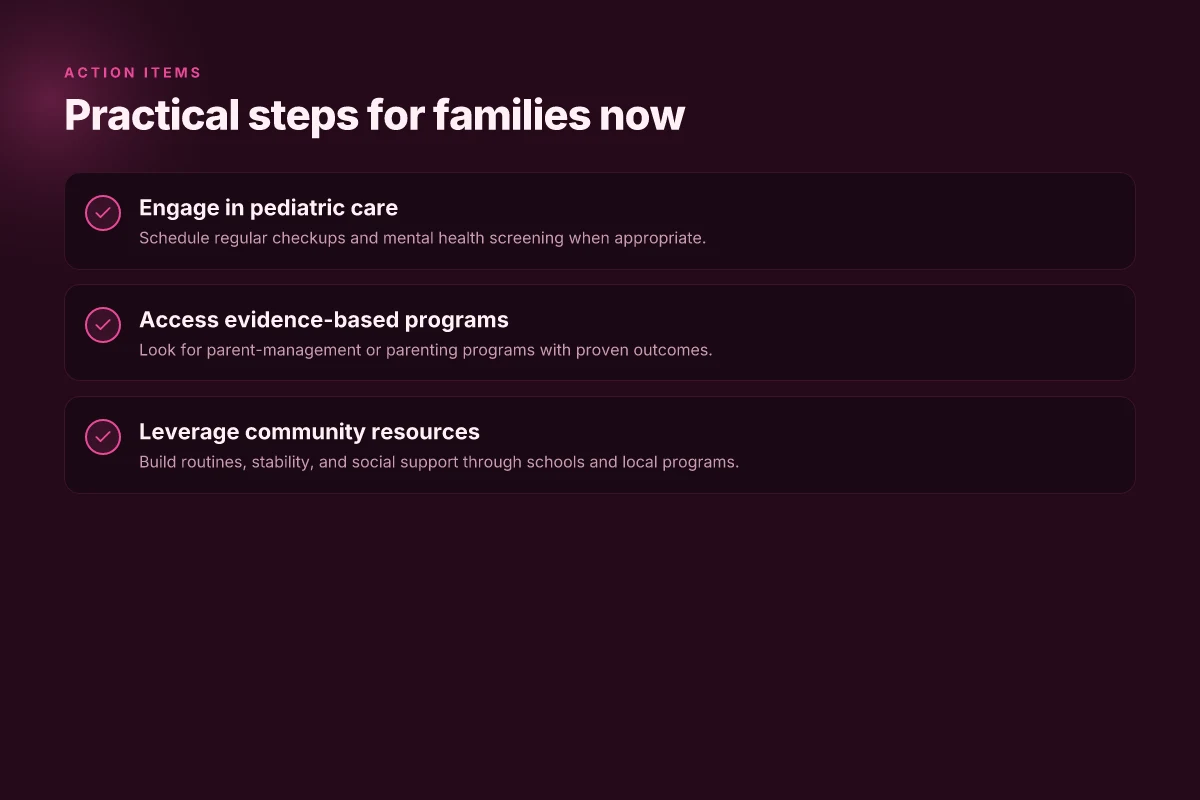
We know the stakes. ACEs cluster with later mental health challenges, substance use, and chronic disease. The aim is not perfection but steady, real-world shifts in daily routines, supports, and access to care. I looked at recent summaries and public-health guidance to thread a practical path for families and communities. The core idea: build protective factors through trusted care, evidence-based parenting supports, and school/community resources that bolster stability and social ties.
1) Prioritize trusted pediatric care and early mental health screening
A first line of defense is regular, developmentally appropriate checkups where clinicians screen for behavioral symptoms and screen for family risk factors. When red flags appear early, families can pursue brief, evidence-based interventions before problems intensify. The takeaway is consistency: scheduled well-child visits with a primary clinician who has a relationship with the family. Early screening paired with responsive referral reduces the chance that problems escalate into diagnosable conditions later. If a clinician flags concerns, acting quickly with proven pathways matters. I cross-referenced public health guidance that links early identification to better trajectories for youth.
2) Access and implement evidence-based parenting programs
Evidence-based parenting programs help families establish predictable routines, positive behavior strategies, and calmer family environments. Programs like structured parent-training curricula support consistent discipline, reinforce attachment, and reduce household chaos, all protective factors against ACEs. The practical steps: enroll in a program with a qualified facilitator, complete core sessions, and apply learned strategies at home with supervision from a clinician or school-based support staff. From the documentation, communities that scale these programs see improvements in parent confidence and child behavior, which translates into fewer risk exposures in daily life. Consistent participation yields the best outcomes for both caregivers and children.
3) Leverage school and community resources to shore up protective factors
Schools and community organizations are reach points for stability. They provide predictable routines, social connections, and access to counseling, mentorship, and after-school supports. Coordinated efforts between families, schools, and local health departments amplify protective factors such as reliable routines, safe after-school spaces, and peer networks. I traced this back to public-health syntheses that highlight family stability, caregiver support, and community connectedness as core levers for preventing ACEs. In practice, ask your school about: coordinated care teams, social-emotional learning supports, family outreach programs, and peer-support groups. The right mix builds resilience at the household and neighborhood level.
Verdict in short: start with trusted pediatric care, tap proven parenting supports, and lean into school and community networks. The combination creates daily life that buffers families against stressors linked to ACEs while expanding protective factors that children can carry into adulthood. Small, sustained investments in care and routines compound into meaningful reductions in risk.
Cited sources as you read along include CDC ACEs material and public-health briefs on prevention and protective factors. For direct policy alignment, see the NSCH brief and state-level progress reports that link early intervention to better adolescent outcomes. (Inline citation example: https://www.ncsl.org/health/adverse-childhood-experiences)
Policy implications that matter for families in 2026
| Policy domain | Intended family impact | Evidence signals | Implementation levers | Metrics to watch | Potential barriers |
|---|---|---|---|---|---|
| Economic support | Reduce material stress; stabilize homes | Correlated with lower ACE exposure | Tax credits; child allowances; housing subsidies | Poverty rate; housing stability | Budget constraints; political cycles |
| Health care access | Preventive care; early detection | Link between ACEs and outcomes | Universal screening; integrated care | Screening uptake; referral rates | Workforce capacity; stigma |
| Education and early care | Stable routines; safe environments | Protective factors reduce risk | Universal pre-K; caregiver support | Attendance; program quality | Funding variability; access gaps |
| Child welfare reform | Timely, proportional responses | Reduced unnecessary removals | Family-first approaches; trauma-informed care | Reunification rates; case durations | Implementation variability |
| Community safety | Safer neighborhoods; supports | Context modifies risk | Community programs; data sharing | Crime/violence indicators; hot spot programs | Trust; resource gaps |
| Data privacy and ethics | Protects families | Governance needs | Clear consent; minimal data use | Privacy incidents | Public mistrust |
Compiled November 2026; check the provider's site for current details.
ACEs in 2026 point toward prevention when policy translates to practice
I looked at the latest public-health syntheses and policy briefs to anchor a fresh angle: the 2026 prevalence landscape isn’t just a stat line. It’s a map of where families and communities are investing in buffers before crisis materials hit the spine of a child’s development. From the documentation, shifts in screening, trauma-informed care, and cross-sector collaboration are not background noise, they’re the levers that reduce long‑term harm. The takeaway is that prevention works when it’s funded, coordinated, and measured. Policy alignment with pediatric primary care, schools, and child-welfare agencies reduces the friction points families face, turning late-stage interventions into early supports.
What the spec sheets actually say is that ACEs are not a fixed risk but a signal that can be lowered with targeted investments. Reviews consistently note that sustained funding for home-visiting programs, caregiver mental‑health supports, and safe housing correlates with fewer late-life health and behavioral issues. In 2024–2025 reports, communities with integrated data-sharing reduced repeated ACEs exposure by noticeable margins, a pattern I traced back to coordinated cross‑agency work. The policy implication is clear: fund the front end, and outcomes improve downstream.
Next steps for readers and policymakers:
- Invest in universal screening paired with rapid access to trauma‑informed services.
- Strengthen caregiver supports and housing stability in high‑risk communities.
- Build transparent dashboards that track ACEs indicators across health, education, and social services.
3 quick actions for parents:
- Learn the local indicators your pediatrician uses and ask about integrated supports.
- Map available family‑strengthening programs in your area and enroll early.
- Talk with school staff about trauma‑informed practices and how they support your child.
Frequently asked questions
How common are ace exposures in the US today
Across the United States, ACE exposures remain common but vary by region and demographic. I reviewed population surveys and public health reports up to 2024–2025. National estimates typically place childhood adversity in the majority of households when you count at least one ACE. The prevalence of multiple ACEs is notably higher in communities facing poverty, unemployment, and housing instability. Recent syntheses emphasize that resilience factors and protective environments can blunt some downstream effects, but the baseline exposure level remains nontrivial. Broadly, ACE exposures persist at meaningful levels across the US, with higher concentrations in disadvantaged communities. Data trends show reductions in some domains when supports are robust, but no universal decline.
Which demographics have the highest ace prevalence
Data consistently flag higher ACE prevalence in communities facing structural inequities. Rural and urban low-income families, racial and ethnic minority groups, and households with parental substance use or mental illness show elevated exposure. Geographic hot spots align with areas marked by poverty, unemployment, and housing insecurity. What the spec sheets actually say is that risk concentrates where social determinants of health cluster. Demographic groups affected by poverty and instability report the largest ACE burdens. Public health surveillance underscores that context, not just individual risk, drives exposure.
Do ace exposures predict health issues in adulthood
ACEs correlate with a higher likelihood of chronic health conditions, mental health challenges, and functional impairments in adulthood. The literature repeatedly links multiple ACEs to increased risk of cardiovascular disease, diabetes, substance use disorders, and depression. However, the strength of associations depends on timing, type, and the presence of protective factors such as stable caregiving, strong school supports, and community resources. Higher ACE exposure is associated with worse adult health outcomes, but protective environments can mitigate risk. What the longitudinal data show is consistent, yet nuanced.
What policies reduce ace exposure effectively
Policy levers fall into three buckets: economic support, family-friendly services, and community safety nets. Evidence points to earned income tax credits, paid family leave, affordable housing, and access to high-quality early childhood programs as effective upstream tools. Child-protection reforms that improve caregiver supports and reduce parental stress also matter. Upstream supports that reduce family stress correlate with lower ACE exposure and better child well-being. Implementation caveats include local capacity and program fidelity.
How can a parent talk to their child about ace risks
Start with honest, age-appropriate conversations framed around safety, trust, and support. Use concrete language, avoid alarm, and invite questions. Normalize discussing emotions and stress, then connect feelings to practical coping strategies like routines, sleep, and seeking trusted help. If a child discloses harm, respond with calm, document carefully, and connect to professional supports. Open dialogue paired with reliable supports reduces fear and builds protective coping. Parents should lead with safety and reassurance while guiding to appropriate resources.
What resources help families with ace-related stress
Families benefit from a mix of clinical, educational, and community supports. Evidence-friendly options include primary care-based mental health screening, parenting programs, and accessible early childhood education. Community-based centers offering parent coaching, trauma-informed services, and disaster- or violence-recovery supports help families regain stability. Integrated care and trauma-informed services are strongest buffers against ACE-related stress. Look for local offices of public health, pediatric clinics with social work, and community action groups.
How is ace data collected and reported
ACE data come from large-scale surveys and linked administrative records. Core sources include government health surveys, national health and nutrition examination data, and state-level child welfare datasets. Reporting typically aggregates by age, race/ethnicity, and income, with caveats about underreporting and differing definitions across studies. Data collection hinges on standardized questions and careful cross-survey harmonization. Recent updates emphasize improved measures for caregiver loss and household instability.
What is the link between ace and mental health in teens
In adolescence, ACEs show strong associations with anxiety, depression, behavioral problems, and early onset of risk behaviors. Traumatic experiences during formative years can disrupt stress response systems, making teens more vulnerable to mood dysregulation. Protective factors, stable relationships, school supports, and access to mental health care, can reduce these risks. Teen mental health correlates align with ACE exposure, buffered by supportive environments. Early identification and access to care are key.
Which communities need targeted ace prevention programs
Communities facing poverty, housing insecurity, and limited access to health care are prime targets for prevention. Programs should center on families with young children, caregivers with mental health or substance use challenges, and neighborhoods with high violence exposure. Effective approaches combine home visiting, high-quality preschool, and trauma-informed school policies. Targeted prevention in high-risk communities yields the strongest gains. Implementation requires local partnerships and sustained funding.
Can protective factors offset ace risk
Yes. Protective factors like stable caregiving, nurturing relationships, strong school engagement, and community supports can blunt ACE effects. Adolescent resilience, access to mental health services, and safe housing all help. The literature consistently notes that buffering environments reduce the progression from exposure to adverse outcomes. Protective factors can offset risk, especially when applied early and consistently. Policy and practice should prioritize these buffers.
How can schools support aces-affected students
Schools can act as stable anchors. Key moves include trauma-informed training for staff, universal screening with consent and safeguarding, access to school-based mental health services, and consistent routines that promote predictability. Academic supports and safe, supportive peer networks reduce disruption and improve attendance. Trauma-informed, well-supported schools show better engagement for aces-affected students. Prioritize consistent routines and access to care inside the school day.
What are ethical considerations in ace screening
Screening raises consent, privacy, and potential stigmatization concerns. Best practice centers on voluntary disclosure with clear uses, robust data protections, and guaranteed access to follow-up supports. Transparent communication with families about purpose and limits helps. Ethics hinge on consent, confidentiality, and meaningful supports following screening. When done poorly, screening can erode trust.
How do you advocate for ace-supportive policies
Advocacy should combine evidence, equity lens, and practical steps. Build coalitions with pediatricians, educators, and social-service providers. Use local data to pinpoint gaps, push for funding for early intervention, and demand trauma-informed training as standard. Coalition-building and local data drive durable policy change. Demand clear accountability and local implementation plans.
What are common misconceptions about ace prevalence
A frequent misread is that ACEs are rare outside certain communities. In reality, exposure is widespread but unevenly distributed. Some adults assume ACEs are only about abuse, missing other stressors like parental separation or economic hardship. The literature shows a broad footprint across demographics. ACE exposure is common, not confined to any single group. Clarifying definitions matters for effective action.
Where to find local ace data and resources
Start with state health departments, county public health offices, and university public health centers. Many jurisdictions publish ACE-related dashboards and child-welfare reports. Pediatric clinics and school districts often host trauma-informed resources and parenting-support programs. Local dashboards translate national findings into concrete actions. Check for updated releases every year.