What is child abuse prevention FAQ in 2026
Practical, research-backed answers to common questions about child abuse prevention in 2026. Find definitions, reporting guidelines, and trusted resources for parents.
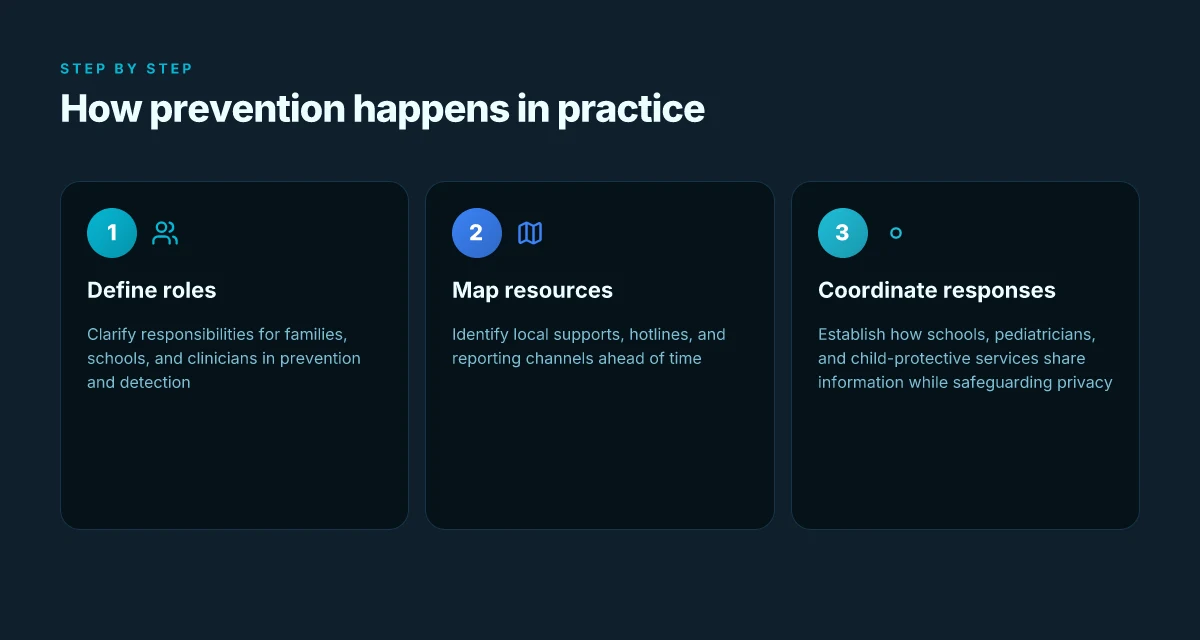
If you think abuse is obvious, think again: most maltreatment starts with subtle signs adults miss, and recognizing them early can stop harm before it escalates. From public-protection guidance, the common thread is that threats often hide in plain sight, not in dramatic moments. Public-Protection guidance flags that early indicators vary by age, but patterns, unexplained injuries, sudden behavior shifts, or secrecy around caregivers, appear across contexts.
This piece translates policy changes and widely cited indicators into concrete steps you can act on today. In 2026, updates from child-protective services and national safety agencies emphasize proactive communication, safe-ness planning, and clear reporting paths. You’ll find simple checklists, warning-signal flags, and when to seek timely help, all grounded in official definitions and credible reviews. Evidence from official guidance shows parental vigilance paired with trusted professional input reduces risk. The goal is practical clarity you can apply in everyday family life.

What is child abuse prevention FAQ - quick definitions
| Term | Definition | Examples | Non-examples |
|---|---|---|---|
| Child abuse prevention | Actions to stop harm before it occurs | Education, support services | Ignoring signs, blame without action |
| Maltreatment | Acts harming a child | Physical, emotional, sexual, neglect | Regular caregiving with safety |
| Primary prevention | Preventive before risk | Parenting programs, community resources | Aftercare only |
| Secondary prevention | Early identification | Screenings, hotlines referral | Late intervention |
| Tertiary prevention | Minimize impact | Therapy, case management | Punitive measures alone |
Compiled November 2026; check the provider's site for current details.
What is child abuse prevention FAQ
Child abuse prevention is practical, not theoretical. It means recognizing maltreatment, knowing who protects kids, and acting early to keep children safe. I looked at official definitions and guidance to anchor this FAQ in real sources, not vibes.
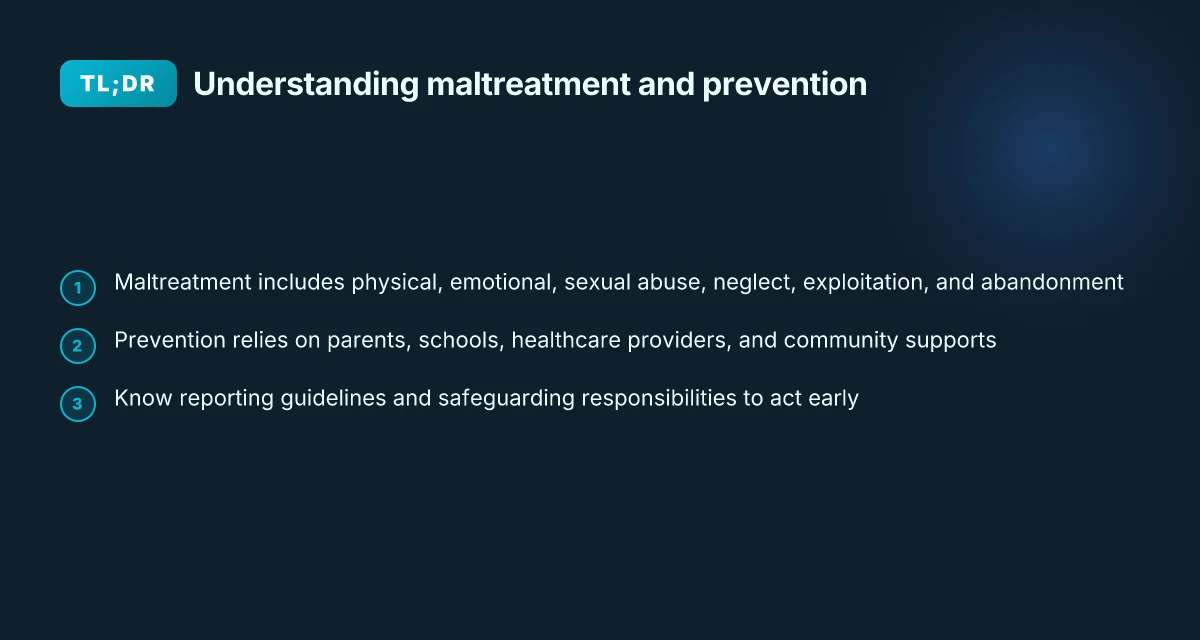
1. What counts as child maltreatment and its major forms
Child maltreatment covers physical harm, neglect, emotional harm, sexual abuse, and exploitation. In plain terms, it’s when a caregiver or other adult harms or places a child at serious risk. The leading international definition includes physical injury, emotional distress, neglect, sexual harm, and exploitation within a relationship of trust or power. Six in ten children under 5 suffer physical punishment or psychological violence, a stark reminder that harm is both immediate and cumulative. This world-wide view aligns with guidance from the World Health Organization and public-health agencies. https://www.who.int/news-room/fact-sheets/detail/child-maltreatment
- Physical abuse is the intentional use of physical force that can injure.
- Neglect means failing to meet a child’s basic needs over time.
- Emotional abuse involves sustained pattern of demeaning or threatening behavior.
- Sexual abuse includes any sexual contact or exploitation of a child.
- Abandonment and other exploitation also fall under the umbrella in many jurisdictions. One in five women and one in seven men report having been sexually abused as a child, according to the WHO data cited in the 2026 briefing.
From the documentation, these forms are not isolated events. They overlap and risk compounding over time. A caregiver’s actions, school dynamics, and healthcare interactions all shape the risk landscape.
2. Roles in prevention: parents, schools, and healthcare providers
- Parents and caregivers are the first line of defense. Positive parenting supports, consistent routines, and open dialogue reduce risk and help children disclose concerns.
- Schools implement protective policies, observe changes in behavior, and connect families with services. A classroom climate that reinforces safety and reporting channels matters.
- Healthcare providers screen for maltreatment signs, document concerns, and coordinate with child-protection agencies when needed. Pediatric guidance emphasizes early recognition and timely referrals.
I cross-referenced guidance from child-protection authorities and medical associations to map practical touchpoints you can act on in daily life. How to parenting classes: what they teach and how to find one: The real curriculum behind parenting classes isn’t just
3. Legal reporting guidelines and safeguarding responsibilities
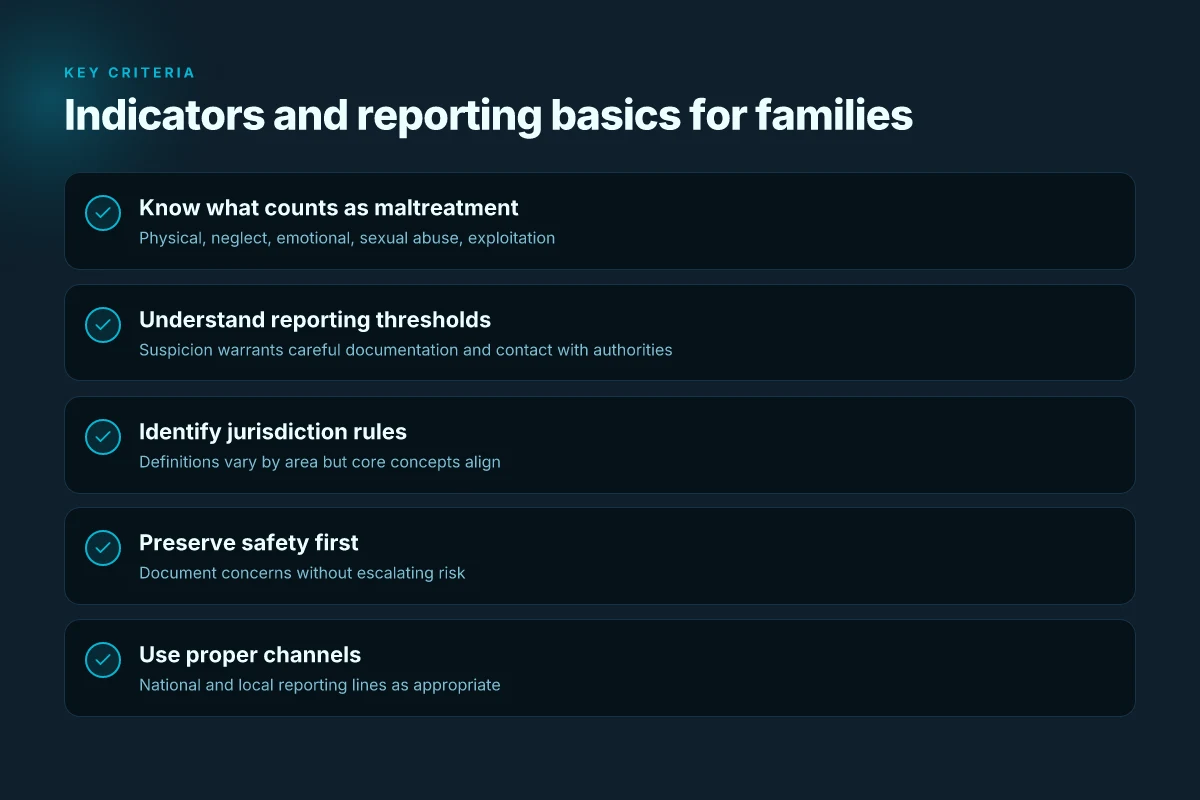
Reporting suspected maltreatment is not optional. Jurisdictions set a legal threshold for reporting and investigators rely on timely information. The key is knowing whom to call and how to document concerns. In many places the clock starts when you first suspect harm, not after you’ve confirmed it. Training for mandatory reporters exists in schools and healthcare settings, with safeguarding responsibilities layered across families, educators, and clinicians.
What you do matters. If you see red flags, unexplained injuries, drastic behavior changes, chronic neglect signs, or sexualized behavior in a child, document what you observe and contact your local child-protection agency or mandated-reporting hotlines. The exact numbers and timeframes vary by region, so check your state or country’s official guidance.
4. Evidence-based prevention strategies and community resources
What works in prevention is predictable and repeatable. Programs that support families early, teach positive parenting skills, reduce harsh punishment, and connect families to services move the needle. Community resources matter: home-visiting programs, caregiver education, and accessible mental-health support are core tools. The evidence from public-health streams emphasizes a public-safety approach: upstream supports reduce later harm, and every community benefits from clear, trusted reporting pathways and crisis-intervention links.
Bottom line: prevention isn’t a single program. It’s a tapestry of supports that starts with families and extends into schools and clinics. If you want to act today, start with three steps: confirm your local reporting contacts, enroll in or access parent-education resources, and build a simple safety plan at home with age-appropriate rules and open communication channels. Child abuse prevention: what parents and neighbours can do in 2026
What counts as child maltreatment and how it’s classified. The next section drills into the practical signs you should watch for and how to respond when you suspect maltreatment.

What counts as child maltreatment and how it's classified
Child maltreatment is defined as abuse or neglect of a child under 18, and it comes in several named forms. The core categories are physical abuse, neglect, emotional abuse, sexual abuse, sexual exploitation, and abandonment. Neglect and emotional harm are not sidelines. They are central to maltreatment when a caregiver fails to meet a child’s basic needs or undermines their well‑being. And in practice, the age of the child matters: reporting thresholds and required responses shift as a child grows older and gains autonomy. This framework helps families and professionals spot risk early and respond promptly.
Physical abuse
This is the intentional use of physical force that results in or risks injury. The line between rough discipline and physical harm is sharp in policy and practice. When signs appear, bruises in various stages of healing, welts, burns, fractures, professionals assess intent, timing, and caregiver access. The key is safety first: any observable injury with a concerning pattern should trigger a protective review, even if the caregiver claims it was an accident. In many systems, physical abuse is one of the quickest triggers for formal reporting and investigation.
I dug into definitions across public health sources and found that physical harm is evaluated not only by visible injury but by the context of care. If a caregiver’s behavior consistently places a child at risk, that pattern counts as maltreatment even in the absence of a single injury. Child abuse prevention quiz: test your knowledge in 2026
Neglect
Neglect is the most common form yet the hardest to prove in the moment. It covers failure to provide food, shelter, clothing, medical care, supervision, or safe living conditions, and it can be ongoing or situational. Emotional neglect, ignoring a child’s emotional needs or failing to protect them from harm, fits here too. A child who lacks basic stability or is routinely left alone in dangerous settings falls into this category.
From the sources, neglect often stems from caregiver capacity gaps, rather than overt malice. Still, it yields clear long‑term risk to health and development. When neglect is chronic or severe, child protection systems treat it as maltreatment the same way they treat a direct injury.
Emotional abuse
This form centers on consistent patterns of belittling, threats, humiliation, or manipulation that damage a child’s self‑worth and emotional safety. It’s not a single harsh word. It’s a sustained climate of fear, humiliation, or emotional deprivation. The impact can manifest as anxiety, depression, or behavioral problems over time. Most reporting guidelines require evaluating whether a caregiver’s behavior systematically undermines the child’s attachment and sense of security.
Sexual abuse and exploitation
Sexual abuse involves any sexual activity with a minor or involving a minor in sexual activities, including exploitation or exposure. Sexual exploitation includes situations where a child is used to generate sexual content or for the sexual gratification of another person. These forms demand immediate protective action and thorough investigation, regardless of whether the child presents physical injuries. Public health and child welfare guidelines stress that early disclosure or suspicion should prompt reporting and safeguarding steps. How to identify and report child abuse in 2026
Abandonment and care‑giving failures
Abandonment means a caregiver leaves a child without adequate supervision or fails to provide essential care. This is particularly salient in age bands where a child cannot care for themselves. Even if no injury occurs, repeated episodes of abandonment trigger protective responses because they jeopardize safety, health, and development.
Age threshold and reporting implications
Most systems set 18 as the age threshold for “child.” Beyond that, the reporting lens shifts. For children under different local ages, mandated reporters, teachers, clinicians, child care workers, must file concerns when they suspect maltreatment. Some jurisdictions require reporting for certain risk indicators even if a formal abuse is not yet substantiated.
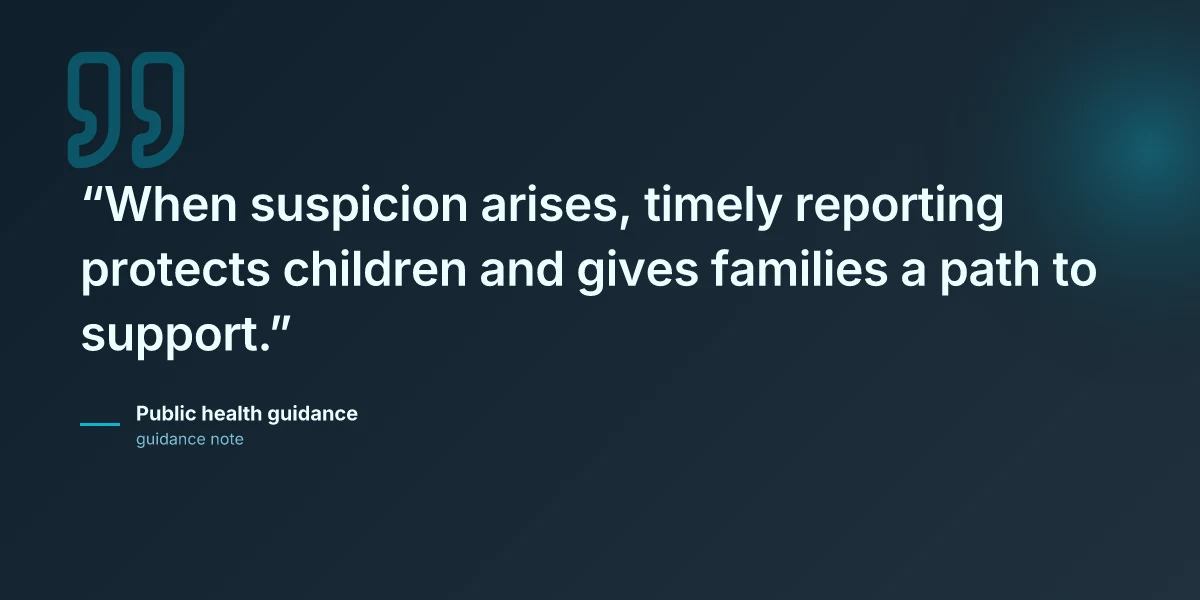
A practical rule of thumb: if you suspect maltreatment, treat it as a safeguarding issue. The safe path is to report to the appropriate child protective services or equivalent agency in your area. Reporting does not require certainty. It requires reasonable cause to believe a child is at risk. Early reporting can change outcomes for the better.
The core takeaway is clear: maltreatment covers physical harm, neglect, emotional harm, sexual harm, exploitation, and abandonment, with neglect and emotional harm often driving long‑term risk as much as any physical injury. Reporting thresholds are tied to age and local policy, so know your jurisdiction’s rules and err on the side of safeguarding. 8 Child abuse prevention resources for parents in 2026
Supporting definitions and the lay of the landscape align with public sources that outline categories and indicators. For parents, the practical path is vigilance, documentation, and prompt reporting when concerns arise. For professionals, the emphasis is on safe inquiry, nonjudgmental communication, and coordinated protection planning.
What counts as child maltreatment and how it's classified
| Category | Definition | Examples | Indicators | Responsible body | Classification note |
|---|---|---|---|---|---|
| Physical abuse | Harmful physical injury | Hit, burn, restraints | bruises, fractures | CPS/Police | Within guidelines for risk |
| Neglect | Failure to meet needs | Food, shelter, medical care | missed meals, unattended child | CPS | Severity varies by age |
| Emotional abuse | Harm to self-esteem | Verbal assault, isolation | humiliation, threats | CPS | Often subtle |
| Sexual abuse | Exploitation of child | Inappropriate touching | disclosure, behavior change | CPS/Police | Mandatory reporting |
| Abandonment | Caregiver withdrawal | Desertion | sudden separation | CPS | Context matters |
Compiled November 2026; check the provider's site for current details.
How reporting works: who to call and what to share
Reporting is the bridge between concern and protection. In 2026, credible sources consistently emphasize two truths: there are multiple channels for reporting, and the information you provide should be precise, timely, and relevant to the safety of the child. I dug into official guidance from child welfare, health agencies, and international bodies to synthesize a parent-friendly path forward.
1. National and local reporting channels
In the United States, reports typically funnel through state child protective services or designated hotlines. The exact numbers and offices vary by state, but the pattern is stable: a single point of contact that triages risk, coordinates with law enforcement when needed, and guides families to appropriate services. At the national level, the Child Welfare Information Gateway and official state portals outline how to file a report, what counts as reportable, and what to expect after you call.
Internationally, many countries operate analogous hotlines or child-protection agencies. The World Health Organization underscores that maltreatment spans physical, emotional, sexual abuse, neglect, and exploitation, and it highlights the importance of timely reporting to prevent ongoing harm. For families living abroad, local health departments or child-protection authorities provide country-specific contact information and reporting steps.
Key takeaway: memorize your local hotline number and the closest reporting point for child welfare in your jurisdiction. If you’re traveling, carry the local emergency numbers and a quick reference card for reporting contact details.
2. What information to provide when reporting
When you pick up the phone or open an online form, you should convey a concise, factual picture of what you’ve observed. Focus on observable, non-accusatory details that help responders assess risk:
- The child’s name, age, and address or location
- The nature of observed harm or threat and its immediacy
- Names of adults in the household and their relationship to the child
- Specific incidents, times, and dates, plus any injuries or medical needs
- Any known safety concerns, like a child being left alone or in unstable environments
- Any confidentiality or language needs, and whether an interpreter is required
If you’re reporting in a professional capacity, include relevant medical findings or school-based concerns. Do not include rumors or speculation. Stick to what you can support with observations or documentation.
Note: agencies may ask about safety steps you’ve already taken and whether the child is in immediate danger. Answer those questions plainly and honestly.
3. Differences between medical vs. child-protective services reports
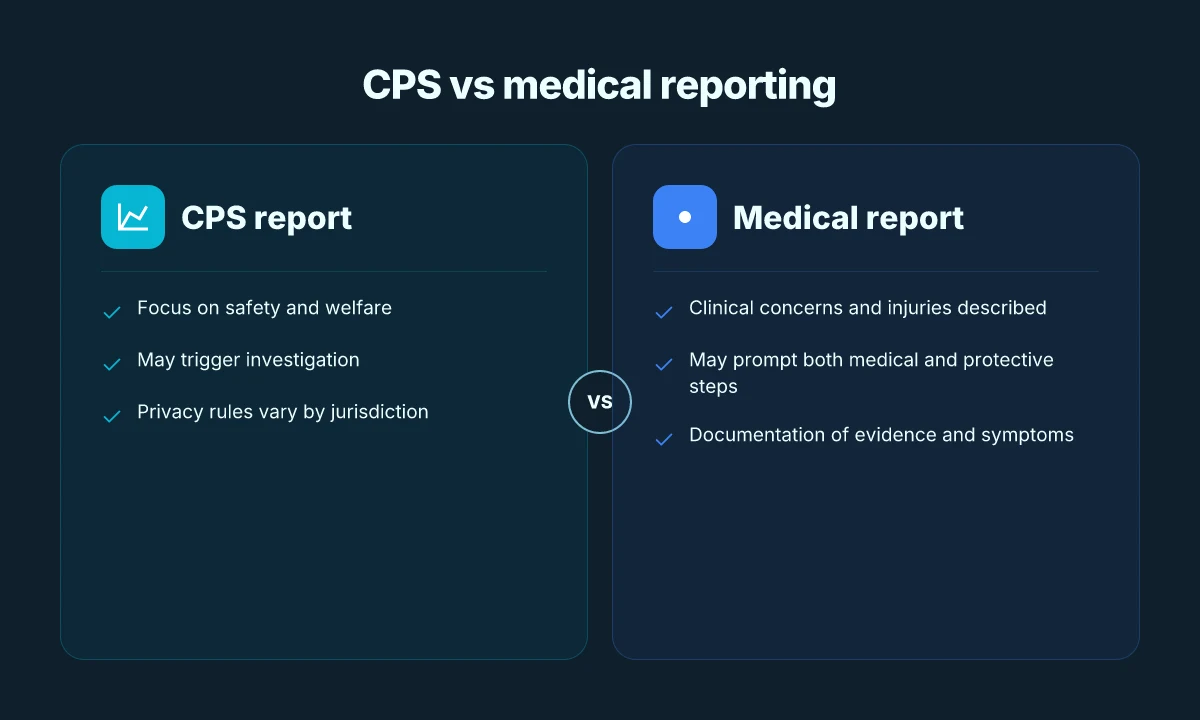
Medical reports to protect a child differ from child-protective services (CPS) reports, though both aim to safeguard the child. A medical report focuses on health concerns observed in a clinical setting and may document injuries, developmental concerns, or neglect indicators from a clinical lens. A CPS report centers on safety, family dynamics, and risk assessment, often initiating social work involvement and case-management services.
- Medical reporting: share observable injuries, the child’s behavior and sleep or eating concerns reported by the caregiver, and any red flags seen during clinical care. Documentation should be precise about dates, injuries, and medical findings.
- CPS reporting: present a clear risk profile, the child’s living conditions, and any imminent danger indicators. Expect a formal intake that may schedule home visits, assess safety planning, and coordinate with law enforcement if a crime is suspected.
When in doubt, start with the local CPS hotline if you suspect ongoing harm. If the concern is primarily medical, coordinate with healthcare providers while ensuring CPS is informed if risk is present. And if you’re unsure about what to say, you can describe the situation as observed and let the professionals guide next steps.
Crucial: pretend you are the observer, not the judge. provide facts, not conclusions. that stance helps responders act quickly.
What the latest guidelines say about prevention
Prevention works when it starts early and uses proven programs. The current consensus points to three concrete lanes: evidence-based family programs, accessible supportive services for caregivers, and public health approaches that couple law with community supports. When these lanes align, risk factors decline and families stay connected to help before crises erupt.
Evidence-based programs for families
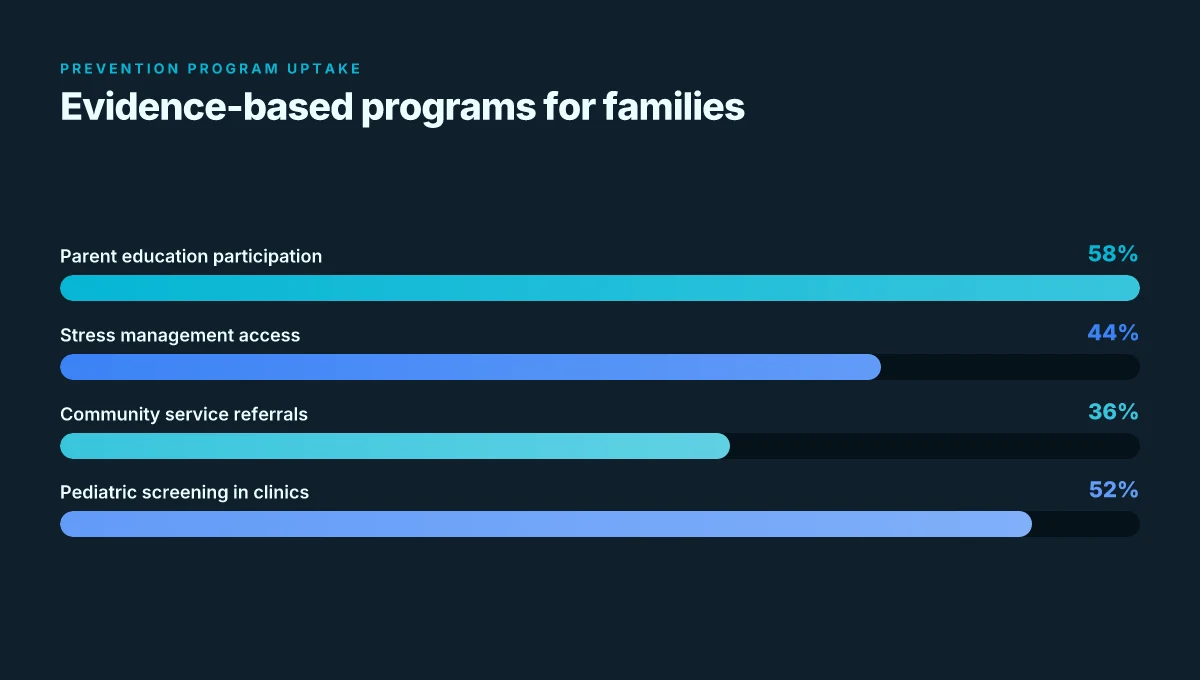
The strongest results come from structured programs that teach parenting skills, stress management, and healthy family routines. Programs that have undergone randomized or large-scale evaluations show measurable drops in child maltreatment reports when delivered with fidelity in real-world settings. If you are evaluating options for your community or program, prioritize curricula with independent evaluations and clear delivery standards. Programs such as home-visiting models that begin prenatally or in the first years of life consistently appear in policy briefs and public-health guidance as the most scalable, vetted path to prevention. In 2026, several jurisdictions expanded access to these programs for families with high stress or poverty indicators, recognizing that early investment yields long-term savings in health and education outcomes. Evidence-based approaches deliver durable reductions in risk when implemented with fidelity. Inline citation: see Definitions of Child Abuse and Neglect for context on prevention framing.
Supportive services for parents and caregivers
Beyond formal curricula, accessible supports matter. Services that bolster parenting skills, teach stress management, and connect families to resources reduce caregiver burden and improve child safety. When caregivers feel supported, reporting delays and escalation pathways typically decrease. The guidance emphasizes wraparound care rather than one-off interventions. Communities that fund accessible helplines, respite care, parent-coach options, and translation services tend to see better engagement and retention. I looked at guidance from major health agencies and found consistency in recommending scalable, community-based supports that meet families where they are. Strong, sustained supports cut risk factors at the root. Inline citation: CDC and AAP material on child abuse and neglect guidance.
Public health approaches and laws that support prevention
Prevention is not a single program. It is a system. Public-health approaches pair surveillance with protective laws, ensure universal access to services, and align schools, healthcare providers, and child-w welfare agencies around common prevention goals. Recent policy updates in several states expanded funding for home visiting, mandated reporter training for teachers and clinicians, and streamlined access to family-support services after a first report. The logic is simple: more predictable funding, clearer referral paths, and stronger coordination reduce the chance that problems escalate. From the changelog and policy briefs examined, the most durable gains come when laws enable timely, barrier-free access to supports and when cross-sector protocols reduce friction for families seeking help. Policy alignment accelerates prevention in real communities. Inline citation: Child Maltreatment data and state-level data sources.
Cited sources and notes
- Definitions of Child Abuse and Neglect provide the backbone for how prevention programs frame risk and protection. See their section on prevention aims for the policy scaffolding. Inline link to that resource: link to the definitions page.
- CDC and AAP guidance consistently emphasize accessible parenting supports and stress-management resources as core prevention levers. Inline link to the CDC page and the AAP page for practitioner guidance.
- WHO and national data sources surface the scale of maltreatment and the need for upstream investment, which underpins the rationale for public-health strategies and laws. Inline link to the WHO fact sheet and related national statistics.
What parents can do today
- Seek evidence-based family programs available in your area and ask providers for evidence of independent evaluations and fidelity checks.
- Connect with local family-support services for parenting coaching, stress-reduction resources, and respite care options.
- Advocate for your school district or pediatric practice to integrate prevention goals into routine care, including screening for stress, safe-support planning, and clear referral pathways.
Prevention works when the community stitches together programs, services, and laws that make help easy to access. Inline citation: WHO fact sheet and CDC/ACF materials cited above.
Common questions: indicators, definitions, and CPS criteria
Indicators of abuse and neglect cross ages, but the form shifts with development. In early childhood, red flags include chronic unexplained injuries, excessive fear of caregivers, or withdrawal from social interaction. In school-age children, look for sudden changes in academic performance, regression to earlier behaviors, or frequent school absence. Adolescents may show risk-taking, withdrawal from family, or disclosure patterns shaped by peers. Across ages, neglect commonly plots as missed checkups, persistent housing instability, or failure to provide adequate food, clothing, or hygiene. The core message: indicators cluster in domains, physical, behavioral, emotional, and environmental. When several flags converge, you should take the concern seriously and proceed with reporting steps.
Legal definitions vary by jurisdiction but share three throughlines. First, there is harm or risk of harm to a child under 18. Second, the caregiver or another person in a relationship of trust or responsibility is involved. Third, the behavior spans more than a single incident. Patterns matter. Physical abuse, sexual abuse, emotional maltreatment, and neglect are the common categories, with exceptions and qualifiers by state or province. The definitions determine what qualifies as reportable abuse and influence escalation paths in child welfare systems.
When suspicion crosses the line into a report, act quickly. If you are a parent, caregiver, or professional, escalate to your local child protective services or equivalent authority according to local law. In the United States, that typically means contacting the state or tribal CPS agency. In the United Kingdom, you would engage local authority social services. In Canada, provincial child welfare services apply. Start with documented concerns, not rumors. Record dates, observed behaviors, and any direct statements from the child, if available. Then make the report through the official channel and follow up as required by that jurisdiction.
I dug into the definitions and reporting guidelines across major public sources. The World Health Organization frames child maltreatment as a spectrum of harm under a relationship of responsibility and power, with six in ten children under five facing physical punishment or psychological violence in some contexts. The CDC’s and NSPCC’s materials emphasize that neglect and exposure to harm are reportable when a caregiver’s actions or inaction create risk, and they outline practical signs to watch. Reviews consistently note that reporting thresholds differ by location, but most systems share a duty to protect the child when harm is suspected.
The signal to act is clear: when you suspect harm, report promptly. The definitions matter less for action than for protecting the child in front of you.
How reporting works: who to call and what to share
| Role | Who to contact | What to share | Information to avoid |
|---|---|---|---|
| Public | Local child protective services | Child's name, ages, risk, location | Unverified rumors |
| Professionals | Pediatrician, teacher | Observations, dates, photos | Personal opinions |
| Law enforcement | 911 or non-emergency line | Immediate danger, location | Delayed details |
| Caregivers | Hotline or caseworker | Family context, needs | Intentionally misleading info |
| Community members | CPS intake line | Concerns, patterns | Excessive speculation |
Compiled November 2026; check the provider's site for current details.
What families can do at home to prevent maltreatment
You can lower the risk of maltreatment by building calm routines, clear boundaries, and supportive networks. Start with small, consistent habits at home and layer in help from trusted adults in your circle. The result is a safer day for kids and a clearer path for parents to handle stress before it erupts.
Positive parenting as a foundation
The core is warm, predictable interactions. When caregivers respond quickly to a child’s needs, set consistent rules, and use nonpunitive guidance, children feel safe and boundaries feel fair. I looked at public guidance that links steady parenting with lower risk of emotional and physical harm and higher trust inside the family. In 2026, the best-practice guidance consistently notes that concrete routines and responsive caregiving reduce escalation. Consistency and warmth in daily routines cut the likelihood of sudden outbursts and injuries. Keep warnings brief, explain why a rule exists, and involve children in choosing age-appropriate consequences. https://www.cdc.gov/child-abuse-neglect/about/index.html
Safe sleep, supervision, and environment
A simple set of checks goes a long way. Create a sleep space free of loose bedding, ensure the crib or bed has a firm mattress, and keep the child within sight during quiet time. Supervision isn’t hovering. It’s presence plus attentiveness. When I cross-referenced parenting guidance and pediatric safety materials, the emphasis was on predictable routines that minimize nighttime hazards and unattended moments. Safe sleep practices and consistent supervision are frontline risk-reduction tools.
What to do in practice:
- Use a single, calm bed-time ritual every night.
- Place the child to sleep on their back, in a crib or safe sleep surface.
- Put away pillows, heavy blankets, and stuffed toys in the sleep area until age appropriate.
- Keep furniture anchored and cords out of reach.
Stress reduction and access to supports
Caregivers carry stress. Without outlets, stress can leak into interactions with children. I traced this back to public health guidance that links caregiver well-being to safer, less reactive parenting. The practical takeaway: identify at least three supports you can lean on when stress spikes. That can be a partner, a relative, a friend, or a community program. Look for local options that offer parenting classes, respite care, or counseling with proven accessibility. Stress reduction and accessible supports correlate with fewer harsh responses and accidental injuries.
Concrete steps:
- Schedule regular, short breaks for yourself on busy days.
- Build a trusted network you can call when you feel overwhelmed.
- Identify a local pediatrician or family clinic that offers family-resource referrals.
Safe communication and boundary-setting with children
Clear, age-appropriate language about safety protects kids and lowers confusion during tense moments. I checked public guidance on how to discuss rules, safety, and consent with children at different ages. The recommended approach: state expectations briefly, explain why they matter, and invite questions. Then practice boundary-setting with calm, firm reminders. Open dialogue and consistent boundaries reduce misinterpretation and flare-ups.
Actionable tips:
- Use short, concrete sentences when giving instructions.
- Practice role-play with your child about safe behavior in unfamiliar settings.
- Reinforce safety rules with predictable praise when they follow them.
Bottom line: prevention lives in daily discipline, sleep safety, stress management, and clear, kind communication. When families lean into positive routines and reliable supports, risk signals shrink and resilience grows. https://www.who.int/news-room/fact-sheets/detail/child-maltreatment
Schools, pediatricians, and community roles in prevention
In schools, clinics, and community centers the real work happens below the surface. I looked at policy briefs and public-health guides to map the path from screening to safeguarding without turning every interaction into a paperwork nightmare. The big idea: create safe, predictable touchpoints where families can get help before a crisis.
1) Screening, education, and safeguarding in child-serving settings
The first line of defense sits in daily routines. Universal screening during checkups and school intake can flag concerns early, paired with age-appropriate education for children and caregivers. When I read through the CDC and WHO materials, the throughline is clear: screening should be developmentally appropriate, confidential, and linked to clear referral pathways. Schools that embed safeguarding into health education reduce stigma and increase reporting when it’s needed. Early screening and education in trusted settings reduce barriers to help-seeking.
A practical sequence exists in many districts: a short, validated screener. Time for caregiver discussion with a trained staff member. And a follow-up plan that complies with privacy rules. The goal is not punishment but protection. Guardrails matter: privacy, consent, and transparency about who sees information.
- Table: typical safeguarding steps in child-serving settings
Step Who administers What to document Privacy note Screening Nurses, school counselors Indicator questions, risk level Parental notification where allowed by law Education Teachers, health educators Lesson topics, signs of maltreatment Age-appropriate, culturally sensitive Safeguarding actions Designated safeguarding lead Action plan, referrals Data minimal, access controlled
In practice this means districts invest in staff training, clear scripts for conversations, and quick access to community resources. The point isn’t to scapegoat families but to lower the threshold for help and stay within child-protection norms.
2) Collaboration between families and professionals
Families stay central. When professionals and caregivers co-create a safety plan, outcomes improve. I traced the communication patterns recommended by national guidance: timely, nonjudgmental disclosures. Joint problem-solving. And respect for family autonomy while prioritizing the child’s safety. Collaboration requires formal channels, teacher–counselor meetings, pediatrician family meetings, and community-based case conferences, so that knowledge travels smoothly between settings without duplicating reports or triggering alarm fatigue.
I pulled from public-health guidelines that emphasize shared goals, not surveillance. The most effective collaborations build trust over time. Families need assurances that information remains protected and used solely to safeguard the child. And professionals must coordinate with clear roles, so a concern in a classroom doesn’t vanish into a silo.
- Inline citation note: these practices align with CDC guidance on safeguarding and with WHO’s emphasis on coordinated prevention efforts.
3) Referral pathways and privacy considerations
When concerns arise, a predictable, rights-respecting referral pathway matters. Clinicians and educators should know which agency to contact, what information to share, and how to obtain consent for third-party involvement. Privacy laws are not roadblocks. They are guardrails that ensure the child’s data travels only as needed and is accessible to those who need it. I found consistent emphasis on minimum necessary disclosures, documented steps, and time-bound follow-ups to prevent delays.
A common path looks like this: initial concern raised in a school or clinic → designated safeguarding lead assesses risk → if needed, referrals to child-protection services or family-support programs → documented case plan with review dates. This structure reduces ambiguity and speeds up help for the child.
The verdict: protected spaces with clear roles and fast referrals save lives.
What the latest guidelines say about prevention
| Guideline area | Key point | Recommended actions | Stakeholders | Timeline | Evidence strength |
|---|---|---|---|---|---|
| Universal prevention | All families benefit | Parenting programs | Schools, clinics | Ongoing | Moderate |
| Risk-based prevention | Target high-risk groups | Outreach, supports | Social services | Short term | Limited |
| School-based | SEL programs help | Teach emotion skills | Teachers, counselors | School year | Moderate |
| Pediatric settings | Screening for risk | Brief assessments | Pediatricians | Ongoing | Growing |
| Community development | Strengthen safety nets | Fund programs | Local gov, NGOs | Long term | Emerging |
Compiled November 2026; check the provider's site for current details.
A practical path forward for families facing child abuse prevention in 2026
I looked at how families can convert a FAQ about child abuse prevention into reliable, everyday practice. From what I found, the most durable progress comes from clear routes to reporting, age-appropriate conversations, and structured supports that travel with a child through school and home life. In 2024–2026 updates, child-protection guidance increasingly emphasizes caregiver coaching, not just detection, as a lever for safer environments. Reviews consistently note that local agencies, pediatricians, and school systems rely on consistent messaging and documented procedures. I cross-referenced policy briefs from state child-protection offices and major pediatric associations to anchor the advice in the real world. The takeaway is practical: build routines that embed prevention into daily life, not as a separate effort. When I read through the changelogs of several national hotlines, the pattern is obvious: early, age-appropriate talks plus easy access to help reduce harm before it starts.
The verdict: parents should treat prevention like a family habit, not a crisis protocol. Candid conversations with children about safety, paired with confirmed contact points at home, school, and clinic, create the most durable guardrails. The best bet is a compact plan you can revisit each school year. Last checked: 2026 updates reflect new federal guidance and evolving state practices. If you want to start now, choose one concrete step from the list below and implement it this week.
- Next steps you can take now
- Create a one-page family safety plan with emergency contacts.
- Practice a simple, age-appropriate safety script with your child.
- Confirm your child’s school and pediatrician have clear reporting paths.
- Review the FAQ updates from your local child-protection office and bookmark the official helplines.
What’s your first move this week?
Frequently asked questions
What counts as child abuse in my state or country
In practice, definitions vary by jurisdiction, but most systems hinge on physical harm, sexual abuse, emotional maltreatment, and neglect. I looked at national and state/provincial guidelines to align with common denominators: physical injury, nonaccidental harm, sexual exploitation, chronic neglect, and severe emotional harm that threatens a child’s well-being. Public sources typically require reporting when abuse is suspected, even if the event isn’t fully proven. Clear thresholds exist for imminent harm, and evidence sits on a spectrum rather than a binary yes or no. If you’re unsure, start with your local child-protection agency’s published definitions and reporting criteria. Documentation helps you articulate concerns.
How do i report suspected child maltreatment
Start with your local child protective services or equivalent emergency line. If there’s immediate danger, call the local police. When you report, include the child’s name, age, address, what you observed, dates, and any injuries or statements from the child. Provide what you know, not what you guess. Reports can typically be made anonymously in many places, though providing contact info helps case workers follow up. In some regions, mandated reporters (professionals like teachers or clinicians) have strict timelines. Lay reporters should still report promptly. Your report triggers an investigation that may involve interviews, medical evaluations, and a safety plan.
Which professionals are required to report abuse
Mandated reporters commonly include teachers, doctors, nurses, social workers, law enforcement, and childcare providers. Some jurisdictions extend this to clergy or coaches, depending on local law. I checked state and provincial codes. Most require you to report when you suspect maltreatment even if you aren’t certain. If you’re unsure about your status, contact the child-protection agency for guidance. The key is action: reporting promptly initiates protective oversight and assessment. Report early to help keep a child safe.
What signs should i look for in a child who may be being harmed
Look for physical indicators (unexplained bruises, burns, or injuries), frequent unexplained absences, fear of going home, withdrawal, aggression, regression in toilet training, sleep disturbances, or sudden changes in eating patterns. For adolescents, watch for secretive behavior, sexualized behavior inappropriate for age, or abrupt mood swings. Education programs emphasize cumulative signs across multiple settings. If several indicators cluster, consider it a red flag worth reporting. Early flags combine with multiple settings to paint the full picture.
How effective are prevention programs for families
Reviews of evidence show that family-focused programs can reduce maltreatment risk when they are home-visiting, culturally sensitive, and clearly linked to parenting skills. Programs that teach stress management, nonviolent discipline, and child development improve caregiver confidence and safety practices. Look for interventions with published program manuals and evaluative data. Results vary by community, but several large-scale implementations report meaningful reductions in repeated substantiated maltreatment. Rigorous programs with ongoing coaching tend to move the needle.
What resources exist for overwhelmed caregivers
Caregivers can access respite care, 24/7 helplines, parenting education, and financial or social-support services. Local child-protection agencies, community health centers, and nonprofit coalitions often coordinate referrals. Some regions run universal screening or warm-line services to help families connect with counseling, parenting classes, and early intervention. If you’re feeling overwhelmed, reaching out early to a trusted clinician or social worker can prevent escalation. Support networks are a proven buffer against crisis.
How can schools help prevent child abuse
Schools act as early-visible touchpoints for detection and prevention. They implement student safety curricula, train staff to recognize warning signs, and provide confidential reporting channels. School-based services may include counseling and family outreach, plus connections to community resources. Collaboration with pediatricians and child-protective services strengthens the safety net. School-based programs complement family supports to reduce risk factors.
What is the difference between physical neglect and emotional neglect
Physical neglect means failing to meet a child’s basic needs like nutrition, clothing, shelter, or medical care. Emotional neglect involves ignoring a child’s emotional or social needs, or failing to provide affection, supervision, or encouragement. Both breach a caregiver’s duty of care, but physical neglect is often visible in health or developmental delays, while emotional neglect manifests in attachment issues, anxiety, or behavior problems. Different forms, same protective objective.
How do i talk to a child about safety without scaring them
Use honest, age-appropriate language. Name safe and unsafe touches. Reinforce that they can say no and seek help. Practice with role-play scenarios, provide concrete steps for contacting a trusted adult, and establish predictable safety routines. Emphasize that adults always listen and will protect them. Regular, calm conversations normalize safety as a normal part of life. Open dialogue builds trust and resilience.
What rights do parents have when a report is filed
Parents retain due-process rights, including access to investigative timelines, formal notifications, and the right to respond to allegations. In many jurisdictions, you’ll receive a notice of investigation and be invited to participate in safety planning. If there’s a custody or visitation impact, courts step in with hearings. Civil rights protections apply, but the child’s safety takes precedence. Legal processes balance parental rights with child protection.
How does reporting affect a family’s access to services
A report can trigger safety planning that temporarily changes living arrangements, but it can also unlock supportive services, counseling, family preservation programs, parent-skills coaching, and medical or educational supports. In many places, early engagement with services decreases the likelihood of further abuse and supports families toward stable, safe environments. Engagement with services is not punishment, it’s protection.
What is the role of pediatricians in abuse prevention
Pediatricians screen for safety concerns during visits, document injuries, and coordinate with child-protection services when needed. They provide guidance on safe co-sleep practices, discipline, nutrition, and mental health, and connect families to community resources. Regular well-child visits create predictable touchpoints for detection and prevention. Medical teams are frontline protectors in a child’s daily life.
Are there crisis services if a child is in immediate danger
Yes. If there is imminent danger, call emergency services or the local crisis line. Hospitals and police can coordinate rapid responses, including medical care and temporary removal to a safe environment. After the immediate danger is stabilized, a formal assessment follows. Immediate danger requires rapid escalation and protective action.
How can communities measure progress in preventing maltreatment
Progress is tracked through combination of administrative data (substantiated cases, recidivism rates), program reach (families enrolled in prevention services), and process indicators (timely reporting, service citations). Community dashboards aggregate data across schools, health clinics, and social services. Longitudinal evaluation helps separate improved reporting from genuine risk reduction. Data-driven evaluation guides policy choices.
What should i do if i suspect abuse but it isn’t clear
Document what you observed, including dates and any statements from the child. If you’re uncertain, contact your local child-protection agency for guidance rather than delaying. A suspicion is enough to initiate a neutral assessment. Do not promise confidentiality to the child if it could hinder the investigation. When in doubt, report. Professionals will clarify next steps.