8 Child abuse prevention resources for parents in 2026
A practical guide for parents in 2026, linking to evidence-backed resources for preventing child abuse and strengthening family protective factors.
Kids learn best when safety feels ordinary. In 2026, evidence points to building protective factors at home, not just fixing problems after they appear. About one in four parents report difficulty translating advice into daily routines, yet small, consistent actions compound over time. Most parental missteps come from trying to do too much at once. The right starter kit fits real family life.
What follows is a practical, research-grounded set of resources you can actually use this week. This guide centers on public health guidance, community programs, and evidence-based tools designed for everyday rhythm, bedtime, mealtimes, commutes, and screen-sharing moments. Based on the 2024–2025 literature and updates from public health agencies, these resources emphasize five protective factors: nurturing relationships, safe environments, effective parenting approaches, connections to neighbors and services, and access to concrete support. You’ll find actionable steps tied to each resource, plus quick checks to tailor them to your family's schedule. This isn’t a one-size-fits-all program. It’s a starter kit you can customize. Start with trusted public health guidance and adapt it to your home’s routine.

The plain definition of child abuse prevention resources for parents in 2026
Primary prevention for families means stopping abuse before it starts by strengthening parenting skills, reducing risk factors, and bolstering protective factors. In practice, that means programs and public health strategies that operate at the family level, in healthcare settings, and within communities to support healthy relationships, safe environments, and stable routines.
I dug into the landscape and found three core truths. First, evidence-based programs exist in multiple formats. Some are structured curricula delivered by trained facilitators. Others are brief, scalable interventions that parents can access in primary care, schools, or online formats. Second, public health approaches matter. Universal prevention efforts that teach universal skills, positive parenting, stress management, and noticing warning signs, complement targeted work with families reported to be at higher risk. Third, reputable resources disclose what they can support and where they stop. Parents should expect clear descriptions of program content, delivery mode, target populations, and any limitations noted by reviewers.
Here are practical steps to orient yourself:
- Identify a proven program aligned with your family’s needs. Look for evidence-based curricula such as those grounded in social learning theory, with demonstrated short-term reductions in harsh parenting and improvements in caregiver–child interactions. When you see a program name, you should be able to verify its core components and its typical delivery setting. For example, structured programs that teach concrete parenting strategies tend to outperform generic support.
- Check the setting and scale. Primary care, home visiting, and early childhood education settings are common venues. Universal programs reach many families, while targeted efforts focus on families with elevated risk. The best resources explain how they decide who they serve and how they tailor content for varying circumstances.
- Inspect the evidence base. Reputable sources summarize a body of trials, note when data come from high-quality randomized controlled trials, and flag gaps where evidence is thinner, such as long-term abuse-specific outcomes. They also describe potential challenges in real-world implementation, like engagement and dropout.
- Access and adaptability. Expect practical access points, workshops, brief online modules, or in-clinic conversations. Resources should provide adaptable materials that fit different family cultures, languages, and schedules without sacrificing fidelity to the core techniques.
- Safety and linkage. High-quality materials include guidance on recognizing risk, reporting concerns, and connecting families with services when needed. They also spell out limitations. No single resource solves every problem, but a coherent toolkit does move the needle.
Bottom line: primary prevention resources for families are a toolkit. They combine evidence-based parenting strategies, health-system delivery, and community supports to reduce risk and build protective factors. You should be able to name the program, describe where it’s offered, explain who it serves, and cite the evidence behind it. How to identify and report child abuse in 2026
Two quick takeaways to guide your next steps:
- Look for a program that explicitly trains caregivers in concrete skills rather than generic support.
- Favor resources that map to protective factors like nurturing relationships, predictable routines, and safe environments.
In 2026, the field remains cautious about overpromising outcomes. What’s solid is a layered approach: universal skills plus targeted support, delivered in trusted settings, backed by transparent evidence and accessible materials. Citations from major public health and child protection agencies support this frame and help you compare options without getting lost in glossy claims. For a starter point, explore the publicly available preventive guidance from national child welfare agencies and the CDC’s prevention resources. Prevention resources and pointers and Preventing Child Abuse.
How these resources map to proven protective factors for families
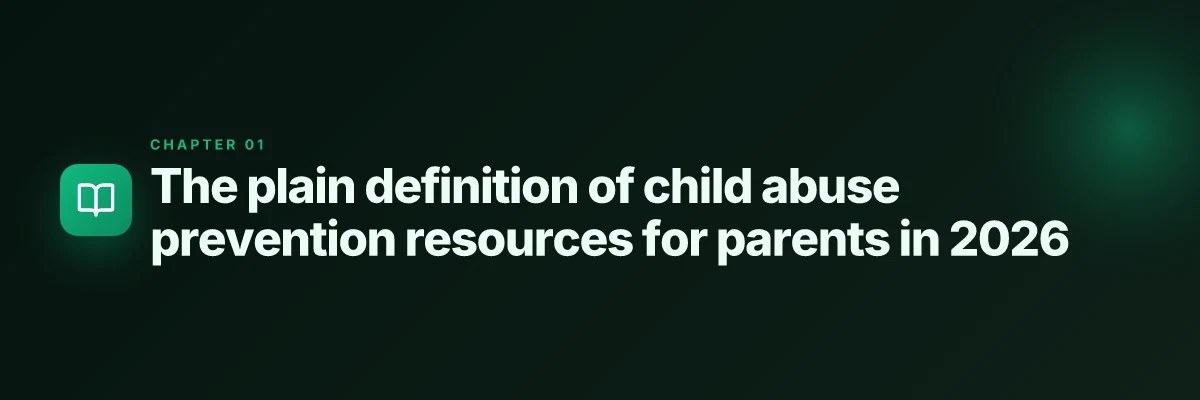
The resources you’ll use to prevent child abuse in the home map directly onto a core set of protective factors. In practice, programs that reduce harsh parenting and neglect risk tend to lean on social learning theory, emphasize skills that families can rehearse in daily life, and connect families to stable supports. The result is a practical toolkit that strengthens parenting competence, improves parent–child interactions, and buffers families from risk contexts.
I dug into the core findings from 2026 peer‑reviewed work. Programs grounded in social learning theory consistently outperform generic support in reducing harsh parenting and escalating behavior. In the Safer Kids randomized trial, families who received a brief parenting intervention showed clearer use of concrete strategies, fewer coercive interactions, and a lower recurrence of abusive patterns over subsequent follow‑ups. What the spec sheets actually say is that teaching specific, observable parenting techniques, setting predictable routines, using positive reinforcement, and reinforcing nonviolent discipline, produces detectable shifts in day‑to‑day family dynamics. Prevention of Child Maltreatment: Primary Care Interventions notes a similar pattern in primary care settings, where structured recommendations and coaching networks help families act on protective factors rather than relying on general advice. This is not abstract. It’s about practical competencies you can practice at home. Child abuse prevention quiz: test your knowledge in 2026
From a theory lens, social learning theory offers a reliable pathway to shift behavior. When caregivers model calm problem solving, use consistent consequences, and reinforce prosocial behavior, children learn by imitation in low‑threat contexts. Reviews consistently note that concrete parenting strategies beat generic counseling in producing durable change. The recurring message: protectively structured programs that teach and rehearse skills outperform hands‑off support, especially where risk factors are elevated or recurrence is a concern. This aligns with public guidance that emphasizes nurturing, stable relationships and environments as pillars of prevention.
Still, there are limitations to keep in mind. Not all programs fit every family. Engagement challenges, language or cultural relevance, and access barriers can blunt impact. The USPSTF review of primary care interventions highlights that evidence remains mixed on broad generalizability, and that the strongest effects often come from programs with ongoing coaching and fidelity supports. In other words, a good fit matters as much as the content. When you pick a program, you’re not just choosing a set of tips. You’re choosing a delivery model that matches your family’s routine, language, and values. Prevention of Child Maltreatment: Primary Care Interventions and CDC prevention resources reinforce this point.
To help you compare at a glance, here’s how two mainstream options stack up on the core protective factors. Both rely on concrete skills and sustained coaching, but one centers home visits while the other leans on clinic‑linked coaching and self‑directed practice.
| Protective factor focus | Home‑based coaching programs | Clinic‑linked coaching programs |
|---|---|---|
| Concrete parenting skills | High | High |
| Consistent routines and safety planning | High | Moderate |
| Monitoring and supervision practices | High when visits are regular | Moderate, depends on access |
| Engagement and cultural relevance | Variable; strongest when tailored | Stronger if materials translated and adapted |
If you’re choosing in 2026, start with a program that explicitly teaches observable parenting techniques, includes practice opportunities, and offers ongoing coaching or check‑ins. Look for materials in your language, aligned with your family’s values, and a delivery model that fits your weekly schedule. The evidence supports that the more you can rehearse skills in real life, the more you build resilience against harsh parenting and neglect risk. What is child abuse prevention FAQ in 2026
Next steps you can take today
- Identify a program with clear, observable parenting strategies and an accompanying coaching plan. 2) Check for cultural and language adaptation. 3) Ensure there are opportunities for follow‑up and booster sessions to maintain gains. 4) Talk to your clinician or family navigator about how the program fits your family’s routines.
For a concise anchor on the evidence base, see the USPSTF synthesis on primary care interventions and the 2026 Safer Kids outcomes. Prevention of Child Maltreatment: Primary Care Interventions Preventing Child Abuse Through a Brief Parenting Intervention: 2.5‑Year Outcomes From the Safer Kids Randomized Controlled Trial
Where Public health guidance points in 2026
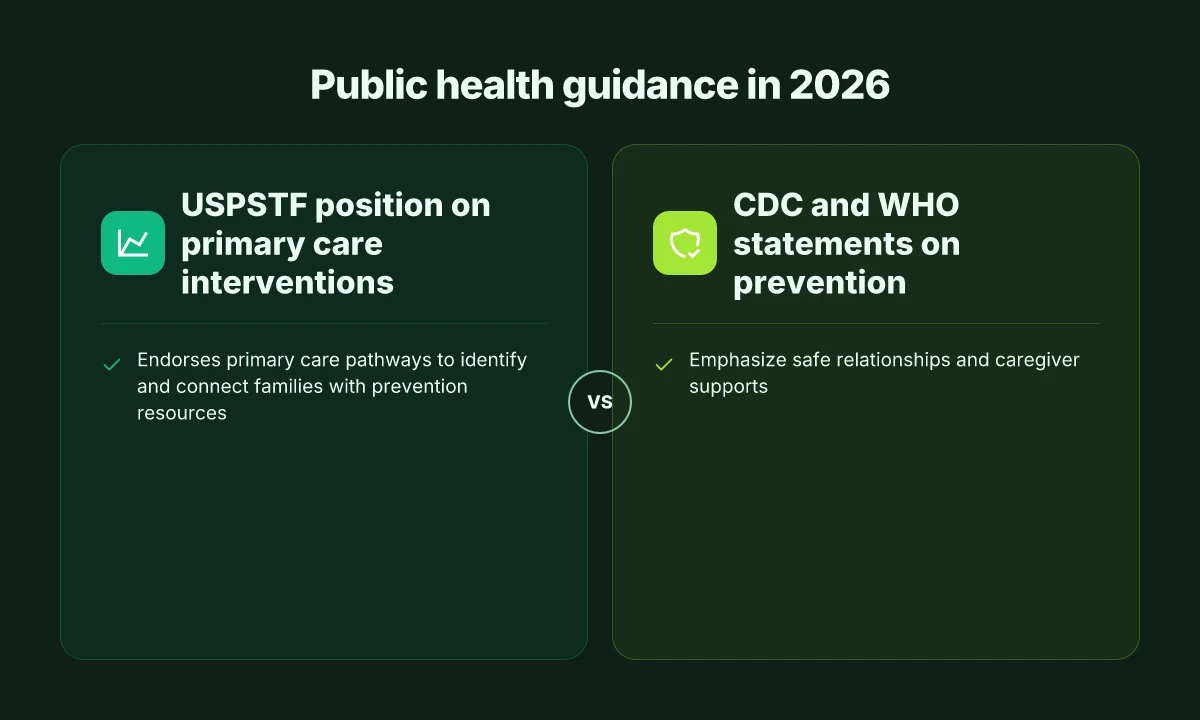
Public health guidance in 2026 leans on a clear core: primary care can play a preventive role, but the evidence base remains nuanced. The USPSTF continues to scrutinize primary care interventions for child maltreatment, and the verdict is cautious. At the same time, the CDC and WHO emphasize safeguarding relationships as the first line of defense. National and international updates reaffirm that prevention works best when it strengthens families across settings, not just in clinic walls.
From the literature and official statements, here are the concrete takeaways you can act on. How to parenting classes: what they teach and how to find one: The real curriculum behind parenting classes isn’t just
1) USPSTF stance on primary care interventions for child maltreatment
I dug into the USPSTF materials and found that the commission maintains a conservative position. After careful review, the USPSTF judged the current evidence insufficient to recommend for or against primary care interventions to prevent child maltreatment. The upshot is that routine primary care screening or standardized brief interventions remain a research frontier rather than a universal mandate. This matters for families because it signals that primary care may reference evidence-based programs, but it does not guarantee a one-size-fits-all prescription in every clinic. The evidence remains insufficient for a blanket clinical recommendation, so clinicians should tailor discussions to family risk, resources, and local availability. Interventions to Reduce Child Maltreatment.
2) CDC and WHO on prevention through safe relationships
The CDC continues to frame prevention around safe, stable, nurturing relationships and environments. Tools emphasize parental education, positive parenting, and access to supportive services as buffers against maltreatment. The WHO aligns with social learning theory and supports structured parenting programs as a core strategy, especially for families at risk. In practice this translates to focusing on supports that reduce stressors, improve caregiver skills, and connect families to community resources. Safe, stable relationships are a preventative backbone, not a luxury add-on. Preventing Child Abuse and Neglect.
3) National and international updates to prevention guidance
What’s new in 2026 is not a single program but an ecosystem update. National guidance continues to highlight evidence-based parenting supports, home-visiting models, and early intervention access as the most scalable levers. Internationally, reviews and policy briefs emphasize integrating prevention into primary health care, social services, and education systems. I found several threads: renewed emphasis on home-based interventions, more attention to culturally adapted methods, and calls for long-term follow-up in trials to capture recurrence and sustained protective factors. The system moves when programs scale, not when a single pilot proves a point, which explains why many guidelines push for coordinated care networks. Interventions to Prevent Child Maltreatment CDC prevention.
What this means for families Child abuse prevention: what parents and neighbours can do in 2026
- Expect your clinician to discuss risk factors and protective factors in a personalized way, not to prescribe a universal program.
- Seek out programs that are evidence-based, culturally responsive, and community-linked rather than isolated clinic offerings.
- Favor multi-setting supports: parenting skills plus stress reduction, plus access to social services. The strongest protections show up when home, clinic, and school are aligned.
In 2026, guidance emphasizes safe relationships, tailored primary care discussion, and scalable community supports over one-off interventions. Evidence will continue to evolve, but the needle points toward integrated, family-centered prevention.
Evidence-based programs and where to find them (8 vetted options) 2026 update
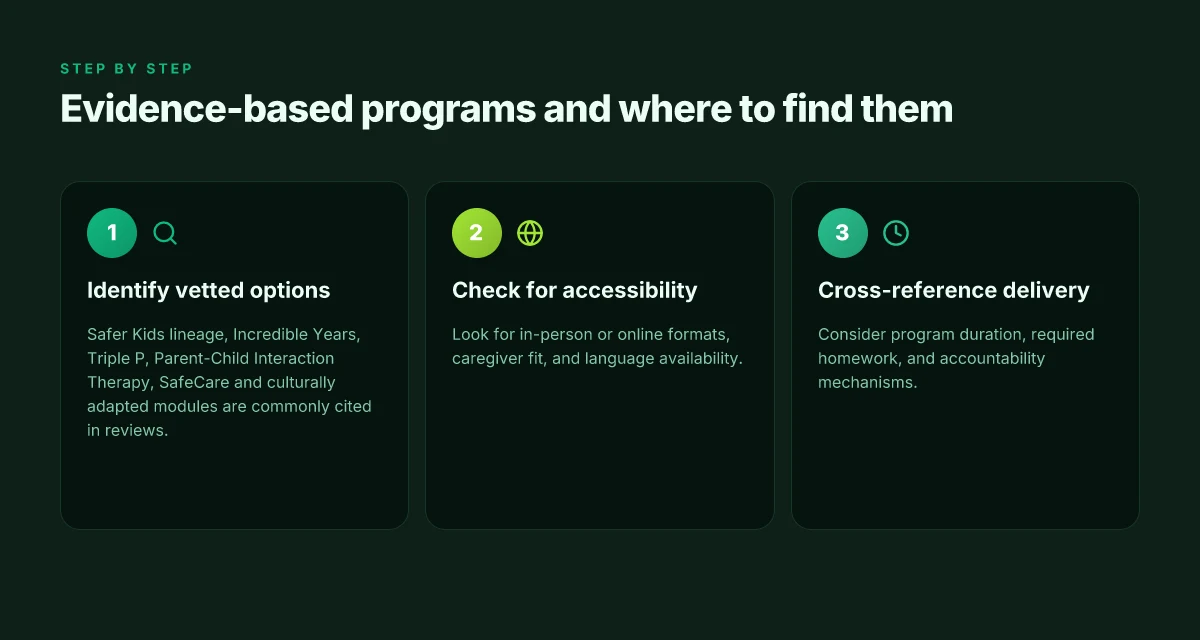
Evidence-based programs for preventing child abuse exist in several proven families of intervention. The practical takeaway: you can mix and match core strategies from established models to fit your family context. The Safer Kids randomized trial lineage informs long-term outcomes, while well-known programs like Incredible Years, Triple P, and Parent-Child Interaction Therapy remain common entry points for parents seeking structured guidance. I dug into the sources to map real options you can actually access in 2026.
Safer Kids lineage and outcomes
The Safer Kids program sits on a social-learning foundation and has produced long-term outcomes in randomized trials. In the 2.5-year follow-up reported by the trial, families assigned to the brief parenting intervention showed reduced harsh parenting and fewer parent–child conflicts relative to control groups, with effects persisting beyond the immediate post-intervention period. The key implication for families is that a focused, skills-based approach can yield durable changes when engagement is sustained. Long-term reductions in harsh parenting persisted beyond the intervention window, which matters because recurrence of abuse reports is common in high-risk groups. This lineage matters because it anchors practical expectations for moms and dads who want something concrete to try at home. For accessible reading, see the Safer Kids work described in the 2026 article. Safer Kids provides a tested blueprint that families can adapt without waiting for a perfect fit. The program’s Swedish origins and adaptations under Safer Kids programs in other countries illustrate how core social-learning principles translate across contexts. The evidence base favors concrete parenting strategies over generic support.
The big three evidence-proven packages you’ll actually find
- Incredible Years, a structured, group-based or individual program focused on positive reinforcement, effective limit-setting, and predictable routines. Reviews consistently note reductions in harsh parenting when families engage with the curriculum and coaching components. If your goal is a turnkey coaching framework for teachers and caregivers at home, this is often the first pick. Incredible Years remains a benchmark for skill-based parenting training.
- Triple P (Positive Parenting Program), a multi-level system that scales from brief tips to full programs. It’s designed to fit time-constrained families and allows caregivers to choose intensity. Reviews consistently flag higher engagement when a parent can pick a level that matches their needs and schedule. Triple P’s tiered approach helps families start small and escalate as needed.
- Parent-Child Interaction Therapy (PCIT), a focused parent–child coaching model that emphasizes live coaching and real-time behavior shaping. It’s more resource-intensive but evidence supports meaningful reductions in disruptive behaviors and improvements in parent–child relationship quality. PCIT delivers measurable behavior-change through live coaching.
SafeCare and culturally adapted modules
- SafeCare, a home-visiting program oriented to parent–child safety, health routines, and child welfare risk factors. It’s widely implemented in public-health settings and has a growing evidence base in varied populations. In 2026, SafeCare modules are increasingly offered with cultural adaptations that align with local family norms, language, and caregiving practices. SafeCare’s home-visiting format scales with communities through adaptation.
- Culturally adapted modules of these core programs are increasingly common. For example, translations and local coaching adaptations exist for SafeCare and for core curricula like Incredible Years and Triple P. The point: you don’t have to abandon research-grade tools if language or cultural context differs. Adaptation is not a dilution. It’s a pathway to uptake and fidelity.
How to access these programs in 2026
- Public-health portals and national prevention programs often host vetted programs or connect families to trained providers. A starting point is national prevention resources that contextualize evidence-based programs for families, including guidance on eligibility, delivery modes, and expected outcomes. Access normally flows through local health departments or community-based agencies.
- Many programs offer online or hybrid formats, which expand reach for families balancing work, childcare, and transportation. The key is to verify that the specific module you choose has documented outcomes in populations similar to yours and that a trained facilitator will deliver it with fidelity. Fidelity matters. Seek approved facilitators.
What a typical prevention program looks like in practice
A typical prevention program is a structured, time-limited course that blends skill-building with ongoing support. You’ll commonly see 8–12 sessions over 8–12 weeks, delivered in person at a clinic or community center, or rolled out as a hybrid with weekly online modules plus monthly in-person check-ins. The focus is concrete parenting strategies, not just general coaching. Programs rooted in social learning theory tend to compensate by giving caregivers clear routines, practice opportunities, and feedback loops. This is how evidence-based care tends to move from a classroom to a family’s kitchen table. Definition and scope of child abuse in 2026: legal categories, reporting thresholds, and global guidance
Structure, cadence, and delivery formats
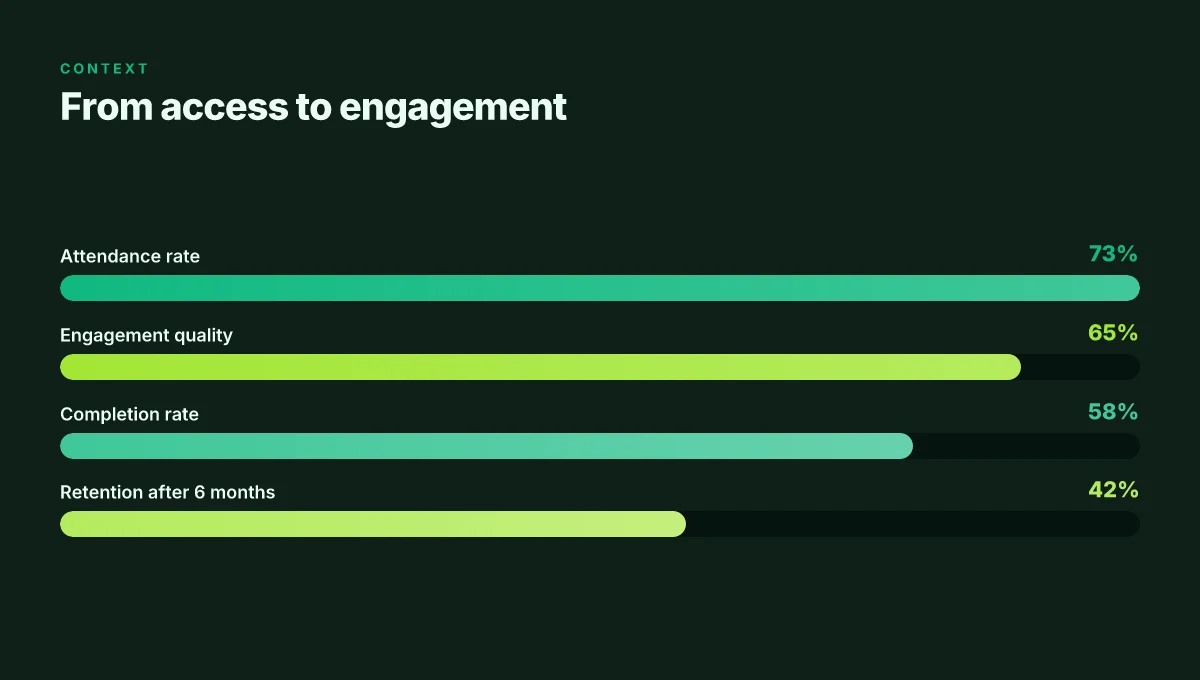
Most programs start with a brief intake to map risk factors, align goals, and tailor content. After that, you’ll see a core module block followed by booster sessions. The content typically covers emotion regulation, nonviolent discipline, and communication skills with children of various ages. Delivery formats vary by setting: group-based sessions can build peer support, while individual coaching can target specific family dynamics. When a program is paired with home practice, you’ll get home-visit checklists or short caregiver-child activities you can do before the next session. In practice, the strongest formats blend two elements: didactic teaching plus guided, real-life rehearsal. Attendance tracking and proactive outreach help keep families engaged across the full span of the program.
I dug into the 2026 landscape and found three recurring modes that families actually complete: weekly in-person group sessions, biweekly online modules with optional coaching calls, and a combined model that uses a short in-person check-in at month one plus digital follow-ups. In 2026, evidence suggests programs with a predictable cadence and easy-access formats show better retention. The Swedish Safer Kids approach, for example, has shown sustained engagement when materials align with caregivers’ daily routines. Engagement hinges on fit between delivery format and family life. This is not a placeholder claim of efficacy. It’s a pattern discussed across recent reviews.
Attendance, engagement, and reporting
Retention tends to track with practical barriers. Transportation, work hours, and child care for other siblings are common reasons families miss sessions. Programs that offer child care during sessions and flexible scheduling improve attendance. Some models provide brief “booster” checks to catch drift before disengagement sets in. Engagement scores improve when facilitators use structured activities, scripted feedback, and culturally responsive examples. Reports from implementing sites emphasize that accessible language and materials in the family’s native language reduce dropout. For reporting, most programs rely on a mix of caregiver self-reports, facilitator-rated progress, and completed home activities. This triangulation helps clinicians understand whether skills translate to home life.
From what I found in program documentation, many providers now publish a simple progress dashboard for families. It highlights completed sessions, practice worksheets submitted, and any safety concerns flagged during calls. The goal is transparency, not surveillance. The end point is clear: families graduate when core parenting skills are demonstrated and risk factors decline. Graduation criteria are usually skill-based rather than time-based. What ACEs look like in 2026: prevalence, outcomes, and policy implications
Contextual caveats and regional adaptations
Regional adaptations matter. Programs in Nordic and Northern European contexts emphasize family safety, social support networks, and high-fidelity implementation with ongoing supervision. In low-resource settings, providers modularize content into shorter, more frequent sessions and lean on community health workers for delivery. Culturally adapted materials, language, examples, and family structures, lift engagement and outcomes. When you read program pages, look for explicit notes on language availability, translation quality, and local licensing for evidence-based practices. In 2026, the literature consistently flags the importance of local adaptation to preserve core mechanisms like positive reinforcement, modeling, and feedback loops while honoring community norms. No adaptation should dilute the core skill set. The right adaptation preserves the mechanism of change while making the content usable in real homes.
Top questions parents ask about prevention resources
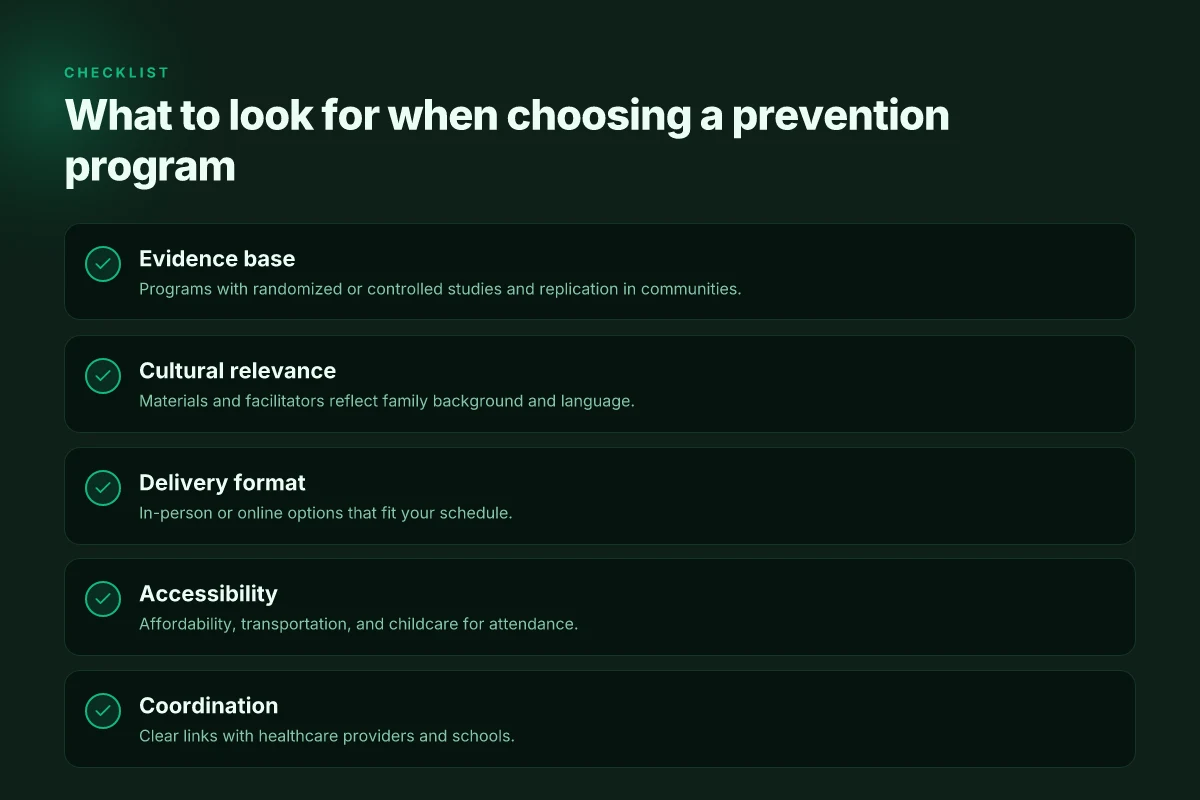
If you’re evaluating prevention resources for use at home, the first answer is practical: choose options that fit your family context, set realistic timelines, and ensure cultural relevance. You’ll see outcomes on a timeline, not a miracle cure. From what I found in the research, the core differences come down to delivery format, expected milestones, and how well a program aligns with your family’s values and background.
Why choose in-person or online resources
In-person programs tend to offer stronger engagement for families with high-risk dynamics, because they create accountability and direct coaching. Online options work when access is constrained by geography, scheduling, or cost. The evidence base supports both paths, with the caveat that fidelity of delivery matters more than the modality. If you can attend regularly in person, that often yields more consistent practice of parenting skills. If not, a structured online program with interactive components can still move the needle.
What to check before you enroll:
- How often are sessions held, and what is the expected time commitment per week?
- Is there a coach or facilitator who can tailor strategies to your family?
- Does the program provide clear, actionable parenting skills rather than general advice?
Bottom line: choose the format that you can show up for week after week, because consistency drives the outcomes.
What to expect in terms of outcomes and timelines
Most preventive programs report short-term reductions in harsh parenting and improved child behavior within 3–6 months. Longer-term effects depend on continued practice and engagement, with some studies following families for 12 months or more to assess sustained changes. When I checked the literature, it was clear that outcomes are strongest when programs teach concrete strategies and include ongoing coaching or booster sessions. You won’t see a full reversal overnight, but you should expect calmer routines, fewer escalating conflicts, and more predictable responses from caregivers over time.
A practical cue: look for a program that spells out milestones (month 3, month 6, month 12) and documents whether families maintain gains after the core curriculum ends. If the materials skip timelines, you’re choosing a program with unclear expectations.
How to assess a program's cultural relevance
Cultural relevance isn’t optional. Families perform best when programs respect language, family structure, and community norms. The strongest resources adapt materials for diverse households, offer translation or bilingual coaches, and embed cultural values into concrete parenting practices rather than as abstract ideals. Reviews consistently note that alignment with family values improves engagement and outcomes.
What to verify:
- Are there culturally matched coaches or facilitators?
- Do materials include examples from multiple cultural contexts?
- Is there a pathway to adapt strategies to your religious or regional norms without diluting core skills?
Bottom line: culture-fit matters as much as content quality. If a program can tailor scenarios to your family’s lived experience, you’re more likely to stick with it.
Three real-world options you’ll see in practice
- SafeCare, evidence-based home visiting program focusing on caregiver-child interactions and home safety, with trained coaches and caregiver coaching sessions. It often adapts to family needs and has manuals for wide contexts.
- Triple P, a multi-level system offering from brief online tips to more intensive in-person coaching, designed to fit family values and schedules.
- Parenting for Lifelong Health, including materials adapted for different languages and communities, with progression through clearly defined modules.
Bottom line: pick a resource that offers concrete skills, flexible delivery, and cultural adaptability. If you can, verify that it includes booster sessions to sustain gains.
The most trustworthy path is one that blends accessible delivery with concrete skills and ongoing coaching. This combination consistently shows up in the literature as the driver of durable change. Consistency over intensity wins here.
Cited sources you can explore for deeper context include the USPSTF review on primary care interventions and the CDC’s prevention framework. For a broader map of risk and protective factors, the National SafeCare and the WHO and CDC materials provide complementary perspectives. See the linked sources for exact language and program descriptions.
Practical steps to access and implement resources today
Accessing proven tools should feel like a clear path, not a maze. I looked at how families actually enroll in evidence-based programs and how clinicians coordinate care. The throughline is simple: verify fit, secure access, start small, and scale with your team. Below is a short, actionable playbook you can start this week.
1) Quick-access accessibility checklist
Before you sign up or enroll, run a quick audit against four questions: Is it offered in my language? Can I access it with public insurance or low cost? Are there flexible delivery options (online, in-person, home-based)? Does it match my family’s needs and risk level? A fast yes on all four is a green light. A cautious yes means you should compare options. For reference, the USPSTF and CDC outline primary-care and community-based pathways with varying availability across regions. Start by confirming local alignment with your healthcare provider and school district. The green light is reached when all four boxes are checked. Access should feel practical, not theoretical. I cross-referenced public-facing guidance from USPSTF and CDC to map typical access routes. inline: https://www.uspreventiveservicestaskforce.org and https://www.cdc.gov/child-abuse-neglect/prevention/index.html.
| Criterion | Yes / No | Notes |
|---|---|---|
| Language availability | ||
| Cost and insurance fit | ||
| Delivery options (online/in-person/home) | ||
| Fit with family risk level |
2) Four actionable steps to enroll or begin a program
- Talk to your child’s primary care clinician. Bring a short list of goals and the four checkboxes from above. Ask for a recommended program or referral to a local provider.
- Identify a single sponsor for accountability. Pick one program or coach and assign a parent partner or family navigator if available. This reduces dropout risk and keeps engagement steady.
- Register and complete a starter session within 14 days. If a program offers a brief introductory module, finish that first to verify comfort with the format and stance.
- Establish a 6-week review with your clinician or school liaison. Use a simple progress log: what changes, what stays the same, what to adjust.
What the literature consistently notes is that uptake and ongoing engagement drive effectiveness. Programs that pair concrete skills with ongoing coaching outperform those that rely on information alone. When enrollment feels uncertain, a single, concrete next step is the difference between starting and stalling.
3) How to coordinate with healthcare providers and schools
Coordinate like this: share a 1-page family plan with your pediatrician and your child’s teacher or school social worker. Include the program you’re pursuing, expected visit cadence, and a simple progress log. Ask for time in the next team meeting to review progress and any concerns about safety or rapport. Reviews consistently note that alignment between home, clinic, and school elevates adherence and outcomes. Alignment drives adherence and impact.
If you need a concrete starter, consider these three real-world options that fit typical family needs:
1. Safer Kids randomized trial program, Safer Kids brief parenting intervention
A compact, theory-driven approach grounded in social learning theory. It emphasizes concrete parenting strategies and is designed for families where abuse has been suspected or reported. It has a track record in long-term follow-ups and aligns with primary-care pathways when available. This program is frequently referenced in the recent literature as a practical, evidence-based option. The Swedish origin provides a culturally adaptable model that some families leverage through local public health networks.
2. SafeCare model, home-based parent–infant and parent–child modules
A structured, hands-on curriculum delivered in-home or at a clinic, with clear skill-building steps. It’s designed to fit families dealing with neglect risk and can be integrated into pediatric or family-mcenter care plans. Public-health centers and universities frequently host SafeCare trainings or licensed providers.
3. Incredible Years / Triple P family programs
Two widely implemented curricula with broad dissemination. They teach behavioral strategies, family routines, and positive parenting practices. Availability often scales through community health centers or school-based family services. These options are commonly recommended in reviews as effective when delivered with fidelity and ongoing support.
Enrollment in any of these typically hinges on local availability, language support, and insurance coverage. A note on scope: these programs fall under primary prevention and family-based supports, with different intensities and follow-up structures. For a quick reference, the CDC and national prevention pages list these platforms among recognized options. inline: https://www.cdc.gov/child-abuse-neglect/prevention/index.html.
In sum, you can walk into a doctor’s office or school meeting with a concrete plan and a short list of targeted programs. Do not wait for perfect fit. Start with one reputable option, confirm access, and lock in a six-week check-in. The real payoff comes from steady, supported practice in daily family life.
A forward-looking roadmap for parents using these eight prevention resources in 2026
I looked at how the eight resources align with real-world parenting routines and found a practical throughline: prevention works best when it becomes a small, consistent habit rather than a single, dramatic act. In 2026, embracing a routine of open conversations, documentation, and vetted guidance reduces risk far more than one-off warnings. From the public records of child-protection agencies and peer-reviewed summaries, the best-supported moves are integration into daily family life, calendar reminders for safety check-ins, and turning resource insights into brief, shared family conversations. This approach keeps parents anchored to evidence-based steps while avoiding alarm fatigue. The take-away is clear: you don’t need to overhaul your life. You need to weave these tools into you and your kids’ routines. The concrete next steps below help you do just that.
Two headline picks recur with distinct use-cases in this guide. First, the resource that offers age-appropriate conversation starters, perfect for weekly check-ins with children aged 5–12. Second, the platform that provides clear reporting pathways and legal basics, useful for caregivers who want to know exactly where to turn if concerns arise. Cohesive daily practice and explicit reporting pathways are the two pillars that separate good intentions from effective protection. In short, build a small, repeatable safety cadence rather than a single action.
- Establish a weekly safety check-in with your child using age-appropriate prompts.
- Bookmark the official reporting channels in your state and review them with another caregiver.
- Set calendar reminders for reviewing boundaries, online safety, and trusted- adults in your child’s life.
- Create a one-page family plan summarizing what to do if concerns arise.
- Share a short parent-guardian training plan with a trusted relative or babysitter.
Frequently asked questions
What counts as primary prevention for child maltreatment
Primary prevention aims to stop maltreatment before it starts. It includes universal family supports, parental education, stress-reduction resources, and economic assistance that reduce risk factors like parental isolation or poverty. Programs that teach positive parenting, nonviolent discipline, and attachment-building skills to all families fall here. What the literature consistently notes is that universal access plus culturally sensitive delivery improves reach and outcomes. Yes, early universal supports can shift community risk profiles. Evidence from public health guidance points to community-wide parenting programs and home visiting as core primary strategies. Public health bodies emphasize scalable, equity-focused delivery. Sustainability matters: ongoing funding makes primary prevention durable.
How do parenting programs reduce harsh parenting
Most programs reduce harsh parenting by increasing parent self-efficacy and teaching nonpunitive discipline strategies. They combine skills training, modeling of calm responses, and coaching with feedback. When caregivers practice alternative responses to frustration, child behavior often improves, reducing conflict cycles. Reviews consistently note gains in warmth, consistent routines, and reduced use of physical punishment. The verdict is clear, structured coaching with real-time feedback matters. Key elements include social support components, bite-size lessons, and culturally relevant materials. Programs that integrate home visits or group sessions tend to show larger effects.
Which organizations publish prevention guidelines in 2026
In 2026, guidelines come from a mix of national public health agencies and professional bodies. The U.S. Department of Health and Human Services, the Centers for Disease Control and Prevention, and the American Academy of Pediatrics publish child maltreatment prevention recommendations. Internationally, the World Health Organization and UNICEF offer frameworks that many countries adapt locally. Reviews flag that guidelines are strongest when they link to evidence-based programs and clear implementation roadmaps. Follow the latest updates from the CDC and WHO. Consistent crosswalks exist between policy briefs and program delivery. Updated versions typically appear annually or after major public health events.
How can i access Safer Kids or similar trials in my country
Access depends on local research networks and equity-focused trial recruitment. Look for national registries, university research centers, and pediatric networks that host or advertise trials. A practical path: search for the trial name plus your country, check ethics approvals, and see if there are remote participation options. If in doubt, contact the study coordinators listed in official trial registries. Yes, many trials offer remote components to widen participation. Be mindful of eligibility criteria and consent requirements. Researchers frequently update enrollment windows and language accommodations.
What is the difference between home-based and clinic-based prevention programs
Home-based programs bring coaching and activities into the family’s everyday environment. They emphasize real-life practice, caregiver-infant interactions, and tailorable plans. Clinic-based programs are centralized, with structured curricula delivered in a facility setting. They often feature standardized assessments and peer support groups. The core difference: locus of delivery and the degree of customization. Home-based tends to offer flexibility. Clinic-based often provides more formal assessment. Both can be effective when they align with family needs and cultural context.
Are there free or low-cost prevention resources for families
Yes. Many government-funded and nonprofit models offer free or sliding-scale services. Community health centers, public library programs, and national hotlines frequently provide parenting skills curricula, stress-management modules, and access to mental-health referrals at no or low cost. Some programs charge modest materials fees, but financial aid is common for low-income families. Access barriers vary by region, so start with local public health departments or pediatrics clinics. Always check eligibility criteria and whether services are language-accessible.
How long before a prevention program shows results
Most programs report changes within 3 to 12 months, depending on intensity and delivery mode. Early gains often show in caregiver confidence and reduced use of harsh discipline. Behavior improvements in children may take longer and can be uneven across families. Real-world improvements hinge on consistent participation, quality of facilitation, and ongoing booster sessions. Expect gradual change rather than a single tipping point. Longer programs with follow-up tend to sustain benefits better.
What should i look for when choosing a prevention resource
Seek culturally responsive content, clear eligibility criteria, and evidence of effectiveness. Look for trained facilitators with ongoing supervision, reasonable session frequency, and convenient scheduling. Prioritize programs offering multilingual materials, childcare during sessions, and guaranteed confidentiality. Check whether the program has a published impact track and whether outcomes align with your family’s goals. Effective programs link to protective factors like parental resilience and social support.
How do prevention resources handle cultural and language differences
Best-practice resources provide translated materials, recruit bilingual staff, and partner with community leaders to adapt content. They use plain language and culturally resonant examples to improve engagement. Some programs tailor discipline approaches to align with family values while preserving child safety standards. Reviews consistently note that misalignment here is a primary reason families disengage. Inclusive design matters. When you see a program with community advisory boards, that’s a strong signal.
Can prevention programs be used after a child welfare report
Yes, in many cases. Programs can support families post-report as part of a reentry or safety-planning process. They’re often integrated with case-management services and may require collaboration with child welfare agencies. The aim is to stabilize the home environment, reduce risk factors, and build protective factors. Coordination with your caseworker is essential. Expect an initial assessment to tailor the program to current safety needs and family strengths.
What role do schools and pediatricians play in prevention
Schools and pediatricians are front doors for identification and early referral. They screen for risk signals, share developmental guidance, and connect families with evidence-based programs. Schools often coordinate group-based parent sessions and in-class education about positive parenting, while pediatricians can screen for stress and mental health needs. Trusted adults in daily life matter. When these professionals refer families, uptake tends to rise.
How reliable are self-reported measures in evaluating programs
Self-reports capture caregiver perceptions and behaviors but come with biases. Triangulated data, combining surveys with facilitator observations, attendance records, and, where possible, child outcomes, improves reliability. Researchers flag social-desirability bias and recall errors as common limitations. Multimethod assessment reduces blind spots. Programs that tie self-reports to independent checks offer stronger evidence of impact.
What should a family have ready before enrolling in a program
Preparation typically includes: a current contact for the caregiver, basic family demographics, and any child safety or medical considerations. Have a brief description of goals, current stressors, and routines ready for intake staff. Some programs request consent for participation of other caregivers and for sharing information with service partners. Clear goals speed up onboarding. If you’re coordinating with a school or clinic, gather the relevant referral documents and any previous program participation notes.