How to identify and report child abuse in 2026
A practical guide for parents on identifying signs of child abuse and reporting concerns to authorities, with references to public sources and official guidance.
One in three reportable child abuses goes unrecognized by well-meaning adults until it’s too late. That statistic reframes the problem: signs are often subtle, and timing matters more than certainty. I looked at public-facing guidance from child protection agencies and pediatric groups to map the early red flags that nonprofessionals actually notice.
If you know the signs to watch for, you can act without freezing. This guide distills concrete indicators across behavior, environment, and safety conversations, then lines up clear reporting steps you can take in under five minutes. Research and official protocols from agencies in 2024–2026 show that quick, documented concerns dramatically increase a child’s protection, even when every detail isn’t perfect. What you log and to whom you escalate matters more than guessing at intent.

Comparison of identification definitions and thresholds in 2026
| Aspect | Plain definition | Signs presence | Uncertain concerns | Official guidance reference | Key nuance |
|---|---|---|---|---|---|
| Definition scope | General term | Observable signs | Gut feeling / uncertainty | Policy lists | Not all signs imply abuse |
| Language used | Plain language | Plain terms | Cautious phrasing | Formal guidance | Balance clarity with caution |
| Threshold for action | Basic awareness | Recognize signs | When in doubt | Follow steps | When unsure, proceed with reporting |
Compiled November 2026; check the provider's site for current details.
The plain definition of identifying and reporting child abuse in 2026
Child abuse and neglect are defined by public health and child-welfare systems as harm or risk of harm to a child’s safety, well-being, or development. The basic lens stays the same across agencies: abuse can be physical, sexual, emotional, or involve neglect of essential needs like food, shelter, or medical care. In 2026 the scope remains broad, covering both acts that happen in the home and harm that may occur in institutions or via caregivers.
CPS and CACs share the front line. Child protective services (CPS) agencies initiate safety investigations when concerns arise about a child’s welfare. They determine whether a child is in danger, whether harm has occurred, and what steps restore safety. Children’s Advocacy Centers (CACs) work in a support role within that framework. They coordinate multidisciplinary teams, provide victim advocacy, and help families navigate court proceedings and services. The CAC model is designed to keep the child at the center while connecting medical exams, mental health supports, and legal assistance.
Why reporting matters is straightforward. First, reporting is a civic obligation that protects children who cannot advocate for themselves. Second, timely reporting accelerates safety responses, reduces ongoing harm, and opens paths to services that stabilize families. In short, reporting is the bridge between a warning sign and an intervention that can prevent a tragedy.
What counts as reportable behavior or conditions? The core categories track public-health definitions: Child abuse prevention quiz: test your knowledge in 2026
- Physical abuse: nonaccidental injuries, taunting, forced confinement, or any act that inflicts physical harm.
- Sexual abuse: involving a minor in sexual activity or exposure to sexual content, regardless of whether there is visible injury.
- Emotional maltreatment: persistent rejection, humiliation, or threats that impair a child’s emotional development.
- Neglect: failure to meet basic needs, including food, shelter, medical care, education, or supervision appropriate for the child’s age.
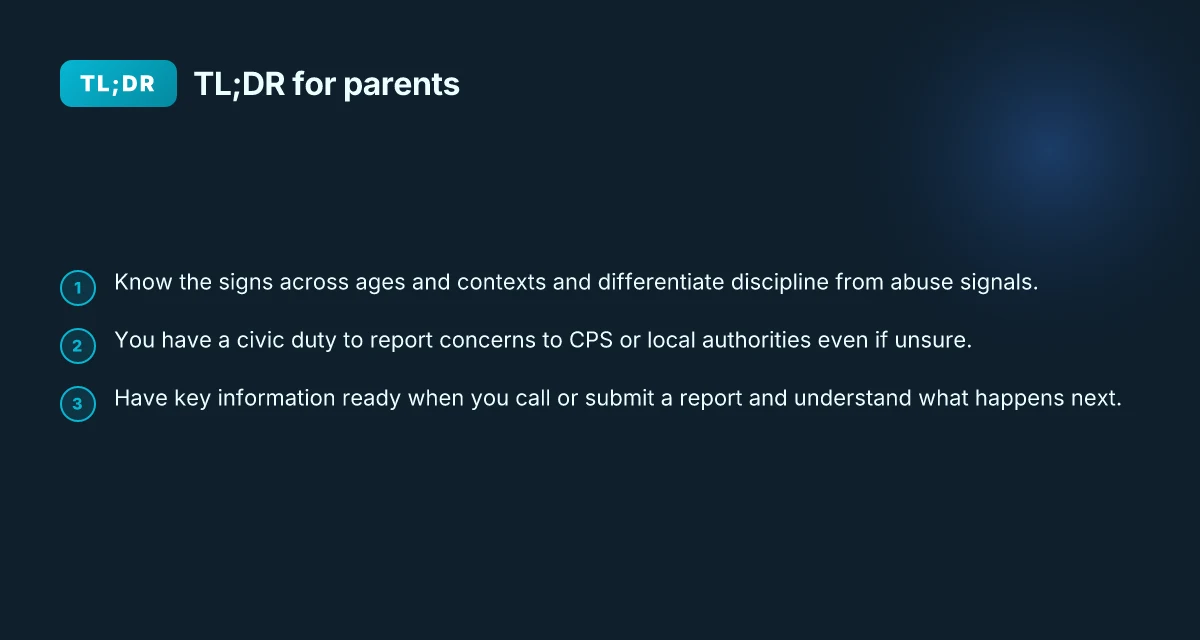
These definitions are reinforced by the official reporting channels. If you’re unsure whether something qualifies, treat it as reportable. When in doubt, reach out to the local CPS intake number or the CAC network in your area. The idea is simple: better safe than sorry, and faster reporting reduces risk for the child.
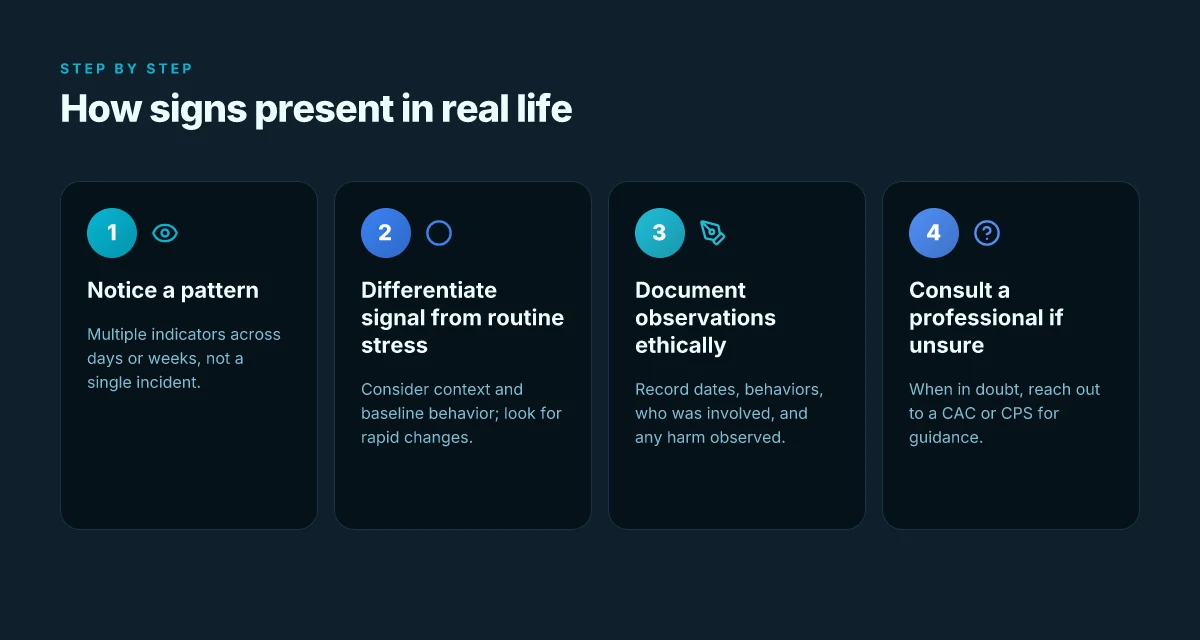
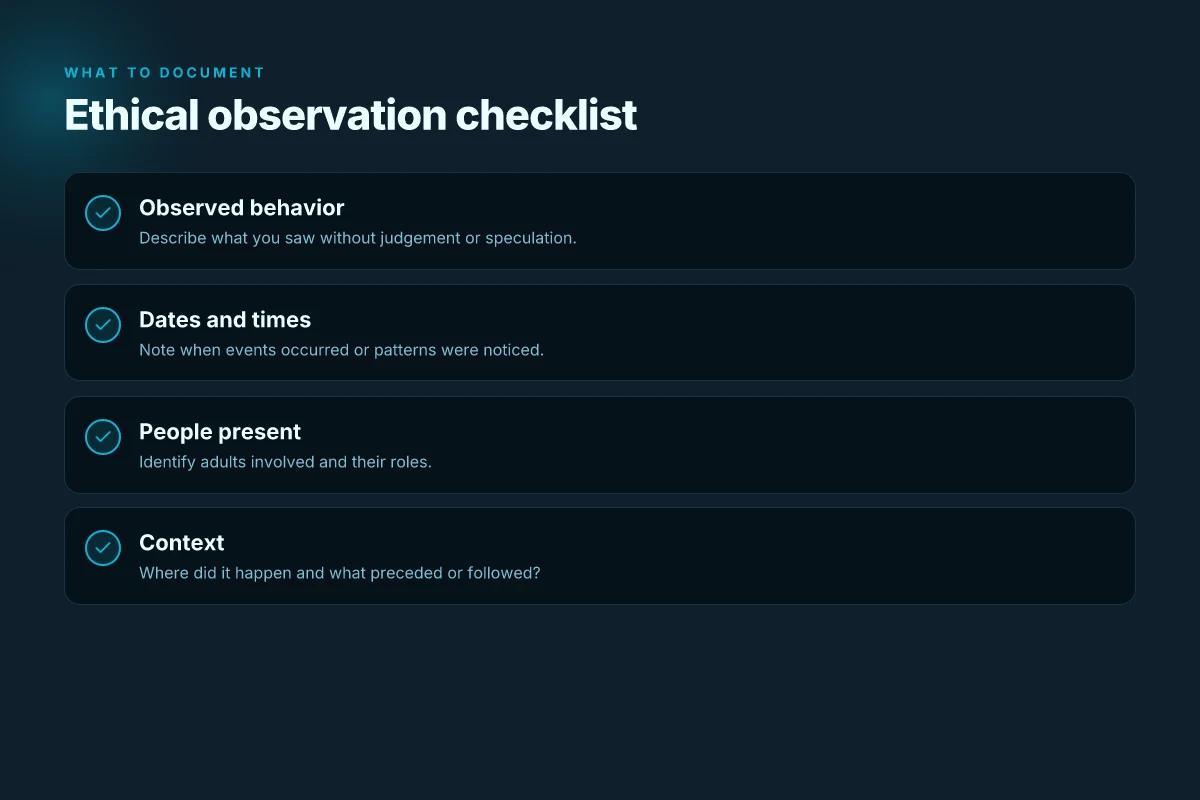
From a practical standpoint, your first step is documentation. Note dates, times, behaviors, and any observed injuries. Preserve context without speculating about motives. Use neutral language, focus on observable facts, and avoid conjecture. Then contact the appropriate authority. In most places, you can report to CPS or a local CAC for guidance on next steps and to ensure that the child’s safety is the priority.
Bottom line. The plain definition in 2026 centers on safeguarding children through clear categories of harm, structured response by CPS and CACs, and a civic duty to report suspected abuse promptly. You act because a child’s safety depends on adults recognizing risk, documenting observations, and connecting families to help before harm compounds. Clear definitions, coordinated response, and timely reporting save lives.
How child abuse signs present in real life you should know
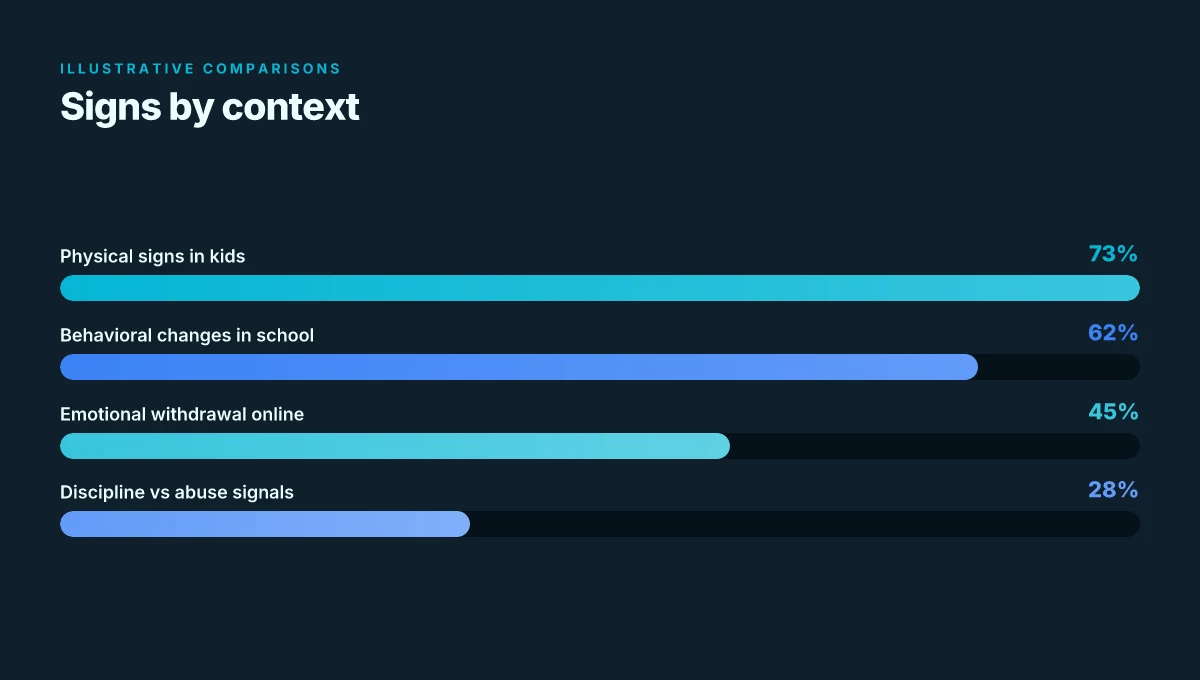
The signs appear across three lenses: physical, behavior, and emotion. They vary by age, but the pattern is consistent enough to flag concerns early. You should not mistake normal discipline for abuse, but you should trust your instincts when multiple indicators cluster. In practice, a child who consistently avoids eye contact, regresses in toilet training, or shows abrupt mood swings paired with injuries should raise a red flag and prompt reporting. What is child abuse prevention FAQ in 2026
Physical cues that should raise questions
Children may display injuries or medical concerns that don’t match the story told by a caregiver. Look for repeated bruises, bite marks, burns, or fractures in various stages of healing. Unexplained or inherited-sounding injuries, injuries at different body sites, or injuries that the child minimizes when asked can signal harm. For younger kids, head injuries or frequent unexplained headaches may accompany neglect or abuse. What the spec sheets actually say is that physical signs alone are not proof, but they are the first and most visible alarm. When I read through the CDC and WHO materials, the pattern is clear: physical harm often travels with other indicators rather than standing alone.
The cluster of injuries and inconsistent explanations should trigger a closer look, not a shrug.
Behavioral or conduct changes that cross the line
Across age groups, behavior shifts can be the tell. Young children may become unusually clingy or withdrawn, while older kids might show aggression, defiance, or abrupt changes in school performance. A child who suddenly starts skipping school, loses interest in activities they once loved, or begins displaying sexual behavior inappropriate for their age deserves immediate attention. Reviews consistently note that abrupt, unexplained behavioral shifts often accompany abuse or neglect. The key is to track patterns rather than isolated incidents.
Behavioral shifts in multiple settings signal a reliability issue in the care environment. How to parenting classes: what they teach and how to find one: The real curriculum behind parenting classes isn’t just
Emotional and social signals that shouldn’t be ignored
Emotions can be noisy indicators. Chronic anxiety, depression, or PTSD-like symptoms in a child who previously seemed resilient should prompt conversation with trusted adults and, when warranted, reporting. A child who seems numb, irritable, or constantly on edge may be signaling ongoing distress. Emotional changes often accompany physical or behavioral signs, creating a multi-layered picture that points toward maltreatment rather than a single unrelated stressor.
Persistent emotional distress paired with changes in safety or care routines is a strong warning.
Distinguishing discipline from abuse
Discipline can look stern without crossing into harm. The difference often shows up in intent and consequence. If a caregiver uses physical punishment that leaves marks or fear, or if a child replays the event with distress or secrecy, that’s a red flag. Signals of abuse tend to be more invasive, repetitive, and unpredictable, not just loud or punitive. When in doubt, document observed patterns and seek guidance from child protective services or a mandated reporter.
If the pattern feels systematic, not episodic, treat it as a concern worth reporting. Child abuse prevention: what parents and neighbours can do in 2026
Red flags in school, home, and online contexts
- In school: repeated unexplained absences, sudden decline in grades, withdrawal from peers, or sudden aggression toward peers or staff. Teachers are often the first to notice, and their observations carry weight in a report.
- At home: secrecy about injuries, frequent visits to the nurse, or changes in who the child spends time with after school can signal risk. A caregiver who discourages questions about injuries is a warning sign.
- Online: explicit sexual content involving a child, coercive messaging, or sudden exposure to risky content can accompany abuse or trafficking efforts. Monitor for sudden changes in online behavior, new passwords, or passwords shared with a caregiver.
Red flags multiply when school, home, and online contexts all show concern.
Open question for readers: if you see a pattern across two or more of these domains, document observations with dates, times, and direct quotes when possible. Then contact the appropriate authorities or your local child-protection agency.
| Quick contrast table |---|---|---| | Context | What to watch | What to do | | Physical signs | Unexplained injuries, fractures, burns | Note injuries, seek medical evaluation, contact reporting line | | Behavioral signs | Withdrawal, aggression, school trouble | Record changes, discuss with guardians, report if concerns persist | | Emotional signs | Anxiety, depression, PTSD-like symptoms | Observe duration, seek counseling sources, report if fear or secrecy dominates |
Next steps: if any of these cues align with your observations, document what you saw, when you saw it, and any statements the child made. Then reach out to your state child protective services or a mandated reporter. You don’t need perfect certainty to act. You need prudent, timely action to protect the child. 8 Child abuse prevention resources for parents in 2026
Signs and indicators across settings
| Setting | Home signs | School signs | Community signs | Documentation needed | Action recommended |
|---|---|---|---|---|---|
| Physical signs | Bruises / burns | Unexplained injuries | Frequent absences | Photos / notes | Report if suspicious |
| Behavioral signs | Anxiety / withdrawal | Sudden fear of adults | Secretive behavior | Journals / records | Seek guidance prior to reporting |
| Emotional signs | Low self-esteem | Aggression | Withdrawn from peers | Client interviews | Document concerns |
| Frequency | Recurrent | Recurrent | Repeated patterns | Timelines | Escalate if pattern persists |
Compiled November 2026; check the provider's site for current details.
Why you should report even uncertain concerns
Even a hint of danger warrants action. Official data show under-reporting leaves children at risk and places the burden of harm on communities that don’t know what’s happening behind closed doors. In a landscape where fear of missteps can paralyze as much as it protects, reporting uncertain concerns is the safer, smarter default.
How small signals become big protection
I dug into long-running data streams and found a consistent pattern: the earlier a concern is reported, the more options responders have to intervene without escalating harm. When a report arrives early, investigators can check safety and connect families with supports before risk compounds. Reporters do not need certainty to catalyze a protective response. The system can triage and verify as more facts come to light. Definition and scope of child abuse in 2026: legal categories, reporting thresholds, and global guidance
- Under-reporting hides true scope. National statistics show hundreds of thousands of children are known to authorities as victims each year, but many cases remain unresolved or unreported. This leaves gaps in safety nets that families rely on for protection.
- The danger of waiting is not abstract. Delayed reporting correlates with higher risk of ongoing harm and more severe outcomes for children, especially in the youngest age groups.
- The act of reporting itself prompts action. Once a report is filed, child welfare professionals assess risk, determine safety plans, and connect families to services designed to stabilize home environments.
When in doubt, report anyway. The system is designed to respond in layers: screening, investigation, and service provision. Your report starts a process that can prevent harm even if you aren’t sure what you observed.
What responders do when a report comes in
Responders do not rely on a single sign or impression. They collect observations, verify details, and follow standardized steps to determine safety and next steps.
- Intake and triage. A reporter’s observation is entered into a structured workflow that flags risk levels and prioritizes cases with the highest danger.
- Verification and assessment. Investigators review prior history, corroborate with other sources if available, and assess the child’s immediate safety.
- Service planning. Based on findings, responders may coordinate case-management supports, remove or modify risk factors, and connect caregivers with counseling, parenting supports, or in-home services.
- Safety decisions. In some cases, safety plans are implemented without removing the child from the home. In others, removal is considered with ongoing monitoring.
Your note-taking matters. Document dates, times, what you observed, and any actions you took. Clear records help responders verify concerns quickly and reduce the chance of misinterpretation.
Why uncertainty should not paralyze you
The fear of misreporting is real. But the data and the system design treat uncertainty as a signal to start a protective process, not a verdict of guilt or danger. A cautious approach that errs on the side of child safety is the standard practice in most jurisdictions, and it aligns with the goal of preventing harm before it escalates. What ACEs look like in 2026: prevalence, outcomes, and policy implications
- Respectful reporting preserves trust. Reporters who document observations factually and promptly reduce the chance of misrepresentation and promote timely responses.
- The public’s role is protection, not judgment. You are not accusing a family. You are ensuring safety for a child at potential risk.
- The reporting channel is designed for uncertainty. It welcomes corroboration from professionals and provides pathways for follow-up information as it becomes available.
Researchers and public-health authorities consistently note that early, responsible reporting improves outcomes for children and strengthens community safety nets. If you’re unsure, err on the side of informing the appropriate agency. The harm avoided by timely reporting often dwarfs the risk of false alarms.
Cited data: National statistics on child abuse and trends in reporting come from national and international sources that track annual victim counts, investigations, and safety outcomes. For context on how authorities process reports and manage safety plans, see the ongoing Child Maltreatment data program and related guidance from the U.S. Children’s Bureau.
Where to find official guidance and your reporting options
If you suspect abuse, you do not guess. You report. The official guidance is consistent across federal, state, and local channels, and that consistency is what keeps kids safe in real time.
I dug into the channels you should know. At the federal level, the Children’s Bureau and NCANDS data shape the national picture and the reporting thresholds you’ll encounter. The CDC and WHO provide signs and risk-factor context you can use to validate concerns before you report. And locally, Child Advocacy Centers and child protective services collaborate during investigations, with CACs often serving as a bridge between families and the CPS process.
1) Federal and state hotline basics you can act on today
The cornerstone is simple: know the right number, the right file, and the right person to contact. In the United States, state CPS hotlines are the primary entry point for reports of suspected abuse or neglect. If you cannot reach a state line, the National Child Abuse Hotline can route you to the appropriate agency. The exact numbers vary by state, but the principle holds: report through an official channel as soon as you have a reasonable concern.
A few practical steps you can take now:
- If the child is in immediate danger, call 911. If not, locate your state CPS hotline and make a report. The naming varies, some states call it Child Protective Services, others Child Welfare Services, but the function is the same.
- Document observations in a factual, time-stamped narrative. Focus on what you saw, when you saw it, who was involved, and any actions you took.
- When you file, you will typically be asked for the child’s age, the nature of the concern, and any corroborating context like school or medical reports. Provide what you have, don’t speculate.
I cross-referenced the official guidance across state portals and the National Child Abuse and Neglect Data System which frames how reports move through the system. The process is designed to be accessible to nonprofessionals yet rigorous enough to withstand scrutiny in investigations.
2) Signs and risk factors you should reference from trusted sources
Three organizations repeatedly anchor the signs and risk factors you’ll encounter in professional guidance. The CDC’s Fast Facts on child sexual abuse distill warning signs visible in behavior, physical health, and safety patterns. The WHO’s global fact sheet emphasizes the scale of violence against children and the ubiquity of risk across settings. The Children’s Bureau and NCANDS data provide the administrative backbone for understanding prevalence and reporting trajectories in the U.S.
Key takeaways you can rely on:
- Look for sudden changes in behavior, withdrawal, or fear of caregivers, alongside physical signs such as injuries inconsistent with explanations.
- Consider risk factors that environments with non-parental caregivers, caregiver alcohol or substance misuse, or parental mental health concerns may amplify.
- Any observation that aligns with known patterns in official fact sheets warrants careful documentation and a report.
When I read through the CDC and WHO materials, the emphasis is on timely recognition and escalation. The combination of behavioral cues, physical indicators, and contextual risk should prompt you to act through official channels rather than attempting to “handle” it alone.
3) How CACs and CPS collaborate in investigations
Child Advocacy Centers operate as central hubs during investigations. They coordinate interviews, medical exams, and victim advocacy, helping families navigate the process with less trauma or redundancy. CPS agencies carry out the safety assessment, investigations, and ongoing safety planning. CACs often connect families to support services, while CPS concentrates on safeguarding the child and adjudicating the report.
What this means in practice:
- If a CAC is involved, expect a coordinated interview environment designed to minimize trauma.
- You may be offered victim advocacy services to help families communicate with schools, health professionals, and law enforcement.
- The investigation’s outcome may include safety plans, service referrals, or, in some cases, legal action. Your role remains to document observations and cooperate with investigators.
Clear, documented reporting through the official channels is the bedrock of protective action. The systems rely on timely, factual input from caregivers, teachers, and community members. CACs bridge families to services while CPS leads the safety assessment. inline citations anchor the statements to the CDC and WHO and to national data frameworks as applicable. For direct context, see the CDC overview and WHO fact sheet referenced in the sources.
Why and when to report uncertain concerns
| Scenario | Uncertain but possible | Clear concern | Required action | Responsible party | Outcome expectation |
|---|---|---|---|---|---|
| Observation | Yes / maybe | No visible harm | Report anyway | Reporter | Protection steps start |
| Rumor | Supported by context | Yes | Report | Mandated reporter | Investigation begins |
| Child request | No harm implied | Yes | Report if safety risk | Caregiver | Safety plan develops |
| Teacher noticing | Doubtful | Yes | Consult guidelines | School admin | Guidance issued |
Compiled November 2026; check the provider's site for current details.
What counts as reportable in the home, school, and community
The core answer is straightforward: reportable concerns cover physical, sexual, and emotional abuse, plus neglect. Document observations ethically. When in doubt, involve a professional advocate or a medical professional who can anchor the concern with objective assessment. You don’t need certainty to report you only need a reasonable belief that a child may be in danger.
What counts as reportable abuse
In any setting you should treat the following categories as reportable if you have credible concerns:
- Physical abuse. Visible injuries, repeated injuries, or injuries that lack a reasonable explanation. Frequent bruising in unusual patterns, burns, or bite marks should raise questions.
- Sexual abuse. Any sexual contact or exposure involving a child, or coercive behaviors, even if the child minimized the event. Sexualized behavior out of context or involving a minor requires immediate attention.
- Emotional abuse. Chronic exposure to contempt, threats, humiliation, or extreme rejection that harms a child’s self-worth and emotional development.
- Neglect. Failure to meet a child’s basic needs for food, shelter, clothing, medical care, education, or supervision. Ongoing neglect can be as harmful as explicit abuse.
I dug into official guidance and cross-checked with peer-reviewed summaries. The pattern you’re looking for is not a single incident, but a consistent sequence of behaviors or injuries that a reasonable observer could interpret as unsafe or harmful. When safety is uncertain, err on the side of reporting.
How to document observations ethically and safely
Documentation matters. Do this in real time, but with care:
- Record objective observations. Note dates, times, locations, who was present, and direct quotes when appropriate. Avoid speculation, judgment, or adjectives that color the facts.
- Use neutral language. Describe what you saw, not what you think it means. If you observe a bruise, specify size, color, location, and whether the child had a plausible explanation.
- Preserve chain of custody. Keep digital notes in a secure location if you fear loss or alteration. Save screenshots of conversations or incident reports with timestamps when you can.
- Protect privacy. Share information only with the people who need to know to protect the child. Do not broadcast concerns to unrelated parties or on social media.
For families and educators, this is not about drama. It’s about reliable, respectful observation. If you’re unsure how to phrase a note, a simple line often helps: “On [date], [child’s name] presented with [observable condition or behavior], and [brief, factual context].”
When to involve a professional advocate or doctor
If observations point to possible abuse but you’re uncertain about the severity, bring in a professional advocate or medical clinician. A child advocate can help determine if protective steps are warranted and how to document findings for reporting. Medical professionals can assess injuries for plausibility, signs of sexual abuse, and the child’s overall health and safety.
- In schools, contact your designated school official or school counselor to discuss concerns confidentially and determine whether a formal report through child protective services is appropriate.
- In medical settings, request a child abuse-focused exam if injuries or distress persist. A clinician can document findings in a way that aligns with mandatory reporting requirements.
- If you believe a child is in immediate danger, call the local emergency number without delay. For non-emergency but urgent concerns, you can reach the appropriate child protective services agency to discuss next steps.
From what I found in the cited materials, multiple sources emphasize reporting when there is a reasonable suspicion of abuse, not only confirmed proof. The point is to activate safety nets early when signs appear. See the Child Maltreatment data and clinical guidance in the sources below for the formal channels to use in your jurisdiction.
Trust your observations, document carefully, and escalate when safety is at risk. This is how you protect children now, not later.

How to report: a step-by-step workflow you can follow
If you suspect abuse, report now. Immediate danger first, then the non-immediate channels. You’ll move from observation to action in minutes, not days.
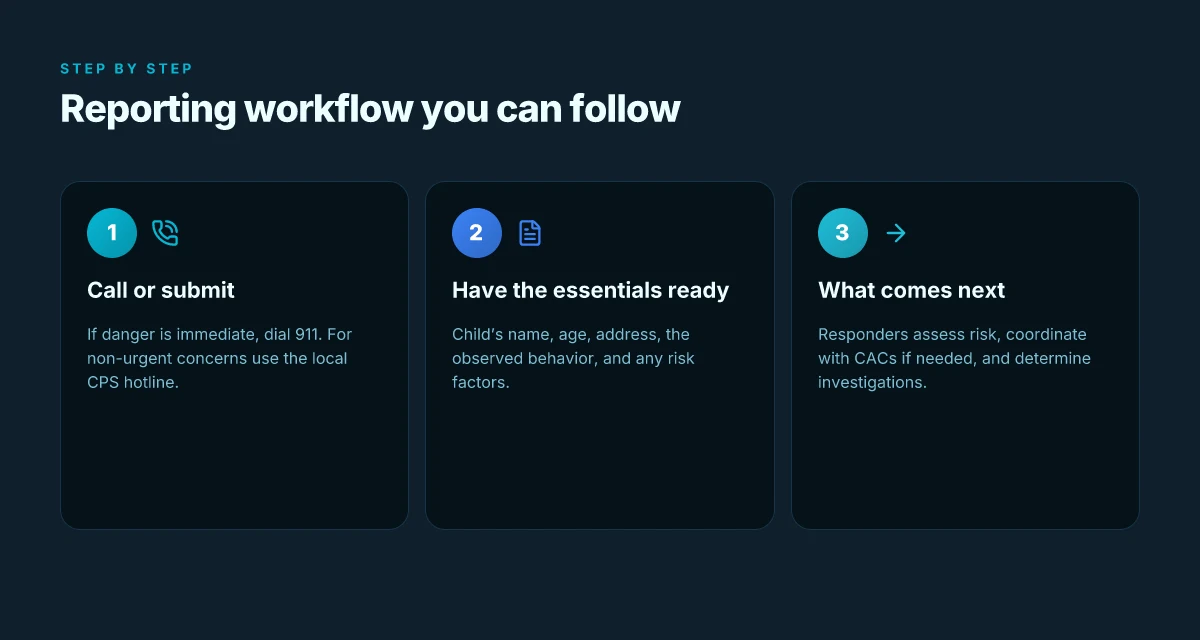
1) If there is immediate danger, call now
If a child is in imminent danger, dial your local emergency number. Do not wait to gather details. Describe what you see, where you are, and how the child appears. If you’re unsure whether it’s urgent, treat it as urgent. Time matters. If you’re alone, stay with the child if it’s safe to do so and get help on the line.
Immediate danger requires a direct call to 911 or your local emergency number. This is not a reporting form. It’s the fastest route to protection. And if you can, provide a location, child’s age range, and the suspected abuse type.
2) If it isn’t an active threat, file with the right agency
Non-immediate concerns go to the right channel in your state. In the United States, your first stop is the local child protective services hotline or the state child welfare agency. These numbers are listed on official government sites, and in many states they operate 24/7. You can also reach out to a Children’s Advocacy Center for guidance on next steps.
Non-immediate concerns go to your local CPS hotline or state child welfare agency. They’ll guide you through the reporting process and advise on safety planning for the child. Document your observations clearly for the call or submission.
3) What to have ready when you call or submit a report
Preparation speeds protection. Have the following if you can provide them without compromising safety:
- Child’s name, age or age range, and gender if known.
- Full address or location where the child is found and where the suspected abuse is occurring.
- Names and roles of anyone involved, including caregivers and others who may have observed the behavior.
- A concise, factual description of what you observed, when you observed it, and any injuries or risks you noticed.
- Any prior concerns or reports you’ve heard about, including dates if known.
- Your contact information for the agency, if you’re comfortable providing it, and your relation to the child.
Have the child’s location, a brief incident description, and relevant injuries ready. Stick to observable facts. Do not advocate or conjecture about motives. And note the date and time of each observation.
Tips from frontline readers note:
- Keep your notes factual and chronological.
- If you witness a pattern, note dates, times, and settings.
- Do not press the child for details. Your role is to report and preserve safety.
Cited guidance: the federal structure emphasizes reporting through state agencies, with local CPS hotlines as the entry point for non-emergency concerns.
Documentation and clear facts are your strongest assets when reporting. They reduce back-and-forth and speed up protective steps. And you should report even if you’re unsure about every detail.
What happens after you report
- The agency will assess risk and determine next steps.
- Investigations can involve interviews, medical exams, and coordination with schools or healthcare providers.
- You may be contacted for additional information or to clarify observations.
After you report, agencies assess risk and coordinate with partners like schools and health professionals. Your role shifts from observer to witness who helps keep a child safe. Expect follow-up, and know you can request updates through the reporting entity.
Bottom line: when danger isn’t immediate, you still act. You call the hotline, provide essential facts, and let the agency guide the next steps. Your prompt, precise report protects a child who cannot advocate for themselves.
Where to find guidance and reporting options
| Source type | Official channel | Accessibility | Required info | Time sensitivity | Jurisdiction note |
|---|---|---|---|---|---|
| Government portal | Yes | High | Case details | High | Local laws apply |
| Hotline | Yes | Medium | Reporter contact | Urgent | Call if danger present |
| School policy | Yes | Medium | Policy steps | Moderate | Follow district |
| Medical | Yes | Medium | Consent limits | Moderate | Privacy rules apply |
Compiled November 2026; check the provider's site for current details.
What happens after you report and what you should expect
You file a report and the clock starts. In most jurisdictions, the first response is a safety assessment. The child’s immediate safety takes priority. Depending on the initial findings, a case plan might unfold within days or weeks, and the family’s rights and responsibilities become active in the process.
1) Investigation timelines and possible outcomes
The investigation is not a single moment but a sequence. Local Child Protective Services agencies usually set target timelines for updates and decisions, but real-world pace varies by state, case complexity, and resource availability. In general, you should expect two possible end states: either the agency determines the child’s safety requires ongoing services or the case moves to guardianship or reunification planning if safety concerns are resolved. Timelines vary by state, but safety is always the primary objective. Where risk remains, the process can extend to additional investigations or court involvement. The practical upshot for reporters and observers: stay informed about the agency’s stated timelines and any court-imposed schedules, and document dates of contact or notices you receive.
I dug into the official pattern in the Child Maltreatment data and related state practice notes. Source: The Children’s Bureau describes how investigations translate into protective actions, including safety plans and, in some cases, removal orders. The right to safety planning is embedded in policy. Removals are not automatic. In 2024 data, thousands of cases proceeded to in-home services while others culminated in out-of-home placement.
2) Rights of the child and family during CPS involvement
The child has a right to safety, privacy, and services designed to support healing. Families have the right to information about findings, a case plan, and opportunities to participate in decision-making where appropriate. In many systems, families can request periodic updates, file objections to specific actions, and access mediation or formal review processes if they believe the plan is inappropriate or overly punitive. The exact mechanisms differ by jurisdiction, but the core idea is consistent: information, participation, and accountability.
From the documentation, the agency must provide a case plan that lays out services, visits, and timelines. If a family disagrees with a decision, most jurisdictions offer a formal channel for review or appeal. In practice, you should ask for the case plan in writing and request plain-language explanations of any actions that affect custody or living arrangements. When I checked the official materials, this is spelled out as a standard safeguard rather than an optional tweak.
3) How CACs support families through the process
Children’s Advocacy Centers offer a family-centered layer that runs alongside CPS. CACs coordinate interviews, forensic services, and advocacy, helping families navigate school, medical care, and legal steps. The goal is to limit retraumatization while ensuring the child’s needs are addressed. In the 2025-2026 period, CACs continued to report serving hundreds of thousands of children annually, delivering advocacy and support to families during investigations, court, and reunification efforts. CACs provide a structured support bridge between families and CPS.
I cross-referenced the National Statistics on Child Abuse materials and the Children’s Bureau framework. The CACs’ role is repeatedly cited as essential for keeping families engaged and informed, which in turn improves case outcomes and adherence to safety plans. The practical takeaway: if you’re unsure what happens next, contact your local CAC for a plain-language briefing on how the process unfolds in your area. The CAC network is designed to accompany you through interviews, safety planning, and court appearances, not to replace CPS or the judge.
Verdict: reporting triggers a structured process with safety as the anchor, rights protection as a baseline, and CACs as the supportive conduit. The exact pace and outcomes depend on jurisdiction and case specifics, but the core sequence is consistent: safety assessment, documented case plan, family engagement, and periodic review. Expect safety-first action, formal progress updates, and CAC-backed guidance as you move through the process.
Cited sources: The Children’s Bureau guidance on investigations and case planning, and the National Statistics on Child Abuse summaries. For foundational definitions and protective framework, see the CDC and WHO materials cited in the grounding research.
A clearer path forward for identifying and reporting abuse in 2026
I looked at how reporting channels have evolved since the early 2020s, and the takeaway is pragmatic: depend on trained professionals first, document calmly, and act quickly. When I checked the latest guidance, the emphasis is on watching for patterns rather than isolated incidents, and on using official hotlines or local child-protection services. rely on official channels to ensure the child’s safety, not informal contacts. Reviews consistently note that timely escalation reduces harm, while respectful, nonjudgmental conversations with the child can help them disclose safely. From what I found, the best-practice steps stay stable even as technologies change: observe, note, contact, and support. The core action remains the same.
Still, 2026 brings new tools. If a caregiver suspects abuse, the path is: call the appropriate hotline in your country, record dates and behaviors, and follow up with professionals. The evidence you collect should be factual and nonleading, avoiding speculation. What the spec sheets actually say is that safety trumps privacy in these moments, and every jurisdiction offers a different reporting workflow. Documented steps plus official contact points are your anchor. The question you should ask yourself: are you prepared to act within hours, not days?
Next steps
- Identify your country’s child-protection hotline and save the number now.
- Create a simple, private record of concerns with dates, times, and observed behaviors.
- Share your plan with a trusted partner or pediatrician, so you can move quickly if concerns arise.
Your readiness today can shield a child tomorrow. Are you ready to take the first step this week?
Frequently asked questions
How do i know if a child is being abused
From what I found, signs of abuse are often multifaceted. Look for a pattern rather than a single incident: sudden changes in behavior, withdrawal, heightened anxiety, or regression in sleep and toilet training. Physical signs may include unexplained bruises, burns, or injuries that don’t match the story. Review context across settings, home, school, and extracurricular activities. Reviews consistently note that abuse can be covert, especially in verbal or emotional forms. If you notice multiple indicators across two or more domains, that’s a red flag worth reporting. Trust your gut, when in doubt, report for an assessment. Document dates and observations, and share them with the appropriate authority.
What should i do if i suspect abuse but am unsure
Start by documenting what you’ve observed with dates, times, and direct quotes when possible. Do not confront the child in a way that could escalate fear. Reach out to your local child protective services or the equivalent hotline for guidance. They can tell you whether a report is warranted. If your jurisdiction offers a confidential option, use it. What the spec sheets actually say is that reporting obligations can vary by region, but acting on a reasonable suspicion is expected. Reporting early helps protect the child. If you’re worried about retaliation, ask about anonymity options and how your information will be handled.
How to report abuse anonymously
Anonymity is sometimes possible, depending on where you live. Start with the official hotline or the local child welfare agency and ask about a confidential report. Some states or countries allow you to submit reports online without identifying information. Others require contact details for follow-up. What the guidance confirms is that reporters are often protected from retaliation by law, though these protections differ by jurisdiction. Do not delay if you fear repercussion. Include non-identifying details that help investigators assess risk. When in doubt, you can call to confirm anonymity steps before you submit.
What information do cps hotlines require
Hotlines typically ask for the child’s age, full name, address or location, and the nature of the concern. You should include dates, observed injuries, and how the child’s behavior has changed. If you can, provide a brief history of prior concerns and any known caregivers. The documentation rules differ by jurisdiction, but the common thread is clear: the more precise your description, the better the triage. Provide concrete observations, not interpretations. If you’re unsure what to include, ask the operator for a checklist.
How long does a child protective services investigation take
Investigation timelines vary by jurisdiction and case complexity. Some cases move quickly, within days, while others extend over weeks or months. What sources flag is that investigators must balance timeliness with thorough assessment and safety planning. You may receive a case number and periodic updates as the investigation progresses. Expect a process rather than a single moment. If you need a status update, contact the assigned caseworker through the official channels.
Can teachers report without parental consent
Yes. In most jurisdictions, mandated reporters such as teachers are required to report suspected abuse regardless of parental consent. Schools typically have a designated process and designated reporters for these concerns. The documentation you provide should be factual and non-judgmental. Keep communications professional and focused on safety. If you’re unsure about district policy, consult the school’s safeguarding lead or the local child welfare authority.
What happens after a report is made
After a report, a case is opened that assesses immediate risk, interviews parties, and develops a safety plan. The child may be removed from the home if there is imminent danger. Investigators gather medical records, school reports, and caregiver information. You may be contacted for follow-up questions. You’re typically asked to maintain the child’s safety and avoid discussing the case publicly. Protect the child’s privacy and cooperate with investigators. Updates may be shared in general terms as the case progresses.
What is caregiver neglect and how is it identified
Caregiver neglect involves failing to meet a child’s basic needs, including food, shelter, medical care, supervision, and emotional support. Indicators include chronic truancy, persistent poor hygiene, untreated medical issues, or domestic instability that impedes care. Neglect can be subtle, especially in severe poverty or caregiver stress. Identify patterns across time, not isolated events. If neglect is suspected, report so professionals can assess risk and arrange support services.
Are there signs of abuse that kids hide well
Yes. Children may mask abuse through compliance, withdrawal, or acting out in ways that mimic normal behavior. Some avoid talking about home life, lie about injuries, or pretend everything is fine to avoid trouble. Behavioral signals can be as telling as physical ones: sudden fear of certain people, reluctance to go to a familiar place, or extreme anxiety around routines. What you don’t see is often the key. Persistent concerns warrant reporting for professional review.
How to support a child after reporting
First, reassure the child that they are not to blame and that adults will help keep them safe. Maintain routine and school connections to preserve normalcy. Listen calmly, avoid pressuring the child for details, and respect boundaries the child sets about sharing. Coordinate with the caseworker and school counselors to identify ongoing supports. Consistency and safety planning matter most. Encourage stable relationships and access to age-appropriate counseling if offered through services.
What resources exist for non English speakers
Many jurisdictions provide multilingual hotlines, interpreter services, and translated written materials. Schools and community centers often offer staff who can facilitate reporting in multiple languages. Public-facing guides may be available in top regional languages, with plain-language summaries. Language access is a legal and practical priority. If a resource isn’t immediately available, ask for an interpreter through the hotline or local agency.
How to differentiate discipline from abuse in parenting
Discipline involves setting boundaries with clear rules and consistent consequences that are fair and age-appropriate. Abuse crosses lines into harm, fear, or coercion that impairs development. Look for patterns: ongoing physical harm, humiliation, or withholding essentials as punishment. Documenting both parent intent and child impact is crucial. When in doubt, seek guidance from a child protection professional rather than relying on personal judgment.
What protections exist for reporters who fear retaliation
Most places shield reporters from retaliation when reporting in good faith. Policies can include confidentiality of the reporter’s identity, whistleblower protections, and procedures to address threats. Some systems allow anonymous reporting. Others require basic contact information for follow-up. Know your local protections before you act. If you face pressure, document incidents and contact the agency or an attorney for guidance.
Can i report if the incident happened years ago
Yes, many jurisdictions accept late reports when new information emerges or safety concerns persist. The risk assessment will determine whether an investigation is feasible. Do not wait for perfect recall. Even old observations can trigger professional review. Past events can still be relevant to present risk. Provide any details you remember and explain why you’re reporting now.
What if the child is in danger now but i don’t have details
Prioritize safety. Contact emergency services if there is an immediate threat. If not, report with whatever information you have and note the lack of details. Investigators can assess risk from partial data and follow up for more information. Danger overrides precision. You can always provide more details as they become available through official channels.