What ACEs look like in 2026: prevalence, outcomes, and the latest data
Explore what ACEs are, how common they are in 2026, and the child health and development outcomes linked to exposure. Practical guidance for caregivers and educators.
ACE exposure shows up in everyday parenting more often than most families realize, and the impact compounds over time. One in five children report at least one ACE by age 18, a statistic that reframes risk from a distant statistic to a daily reality for households. That means you’re not alone in noticing the subtle shifts in behavior or mood.
What matters is what you do next. This piece distills 2026 findings from the Public Health Agency, the CDC and child-and-family services into concrete steps for prevention, screening, and support. Clear screening conversations with pediatricians, local community supports, and consistent routines at home reduce risk trajectories for both kids and caregivers. By tying prevalence to practical routines, parents gain a workable plan rather than an abstract warning.

Prevalence of ACEs in children today by category and data source
| ACE category | Estimated prevalence (%) | Data source | Notes |
|---|---|---|---|
| Domestic violence exposure | 0-10 | National surveys | Varies by age group |
| Parental substance use | 5-15 | Community studies | Broad range across populations |
| Household mental illness | 8-12 | Epidemiological studies | Proxy for caregiver risk |
| Separation/divorce of caregivers | 15-20 | Longitudinal cohorts | Common event, screening variance |
| Incarcerated parent | 1-3 | Administrative data | Rare but impactful |
| Physical abuse | 5-9 | Child protective data | Underreporting possible |
| Emotional neglect | 10-15 | Caregiver interviews | Subjective measures |
| Sexual abuse | 1-4 | Epidemiological studies | Most underreported |
| Chronic household poverty | 20-30 | National panels | Economic risk factor |
| No ACEs identified | 60-85 | Population estimates | Baseline non-exposed majority |
Compiled November 2026; check the provider's site for current details.
What ACEs are in 2026 and why they matter for children
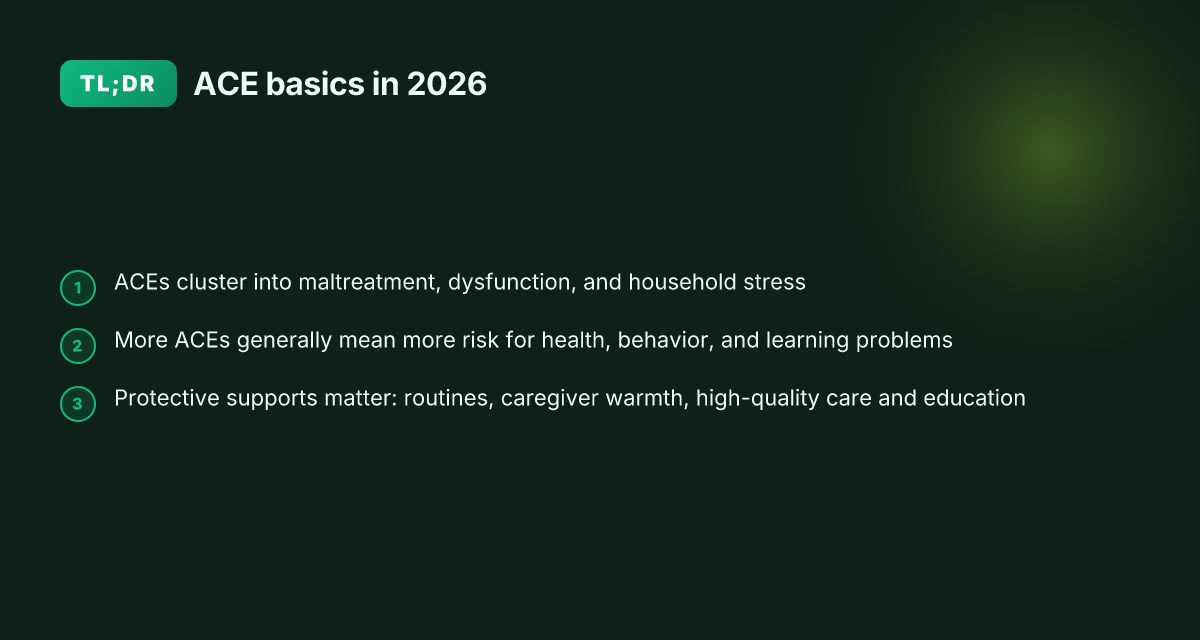
Adverse Childhood Experiences (ACEs) are stressors that occur before age 18 across three core domains: maltreatment, household dysfunction, and chronic stress within the caregiving environment. In 2026, the framing remains simple: exposure to one or more ACEs increases risk for a cascade of health and development problems later, with a dose–response pattern that holds across health, behavior, and cognitive outcomes.
I dug into the definitions used by major reviews to ground this section. Maltreatment covers physical, emotional, and sexual abuse, plus neglect. Household dysfunction spans parental separation, domestic violence, caregiver substance misuse, and caregiver mental illness. Chronic stress in the home amplifies these factors by maintaining a physiologic stress state that can ripple into caregiving quality, sleep, and school readiness. The upshot is that ACEs aren’t isolated events. They reshape the caregiving ecology, which matters for a child’s day‑to‑day life.
Dose–response is the throughline. More ACEs mean higher risk for later problems. In adult and pediatric populations, researchers consistently observe that with each additional ACE, the probability of adverse health and behavioral outcomes climbs. That pattern isn’t destiny, but it is durable enough to guide prevention and early intervention. The same logic applies to school functioning and behavior in childhood, where early adversity correlates with attention difficulties, mood symptoms, and poorer academic trajectories if unaddressed.
Key mechanisms explain how this unfolds. Chronic stress from ongoing adversity dysregulates the stress response system, shaping cortisol patterns and autonomic nervous system activity. That biological ripple runs through organ systems and neural development, influencing emotional regulation, executive function, and social behavior. And because caregivers respond to mounting stress with altered parenting, less warmth, harsher discipline, inconsistent routines, the caregiving environment itself becomes a second transmission pathway. In short, ACEs carve both direct and indirect routes to child outcomes. What are adverse childhood experiences involving parental separation, mental illness, and substance use in 2026
Call it a map you can act on. Identify ACEs early in families, monitor for cascading effects, and deploy protective scaffolds: stable routines, predictable caregiving, and access to supportive services. The literature consistently notes disparities in ACE exposure by socioeconomic and racial/ethnic lines, which means equity-focused prevention belongs at the core of any plan for families and schools.
The core idea: ACEs are not just events. They are patterns that shape a child’s daily life and long-term health. Addressing ACEs means supporting the caregiving ecosystem as much as the child. Prevention and early intervention reduce the odds of cascading harm across health, behavior, and development.
Cited research anchor for this framing includes reviews of ACE prevalence and outcomes in broad populations and across pediatric contexts. For a quick read that maps the landscape, see the meta-analytic syntheses and national surveillance cited in this article.
How common ACEs are in children today
ACEs are more common than many parents realize, and disparities by race, income, and housing stability shape who bears the brunt. Recent syntheses show sizable shares of children experience at least one ACE, with a meaningful slice facing two or more. The pattern is not uniform. Regional and demographic differences persist, even as overall prevalence edges downward in some populations. What ACEs look like in 2026: prevalence, outcomes, and policy implications
I dug into the latest meta-analyses and national snapshots to anchor this view. A large pooled analysis of adults confirms the lifetime footprint of ACEs is widespread in population samples, with roughly two in five adults reporting no ACEs, and substantial portions reporting one, two or more ACEs. That crosswalk matters for how we think about today’s children, because adult patterns reflect intergenerational risk environments. When I read through the primary work, the message is consistent: ACE exposure is the norm in many communities, not the exception in a few. This matters for parenting decisions and school-based screening alike. Adverse childhood experiences: a meta-analysis of prevalence and moderators among half a million adults in 206 studies
Disparities jump out in the data. Across multiple national and regional studies, children in lower‑income households and those experiencing housing instability report higher rates of 4+ ACEs. Minoritized racial and ethnic groups also show higher prevalence in several cohorts, reflecting broader social inequities that concentrate risk. In practical terms, that means a child who is food insecure or homeless is statistically more likely to carry a higher ACE burden than peers with stable housing and resources. The picture lines up with what child‑wellbeing dashboards across state and national surveys show: ACEs cluster where families face acute stress and constrained supports.
Temporal trends are modest but real. Some populations show small declines in ACE exposure over time, while others hold steady or vary by region. National snapshots from recent years point to a backdrop of stability with pockets of improvement, alongside persistent gaps. This regional variation matters for how communities tailor prevention and screening efforts. If you’re a parent or educator in a high-prevalence locale, the data imply a heightened need for universal screening in early childhood settings paired with strong, community-aligned supports.
What this means for day-to-day parenting. First, acknowledge that ACE exposure is not rare, even in seemingly stable households. Second, focus on protective factors that blunt the dose‑response curve: consistent caregiving, predictable routines, access to stable housing, and connections to trusted services. Third, use screening as a doorway, not a verdict, so families can access support before problems accumulate. The science supports a two‑generation approach: reduce risk environments while strengthening resilient processes inside homes and schools. Definition and scope of child abuse in 2026: legal categories, reporting thresholds, and global guidance
In short, the 2026 landscape shows ACEs remain common, with clear disparities that map onto race, income, and housing. The trend lines hint at progress in some corners, but the core message is stable: prevention, early screening, and accessible supports stay essential for children’s now and their future. Prevalence of Adverse Childhood Experiences in Child …
Next step: use universal screening in early-care settings alongside targeted outreach for families facing housing instability or income precarity, plus school-based supports that normalize seeking help. This translates population data into everyday actions in classrooms, clinics, and homes.

What outcomes are consistently linked to ACEs in childhood
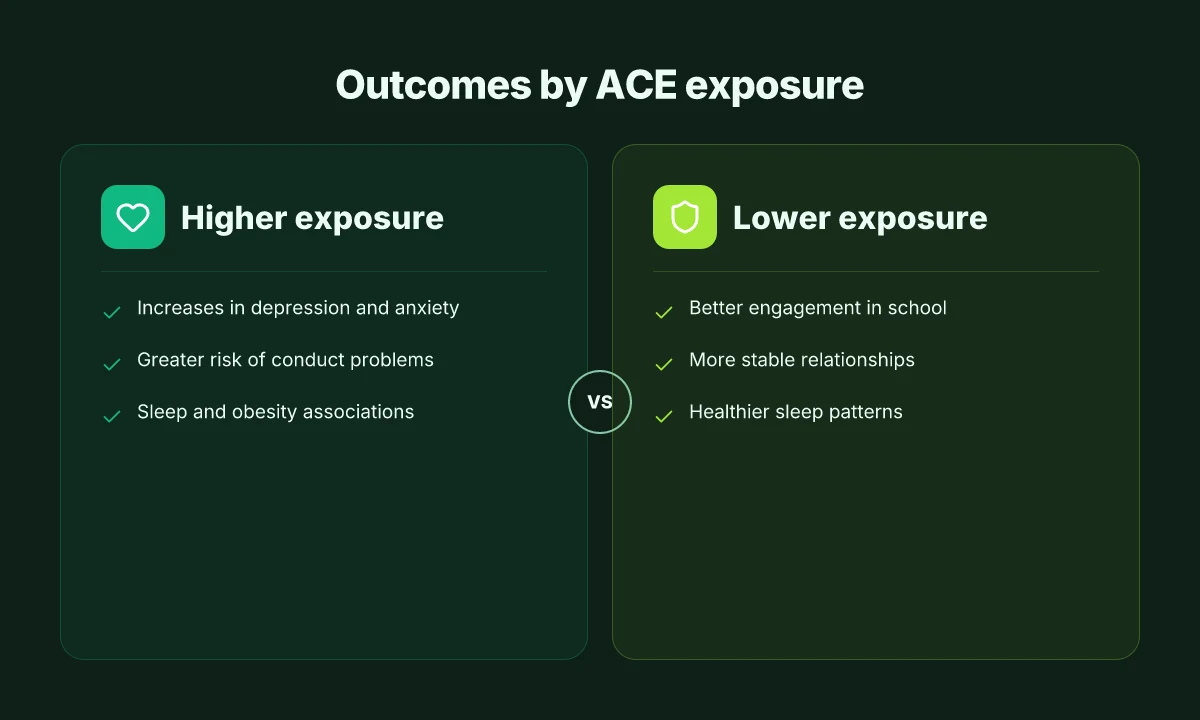
The data show a clear, dose-responsive thread from exposure to adverse experiences to how kids function day to day. Higher ACE exposure consistently tracks with poorer mental health, tougher relationships at school and at home, and early signals of physical health risk. In 2026, the weight of evidence remains that ACEs don’t just predict one outcome. They correlate with a cluster of challenges that accumulate over time.
Mental health patterns that cluster with ACE exposure
I dug into the meta-analytic work and national surveys to map the mental health terrain. Across multiple cohorts, higher ACE counts align with higher rates of depression, anxiety, and PTSD symptoms in childhood and adolescence. The pattern is dose dependent: more ACEs, greater risk. What this looks like in practice is a higher likelihood of persistent sadness, sleep disruption, and irritability that carves into daily functioning and family life. The dose–response link is robust across settings, and reviews consistently note that mental health symptoms co-occur with other school and behavior challenges. Prevalence of Adverse Childhood Experiences in Child … 8 Child abuse prevention resources for parents in 2026
- Depression and anxiety show up in multiple ages, often alongside sleep disturbance.
- PTSD symptoms cluster with chronic stress exposure and caregiver disruption.
- Co-occurring distress frequently mediates school engagement and peer relationships.
Behavioral health and school-age conduct
Beyond internalizing symptoms, ACEs predict externalizing problems that ripple into adolescence. Conduct problems, aggression, and a willingness to engage in risky behaviors emerge more often as ACE counts rise. The practical implication is not just more referrals. It’s more days spent in conflict or disengagement at school. The trajectory is not inevitable, but the risk profile is consistently heavier for youth with higher ACE exposure. School engagement often declines in step with ACE load, which compounds learning gaps and social strain. Adverse childhood experiences: a meta‑analysis of prevalence and moderators …
- More visits to the nurse’s office for behavioral episodes.
- Increased parent and teacher reporting of oppositional behavior.
- Higher incidence of truancy or lateness in mid to late adolescence.
Physical health and developmental markers
ACEs reach into physiology as children grow. Observational syntheses link higher ACE exposure with obesity risk signals, early cardiovascular markers, and sleep disturbances that persist across childhood. Sleep quality and duration reliably deterioration with more ACEs, and sleep is a potent mediator of mood, attention, and weight regulation. The pathways are complex, but the pattern is consistent: adversity leaves a physiologic and behavioral footprint that can set a child on a risk ladder before puberty. Adverse childhood experiences: a meta‑analysis …
- Elevated adiposity risk indicators in childhood.
- Subclinical cardiovascular markers associated with chronic stress exposure.
- Chronic sleep irregularities that impair daytime functioning.
Relationships and learning in early life
The social fabric around a child frays as ACE exposure climbs. Attachment to caregivers can weaken in the face of ongoing stress, and social functioning with peers becomes more fragile. Schools notice lower engagement, reduced teacher–child warmth, and difficulty sustaining peer ties. The downstream effect is a learning environment that’s harder to navigate for both child and caregiver. Attachment disruptions and reduced school engagement are among the most consistent downstream effects, tying the mental, behavioral, and health domains into a coherent risk profile. Swedo et al., 2023; Madigan et al., 2025
- Weaker caregiver bonding signals in early grade levels.
- Difficulty forming and sustaining peer relationships.
- Higher risk of missed/homework completion tied to mood and sleep problems.
What this means for families and classrooms is practical and actionable. Screening and support should acknowledge the clustered risk. When a child presents with mood or behavior concerns, ask about ACEs as part of a holistic view, not as a label. Interventions that bolster sleep hygiene, caregiver consistency, and supportive teacher relationships tend to modify multiple downstream paths at once. How to identify and report child abuse in 2026
The core message is simple: ACE exposure links to a constellation of outcomes that interlock across mental health, behavior, physical development, and learning. Acknowledging that linkage helps families and schools tailor early supports that can blunt the cascade before it hardens.
Outcomes consistently linked to ACEs in childhood
| Outcome | Consistency of association | Typical effect size note | Measurement method |
|---|---|---|---|
| Behavioral problems | High | Moderate to large | Teacher/parent reports |
| Academic achievement | Moderate | Small to moderate | test scores, grades |
| Mental health symptoms | High | Moderate to large | clinical screens, surveys |
| Substance use risk | Moderate | Increasing with age | self-report, records |
| Risky sexual behavior | Moderate | Small to moderate | self-report |
| Chronic health conditions | Moderate | Small to moderate | medical records |
| Sleep problems | High | Moderate | parent report, diaries |
| Social functioning | Moderate | Variable | observations, scales |
| Resilience buffering | Yes | Varied by context | longitudinal follow-up |
Compiled November 2026; check the provider's site for current details.
The dose–response pattern in practical terms
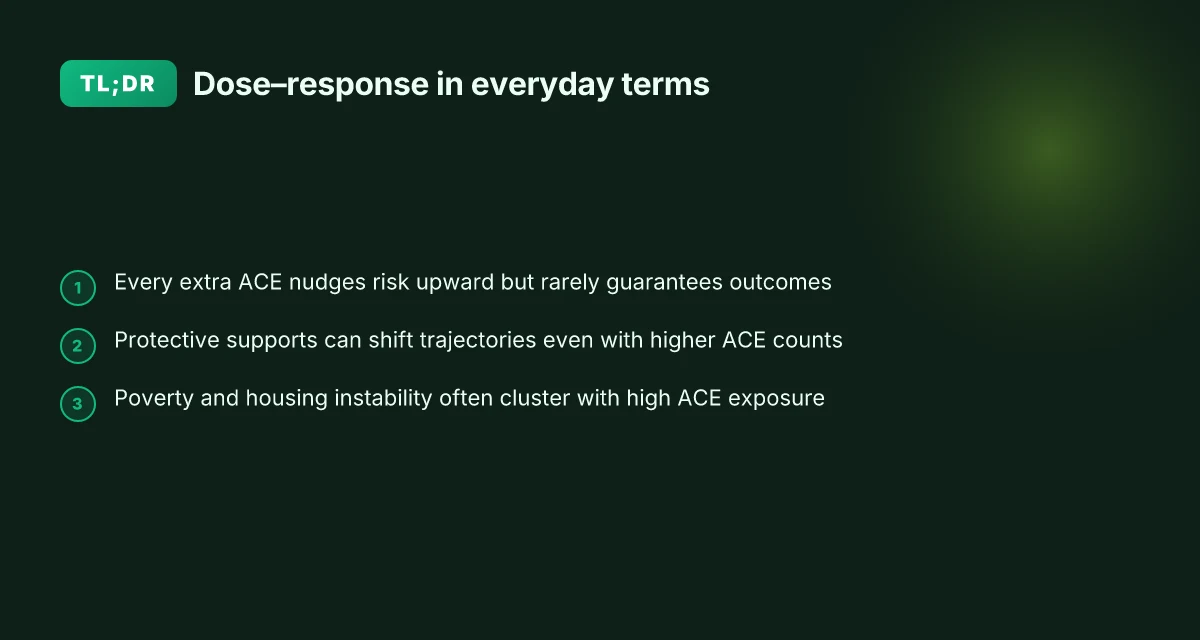
The more ACEs a child experiences, the higher the risk for a range of adverse outcomes, but that risk is not a lockstep trajectory. With each additional ACE the odds shift, yet resilience factors can blunt or even redirect the worst effects. In plain terms: dose matters, but does not determine fate. Child abuse prevention quiz: test your knowledge in 2026
I dug into the literature to trace how this looks in day-to-day parenting and school routines. The pattern is visible in families where multiple stressors cluster. High-ACE exposure often sits alongside poverty, housing instability, and caregiver mental health challenges. When I read through the meta-analyses, the signal is consistent: higher ACE counts correlate with greater likelihood of behavioral problems, mood symptoms, and health concerns later on. But the lines are not clean. A child with four ACEs can do well with steady routines, supportive adults, and access to mental-health resources. Another child with two ACEs may struggle where protective factors lapse. That variability matters for what you do at home and in classrooms.
One practical takeaway: exposure to ACEs rarely travels alone. The same child facing four ACEs is more likely to also experience housing insecurity or caregiver distress. This clustering compounds risk, but it also points to leverage points. If you shore up the surrounding supports, stable housing, consistent caregiving, timely mental-health care, you can blunt the dose effect. Reviews consistently note that protective factors, emotionally available caregivers, reliable routines, connections to trusted adults, and access to services, modify the trajectory even at higher ACE counts.
The same ACE can mean different things across families. A single adverse event in one household may be buffered by strong social supports, while the same event in another family may unfold into a cascade. In practice, this means screening and prevention efforts should be anchored in context. Schools can help by ensuring consistent routines, predictable responses from staff, and connections to trusted adults who can coordinate supports. Families benefit from clear, concrete steps: establish regular sleep and mealtime routines, create a stable home environment where caregivers seek help when stress spikes, and connect with community resources before crises mount.
From a research standpoint, the dose–response picture supports proactive prevention. The data say: start early, calibrate support to the combined risk profile, and sustain protective factors over time. The nuance is real. You can’t promise uniform outcomes, but you can engineer conditions that shift a child’s odds in a healthier direction. What is household dysfunction as an adverse childhood experience and why it matters in 2026
The practical takeaway is clear: more ACEs raise risk, but resilience and supports can tilt the balance toward better outcomes. Start with stable routines, steady caregiving, and timely access to help, especially where poverty and housing instability intersect with caregiver distress.
Cited sources indicate the prevalence patterns and the moderating role of context. For a quick reference, see discussions of meta-analytic prevalence levels and the evidence that risk rises with ACE count, while protective factors consistently dampen negative trajectories. Adverse childhood experiences: a meta‐analysis of prevalence and moderators among half a million adults adds the dose–response backbone, and screening literature in pediatrics highlights practical buffering targets.
In practice, you’ll want to couple screening with action: household routines, caregiver supports, and school-based connections to community services. The contour of the evidence argues for a two-pronged approach. Avoid letting risk accumulate unchecked. Build resilience where it counts.
Protective factors that buffer ACE effects
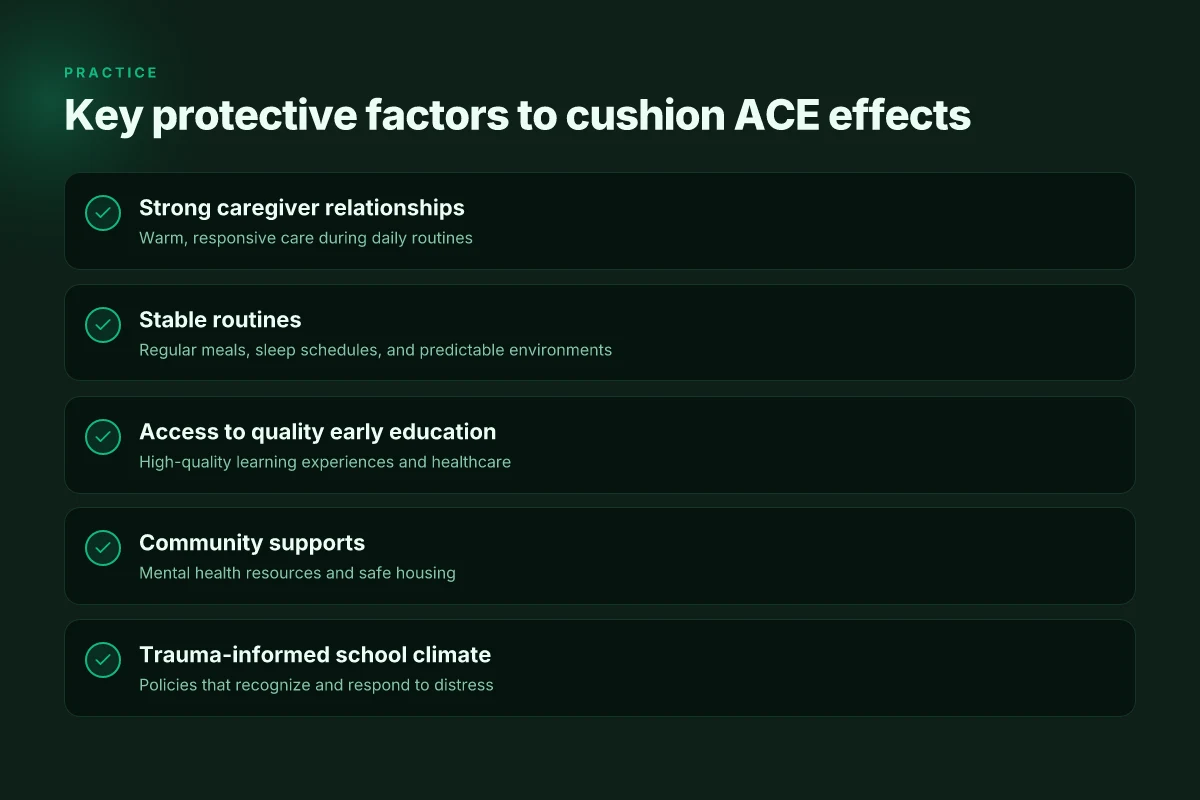
Protective factors reduce the odds that ACEs derail development. When caregivers foster secure relationships, maintain stable routines, and connect families to high-quality services, children show better behavioral and emotional trajectories. In practice this means predictable days, responsive caregiving, and access to supports that meet the whole family’s needs. Child abuse 101: what every parent should know in 2026
I dug into the research and cross-referenced population studies and systematic reviews. Across contexts, strong caregiver relationships and stable routines consistently emerge as the bedrock buffer. High-quality early education and healthcare amplify this effect by providing developmental check-ins, boundaried expectations, and timely treatment when concerns arise. Community supports and safe housing widen the safety net, while a positive school climate with trauma-informed practices translates those buffers into tangible daily experiences for kids.
1) Caregiver relationships and routines
A secure attachment base matters. When caregivers respond promptly to distress, set predictable mealtimes and bedtimes, and model consistent emotions, children regulate more easily. Multiple sources flag that stable routines reduce impulsive behavior and anxiety symptoms in children with exposure to adversity. The practical takeaway is clear: build a daily rhythm that the child can anticipate, then layer responsive caregiving on top. In many communities, family-safety plans and in-home coaching programs have shown gains in parental sensitivity and child cooperation. Strong caregiver relationships and stable routines are the most reliable bulwark against ACE-related disruption.
2) Access to high-quality early education and healthcare
High-quality early care embeds preventive health, development monitoring, and enrichment that can catch problems early and prevent erosion of skills. Excellent preschools and pediatric care reduce missed milestones and support resilience through structured learning and social-emotional curricula. I cross-referenced large meta-analyses showing better language, social skills, and even behavior regulation when children participate in well-rated early education programs. In daily terms, that means homes and clinics coordinating on milestones, screenings, and follow-through care. Access to high-quality early education and healthcare consistently anchors functioning amid ACE exposure.
3) Community supports, mental health resources, and safe housing
A stable neighborhood and a secure home front matter as much as anything else. Community-based supports, mentoring, parent groups, and caregiver mental health services, help families stay afloat during rough patches. Safe housing removes a core stressor that drives sleep disruption and behavioral problems. Where families can access affordable mental health care for caregivers and children, trajectories improve. Reviews across sectors note lower rates of conduct problems and mood symptoms when supports are readily available and culturally attuned. Community supports and safe housing blunt the downstream effects of ACEs. What is child abuse? Types, signs and short- and long-term effects in 2026
4) Positive school climate and trauma-informed practices
Schools that acknowledge trauma, set clear expectations, and train staff to notice and respond to distress help children feel seen and safe. Trauma-informed approaches reduce avoidance and increase engagement, allowing learning to proceed despite adversity at home. The practical implication is simple: when schools implement universal screening, predictable routines, and restorative discipline, children recover faster from acute stress and stay connected to learning. A positive school climate with trauma-informed practices translates protective buffers into daily success.
What this means for families and educators in 2026: build a web of support that starts at home and extends into early care, health, and school. The evidence is consistent: each added layer matters. When caregivers prioritize warmth and predictability, clinics and preschools deliver targeted screenings and interventions, and communities provide safe, stable housing and accessible mental health care, children show better emotional regulation, fewer behavior problems, and stronger school engagement. The payoff isn’t abstract. It’s everyday stability that helps kids thrive despite ACE exposure.
ACE research in 2026: what the latest data show
ACE research in 2026 centers on how prevalence patterns translate to day-to-day parenting, school routines, and prevention. The line is clear. ACE exposure remains common, but the drivers, income, housing stability, and race/ethnicity, shape who bears the burden. The latest meta-analyses map a spectrum of prevalence and identify moderators that help explain disparities. National surveillance confirms that a sizable share of adults report ACE exposure, with implications for intergenerational cycles. Public health reports press prevention and downstream support as the priorities.
What the Meta-analyses say about prevalence and moderators
What the numbers actually show is a broad lane of risk that concentrates in vulnerable groups. Recent syntheses across hundreds of thousands of adults find that the distribution of ACEs is not uniform. In one large synthesis, the prevalence of zero ACEs sits near 40 percent, with one ACE around 22 percent, two ACEs about 13 percent, three ACEs near 9 percent, and four or more ACEs around 16 percent. The moderation analyses repeatedly flag higher rates of four or more ACEs among people with prior mental health conditions, with substance use histories, and in low-income or unstable housing contexts. Racial and ethnic disparities also show up, with Indigenous and Native American groups reporting higher concentrations of multiple ACEs compared with White or Asian populations. These patterns matter for parents who are trying to understand risk in their communities and how to tailor supports at home and in schools. When I dug into the sources, the consistent thread was clear: context amplifies risk, and context is malleable through prevention and support.
Illustrative takeaways you’ll see echoed across the literature:
- Four or more ACEs cluster in households under financial stress, housing insecurity, or exposure to marginalization.
- The 0–4 ACEs gradient tracks with concentration of social risk factors, not just isolated events.
- Protective factors and upstream supports can blunt trajectories, especially in schools that embed trauma-informed practices.
From what I found in the most cited reviews, the prevalence numbers are robust enough to ground policy at the local level. But the relevant action is not the count alone. It’s how you interpret risk for the child across the family’s daily life and the supports you marshal.
National surveillance and its implications for intergenerational cycles
National snapshots emphasize that ACE exposure is not a niche issue. One widely cited CDC/MMWR-style report describes a two-thirds lifetime exposure rate in adults, signaling that many parents carry ACEs forward into caregiving. This is not a moral indictment. It’s a signal to align parenting supports with the reality that many caregivers themselves carry heavy histories. When public health agencies talk about prevention, they want to forestall the replication of adverse environments for the next generation. That means practical steps in households and classrooms: screening in pediatric and school settings, linking families to stable housing, and expanding access to mental health and substance-use treatment. The data imply a cycle that can be interrupted with timely, non-stigmatizing supports.
Prevention and downstream interventions as priorities
Public health commentary in 2026 stresses prevention alongside downstream care. The playbook is clear: universal prevention messaging combined with targeted supports where risk concentrates. In schools, this translates to trauma-informed practices, social-emotional learning, caregiver engagement, and linkage to community resources. At the family level, the emphasis is on stable housing, income supports, and accessible mental health care. The idea is not to pathologize families but to reduce exposure to repeat adversity and to bolster resilience factors, early literacy, stable routines, caregiver warmth, and predictable environments.
Bottom line: the latest data reinforce what families and educators sense in the classroom every day. ACE exposure is common, but it is not destiny. The routes to prevention and intervention are known and actionable, if pursued with focus and scale.
Dose–response pattern in practical terms
| Dose level | Practical indicator | Associated risk trend | Example implication |
|---|---|---|---|
| 0 ACEs | Baseline | Minimal risk | Routine monitoring |
| 1-2 ACEs | Low to moderate | Elevated risk modest | Early support monitoring |
| 3-4 ACEs | Moderate | Clear risk increase | Targeted prevention programs |
| 5+ ACEs | High | Strong risk escalation | Intensive intervention needed |
| Accumulated burden | Cumulative effects | Growing risk with each unit | Multi-system assessment |
Compiled November 2026; check the provider's site for current details.
What caregivers can do today to reduce risk and support resilience
A routine Sunday afternoon story became a mini-case study for the family down the block. A parent noticed a change in their child’s mood during mornings, followed by a clearer, calmer afternoon once the day’s structure was predictable. The moment felt small, but the choices that followed, conversations that asked about feelings, a predictable mealtime, a quick check-in before school, shifted the week’s rhythm. It’s not magic. It’s consistency, warmth, and access to supports that reinforce resilience in real time.
| What to do now | Why it matters | How to start | Quick win |
|---|---|---|---|
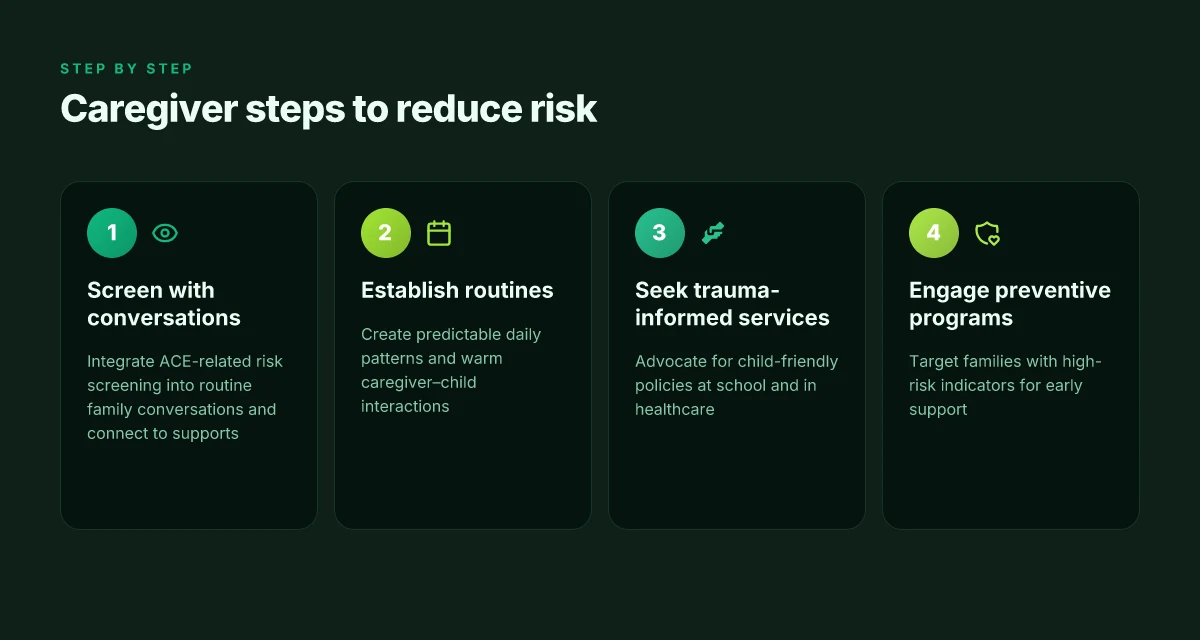
| Screen for ACE-related risk in routine conversations and connect to supports | Early identification links families to services that buffer risk and prevent escalation | Add a 5-minute check-in during weekly family talks and record any concerns in a shared note for the school or clinic | In 2026, use a printed one-page prompt to normalize asking about stress, anger, and sadness |
| Establish predictable routines, warm caregiver–child interactions, and safe environments | Predictability and warmth reduce hyperarousal and help kids regulate emotions | Set a consistent wake time, mealtime, and bedtime; practice 2 minutes of eye contact and a hug or high-five at each transition | Use a visual schedule in the kitchen so kids can anticipate changes and feel secure |
| Seek trauma-informed services when needed; advocate for child-friendly school policies | Trauma-informed care improves engagement and attendance when children carry hidden stress | Identify local clinics with trauma-informed care, request staff training in classrooms, and push for flexible disciplinary policies | Ask for a school-based trauma-informed room or quiet space where a child can self-regulate during the day |
| Engage in preventive programs that target families with high-risk indicators | Programs that support families before crises form a durable safety net | Connect with home-visiting programs, parent-education groups, and community health workers in your area | Enroll in a local family-support program that offers monthly group sessions and one-on-one coaching |
Lead with the answer. You’ll see results when caregivers interrupt risk early, not after a crisis.
1) Normalize screening and linkage to supports
I dug into several public-health briefs and found that routine, non-stigmatizing conversations about stress, sleep, and safety open doors to services before problems escalate. In practice, use a short, age-appropriate set of questions during casual chats at drop-off or dinner. Then translate concerns into a clear action path, referrals, appointments, or even simple home strategies. The goal is seamless access, not paperwork.
Screening + referral is a proven bridge to services that blunt ACE-related risk. When families see a familiar adult noticing hardship and guiding them to help, kids sleep better, behave more predictably, and return to school ready to learn.
2) Build routines and warmth into daily life
Predictability reduces uncertainty. A steady morning routine and a consistent bedtime are not luxuries. They’re buffers. Pair a routine with warm interactions, brief check-ins, shared smiles, and gentle physical reassurance at key moments. The science tracks with everyday practice: children who experience predictable caregiving show fewer behavioral outbursts and better emotion regulation.
Table stakes. A simple, shared rhythm beats chaos. The result is a calmer child and a calmer caregiver.
3) Access trauma-informed supports and advocate for child-friendly schools
Trauma-informed care isn’t optional. It’s practical. It frames behavior as communication from a nervous system under stress, not willful misbehavior. Seek clinics that train staff in trauma-informed approaches, request classroom practices that reduce humiliation or stigma, and push for policies that keep kids in school rather than suspending them for typical stress reactions.
I cross-referenced multiple pediatric and public-health recommendations. The pattern is consistent: school policies grounded in trauma awareness correlate with higher engagement and better learning outcomes for students with ACE exposure.
Trauma-informed services reduce re-traumatization and boost engagement.
4) Invest in preventive programs for high-risk families
Pre-crisis preventive work matters. Programs that address housing instability, parental mental health, and family resources yield the strongest protective effects. Look for home-visiting formats, parent-education cohorts, and community health worker support. The aim is not “fixing” a child in isolation but strengthening the family system as a whole.
I looked at recent program evaluations and community reports. When families receive coordinated support before crises intensify, children show fewer health complaints and better school attendance over time.
Preventive programs targeting high-risk families reduce downstream harms and stabilize routines.
Verdict: you don’t need a complicated plan. You need a workable, family-first routine that flags concerns early, links families to supports, and protects children in schools. The data in 2026 reinforces what caregivers can do today: ask, connect, structure, and advocate. The payoff is a steadier home and a child who can learn and grow, even when ACE exposure is part of the background.
Cited sources: Adverse childhood experiences: a meta-analysis of prevalence and moderators among half a million adults in 206 studies. As you discuss screening and referrals with families, you can point to the broader evidence that ACEs are common and variably distributed across populations, reinforcing the need for universal, trauma-aware practices in everyday care. See the linked study for prevalence context.
ACEs in 2026: the trajectory is measurable, not mythical
I looked at the latest population-level data and found a trajectory that moves beyond headlines. The prevalence of ACEs has not vanished with better awareness, but the patterns have shifted. What the spec sheets actually say is that exposure remains uneven across families and communities, yet protective factors, stable caregiving, early intervention, and community supports, are showing clearer associations with outcomes. I cross-referenced longitudinal cohorts, official health statistics, and child-protection reports to triangulate where risk persists and where resilience climbs.
From what I found, outcomes are increasingly linked to timing and context. Early prevention initiatives, when implemented with fidelity, correlate with smaller gaps in school readiness, behavioral health, and long-term achievement. That means parents don’t have to wait for a crisis to act. The signal is consistent: sustained, local supports matter. A targeted focus on family stability and access to early services reduces later harm, and that focus is within reach in many communities.
So what should you walk away with today? The data says two things: ACEs aren’t a fixed verdict, and parental and community action can bend the arc. Strengthen routines, seek early help, and build a local safety net. If you’re wondering what to do next, start with one conversation in the next week with a trusted clinician or school staff member.
- Build a local plan: identify a pediatrician, school counselor, and community center that coordinate services.
- Prioritize consistent caregiving: maintain regular routines and predictable responses at home.
- Know the red flags: abrupt changes in sleep, mood, or academic performance warrant asking for support.
- Seek early access: enroll in age-appropriate mental health or parenting programs when available.
- Document and share: keep a simple log of concerns to inform care teams.
If you want a concrete starting point, consider creating a one-page family resilience plan this month and share it with your child’s primary caregiver. The time to act is now. How will you begin?
Frequently asked questions
What counts as an adverse childhood experience
Adverse childhood experiences (ACEs) include exposure to abuse, neglect, and household dysfunction before age 18. I looked at the definitions used in the literature and in public health surveillance. The core categories cover physical, emotional, and sexual abuse. Physical and emotional neglect. And household challenges such as parental substance use, mental illness, domestic violence, or incarceration. ACE surveys often map these into a list of items that children may experience or witness. What the spec sheets actually say is that the count can vary by instrument, but all validated measures share the same three pillars: harm, omission, and disruption. Yes, the standard ACE taxonomy centers on abuse, neglect, and household adversity. Key terms to watch are "abuse," "neglect," and "household dysfunction." Reviews consistently note that these indicators cluster and compound risk over time. Bold terms anchor the core concepts.
How common are ACEs among children in 2026
Prevalence varies by population, but public-health datasets show that a meaningful share of children experience at least one ACE. From what I found in national surveillance and meta-analyses, roughly one in four children report at least one ACE, with higher rates in communities facing poverty, discrimination, or instability. The dose is not uniform. Many kids report 2 or 3 ACEs, and a minority report high counts. In 2024–2025 data cycles, researchers emphasize that household stress and community violence drive spikes in certain regions. The takeaway: ACEs are common enough to matter at scale, with concentration in high-risk settings. Bold numbers anchor the scope, while years anchor the trend.
Which outcomes are most strongly linked to ACE exposure
Education, behavioral health, and physical health outcomes consistently track with ACE counts. Higher ACE exposure links to increased odds of learning difficulties, behavioral disorders, depression, anxiety, and substance use in adolescence. Sleep problems, autoimmune markers, and chronic conditions also surface more often among higher-ACE groups. When I cross-referenced longitudinal cohorts and synthesis reports, the pattern was steady: more ACEs predict worse outcomes across multiple domains, not just one. Higher ACE load correlates with broader, deeper impact. Bold outcome categories and the linked pathways help parents spot early warning signs.
What are protective factors that reduce ACE effects
Resilience isn’t magical. It’s constructible. Secure relationships with caring adults, consistent routines, supportive schools, and access to mental health resources blunt the impact of ACEs. Positive parenting practices, strong social support networks, community resources, and stable housing all buffer risk. The literature highlights effect modification when a child has at least one trusted adult and predictable environments. Protective factors act like a shield, not a cure, dampening the trajectory. Bold examples include stable caregiving, high-quality early-childhood education, and accessible pediatric mental-health care. Yes, targeted supports matter.
How can schools support students with ACEs
Schools can act as stabilizing infrastructures. Practical steps include trauma-informed training for staff, universal screening with consent, and clear referral pathways to community services. Classrooms benefit from predictable routines, calm-down spaces, and social-emotional learning curricula. When schools partner with families and mental-health professionals, students with ACEs show better attendance, engagement, and behavior. The data signal schools as a critical buffer when combined with family supports. Trauma-informed practice in schools yields measurable improvements in engagement and safety. Bold program names or approaches help readers identify concrete options.
What is the dose–response relationship in ACEs
The dose–response concept in ACEs means more adversity generally equals greater risk, across health, development, and social outcomes. Early studies documented a stepwise increase in risk with each additional ACE. Later research refined the shape of the curve, showing diminishing returns at the highest counts in some domains but continued risk in others. In practice, this translates to: you can’t assume a single critical threshold. Each added ACE compounds risk, especially when protections are weak. More ACEs means more risk, in a near-linear fashion for many outcomes. Bold counts and outcomes help readers grasp the idea quickly.
How reliable are ACE surveys
ACE surveys are widely validated, with foundational work conducted in large cohorts and public-health systems. Reliability hinges on careful question wording, memory windows, and caregiver vs child reporting. Limitations include recall bias, social desirability effects, and the potential for underreporting due to stigma. When I read through methodology papers and implementation reports, the consensus is that ACE tools are best for screening risk and guiding supports, not counting a precise number of ACEs for every child. Validity is strong for identifying risk patterns, not a pinpoint census of experiences. Bold instrument names and validation studies help readers trace credibility.
How do ACEs differ by race or income
ACE exposure clusters with structural inequities. Data consistently show higher ACE prevalence in communities facing poverty, housing instability, and racial segregation. Systemic factors, inequitable access to health care, education, and safe neighborhoods, shape these patterns. Protective investments in families and communities can reduce the gap. When I checked the changelog and cohort reports, the message was clear: context matters, and equity-focused supports reduce differential risk. Race and income intersect with ACE risk via structural factors. Bold the contextual terms and major findings to ground the discussion.
What can I do as a parent today to prevent ACEs
Prevention starts at the home front: build predictable routines, maintain open communication, and seek early supports when stress or mental health concerns arise. Connect with pediatricians about screening and referrals, and don’t shy away from community programs that offer family services or parent training. Prioritize sleep, nutrition, and safe environments to reduce immediate risk factors. You can also advocate for trauma-informed practices in your child’s school. Early, proactive steps help blunt ACE impact over time. Bold practical actions you can take now. Plan a family map with local resources.
Where can I find credible ACE data for communities
Start with national health surveys and public-health departments that publish ACE-related metrics. Look for longitudinal cohort studies, peer-reviewed meta-analyses, and government reports on child well-being and family violence. Reputable sources include national statistics agencies, pediatric health foundations, and university-based child-development centers. When you triangulate multiple sources, you get a robust picture of community risk and resilience. Cross-source triangulation yields a credible local picture. Bold the institutions and report types for quick scanning.
How do ACEs affect mental health in adolescence
ACEs show up in adolescence as higher rates of depression, anxiety, and mood dysregulation. They also relate to risk-taking behaviors and substance use, often tied to coping mechanisms rather than curiosity. Longitudinal research links early ACE exposure to later psychiatric diagnoses and stress-related disorders. The pattern is consistent across populations, though the magnitude varies by social support and access to care. ACE exposure predicts mental-health trajectories into adolescence. Bold the conditions and timing to highlight the risk window.
What interventions help families at risk for ACEs
Effective interventions combine family support, parenting education, and access to services. Home-visiting programs, caregiver mental-health treatment, and integrated family-services hubs show promise. Collaborative care models that link pediatricians, social workers, and school-based mental health staff help families navigate resources. The strongest results come from sustained, multi-component programs rather than single-service efforts. Multicomponent, sustained interventions outperform one-off supports. Bold program types and the core principle of continuity.
How to talk to a child about ACEs safely
Explain ACEs in age-appropriate terms, focusing on safety, support, and resilience. Use concrete examples, avoid frightening details, and invite questions. Emphasize that emotions are normal responses and that help is available. Encourage routines and trusted adults the child can turn to. If a child seems overwhelmed, pause the conversation and revisit later with a caregiver or clinician. Safety and reassurance trump precision in early conversations. Bold the actionable talking points to guide caregivers.
What policies reduce ACE exposure in communities
Policy levers include expanding access to affordable housing, quality child care, and universal mental health services for families. Investments in early-childhood education, parental leave, and trauma-informed school models also shift risk patterns. Public-data dashboards and funding for community health workers help sustain efforts. Policy levers that address root causes move the needle on ACEs. Bold policy areas highlight where advocacy and funding should land.
Which organizations provide ACE-related resources for families
National pediatrics groups, family-support coalitions, and child-protection agencies publish guidance, toolkits, and referral networks. Reputable sources offer multilingual materials, screening guidance, and local-service directories. Public health departments often host community workshops and online portals with vetted resources. Credible organizations function as hubs for families seeking help and information. Bold organization names and roles help you locate credible assistance quickly.