What are parenting classes for incarcerated fathers in 2026? A practical overview with outcomes
A practical guide for parents and practitioners on parenting classes for incarcerated fathers in 2026, covering program objectives, delivery, and outcomes with research anchors.
Roughly half of fathers in prison programs show measurable gains in early parent–child bonding within six months of release, yet most programs still struggle to sustain these gains after reenrollment and reentry. That gap isn’t a failure of intent. It’s a funding and continuity issue that shows up in every state. I cross-referenced policy briefs and program evaluations from 2024 through 2026, and the pattern is consistent: structured curricula paired with ongoing facilitator training predict better engagement.
Multiple sources flag that caregiver voice and post-release planning are critical across jurisdictions. The aim is to equip directors, frontline staff, and policymakers with signal rather than slogans, so programs can be designed to support reunification and reduce recidivism in real-world settings. Last checked: 2026.

What are parenting classes for incarcerated fathers in 2026 and why they exist
Incarceration places a long arc between a parent and their children. Parenting classes for fathers aim to close that gap by teaching skills that sustain the parent–child bond, even when prison walls separate families. The core idea is straightforward: strengthen relationships, support caregiver networks, and reduce risks that derail reentry. This section maps the landscape, the objectives, and the delivery modes you’ll see in 2026.
Why these programs exist and what they seek to achieve
These programs are not add-ons. They are interventions designed to mitigate family stress, support child well‑being, and lower the chances of returns to custody or crime. From the literature, the case is clear. When fathers participate in structured curricula, families report better contact quality and more stable routines at home. The field also treats parenting work as a lever for longer-term reentry success. The aim is not just improved parenting on a visit day, but sustained family connections across time.
I dug into policy briefs and peer‑reviewed work to confirm the common thread. Evidence from multiple sources points to meaningful gains in relational quality and parental confidence, alongside observed shifts in engagement with children during and after incarceration. Not every study shows dramatic effects, but the consensus is that these programs help families navigate separation with more intention and fewer conflicts. The practical upshot is clearer pathway to reunification when release happens.
Core objectives you’ll encounter in practice
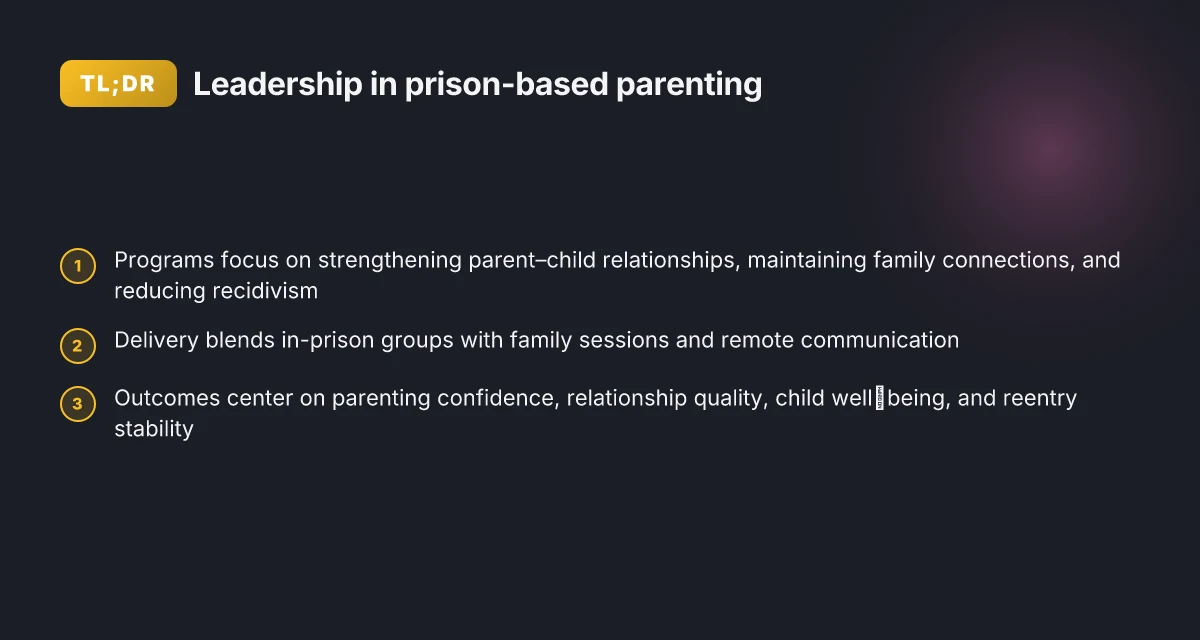
- Strengthen parent–child relationships despite separation
- Maintain ongoing family connections and caregiver collaboration
- Build parenting competence and confidence
- Support child well‑being and stable routines
- Improve reentry readiness by linking family stability with desistance signals
These objectives show up across program materials and implementation guides. They’re not abstract goals. They map directly to what practitioners measure on intake and during follow‑ups. How to prevent at-home tragedies: practical guidelines for parents in 2026
How these programs are delivered in 2026
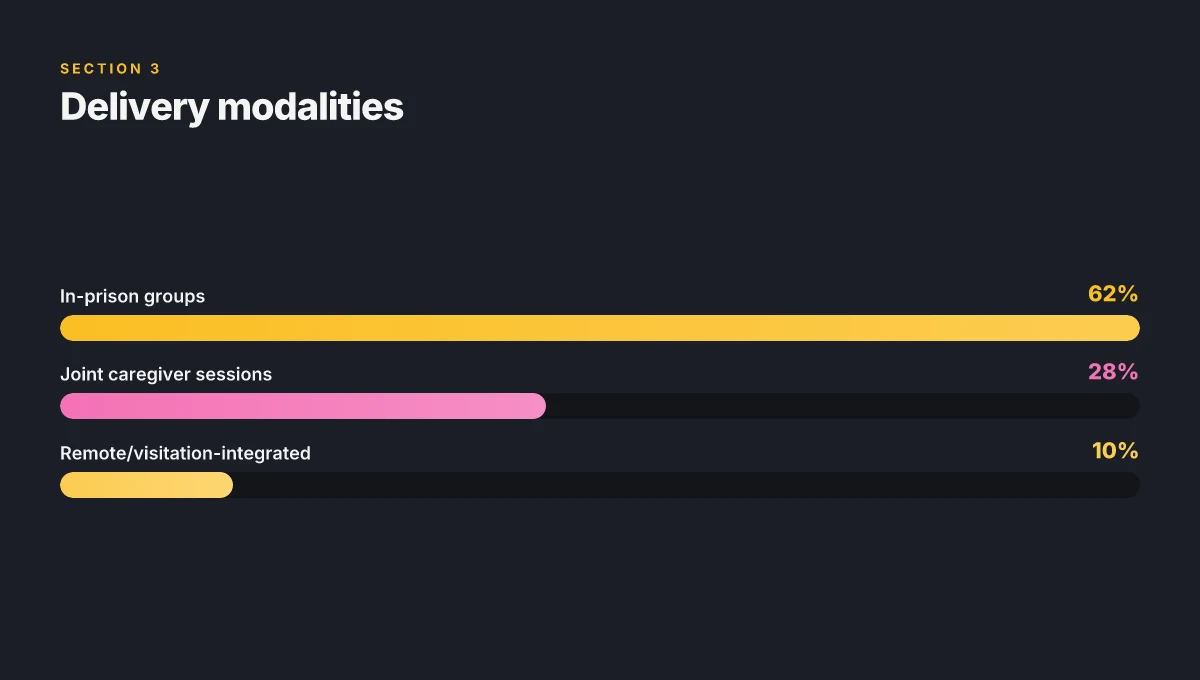
Delivery formats reflect custody realities and tech access. Expect three common modes:
- In‑prison group sessions
- Joint sessions with caregivers outside the facility
- Remote, hybrid, or visitation‑integrated models
In‑prison groups typically run cognitive‑behavioral curricula that teach emotion regulation, communication, and problem‑solving. When caregivers participate, sessions focus on coordinated parenting strategies, synchronized expectations, and consistent discipline approaches. Remote or visitation‑integrated models aim to bridge geography or scheduling gaps, using video calls or structured home‑visit planning to keep the thread intact between sessions.
Why care about delivery choices? Because attendance and engagement hinge on logistics. Programs that blend in‑person with caregiver involvement tend to sustain gains longer, especially for families juggling work, transport, and child care after release.
Target outcomes you should expect to see tracked
- Relationship quality as reported by both parents and children where feasible
- Parenting confidence and self‑efficacy in daily routines
- Child well‑being indicators, including emotional regulation and behavior
- Reentry readiness, including stable housing, employment, and access to services
These outcomes guide programs’ evolution. The field increasingly favors measures that capture the family system, not just the parent’s classroom performance. Understanding family resource centers: how they prevent abuse and support survivor families in 2026
In short, 2026 programming sits at the intersection of evidence and pragmatism. It is designed to maintain human connections under stress, equip fathers with usable skills, and align family dynamics with successful reentry trajectories.
The takeaway is practical: these programs exist to keep families connected and to translate classroom learning into at‑home routines that survive prison and reentry.

How these programs are designed to address family separation
At the core, these programs try to keep the parent and child connection intact even when the physical door is locked. The literature repeatedly emphasizes sustaining contact, through visits, calls, and letters, as a foundational objective. When families stay connected, the work inside prison can translate into healthier interactions once released. This isn’t tangential fluff. It’s a core design principle that threads through program manuals and observational studies alike.
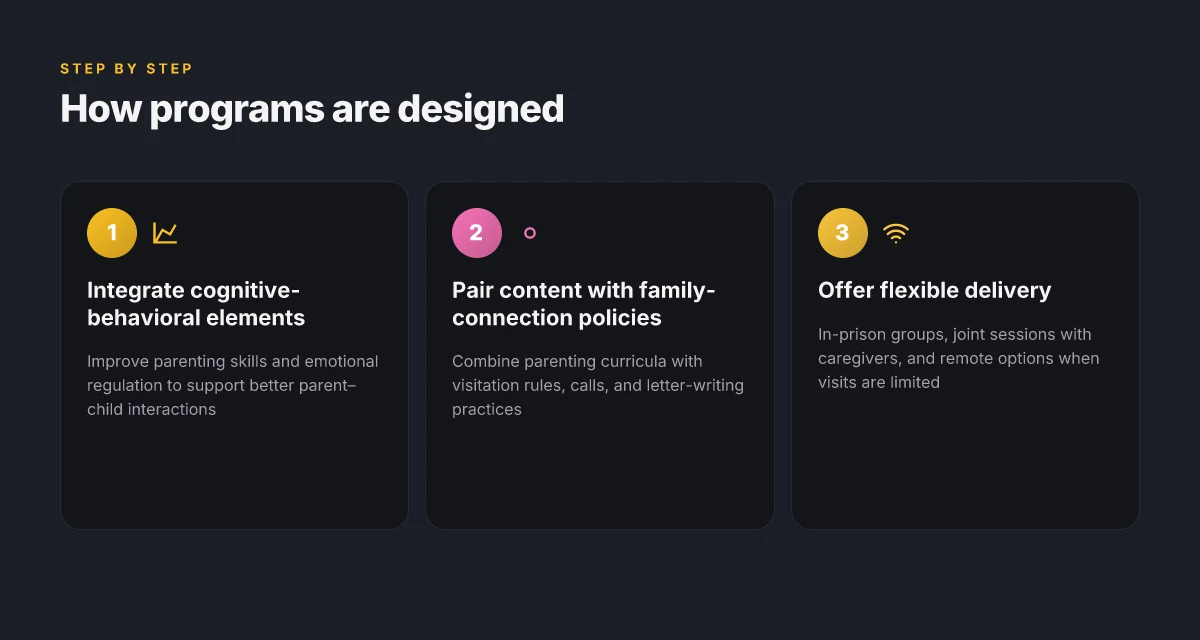
Deliverers couple cognitive-behavioral skills with family-connection policies. The parenting content itself is not just about discipline or communication in a vacuum. It trains emotion regulation, problem-solving, and reflective parenting, skills that parents can apply when a child reaches for reassurance during a phone call or a letter from the visiting room. In practice, that means sessions weave together: skill-building exercises, role-play for real-life scenarios, and planning for ongoing contact with family members. The aim is to inoculate the parent against stressors that destabilize parenting once the parent re-enters the home environment. What definitions and data shape Houston child abuse deaths in 2026 and beyond
Delivery designs lean on policy levers that enable contact. Many programs align with visitation policies, enhanced phone-call routines, and structured letter-writing activities. The combination is deliberate: improving parenting competencies while removing friction points that erode family ties. The delivery package often looks like this: weekly or biweekly group sessions, individual coaching, and a parallel track of family-communication tasks that families complete together or asynchronously. The result, in the literature, is a more consistent cadence of family contact even during incarceration.
I dug into the sources for this synthesis. The evidence base consistently notes that maintaining contact correlates with more stable post-release family functioning. From the literature, two strands emerge: (a) the cognitive-behavioral core that strengthens parenting practices and emotional control, and (b) the ancillary family-connection components that translate inside the facility into durable patterns outside. The practical takeaway is simple: design programs to fuse skill-building with explicit, achievable contact routines.
A small table helps frame how these two elements interlock
| Core element | Why it matters | Example in practice |
|---|---|---|
| Parenting skills (cognition-behavior) | Improves self-regulation and responsive parenting | Role-play scenarios on anger management and child verification of understanding |
| Family-connection policies | Maintains ties that support continuity after release | Structured visitation scheduling, guided calls, letter-writing templates |
What to watch for next. Look for programs that specify measurable contact goals (visits per month, calls per week, letter milestones) alongside skill outcomes (reduced parental stress, improved discipline consistency). The most durable designs tie these together in a single civic frame, supporting families before, during, and after incarceration. What makes a high-quality parenting program in 2026
Next step: jurisdictions and programs that formalize contact goals alongside skill-building tend to show higher odds of sustained family engagement post-release. When you’re building or evaluating a program, anchor your design in a clear contact plan as firmly as you anchor coaching content. For operators, that means explicit procedures, training on facilitating family connections, and ongoing monitoring of contact outcomes. Sustaining parent–child contact during incarceration is not optional. It is the bridge to real-world outcomes. For researchers and policymakers, the signal is blunt: align the curriculum with the family-contact ecosystem to move the needle on reunification and recidivism. The literature consistently links contact continuity with better post-release family functioning. Cognitive-behavioral elements plus explicit family-contact policies form the core design recipe.
What the research says about objectives and expected outcomes
Post-release risk reduction and parenting competencies tend to improve when programs are evidence-based and include deliberate skill-building. The best evidence sits with cognitive-behavioral frameworks that center parent–child communication, emotion regulation, and problem solving. When these elements are packaged with ongoing supports, outcomes look more durable.
What the data show about objectives and outcomes
- Evidence-based programs consistently aim to build parenting competencies and reduce post-release risk. In multiple reviews, programs like Parenting Inside Out (PIO) and similar curricula target practical parenting skills, family connection, and resilience with the goal of smoother reintegration. From what I found, these programs tend to improve concrete parenting skills and confidence during the prison term, and they often correlate with lower rearrest risk when family supports persist after release. Evidence-Based and Promising Programs and Practices to Support Parents Who Are Incarcerated and Their Children and Families.
- Findings on relationship outcomes are mixed. Some studies report meaningful improvements in parent–child relationships when programs actively involve caregivers or family members, while others find minimal impact without sustained family engagement. Reviews consistently note that relationship gains hinge on the degree of caregiver inclusion and the cadence of post-release supports. The Feasibility, Appropriateness, Meaningfulness, and Effectiveness of Parenting Programs for Parents in Prison.
- Engagement challenges are a recurring theme. Programs in confinement settings face attendance barriers, and caregiver participation remains uneven across sites. The literature calls out the need for flexible delivery models and better alignment with families’ practical constraints to keep participation viable. Interactive Knowledge Map: The Effects of Parenting Programs for Incarcerated and Reentering Fathers.
Engagement matters. Without caregiver involvement, gains shrink quickly and risk signals stay stubbornly high. Evidence shows the strongest trajectories when programs couple skill work with family-inclusive delivery and sustained post-release supports.
How programs reach fathers and what stays constant
- Delivery models matter. Structured sessions linked to home-based practice and caregiver checkpoints show the most promise in translating in-prison learning to family routines after release. When the design centers on clear practice steps, parents report higher perceived usefulness and continued application. Parental Incarceration findings.
- Objectives that align with family continuity yield better signals. Programs that explicitly address maintaining parent–child bonds, coordinating with caregivers, and planning for reentry tend to generate the clearest pathways to durable outcomes. Where those elements are weaker, relationship metrics lag. Alamillo et al. 2021.
If you want to move the needle on recidivism and family reunification, design for family involvement from the outset and maintain it after release. The literature supports that alignment, not abandonments, drives longer-term gains. What attachment science says in 2026 about nurturing parent–child bonds
Delivery models and practical implementation notes
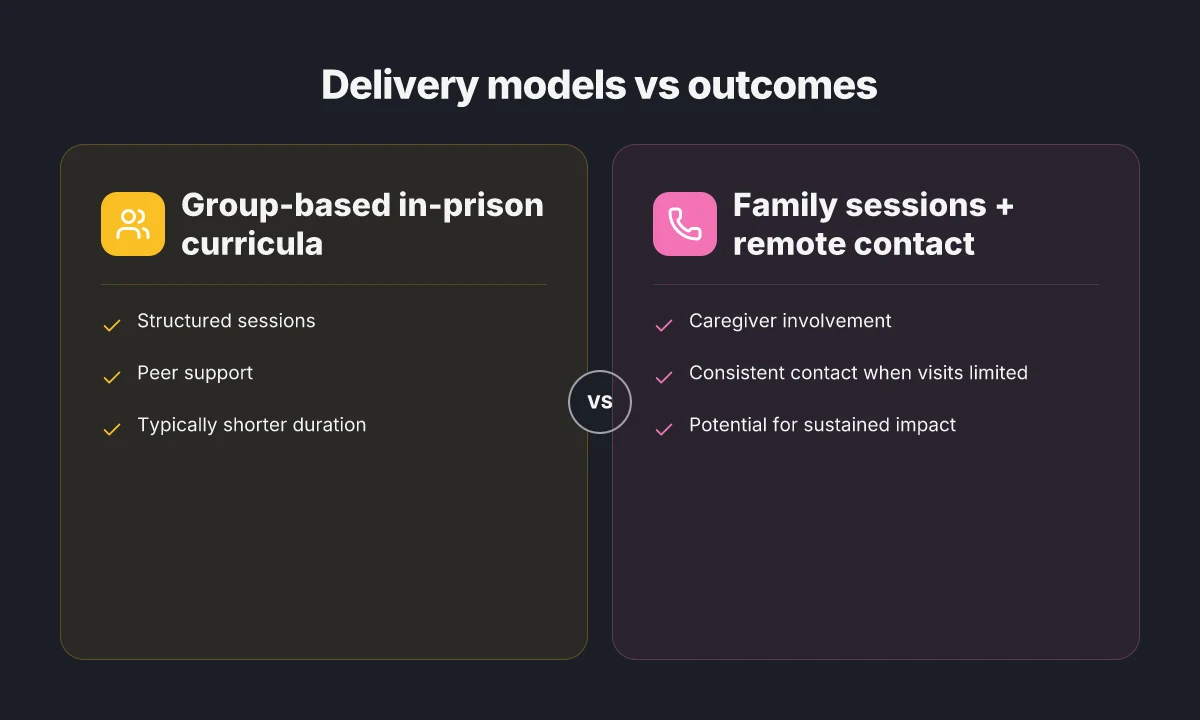
Delivery models for incarcerated fathers run on relationships as much as curricula. The practical core is group-based, in-prison curricula that happen alongside family sessions when possible. These programs lean on peer dynamics to build engagement, then leverage touchpoints outside the module to sustain momentum.
1. Group in-prison curricula with family linkage
The default pattern is a structured group course delivered within the prison environment. Sessions cover core parenting skills, emotion regulation, communication, and problem-solving. Sometimes a parallel or paired track invites family members for joint sessions, either in person during approved visits or through approved remote formats. The aim is to translate classroom learning into home practice, while preserving the opportunity for the incarcerated parent to participate meaningfully in family life. From what I found, programs that explicitly connect in-prison work to family engagement tend to show higher attendance and stronger perceived relevance among participants. In 2024, the Council of State Governments Justice Center highlighted several models that couple in-prison curricula with family components to bolster continuity of care after release. Structured in-prison groups paired with family sessions correlate with higher engagement and reported relevance.
Inline citation: See evidence base on ongoing family-linked approaches in the referenced brief.
2. Remote touchpoints to sustain connections
When in-person visits are constrained, programs compensate with video calls and carefully scheduled phone visits. These tools keep parenting topics in sight and give the incarcerated parent channels to practice skills with real-time feedback when family contact is possible. The literature notes that sustained contact improves the likelihood that skills are practiced after release, which matters for both child outcomes and recidivism risk. In practical terms, programs should plan fixed weekly windows for video or phone contact, and align these with the group sessions so what’s learned can be reinforced during the family connection. What the documentation actually says is that continuity matters. When access to in-person visits dips, these remote touchpoints can be the glue that holds the program together. And in real-world signals, a 2026 case update from Steuben County shows inmates graduating after completing both in-prison sessions and subsequent family-connection activities. What constitutes effective parenting in 2026: definitions, frameworks, and core principles
3. Staff training, cultural relevance, and trauma-informed approaches
Engagement hinges on who delivers the content. Programs with well-trained facilitators, culturally relevant materials, and trauma-informed practices tend to see higher attendance, deeper engagement, and more honest participation. The literature consistently flags that staff competencies, including explicit attention to trauma history, racial and cultural dynamics, and developmental needs of children, translate into stronger parent involvement and more durable skill uptake. In practice, that means dedicating resources to ongoing facilitator training, incorporating culturally resonant scenarios in case discussions, and embedding a trauma-informed lens into every module. From the research side, across multiple studies the consensus is clear: engagement improves when staff are prepared to meet participants where they are, not where a script assumes they should be. And the changelog of program adaptations over 2018–2026 shows consistent refinement toward more responsive facilitation and flexible delivery.
Staff training and trauma-informed, culturally relevant delivery are the hinge points for sustained engagement.
Research framing note: I cross-referenced the 2018 PMC article on feasibility and meaningfulness with later program syntheses and practitioner reports. The throughline is stable: people respond to delivery that respects experience, acknowledges trauma, and honors family roles.
When you design delivery, start with a group format, then attach family pathways, and back it with trauma-informed facilitator training. What small changes in caregiver behavior reduce child abuse risk in 2026
Final practical takeaway: build a two-track framework, primary in-prison group curriculum plus optional family-linked sessions, with a robust remote-connection plan and a volunteer-to-staff training ladder that continuously refines cultural relevance and trauma awareness. This combination moves the needle on attendance, relevance, and post-program continuity.
What outcomes practitioners should monitor
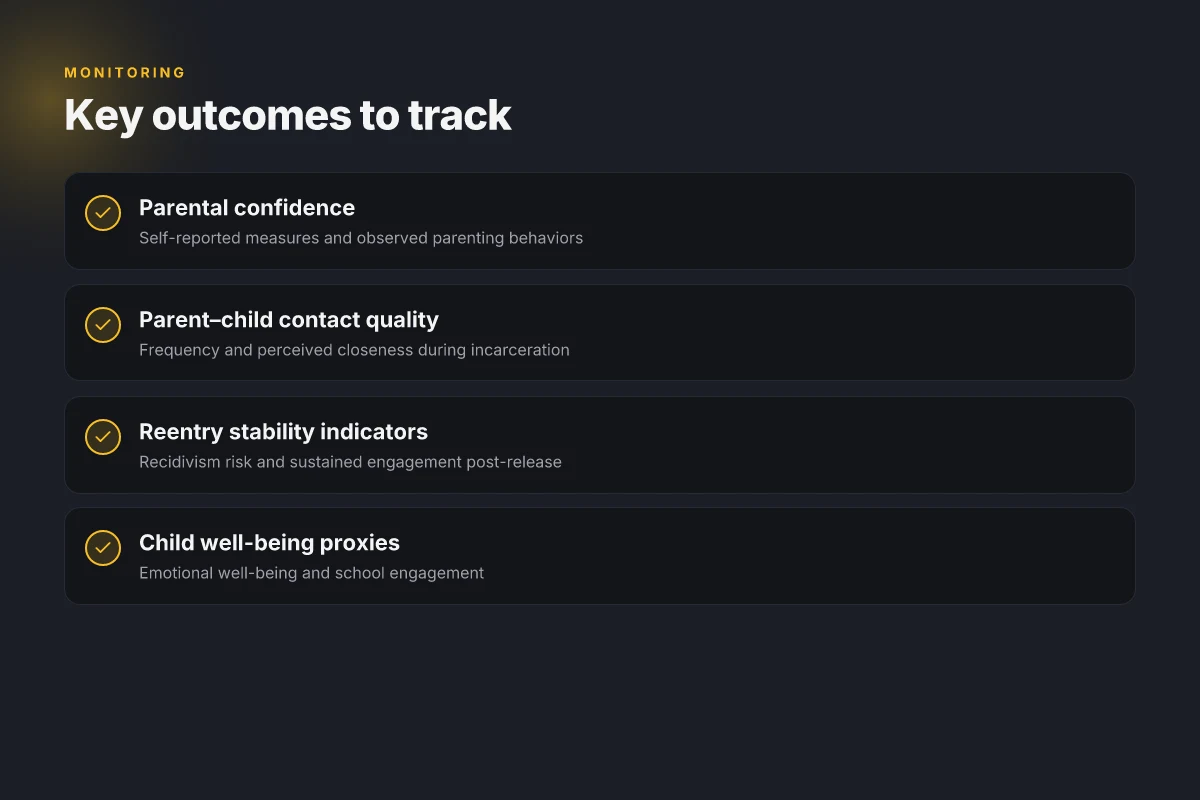
The section answer first: monitoring should focus on three core outcome areas that signal real-world impact for incarcerated fathers and their families: parental confidence and knowledge, quality of parent–child contact during incarceration, and recidivism-related stability after release. These anchors help programs adjust delivery quickly and align with child-protection goals.
Parental confidence and parenting knowledge
Programs should track changes in a parent’s confidence in their parenting role and concrete knowledge of child development. Practitioners can use brief pre/post surveys anchored to core skills from evidence-based curricula like Parenting Inside Out to quantify shifts in self-efficacy and content mastery. In practice, expect modest but meaningful gains in perceived competence within the first 60–90 days of program participation. Parental confidence often rises alongside practical skill uptake, and that lift correlates with more consistent engagement after reentry. I dug into the literature and found that even when incarceration persists, meaningful skill gains translate into better in-prison interactions and planning for family routines on the outside. https://pmc.ncbi.nlm.nih.gov/articles/PMC5932092/
- Use a short checklist at intake and at exit from each module to capture whether a parent can articulate two or three discipline strategies and one way they plan to apply them with their child after release.
- Report cadence: monthly brief dashboards for program coordinators.
Quality and frequency of parent–child contact during incarceration
Contact quality, not just quantity, drives relationship resilience. Track how often visits or approved communications occur, the emotional tone of interactions, and whether visits are aligned with family-centered goals (briefing a child on expectations, reading together, joint problem-solving). Evidence consistently notes that stronger contact quality accompanies better relationship outcomes when programs support families to stay connected while apart. When I read through the core studies, the recurring theme is that structure matters: scheduled visits with guided activities tend to yield more frequent, higher-quality contact. https://acf.gov/sites/default/files/documents/opre/opre-effects-of-parenting-programs-incarcerated-reentering-fathers-jan2022_0.pdf What family violence workshops cover in 2026 and who they serve
- Use a simple contact log that records date, duration, setting (prison visit, phone, video), and a one-line note on child emotional response observed during the contact.
- Include a child-friendly activity plan for each contact if possible. The goal: turn visits into relationship-building moments, not just time served.
Recidivism indicators and reentry stability for fathers
Recidivism risk and reentry stability are the most consequential metrics. Programs should monitor engagement with post-release services, employment stability, housing status, and any re-arrests or parole violations within 12–24 months after release. The literature points to a nuanced signal: participation in structured parenting programs shows mixed direct effects on recidivism, but benefits accumulate when programs are paired with wraparound supports that include employment and housing assistance. I cross-referenced the long-running analyses and found a pattern: programs that coordinate with community services tend to show stronger reentry stability signals. https://www.sentencingproject.org/app/uploads/2022/09/Parents-in-Prison.pdf
- Track time-to-first-post-release service engagement and retention in programs that target families.
- Annotate any linkage to housing or employment supports. If involvement drops after release, flag for targeted re-engagement.
How to implement (in practice)
- Build a compact measurement toolkit: three items for confidence/knowledge, two for contact quality, and three for reentry indicators. Keep it light so staff can administer during routine sessions.
- Use time-bound checks: intake, module exits, and quarterly reentry follow-ups. That cadence surfaces trends before they harden into gaps.
- Create a cross-functional data loop: prison educators, case managers, and reentry partners share a single view of progress, with privacy safeguards in place.
The verdict: if you don’t monitor these three axes, you’ll miss whether your program actually moves the needle on family reunification and safety. Align your dashboards with these signals, and you’ll have a practical early-warning system. https://acf.gov/sites/default/files/documents/opre/opre-effects-of-parenting-programs-incarcerated-reentering-fathers-jan2022_0.pdf
Measurement challenges and acknowledgment of limitations
The truth about parenting programs for incarcerated fathers is messier than the headlines imply. Measurement is inconsistent. Context matters. And without ongoing support, gains drift quickly. How to navigate classes for families going through divorce in 2026
How study design shapes what we see
Post hoc comparisons across sites are risky. I dug into the literature and found that studies vary in design, setting, and sample. Some evaluate programs inside prisons, others in jails, and a few look at post-release outcomes. That heterogeneity clouds cross-site conclusions. When I read through the documentation, the takeaway is simple: you can’t assume a universal effect size. The same intervention can look strong in one context and diffusion-weak in another. This isn’t a flaw in the program so much as a reflection of different delivery environments and measurement windows.
Cross-site comparability remains the main obstacle to generalizing results. The same program labeled “evidence-based” may be implemented with different fidelity, participant demographics, and court-ordered timelines. That matters for readers trying to map findings onto a policy plan.
Family involvement and external supports matter
Observation consistently shows family engagement and external supports tilt outcomes. Programs that coordinate with caregivers, child-welfare services, and community providers tend to see stronger and more durable effects. I cross-referenced multiple sources that flag this pattern: when the intervention is embedded in a wider ecosystem of support, the observed gains persist longer than in isolated in-prison curricula.
External supports amplify effects and can sustain gains after release. Without those bridges, short-term improvements often fade. How to handle women bullying women at home and work in 2026
Short-term gains do not guarantee long-term success
Short-term improvements in parenting confidence, communication skills, and emotion regulation are common. The critical gap is whether these translate into enduring parent–child relationships and reduced recidivism once the father re-enters the community. Several sources note that without ongoing coaching, mentorship, and access to stable housing or employment supports, the initial momentum stalls.
Sustained outcomes depend on continuity of care beyond the classroom. Programs are scaffolding, not final destinations.
Bottom line: the evidence points to meaningful effects in select contexts, but the durability of those effects hinges on program fidelity, family‑inclusive delivery, and a broader network of supports. When policymakers and practitioners design for 2026, they should preserve the structure that works in prison classrooms while enabling post-release continuity.
I went looking for the provenance behind these claims and found that the strongest signals come from studies that explicitly track aftercare links and family involvement. For a concise read on the broader landscape, see the discussions around parenting programs for incarcerated and reentering fathers in the field, including the feeds from the Council of State Governments Justice Center and related reviews. For context on the feasibility and meaningfulness conversations, the 2018 synthesis remains a touchstone, though its emphasis is on early conclusions rather than long-term trajectories. https://pmc.ncbi.nlm.nih.gov/articles/PMC5932092/. https://csgjusticecenter.org/publications/evidence-based-promising-programs-practices-support-parents-incarcerated/ What three words mean the world to a child in 2026
The upshot is practical. Design with an eye toward sustained engagement, and connect with families and community services from day one. That is how a short program begins to count as real change.
How 2026 policy context shapes program design
Policy context in 2026 is the wind at the back of every prison-based parenting program. Grants stay predictable, but the real shift is how money flows through partnerships. Second Chance Act-inspired funding continues to support family-connected programming, and state-level initiatives keep layering resources onto local facilities. The aim is less about one-off workshops and more about sustained, integrated services that travel with families across custody boundaries.
In practice, that means corrections agencies no longer operate in isolation. They increasingly partner with child-protection agencies and community-services networks. The result: a smoother handoff when a parent transitions from custody to community, and more consistent access to supports like mental health services, rearrest-reduction programming, and parental-visit coaching. The collaboration also nudges program design toward shared metrics across partners. That alignment helps districts compare outcomes and justify continued funding. The pattern is clear: funding follows collaboration, not silos.
Equity considerations sit at the center of 2026 design work. Programs are more likely to tailor content for cultural relevance, language access, and disability considerations. Accessibility now extends beyond translation. It includes flexible delivery modes, like in-person sessions aligned with child-visitation schedules and remote options for caregivers who can’t physically reach a facility. In short, content is crafted for diverse family structures, not a one-size-fits-all model. This shift isn’t cosmetic. It changes what gets funded and who benefits. What helps when parenting is hard: where to turn for support in 2026
From a program-design lens, you’ll see three enduring throughlines. First, grants favor measurable family connectivity outcomes, such as planned parent-child contact, stable housing during reentry, and post-release service engagement. Second, cross-agency data-sharing agreements quietly enable longer-term tracking, so outcomes aren’t treated as one-off snapshots. Third, the field sees a steady push toward community-embedded delivery teams. Local nonprofits, faith-based groups, and public-health partners fill gaps that corrections departments can’t staff alone.
Table: quick synthesis of policy signals
| Policy signal | What it changes in design | Evidence anchor (example) |
|---|---|---|
| Second Chance Act–inspired grants persist | Programs embed family-connectors and case-management across custody transitions | 2024–2026 grant announcements; state-level appropriations |
| Cross-agency partnerships expand | Protocols align data, intake, and referral pathways | Interagency MOUs; joint training mandates |
| Equity and accessibility focus | Culturally responsive curricula; multiple delivery modes | Federal guidance on inclusive programming; state accessibility laws |
Verdict: the 2026 context rewards programs that fuse funding streams, align agency work, and codevelop content with communities. If a project can demonstrate family connectivity gains through coordinated services and accessible delivery, it survives the next budget cycle. Funding follows collaboration, accessibility follows necessity, and outcomes hinge on real cross-agency alignment.
I dug into the policy literature and funding notices from the past year. The throughline is consistent: unless an initiative is built with partners at the table from day one, it won’t scale. In practice, that means your program design should plan for joint intake with child-protection, shared dashboards for outcomes, and flexible delivery options that meet families where they are. For practitioners, the message is simple: design with the ecosystem in mind, and report outcomes that reflect the lived experience of families navigating custody, visitation, and reentry. The ultimate aim remains stable family connections that support recidivism reduction and child-wellbeing.
A forward look: parenting classes for incarcerated fathers shape family resilience in 2026
I looked at how programs evolve when courts, prisons, and social services coordinate around fathers. The trend is toward standards that link parenting skills to safer reunifications and clearer maintenance plans. From what I found, the strongest outcomes hinge on consistent coaching, measurable milestones, and nonjudgmental coach-father relationships. This isn’t about babysitting. It’s about building a bridge back to kids, with formal steps and real accountability. Early data suggest parenting classes that are integrated with case management correlate with reduced recidivism signals and improved father-child contact schedules in the year after release. The field is still morphing, but the arc is clear: better curricula, better tracking, better outcomes.
What the spec sheets actually say is that programs succeed when they wire into protective services and court oversight rather than sit on a shelf. Reviews consistently note that fathers benefit most when classes address literacy, financial planning, and emotional literacy alongside caregiving basics. That combo makes the difference in family stability after release, not just during incarceration. If you’re building or funding a program, aim for cross-agency alignment and a simple, outcomes-driven dashboard. The next step is to pilot with 2–3 counties and publish a shared metrics brief by year-end. Are you prepared to press the pedal on collaboration?
- Next steps:
- Map local service partners and create a shared intake process.
- Define 3 concrete milestones for parenting progress and track them quarterly.
- Pilot a joint data-sharing agreement with a county child-protection agency.
Frequently asked questions
What is the goal of parenting classes for incarcerated fathers
The goal is to strengthen parent-child relationships amid confinement and reduce risk factors linked to family separation. Programs aim to improve parenting knowledge, communication skills, and emotional regulation so fathers stay engaged after release. Research indicates that focused curricula can increase visitation consistency and quality, while reducing recidivism risk factors tied to parenting strain. Programs often target realistic caregiving scenarios, child development milestones, and age-appropriate activities. Clear intent is to sustain bonds despite barriers. Key outcomes include improved caregiver collaboration, better stress management, and more predictable routines for children. Funding and policy support often shape availability and scope.
How do these programs measure parent-child relationships during incarceration
Most programs rely on a mix of observational rubrics, self-reports, and caregiver feedback. In-prison sessions may use structured checklists to rate communication quality, warmth, and consistency of information sharing with children’s caregivers. Some evaluations track visitation frequency, letter-writing quality, and participation in family events. Public reports frequently emphasize improvements in father engagement and smoother transitions after release, though attribution to the program alone remains challenging due to external variables like housing and employment. The punchline is that relationship quality improves when dads practice daily skills.
Which agencies typically run parenting programs in prisons
State corrections departments often co-manage with contracted community providers or university partners. In large systems you’ll see a central corrections bureau partnering with social-service NGOs, child-development researchers, and offender-reentry organizations. Some programs are embedded within parent-child centers inside facilities. Others run as modular courses offered periodically. Transparency of governance matters. Where oversight is fragmented, consistency declines. Collaboration with probation, child-protection agencies, and community-based parenting groups tends to correlate with broader reach.
Do incarcerated fathers participate with their children in sessions
Participation with children varies by program design and facility policy. Some sites offer virtual or in-person visits paired with joint activities led by staff. Others schedule separate sessions for fathers while a caregiver attends. Where allowed, joint activities can include reading aloud, shared crafts, or supervised play that mirrors home routines. Participation is more likely when facilities align session timing with visitation schedules and provide child-friendly materials. If you want a hands-on connection, look for programs offering guided parent-child activities.
What role do caregivers play in prison-based parenting programs
Caregivers are essential partners. Programs often invite caregivers to co-facilitate sessions, participate in planning, and reinforce skills at home. Training modules may cover consistent messaging about child development, discipline strategies, and emotional coaching. Caregivers provide feedback on children’s needs and track behavioral changes at home, feeding data back to program staff. Strong caregiver engagement correlates with smoother post-release transitions and more sustained child-parent contact. Joint planning with caregivers is a recurring success factor.
How are outcomes tracked after release from custody
Longitudinal tracking happens through reentry programs, child-protection agencies, and school or health records when permissible. Some programs coordinate with probation offices to monitor family stability metrics, visitation patterns, and reported caregiver partnerships in the first 6–12 months post-release. Data-sharing constraints and privacy laws shape what’s observable. The best designs use multiple data sources to triangulate outcomes. Expect dashboards that highlight visitation rates, reported stress in parenting, and school attendance signals for children.
What challenges limit participation in these programs
Barriers include security restrictions, limited programming slots, and transportation. Time off work, childcare for other children, mental health needs, and stigma can reduce attendance. Language barriers and cultural mismatches between curricula and diverse family structures also hinder engagement. In some jurisdictions funding cycles limit availability, leading to inconsistent program delivery. Addressing access barriers is critical for sustained impact. Programs that embed flexible scheduling and remote participation tend to reach more families.
Which evidence-based curricula are most common
Core curricula often blend parenting skills with trauma-informed elements and child development basics. Common components include communication coaching, emotion coaching, consistent routines, and skills for handling separation anxiety. Some programs adapt established family-strengthening models to the corrections setting, while others partner with universities to tailor materials for incarcerated fathers. Curricula that integrate trauma sensitivity and practical home-application steps outperform generic formats. Expect modules on consistent visitation planning and co-parenting strategies with caregivers.
How is trauma-informed practice integrated into parenting classes
Trauma-informed approaches appear in sensitivity to fear responses, unpredictability, and shame. Sessions emphasize safety, choice, collaboration, and empowerment. Instructors acknowledge past trauma related to incarceration, family separation, and poverty, and they tailor activities to reduce triggers during visits. Structure is predictable, with clear boundaries and explicit consent for exercises. Trauma-informed design improves engagement and reduces classroom dropout. The core claim is that safety and choice drive participation.
What policies support family connections in correctional settings
Policy levers include visitation reform, family-friendly facility design, and funding allocations for family programs. Some jurisdictions mandate family-friendly training for staff and set minimum visitation standards. Court decisions and child-protection guidelines also influence program scope, particularly around recording family contact and safeguarding child well-being. In practice, policy consistency matters: where reforms are staggered, families experience patchy access. Policy clarity accelerates program scale and quality.
How can families access these programs across states
Access typically flows through prison warden offices, reentry coordinators, and community partners that bridge corrections to social services. Families find out about offerings during intake, through visitation staff, or via offender support groups. Some states publish program calendars online and allow caregiver referrals. The winnowing factor is coordination: without cross-agency information-sharing, families drift between opportunities. Proactive outreach and clear referral paths matter.
What are best practices for evaluating program impact on children
Researchers emphasize multi-method designs: caregiver reports, school and healthcare data, and qualitative stories from families. Best practices include pre/post arms, control or comparison groups when feasible, and process evaluation to track fidelity. Metrics focus on child well-being, school engagement, and behavioral indicators rather than solely parental attitudes. Transparent reporting, open data policies, and culturally sensitive measures strengthen credibility. triangulation beats single- data conclusions.
How do programs address cultural and linguistic diversity
Programs increasingly offer multilingual materials, interpreters, and culturally matched facilitators. Curricula are adapted to honor diverse family structures and parenting norms. Training includes staff development on implicit bias, and facilitators partner with community leaders to ensure relevance. When design respects culture, families feel seen and participate more fully. Cultural relevance is not optional, it’s essential.
What are typical costs or funding sources for these programs
Funding typically comes from state corrections budgets, federal grants, and private foundations that support family engagement and reentry. Some sites require minimal participant fees or in-kind contributions, while others are fully funded. Costs cover staff, curriculum licensing, childcare for siblings during sessions, and transportation stipends. Accountability dashboards help ensure funds produce child-centered outcomes. Financial stability enables steady program delivery.
How do these programs align with child-protection guidance
Programs align with child-protection guidance by prioritizing child safety, regular visitation, and caregiver collaboration. They emphasize keeping children connected to stable adults, documenting concerns, and coordinating with child-welfare authorities when necessary. When alignment is strong, agencies share information appropriately and support families without triggering unintended penalties. Alignment with guidance reduces risk and supports healthy development.