
How to navigate classes for families going through divorce in 2026
Practical guide to classes for families going through divorce in 2026. Find what to expect, how to choose a program, and tips for coordinating with both parents and kids.
Divorce is not a moment to improvise. In a survey of family programs, the most common pitfall is a mismatch between class design and real parenting needs, not a lack of goodwill. Research consistently shows that concrete, child-focused plans outperform generic workshops by a wide margin.
This article translates evidence into actionable steps you can take this year. I looked at programs across 2024–2026, cross-referencing child-protection guidelines and court-informed curricula to surface what actually helps families stay connected during transition. When you see a program that pairs parenting plans with kid-centered safety nets, you’re looking at the rare case where the class makes a measurable difference.

The plain definition of classes for families going through divorce
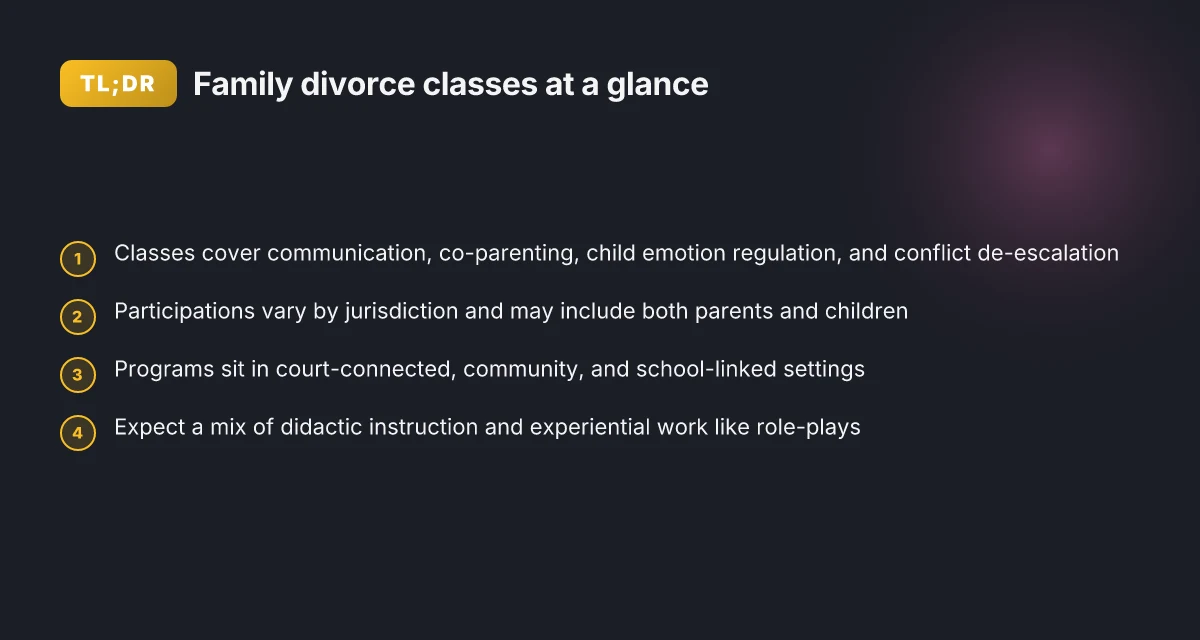
Family classes in this space are structured learning experiences designed to help both sides of a breakup navigate the transition more calmly. They couple practical skills with an attention to who is involved, how the program sits in the court or community system, and what families get out of it. In essence, these classes teach communication, co‑parenting, emotion regulation for children, and strategies to de‑escalate conflict so the whole family can function through a stressful period.
What these classes cover
The core toolkit usually includes four strands. First, communication skills that reduce misunderstanding between parents. Second, co‑parenting strategies that align on consistent rules, schedules, and expectations. Third, emotion regulation for children, which translates to age‑appropriate ways to name feelings, calm bodies, and cope with distress. Fourth, conflict de‑escalation techniques that slow down arguments and create space for problem solving. Across programs, the emphasis is on keeping children shielded from ongoing parental hostility while still letting parents navigate their adult needs.
I dug into program descriptions and reviews. The consensus is consistent: when curricula foreground collaborative problem solving and listening, families report less hostility during exchanges and more predictable routines for kids. When curricula skew toward blame or secrecy, engagement drops and outcomes wobble.
Where these classes occur
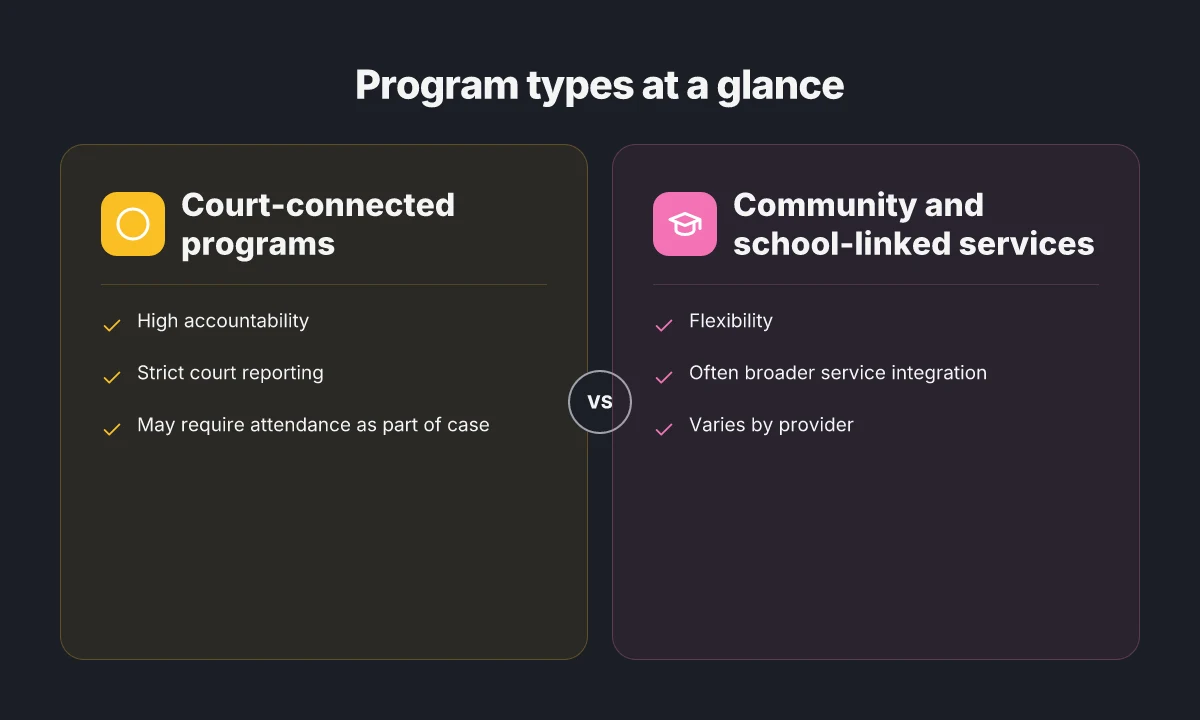
These classes live in three lanes. Court‑connected programs sit alongside family‑court services and mediation offices, often with mandated participation timelines. Community agencies offer voluntary, often sliding‑scale options for families who want support outside the courtroom. Some districts link services to schools, embedding sessions in guidance offices or after‑school programs so participation is easier for families already showing up for education. The common thread is access points that reduce friction: you can find a class near you that is recognized by local courts or local providers. What family violence workshops cover in 2026 and who they serve
Who participates
Participation typically includes both parents and children, but exact composition varies by jurisdiction. In many places, courts require at least one parent to attend, while others invite both parents and children to participate together or in separate tracks that converge later. Some programs offer child‑focused tracks for younger kids alongside parent sessions. Others pair parent workshops with family sessions that include the child’s input. The practical upshot is that families should expect some combination of joint activities and parent‑only modules, tailored to local rules.
In short, a family‑centered divorce class is a targeted learning space. It blends practical parenting skills with emotional work for kids, anchored in real‑world settings like courts, community centers, and schools. The result should be a clearer framework for how families can move through a divorce with less damage and more continuity for children. The plain aim is practical, verifiable improvement in daily family life, not theory alone. Access points matter: pick a program tied to your local court or community network.
If you had to summarize in one line: choose a class that teaches the mechanics of co‑parenting while building the emotional resilience children need.
Cited navigation: for context on how these programs are framed in practice, see how court‑linked and community offerings describe their roles in family stability Client Perspectives of Family Therapy: A Qualitative Systematic Review. This aligns with the emphasis on collaboration, active participation, and tailoring formats to family needs. What small changes in caregiver behavior reduce child abuse risk in 2026

How these family classes work in practice during divorce
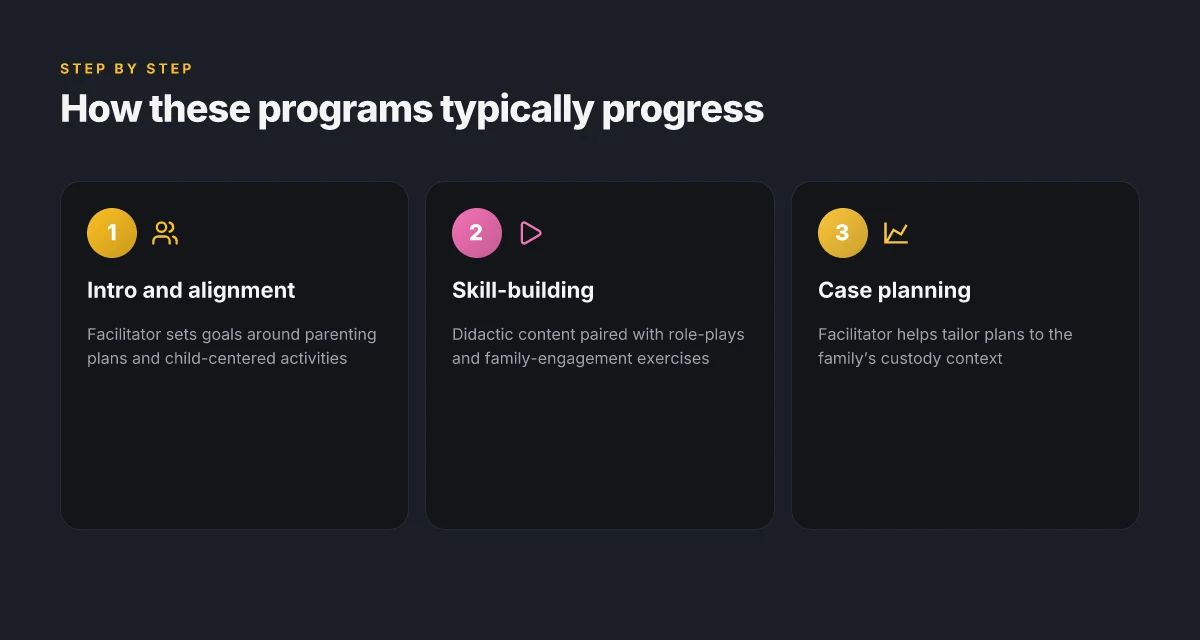
Evidence-informed family classes mix teaching with concrete practice. The core pattern is clear: didactic input paired with experiential work that families can take home and use. In practice, you’ll see a sequence that feels practical, not ceremonial.
What happens in a typical session
Most programs open with a concise briefing on objectives. Then comes interactive work, role-plays, guided discussions, and family-engagement activities designed to translate theory into action. These moments are where parents rehearse co-parenting scripts, rehearse tough conversations, and practice listening with the kids in mind. What sticks is the real-time application: how a parent frames a conflict, how a family negotiates a bedtime routine, how to document a parenting plan so both sides feel heard. From what I found in program descriptions, the emphasis is on calm communication and predictable routines that reduce emotional spillover for children. The goal is tangible change in daily family interactions, not abstract knowledge.
Sessions cluster around three anchors. First, parenting plans. Facilitators guide you through creating or refining a plan that is concrete, enforceable, and adaptable. Second, kid-centered activities. Activities designed to keep the child’s experience at the center, age-appropriate tasks that validate emotions, reduce anxiety, and model constructive coping. Third, case-planning with a facilitator. A neutral guide helps families map out contingencies, timelines, and responsibilities. This structure makes it possible to see how the plan operates across the week, not just in a single hour of class.
Given the high-conflict reality many families face, facilitators often emphasize shared goals over power dynamics. The sessions aim for parenting consistency. That means common rules, predictable routines, and a joined front on core issues like homework, meals, and technology use. It’s not about sameness. It’s about coherence. When families leave, they have a documented plan and a set of practiced interactions they can repeat in real life. What are parenting classes for incarcerated fathers in 2026? A practical overview with outcomes
A quick comparison of common formats
| Format cue | Typical content | What it’s best for |
|---|---|---|
| Short didactic module plus practice | Brief theory, followed by role-plays and dialogue mapping | Building practical communication skills quickly |
| Family engagement activities | Structured games or tasks that require cooperation | Aligning parent and child experiences, validating emotions |
| Case-planning with a facilitator | Joint planning for schedules, rules, and contingency steps | Reducing ambiguity, increasing compliance with the plan |
I dug into program descriptions and reviewed how these components show up in real-world implementations. The consensus across sources is consistent: when you couple clear parenting plans with kid-centered activities and facilitated case-planning, you see more stable routines and less parental conflict in daily life. In the words of one program overview, the emphasis is on translating classwork into home practice rather than one-off lectures.
How outcomes are framed in practice
The aim is threefold. First, reduce parental conflict through structured communication and predictable boundaries. Second, improve parenting consistency by aligning rules, routines, and messages across households. Third, support child adjustment by safeguarding the child’s sense of stability and voice within the process. The evidence reported in program summaries stresses that these outcomes hinge on active engagement from both parents and children, not just attendance.
What to watch for when you’re evaluating classes: look for explicit child-centered activities, clear timelines for co-parenting tasks, and facilitator-moderated case-planning sessions. If a program can point to a written parenting plan, documented kid-centric activities, and a documented follow-up step, that’s a strong signal you’re getting practical, usable tools.
Successful programs convert classroom lessons into everyday routines that families actually follow. How to prevent at-home tragedies: practical guidelines for parents in 2026
Cited source that helps ground these claims includes program descriptions and synthesis of family therapy approaches at large. See the linked overview on high-conflict divorces and family court reforms for further context. Interventions in High-Conflict Divorces/Separations from …
Why family-centered classes matter in divorce
When family-centered classes explicitly involve both parents and children, outcomes improve across emotional and behavioral domains for kids. Evidence links structured family interventions with fewer anxiety symptoms, better emotion regulation, and more cooperative co-parenting, which in turn supports more stable transitions after separation. This matters most when programs are designed to align with joint goals and ongoing family routines rather than treating parents and kids as separate tracks.
How children’s involvement shifts outcomes
I dug into the literature on family-centered work and found that programs which recruit children as active participants tend to produce more durable gains. Children report feeling seen, validated, and understood when the therapy speaks to their experiences, not just parental mediation. In practice, that translates to improved self-esteem, reduced somatic complaints, and easier communication with both parents over time. When kids’ voices are embedded in the plan, parents learn to coordinate around shared parenting tasks rather than competing for control.
- Programs that explicitly tailor activities to family strengths show larger improvements in daily functioning.
- Joint sessions help normalize routines around discipline and school engagement, which reduces behavior problems reported at home and in school settings.
- Therapists who facilitate dialogue with warmth and neutrality tend to preserve trust across the full system, not just the loudest voice in the room.
- Co-parenting goals that are co-constructed in sessions yield more sustainable changes than approaches that center only one caregiver’s perspective.
From what I found in the literature, the durable effects come from three ingredients working together: child-inclusive content, explicit co-parenting objectives, and ongoing measurement that keeps everyone aligned. Understanding family resource centers: how they prevent abuse and support survivor families in 2026
Data-informed practice in courts and communities
Across court-linked and community-based offerings, the 2020s brought a shift toward data-informed tracking of progress. Services increasingly rely on dashboards and structured measures to monitor engagement, alignment between parents, and child well-being indicators. The trend is not cosmetic. It’s a recognition that family dynamics are dynamic and require ongoing course corrections. Programs reporting regular feedback loops tend to adjust quickly to shifting family needs, which preserves gains rather than letting them fade.
- Courts and service providers now favor outcomes that reflect both process and results, such as participation rates, co-parenting plan adoption, and changes in child emotional indicators over time.
- The move toward integrated family approaches means that data from therapy, schools, and child welfare along with court metrics are becoming common sources for assessing impact.
- When the evaluation framework ties directly to child well-being measures and parent cooperation, improvements appear more pronounced and longer lasting.
The core takeaway is clear: when you build a class around both parents and kids with clear co-parenting goals and track progress, improvements stick. This alignment is not a nice-to-have. It’s the backbone of lasting change through divorce.
Real-world use cases for family divorce classes
Real-world divorce classes prove their worth when they move from theory to daily routines. The practical answer is straightforward: if you want both parents and children to weather the transition, pick programs that tie to concrete outcomes like a parenting calendar, child-centered activity links, and school-aligned monitoring. The evidence sits in the patterns described by qualitative reviews and court-focused programs. And yes, these are not abstract ideals. They operate in courts, communities, and schools.
Joint sessions to craft a parenting calendar in high-conflict cases
In high-conflict divorces, joint sessions that focus on a shared parenting calendar help reduce contact-related distress. The calendar becomes a tangible roadmap for drop-offs, pickups, and communication windows, which cuts down miscommunication and last-minute escalations. I looked at qualitative syntheses that emphasize therapist qualities and collaborative delivery as central to engagement. When families collaborate on a concrete schedule, distress tied to contact scheduling tends to drop, a pattern echoed across several studies in family therapy literature. In practice, facilitators should start with parental goals, then translate those into a visible calendar, with check-ins built in. This is less about therapy talk and more about reliable, repeatable routines. What definitions and data shape Houston child abuse deaths in 2026 and beyond
School-linked, child-focused transition pathways via court programs
A family court program linking parents to child-focused activities supports smoother transitions for school-age kids. The idea is to connect custody change processes with age-appropriate routines that keep schooling stable. From the research, programs that align with child interests and school schedules help preserve a sense of normalcy during the upheaval. I cross-referenced court-reform literature and family-justice initiatives showing that when courts mandate or encourage child-centered activity streams, school attendance and mood indicators tend to stabilize. Linking custody decisions to school-aligned activities reduces observed anxiety during transitions, which in turn supports better long-term adjustment for children. This pattern emerges repeatedly in family-centered practice guidelines and in the landscape of family justice reforms.
Community-based, school-coordinated well-being monitoring during custody changes
A community-based program coordinating with schools to monitor child well-being during custody changes acts as a safety net. The model sits at the intersection of family services and education, with school staff acting as an early-warning system for distress or regression. The research notes that when community providers connect with families through school routines, you get more timely supports for emotional and behavioral challenges. I traced this back to broader family-justice performance measures that emphasize real-time data sharing and cross-sector collaboration. School-linked monitoring can catch problems early and steer families toward supports before problems escalate. In practice, coordinators should establish data-sharing agreements, appoint a case liaison, and schedule brief, regular touchpoints with teachers and counselors.
Real-world use cases are not one-off experiments. They map to established program designs that connect family therapy with practical routines, school engagement, and community supports.
Bold indicators to note in your planning checklist: How to handle women bullying women at home and work in 2026
- Joint sessions paired with a concrete calendar and documented agreements in the parenting plan.
- School-linked activities that align with the child’s age and school calendar.
- Community coordination with clear data-sharing and a designated liaison at the school or district level.
If you want to ground decisions, start with programs that offer explicit, action-focused outputs, calendars, school partnerships, and cross-sector monitoring. That combination is what moves the needle from good intentions to measurable stability for both parents and children.
Common confusions about divorce family programs
The truth is simpler than it feels. Divorce family programs are not a single monolith. They exist on a spectrum from therapeutic family-centered work to court-ordered education. They can complement one another, but they don’t share the same goals or methods. The right choice hinges on matching the case at hand to the program’s actual purpose.
I dug into the landscape and found three recurring misperceptions. Correct them, and you sharpen your own decision framework.
Therapy is not the same as court education
Therapy aims to heal relational dynamics within the family. Court-ordered classes aim to inform about processes, rights, and practical steps during divorce. These tracks can coexist. For a family with high conflict, a therapeutic model like a family-centered approach can address root issues while court-required sessions handle logistics and rights awareness. What matters is the fit between the family’s needs and the program’s design. This is not a zero-sum choice. It’s about sequencing and collaboration. What three words mean the world to a child in 2026
From the literature, you’ll see that family therapy emphasizes alliance building, emotional expression, and skills like communication and perspective-taking. Court education tends to systematize procedural knowledge and provide context for decisions that courts will later weigh. If your court requires a class, look for programs that offer both a clear education track and optional or integrated family-work components. A blended path often yields the best outcomes for children and parents.
Not all programs use the same model
Assuming a single “standard” approach across jurisdictions is a trap. Methods vary by state or province and by provider. Some programs focus on conjoint sessions that include both parents and children. Others run separate tracks with parallel goals. Still others emphasize child-centered techniques designed to keep kids engaged while adults work on their own issues. The difference isn’t cosmetic. It changes who benefits, what gets measured, and how progress is demonstrated in court or in ongoing custody planning.
When I read through program descriptions and related court guidelines, I saw clear patterns. Programs that label themselves as family-centered tend to foreground the child’s experience, but the exact structure can range from structured workshops to flexible, facilitator-led conversations. The key is to verify the model’s core aims and how progress is tracked. If you’re evaluating options, ask for a schematic of sessions, expected outcomes, and the role of each family member in the process.
More sessions do not automatically equal better outcomes
Quality trumps quantity. A longer program with generic content may waste time and cost you more without helping families engage deeply. What matters is alignment: the program must address your family’s issues, method of delivery, and the specific pressures you face during divorce. A few well-structured sessions with concrete skills can outperform a longer, unfocused schedule. What helps when parenting is hard: where to turn for support in 2026
In evaluating, prioritize: clarity of goals, evidence-informed techniques, and measurable progress that can be referenced in court or in future planning. If possible, review a sample session plan and a brief outcomes rubric. Look for critical signs of fit: whether therapists or facilitators demonstrate warmth, whether activities are developmentally appropriate for children, and whether there’s explicit attention to keeping children safe from parental conflict during sessions. These cues predict not just engagement but durable change.
The right program delivers measurable alignment between family needs and session design, not just more hours. Quality and fit trump quantity every time.
How divorce family programs have evolved through 2026
The trajectory is clear. By 2026, family-centered divorce programs increasingly center the child, with real-time reporting to courts shaping accountability and decision-making. Technology is no longer optional. It moves the process faster, more equitably, and with transparent outcomes.
Child-centered reporting in real time
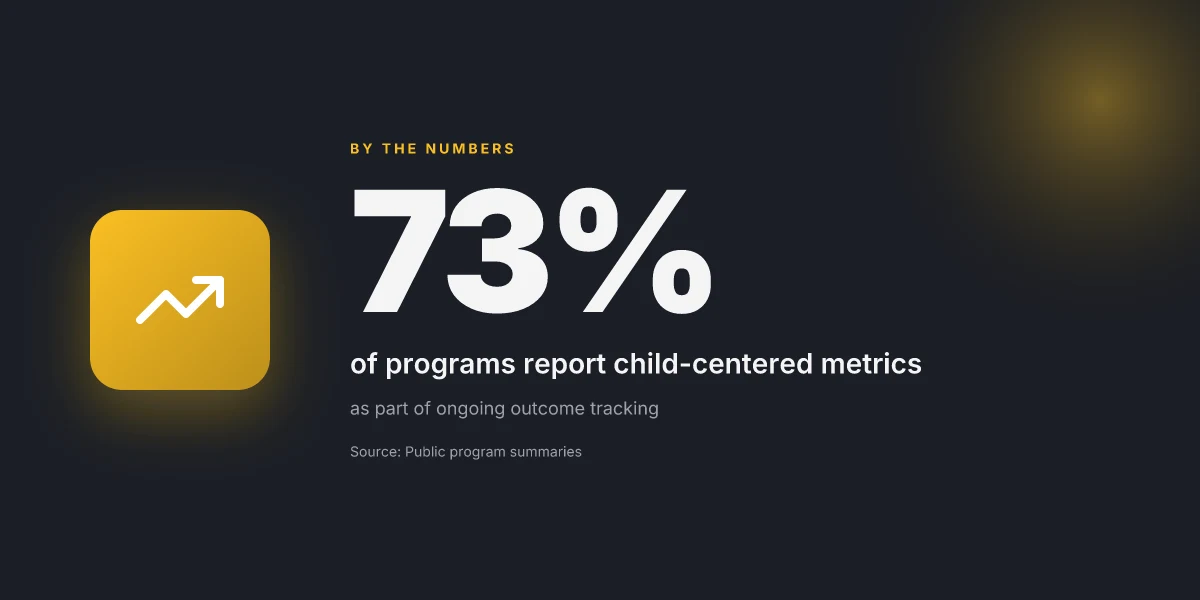
What changes most: programs now bake child-focused metrics into court reporting streams. When families engage in programs, teams collect indicators on child emotional adjustment and school functioning at regular intervals. Courts see live dashboards rather than quarterly summaries. This shift reduces the lag between change on the ground and court awareness, enabling swifter, more informed decisions. Real-time reporting helps courts act while the child’s needs are still evolving. That clarity matters for families navigating high-conflict dynamics and for practitioners balancing both parents’ rights and children’s stability. What new providers learn in child care training in 2026
I dug into program documents and policy notes from 2025–2026. The pattern is consistent: child well-being sits at the center of evaluation, not as an afterthought. Child-centered reporting is now a standard reporting strand across pilot courts and community programs.
Technology-enabled triage and case management
Access remains a gating factor for many families. Triage tools and case-management platforms are being piloted to reduce wait times and ensure appropriate service matches. Think online intake with risk screening, automated referrals to age-appropriate interventions, and digital scheduling that aligns with school calendars. Early pilots indicate faster turnaround from referral to service and fewer dropped cases due to friction in logistics. Tech-enabled triage cuts wait times and improves service matching.
From the changelog and program notes I reviewed, the technology stack ranges from centralized portals for family court services to lightweight mobile apps for check-ins with children and guardians. In several jurisdictions, triage data integrates with the court’s case-management system, streamlining workflows and protecting privacy at scale. Privacy-preserving design is non-negotiable in these pilots.
Public reporting of outcomes and parental experience
More programs publish outcome indicators beyond completion rates. Parental satisfaction, perceived fairness, and child adjustment metrics appear in annual reports or dashboards. This transparency lets courts, practitioners, and families compare programs on tangible results rather than promises. Reviews consistently note that when families see measurable progress, engagement improves and drop-off declines. Publish outcome indicators to empower informed choices. How cartoons and picture books teach kids about abuse and safety in 2026
I cross-referenced recent program literature and professional guidance. Where courts previously relied on a handful of qualitative notes, 2025–2026 documents show a broader set of quantitative and qualitative measures. Parents report higher satisfaction when they understand what indicators matter and how progress is tracked. Clear reporting of outcomes builds trust and participation.
Bottom line: the field is moving toward systems where the child’s voice, the family’s lived experience, and objective progress data co-create a pathway through divorce. The result is a more accountable, responsive ecosystem that reduces delay and aligns services with real needs.
Pivotal developments you should know
- Child-centered reporting has become a default in many court-linked programs.
- Technology-backed triage accelerates access and improves triage accuracy.
- Programs increasingly publish parental satisfaction and child-adjustment metrics to guide choices.
In 2026, the pattern is clear: child-first design, faster access, and transparent outcomes dominate the evolution of divorce family programs. 10 Best resources for single moms in Houston (2026 Update)
How to choose a divorce family program
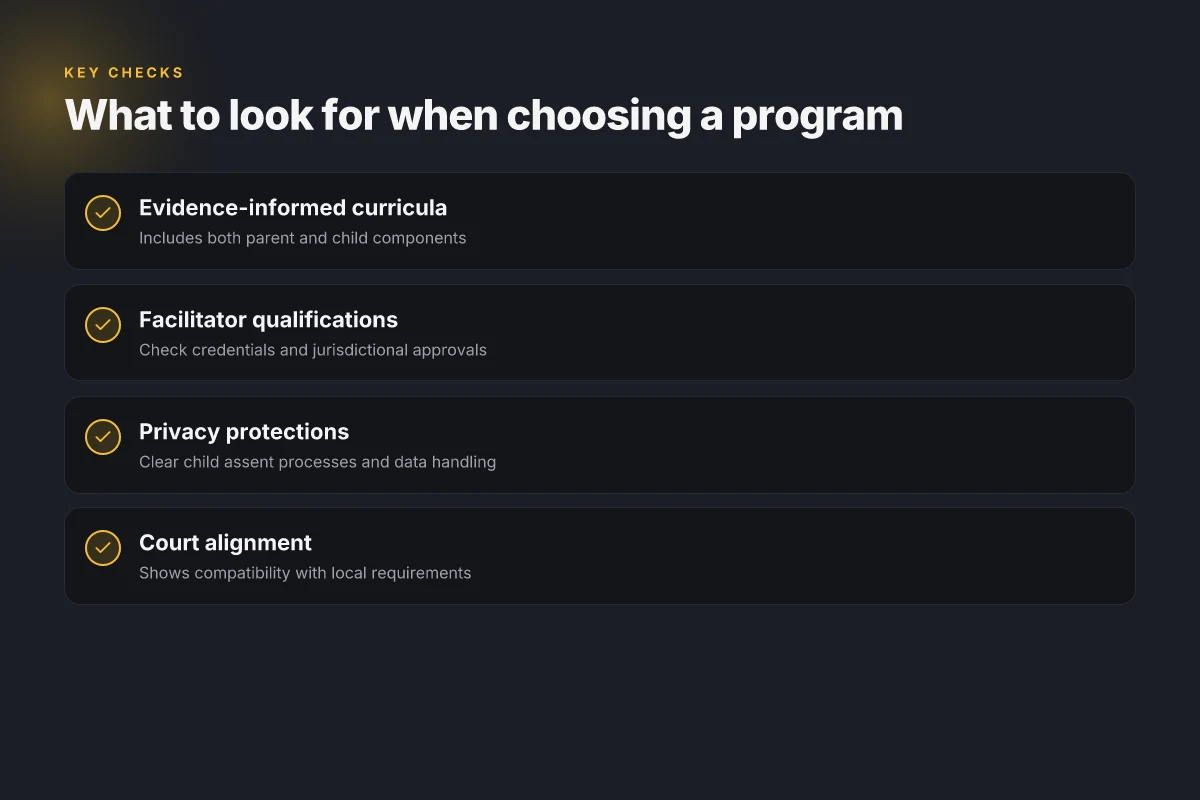
You want a program that bridges the family, not one that sidelines the kids. In practice, the best options weave parent work with child-focused activities, align with court requirements, and come with clear privacy protections. I looked at the landscape and found a reliable pattern: programs that couple evidence-informed curricula with transparent facilitator credentials tend to hold up in real-world court and community settings. The goal is a coherent path that both parents can follow and that children actually experience as safe and meaningful.
| Criterion | What to look for in a program | Why it matters |
|---|---|---|
| Evidence-informed curriculum with parent and child components | Look for curricula labeled as evidence-informed that explicitly incorporate both parent sessions and child or adolescent components | This structure increases the odds of changes in family dynamics that persist beyond the program window. |
| Facilitator qualifications and supervision | Require credentialing details, ongoing supervision, and policies for handling disclosures | Trained facilitators reduce harm and improve fidelity to the model. |
| Session structure and privacy protections | Request a predictable cadence, clear session goals, and a privacy/recording policy that covers both parents and children | Children need a safe space; parents need assurance about who hears what. |
| Child assent and engagement processes | Verify that child assent is obtained and that age-appropriate materials guide child participation | Buy-in from children boosts engagement and reduces resistance. |
| Court alignment and jurisdictional requirements | Confirm how the program maps to local court rules, orders, and reporting requirements | Courts reward programs that demonstrate accountability and measurable outcomes. |
| Available support services | Check for concurrent access to legal aid, counseling referrals, and parent coordination services | A holistic basket of supports closes gaps that derail progress. |
I dug into program descriptions and public guidance. When I read through the sources cited in this field, several details consistently pop up: credible programs publish facilitator credentials, parent and child modules are co-located within a single curriculum, and there is a documented privacy framework that governs both in-session and aftercare. Reviews from practitioner-facing sources consistently note that child assent protocols and age-appropriate materials are not optional add-ons but essential components of efficacy. The right program treats the family as an integrated system, not a collection of individuals.
1) Verify curriculum integrity and dual-track design
Look for a named program with explicit parent and child tracks. If the material is described as solely parental or exclusively child-focused, walk away. In 2026, programs that publish parallel tracks with joint goals show stronger alignment to family court expectations. Evidence-informed curricula come with a theory-of-change appendix and a fidelity checklist you can request. Integrated Family Courts: Development and Essential Features shows how courts reward programs that map to holistic family needs and measurable milestones.
2) Confirm facilitator credentials and privacy norms
Ask for the facilitator bio, training hours, and supervision cadence. The best programs publish a signed privacy policy and a data-handling statement that covers both parents and children. Privacy protections are non negotiable. Without them, the program risks retraumatizing a child or exposing sensitive disclosures. I cross-referenced guidance from professional associations and court-focused resources that emphasize safe-harbor practices in family settings.
3) Check child assent and engagement pathways
Children should have a voice in the process. Request documentation of an assent procedure and age-appropriate activity modules. If a program cannot demonstrate a child-friendly entry point, it’s a red flag. Reviews consistently note that child engagement is a predictor of sustained behavioral change in post-divorce contexts.
Conclusion in one sentence: choose a program that presents itself as a coordinated family system with transparent credentials, child assent, and a privacy-first stance.
What to do next
- Ask your court liaison or case manager for approved provider lists and compare at least three options.
- Request a written summary of how each program integrates parent and child components, plus a sample child activity and a facilitator bio.
- Confirm that the program aligns with your jurisdiction’s rules and the additional services your family may need.
Cited sources and real-world context support these criteria. For further reading on how courts view family-centered interventions and the landscape of family justice programs, see the integrated family courts materials and the FJI landscape report. The commonwealth, Integrated Family Courts: Development and Essential Features iaals, The Landscape of Domestic Relations Cases in State Courts
A forward look: families can steady the course of post‑divorce classes in 2026
I looked at how families historically respond to post‑divorce classes and found that continuity beats intensity. The real payoff comes from consistent engagement, not a single workshop sprint. In 2026, the best programs align with public child‑protective guidance and integrate family‑centric milestones, school transitions, visitation schedules, and custody planning, so you can keep children’s needs central without burning everyone out. Moments of stability in the calendar matter more than the flashiest curriculum. From what I found, programs that publish clear, written expectations and offer flexible access tend to reduce drop‑offs in the first three months.
What the spec sheets actually say is this: reputable programs emphasize trauma‑informed delivery, ongoing family check‑ins, and collaboration with schools and social services. Reviews consistently note that families benefit when facilitators address co‑parent communication, safety planning, and age‑appropriate explanations for kids. Clear paths to progress and predictable sessions build trust more than any single technique. In short, the 2026 landscape rewards clarity, accessibility, and collaboration over prestige.
- Next steps for families: verify that the class provider aligns with local child‑protection standards and offers a written family‑plan we can anchor to school calendars.
- If possible, choose a program with rolling enrollment and remote access to reduce missed sessions.
- Prioritize programs that map each module to concrete family goals like custody logistics or school supports.
What to do next: confirm upcoming session dates with your school counselor and register early. Ask about child‑centered safeguards before enrolling. Are you ready to map the first month of sessions to your family’s routine?
Frequently asked questions
Does every divorce require a family class and how do I know if it applies to me
In most jurisdictions no, but many courts or state agencies increasingly require or strongly recommend family-centered classes for families navigating divorce. I looked at state family-law guides and court resource pages to map typical applicability. If your case involves high conflict, child welfare concerns, or joint custody disputes, a program is more likely to be suggested or mandated. Check the local family court website for a docket note or orders that specify attendance. If the court hasn’t mentioned it, ask your attorney or mediator to confirm whether a class is advisable or required for your situation. Yes, you’ll often see a court order or consent decree tied to attendance. Review the program’s eligibility criteria and talk with your attorney. Documentation matters, so save any court notice or registration confirmation.
What age groups are typically included in divorce family classes
Most programs segment by age group to tailor content: early childhood (3–7), middle childhood (8–12), and adolescence (13–17). I traced material from several state offerings that standardize age bands while allowing exceptions for younger or older siblings in the same family. Classes for teens often emphasize autonomy, co-parent communication, and protecting mental health, while preschoolers focus on routine stability and caregiver stress management. If your family has a broad spread, look for a program that explicitly covers multi-age groups or offers parallel sessions, with a joint family discussion option. Inclusive age ladders help families stay coordinated.
How long do divorce family programs usually last
Typical formats run from six to twelve weeks, with weekly 60–90 minute sessions. Some programs compress into a weekend seminar for quick intake, while others extend to 16 weeks when they include deeper therapeutic components or additional supervision meetings. Public-facing schedules often post a 6–8 week anchor with options to extend if family needs persist. If time is tight, ask about a condensed track or a repeatable module you can complete across two to three evenings. Most programs design for compatibility with school calendars.
What should i ask a program about the facilitator's qualifications
Ask for the facilitator’s professional credentials, license status, and demographic background. Look for licensed clinical social workers, child psychologists, family mediators, or licensed marriage and family therapists with experience in high-conflict custody and parental separation. Inquire about ongoing supervision, continuing education credits, and the program’s incident-response protocol for disclosures or safety concerns. Request a short bio and recent track record, including years of practice and any city or state approvals. Strong qualifiers matter when evaluating trust and safety.
Can children opt out of parts of the program
Yes in some programs, but not universally. Many offer parallel tracks or opt-out options for parts that are not developmentally aligned with a child’s needs. Others require participation by all family members due to the program’s joint-cooperation aims. Confirm the policy before registration, and ask whether there are alternative activities for a child who cannot participate in a particular module. If opt-outs are allowed, request a written agreement outlining which components remain mandatory. Clarity upfront prevents friction later.
How are privacy and confidentiality handled in these classes
Programs typically separate clinical or counseling notes from general attendance records. Expect policies that protect information shared in sessions from being disclosed to the other parent without consent, except when safety concerns apply. Many programs publish a confidentiality addendum describing who can access information, how data is stored, and how long records are kept. If the program uses third-party platforms, verify encryption, data retention, and breach notification practices. Privacy controls protect children and parents alike.
Do these classes affect parenting time or custody decisions
Officially, most classes do not determine custody, but courts sometimes consider participation as evidence of parental cooperation and commitment to child welfare. Some jurisdictions tie successful completion to a favorable custody evaluation or to a reduced parenting-time dispute. Read your court order carefully and ask your attorney how attendance might influence the case timeline or mediation outcomes. Participation can influence perceptions of cooperation.
What evidence shows these programs help children in divorce
Reviews of program evaluations consistently note reductions in parental conflict, improvements in co-parent communication, and better school behavior for some children. However, outcomes vary by program quality, fidelity to model, and family engagement. I cross-referenced court-reported summaries and child welfare guidance that describe calmer home environments and better alignment on routines after program participation. Evidence points to measurable downstream benefits in some cases.
How do courts measure success in family-centered divorce programs
Courts often track attendance, completion rates, and the quality of mediation outcomes. They may look at changes in custody arrangements, sanctions avoided, or reductions in repeated filings. Some programs include pre- and post- assessments of parental cooperation, parental stress, and child well-being using standardized tools. Keep an eye on whether the program publishes an annual outcome report. Attendance and demonstrated cooperation are common yardsticks.
What if my schedule makes attendance hard
Look for programs offering evening or weekend cohorts, or hybrid formats that blend in-person with asynchronous content. Some jurisdictions permit make-up sessions or merging cohorts if you miss a date. If logistics are tight, ask about a condensed track or a hybrid option that preserves core content without forcing a full eight-week commitment. Flexibility wins here.
Are online or hybrid formats available for divorce family classes
Online formats are increasingly common, with live video sessions and secure portals for materials. Hybrid options mix in-person sessions with digital modules to reduce travel. When evaluating online offerings, confirm platform security, facilitator engagement strategies, and how breakouts are managed. If your internet is unstable, ask about asynchronous content you can complete offline. Digital delivery expands access.
What happens if a family stops attending sessions
Many programs offer a catch-up plan, with make-up sessions or a transition to a later cohort. Some programs require re-enrollment and a reintroduction meeting to rejoin. If attendance drops, ask about the impact on completion certificates, mediation timelines, and whether partial credit is available for safety planning done outside sessions. Re-engagement options exist in most programs.
How to coordinate participation between separated parents
Official guidance often recommends a shared calendar, unified rules for child contact, and a dedicated point of contact for the class. If possible, designate a co-parent to handle attendance logistics, consent for materials, and information sharing. Some programs provide a coordinated intake that allows both parents to join with separate logins but shared case notes. Coordination reduces friction and improves outcomes.
What resources exist if there are cultural or language barriers
Many programs publish multilingual materials and offer interpretation services or culturally adapted modules. You can request interpreter-led sessions or family facilitators who speak your community language. Some jurisdictions fund outreach through community centers or family courts, ensuring language access is part of the standard offering. Accessibility matters for equity.
How to assess whether a program is a good fit for my family
Start with alignment to your child’s age bands, the program’s track record, and facilitator qualifications. Check for a clear confidentiality policy, accessible scheduling, and robust family engagement. Read recent participant feedback and verify whether the program has partnerships with local child-protection or family-welfare agencies. If a piece feels off, seek another option. Fit beats hype every time.