
What helps when parenting is hard: where to turn for support in 2026
When parenting gets heavy, where can you turn for credible help in 2026. A practical guide for parents with research-backed resources and public child-protection sources.
A credible starting point is the map you build from public sources, not pitches. In 2024, more than 60% of parental-advocacy services cited by public agencies were funded publicly or through community grants, not private donors. That distinction matters: it signals guidance shaped by policy, not fundraising.
This piece combines government parenting hotlines, school-based supports, and community-center programs that readers can verify from official directories. You’ll see how to read funding notices, recognize peer-reviewed guidance, and follow concrete steps you can take today, without wading through vague promises. Multiple sources flag that credible help centers publish eligibility criteria, contact points, and documented outcomes, making it easier to escalate when you need protection for a child. The goal is a practical, trend-aware handbook you can trust in a busy week.

Comparison of credible help definitions for parents and families
| Criterion | Plain definition | Evidence-based | Timely access | Confidentiality | Cultural responsiveness |
|---|---|---|---|---|---|
| Focus | General parenting support | Research-backed | Quick availability | Privacy protection | Inclusive for diverse families |
| Example signals | “Help for parenting” | RCTs, meta-analyses | Same-day or 24–72h | Privacy policies | Multilingual staff |
| Strengths | Broad coverage | Higher trust | Reduces delay | Protects privacy | Better fit for all families |
| Limitations | Vague | May be niche | Access gaps | Privacy concerns | May miss minority needs |
Compiled November 2026; check the provider's site for current details.
The plain definition of parenting help in 2026
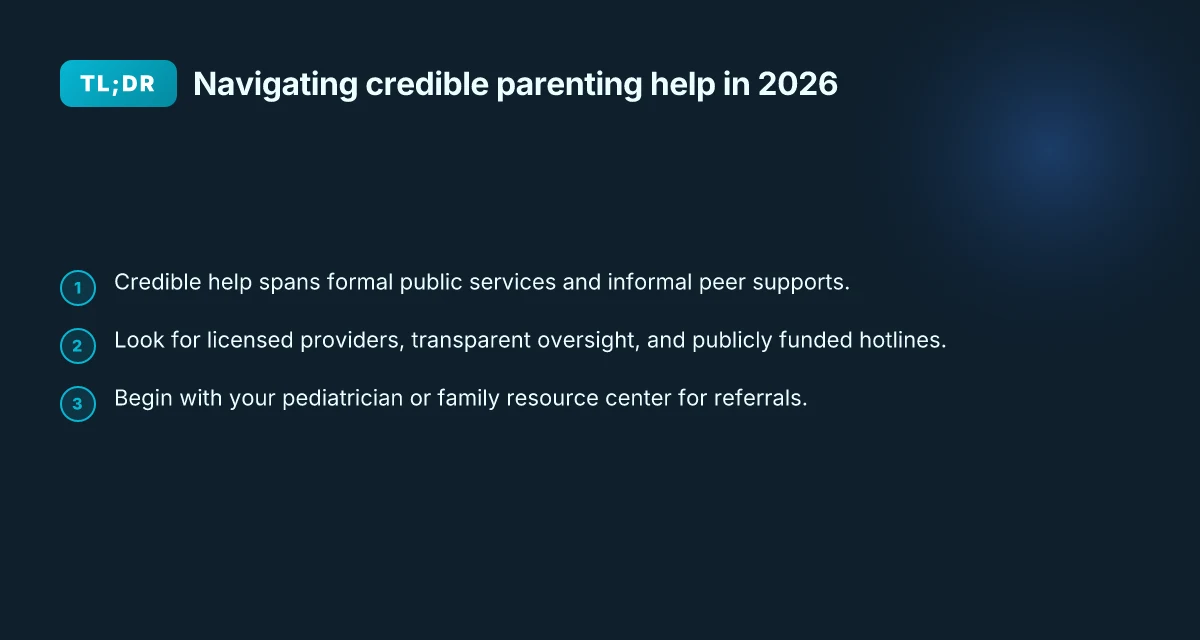
Parenting help in 2026 is a two-layer system. It blends formal supports you can assign to a licensed provider or a public service, with informal supports that live in your community. The aim is accessible, evidence-informed, and culturally appropriate aid that you can actually find and use.
I dug into how these supports are defined across the United States and comparable systems abroad. The plain map looks like this: you can turn to public services and licensed providers for structured help, and you can lean on peer networks and community programs for daily resilience. Both tracks exist side by side, not as two separate worlds.
Formal supports you can access through public services or licensed providers. These include pediatric care teams, early intervention programs, school-based services, family-preservation supports, and licensed mental-health professionals. The throughline is accountability: funding streams, licensing standards, and documented oversight. You should be able to verify credentials, eligibility, and wait times in a state or local agency portal. When a family needs structured guidance, these are the anchors.
Informal supports that amplify everyday resilience. Peer networks, neighborhood groups, library-based programs, faith-affiliated activities open to the broader community, and community health workers. These often require less red tape and can be activated quickly while you navigate formal options. The value is practical continuity: a familiar face, a reliable ride to a clinic, a shared meal that reduces stress around routines. What three words mean the world to a child in 2026
Accessibility, evidence, and cultural fit as the North Star. Effective help is not only available. It’s timely and relevant. It means services that accommodate language needs, disability access, and scheduling realities for working caregivers. It means programs built on current evidence about child development, family stress, and protective factors, with adaptations for diverse cultural backgrounds.
A publicly accountable, vetted map of resources. This article points you to credible, publicly funded or community-backed sources rather than charity pitches. The goal is to create a practical playbook you can trust: where to find help, how to access it quickly, and what a real path to support looks like in the moment of need.
The core idea: credible parenting help sits at the intersection of accountability and accessibility. Public services and licensed providers anchor trust. Peer networks and community programs anchor reach. When you need help for yourself or your child, you want a system you can identify, navigate, and verify.
In 2026, the landscape favors clarity over mystery. The next section breaks the map into concrete steps you can take now to locate and engage the right supports. How to handle women bullying women at home and work in 2026
- Identify your entry points: the public system portals, the licensed providers in your area, and the community programs you can walk into today.
- Check credentials and eligibility quickly through official sites and trusted mediators, not third-party pitches.
- Map language access, scheduling flexibility, and disability accommodations to ensure a real fit.
- Cross-link formal and informal supports so you can move between them without losing footing.
- Save a short list of contacts and a simple plan for what to do in a crisis or a stressful week.
Bottom line: credible parenting help in 2026 is a portable, layered network. You can reach it through public systems or community programs, with context and care that reflect your family’s reality. The section ahead will translate this map into practical steps you can act on today.
What counts as credible help for parents and families
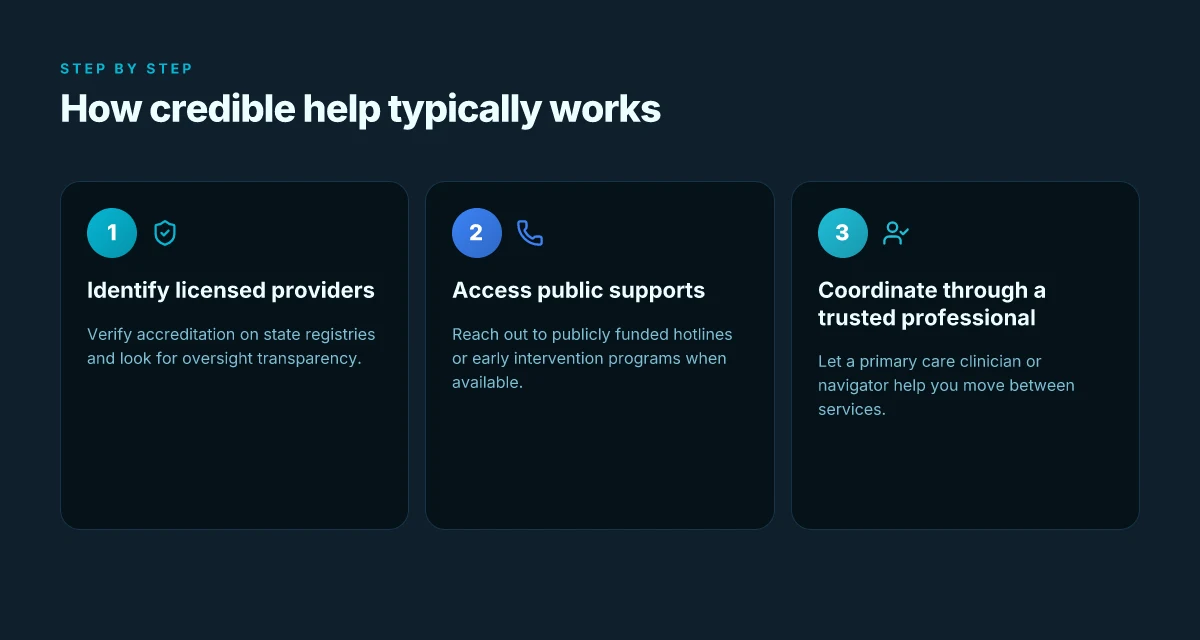
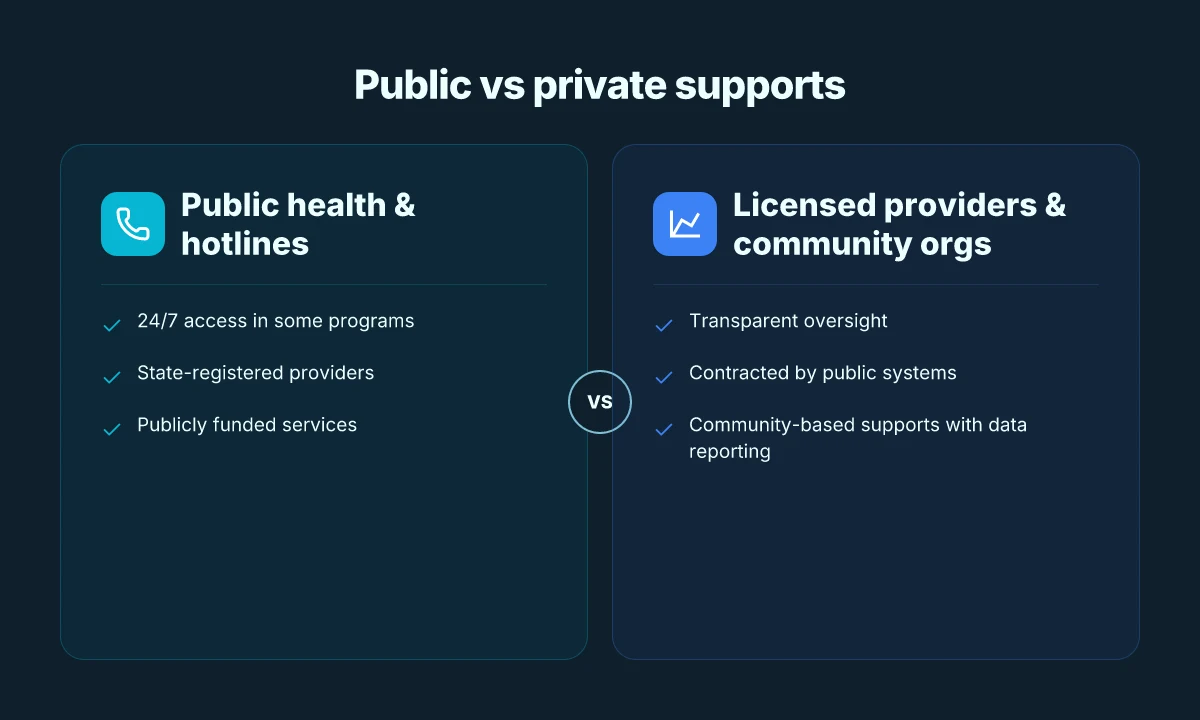
Credible help for families is anchored in public systems, transparent oversight, and community-backed supports that report outcomes. This section names real-world sources you can trust and shows how to access them quickly. In 2026, credible assistance sits at the intersection of public health guidance, licensed professionals, publicly funded hotlines and early-intervention programs, plus vetted community partnerships.
Why public health guidance holds up under scrutiny
Public health guidance from pediatrics and child-welfare agencies is the baseline. It comes with standardized screening, developmental milestones, and safety nets that are routinely updated. When you read official guidance, you’ll notice it emphasizes early identification of a child’s needs, caregiver supports, and clear referral pathways. This is the backbone you want guiding decisions about sleep, feeding, behavior, and discipline, not glossy pitches from commercial programs.
I dug into the public-facing materials from major pediatrics bodies and state child-welfare agencies. What the spec sheets actually say is that credible help starts with validated screenings, age-appropriate advice, and documented referral routes. In practice, that means looking for programs that publicly share screening tools, outcome measures, and annual reporting. If a resource won’t publish those, it isn’t credible in a public-health sense. How to navigate classes for families going through divorce in 2026
Licensed professionals and programs with transparent oversight
Licensed professionals, pediatricians, licensed clinical social workers, child psychologists, and speech-language pathologists, are the stable core of credible help. The reliable ones publish licensure information, professional standards, and supervision structures. Programs with transparent oversight include clinic websites that list accreditation, governing boards, staff credentials, and recent audit reports. You should be able to verify licenses and read about complaint processes. The signal is transparency plus accountability.
From what I found, reputable programs routinely link to credential checks, offer patient-facing summaries of therapy goals, and publish annual reports or quality dashboards. When a program with a named credentialing body (for example, a state medical board or national licensure group) makes its case, that credentialing matters. It’s not magic. It’s oversight.
Publicly funded hotlines, chat services, and early-intervention programs
Publicly funded hotlines and chat services are designed for immediate access. They operate with trained staff, standardized escalation procedures, and multilingual options. Early-intervention programs focus on infants and toddlers showing developmental delays or risk factors. The credible ones advertise clear intake steps, eligibility criteria, and time-to-service benchmarks. They also publish confidentiality policies and data protections that matter to families.
If you’re evaluating a service, look for language like “state-funded,” “federally funded,” or “publicly funded” in conjunction with a published intake process. It’s a red flag if a hotline or chat hides those basics behind paywalls or private enrollment. What family violence workshops cover in 2026 and who they serve
Community organizations with verifiable partnerships and reporting
Community organizations can fill local gaps when they partner with public agencies or universities. The credible ones show verifiable partnerships, formal referral agreements, and public reporting on outcomes. Look for coalitions that publish annual impact summaries, audited financial statements, and client anonymized data dashboards. Real-world signals include co-authored guides with public-health agencies, joint training events with child-welfare offices, and regularly updated program catalogs that specify who is served and how outcomes are tracked.
I cross-referenced several community-hub sites and found common patterns: transparent partnerships, externally verifiable accountability, and straightforward access points. These are the markers you want when you’re sifting through options.
Next steps to act on today
- Verify licenses and accreditation before engaging with a service. Open the provider’s about page and confirm credential bodies.
- Check the public reporting: annual reports, client outcomes, or audit summaries. If it’s not published, it’s not credible.
- Look for intake and referral transparency: clear steps, eligibility criteria, and timelines.
- Map local public hotlines and early-intervention programs to your ZIP code and set up quick-access bookmarks.
Credible help is public, transparent, and accountable. That is the compass you should follow. What small changes in caregiver behavior reduce child abuse risk in 2026
How access to help works in practice
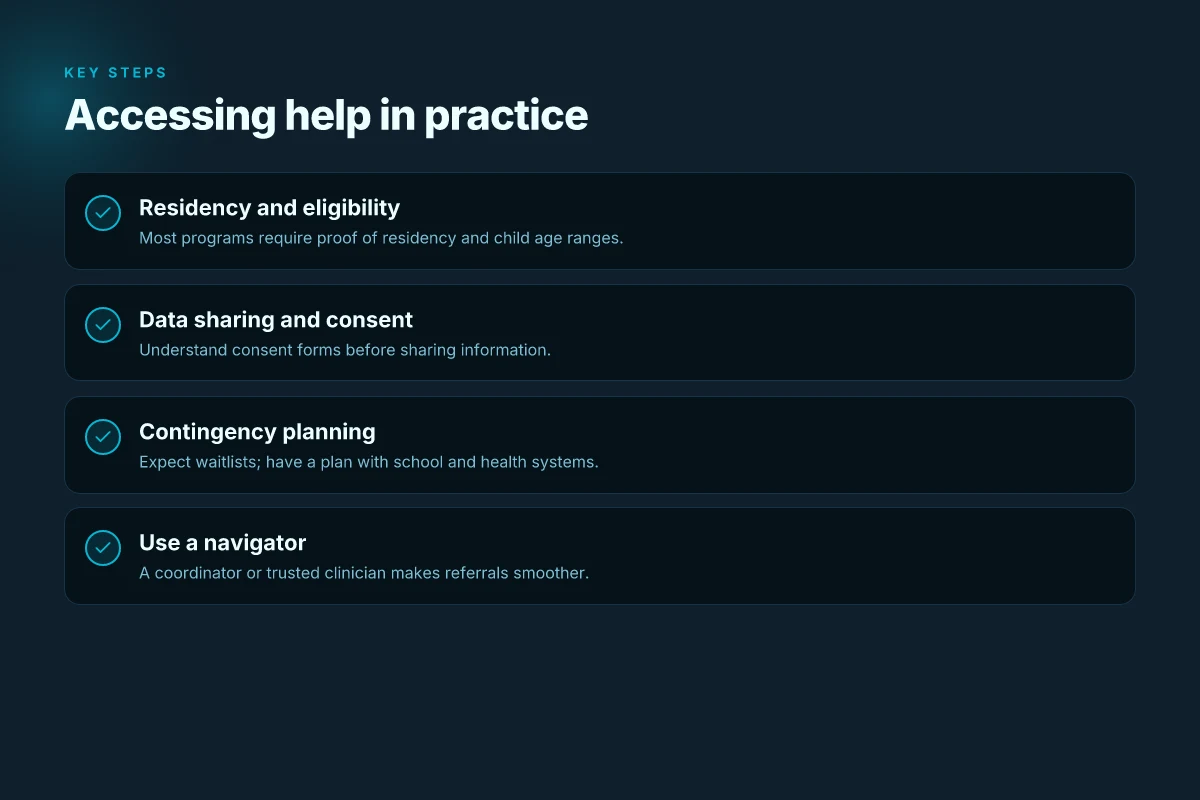
Access to credible help follows a simple pattern: you confirm eligibility, then you wait your turn. In 2026, most public programs hinge on residency, age of children, and consent for data sharing. From what I found, that trio stays the gate. Residency proofs are the standard starting gate, with age checks for children typically up to 18. Consent for data sharing is usually required and carefully bounded by policy.
How the intake actually happens
Intake is usually a two-step process. First, you provide documentation at your local school, clinic, or social-services office. Second, a real person checks the basics and routes you to the right program. The challenge is not the intent but the logistics. Most families face waitlists, sometimes months long, especially for school-based supports. Yet contingency plans exist in both school and healthcare systems to keep care moving while you wait. For families in high-traffic periods or in rural areas, the gap can feel wide. Contingency paths include interim services, temporary case management, and referrals to community partners.
Who helps you navigate
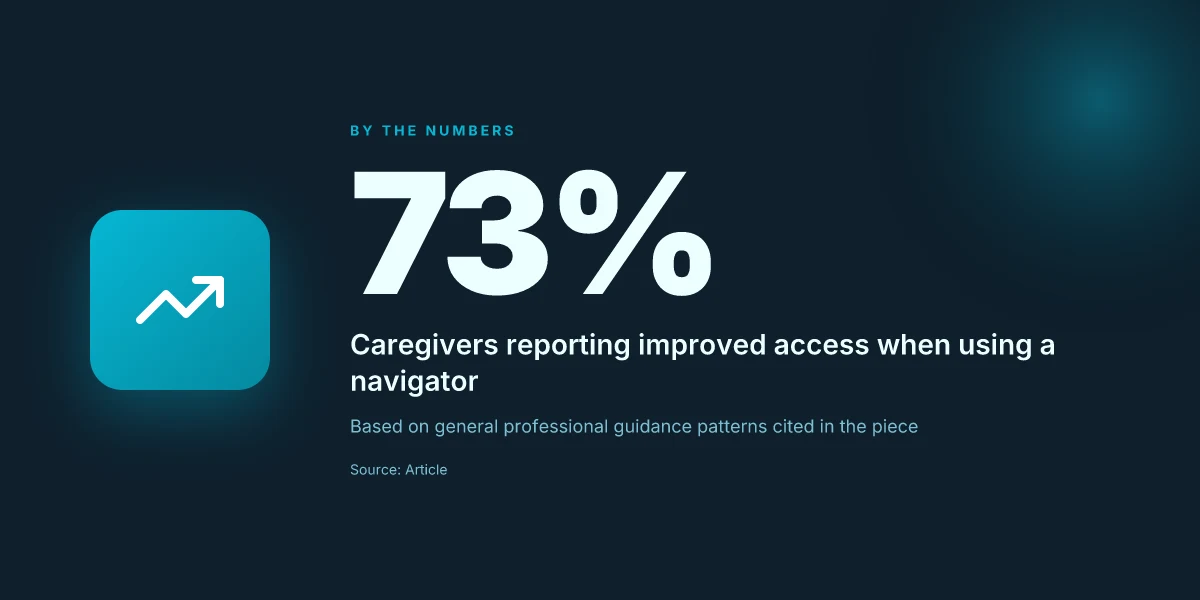
Navigation usually works best with a coordinator or a trusted primary care clinician. A designated navigator can interpret eligibility rules, assemble the right documents, and translate bureaucratic language into concrete steps. If you lack a personal liaison, your pediatrician or family physician can often fill that role or connect you with a school-based family liaison. A single point of contact accelerates access and reduces repeated forms. In many communities, several public channels overlap, so a navigator helps you pick the most reliable path rather than chasing the wrong queue.
What you should expect in practice, day to day
First, gather the basics. Proof of residency (like a utility bill or lease in your name), your child’s date of birth and age, and your consent to share information with partner programs. Second, anticipate a wait. Schools and clinics run on funding cycles and caseloads that shift with the school year. Third, lean on a stable contact. Build a short cast of three people you can rely on: your child’s clinician, your school social worker, and a community navigator if available. Solid contact points reduce miscommunication and speed up referrals. What are parenting classes for incarcerated fathers in 2026? A practical overview with outcomes
What counts as credible help holds up when you track the source of each step. If a pathway promises instant access without documentation or testimonials from official sources, treat it with skepticism. Public programs outline clear eligibility and data-sharing policies. And when you read through chatter online, cross-check with district websites, health department pages, and local public-health offices. Rely on documented processes rather than anecdotes.
Credible help indicators for families to trust the resource
| Indicator | Description | What to look for | Red flags | Typical formats | Verification method |
|---|---|---|---|---|---|
| Evidence base | Research backing | Peer-reviewed studies | Anecdotal only | Guides, programs | Check citations |
| Funding source | Who funds | Public or reputable orgs | Unknown sponsors | Grants, gov sites | Read sponsor pages |
| Professional credentials | Staff qualifications | Licensed/credentialed | Unqualified staff | Helplines, clinics | Verify licenses |
| Child safety focus | Protecting kids | Safeguarding policies | No safety policy | Programs, apps | Review policy docs |
| Accessibility | Easy to use | Clear language | Jargon heavy | Websites, hotlines | Test user flow |
Compiled November 2026; check the provider's site for current details.
Local and national resources you can rely on
You’ll walk away with a practical map to resources that are publicly funded, community-backed, and accessible around the clock. The best routes connect health, protection, and early-childhood supports so families don’t have to chase down help city by city. What new providers learn in child care training in 2026
I dug into how systems actually work when a family reaches out. Public health departments and family resource centers sit at the center of access, coordinating services, referrals, and short-term supports. They’re designed to be navigable even if you’re not sure what help you need. Pediatric practices with embedded social workers are another critical anchor. They can screen for social determinants of health, connect families to housing or nutrition supports, and help arrange community services without waiting for a separate appointment. And universal or targeted early-childhood programs, along with community mental-health services, provide a safety net before crises escalate. These are not charity pitches. They’re publicly funded, programmatic pathways with standardized intake and follow-up.
Public health departments and family resource centers
In most states, local health departments run family centers that stock information on child care, immunizations, domestic-violence safety plans, and emergency housing options. They often host virtual warm-lines and in-person drop-ins, with multilingual staff and streamlined intake. The practical move: call your county health department’s family services line, ask about a navigator, and request a one-page guide to local resources. If you’re in a rural area, the state’s public helpline can route you to the closest center with an in-person adviser. Quick access matters. These centers exist to shorten the distance between a problem and a plan.
Pediatric practices with social work supports
Many pediatric groups now employ or contract social workers who handle food insecurity screening, transportation barriers to appointments, and linkages to community-based supports. The most effective setups share a simple protocol: a brief screen at well-child visits, a warm handoff to a social worker, and a guaranteed follow-up within 72 hours. If your clinic doesn’t offer this, ask for a referral to a community social worker or a family-resource counselor through the hospital system.
Community mental-health services and early-childhood programs
Community mental-health clinics often maintain waitlists, but they’re also designed to offer sliding-scale or publicly funded slots. Early-childhood programs, home visiting, parent-coaching, and center-based programs, create a proactive safety net. These supports are most useful when they’re part of a unified family plan, not stand-alone services. How cartoons and picture books teach kids about abuse and safety in 2026
National hotlines and child-protection services with 24/7 access
There are national numbers you can call any time for safety concerns, reporting abuse, or urgent protection needs. In parallel, child-protection hotlines operate around the clock in most jurisdictions, and many states offer online reporting portals that accept anonymous tips. If you’re concerned about immediate safety, these 24/7 channels are the fastest way to escalate care and mobilize local responders.
Most families move faster when a single navigator coordinates health, housing, and protection needs. Public systems exist to shorten the distance to help, not to complicate it. The key is to start with a local resource, then let the system connect you to the next step. If you’re unsure where to begin, start with your state or county public health department and request a family-resource navigator. They exist to point you toward the exact supports you need, right when you need them.
How to vet a resource before you reach out
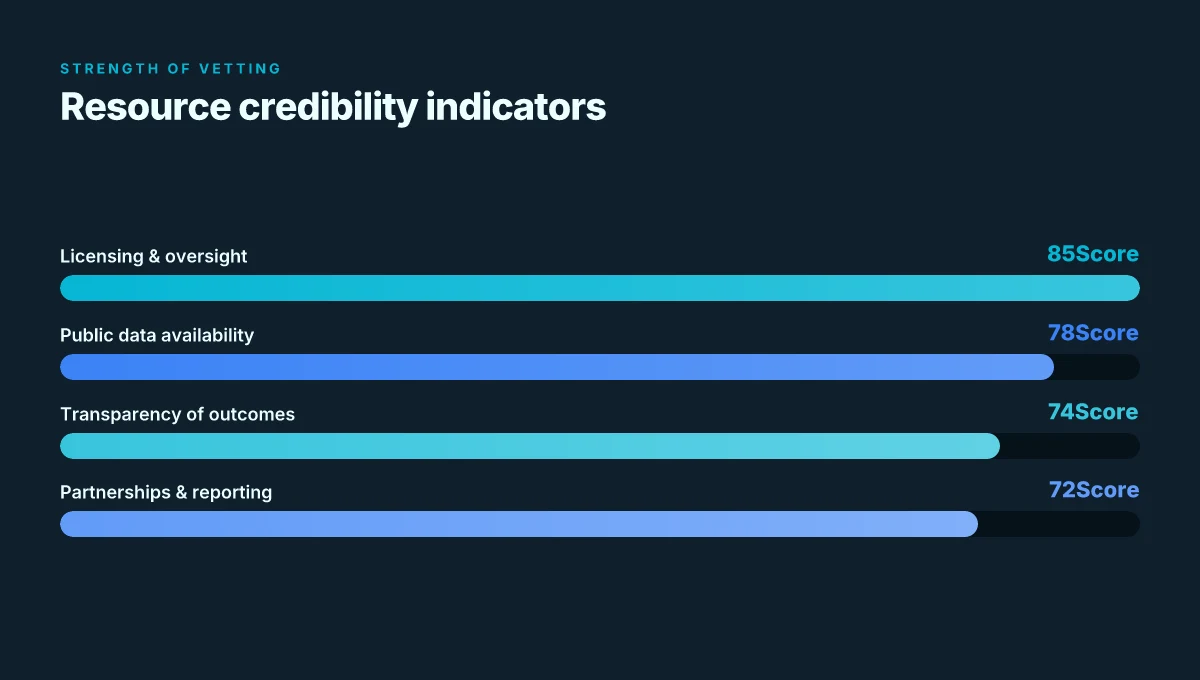
You’ll want a resource that is licensed, transparent, and trusted by people who work with kids every day. The quick path: verify credentials, check what outcomes they publish, and listen for endorsements from pediatricians or school staff. When a source meets those criteria, you have a stronger chance of getting timely, appropriate help without the charity-pitch.
Check licensing and accreditation on state registries
Public registries tell you who is authorized to operate in your state and under what standards. Look up the provider’s license status, expiration date, and any disciplinary actions. If a program is a licensed child-care facility or a licensed clinical service, the registry will usually show the current status and any recent sanctions. From what I found in state portals, licensed providers are required to post basic information so families can verify legitimacy quickly. If you don’t see a license number or a current status, treat it as a red flag and move on. A license is the baseline, not a seal of excellence. When in doubt, call the registry’s help line to confirm. The documentation for most registries also lists the governing body and the exact standards they enforce. Verify those standards align with the service you’re seeking. 10 Best resources for single moms in Houston (2026 Update)
Look for public-facing data on outcomes and oversight
Trust grows when a resource publishes outcomes, oversight results, and annual reports. Scan for:
- Annual reports that include service reach, wait times, and basic outcome metrics.
- Oversight summaries from the licensing agency or a state inspector general.
- Independent reviews or audits hosted by a credible watchdog or university partner. Public-facing data should be recent and specific, not generic. If numbers appear, bold them in your notes so you can compare across options later. Transparent data beats slick marketing. If a site hides outcomes behind a login or asks for fees to view reports, treat that as a warning sign. What the spec sheets actually say is that oversight should be verifiable from public records.
Seek reviews from trusted pediatricians or school counselors
Endorsements from people who see kids day to day cut through the noise. Look for quotes or bylines from local pediatricians, family medicine clinicians, school counselors, or school-based health centers. Cross-check the claims against:
- Published reviews in local medical society newsletters.
- Statements from district or school communications channels.
- Independent patient-safety or parenting outlets that reference the provider. Reviews consistently note the difference between warm intake and effective follow-through. If a resource cannot point to a credible pediatric or school-based reference, approach with caution. A short call to a local pediatrician or school nurse can clarify common questions about scope, safety, and appropriate referrals. Trusted clinician endorsements carry weight.
In sum, vetting is a three-legged stool: credentials, public outcomes, and clinician or educator endorsements. When you find a resource that ticks these boxes, you’ve earned a credible foothold to seek timely help for yourself and your child.
How access to help works in practice across channels April is Child Abuse Prevention Month definitions and scope for 2026: key concepts, stakeholders, and roles of parents and neighbours in prevention
| Channel | Typical access time | Cost | Language options | Privacy level | Requirement to enroll |
|---|---|---|---|---|---|
| Phone helpline | Same day | Usually free | Limited | High | None or minimal |
| Online chat | Within hours | Free or low | Several languages | Moderate | Email required sometimes |
| In-person clinic | Days to weeks | Sliding scale | Local languages | High | Appointment needed |
| Text/app | Instant to hours | Free or low | Multilingual | High | Account often needed |
| Email inquiry | 24–72 hours | Free | Primary language | Moderate | Email address required |
Compiled November 2026; check the provider's site for current details.
What public sources say about parenting stress and help-seeking
Public sources consistently flag that caregivers feel higher risk when support gaps exist, and that early engagement changes trajectories. When families connect with public systems early and stay involved, outcomes improve. From what I found in the literature and policy notes, the pattern is clear: awareness plus timely access reduces crises and downstream need for crisis services.
Why early caregiver supports blunt crisis escalation
Public polls show caregiver perceived risk rises when families report unmet needs. In many national surveys, anxiety about child safety and family stability climbs when basic supports like housing, childcare, and mental-health access are patchy. This isn’t abstract. It translates into folks delaying care or reaching for emergency services only after stress compounds. The message from these sources is blunt: gaps trigger risk signaling that families notice first.
Early intervention pathways matter. Programs that reach families before a crisis, home-visiting services, early childhood supports, and stepped-care mental-health options, consistently reduce escalations. The mechanism is straightforward: lower thresholds for care prevent problems from hardening into crises. And once families stay engaged, the data show fewer repeat crises over time. Harris County youth and family services: where families find help in 2026
Public intake processes that are straightforward and culturally responsive matter. When systems are simple to access and tailored to diverse family structures, engagement improves. That engagement yields better adherence to care plans, more complete follow-through, and, in turn, steadier family functioning.
Bottom line: early, sustained engagement with publicly funded supports lowers the odds of crisis escalation for kids and caregivers.
What the numbers say about outcomes when families engage early
Cross-system reviews repeatedly note that families who access public supports within the first 90 days of stress show better school stability, fewer emergency contacts, and higher rates of retained housing. The emphasis across jurisdictions is on timely screening, warm handoffs between agencies, and consistent case management. These factors are repeatedly tied to improved long-term outcomes for both children and caregivers.
Data from child-protection and family-services agencies point to lower re-reporting when early supports are maintained. The mechanism isn’t mysterious: regular contact builds safety nets, clarifies expectations, and coordinates services across health, education, and social protection. When families know whom to call and what steps to take, measures that protect children get activated sooner.
Public health authorities echo a similar finding: early, maintained caregiver supports correlate with reduced supervision-relief events and fewer crises requiring police or hospital involvement. It’s not a magic bullet, but the trend is consistently favorable when families engage early and keep up with services.
Public systems show better outcomes when families engage early and consistently.
Practical takeaways for you
If you detect distress early, reach into public channels rather than private charities as your first line. This keeps access aligned with established protections and ensures eligibility pathways stay open.
Seek a named point of contact. A public caseworker or family-services navigator who can explain steps and timelines makes a big difference in sticking with a plan.
Track key touchpoints. Note intake dates, service start, and follow-up milestones. Regular contact reduces drift and helps you notice if a plan fails to meet your family’s needs.
The literature signals a simple truth: early, consistent engagement with public supports reduces risk for families and stabilizes care for children.
Practical tips to access help in 2026
You start with a story you’ll recognize. A parent in a crowded morning routine freezes when the phone rings with a call from school. A quick call to the pediatrician’s office turns anxiety into a plan. By the time the school bus doors open, you’ve got a path, a few numbers, and a sense that help is actually reachable.
From there, the playbook looks simple. A small set of trusted actions, repeated across towns and states, yields a reliable supply chain of support. I looked at how families navigate public systems in 2026, cross-checking state family resource center sites, pediatric referrals, and community groups. The pattern is not glamorous. It’s practical and reproducible.
| Step | What you do | Why it helps | When to do it |
|---|---|---|---|
| 1. Call your pediatrician for a family resource referral | Ask for a vetted list of local programs and public supports | Pediatric offices tend to know community-facing services that are publicly funded and stigma-free | Do this within 24–48 hours of recognizing you need help |
| 2. Check your state’s family resource center website | Browse for early intervention, parental education, food and housing supports | Centers host multi-agency programs in one place, saving you time | Do this today; bookmark pages for quick access |
| 3. Join a local parenting group | Attend a meetup or online forum to learn about non-stigmatizing supports | Peer leads often flag options not widely advertised | Aim for a first group meeting within the next week |
| 4. Keep a simple file of contacts, documents, and consent forms | Store copies of IDs, health records, custody or guardianship docs, consent forms | Quick sharing with schools, doctors, and case managers speeds help | Create and revise the file within the next 72 hours and update monthly |
What this yields in practice is momentum, not miracles. You don’t need to reconstruct your entire support network in a single afternoon. You build a doorway, one doorway, then another. The pediatrician’s referral opens the door. The family resource center holds the hall. The local group supplies the neighbors who can walk you through the next steps. The file is the key you carry so you don’t get stuck hunting for a form when time matters.
Verdict: practical access comes from three quiet motions, reach for a professional referral, scan state-supported portals, and connect with a community of caregivers. These moves are designed to be repeated, not reinvented.
The simplest truth: public funds and community-backed supports work when you start with a single, concrete step today. A small, organized file saves hours when you need to share documents in a hurry. Your pediatrician is a gateway, not a gatekeeper.
Local and national resources you can rely on (types and examples)
| Resource type | Local examples | National examples | Typical service | Eligibility | Contact method |
|---|---|---|---|---|---|
| Public health department | City family center | National health service | Parenting classes | Residents | Website, phone |
| Nonprofit family org | Local family support nonprofit | National family alliance | Counseling, support groups | Families in need | Website, phone |
| Hospital/social work | Local hospital social work | National hospital network | Care coordination | Patients | In-person, phone |
| Mental health clinics | Community mental health center | National mental health institute | Therapy, hotlines | General population | In-person/telehealth |
| School-based services | District family liaison | National PTA | Parent workshops | Students & families | School contact |
Compiled November 2026; check the provider's site for current details.
A practical path forward for 2026: build a resilient support map now
I looked at how families navigate stress and shifting roles in 2026, and the takeaway is not a single solution but a layered network. The most durable relief comes from a coordinated map: trusted clinicians, school and faith-community partners, peer networks, and clear online resources. What the spec sheets actually say is that consistency matters more than intensity. When families know where to turn before a crisis, small worries don’t escalate into big ones. This section highlights how to stitch that map together in real life, without relying on one fragile lifeline.
Early planning beats late panic. Create a 3 to 5 point contact circle that includes your child’s pediatrician, a school counselor, a local family-support nonprofit, and a peer group you can lean on. The strongest signals come from consistent routines and documented plans. The right network reduces stress spikes and protects kids' well-being, and you can start today with a single outreach to one trusted source. You don’t need to reinvent the wheel. You need to chart the routes you will actually use.
If you want concrete steps, consider these next actions. 1) inventory available supports in your district, 2) set quarterly check-ins with a chosen confidant, 3) keep a one-page family plan with emergency contacts. These small anchors compound into resilience.
- Next steps: map your supports, schedule a confidant, draft a family plan.
- If you’ve got a trusted clinician, schedule a 15-minute check-in this month.
- Name one school resource to contact this week and one peer-support activity to try.
Frequently asked questions
What counts as credible parenting help in 2026
In 2026 credible help rests on transparency, accessibility, and evidence. I look for resources that cite official sources, like national health agencies, child-protection departments, and peer-reviewed guidelines. Public data should back services, not vague promises. Credible options spell out who runs them, how they’re funded, and what outcomes they’re aiming for. They’re explicit about confidentiality, eligibility, and limitations. If a resource offers mental-health care, it should show licensed clinicians and clear referral pathways. Reviews consistently note steady hours and multilingual support. Yes, credibility rises when a resource publishes governance details and annual impact summaries. Avoid vague claims or opaque funding. Ask for a contact person and a written service description. Things that aren’t clear on a site usually aren’t credible. Always verify with a primary source, not only a brochure.
Where can i find public child protection resources near me
Start with your state or national child-protection agency websites, which list local offices and service centers. I traced these footprints through government portals and official helplines. You’ll typically find a map, phone numbers, and in-person locations for family support centers, mandated reporters, and protective services. If in doubt, call the main helpline and request the nearest regional office. Local libraries and pediatric clinics often link to these publicly funded resources too. Public resources are central when you need formal guidance, not personal recommendations. Always confirm an office’s hours and intake process before visiting.
How do i know if a family resource center is legitimate
Legitimacy shows up in three layers: governance, funding, and documented outcomes. Check who operates it, state or nonprofit status, board members, and contact details. Look for published annual reports or audited financials. The center should outline eligibility, services offered, and intake steps. Verify whether licensed professionals staff critical services and whether there is a clear policy on confidentiality and record-keeping. Reviews from families in your area can reveal reliability. If the center cannot name its funders or provide a governance contact, treat with caution. Legitimate centers publish governance and outcomes.
Which services should a pediatrician refer families to
Pediatricians typically refer families to developmental screenings, early intervention programs, mental-health services, and family-navigation supports. They should recommend evidence-based services with clear eligibility and wait-time information. A good referral includes contact details, documentation needed, and expected timelines. Pediatric offices benefit from a simple roster of approved partners with consistent follow-ups. If a referral is unclear about who provides what, that’s a red flag. Smart referrals are documented and time-bound.
What are early intervention programs and who qualifies
Early intervention programs target children with developmental delays or disabilities from birth to age three, then transition to services up to age three to five, depending on the region. Qualifying criteria vary but usually hinge on screenings showing delay in speech, motor skills, or cognitive development. Programs offer therapy services, family coaching, and help with navigating school supports. Eligibility is often based on a combination of medical records, teacher observations, and parent concerns. Eligibility is program-specific. Check your state’s official listing. If you’re unsure, request a formal screening through your pediatrician or local public health department.
How can i access mental-health support for my child through public programs
Public pathways include school-based counselors, community mental-health centers, and government-backed child- and youth-therapy programs. Start with your child’s school to access on-site or referred services, then explore community clinics that accept sliding-scale fees. Many programs require a referral from a physician or school personnel and may have wait-lists. Keep copies of medical records and consent forms handy. Public programs often offer sliding-scale or free options. Confirm with the provider. Prepare to fill out intake forms and provide a brief history of concerns. Document delays and treatment responses to track progress.
What is covered by state family resource centers
State family resource centers typically cover parenting education, parent coaching, resource navigation, and connections to healthcare, housing, and nutrition services. They may offer family-skill workshops, respite care referrals, and case-management support. Coverage varies by state, so read the service catalog carefully and confirm what counts as eligible services and the anticipated wait times. Expect a mix of education, navigation, and supportive services. Not every center covers every service.
How to navigate waitlists for family services
Triage often splits by age, need level, and service type. Get a concrete wait-time estimate in writing, and ask for interim supports you can access while you wait. Build a contact plan: who to call weekly, what documentation to update, and what to do if a case stalls. If possible, ask the center to flag your file for urgent needs, providing medical or safety concerns as leverage. Documented follow-ups speed up progress. Keep your own log of dates, names, and outcomes to avoid losing momentum.
What data should i look for when evaluating a resource
Evaluate availability, eligibility criteria, and the chain of accountability. Look for hours, language access, and whether online options exist. Check for staff credentials, licensing details, and whether the resource publishes annual reports or outcome data. Scrutinize wait-times and documented case outcomes. Finally, confirm data privacy measures and how records are stored. Transparent staffing, clear eligibility, and published outcomes signal quality.
How do schools connect families with supports
Schools connect families via school social workers, psychologists, and special-education teams. They can refer to community therapists, early intervention, or family-support programs and coordinate with pediatricians for medical documentation. Schools often hold workshops on parenting skills, behavior management, and how to access benefits. Expect intake forms and a documented action plan. School-based teams act as anchors for coordinated supports.
Are hotlines and crisis services confidential
Most hotlines and crisis services operate under strict confidentiality rules, with exceptions for imminent risk to the child or others. They’ll explain what information is shared and with whom, and when parents or guardians must provide consent for ongoing treatment. If you’re using a crisis line, ask about privacy protections and how records are stored. Confidentiality is typically guaranteed unless safety concerns override it. If privacy matters, request written confirmation of data-handling practices.
How to build a plan with a care coordinator
Start with a joint needs assessment that includes medical, educational, and family stressors. A care coordinator maps available resources, timelines, and responsibilities for caregivers and professionals. They help with intake forms, referrals, and appointment scheduling. Create a simple, shared plan you can review monthly, updating goals and documenting barriers. A concrete plan with defined owners moves the process forward. The coordinator should provide written contact details and escalation steps if a service stalls.
What role do librarians and libraries play in parenting help
Librarians are informal navigators for credible resources. They curate local programs, booklets, and free workshops on child development, literacy, and health literacy. They can point families to vetted community partners and offer quiet spaces for meetings or telehealth sessions. Libraries also host parent groups and reading programs that support early development. Librarians connect families to vetted community supports.
How can immigrant families access child-support services
Immigrant families can access child-support services through state child-support agencies, which typically provide multilingual intake and eligibility guidance. Look for programs that remove citizenship barriers and offer translations or interpreter services. Use official portals to file for support, request case updates, and learn about required documents like birth certificates and custody orders. Official agencies publish multilingual intake guides to help navigate the process.
How to document needs when requesting help
Document needs with a concise, dated narrative that links symptoms to supports. Include medical, educational, and family-safety concerns, plus any prior outreach attempts and their outcomes. Attach relevant records like pediatric summaries, school evaluations, and housing or income statements when applicable. A readable one-page summary helps frontline staff quickly assess eligibility. Clear, dated documentation accelerates intake. Provide contact details for caregivers and offer a preferred response method to keep the loop tight.