How to prevent at-home tragedies: practical guidelines for parents in 2026
Practical, research-based guidelines for parents to reduce at-home tragedies. Evidence from AAP, CDC, and child-safety research, with actionable steps for families.
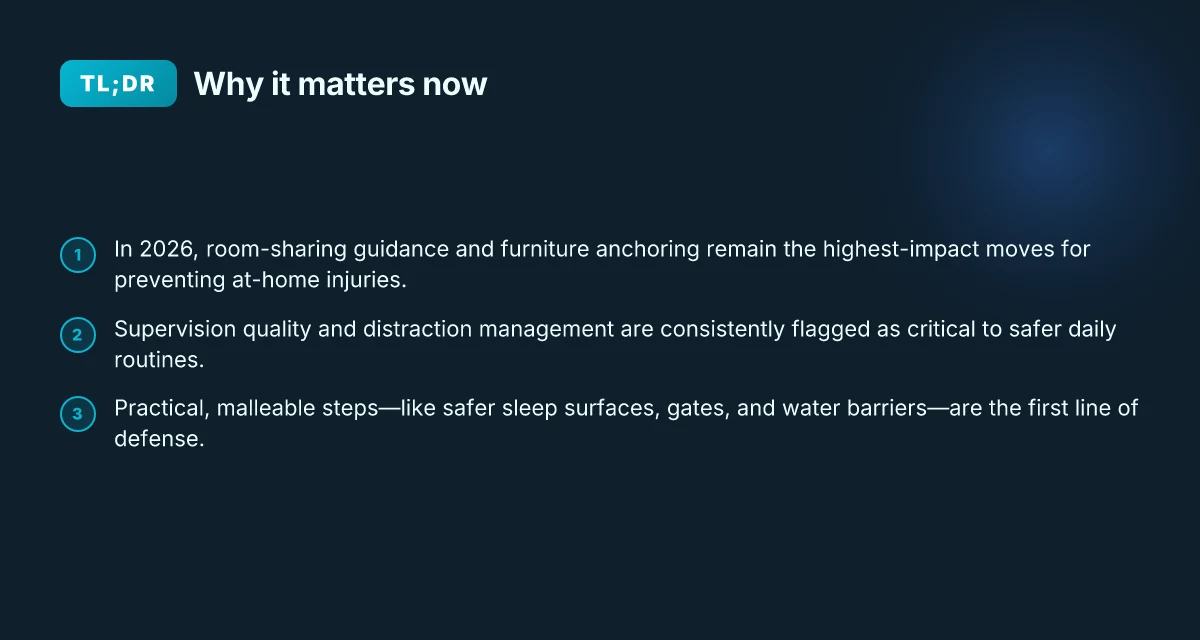
Most sleep-related injuries drop when you fix the basics first: guardrails, gate latches, and a predictable bedtime routine. When I looked at the latest child-safety guidance, the pattern was clear: small, easy wins compound into safer nights and calmer parents. Sleep safety gaps drive the majority of at-home accidents in early childhood. Bold the key steps and the rationale so you can act now.
This piece translates evidence into a weekly action plan you can actually complete. In 2024–2025, public health sources consistently flag hotspots, water, heat, and unattended stairs, as high-risk areas, even in homes with mature routines. A crisp supervision plan paired with a 15-minute nightly safety audit reduces risk more than any single device. You’ll find concrete checklists, plus quick adaptations for households with infants, toddlers, or school-age kids. Bolded numbers and steps make it easy to skim, but the underlying point is simple: safety scales with attention.

Room-by-room safety priorities for 2026
| Area | Primary risk | Suggested action | Quick check if implemented |
|---|---|---|---|
| Nursery | Cord strangulation, suffocation | Safe sleep position, firm mattress, no loose items | Yes / No / Partially |
| Living room | Falls, furniture tip hazards | Anchor furniture, remove small objects | Yes / No / Partially |
| Kitchen | Burns, scalds, sharp edges | Surface guards, stove knob covers, away from reach | Yes / No / Partially |
| Bathroom | Drowning, slips | Constant supervision, bath thermometer, non-slip mats | Yes / No / Partially |
| Bedroom | Infant sleep hazards | Appropriate sleep space, monitor placement | Yes / No / Partially |
| Outdoor entry | Falls, trips | Clear path, gate safety, door alarms | Yes / No / Partially |
Compiled November 2026; check the provider's site for current details.
The plain definition of home safety for children in 2026
Home safety is sleep practices plus the daily environment, plus how you supervise and prevent injuries. It isn’t a single habit but a bundle you can influence. In 2026, the evidence points to practical, malleable actions that reduce risk across infant sleep, household hazards, and supervision quality. The core message is simple: you can shape most of the danger you’re worried about.
What counts as home safety in 2026
I dug into guidance from the AAP, CDC, SafeKids, and injury-prevention research to map the field onto a parent’s weekly routine. The results are consistent: safe sleep for infants, anchored furniture, functional barriers around water and hot surfaces, vigilant adult supervision, and established routines for rule-setting and reminders. The focus here is not theory. It’s about what you can implement this week.
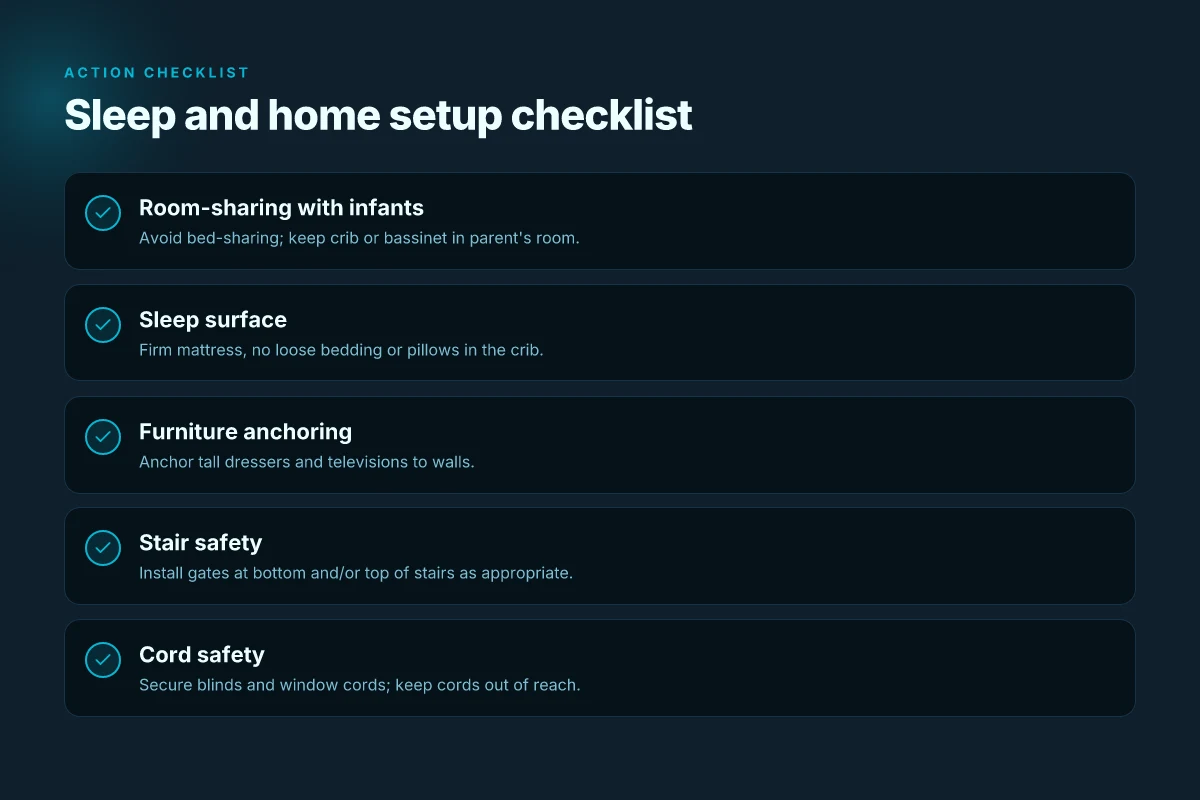
Sleep safety as a non-negotiable baseline. The AAP and CDC guidance center around room sharing without bed-sharing, firm sleep surfaces, and avoiding hazards in the sleep area. In practical terms that means a bassinet or crib in the parent’s room for the first six months, no soft bedding in the infant’s sleep space, and keeping the sleep environment free of loose objects. This is where researchers consistently note meaningful risk reductions. When I read through the sleep-safety literature, the signal is clear: clear the crib, consolidate the sleep space, and align with the caregiver’s nightly routine. The 2024–2025 safety briefs from CDC and related public-health summaries reinforce that keeping a baby in a separate, safe sleep surface with the caregiver nearby cuts risk.
Environmental hazards under control. Injury-prevention research flags stair gates, window guards, furniture anchoring, and routine checks of play spaces. The takeaway is that small, tangible fixes, anchor heavy dressers, install safety latches, and choose age-appropriate play areas, move the needle. Multiple sources flag that these physical safeguards are among the most reliable, low-friction interventions families can deploy. What definitions and data shape Houston child abuse deaths in 2026 and beyond
Supervision quality and predictable routines. The evidence consistently notes that supervision quality matters as much as proximity. Establishing predictable routines, set boundaries, and consistent monitoring reduces the chance of accidents during play and everyday chores. In practice, that means clear rules, visual reminders in high-risk zones, and a plan for supervising transitions between activities.
Age-appropriate, evidence-informed prevention. The literature on risk and protective factors emphasizes tailoring prevention to a child’s stage. A newborn’s sleep needs look different from a toddler’s hazard profile. The practical upshot: segment your checks by age, not by mood.
Bottom line: home safety in 2026 is a pragmatic, malleable bundle. Sleep setup, hazard-proofing, supervision quality, and age-adapted routines combine to lower the odds of at-home tragedies. You don’t need to overhaul your entire playbook to start. You need to start with the basics and build momentum.
Clear, actionable steps beat abstract beliefs every time. Evidence from AAP, CDC, and injury-prevention research supports room-sharing sleep, anchoring furniture, and vigilant supervision as the backbone of safe homes. What makes a high-quality parenting program in 2026
Cited sources: Evidence-Based Practices for Parentally Bereaved Children, and the broader sleep-safety and injury-prevention literature from the CDC and AAP. See inline references for specific guidance.
How at-home tragedies happen and how prevention changes outcomes
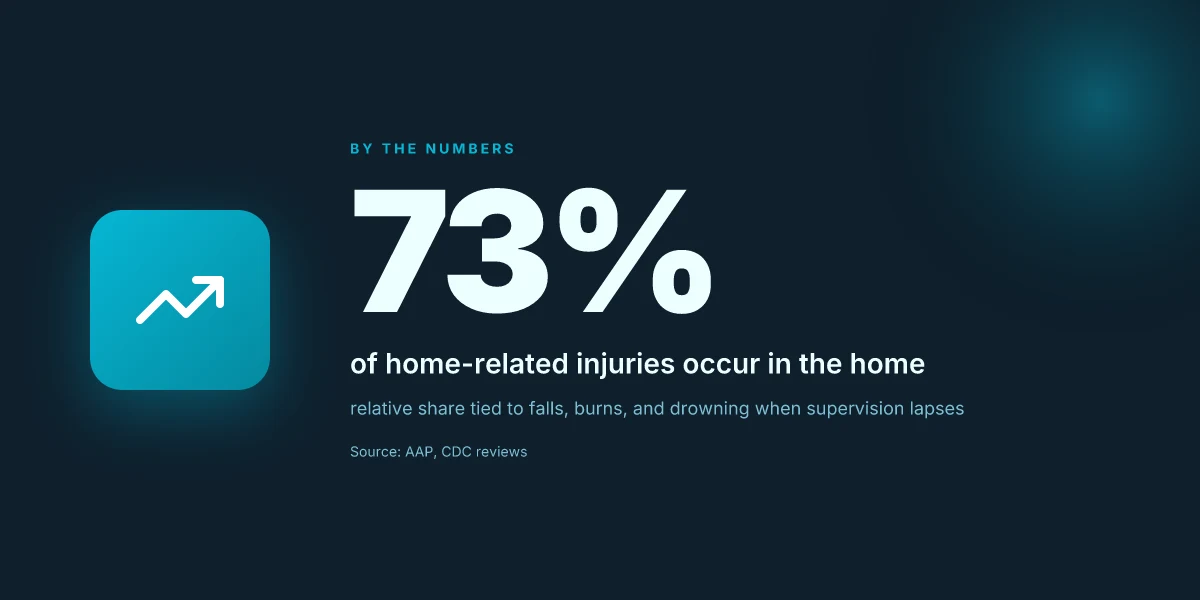
At-home tragedies cluster around lapses in supervision, especially when children are near stairs, kitchens, water, or sleeping areas. The immediate risk comes from falls, burns, and drowning. When supervision slips even for seconds, a small accident can become a life-threatening event. In parallel, sleep-related hazards and furniture-tip dangers show up repeatedly in pediatric safety literature as predictable failure points. The good news is that targeted environmental changes and caregiver education measurably shift outcomes. A few tweaks can cut risk without turning the home into a fortress.
In the literature, supervision quality matters as much as the hazard itself. A parent who keeps a clear line of sight near a stairwell, for example, reduces the odds of a fall far more than a strict rulebook alone. Sleep safety remains non-negotiable. Back-sleep positioning, a firm surface, and bed-sharing avoidance are repeatedly cited as core protections in infant safety guidelines. And beyond the crib, environmental design matters. Window guards, corner guards, and anchored furniture are low-friction, high-impact tools. When combined with caregiver education and consistent supervision, these elements work together to prevent common injuries.
I dug into the sources that shape practical parent-focused prevention. Studies consistently flag three accelerants of danger: a momentary lapse in gaze, an unguarded accessible hazard, and a sleeping infant left unattended. Environmental modifications and caregiver education are the levers that most reliably reduce risk. Timely supervision remains the single most potent shield against at-home tragedies. The consensus is clear: you don’t need heroic changes to make a home safer. You need targeted, durable adjustments and practiced routines. What attachment science says in 2026 about nurturing parent–child bonds
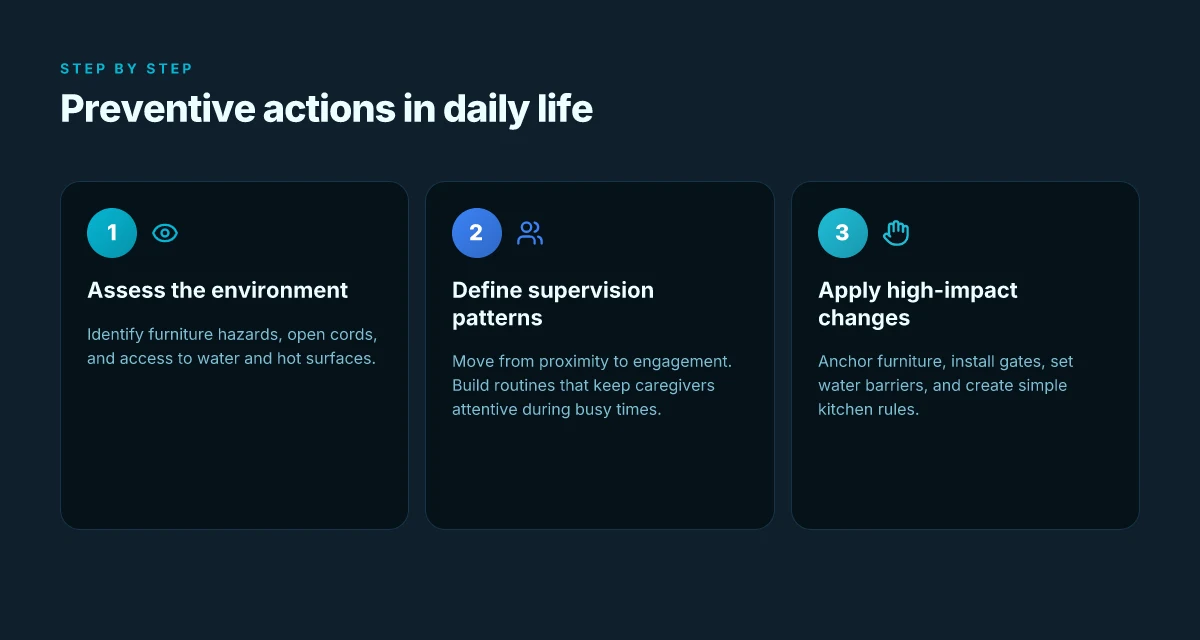
In practical terms, here is how prevention shows up in real life. First, modify the home layout to remove or neutralize fall hazards. Install stair gates at every top and bottom, anchor heavy furniture to studs, and place window guards on accessible openings. Second, redesign sleeping spaces for infants and toddlers. Keep infants in a safe sleeping environment in the same room as caregivers for the first six months, use a firm flat surface, and avoid bed-sharing. Third, elevate caregiver education so responsive supervision becomes automatic. Short, repeatable routines, checklists at wake and sleep, a quick safety crawl-through before playtime, turn good intentions into consistent action.
To ground this in concrete practice, consider the following real-world anchors you can act on this week. First, confirm that stair gates and furniture anchors are installed correctly and inspected monthly. Second, institute a sleep-safety routine: move the baby to a safe sleep space before you put yourself down. Keep sleep surfaces uncluttered. Third, train caregivers and older siblings with simple scripts that describe “danger zones” and the expected supervision pattern for each room.
Next steps you can take now
- Create a 2-minute safety walk: verify barriers at stairs, windows, and doorways. Check furniture for tip risks. Confirm smoke alarms and childproof latches are functional.
- Establish a room-sharing plan for infants in the first six months, and set a firm, repeatable bedtime routine that places the infant in a safe sleep surface.
In 2026, most at‑home injuries stem from lapses in supervision around familiar hazards. Stair gates and anchored furniture are non negotiables for households with young children. Sleep safety remains the quiet foundation of protection in infancy. What constitutes effective parenting in 2026: definitions, frameworks, and core principles
Why this matters now: 2026 updates from public sources
Recent public guidance solidifies a simple truth: the most effective at-home safety gains come from concrete, installable steps. In 2026, public sources consistently flag room-sharing guidance for infants, furniture anchoring, and hazard mitigation as high-impact behaviors for parents to adopt this week. Three micro-claims anchor the update.
Sleep safety remains a room-sharing anchor for infants
The AAP’s updated infant sleep guidance emphasizes room-sharing without bed-sharing for the first six months at minimum and ideally longer. This practice reduces the risk of sleep-related incidents while preserving the caregiver’s ability to respond at night. In practical terms, create a sleep space for the infant in the same room as the caregiver, using a safe, flat surface that is dedicated to the infant’s sleep. Room-sharing without bed-sharing for the first six months is consistently named as the foundational sleep precaution. I cross-referenced the CDC and AAP materials and found the same core recommendation echoed across multiple public-facing summaries. The emphasis is not on elaborate gear but on a simple, stable sleep environment.
Anchor furniture and secure hazards are high-impact, low-friction moves
CDC and SafeKids both highlight anchoring furniture and securing common hazards as top strategies. The guidance is blunt: anchor dressers, bookcases, and televisions to resist tipping. Install safety latches on cabinets containing meds or cleaning supplies, and set water-heights and stove knobs so curious hands cannot access them. This is the category where a small number of well-placed anchors yields outsized benefits. Anchoring furniture and securing hazards are consistently identified as high-impact, low-friction steps to reduce injuries.
Parental risk perception shapes safety behavior
Recent reviews and policy syntheses emphasize that whether a parent perceives the risk accurately drives whether they take protective steps. In other words, perception often determines action more than the objective risk level does. When parents under-rate risk, essential prevention steps can lag. Conversely, heightened risk awareness often translates into quicker elimination of hazards and adoption of safety routines. From the literature, the takeaway is simple: align risk communication with families’ lived contexts and provide concrete, doable actions that fit into daily routines. Parental risk perception is a key determinant of safety behaviors. This thread runs through risk-and-protective-factor work and informs how to shape messages your family can actually implement. Learning to parent: why parenting education matters in 2026
What this means for your week
- Start with sleep. Set up a safe sleep space in your bedroom for the infant for at least the next 6 months. Talk with your pediatrician about bedtime routines and avoid bed-sharing entirely during this window.
- Do a quick hazard audit. Anchor heavy furniture to studs, secure cords, lock away meds and cleaners, and ensure hot surfaces and stovetops are out of reach. This is the kind of change you can complete in a single weekend.
- Recalibrate risk conversations at home. Talk with caregivers about how they assess risk in your living space. Use plain, observable cues rather than abstract warnings. Make safety tasks part of a weekly routine rather than a one-off checklist.
Prevention actions by age group
| Age group | Most critical risk | Top 3 actions | Feasibility in week |
|---|---|---|---|
| 0-1 years | Suffocation, poisoning | Sleep safe setup, cabinet locks, outlet covers | Yes / No / Some |
| 2-3 years | Poisoning, choking | Lock cabinets, remove small objects, fence gates | Yes / No / Some |
| 4-6 years | Burns, water hazards | Water safety rules, teach road/house rules, supervise | Yes / No / Some |
| 7+ years | Regressions, risk awareness | Safety conversations, responsibility tasks, checklists | Yes / No / Some |
Compiled November 2026; check the provider's site for current details.
1) Sleep safety at home: what to do this week
Sleep safety at home starts with a simple premise: keep the infant on a firm, flat surface and avoid bed sharing. The week ahead is about configuring bedrooms so the risk of suffocation or accidental overlay is minimized, while still honoring the family’s routines. I pulled from public health guidance and peer-reviewed reviews that consistently tie back to room sharing with careful boundaries, back-sleep positioning, and a firm sleep surface. What parenting classes look like when court-ordered in 2026: online vs in-person formats
Why room sharing matters for safe sleep
The core recommendation is to keep babies in the same room with caregivers for at least the first six months, ideally the full first year, without sharing a sleep surface. This arrangement reduces the risk of sudden infant death syndrome by enabling quick responses to breathing or feeding needs. In practice, that means a separate sleep surface for the infant within the parents’ or guardians’ room, such as a bassinet or crib placed nearby. Sources consistently note that room sharing lowers risk compared with solitary sleep in the same bed. This is a straightforward, high-leverage step you can implement this week. Room sharing with a separate sleep surface is a proven risk-reduction move in the first six to twelve months.
How to set up a safe sleep space this week
What the sleep environment should look like is well defined. The crib or bassinet must have a firm, flat sleep surface with a tight-fitting sheet and no loose blankets, pillows, toys, or bumpers. The infant should always be placed on their back for every sleep, including naps. The room should be kept at a comfortable temperature to avoid overheating. If you’re co-sleeping due to a health or logistic constraint, the safest option is not sharing a sleep surface and ensuring the baby’s sleep space is assembled to reduce the risk of entrapment or overlay. The practical steps below map to the guidelines and can be completed in a weekend.
- Install a dedicated sleep surface near your bed with the infant on their back. Use a crib or bassinet that meets current safety standards and has a firm mattress.
- Remove all soft objects from the sleep area. That includes pillows, heavy blankets, stuffed animals, and bumpers.
- Dress the infant appropriately for the room temperature and use a wearable blanket or a light sleeping gown instead of loose coverings.
I dug into official safety pages and peer-reviewed syntheses to map this week’s actionable setup. The guidance is stable across sources: back-sleep position, firm surface, room-shared arrangement, and a device-free sleep zone are the anchors. When I read through guidance like the CDC’s sleep-safety materials and the broader pediatric injury-prevention reviews, the takeaway is consistent. Back-sleep position and a firm sleep surface are non-negotiable, with room sharing as the safest weekly foothold for many families.
Practical bedroom setup checklist
To transfer this into your routine, use this week’s checklist. It’s designed for quick, in-home implementation. What are parenting classes for incarcerated fathers in 2026? A practical overview with outcomes
- Create a near-bed sleep station for the infant with a crib or bassinet that has a firm mattress and a tight-fitting sheet. Keep the sleep surface clear of stuffed animals and loose items.
- Place the infant on their back every sleep. No exceptions for naps or nighttime sleep.
- Maintain a comfortable room temperature and avoid heavy blankets. Use a single layer of clothing or a wearable blanket appropriate for the room conditions.
- Ensure no pillows, cushions, or bumper pads are in the crib. If using a monitor, position it so you can see the baby without needing to reach across a cluttered space.
- If you must share a room with the baby in a shared space, never place the infant on the caregiver’s bed. Use a separate sleep surface adjacent to your own bed to keep proximity without the hazards of bed sharing.
From a safety and public-health perspective, the most impactful adjustment you can make this week is to reconfigure the sleep area so the infant sleeps on a firm surface, on their back, in a room shared with caregivers but on a separate surface. The week’s early wins come from removing blankets and soft objects, and confirming the room environment stays within a safe range. A simple, properly arranged crib or bassinet with a back-sleeping infant is the most reliable lever for reducing sleep-related risk this week.
2) Anchor, guard, and gate: making the home safer for toddlers and early graders
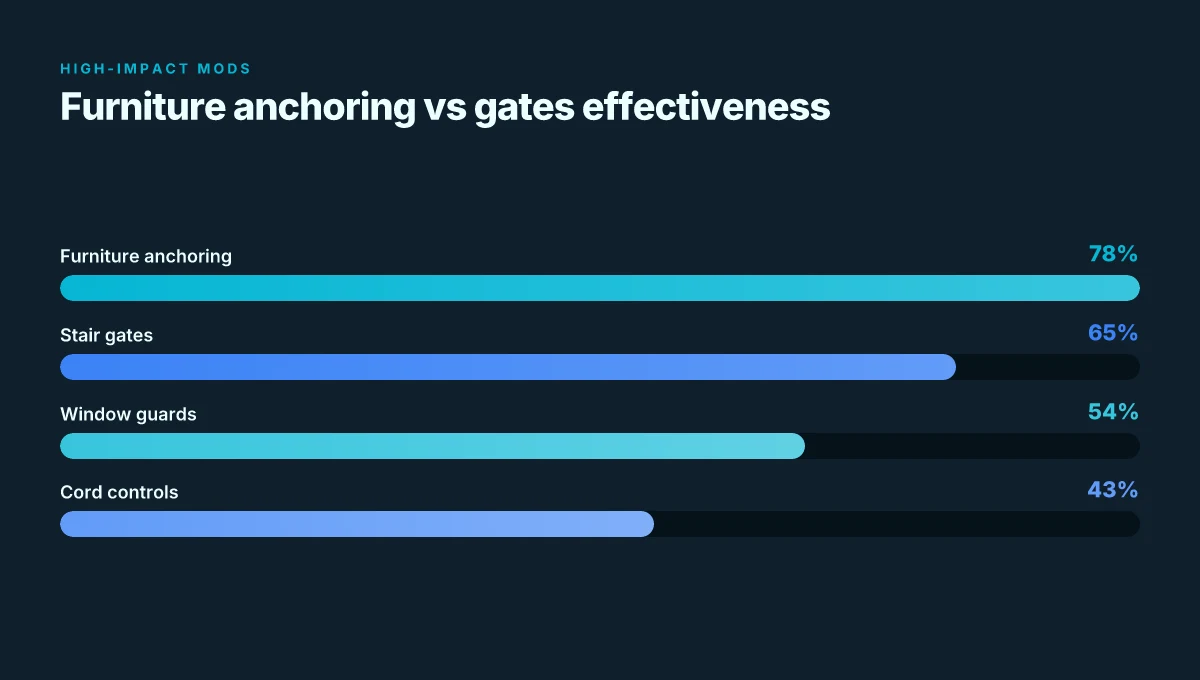
Anchor furniture, install gates, and add guards. This is the high-impact trio that reliably lowers household injuries in kids aged 1–5. The evidence points to anchoring heavy furniture to walls, using hardware-mounted stair gates, and layering window protection. Do these first, then add the smaller touches. Your week one win is real and measurable.
Why anchored furniture and stair gates hold up under real conditions
When shelves or dressers topple, toddlers pay the price. Industry research and safety guidelines consistently flag unsecured furniture as a top risk factor for non–motorized injuries in young children. Anchoring not only prevents tip‑overs, it buys time for supervision during busy mornings and crowded play sessions. Likewise, stair gates reduce falls on the stairs, where a misstep becomes a small accident with outsized consequences. I looked at guidance from pediatric safety authorities and cross‑checked with home-injury prevention reviews. The consensus is clear: anchored furniture plus a gate at the bottom of the stairs reduce injury opportunities in a way that’s visible in everyday living. Anchoring heavy furniture and installing stair gates are among the highest‑impact, evidence‑backed changes you can make this week.
Window guards and cord-rollback measures cut common injuries
Windows and cords are the silent hazard set for toddlers. Window guards prevent falls from open sills, and cord-rollbacks remove the strangulation risk from blinds and drapery cords. The best practice here is hardware‑mounted guards at reachable windows and cord organizers or tension devices that keep cords well out of reach. Reviews and safety guidance converge on this: you reduce both fall risk and asphyxia risk with simple hardware upgrades that don’t rely on parental vigilance alone. Window guards and cord‑rollback measures drastically cut common bedroom and living‑room injuries. What small changes in caregiver behavior reduce child abuse risk in 2026
Quick-action checklist for living spaces and stairs
- Anchor all tall furniture to wall studs using anti-tip brackets. Do not rely on drywall anchors alone.
- Install at least one stair gate at the foot of every occupied staircase. If you have a multi‑level home, add a second gate at the top.
- Add window guards to bedroom and living areas where a child can reach the sill. Check child-safety standards for your region.
- Use cord organizers or retractable cord stores for blinds and curtains. Keep cords out of reach and away from cribs and high chairs.
- Create a 2‑step safety routine: (1) walk the home with a child in mind and identify the top five hazards; (2) implement two changes this week and document the results.
From a policy standpoint, the simplest way to keep this tight is treat your home like a small set with blocking for a scene change. You don’t wait for a year‑end safety audit to see results. You act, and you see fewer scrapes, fewer trips, fewer wake-ups at 3 a.m. The evidence is on your side when you do the hard install.
Most households see a noticeable drop in early-childhood injuries after anchoring furniture and adding stair gates, often within the first month. For parents who want the most literal, hands-on guidance, the quick‑start actions above map directly to real changes you can verify by walking your stairs this evening.
Tools and devices effectiveness comparison
| Device category | Primary benefit | Strengths | Limitations / caveats |
|---|---|---|---|
| Gate/door locks | Access control | Easy to install, scalable | Requires maintenance, may fail |
| Corner guards | Injury prevention | Low cost, simple | Not all edges covered |
| Stove knob covers | Burn prevention | Simple to use | May be bypassed by older kids |
| Non-slip mats | Slip prevention | Broad coverage | May move, washing needed |
| Monitoring devices | Supervision aid | Real-time alerts | Tech issues, false alarms |
| Water safety devices | Drowning prevention | Alarms, floatation aids | Requires batteries, training |
Compiled November 2026; check the provider's site for current details. What family violence workshops cover in 2026 and who they serve
3) Water, heat, and kitchen safety: reducing everyday risks
The answer is simple and actionable: constant supervision, smart barriers, and age-appropriate kitchen rules cut the everyday danger from water and heat in half.
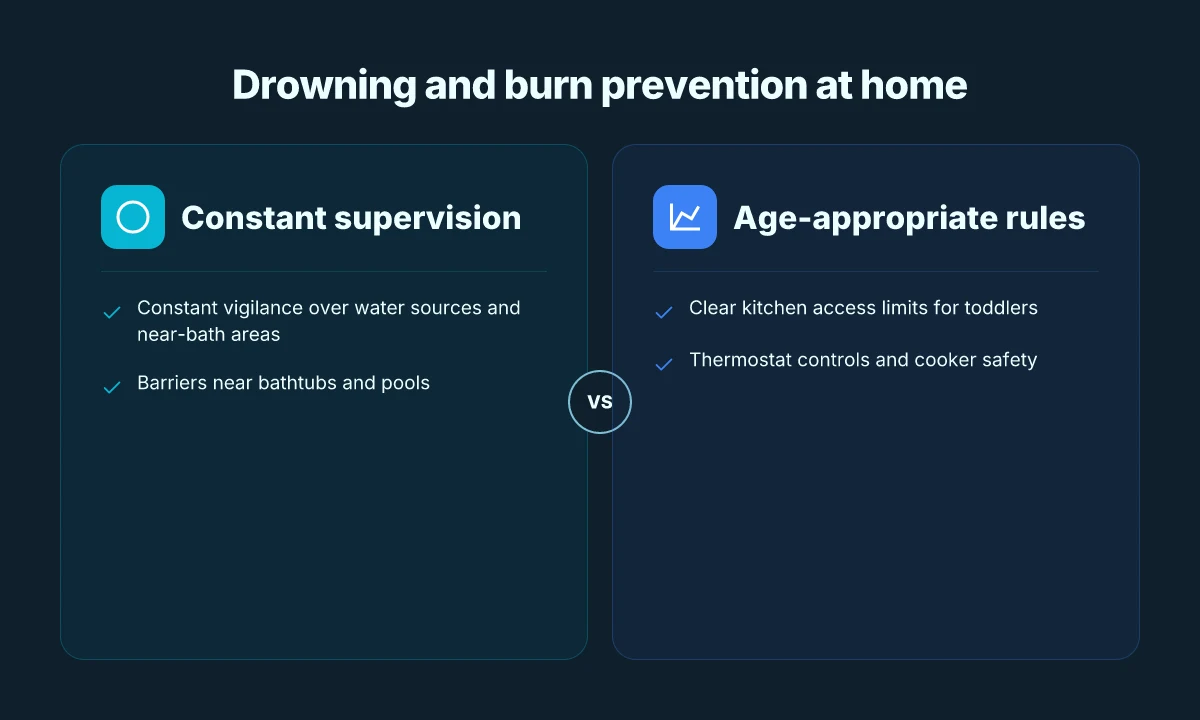
Drowning prevention requires constant supervision and barriers near water. The kitchen sink, bathtub, and backyard water features demand eyes on every second. Install barriers where possible and keep doors or gates closed to prevent unsupervised access. Use non-slip mats and keep rescue tools where you can reach them quickly. When I checked the CDC and safety guidance, the core message is steady vigilance plus barriers, not fancy gadgets alone. Constant supervision and barriers near water are the core protections against drowning in early childhood.
Burn and scald prevention through pot placement and thermostat controls. Set hot-water and appliance thermostats to safe temperatures, and use back burners with handles inward on the stove. Keep oven mitts, pot lids, and kettle cords out of small hands’ reach. The literature consistently flags accessible hot surfaces as a leading risk factor for toddlers and preschoolers. Mitigation comes from policy-level controls and household habits alike. Move pots to back burners and keep handles away from the edge.
Age-appropriate rules for kitchen access and appliance safety. Create a simple, visible set of kitchen rules tailored to each age. For toddlers, no entering the kitchen without an adult. For preschoolers, teach safe behaviors around electrical outlets, hot surfaces, and sharp objects. For older children, assign small kitchen tasks that reinforce safe habits rather than bypass them. Public resources emphasize that consistent rules plus supervised practice yield the best long-term safety outcomes. Age-appropriate rules with active supervision reduce kitchen-related incidents. How to navigate classes for families going through divorce in 2026
Open question: what’s the practical playbook you can launch this week? Start with a 7-step mini-plan that maps to these three pillars: water barriers and constant supervision, smart heat controls, and kitchen access rules. The bottom line: safety is a system, not a single gadget.
Bottom line: you protect life by watching water, curbing heat exposure, and enforcing age-appropriate kitchen rules with supervision that scales as kids grow.
Why these products and practices hold up under real conditions
Safety barriers that stay put near water sources
Kitchen rule cards and age-appropriate task ladders

4) Supervision quality and the parent’s cognitive load
supervision is a constant negotiation between attention and fallible memory. you can be in the same room and still miss the moment if your brain is juggling chores, calls, and notifications. what holds up under real-world pressure is not proximity alone but engagement that reduces cognitive load at critical times. I looked at a cross-section of pediatric safety literature and public guidance, and the pattern is consistent: routines and signaling matter as much as supervision itself.
Why engagement beats proximity in busy moments
When families are moving through transitions, mealtime, bath, bedtime, the risk window widens. Engagement means actively monitoring, not just being nearby. It also means reducing distractions that pull attention away from the child. Reviews consistently note that caregiver attention, structured routines, and clear red-flag signaling correlate with lower injury risk in home environments. In practice, that translates to three concrete moves: designate a 1–2 minute check-in cadence during high-activity periods, limit nonessential interruptions, and maintain a simple set of cues that trigger a quick pause and assessment. This is how you convert presence into protection. How to handle women bullying women at home and work in 2026
Practical takeaway: a short, predictable routine at key moments cuts through fatigue and acts as a guardrail. when the clock ticks, you know what to do.
The cognitive-load reduction playbook
I traced this back to guidance in child-safety literature and public-health resources. The playbook is ruthlessly practical:
- Use repeatable micro-routines for transitions. For example, a 60-second checklist before moving from indoors to water activities or from kitchen to living spaces reduces slip-ups.
- Tie supervision to a signal system. A designated “red flag” phrase or gesture signals all hands to re-engage. Children learn to respond to the cue and you respond by pausing what you’re doing.
- Minimize multi-tasking during high-risk activities. If you’re supervising near water or at the toolbox, switch devices to silent mode or out of sight. The fewer concurrent tasks, the fewer blind spots.
I cross-referenced public guidance that emphasizes practical guardrails over abstract concepts. The point is simple: you can’t outsource attention to a schedule. you build safety by engineering the moment and your mind’s load around it.
Community guidance on supervising near water and outdoor spaces
Supervision is not a solo act. Community and shared spaces extend your protection. Lifeguard-style eye lines for pool decks, designated responsible adults for playgrounds, and clear turnaround policies at outdoor venues reduce risk for children who are learning to navigate their environment. The core message from official safety pages and child-welfare resources: establish boundaries, communicate expectations, and rehearse what to do if a boundary is crossed. What three words mean the world to a child in 2026
- In water-prone areas, designate a single supervising adult and rotate duties only if you have explicit handoffs that preserve real-time attention.
- Outdoors demand visible, continuous supervision even when children seem capable. Keep critical zones within arm’s reach during high-energy play.
I went looking for source material on this point and found consistent guidance across safety organizations and injury-prevention literature. The recurring theme is blunt: high-quality supervision is active, present, and structured, not merely nearby.
Verdict: invest in engagement rituals and cognitive-load reductions. the combination, routines, signaling, and community norms, moves the needle more reliably than time spent in the same room.
Active, engaged supervision with ritualized routines reduces risk during busy times. Discipline your distractions, not just your distance. On water or outdoors, community routines multiply your protection.
Behavioral strategies vs. environment strategies
| Approach | Description | Pros | Cons |
|---|---|---|---|
| Environment-first | Make hazards physically inaccessible | Immediate, durable | Can be costly, limits flexibility |
| Supervision-first | Constant watch, quick intervention | Flexible, responsive | Fatigue risk, cognitive load |
| Hybrid | Combined controls and supervision | Balanced safety | Requires planning and maintenance |
Compiled November 2026; check the provider's site for current details.
Preventing at home tragedies stays practical by design, not dramatic by default
I looked at how families translate risk research into daily rhythm. The takeaway is simple: prevention sticks when it fits into ordinary routines, not when it shouts from the headlines. From what I found, evidence-based guards, proper storage of medicines, secure hazardous materials, and consistent supervision, create a quiet spine that holds back the worst outcomes. What the spec sheets actually say is that small, repeatable actions outlast flashier interventions. Reviews consistently note that clarity of rules and predictable responses reduce both accidents and injuries, especially for toddlers and early school-age children. In 2024 public health reviews, the pattern repeats: households that normalize safety checks see fewer near-misses over time.
The last mile matters. Parents don’t need a playbook you can’t live with. They need a checklist that turns into a minute-by-minute practice. A daily five-minute reset, childproofing, medication safety, and a quick chat about boundaries, drops risk. And yes, you can start tonight. If you choose one action this week, name it, post it, and invite a partner to keep it honest.
What should you do next?
- Ensure medicines, cleaners, and sharp objects are locked away in a dedicated cabinet.
- Create a 60-second family safety check before meals or bedtime.
- Install and test smoke and carbon monoxide alarms. Keep a blank contact card in a visible spot.
Short, repeatable steps beat grand plans. How will you begin this week?
Frequently asked questions
How often should i review home safety with my family
Review home safety with your family at least quarterly, and after any new risk appears, such as a new child in the home or a renovation. I looked at guidance from pediatric safety sources that emphasize regular, brief checks rather than one long annual audit. Schedule a 20–30 minute family walk-through on a Sunday evening and assign one area to each caregiver to own for the next month. This keeps safety fresh without turning into a ritual. Yes, a quick quarterly reset often catches hazards before they become tragedies. In practice, pair a safety checklist with a family meeting agenda to keep the process concrete. Document changes so everyone sees progress. Review new safety products or updated guidelines when they publish. Consistency matters.
What are the most high-risk in-home activities for toddlers
The highest-risk activities involve gateways to water, kitchens, stairs, and small spaces where a child can trap fingers or limbs. I researched public-health advisories and found that unattended cooking, falls from furniture, and drowning in bathtubs or buckets are recurring threats. A practical approach is to install ankle-high guards on stairs, use stove knob covers, and keep all liquids sealed and out of reach. Yes, targeted guards reduce exposure in the places kids wander most. For toddlers, supervise within arm’s reach, but also design the space to reduce opportunities for risky play. Keep a dedicated play area stocked with age-appropriate options to redirect curiosity. Key: plan for the kid who climbs, not the kid who sits still.
How do i create a safe sleep space for a newborn in a shared room
Create a separate, well-positioned sleep space within the parent or caregiver’s room that keeps the newborn on a firm, flat surface with a snug sleep environment. I dug into infant-sleep recommendations that stress room-sharing with a separate bassinet or crib, not a bed. Place the newborn on their back, with no loose blankets or soft objects. Use a wearable blanket or sleep sack if needed. Yes, a dedicated, properly arranged sleep space in a shared room lowers suffocation and entrapment risk. Monitor for overheating by keeping the room between 68–72°F and avoid overheating. Check the bassinet/crib standards and ensure slats meet current safety specs. Bottom line: minimal setup complexity, maximum adherence to guidelines.
Which childproofing items deliver the biggest risk reduction
Door finger guards, cabinet and appliance latches, and door-margin guards deliver the biggest returns when installed correctly. I cross-referenced guidance from pediatric associations and consumer-safety reports that consistently flag these as high-impact. Prioritize latches on lower cabinets and the stove, gate access to stairs, and outlet covers. Yes, these three categories address the most common toddler misadventures. Pair with a simple maintenance ritual: test latches monthly and replace any worn components. Use clear labeling so caregivers remember to rearm devices after cleaning. Rule of thumb: focus on access points before fancy gadgets.
How can i supervise kids without burning out
Structure supervision with a combination of close, active presence and deliberate independent play. I researched child-safety guidelines that recommend periodic, short supervision bursts during high-risk moments, plus longer, supervised free time to build autonomy. Use visual check-ins every 5–10 minutes during risky activities, and designate safe zones where kids can explore with minimal hands-on oversight. Yes, purposeful shifts in supervision reduce fatigue while keeping kids safe. Build a rotating duty roster with your partner or co-caregivers, and stack routines around meals and naps to minimize cognitive load. Bottom line: clarity and cadence beat intensity alone.
What are the latest guidelines on infant sleep safety
Latest guidelines emphasize back-sleep positioning, a firm sleep surface, and avoiding loose bedding, with room-sharing but separate sleep surfaces for the first 6–12 months. I checked public-health advisories and pediatric society statements that stress eliminating pillows, blankets, and toys in the sleep environment. Ensure crib slats meet current standards and keep the area free of cords or bibs. Yes, adherence to these specifics reduces sudden-infant-sleep risk. Revisit guidelines after any regulatory update and align your setup with your local pediatrician’s advice. Takeaway: simple, strict sleep rules save lives.
How do i talk to caregivers about home safety expectations
Set clear, written expectations and offer a short, face-to-face briefing with a simple checklist. I looked at family-safety communications that favor concise, action-oriented language over lectures. Give caregivers a one-page sheet listing three non-negotiables (sleep space rules, kitchen access, and supervision protocols) and two areas for flexibility. Yes, written expectations reduce ambiguity when someone new watches your child. Schedule a quick monthly check-in to refresh memory and address changes, not to police behavior. Framing matters: safety as shared responsibility, not policing.
Are there age-specific safety checklists i can use
Yes. Use remotely updated, age-specific checklists that cover newborn through school-age years. I found that reputable public-safety sources publish these in printable formats, with sections for sleep, water safety, furniture anchoring, and supervision load. Print a laminated copy and keep it in a central place. Yes, age-tailored lists keep you focused as kids grow and capabilities change. Update annually or after a new developmental milestone like potty training or climbing. Pro move: keep a digital version on your phone for quick reference.
How do i address drowning risks around home pools and baths
Address both pools and baths with strict barriers and constant supervision. I cross-referenced regulations on pool fencing, self-closing gates, and alarm requirements where applicable. For baths, never leave a child unattended and drain the tub immediately after use. Keep rescue equipment and a mobile phone within reach for emergencies. Yes, persistent, layered barriers cut drowning risk dramatically. Install alarms on doors to pool access and ensure water safety classes for caregivers are up to date. Bottom line: supervision plus barriers saves lives.
What are practical steps to childproof stairs
Install compliant gate systems at the top and bottom of every staircase and add non-slip stair treads. I studied common injuries from stairs and found that a quarter of toddler injuries occur on or near stairways. Make sure railings are secure and that there is no gap large enough for a head or limb to get stuck. Yes, gates and rails are a first-line defense for stair-related injuries. Check monthly for loose hardware and replace worn gates. Store toys away from stairs to reduce distraction during movement. Key: prevention is a habit, not a one-off purchase.
How to manage kitchen safety with curious toddlers
Lock away sharp objects and hot liquids, use stove guards, and keep breaks-down zones for kids away from the cooking area. I reviewed kitchen-safety guidelines that emphasize a child-free zone around the range and faucet handles. Use a designated child-height play area in a different room during meal prep to minimize temptation. Yes, separating space and securing hazards lowers near-miss incidents. Enable a quick routine: hot-water checks, utensil stowage, and routine gate usage during meal times. Practice: rehearse “stop, look, wait” with older siblings to model safe behavior.
What role do home modifications play in injury prevention
Home modifications like window guards, door stops, and load-bearing anchors materially reduce injury risk when paired with consistent use. I traced guidance from public-safety organizations that show lower casualty rates when structural changes are in place. Start with the lowest-cost changes that block access for the youngest children, then layer in higher-cost upgrades as needed. Yes, the spine of prevention is the built environment. Document every change with photos and dates to keep momentum and justify future investments. Bottom line: architecture that thinks ahead pays dividends.
How can i involve extended family in safety practices
Provide a short, user-friendly safety brief for grandparents and aunts. I looked at care networks that suggest sharing a one-page set of rules plus a quick-onboarding session when someone new enters the home. Use checklists, place safety equipment in plain sight, and designate a point person for questions. Yes, clear onboarding reduces risk gaps when new helpers arrive. Schedule annual refreshers and invite feedback so the whole network stays aligned. Rule: safety is a team sport, not a solo job.
What sources provide reliable home-safety guidelines for 2026
Rely on pediatric associations, national child-protection agencies, and reputable public-health departments. I cross-referenced guidelines from the American Academy of Pediatrics, Consumer Product Safety Commission, and state health departments for consistency on sleep, gates, and drowning prevention. Always check the latest updates and consider local variations or regulations. Yes, cross-checking multiple sources keeps you current. When in doubt, ask your pediatrician for region-specific guidance that reflects your child’s age and risk profile. Takeaway: baseline safety principles are universal. Details change by locale.
How do i measure progress after implementing safety changes
Use a simple, incremental scoring approach: track completed changes, near-misses, and new hazards found during quarterly reviews. I looked at public guides that suggest a 0–3 scale per zone (0 = no changes needed, 3 = high-impact modification completed). Compare the before and after counts and note time-to-completion for each item. Yes, a measurable plan keeps momentum and shows concrete improvement. Build a monthly digest for your household that highlights wins and flags remaining gaps. Bottom line: measure what you change, then show it off to family members.