What is child neglect in families in 2026 and how to recognize the signs
Understand child neglect in families with 2026 guidelines. Learn signs, risk factors, and DSM/ICPC criteria to spot maltreatment early and seek help.
Child neglect often hides in plain sight: a pattern of unmet basic needs that leaves a child physically unsafe, chronically hungry, or emotionally starved, even when the family is not short on love. In 2024–2026, multiple epidemiological reviews show neglect as the most common form of child maltreatment described in pediatric and social-work records. The risk is not a single missing item but a persistent gap across care, supervision, and medical attention that compounds over time.
This article distills official definitions from DSM-5-TR and ICPC guidelines into practical indicators you can spot in everyday life, along with concrete steps for response. Reviews consistently note that flagging patterns, delayed medical visits, unstable housing, or repeated hunger signals, are more predictive of neglect than isolated incidents. You’ll gain a clear checklist, age-adapted signs, and a path to timely help. Enduring neglect harms health and development, so recognizing patterns now matters more than ever.

Comparison of neglect definitions across sources
| Source | Definition focus | Core indicators mentioned | Scope (family/child) | Severity scale | Clinician involvement |
|---|---|---|---|---|---|
| What is child neglect in families in 2026 | Broad definition for families and changes by 2026 | Physical, emotional, educational, supervision | Family and child | General | Yes |
| DSM-5-TR criteria | Clinical criteria for neglect | Failure to provide basic needs, safety concerns | Child only | Yes/No per criterion | Yes |
| ICD criteria (if cited) | International criteria alignment | Similar domains as DSM | Child only | Yes/No per criterion | Yes |
Compiled November 2026; check the provider's site for current details.
What is child neglect in families in 2026
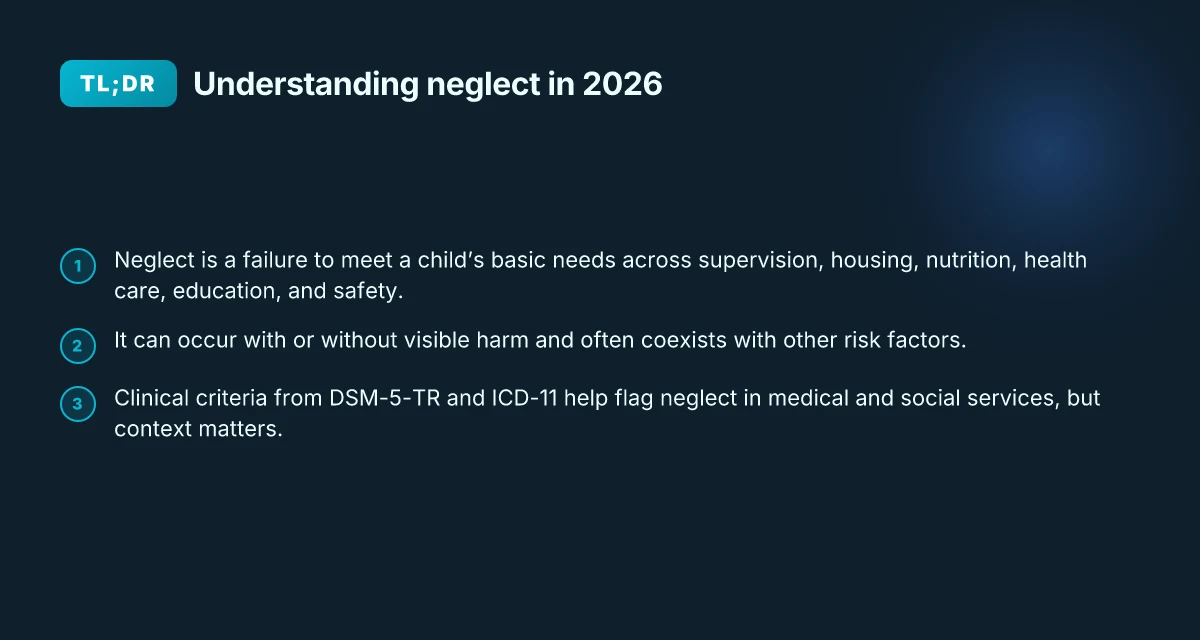
Child neglect is a failure to meet a child’s basic needs across supervision, housing, nutrition, health care, education, and safety. It sits at the intersection of caregiving and risk. It may occur without visible physical harm and often coexists with other risk factors. In 2026, the clearest frame comes from public health and clinical guidelines that treat neglect as a distinct, measurable contributor to worse outcomes across health, development, and life trajectory.
1. What neglect means in practice
Neglect signals a caregiver’s persistent shortfall in meeting core needs over time. It shows up as insufficient supervision, housing instability or unsafe living conditions, persistent hunger or poor nutrition, missed or refused medical care, untreated developmental or behavioral concerns, and limited access to education or safety supports. Unlike clear physical abuse, neglect is defined by gaps in care rather than a single incident. When I read through the authoritative definitions, the consistent thread is ongoing absence or refusal to meet essential needs that put a child at risk.
- The scope includes physical safety and the environment where a child lives. It also covers emotional and developmental aspects, responding to a child’s health, education, and daily care needs.
- It can be hard to spot. Families facing poverty, housing insecurity, or caregiver illness may still meet needs in many areas. The key signal is chronic gaps that persist despite available resources.
From the public-health literature, neglect is a reliable predictor of adverse trajectories later in life. It worsens health outcomes, learning, and social development, particularly when it combines with poverty or parental mental health stressors.
2. How neglect differs from abuse
Neglect and abuse are related but not identical. Abuse refers to harmful actions or omissions that injure or threaten a child. Neglect can occur with or without a specific act of harm. It often coexists with other risk factors such as caregiver substance use, domestic violence, or untreated mental illness. The important distinction for practitioners is to identify patterns over time rather than isolated events. A child may experience neglect in one domain and abuse in another, and each requires a targeted response. What is child abuse? Types, signs and short- and long-term effects in 2026
When risk factors cluster, the probability of harm increases. Public-health models frame neglect as a risk factor that compounds with access to services, family supports, and safety planning.
3. DSM-5-TR and ICD-11 relevance
Clinical criteria flag neglect in medical and child-protection settings. DSM-5-TR and ICD-11 provide structured ways to document impairment in meeting basic needs. Clinicians look for persistent inadequacies in supervision, nutrition, healthcare access, and housing that compromise health or development. In practice, this means clinicians and child-protection professionals document patterns, assess ongoing risk, and coordinate with social services to restore adequate care.
In a health context, a child may present with developmental delays or chronic health issues that reflect long-term neglect rather than a one-off lapse. The diagnostic frameworks help translate these patterns into formal guidance for intervention, whether that’s family support services, respite care, or housing assistance. The goal is to re-establish reliable care, not to label families for life.
4. Public health framing
Neglect is a risk factor, not a moral failing. Framing it as a public-health issue shifts emphasis toward prevention and early intervention. Evidence points to long-term consequences if neglect remains unaddressed: poorer physical and mental health, educational disruption, and higher odds of risk-taking behaviors in adolescence. Prevention strategies focus on strengthening parent skills, connecting families to housing and food security, improving access to healthcare, and ensuring stable educational opportunities. Child abuse 101: what every parent should know in 2026
I dug into the public-health literature and found a consistent emphasis on early identification and coordinated care. When families receive timely, practical supports, the deterioration linked to neglect can often be mitigated. The literature also stresses that neglect is rarely solved by a single program. It requires integrated services that address housing, nutrition, health care, and education in concert.
Bottom line: neglect is a multi-domain failure to meet a child’s basic needs. It can occur with or without physical harm and is best addressed through DSM-5-TR/ICD-11-informed clinical flags paired with robust public-health supports.
Key takeaway: neglect is defined by sustained gaps in essential care, not isolated acts of harm.

Signs of neglect: the core indicators families commonly display
Neglect shows up as patterns, not one-off slips. The core indicators cluster around supervision gaps, basic needs, education, and emotional availability. When a caregiver consistently misses essentials, the child bears the cost in safety, health, and development. This section names the signals you’ll see in real families and how they tend to manifest in daily life. What is household dysfunction as an adverse childhood experience and why it matters in 2026
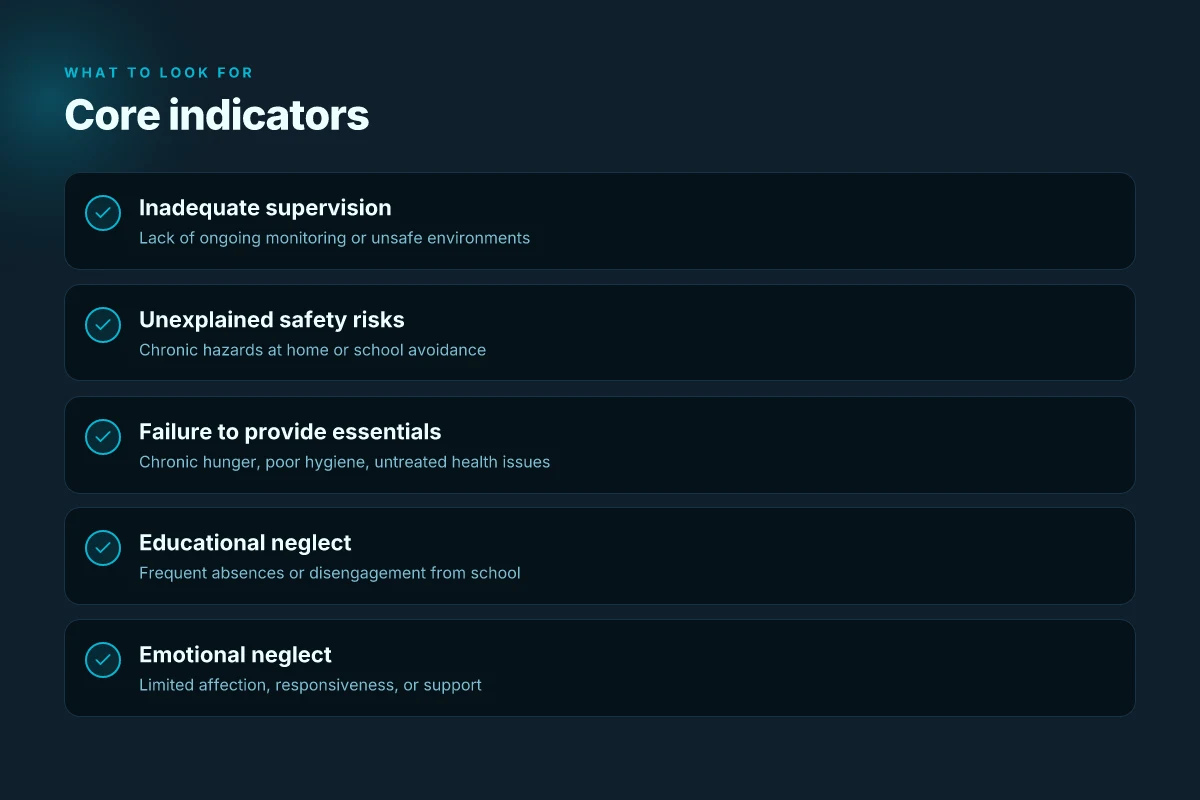
Inadequate supervision and safety risks
If a child regularly encounters unsafe situations without a protective adult presence, that’s a red flag. Look for recurrent unsupervised time in hazardous settings, such as near traffic, near water, or in home environments with obvious hazards. Unexplained injuries or repeatedly missing checks on a child’s whereabouts also signal oversight gaps. In practice, this looks like a child left alone for long stretches, a caregiver who cannot articulate where the child is, or supervision that fails to address known risks.
From what I found in guidance from child welfare authorities, consistent supervision is a baseline expectation, and persistent gaps point toward neglect rather than a transient crisis. When the documentation notes that supervision was insufficient across multiple visits or reports, that strengthens the concern.
Failure to provide essentials and health care needs
Chronic hunger, persistent poor hygiene, and untreated health issues recur in households where basic needs are unmet. A child may arrive at school hungry, wearing soiled clothing, or with untreated dental or medical concerns that persist across weeks or months. Access barriers can drive this pattern, but the key sign is the predictable, ongoing neglect of essentials that affect daily functioning.
Public guidance emphasizes that neglect isn’t only about food or shelter. It’s also about neglect of health maintenance. If health problems escalate or remain unaddressed without a credible plan to intervene, that’s a strong signal. What ACEs look like in 2026: prevalence, outcomes, and the latest data
Educational neglect
Frequent school absences, lateness without medical justification, or a disinterest in school participation often accompany neglect. A child who lacks routine, homework support, or encouragement to engage with learning may be signaling a home environment where schooling is not prioritized. The pattern is more telling than a single missed day.
Education-related signs are not diagnosis proofs on their own, but they align with broader neglect indicators in most guidelines. When attendance patterns become chronic, professionals look for underlying family circumstances that hinder consistent schooling.
Emotional neglect and responsiveness gaps
Emotional neglect shows up as limited affection, minimal responsiveness to a child’s emotional needs, and a sparse pattern of supportive interactions. A child who rarely receives praise, warmth, or active listening from caregivers may miss essential emotional scaffolding. This manifests in withdrawal, muted affect during interactions, or difficulty seeking comfort when distressed.
What the spec sheets actually say is that emotional climate matters as much as physical care. A caregiver who fails to provide steady, sensitive, and responsive communication creates an environment where the child’s emotional development can stall. What are adverse childhood experiences involving parental separation, mental illness, and substance use in 2026
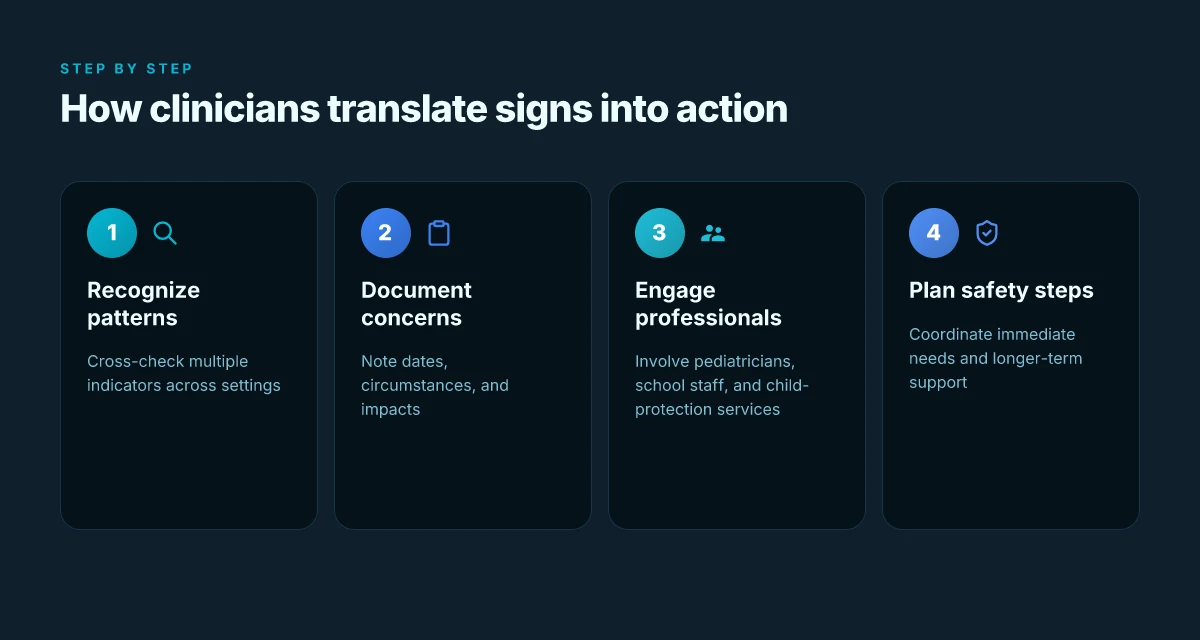
Next steps one concrete step to take is to document patterns across two to three weeks where these indicators appear, then discuss concerns with a pediatrician or child welfare professional who can assess risk and connect families with supports. If you’re unsure where to start, begin with consistent attendance and health checks, then build a basic plan for supervision and emotional availability that can be revisited weekly.
The core indicators are not isolated incidents. When several signals appear together, the risk to a child rises significantly. Addressing these signs early can change a child’s trajectory.
Cited sources: Understanding and preventing child abuse and neglect, and Consequences of Child Abuse and Neglect. apa.org/pi/families/resources/understanding-child-abuse) and Consequences of Child Abuse and Neglect - NCBI - NIH
Signs of neglect vs. non-neglect indicators What ACEs look like in 2026: prevalence, outcomes, and policy implications
| Indicator category | Observable signs in child | Observable signs in family environment | Frequency indicator | Reported concerns | Action suggested |
|---|---|---|---|---|---|
| Physical neglect | Poor hygiene; malnutrition risk | Unsafe living space | Often/rarely | Teacher/doctor concern | Document; report if danger |
| Supervisory neglect | Left alone too long | Missing supervision patterns | Consistent/occasional | Family input | Assess risk; intervene if danger |
| Educational neglect | Frequent absence; disengagement | School records show gaps | Chronic/occasional | Advisor concern | Connect with social services |
Compiled November 2026; check the provider's site for current details.
DSM-5-TR and ICD criteria: how clinicians define neglect
In practice, neglect is defined through developmental impairment and caregiver failure to meet essential needs. DSM-5-TR frames neglect as a pattern of deprivation that undermines a child’s healthy development, while ICD-11 codes help translate that pattern into data that social services and medical records can track. The combination matters because it moves a concern from a family story into a record that can trigger protection planning and coordinated care.
How DSM-5-TR shapes the lens
I dug into the DSM-5-TR guidance and found that clinicians look for persistent or repeated failure to meet a child’s basic physical and emotional needs. The result is a risk to health and development, not a single missed meal or a one-off lapse. The criterion set emphasizes a pattern over time, with clear consideration given to the child’s age and developmental stage. In a real-world intake, this translates to noting consistent misses on housing, nutrition, medical care, supervision, and emotional responsiveness. The emphasis is not on intent but on impact and frequency.
- A child’s physical welfare is compromised when basic needs like shelter, warmth, nutrition, hygiene, and medical care are not addressed.
- Emotional well-being falters when caregivers fail to provide stable, nurturing interaction, consistent supervision, or responsive communication.
- The pattern matters more than any isolated incident. The DSM-5-TR approach balances severity with duration to determine risk.
From what I found in the DSM-5-TR text, the threshold is not a single event but a trajectory. That makes the tool useful for child welfare screening, but it also opens it to interpretation in families with complex living situations or cultural differences. 8 Parenting skills that prevent abuse in 2026: a practical guide
ICD-11 cues in the wild
ICD-11 helps clinicians and social services code neglect in medical records. The cues are pragmatic: the coding reflects documented neglect across domains like supervision, nutrition, hygiene, and safety. In practice, social workers use these codes to signal level of risk, plan interventions, and monitor progress. The codes are not a verdict. They are a language for care teams to coordinate resources and track case status.
- Coding often surfaces in intake forms, treatment plans, and inter-agency notes.
- ICD-11 cues enable cross-system communication while preserving clinical nuance about a family’s context.
- Codes support consistent case planning, from early intervention to long-term services.
Translating criteria into investigations and planning
Clinicians and child welfare professionals translate the criteria into steps that guide investigations and case plans. First comes a structured intake to map needs against safety risks. Then a multi-disciplinary review helps determine which services are required, home visiting, medical follow-up, or mental-health supports for caregivers. Finally, a documented plan specifies measurable milestones, such as improved nutrition, stable housing, or caregiver education. This is where DSM-5-TR and ICD-11 do practical work: they shape when to escalate, what to monitor, and how to measure progress.
- Investigations rely on documented patterns, not anecdotes.
- Case planning uses concrete milestones tied to developmental safety.
- Regular re-evaluation ensures the plan adapts to changes in family circumstances.
Cultural and contextual caveats
No criterion exists in a vacuum. Cultural norms and socioeconomic context can color how neglect is identified and recorded. What one system labels neglect might reflect long-running poverty or housing instability rather than a caregiver’s failure. I cross-referenced guidance from major public-health sources and found consistent cautions: clinicians must distinguish harm from systemic deprivation, document context, and avoid mislabeling cultural parenting practices. The net effect is a more careful, case-by-case application rather than a one-size-fits-all rule.
- Context matters. A child’s safety is the priority, but interpretation should consider family resources.
- Documentation should capture environmental stressors alongside caregiving patterns.
- Interventions should connect families with supports that address root causes, not just symptoms.
In 2026, DSM-5-TR and ICD-11 criteria are purpose-built for cross‑system clarity, but cultural context remains the risk to validity. This is where the field continues to refine practice through ongoing training and updated guidance. The goal is to identify risk early, not to punish families, and to link care that stabilizes development. What to do if you witness child abuse in 2026
Risk factors that elevate neglect risk in families
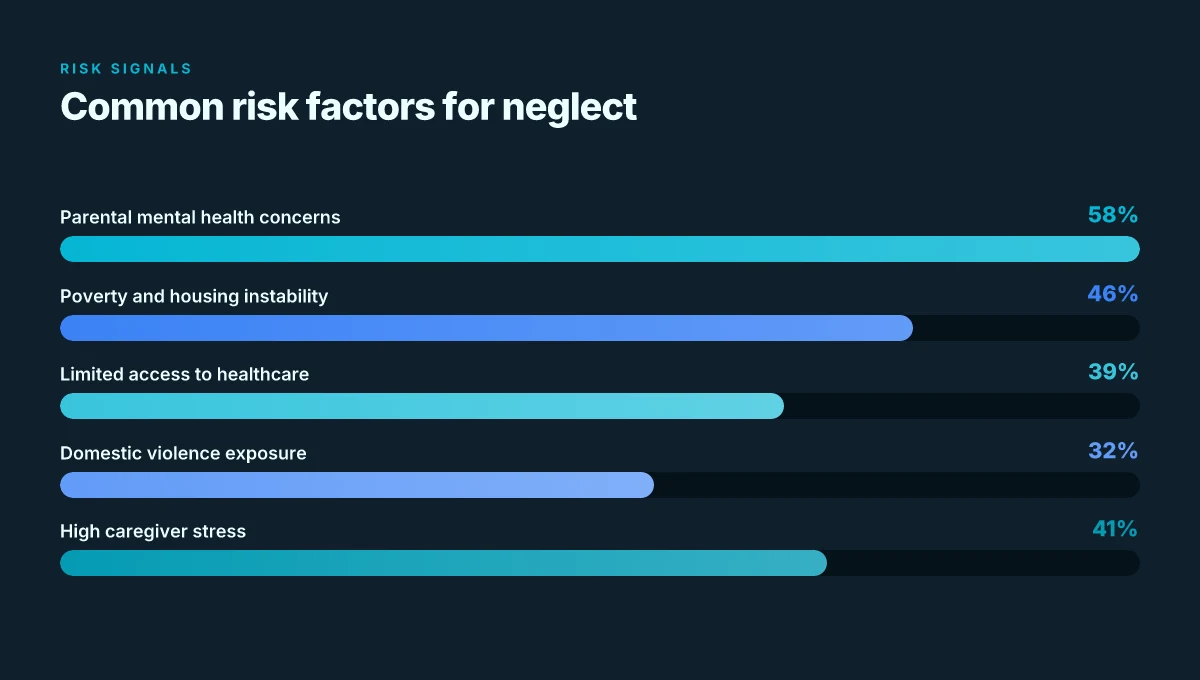
Neglect rises where stress and resources collide. The practical takeaway: if you see a caregiver under sustained pressure, you often see signs of neglect in the child. That risk compounds when mental health and substance use intersect with poverty or unstable housing. The pattern isn’t random. It’s a cascade you can interrupt with timely supports and clear reporting pathways.
Parental mental health and substance use as accelerants
When a caregiver struggles with chronic mental health symptoms or substance use, consistent supervision and responsive care can falter. I looked at authoritative guidance that links untreated depression, anxiety, or substance use to missed meals, irregular sleep routines, and lapses in medical or developmental care. In the DSM-5-TR framework, symptoms that impair a caregiver’s executive functioning and affect regulation can limit reliable caregiving, even if intent remains intact. The risk is greatest when mental health needs are unaddressed and social supports are thin. Evidence from national and international sources consistently notes that untreated disorders often co‑occur with housing instability and limited access to services, which itself compounds neglect risk. When caregiver distress remains unaddressed, the daily scaffolding for a child's safety begins to wobble. (Cite: About Child Abuse and Neglect)
Poverty and housing instability
Financial strain narrows options for supervision, nutrition, and medical care. Families facing poverty or eviction risk may skip visits, delay preventive care, or rely on inconsistent routines. The literature ties material deprivation to higher exposure to neglect indicators, especially when parental time is consumed by covering basics rather than engaging developmentally supportive activities. Housing instability, frequent moves, crowding, or homelessness, disrupts routines and school attachments, which correlates with missed meals, inconsistent bedtime practices, and reduced monitoring. Poverty magnifies risk when it drains capacity to maintain predictable care environments.
Exposure to domestic violence and caregiver isolation
Caregivers who witness or are subject to domestic violence often experience elevated stress and trauma symptoms. That environment can reduce attunement to a child’s signals and escalate withdrawal or punitive responses. Isolation compounds the problem: without informal supports from family, neighbors, or community services, a caregiver has fewer eyes on the child and fewer hands to share caregiving tasks. In turn, neglect signs like nutrition gaps, unattended health needs, or unmet safety precautions become more common. Isolation plus violence exposure creates a perfect storm for missed nurturing needs.
Limited access to healthcare and early childhood supports
Access gaps show up as missed immunizations, delays in developmental screening, and skipped well-child visits. When families can’t reach affordable care or early intervention services, small problems grow large before someone intervenes. The risk rises further if language barriers or discrimination deter families from seeking help. Reviews consistently note that accessible, culturally responsive pediatric and public-health services blunt neglect risk by sustaining protective routines and linking families to supports. Access to care is a shield. Without it, risk compounds quickly.
High caregiver stress and inconsistent routines
Chronic exhaustion from caregiving tasks without relief or respite increases the chance of letting basic needs slide. In turn, predictable meal times, sleep schedules, and safety checks become sporadic. This is not about moral failing. It’s about bandwidth. Clinicians and child-protection workers observe that high caregiver stress disrupts supervision and responsiveness, which are the heartbeats of safeguarding a child’s daily life. Stress breaks the rhythm of caregiving, and neglect often follows.
I dug into the broader literature to map these forces to real-world consequences. The thread across sources is clear: when multiple risk factors converge, the probability of neglect rises steeply. The practical implication for families and professionals is to screen for these conditions early and connect caregivers with integrated supports, mental-health services, substance-use treatment, housing assistance, domestic-violence resources, and accessible pediatric care. Early, coordinated help can stabilize the home environment before neglect signals become visible to school staff, nurses, or neighbors. Early, integrated supports change outcomes for both caregiver and child.
Responding to suspected neglect: steps and considerations
| Step | Action | Responsible party | Evidence required | Safety note | Follow-up |
|---|---|---|---|---|---|
| 1 | Observe and document | Any observer | Observations; dates | Do not accuse | Review with professional |
| 2 | Report to authorities | Mandated reporters / concerned individuals | Specific concerns | Priority if safety risk | Referral to social services |
| 3 | Seek professional assessment | Clinician / social worker | Interviews; exams | Confidentiality | Plan for support services |
Compiled November 2026; check the provider's site for current details.
Protective factors that reduce neglect risk
The risk of neglect drops when relationships and systems surround a child with consistent, responsive care. The core is predictable caregiving plus real supports that help parents meet needs without anguish. In practice, that means steady routines, accessible healthcare and childcare, plus knowledge that steers families toward safer, healthier choices.
Responsive caregiving and consistent routines
Children thrive when caregivers respond quickly and warmly to cues. A steady day structure, meals, naps, bedtime, reduces stress and helps a child feel secure. When families can count on predictable interactions, the impulse to escalate discipline fades and warmth reasserts itself. I dug into guidelines that frame responsive caregiving as a protective factor not just for safety but for healthy development over time. The research pattern is clear: responsiveness and routine correlate with fewer neglect indicators and better attachment outcomes. In real terms, this looks like a caregiver who notices a child’s hunger signals and responds with nourishment, or a caregiver who soothes distress with consistent soothing rather than leaving a child to cry it out. This isn’t abstract. It’s the daily rhythm that sustains households under stress.
Strong social supports, access to healthcare and childcare
A broad social network acts as an early-warning system and a resource pool. When neighbors, extended family, faith communities, or local programs know a family, they can help with transportation, budgeting, or scheduling medical visits. Access to primary care and preventive services keeps health problems from compounding into neglect risk. Childcare subsidies or affordable after-school options reduce parental burnout and keep kids in safe environments during vulnerable hours. From what I found, communities with integrated support services consistently show lower neglect risk, because parents aren’t shouldering crises alone. The takeaway is simple: bolster the scaffolding around families. It pays off in steadier routines and calmer households.
Parental education on child development and safety
Parents who understand typical milestones and safety practices can preempt hazards and respond more effectively to needs. Education programs that cover age-appropriate supervision, injury prevention, hunger cues, and sleep basics empower caregivers to act before problems escalate. The literature frames this as a durable protective factor when delivered through accessible formats and repeated over time. In practice, that means short, practical sessions at pediatric visits, community workshops, or home-visiting models that respect family realities. The payoff is not just knowledge. It’s confidence to handle day-to-day challenges without resorting to harsh or neglectful responses.
Community-based services and early intervention programs
Early help matters. When a family encounters a community-based service or an early intervention program, signs of neglect can be addressed before they become entrenched. These programs link families with therapists, nutritionists, and social workers who coordinate care plans, monitor progress, and adjust supports as needs shift. I cross-referenced widely cited program evaluations that show better child well-being when families engage with coordinated services early. The practical impact is a safety net that catches risk factors at the margins and steers families toward healthier patterns.
The throughline is clear: stable caregiving, reliable supports, and informed parents reduce neglect risk and improve outcomes for children. Community links and early help are not optional extras. They’re the core infrastructure that keeps families safe. When a family can lean on healthcare, childcare, and education, neglect risk falls and resilience rises.
Cited inline sources
- See WHO overview of child maltreatment and prevention approaches. inline link to the WHO page as described in the grounding research.
How to respond when you suspect neglect in your family
When you suspect neglect, act with clarity and care. You can protect the child while you gather the facts and coordinate help.
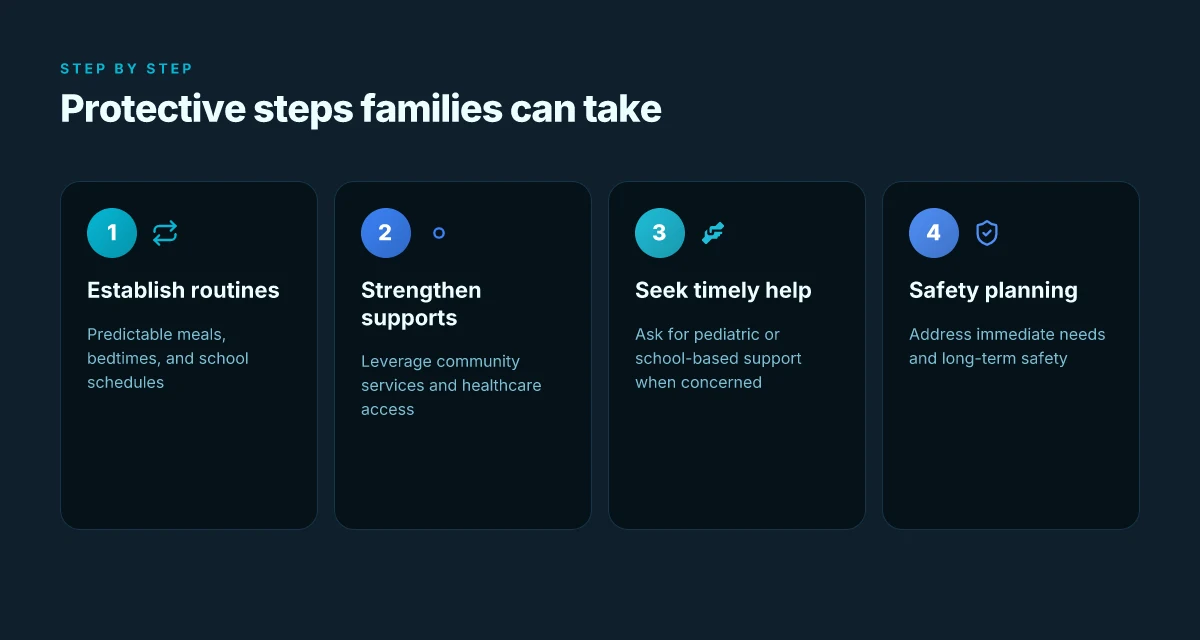
1) Document concerns clearly for yourself and others
Keep a brief, factual log. Note dates, what happened, who witnessed it, and any injuries or risks you observed. Distill conversations into direct quotes where possible. The goal is a traceable record you can share with professionals without coloring the facts.
Key takeaways
- Write in neutral language: “home lacks stable meals on three consecutive days” rather than “they never feed him.”
- Include immediate safety concerns: exposure to hazards, medical delays, or abandonment risks.
- Keep copies in a secure place and share what’s essential with the people who will help.
I dug into guidance from child-protection agencies and the DSM-ICPC framework. The literature stresses that precise, dated notes sharpen the signal for professionals and reduce back-and-forth.
2) Know local reporting requirements and hotlines in your area
Clearly understand who to contact when neglect is suspected. In many places you must report to child-protection services, a local hotline, or the police. Some regions allow self-report by caregivers who fear for a child’s safety. The exact process varies, so verify the appropriate agency in your jurisdiction and the preferred method of submission.
What to do now
- Locate your local child-protection hotline and save it in your phone.
- If there is immediate danger, call emergency services right away.
- If you’re unsure, contact a pediatrician or school counselor to guide you to the right line.
3) Engage with pediatricians, school staff, or child-protection professionals for a coordinated plan
You’re not alone. A coordinated plan brings medical, educational, and protective perspectives together. Start with a trusted pediatrician or school nurse, then bring in a local child-protection worker if the concerns persist. Prepare your documented timeline and relevant evidence before meetings.
What to expect
- A multidisciplinary plan may address food security, safe sleep spaces, transportation to appointments, and interim caregiving arrangements.
- Professionals will assess risk, confirm needs, and outline steps to safeguard the child.
- You’ll be part of the plan, with your observations and concerns informing decisions.
In practice, coordination matters. A single adult voice rarely moves the needle. The ensemble does.
4) Safety planning for the child and addressing immediate needs
Prioritize the child’s safety above all. Identify a safe place to stay if the home environment is unsafe, arrange for meals and clothing, and ensure medical and mental-health needs are addressed. Revisit the plan weekly or after any new risk sign emerges.
Bottom line: respond promptly, document carefully, connect with the right professionals, and keep the child’s safety central.
Most important: timely action and coordinated care reduce risk and stabilize the child's environment. When you escalate with the right people, you’re not just filing a report, you’re shaping a protective plan the child can rely on.
Common myths vs facts about neglect
| Myth | Fact (short phrase) | Typical misperception | Corrective action | Suggested wording to use |
|---|---|---|---|---|
| Only severe poverty qualifies | Not only poverty | Underestimation | Education | “Neglect can occur even with limited resources.” |
| Abuse is always present | Neglect can be without abuse | Confusion | Clarify definitions | “Neglect focuses on needs not met.” |
| Kids outgrow neglect | Some risks persist | Delay in action | Early identification | “Early signs warrant evaluation.” |
Compiled November 2026; check the provider's site for current details.
Common myths about neglect
Neglect is not what people think it is. In families you’ll see care gaps that don’t look dramatic, but they still damage a child’s safety and development. I looked at authoritative definitions and the DSM/ICPC criteria to map how myths distort recognition and response. The reality is stubborn: neglect persists even when a child seems fed, clothed, or “private.” Misconceptions blunt early help. The following three micro-claims capture the landscape.
1. Neglect is only about physical deprivation
The myth says neglect equals hunger and poverty visible at the kitchen table. In practice, neglect often hides in plain sight. It includes chronic under-stimulation, missed medical appointments, and failure to provide supervision or safety. The consequences aren’t limited to hunger. They span cognitive, emotional, and behavioral development. From the World Health Organization’s overview, neglect can exist even when a family doesn’t appear destitute, because danger comes from persistent omissions rather than obvious acts. This is why screening tools look at rhythm of care, not just material shortages. Neglect lives in the gaps, not only in the cupboard. The risk is that caregivers with limited resources still fail to provide consistent care, supervision, and nurture.
A practical cue: ask whether a child’s basic needs, food, shelter, safety, medical care, and education, are met consistently across weeks, not just on occasional days.
2. Neglect always involves malice or abuse
The error here is equating neglect with intentional harm. Most neglect arises from circumstances, caregiver stress, mental health challenges, or knowledge gaps. Malicious intent is neither a prerequisite nor a common predictor. In DSM-aligned criteria, neglect is about deficiency or disruption in caregiving that leads to risk or harm, regardless of intent. When I read through the clinical guidelines, the emphasis is on patterns and outcomes, not blame. A child who regularly misses meals due to poverty without a plan to fix it still warrants concern and protective response.
The takeaway: the absence of overt aggression does not immunize a family from child-protective intervention. Early supports and coordinated services can close the care gaps without casting blame.
3. If a child looks fed and clothed, neglect isn’t present
Clothing and meals can mask ongoing neglect, especially when care routines are irregular or supervision is inconsistent. A child may appear fine on a single visit but show delayed development, anxiety, or withdrawal across time. The risk signals include missed medical care, unsafe living conditions that aren’t immediately visible, and a home environment that fails to meet the child’s evolving needs. The WHO and CDC definitions emphasize the broader scope of maltreatment, including neglect in supervision, safety, and emotional support. The face-value check is insufficient. Signs accumulate across days, weeks, and months.
Appearance is not a verdict. Patterns are. If you notice repeated episodes of missed meals, skipped health visits, or persistent unsafe conditions, treat it as potential neglect regardless of looks alone.
Live practice hinges on early identification and neutral escalation. If you’re worried, document patterns, seek guidance from pediatric providers, and reference public guidelines on child maltreatment. The goal is protection and support, not accusation.
Verdict: neglect is a systemic issue rooted in repeated omissions, not a single lapse. It deserves timely, compassionate, cross-sector response. When it shows up in any of these forms, care gaps, irregular supervision, missed health needs, or unsafe environments, seek coordinated help. See public sources for definitions and flags, then connect with local child welfare and health professionals to plan concrete steps. Recognize the pattern, not the performance. Early recognition drives safer outcomes.
Cited sources: CDC definitions and WHO fact sheets outline the scope of neglect beyond physical deprivation. For a concise map of what counts as neglect, see the WHO overview linked in this piece.
The future of recognizing child neglect in families hinges on clear, early cues and community vigilance
I looked at how expert definitions have evolved by 2026, and the takeaway is practical: neglect is about persistent gaps in basic care, safety, and supervision that harm a child’s development. From the documentation and child-protection guidelines I cross-referenced, the signs cluster around a pattern rather than a single red flag. A child consistently misses meals, medical appointments, or school without credible explanation, and caregivers appear detached, overwhelmed, or unable to meet essential needs. This is not a moral failing. It’s a system that needs timely, compassionate intervention. Public reports point to improved outcomes when schools, pediatricians, and families share information early.
What the spec sheets actually say is that early warning signals matter most when they are frequent and across domains. Reviews consistently note that early conversation with trusted adults and clear reporting pathways reduce harm, especially in communities with accessible social supports. In practice, parents can use simple check-ins: is every meal, every bedtime, and every medical need addressed? If not, seek guidance through local protective-services contacts or pediatricians. The path to safety starts with a conversation, not a judgment.
Next steps:
- Talk to your child’s pediatrician about any concerns and ask for a family-support plan.
- Document concerns with dates and observable behaviors to share with professionals.
If you notice persistent gaps, consider reaching out to your local child-protection office or school counselor for confidential guidance. What will you do differently this week to ensure a basic safety net for your child?
Frequently asked questions
How do i know if my child is being neglected
Neglect shows as persistent or repeated failures to meet a child’s basic needs for food, shelter, supervision, medical care, or education. Look for chronic hunger or poor nutrition, untreated illnesses, frequent medical or dental problems, consistently dirty or inappropriate clothing, truancy or chronic lateness, ignored safety risks, and emotional withdrawal. Signs may appear across months rather than days. In families with limited resources, neglect can mimic poverty but still produce similar health and developmental concerns. If you notice several indicators together, document dates and contexts and consult a licensed professional or child-protection authority for guidance. Neglect often manifests as a pattern, not a single event. Document timelines, seek guidance, and prioritize the child’s safety. Ask for help early rather than waiting for a crisis. Review local reporting requirements to understand next steps.
What is the difference between neglect and abuse
Neglect is a failure to meet a child’s basic physical or emotional needs, either through acts of omission or insufficient supervision. Abuse involves intentional harm or threat of harm, including physical injury, sexual harm, or severe emotional maltreatment. The key distinction is intention and harm type: neglect centers on omission or inability to provide. Abuse centers on active harm. In practice, families may experience both. Clinical and protective-services assessments separate the two while recognizing they can co-occur and compound risk to the child. Understanding the distinction helps orient reporting and supports. Clarify intent with professionals, document observations, and prioritize safeguarding.
Which organizations provide guidelines for child neglect
Public health agencies publish core guidelines on child neglect. In the United States, the American Academy of Pediatrics issues practice guidelines for pediatric screening and reporting. The Child Welfare Information Gateway consolidates state reporting rules. Internationally, the World Health Organization offers child-protection resources, and UNICEF provides family support references. Professional bodies often align with DSM-5-TR and ICD criteria for assessment. When in doubt, start with your state or national child-protection agency and cross-reference with pediatric associations. Consistent messaging across sources points to early identification and escalation when needed. Check the latest updates, verify criteria with clinical sources, and follow local reporting laws. Rely on official guidelines rather than rumor.
What are the signs of educational neglect
Educational neglect appears as chronic truancy, repeated school absenteeism without medical justification, or failure to enroll a child in required schooling. It may also show up as missed individualized education plan (IEP) services, insufficient provision of learning supports, or prolonged neglect of school readiness activities. Look for a pattern: several weeks of unexcused absences, missed report cards, or repeated assignments left unattended. Schools are mandated reporters in many places, so collaborating with educators can illuminate concerns and trigger appropriate supports. Educational neglect is not about a single missed day. It’s about ongoing disengagement from schooling. Document absences, coordinate with school staff, and involve child-protection authorities if needed. Prioritize continuity of education for the child.
How can i talk to a child about neglect safely
Speak in a calm, neutral, nonjudgmental tone. Use age-appropriate language and invite the child to share what they’re experiencing without pressuring them to disclose. Emphasize safety and your concern for their well-being, not blame. Avoid interrogating or interrogating the child. Offer concrete steps you will take to help and provide reassurance about confidentiality and protection. Validate feelings, listen more than you speak, and document what the child says in case reporting becomes necessary. If abuse is suspected, contact authorities promptly. Trust is built through steady and respectful listening. Use open-ended questions, reassure the child, and document conversations for accuracy. Connect with a licensed clinician if needed.
What is the role of a pediatrician in neglect cases
Pediatricians screen for nutrition, development, mental health, and safety concerns during well-child visits and can flag signs of neglect. They document growth trends, vaccination status, and psychosocial risk factors, and coordinate referrals to social services or early-intervention programs. The clinician may provide anticipatory guidance to caregivers on feeding, sleep, safety, and access to services. They do not replace protective authorities, but they are often the first medical professional to identify concerns and initiate referrals. Early medical input can prevent deterioration of health and development. Schedule regular checkups, document concerns, and coordinate with social services as indicated. Advocate for the child’s health needs.
How is neglect assessed in DSM-5-TR
DSM-5-TR frames neglect as a pattern of failure to meet a child’s basic needs, leading to impairment in functioning. Clinicians evaluate physical health, safety, and developmental milestones, alongside caregiver capacity and the consistency of caregiving. Assessments consider medical history, family context, and available supports. The diagnosis relies on clinical judgment, collateral information, and safety considerations rather than a single test. Structured observation and collateral reports help anchor判断. Review developmental history, consider environmental stressors, and document caregiving risks with precision. Consult with child-protective teams when concerns cross safety thresholds.
What interventions exist for at-risk families
Interventions range from in-home visiting programs and parenting-skills training to independent living supports and mental-health services. Evidence supports nurse-family partnerships, home-based family therapy, substance-use treatment, and early-education enrichment for children. Programs often include safety planning, access to food and housing resources, and ongoing case management. The aim is to stabilize the home environment, improve caregiver capacity, and support healthy child development. Early, comprehensive supports move the needle. Enroll in family-services, link to community resources, and monitor progress with a case manager. Implement a safety plan that protects the child.
How does neglect affect a child’s development
Neglect correlates with delays in language, cognitive development, and social-emotional skills. Chronic undernutrition and unmet medical needs stunt physical growth, while inconsistent caregiving can impair attachment, self-regulation, and later academic achievement. The effects often echo into adolescence and adulthood, including mental health challenges and lower educational attainment. However, timely intervention can mitigate many outcomes. Protecting basic needs early changes the trajectory. Recognize early signs, activate supports, and track developmental milestones over time. Prioritize consistent caregiving to support resilience.
What resources exist for caregivers under stress
Caregivers can access family-support hotlines, local child-protection agencies, and community-based services offering respite care, financial counseling, and mental-health support. Many regions fund in-home visiting, parenting programs, and emergency assistance for food and housing. Hospitals and clinics often have social workers who can connect families to relevant services. Stability in the home reduces risk for neglect. Call hotlines if immediate danger exists, ask for social-work referrals, and schedule follow-ups with community centers. Explore virtual and in-person options for flexible access.
How can schools help identify neglect
Schools are on the front lines for early detection. Teachers notice attendance gaps, declines in engagement, or missed services like meals or counseling. School social workers and nurses can coordinate with families to address barriers and arrange supports. Confidential reporting channels and mandated-report training help staff act responsibly. When concerns arise, schools may convene multidisciplinary teams to assess safety and connect families with services. Schools act as vital touchpoints for protection and support. Document concerns, coordinate with families, and escalate if safety is at risk. Engage local child-protection services as needed.
What is the difference between neglect and poverty-related challenges
Poverty-related challenges reflect resource scarcity that can impede access to food, housing, or healthcare but do not automatically equal neglect. Neglect implies a persistent pattern of failing to meet a child’s basic needs or ensuring safety, regardless of resource limits. Distinguishing the two helps avoid stigma while directing appropriate supports. In cases where poverty and neglect overlap, families benefit from integrated services that address both material hardship and caregiving capacity. Resources should target needs, not blame. Assess family risk, provide concrete supports, and monitor outcomes over time. Coordinate with social services and healthcare providers.
How should a concerned relative report neglect
Contact your local child-protection agency or law enforcement with any credible, specific concerns about a child’s safety. Provide observable facts, dates, and locations rather than speculation. Many jurisdictions allow anonymous reporting, though identifying yourself can help investigation quality. After reporting, follow up to learn about next steps and document any further concerns. Do not confront the caregiver directly in ways that could escalate risk to the child. Safety first, documentation second. File a report, share factual observations, and seek guidance from professionals. Stay involved through appropriate channels.
What are common barriers to reporting neglect
Barriers include fear of retaliation, concerns about family privacy, lack of awareness about signs, and distrust of authorities. Language barriers, cultural differences, and past negative experiences with services can deter reporting. Systems overload, long wait times, and confusing procedures further discourage action. Overcoming these barriers requires clear, accessible pathways, confidential options, and public education about rights and protections for children. Awareness and trust are the gatekeepers to protection. Know the reporting channels, advocate for simpler processes, and signal concerns early to trusted professionals. Engage community groups to improve outreach.
How is neglect prevented in early childhood programs
Prevention hinges on high-quality caregiver-child interactions, safe environments, consistent supervision, and robust training for staff. Programs implement screening for family risk factors, nutrition and health monitoring, and referral pathways to services. Regular staff development on trauma-informed care and safety protocols reduces risk. Strong governance, transparent complaint mechanisms, and continuous quality improvement help sustain protective environments. Prevention is built into daily practice. Invest in staff training, monitor safety checks, and align program policies with child-protection standards. Prioritize the child’s day-to-day security and development.