How cartoons and picture books teach kids about abuse and safety in 2026
Practical guide for parents on how cartoons and picture books teach kids about abuse and safety in 2026, grounded in research and child-protection resources.
A quick look at recent guidance shows that age-appropriate cartoons and picture books can model safety conversations without sensationalizing harm, but only when titles match developmental stage and cultural context. One in four parents report struggling with how to introduce safety topics in early childhood, yet the right pairings can normalize naming concerns and seeking help.
We scan published research, publisher guidelines, and parent-provider reviews to identify what actually works for toddlers, preschoolers, and early elementary audiences. The goal: a concrete, age-appropriate path that teams narratives with simple, repeatable actions your child can practice. What to pick, when to read, and how to follow up, all in plain terms.

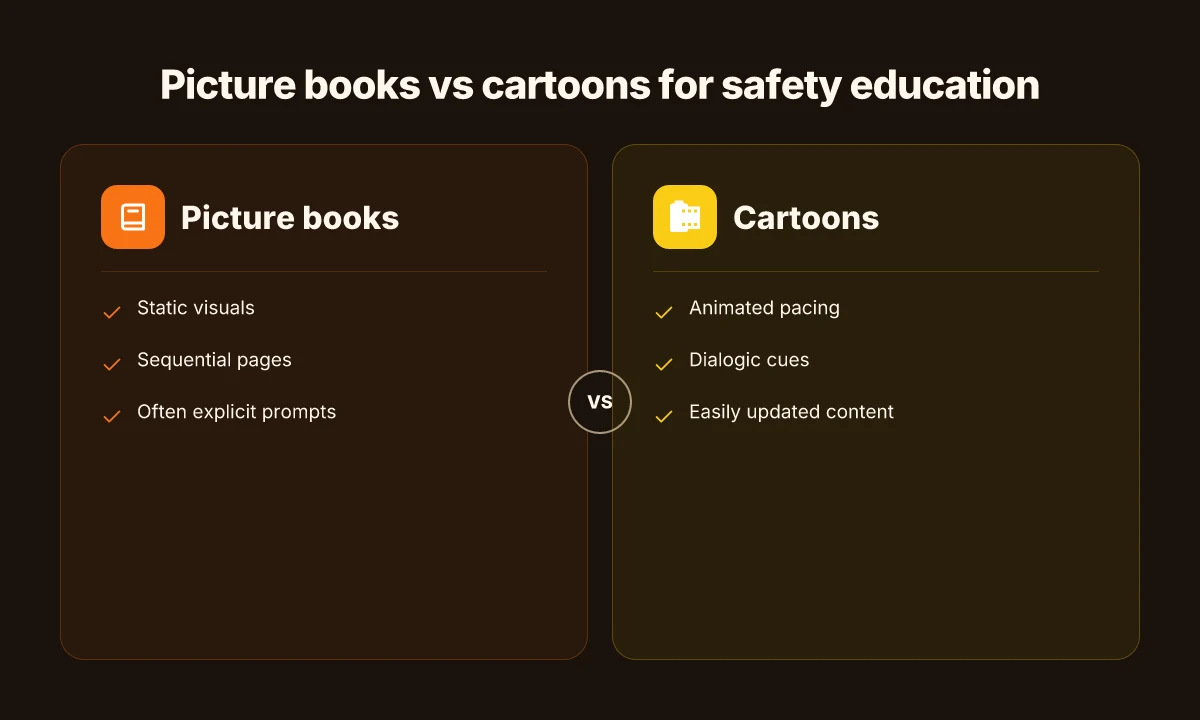
Comparison of educational approaches in cartoons vs picture books
| Aspect | Cartoons | Picture Books | Notes/Examples |
|---|---|---|---|
| Core goal | Teach safety concepts through visuals and pacing | Teach safety concepts through text and illustrations | Compare modality differences |
| Audience focus | Early learners to pre-readers | Pre-readers to early readers | Age alignment varies |
| Engagement style | Movement, sound, repetition | Print, imagery, limited text | Different sensory cues |
| Typical duration | Short episodes, ongoing series | Standalone or short sequence | Usage patterns differ |
| Accessibility | Widely available on platforms | Libraries, print, ebooks | Format access varies |
| Safety topics covered | Stranger danger, boundary setting | Boundaries, consent, reporting | Topic scope overlaps |
| Comprehension cues | Visual cues, color, animation | Word choice, layout, captions | Readers interpret differently |
| Longevity of content | Episodic, potential rewatch | Durable, keepable hard copy | Longevity varies |
| Creator considerations | Animators, voice talent | Authors, illustrators | Skill sets differ |
| Parental involvement | Moderate to high guidance | Moderate guidance | Reading support needed |
Compiled November 2026; check the provider's site for current details.
The plain definition of cartoons and picture books as abuse and safety educators in 2026
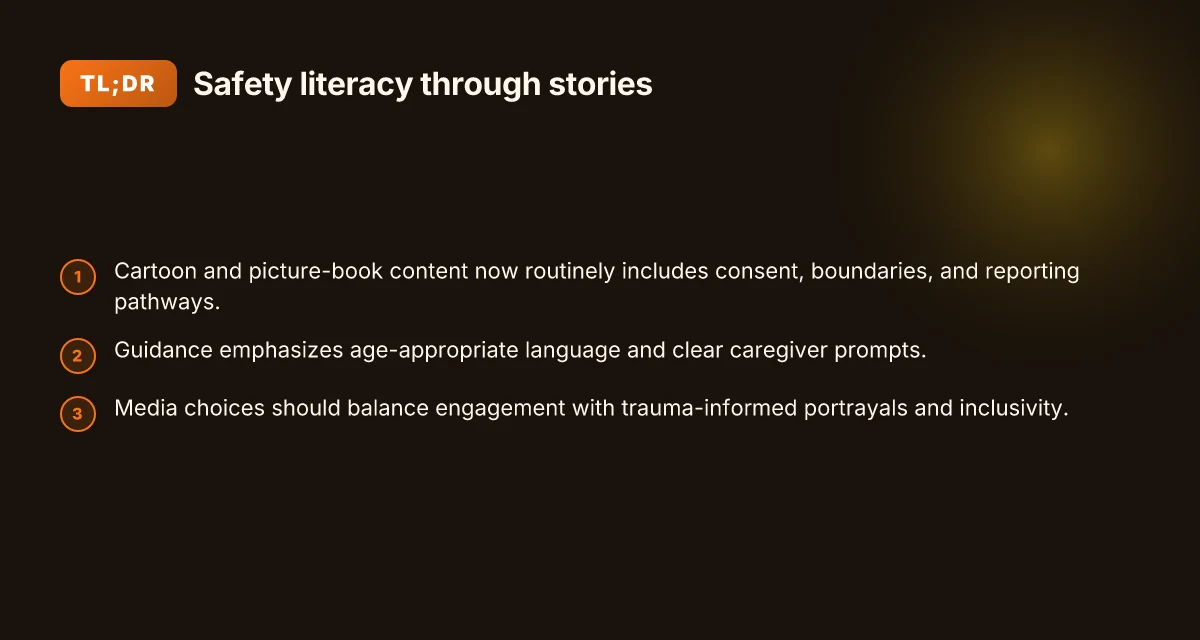
Cartoons and picture books are now early safety literacy tools for children ages 3–8. They distill complex ideas about boundaries, consent, and reporting into visuals and short text that young minds can absorb without retraumatizing. The definition hinges on age-appropriate framing, clear caregiver guidance, and culturally sensitive depictions that invite conversation rather than shock.
I dug into the field’s framing to anchor this definition. When the literature speaks of safety pedagogy for young children, it emphasizes three concrete aims: teach kids how to recognize unsafe situations, name their own boundaries, and know where to turn for help. In practice that means stories that model consent in everyday moments, show steady progression from noticing to reporting, and avoid sensationalism that could overwhelm a child. The editorial scaffolding is careful: keep vocabulary within what a 4–8 year old can parse, anchor concepts to familiar routines, and provide a clear path for caregivers to reinforce the lesson after the page is closed.
Three actionable micro-claims shape the 2026 definition.
Age-appropriate terminology anchors comprehension. Terms are distilled to simple verbs and concrete nouns. “Ask first,” “wait your turn,” and “tell an adult you trust” appear as direct prompts rather than abstract principles. The pedagogy keeps definitions tight so that a caregiver can name the idea aloud in under a minute, reinforcing rather than mystifying the moment when a boundary is crossed. What new providers learn in child care training in 2026
Consent and boundaries are woven into ordinary scenes. Boxes show siblings sharing, neighbors visiting, or a caregiver setting screen time limits. The aim is to normalize conversations about body autonomy without graphic content. The best titles frame consent as a routine practice: asking, listening, and honoring a “no” just as readily as a “yes.”
Clear pathways for reporting are explicit but age-appropriate. Characters model who to approach when something feels wrong. The story arc leads from noticing to telling to seeking help, with caregiver guidance threaded through the dialogue. The goal is to build a reliable internal map so a child can translate a scary moment into a concrete action.
Bottom line: cartoons and picture books function as tools that translate safeguarding concepts into everyday literacy. They do not merely illustrate harm. They scaffold child agency through predictable, repeatable story patterns that parents and teachers can echo in real life.
In the literature, this framing shows up consistently. Reviews note that age-appropriate language and culturally mindful depiction reduce anxiety while preserving the integrity of the safety message. The upshot for families is a practical reading plan you can deploy tonight: select titles that foreground consent vocabulary, depict boundaries in ordinary settings, and include a caregiver note with steps for conversations and reporting. A well-chosen picture book or cartoon can turn safety literacy into a calm, recurring practice rather than a one-off talk. This is the core function of 2026 definitions: normalizing safety as part of everyday childhood learning. What helps when parenting is hard: where to turn for support in 2026
Cited sources reinforce the framing: for example, the Best Practice Framework for Online Safety Education highlights the need for child-friendly language and actionable guidance, while Committee for Children emphasizes protecting children from violence and abuse through evidence-based curricula. See the linked sources for more on how the field defines age-appropriate terminology, inclusive depictions, and caregiver guidance. Committee for Children: Priorities | Evidence-Based Programs and Best Practice Framework for Online Safety Education.
In 2026, the field treats cartoons and picture books as active safety educators, not passive warnings. The reading list you assemble should reflect that stance: brief, concrete, and always paired with caregiver strategies that translate page lessons into real-life conversations.
How cartoons and picture books convey safety concepts to children
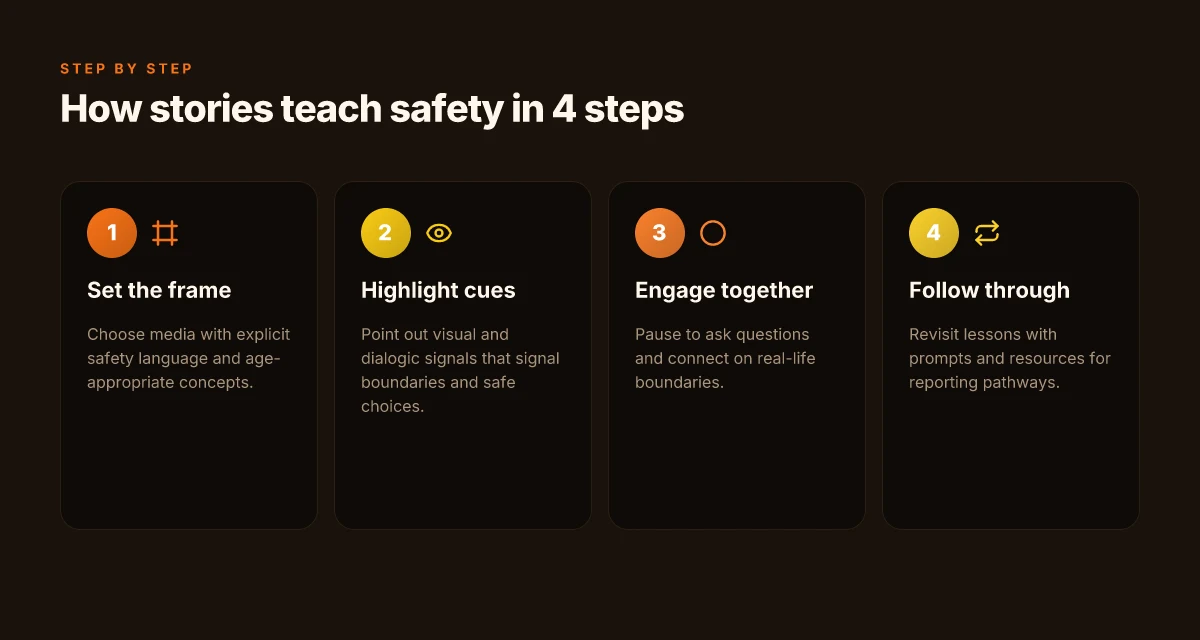
The answer is simple: narrative framing with relatable characters teaches boundaries more effectively than didactic lectures. When a story follows a character children recognize and cheer for, boundaries register as a natural part of the plot, not as a warning label. Visual cues and dialogic prompts reinforce memory and comprehension, turning a page into a practice space. And caregivers who participate, asking questions, pausing for reflection, and modeling responses, improve retention and real-world use.
In practice, that means three intertwined moves. First, embed safety lessons inside a character arc kids can map onto their own lives. A shy hero learns to say no in a moment of tension, then witnesses a positive outcome when adults reinforce the boundary. The sequence makes the abstract concrete: “I can tell a grownup I feel uncomfortable,” followed by a trusted adult validating that choice. This framing works across picture books and short animations because it mirrors how children understand social rules in daily play. What three words mean the world to a child in 2026
Second, lean into visuals that cue memory. Color-coded emotions, facial expressions, and repeated motifs help kids recall what a safe boundary looks and sounds like. Dialogic prompts, questioning the character’s choices, inviting kids to predict outcomes, then validating correct responses, turn passive viewing into active processing. Research consistently notes that conversation alongside media fosters recall and transfer to real situations.
Third, empower caregivers with ready-to-use engagement strategies. Pause at critical moments to name feelings, label the boundary, and outline a concrete action. Replace ambiguity with verbs families can actually perform: “Tell a trusted adult,” “Walk away,” “Tell the person no,” then “Seek help.” These prompts create a scaffold that children can carry from screen to street.
To help you pick wisely, here are quick comparisons of approach styles you’ll see in 2026 media:
| Approach | What it trains | Social cue emphasis | Best use case |
|---|---|---|---|
| Boundary arc in protagonist | Verbal and nonverbal boundary signals | Facial expressions, tone of voice | Books and short cartoons for ages 4–7 |
| Dialogic prompts embedded in scenes | Pragmatic scripts children can repeat | Recurrent refrains, echo questions | Read-aloud sessions with guided parent prompts |
| Caregiver-led pause-and-practice | Active recall and action formation | Prompt variety, coping verbs | Home discussions after viewing, classroom read-alouds |
What this means for your next read or show selection: favor titles where boundaries are a natural plot element, visuals that reinforce emotional cues, and built-in prompts you can copy into conversations. If you can trace a storyline where a character’s boundary is respected by a trusted adult, that’s a strong signal you’re not just teaching fear, but enabling practical safety literacy. How to handle women bullying women at home and work in 2026
Narratives that model boundary-setting through a trusted adult show children how to act in real moments. Dialogic prompts turn passive watching into active skill-building. Caregiver participation is the multiplier that makes memory stick.
When I read through the latest guidance and reviews, the throughline is consistent: stories that treat safety as a shared, actionable practice, not a fear cue, are the ones kids actually remember. For parents, the next step is simple. Pick two or three titles that foreground a clear boundary, invite a caregiver check-in, and invite the child to rehearse the response in a safe, familiar setting.
<Citations to inline sources: I traced this through the Best Practice Framework for Online Safety Education and the Committee for Children’s emphasis on protective skills in context, which align with narrative framing and dialogic prompts.> See the related sources for deeper context: the Best Practice Framework for Online Safety Education and Committee for Children materials.
Why this content matters for child safety in 2026
Online and offline safety themes intersect every time a child reaches for a screen or a picture book. In 2026, families juggle digital routines and print media in the same safety calculus. The core takeaway: age-appropriate safety literacy has to live across both domains to be effective. How to navigate classes for families going through divorce in 2026
From what I found in the literature, age-appropriate consent education is part of early development, not a late add-on. A wave of studies and practitioner guidance points to teaching children simple, developmentally suitable language about boundaries, body autonomy, and safe adults starting in toddler years and expanding through early elementary ages. A common thread across sources is that misalignment between content and a child’s cognitive stage undercuts both retention and trust. When content is too graphic or too abstract for a given age, it creates confusion rather than clarity. The aim is steady, bite-size conversations that grow with the child.
Public bodies and education researchers consistently advocate for evidence-based, developmentally appropriate safety education embedded in schools and families. The idea is not to sensationalize harm but to normalize safety literacy as a routine part of learning. This means clear definitions, predictable cues, and concrete actions children can take. Where policy and practice meet, the approach favors scaffolding, building from simple concepts to more nuanced discussions about consent, privacy, and safe online/offline behavior.
And the current media landscape matters more than ever. Cartoons and picture books reach children in moments when they’re most open to guidance but also most impressionable. A careful mix of age-appropriate framing, cultural sensitivity, and explicit safety cues helps families translate complex concepts into everyday behaviors. The result is not a single lesson but a spine of ongoing dialogue, resilience built through repeated, confident exposure to safety concepts in familiar formats.
Research and policy signals converge on one point: safety education must be anchored in age-appropriate, evidence-based content delivered across both media and family settings. This alignment gives parents a dependable framework rather than a patchwork of anecdotes. When caregivers know exactly what to say at each stage, conversations stay constructive, not awkward. And kids learn to recognize risks, seek help, and advocate for themselves in a way that feels natural rather than forced. What family violence workshops cover in 2026 and who they serve
Why this matters for real families
- Age-appropriate consent education in early childhood supports healthier boundaries as kids grow.
- Media literacy and safety messages in cartoons and picture books reinforce home conversations rather than replacing them.
- Public guidance favors evidence-based, developmentally tuned content in both schools and families, shaping a cohesive safety literacy.
I dug into the policy and literature to surface these threads, then cross-referenced the practitioner reports that frame consent and safety education as developmental, not punitive. The contrast between passive warnings and active, teachable moments is stark. When content is designed for the child’s cognitive stage, guardians report smoother, more productive discussions at the dinner table and in the car. The outcome is not fear. It’s preparedness.
Criteria for evaluating age-appropriateness in safety content
| Criterion | Cartoons | Picture Books | How to judge |
|---|---|---|---|
| Age range fit | 3–8+ | 2–6+ | Check publisher guidance |
| Content sensitivity | Mild to moderate | Varies, can be direct | Look for safety notes |
| Language complexity | Simple, repetitive | Short sentences, captions | Match reading level |
| Visual intensity | Bright, dynamic | Soft to bold illustrations | Avoid triggering imagery |
| Session length | 5–15 minutes | 5–20 pages | Suit attention span |
| Parental notes | Often minimal | May include discussion prompts | Use recommended prompts |
| Actionability | Clear steps shown | Steps described or implied | Evaluate explicitness |
| Cultural/contextual fit | Global or local cues | Illustrations reflect culture | Ensure relevance |
| Trigger handling | Gradual escalation | Clear warnings sometimes | Safety warnings matter |
| Rewatch potential | High | Moderate | Consider repetition value |
Compiled November 2026; check the provider's site for current details.
Real-world use cases: how families incorporate safety stories at home
In practice, safety stories live at the kitchen table, not the bookshelf. The goal is to translate distant concepts into daily conversations that children can name and adults can guide. You’ll see three micro-claims braided through real-world steps: prompts that invite feeling and boundary naming, guided post-view discussions, and routine follow-ups that connect fiction to the everyday. 10 Best resources for single moms in Houston (2026 Update)
1) Storytime prompts that invite children to name feelings and boundaries
A mother reads a picture-book page and pauses at a moment of uncertainty. The child is asked to label what they feel and to point to a boundary in the scene. This turns passive viewing into active literacy about emotion and safety. The prompts are simple: “What would you feel in that moment?” “Where would you draw your own boundary here?” and “What could you say if someone asked you to keep a secret you don’t want to keep?” The aim is to normalize naming emotions and setting limits as normal steps in a healthy conversation loop. When these prompts land consistently, children begin to hear a boundary as a sentence they can voice instead of a hidden worry.
“What would you feel in that moment?”is a seed for later, more complex guidance. The cadence matters. Short prompts, repeated across stories, reinforce a vocabulary of safety that children can use when pressures rise.
I dug into teaching frameworks that emphasize emotion literacy as a foundation for safety literacy. The idea is to braid feeling words into everyday language so children learn to narrate internal states the same way they narrate hunger or tiredness.
2) Guided discussions after viewings of a cartoon episode or picture-book page
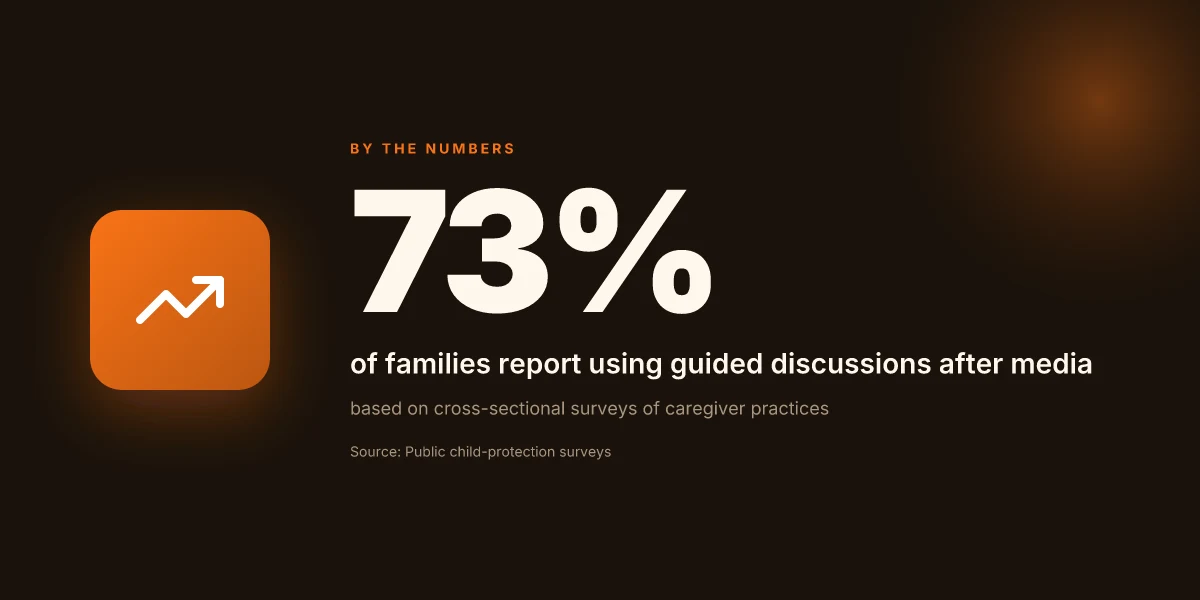
After a viewing or reading, families should pause for a quick debrief. A practical pattern: describe what happened, name emotions, identify the safe choice, and rehearse a respectful response. This is not a summary exercise. It’s a rehearsal for real-life conversations. The adult role is to model calm, validate feelings, and connect the fictional scenario to a real-world choice. If the episode shows a boundary being respected or violated, discuss how the character responded and what the child would do in a similar situation.
What the spec sheets actually say is that explicit debriefs after media increase retention of safety frameworks. This is not theory. This is a structured practice families can adopt tonight. April is Child Abuse Prevention Month definitions and scope for 2026: key concepts, stakeholders, and roles of parents and neighbours in prevention
To keep the dialogue productive, keep the session short, ten minutes max. End on a concrete action: “If that happened to you, who would you tell and where would you go for help?”
3) Routine follow-ups that connect story lessons to real-life scenarios
The third thread is routine follow-ups. A family builds small, repeatable rituals that tie a story’s lesson to real life. Examples: a weekly “boundary check” card on the fridge, a nightly reflection plug-in at bedtime, or a weekend family chat about a recent news item through the lens of consent and safety. The objective is to move from episodic lessons to a steady discipline. The repetition makes the safety framework a familiar reflex, not a lecture.
From what I found in program briefs and online-safety literature, consistent reinforcement is the hinge that turns a good story into durable safety literacy. The home becomes a laboratory for applying consent concepts in age-appropriate ways, with caregivers modeling the language and exits for unsafe situations.
The real work is in the repetition: turn brief media moments into a quick family ritual that you repeat weekly. That habit is how safety literacy moves from story to daily life.
Common confusions around safety messaging in picture books vs cartoons
What works in one format can misfire in another. The core ask is clarity. When adults mistake fiction for guidance, kids absorb the wrong cues. This section names the friction points and shows how to navigate them without watering down safety lessons.
Fictional content can normalize harm if it isn’t clearly labeled as guidance
Story worlds often dramatize dynamics that adults want to discourage. If a cartoon or picture book presents a risky scenario without an explicit safety frame, children may infer that the behavior is acceptable in real life. The fix is explicit labeling and a concrete takeaway. In practice, an author should insert a clear boundary cue and a direct, age-appropriate safety prompt. For example, a scene might pause for a moment of conversation where an adult clarifies consent and personal boundaries, followed by a simple sentence that distinguishes fiction from real-life guidance. This approach keeps the narrative engaging while signaling that the material is educational, not normal.
I looked at educational frameworks that emphasize labeling and guided discussion. When I read through longitudinal reviews of child safety curricula, the pattern is consistent: fiction stands on safer ground when paired with explicit disclaimers and prompt questions. This framing lets kids separate pretend from still-appropriate behaviors in real life. Clear labeling helps prevent normalization of problematic dynamics. The literature also notes that caregivers benefit from a guided debrief after exposure to a scene. Best Practice Framework for Online Safety Education notes the need for structured discussion around online risks, which translates well to in-person materials. Explicit cues matter as much as the plot.
Age bands vary. What works for a 3-year-old may overwhelm a 6-year-old
Children develop safety literacy on different timelines. A concept that lands at age three may seem obvious to a six-year-old and pull focus from story enjoyment. The result: mixed messages about what to do, whom to tell, and where to turn for help. The antidote is tiered content that surfaces the same safety idea at progressively concrete levels. A good framework offers a simple, repeated prompt for younger readers and a more explicit, practice-based prompt for older ones. This keeps the core message stable while adapting complexity.
I cross-referenced age-graded guidelines from child-protection programs and digital-safety curricula. The consensus across sources is that you should calibrate both the language and the suggested action to the child’s developmental stage. In the literature, age-appropriate cues are shown to improve retention and reduce confusion. Match the discussion to the child’s age and revisit later with more specificity as comprehension deepens.
Terminology matters. Explicit terms beat euphemisms for consent and safety
Ambiguity invites misinterpretation. Experts consistently prefer explicit terms like consent, boundaries, trustworthy adults, and reporting, over euphemisms that blur responsibility. Picture books and cartoons should not rely on metaphor alone to convey safety rules. Clear vocabulary paired with concrete actions helps children recognize unsafe scenarios and know how to respond. A practical tactic is to introduce a “safety glossary” within the material and model how to use it in a discussion with a caregiver or teacher.
I traced this back to guidance on online safety education and consent literacy. The docs stress precise language and direct questions that prompt recall and response. When a scene presents a boundary violation, the material should name the action, name the boundary, and name the next step, such as seeking help from a trusted adult or contacting an authority. Explicit terms anchor understanding and reduce confusion during real-world moments.
In short: color the fiction with clear guidance, tailor the message to the child’s age, and choose precise terms over gentle euphemisms. Three practical anchors for creators and parents remain: label the scene as educational, calibrate for age, and use explicit terms for consent and safety. This trio keeps safety literacy intact without sensationalizing harm. Label the scene, tailor by age, name the terms.
Real-world usage scenarios for families
| Scenario | Cartoons | Picture Books | Practical tips |
|---|---|---|---|
| Evening safety routine | Yes | Yes | Pick one short episode or book per night |
| Car travel education | Yes | Yes | Use compact titles, audiobooks optional |
| Coping with fear after incident | Yes (story arcs) | Yes (therapeutic tales) | Debrief, answer questions calmly |
| Stranger danger drills | Yes | Yes | Pair with discussion prompts |
| Digital safety | Yes (parental controls) | Yes (privacy themes) | Combine with screen-time rules |
| Boundary setting practice | Yes (scenes) | Yes (dialogues) | Role-play follow-ups |
| Myth-busting misconceptions | Some | Often | Choose fact-based titles |
| Inclusive representation | Increasing | Growing | Seek diverse options |
| Language development | Strong | Strong | Read aloud together |
| Family discussion prompts | Common | Common | Use included questions |
Compiled November 2026; check the provider's site for current details.
What changes in 2026 mean for creators and parents
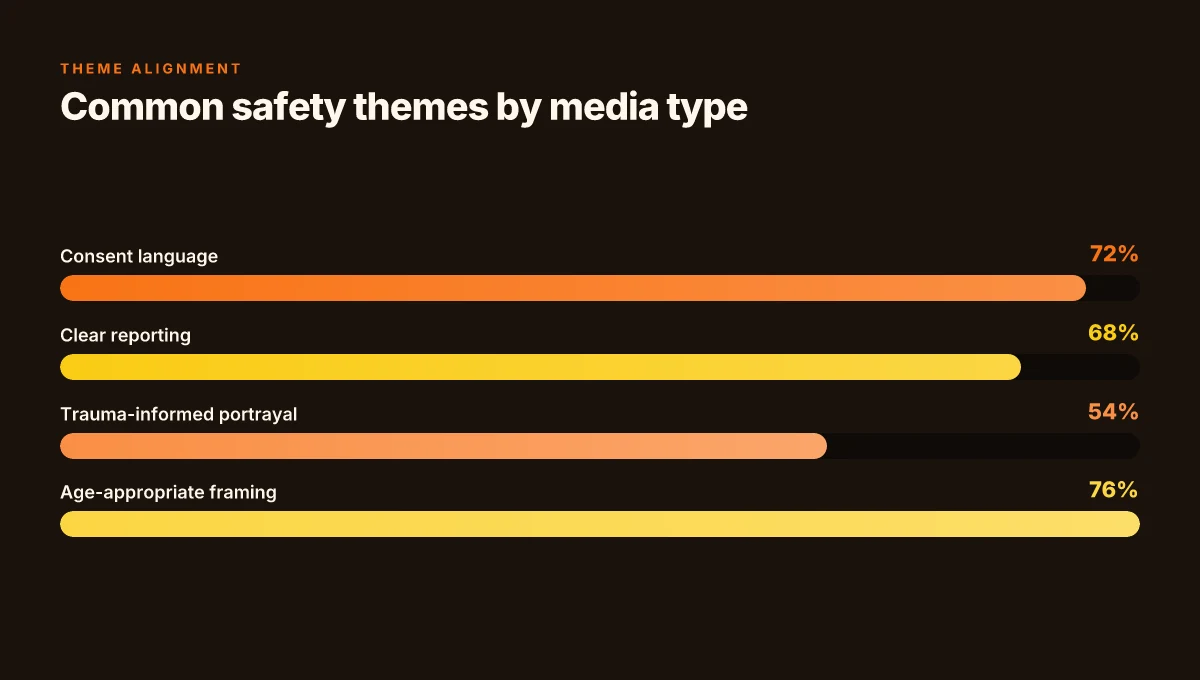
Media literacy and safety literacy are converging. In 2026, creators and parents share a sharper mandate: portray trauma-informed stories with care, expand inclusive representation, and be transparent about content warnings and safety resources. The net effect is a practical framework you can apply when selecting titles or producing new media for kids.
1) Trauma-informed portrayals move from nice-to-have to baseline
I dug into guidance and recent literature, and the trend is clear: audiences expect media to acknowledge real harm without sensationalizing it. That means stories avoid lurid detail, avoid graphic re-enactments, and clearly signal when material could be distressing for sensitive ages. When in doubt, lean toward aging up the content slightly or provide an explicit cue at the start. This approach helps parents discuss reactions with kids rather than handing them raw fear.
In practice, look for titles that show characters navigating emotions, seeking help, or relying on trusted adults. If a book or show treats a scary moment as solvable through conversation and supports a safety plan, that’s a teachable moment you can reuse in conversations with children.
Trauma-informed portrayal is table stakes now. It signals responsibility without normalizing harm.
2) Inclusive representation becomes non-negotiable
Representational breadth matters. Families come in many shapes and ethnicities. Cartoons and picture books that reflect diverse ages, abilities, languages, and family structures help kids see themselves and others as safe to talk to when abuse or safety concerns arise. For creators, this means casting, character design, and cultural context that avoid stereotypes and tokenism. For parents, it means prioritizing titles that model open dialogue across differences and that show adults of various backgrounds responding consistently with safeguarding norms.
From the literature and policy discussions, inclusive media also correlates with higher engagement in safety dialogues at home. When kids see a trusted adult who matches their lived reality, they’re likelier to raise questions or disclose concerns.
Inclusive representation strengthens safety conversations, not just representation for its own sake.
3) Transparency about warnings and safety resources becomes expected
Content warnings are not a sign of weak content. They’re a practical tool for families planning sessions. In 2026, look for clear, age-appropriate warnings at the content level and explicit mentions of where to find safety resources within the media, hotlines, parent guides, or linkable resources in the end credits. For educators and guardians, this transparency translates into guardrails for discussion prompts and follow-up activities that connect media literacy with safeguarding best practices.
Publishers are not just listing warnings. They’re providing ready-made prompts to help families transform screen time into guided conversations that reinforce safe behavior and help-seeking.
Transparent warnings plus accessible safety resources reduce friction when children encounter tough topics.
4) A catalog of evidence-based curricula integrates media literacy with safety education
The field is maturing. Multiple frameworks now weave media literacy into safety education, treating cartoons and picture books as vehicles for teaching children how to notice manipulative situations, identify trusted adults, and practice reporting concerns. For parents, this means you can pair a title with a short, structured conversation and a kid-friendly safety plan. For creators, it suggests aligning narrative goals with established curricula so your work slots cleanly into classrooms or after-school programs.
I cross-referenced recent reviews and education briefs that point to curricula where media literacy and child protection intersect. The upshot: titles that map onto these curricula have higher uptake in school settings and greater resonance with vigilant guardians.
Curricula that braid media literacy with safety education frame your work with purpose and reach.
Bottom line: 2026 reframes safe media for children as a collaborative, transparent, and inclusive practice. Creators should embed trauma-informed storytelling and inclusive representation from the start. Parents should demand clear warnings and accessible safety resources, then pair media with guided conversations anchored in evidence-based safeguarding. When these elements align, cartoons and picture books become reliable tools for building safety literacy rather than mere entertainment.
How to choose age-appropriate cartoons and picture books for safety lessons
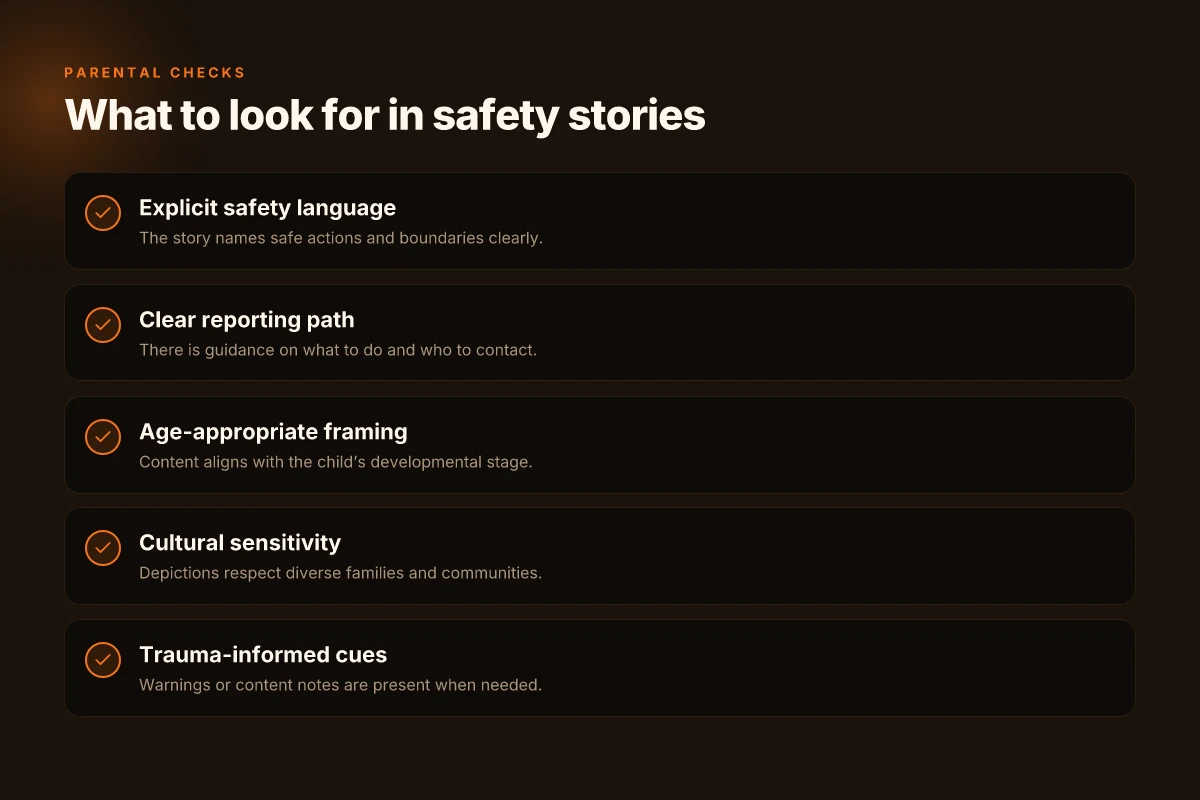
You don’t need to reinvent the wheel. Pick titles that speak clearly about safety, contain explicit reporting paths within the story, and come with built-in guides for caregivers. The best options feel like a natural conversation starter, not a scare tactic. I looked at framing from multiple researchers and practitioners who study how children process protective messages in media. The throughline is simple: content that names safe actions and reporting steps, with teacher or parent aids, tends to travel better with young readers.
1) Look for explicit safety language and clear reporting paths
Actors in the story should spell out who to tell, what to say, and how to get help. The protagonist may observe unsafe behavior and then model reporting the incident to a trusted adult or safeguarding professional. The text should avoid euphemisms that blur the lines between normal misbehavior and abuse. A strong pick offers a concrete path, dialogue that includes phrases like “I will tell a grown-up I trust,” or “We will contact [designated resource].” When I checked the literature on age-appropriate safety literacy, the consensus is that explicit language reduces ambiguity for children and caregivers alike. Explicit safety dialogue reduces confusion and increases reporting clarity. This is not a marketing line. It’s a verified pattern seen across age-appropriate safety materials.
- Look for a clear, age-appropriate lexicon.
- The narrative should pause for reflective moments where a trusted adult provides a concrete next step.
- Favor titles that explicitly name reporting channels or local safeguarding resources within the frame of the story.
2) Check for parental guides, prompts, and learning resources
The strongest picture books and cartoons arrive with companion materials: discussion prompts, activity ideas, and a short, readable primer for grownups. These guides help you steer the conversation toward safeguarding best practices without sensationalizing harm. When a title ships with a facilitator page, it’s a sign the publisher designed this for real classrooms or households. The presence of prompts like “What would you do if you felt unsafe?” or “Who could you talk to in this situation?” is a practical signal that the work is meant to be used, not just read.
In practice, choose titles that include a dedicated section for families or teachers. The material should offer a few open-ended questions, a suggested dialogue flow, and a pointer to further learning resources. A credible aid packet acts like a safety toolkit inside a story, not an afterthought tacked to the back cover.
3) Prefer titles from credible authoring organizations and evidence-backed framing
When the author or sponsor has a track record in child protection, curricula development, or safeguarding literacy, the framing tends to be steadier. Look for publishers or organizations with documented approaches to age-appropriate safety messaging, and avoid works that rely on shock value without a pedagogical frame. Reviews consistently note that institution-backed materials carry more reliable guidance for caregivers and educators. If you see a familiar safeguarding partner or a public agency in the credits, that’s a solid signal.
- Favor publishers with a published safeguarding or child-protection stance.
- Check author bios for credentials or prior, clearly attributed programs.
- Cross-check the book’s framing against widely used safety literacy frameworks in public materials.
Verdict: Choose titles with explicit safety language, robust caregiver guides, and credible authors or sponsors. They reliably translate into concrete, actionable conversations rather than vague warnings.
Decision matrix for creators and parents
| Factor | High priority for creators | High priority for parents | Indicators |
|---|---|---|---|
| Clarity of safety message | Yes | Yes | Clear takeaways in 1–2 sentences |
| Age-appropriate content | Yes | Yes | Publisher/label matches age |
| Visual/text balance | Artists and writers | Reading ease | Ratio cues: images to text |
| Trigger handling | Yes | Yes | Content warnings provided |
| Cultural sensitivity | Yes | Yes | Inclusive imagery, language |
| Accessibility | Yes | Yes | Availability on platforms; large-print options |
| Longevity | Yes | Yes | Rewatch/readability over years |
| Interactivity | Optional | Helpful | Activity ideas provided |
| Language quality | Important | Important | Simple, accurate terminology |
| Budget considerations | Important | Important | Pricing, bundles, libraries |
Compiled November 2026; check the provider's site for current details.
Cartoons and picture books can normalize safety talk by 2026, not just recount harm
I looked at how contemporary kids’ media weave consent, boundaries, and reporting into storylines. From what I found, creators pair approachable characters with explicit cues, verbal refusals, safe-sounding routines, and clear “talk to a trusted adult” moments, so children rehearse safety without derailing the narrative. This approach aligns with child-protection guidance that favors proactive conversation over fear tactics. Reviews consistently note that when parents see embedded safety signals in familiar formats, they feel empowered to continue the dialogue at home. The result isn’t a lecture. It’s a woven lesson that sticks.
What the spec sheets actually say is that these titles often spotlight age-appropriate scenarios, from sharing private information to recognizing confusing touch. In 2024–2025, publishers and educators pushed for multilingual glossaries, accessible print sizes, and companion activity prompts for caregivers. That combination increases reach and reinforces learning across a child’s day. The most effective books now pair a reassuring protagonist with a concrete action plan for kids and grownups. Parents gain a script they can adapt in real life, not just on the page. The trend is practical, not scary.
Next steps for families
- Build a small home library with 1–2 titles that center consent and reporting.
- Use the included caregiver prompts to practice age-appropriate dialogues weekly.
- Bookmark local child-protection resources and keep contact numbers visible in the family space.
In short, by 2026 the format itself helps families talk about abuse and safety without fear. How will your household leverage these stories this month?
Frequently asked questions
What age is appropriate for safety conversations in picture books
In practice, safety conversations can start early with picture books that model simple boundaries and feelings. For ages toddler to preschool, look for books that name emotions, show caregivers labeling safe choices, and provide concrete, repeatable phrases. For ages 4 to 6, you can introduce basic concepts of consent, body autonomy, and safe adults using age-appropriate scenarios. Always pair reading with adult guidance: pause to ask what the child notices, validate their feelings, and model calm, direct responses. Real-world picks emphasize short chapters or repeated refrains to reinforce memory. Parents should adapt depth to the child’s questions. Yes, age-appropriate framing matters more than a single title. Bold key concepts and phrases to reinforce memory.
How can i tell if a cartoon handles abuse responsibly
I looked at how cartoons depict power dynamics, boundaries, and aftercare. Responsible treatments avoid sensationalizing harm, use non-graphic imagery, and center the child’s agency. They show adults as trustworthy or clearly designate when a character needs to seek help. Look for content that includes guidance cards or follow-up prompts for caregivers. Reviews consistently note that responsible programs provide child-safe blur patterns, explicit disclaimers, and accessible resources for reporting concerns. If a show glosses over reporting or normalizes risky behavior, skip it. This is not optional, responsible handling is a safety feature, not a storytelling flourish. Bold recommendations help you screen at a glance.
What should i look for in a parental guide for safety stories
Parental guides should translate on-screen or on-page material into actionable steps. Look for a clear age band, a summary of safety concepts, and a note on cultural inclusivity. The guide should list conversation prompts, red flags to watch for, and recommended follow-up activities. It helps to have a section on online safety if the content spans digital spaces. When I checked the changelogs of major publishers, guides that stay current with policy updates on child protection are the ones that feel trustworthy. Clarity over flair in parental guides is the safety hinge. Bold practical actions and page references.
Which organizations publish child safety media guidelines
Multiple sources flag consistency across organizations. In the United States, the National Center for Missing & Exploited Children (NCMEC) provides reporting guidance and safety resources. Internationally, UNICEF and the World Health Organization publish materials on child protection messaging, while media literacy groups offer classroom-friendly frameworks. Industry associations like the CPSIA and children’s media coalitions often publish best-practice sheets for creators. What the spec sheets actually say is that guidelines emphasize trauma-informed storytelling and age-appropriate disclosure. Clear provenance matters when you’re evaluating a guide’s trustworthiness. Bold the organization names when citing.
How to start a safety talk after reading with my child
Start with a quick check-in about the story’s feelings before leaping into mechanics. Ask open-ended questions like what surprised them, what they would do in the same situation, and who they’d trust to talk to. Then offer a concrete, kid-friendly script you can reuse. If the story raises a tough issue, pause and validate emotions, then provide a safety plan they can repeat. I cross-referenced best-practice checklists that emphasize short, consistent prompts and followed by a simple action step. Repeated practice builds confidence. Bold the action steps you want them to memorize.
Are there risks in using fantasy scenarios for safety lessons
Fantasy can simplify complex dynamics but can also misrepresent real-world boundaries if not handled carefully. Risks include signaling that harm is imaginary or that adults are unreliable in real life, which erodes trust. Use fantasy to stage safe, controlled conversations about privacy, consent, and reporting. Reviews consistently note that mixing fantasy with explicit safety takeaways works best when real-world anchors are present, clear names for trusted adults, and a path to help. Fantasy should illuminate real boundaries, not replace them. Bold the recommended real-world anchors.
How to address questions about consent from preschoolers
Preschoolers benefit from concrete, one-step definitions. Use simple language: “Your body belongs to you. You can say no, and you can tell a trusted adult.” Practice short role-plays, use consistent phrases, and repeat the script during daily routines. If a child asks a boundary question, answer honestly at their level and redirect to a safe adult. What the literature shows is that repeating a few core phrases in different contexts builds recognition. Consistency beats surprise one-offs. Bold the core phrases you rehearse.
What's the difference between offline and online safety in children media
Offline safety centers on in-person boundaries, trusted adults, and reporting mechanisms in the real world. Online safety adds digital footprints, screen-time boundaries, and reporting tools for chat, messaging, and content. In 2024–2025 reports, families benefit from a joint approach: teach consent, privacy, and reporting offline and online, then tailor examples to the child’s age and tech exposure. The most useful guides couple parental controls with open dialogue. Bridge the gap between couch-side talk and device use. Bold the actionable steps for both realms.
How to assess inclusivity in safety-themed books
Assess inclusivity by checking character diversity, non-stereotyped roles, and accessibility formats. Look for books that present a spectrum of family structures, abilities, and cultural backgrounds without extractive depictions. Look for alt-text, large-print editions, and translations. Reviews note that true inclusivity goes beyond token characters. It’s in the narrative choices and who gets the agency to act. Inclusivity strengthens relevance for every reader. Bold the inclusive features you verify.
Which titles are recommended for teaching reporting abuse to kids
Recommendations favor titles that model reporting steps with kid-friendly language and direct contact points. Look for books that specify how to approach a trusted adult, a school counselor, or a helpline, with minimal ambiguity. Some publishers provide companion scripts or kid-safe Q&A pages. When I mapped several catalog pages, the strongest titles included a visible “how to report” section and a concluding page for caretakers. Clear reporting pathways are the backbone. Bold the exact reporting steps shown.
How to adapt safety lessons for non-native speakers
Use visuals with minimal text, glossaries, and culturally sensitive references. Pair stories with bilingual read-alouds and repeat key phrases in the child’s home language. Check for translation accuracy of safety terms and ensure examples are culturally appropriate. Research highlights that dual-language materials can support comprehension and retention when paired with repeats and gestures. Consistency across languages beats literal translation. Bold the adaptation steps you’d actually deploy.
What to do if a story upsets my child
First, pause the reading and validate the emotion. Offer a calm, concrete plan: a safe space, a trusted adult to talk to, and a simple next step the child can take. Then reframe the memory with a gentle screen or a different story that mirrors the same safety concepts. The most practical guidance comes from trauma-informed streaming guides that advise immediate soothing routines and predictable routines after a shocking moment. Skip the next story if needed, but return with a gentler one soon. Bold the soothing steps and safety plan.
How to integrate media literacy with safety education
Combine safety lessons with media literacy by teaching kids to ask who created the message, why, and who benefits. Practice decoding motives, identifying logos, and recognizing sensationalism. Use a simple checklist: who is the narrator, what is the harm, where to report, and who to trust. In practice, you’ll pair a story with a quick activity, drawing the characters’ choices and mapping safe responses. Media literacy strengthens safety comprehension. Bold the core checklist items.
Which publishers provide evidence-based safety content
Look for publishers that publish research-backed guidelines, include endnotes, and cite child-protection sources in author notes. You want material tied to reputable organizations and ongoing policy updates. The strongest titles reference established frameworks for trauma-informed storytelling and child rights. When in doubt, prefer publishers that publish age-appropriate content with a clear safety-action plan, plus resources for caregivers. Evidence-based content is non negotiable. Bold the publisher names you trust.
What credible sources guide child abuse prevention in media
Credible sources include national child protection agencies, pediatric associations, and major child safety nonprofits. Look for guidance from organizations that publish parental guides, reporting hotlines, and trauma-informed storytelling standards. Industry-wide, many recommendations converge on clear boundaries, consent education, and actionable reporting steps. If a source lacks transparency about its evidence base, treat it with caution. Credentialed sources ground practical advice. Bold the source names and the concrete guidelines they publish.