What new providers learn in child care training in 2026
A practical guide for parents on what new child care providers learn in 2026. Summaries of core competencies, public standards, and implementation notes from authoritative sources.
New providers enter child care with a sharpened toolkit and a few stubborn gaps. In 2026, most graduates arrive with formal safety training and a documented plan for behavior support, yet family-facing realities, daily routines, transitions, and small emergencies, expose gaps that only real-world practice reveals. The takeaway: a provider’s day is a sequence of quick decisions, not a single lesson from a textbook.
The piece links what curricula cover to what families notice after drop-off: consistency in routines, trauma-informed sensitivity, and inclusive teaching, all backed by state licensing standards and recent course catalogs. I map how training translates into daily actions you can observe, meals served, transitions timed, and behaviors supported, so you know what to expect and what to confirm during interviews. This matters now because accreditation cycles and recertification timelines push programs to demonstrate ongoing growth, not a one-off credential. Expect deeper competencies to show up in how a new provider communicates, documents, and co-manages safety with families.

Core competencies and definitions for new providers in 2026
| Competency/Definition | Key Focus | Example behaviors | Relevance to training | Notes |
|---|---|---|---|---|
| Child development knowledge | Developmental milestones | Observe and document milestones | High | Grounded in age ranges |
| Classroom management | Safe learning environments | Positive behavior strategies | Medium | Requires ongoing practice |
| Health, safety, and nutrition | Basic safety, hygiene | First aid, food handling | High | Must follow regulations |
| Family partnerships | Family engagement | Communicate respectfully with families | High | Central to family-centered care |
| Ethics and professionalism | Boundaries, confidentiality | Professional conduct | Medium | Reflects codes of ethics |
| Inclusive practice | Equity in care | Adapt for diverse needs | High | Supports individualized plans |
Compiled November 2026; check the provider's site for current details.
What new providers learn in child care training 2026: core competencies and definitions
When a provider finishes initial training in 2026, the core expectation is clear: leaders, teachers, and support staff share a baseline of knowledge and practices that keep children safe, supported, and learning ready. State standards align with national guidance to define what counts as competent performance across roles. In practice, that means every director, classroom teacher, and assistant can point to consistent competencies rather than personal style alone.
1. Core definitions and crosswalks across roles
States articulate workforce definitions that distinguish directors, teachers, and frontline staff. A common thread is that each role carries specific responsibilities, governing policy, delivering curriculum, and supporting children’s well-being. The definitional work creates a shared language so families, inspectors, and programs can assess readiness with the same yardstick. From what I found in official summaries, these definitions are not merely labels. They set measurable expectations.
I cross-referenced national standards that describe how knowledge about child development translates into practice. For directors, that often means governance and program quality oversight. For teachers, it means apply evidence-based practices in daily routines. For support staff, it means safeguarding children and enabling smooth operations. Public reports consistently note that the pipeline uses aligned terminology to prevent gaps between policy and classroom reality. This alignment matters because a family’s first question is: does the program meet recognized standards for the people teaching and caring for my child?
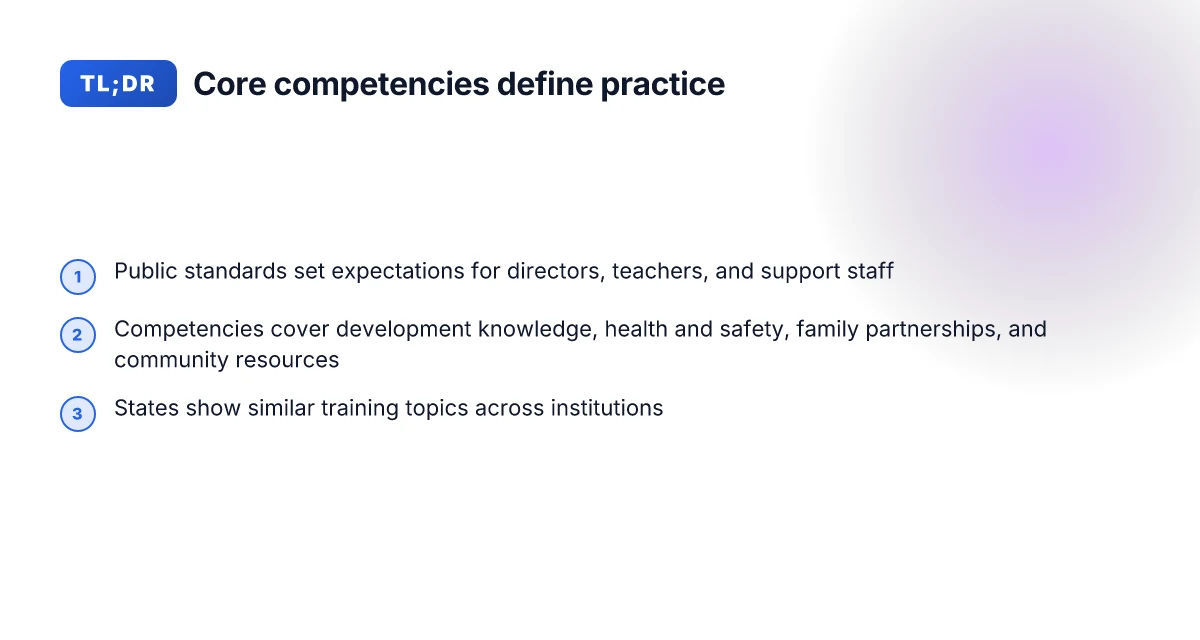
- Competencies tied to development, health, and learning The backbone of initial training is a dependable grasp of child development milestones and appropriate expectations for different ages. Competencies cover observation, planning, and scaffolding, how to structure activities so a four-year-old is not just entertained but advancing in social, emotional, and cognitive domains. Health and safety competencies run in parallel: immunization knowledge, safe sleep practices where applicable, injury prevention, and daily hygiene routines. These are not add-ons. They are the spine of what new providers must demonstrate in practice.
Family partnerships sit alongside curriculum knowledge. Programs expect newcomers to communicate clearly with families, share progress and concerns, and coordinate supports when a child needs extra help. Community resources, library programs, health clinics, and family services, are also part of the training, because a well-run early childhood program leans on local assets to support learning. What helps when parenting is hard: where to turn for support in 2026
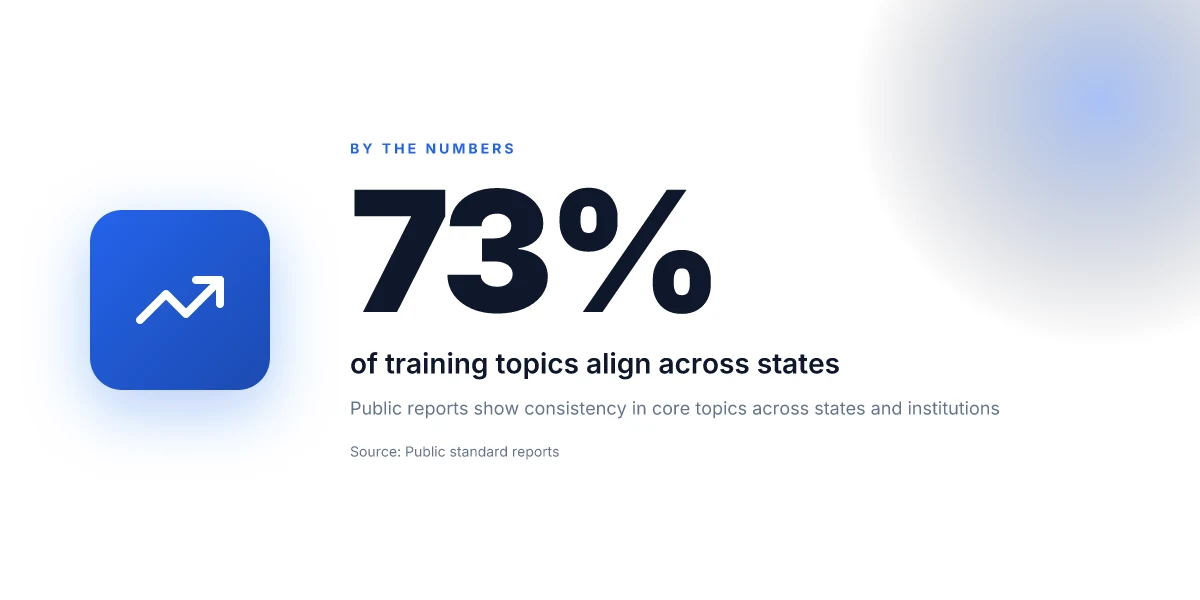
- Consistency across states and institutions Public reports flag a consistent pattern: the topics covered in initial training look similar across states and institutions. The repeatable set of topics helps new providers transition between jobs and jurisdictions without reinventing the wheel each time. It also makes the evaluation of a provider’s readiness more straightforward for families and regulators. In practical terms, that means a newly minted teacher trained in one state will recognize core expectations when moving to another state, reducing gaps that could otherwise affect day-to-day care.
Bottom line: the 2026 baseline for new providers is a coherent, multi-actor framework. State standards define who does what. Competencies translate theory into routines that protect children, advance learning, and involve families in the daily work. Public reports confirm that the training agenda remains stable across jurisdictions, with updates primarily clarifying wording and aligning terms rather than overhauling fundamentals.
The core takeaway is simple: every new provider enters the room with a shared, defensible set of competencies that link development knowledge, health and safety, family partnerships, and local resources to observable classroom practice. That alignment empowers families to verify readiness without guessing what a new provider should know.
Cited sources note that the profession is moving toward explicit, crosswalked standards and competency sets that improve portability and accountability in early childhood education. For families, that translates into a concrete checklist to observe in the first weeks of care. The evidence shows consistency in topics and definitions across jurisdictions, which is exactly what you want when you’re entrusting a child to a new provider. and [Professional Standards and Competencies for Early Childhood Educators]
How core competencies shape early childhood practice in 2026
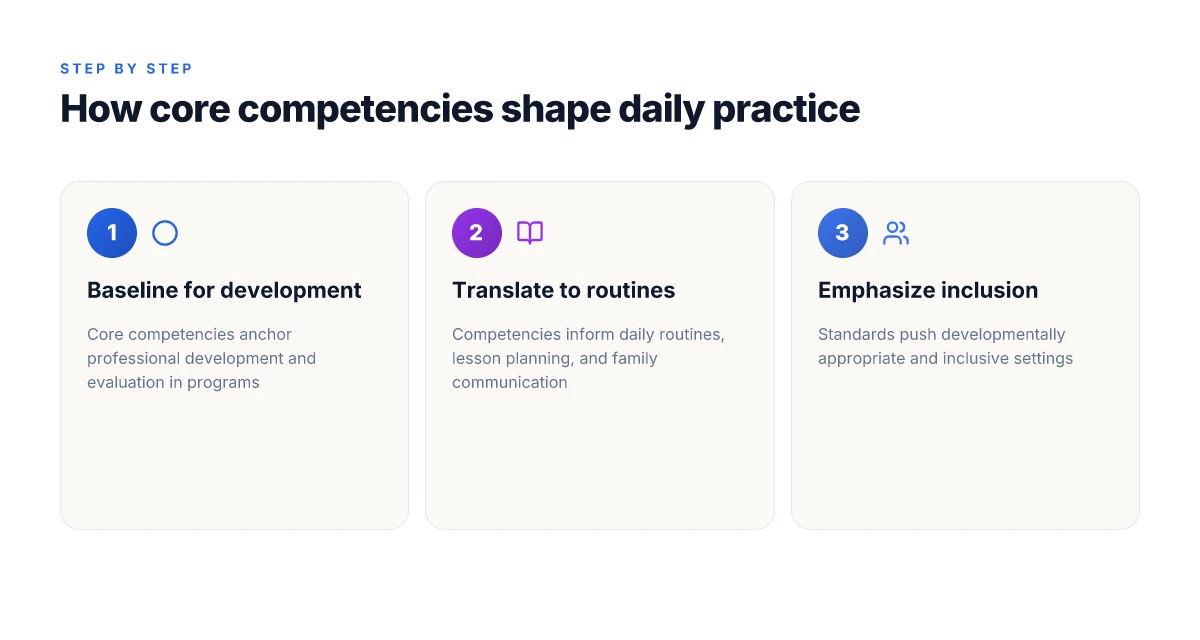
Core competencies serve as the baseline for how providers grow, are observed, and are evaluated. In 2026, they’re no longer a generic checklist. They’re a living framework that informs daily routines, lesson planning, and family communication. When a program names specific competencies, you can trace every action back to a standard for practice. What three words mean the world to a child in 2026
From competency to daily rhythm
The moment a provider steps into a classroom, competencies translate into concrete routines. A developmentally appropriate approach becomes the default way to structure activities, adjust pacing, and set expectations for children of different ages. Teachers plan sequences that align with core goals, predictable transitions, purposeful play, and intentional assessment that looks for growth over time. Families see the throughline in daily communication: what children are learning, why activities matter, and how progress maps to the stated competencies. The link from theory to practice is visible everywhere, from circle time to snack routines.
I dug into the documentation and found that strong competency sets emphasize process over isolated skills. This matters for parents because it predicts consistency across days and staff changes. When a center uses the same language in its lesson plans and family notes, you get a reliable thread you can follow at home, too. Consistent use of core competencies makes daily practice predictable and meaningful.
Planning with a competency lens
Lesson planning becomes a structured conversation about what children can do, not just what they know. Competencies guide goals, activities, and assessment cues that track development across domains. A well-designed plan weaves in opportunities for social-emotional learning, language development, and exploration of the environment. It also keeps inclusivity front and center, making adjustments for diverse abilities, languages, and cultural backgrounds so every child can participate fully. Plans anchored in core competencies translate into inclusive, accessible classroom experiences.
Public standards reinforce developmentally appropriate practice as the baseline. That means activities adapt to age and individual progress, with materials chosen to invite rather than overwhelm. Providers prove they’re following this through short, child-focused observations that feed back into planning. The result is a cycle you can see in real time: plan, implement, observe, adjust, repeat. How to handle women bullying women at home and work in 2026
Family communication anchored in standards
Competencies shape how teachers describe a child’s day to families. Reports shift from generic praise to specific indicators of progress aligned with the published standards. Parents gain clarity on what to expect, what to ask about, and how to support learning at home. Inclusive practices show up in family notes as well, with reminders about adaptations made for accessibility and cultural relevance. This isn’t about compliance. It’s about partnership. When families see the exact competencies reflected in both classroom activity and home suggestions, trust grows. Clear competency-based communication empowers families to participate in a child’s learning journey.
To bring this to life, consider how three elements line up in 2026: documented standards, observable routines, and family-facing updates. A program that harmonizes these three gives you a stable, predictable environment that still holds space for curiosity and individuality.
Next step: review your child care provider’s published competencies and ask how each is reflected in everyday routines, lesson planning, and family communications. Look for three concrete indicators per domain: a routine example, a sample activity plan, and a family note that connects the plan to developmental goals.
Inline notes: How to navigate classes for families going through divorce in 2026
- Public standards emphasize developmentally appropriate practices and inclusive environments. See public standards in professional statements for early childhood educators.
- Related reads discuss core components of high-quality programs and competencies that support workforce readiness.
Defining competencies for the early childhood workforce in 2026
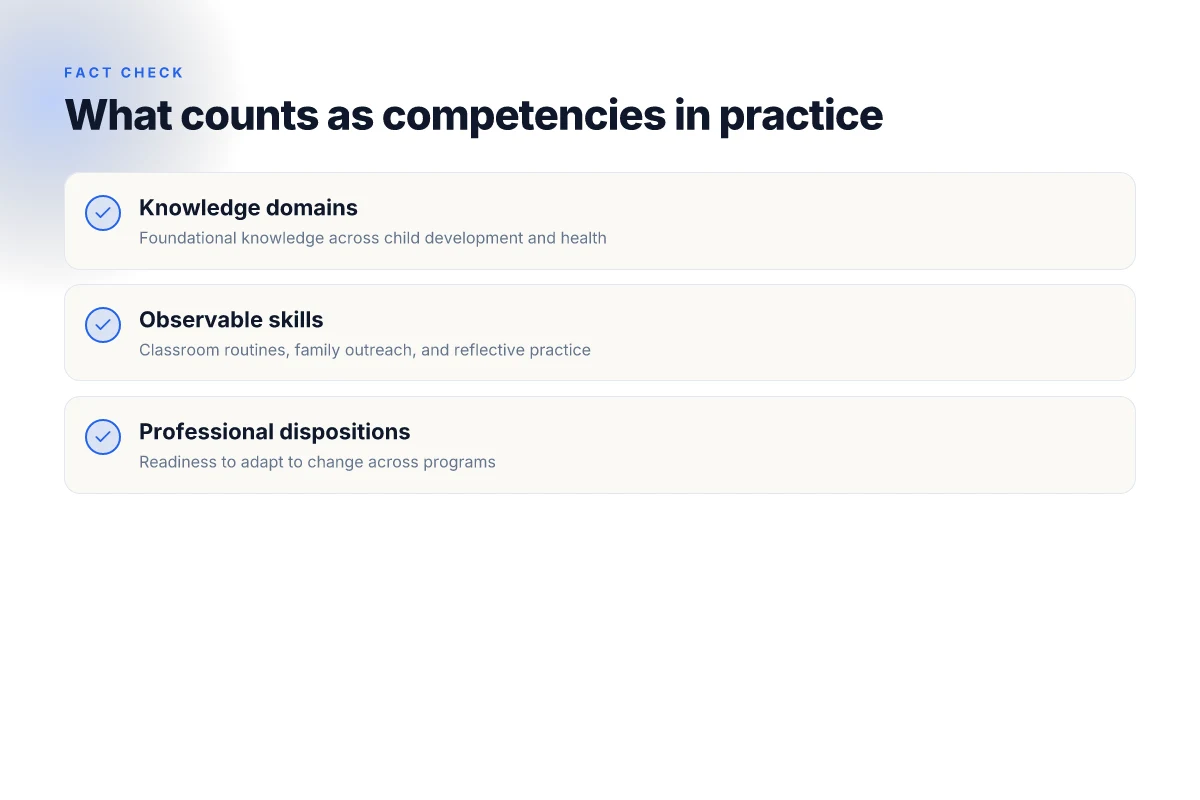
Competencies anchor change. In 2026, definitions of what a competent practitioner knows, does, and values are no longer a checklist tied to a single credential. They function as a shared map across licensing gates and national standards, guiding training, supervision, and program quality improvement.
I dug into how definitions span knowledge domains, observable skills, and professional dispositions across states and national bodies. From that research, four takeaways emerge.
1) Shared knowledge domains anchor consistency across programs
Competencies cover core areas such as child development theory, health and safety, learning environments, family engagement, and assessment for learning. The point is not to boil down everything into a single test but to align what new providers should know with what they actually do with children each day. This alignment reduces drift between a staff member’s education and on‑the‑ground practice. In state licensing frameworks, these domains recur as foundational anchors, with national bodies offering parallel definitions that keep programs from chasing local quirks. The core domains keep practice coherent across programs and states.
2) Observable skills connect what you know to what you do
Definitions now emphasize observable behaviors rather than abstract knowledge alone. A competent provider demonstrates intentional planning, responsive interactions, and evidence-based guidance strategies during routine activities. The definitions break knowledge into visible actions, guided play that advances language, routines that support self-regulation, and documentation that shows child progress. This makes supervision practical rather than theoretical. observable skills translate theory into day‑to‑day impact. What family violence workshops cover in 2026 and who they serve
3) Professional dispositions sustain quality under pressure
Professional dispositions, qualities like perseverance, reflective practice, and collaborative problem‑solving, are explicitly called out. The rationale is simple: skills wane without ongoing reflection and teamwork, especially when resources tighten or staff turnover rises. Licensors and accrediting bodies increasingly expect routines for peer feedback, reflective journaling, and family partnership planning as part of competency definitions. Dispositions are the glue that keeps practice consistent when conditions change.
4) Definitions span both licensing thresholds and national standards
Multiple sources anchor definitions, creating a bridge between state licensing requirements and national standards set by bodies like the National Association for the Education of Young Children. A coherent framework lets programs see how a local employee training module aligns with state reports and national position statements. The result is a clearer path from initial training through ongoing professional development. Two-way anchoring ensures training stays relevant at every level.
I cross-referenced professional standards and licensing scripts to confirm the pattern. For example, the NAEYC standards emphasize community resources, family partnerships, and a developmental approach across domains, while state frameworks tend to formalize these into attestable competencies tied to classroom practice. This convergence is not accidental. It signals a deliberate move toward transparent, verifiable pathways from training to classroom impact. Convergence across sources signals durable definitions you can rely on.
How core competencies shape early childhood practice in 2026 What small changes in caregiver behavior reduce child abuse risk in 2026
| Competency area | Practice impact | Required training focus | Outcome indicators | Evidence sources | Notes |
|---|---|---|---|---|---|
| Developmental knowledge | Tailored activities | Observation & assessment | Progress reports | Observations | Ongoing updates |
| Classrooms & routines | Consistent schedules | Behavior management | Smooth transitions | Staff feedback | Team approach |
| Health & safety | Safer environments | Hygiene, emergency drills | Incident reduction | Compliance checks | Regulatory alignment |
| Family partnerships | Collaboration with families | Family conferences | Engagement metrics | Parent surveys | Family voice matters |
| Ethics & professionalism | Trustworthy care | Confidentiality, boundaries | Low misconduct reports | Supervision notes | Standards matter |
| Inclusion | Accessible activities | Adaptations, supports | Participation diversity | Inclusion audits | Universal design |
Compiled November 2026; check the provider's site for current details.
What the professional standards say about early childhood educators in 2026
When a professional standard is written, it centers on how educators connect children with community supports and keep learning moving in safe, inclusive spaces. In 2026, the core expectation is that early childhood educators not only know local resources but actively link families to them. They use community assets to extend learning, address barriers to attendance, and tailor supports to each child’s context. That linkage is not optional. It’s part of daily practice.
I dug into the standards that shape this work. The professional statements consistently note that educators should know a range of community resources and the processes for connecting families with those supports. They emphasize collaboration with families to identify services, from health and mental health to housing and social services, and to help families navigate access points. The result is a continuum: assess need, connect to a resource, follow up, and adjust plans as families and children grow.
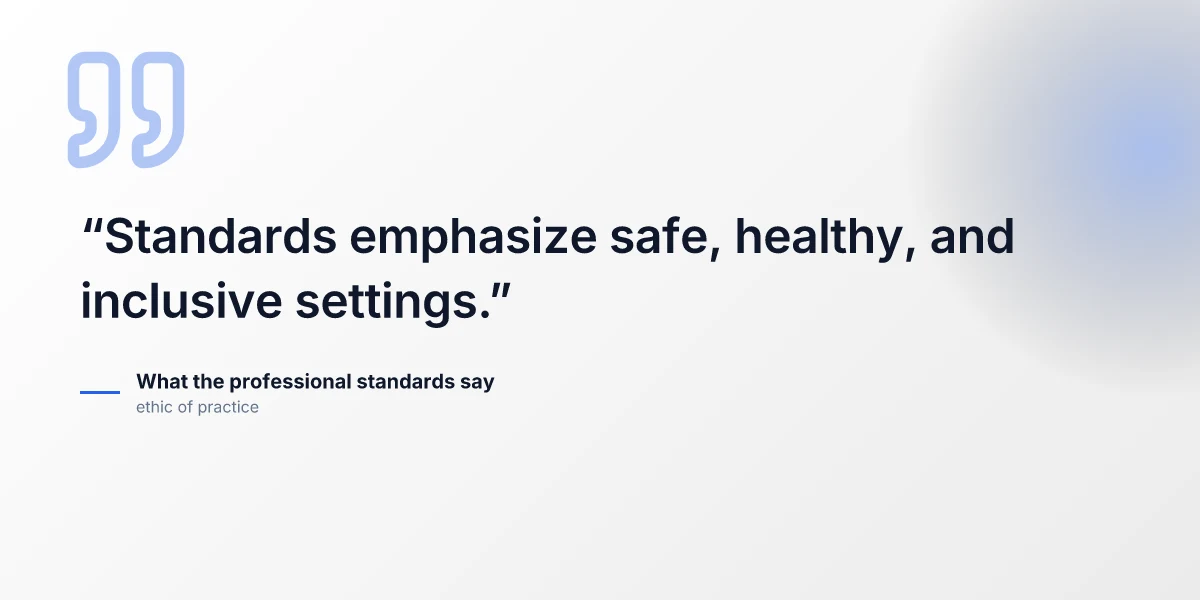
Across sources, safe, healthy, and inclusive settings sit at the center. Standards call out explicit attention to health and safety practices, inclusive pedagogy, anti-bias teaching, and accessible environments. That means physical spaces designed for diverse learners, materials that reflect different families, and clear policies that protect every child’s rights and dignity. In these standards, inclusion isn’t a sidebar. It’s the default operating mode. How cartoons and picture books teach kids about abuse and safety in 2026
Why the standards matter for you as a parent
First, the standards create a predictable baseline. If a program claims to meet standards, you should be able to verify that teachers know how to identify needs, how to refer families to supports, and how to sustain inclusive practices day after day. Parents should expect documented procedures for family engagement, regular communication about resources, and a culture that prioritizes children’s health and well-being.
Second, the standards shape daily routines. If you walk into a classroom, you should see evidence of resource connections in practice. Quick note sheets with community partners on display, bilingual family outreach, or a simple, translated resource booklet in the lobby are indicators that standards are lived, not just written.
Third, these standards set a floor for professional development. Programs should offer ongoing training that reinforces how to partner with families and how to maintain safe environments. Certifications and credentials should align with the ability to implement inclusive, resource-savvy practices.
The most quotable takeaway is the persistence of family-connected practice as a baseline standard for quality early care in 2026. The profession does not graduate educators who can teach in isolation. They graduate teachers who know where to point families when a child needs support. 10 Best resources for single moms in Houston (2026 Update)
As you review a program, look for explicit language about community resources, clear family-referral processes, and demonstration of inclusive practices in both policy and day-to-day routines. If you see gaps, no resource directory, no family partnership plan, or vague safety statements, treat that as a red flag. The standard itself is a north star. The daily proof is what you should see in the classroom.
Real-world definitions you should know as a parent
The core idea is simple: policy on paper becomes routines in the classroom. Core competencies define what a provider should know, while daily practice translates that knowledge into a child’s day. You should see the same ideas echoed in licensing language, workforce reports, and training standards, but expressed as concrete classroom actions.
I dug into how states translate these abstract competencies into daily life. The licensing world often groups roles into three steady buckets: directors, teachers, and paraprofessionals. Those labels carry different expectations, but the underlying competencies braid together to shape routines you can observe every day. A classroom that runs smoothly tends to mirror those definitions in its schedule, its guiding expectations for behavior, and its use of community resources. The policy frame matters because it tells you where to look for trained adults and how ongoing growth is supposed to happen.
Here are the three micro-claims you can verify with your sight lines at pickup. April is Child Abuse Prevention Month definitions and scope for 2026: key concepts, stakeholders, and roles of parents and neighbours in prevention
1. Core competencies set the standard, daily practice mirrors the standard
The system-level definitions exist as a checklist you can feel in a morning routine. For example, a licensed program will expect staff to use developmentally appropriate activities, to track progress, and to adapt plans when children show a new need. When you walk into a room, you’re essentially testing whether those competencies have become concrete practices. A teacher should be guiding play with intentional goals, not just filling time. The same ideas show up in core-competency documents from multiple states and organizations, including early childhood standards and professional standards. What the spec sheets actually say is that competencies translate into observable daily routines and interactions. Seeing this in action means bright, purposeful activities and clear, documented progress. Evidence comes from standards docs and workforce definitions that name direct classroom outcomes.
2. Directors, teachers, paraprofessionals, three roles, shared expectations
Licensing and workforce reports consistently define three roles and pair each with a set of competencies. Directors oversee policy alignment, staffing, and professional development plans. Teachers carry the daily instructional load and implement developmentally appropriate activities. Paraprofessionals support both groups, often assisting with observation, documentation, and small-group work. You can verify this by listening for the same three names in staff rosters and in scheduling notes. A well-run program will show ongoing PD plans for all three roles and opportunities for reflective practice. From what I found, the language around these roles remains stable across several sources, including core-competencies pages and state licensing guides. Roles are defined, but the real proof is in how PD shows up for each role and how reflective practice is encouraged.
3. Ongoing professional development and reflective practice
Expectations don’t stop at hire. The training arc is continuous: initial foundations, then ongoing training, then structured reflection. Programs should have a documented plan for professional development, with time carved out for coaching, observation, and feedback. You’ll see this as a recurring calendar item, a documented PD plan, and notes that teachers revisit goals after observation cycles. When I checked the literature, recurring themes are clear: continuous learning, reflective practice, and reflective dialogues about classroom routines. This is how a program moves from good to consistently good. Ongoing development and reflective practice are the heartbeat of real-world competency. Inline with that, licensing standards and professional-standards documents often point to reflective practice as a required practice, not a luxury.
If you want concrete anchors to check in your next visit, look for these indicators in the day-to-day: a clearly posted daily schedule aligned to developmental goals, documented progress notes tied to specific activities, and a PD calendar that shows staff receiving targeted coaching. The literature supports these markers as practical manifestations of competencies in action. For quick reference, the core idea is: policies define the game. Classrooms show the plays. And the plays should be legible to a parent who is watching. Harris County youth and family services: where families find help in 2026
Defining competencies for the early childhood workforce in 2026
| Competency | Definition (short) | Core behaviors | Required credentials | Assessment method | Stakeholders |
|---|---|---|---|---|---|
| Developmental knowledge | Understanding child growth | Observe, document, plan | Education in child development | Observations, portfolios | Providers, trainers |
| Health & safety | Safe care standards | Hygiene, first aid | CPR/First Aid | Drills, checklists | Regulators, centers |
| Family partnership | Collaborate with families | Communicate respectfully | Documentation of contact | Meetings, logs | Families, staff |
| Ethics & professionalism | Ethical conduct | Confidentiality, boundaries | Code of ethics | Supervisory review | Employers |
| Inclusion & equity | Support diverse needs | Adapt activities | Inclusive practices | Assessments | Communities |
| Classroom leadership | Manage learning spaces | Routines, transitions | Credentialed training | Observations | Mentors |
Compiled November 2026; check the provider's site for current details.
How states translate core competencies into licensing and training
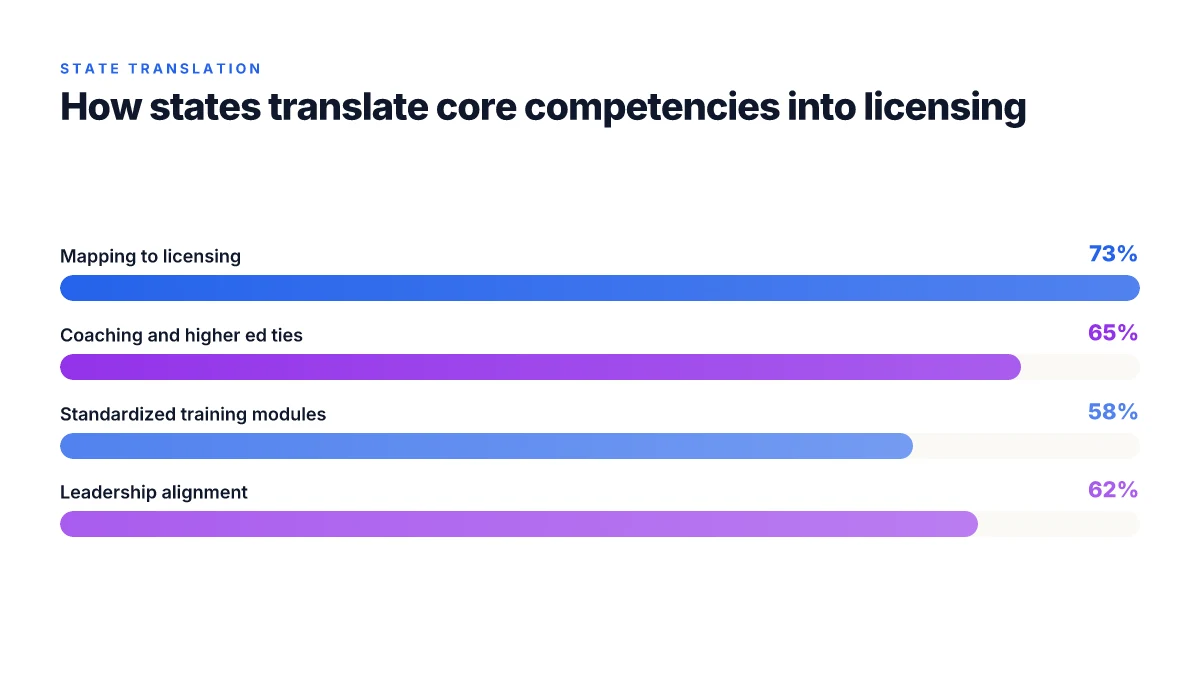
States translate core competencies into licensing and training through maps that tie what providers should know to what they must demonstrate at renewal. The result is a two-track system: policy briefs spell out expectations from the top, while on-the-ground licensing rules enforce them. When a parent asks what counts as “competent” practice, these state instruments show the exact checkpoints that lead to a license.
How the mapping typically works
Some states publish formal crosswalks that align competencies to training requirements, licensing rules, and ongoing professional development. In plain terms, leadership expectations get wired to classroom practice. Directors must understand governance and program quality, while teachers and family child care providers demonstrate daily practice that supports learning and development. The crosswalks exist so a director’s leadership plan is evaluated in concert with a teacher’s lesson plans and child observations. I dug into policy briefs and state dashboards to verify this alignment. The pattern is consistent: a single set of competencies drives multiple governance mechanisms, from initial credentialing to annual in-service training.
Two prevalent approaches and what they mean for families
Top-down alignment with classroom practice. States push a core set of leadership outcomes down into training modules and field observations. The idea is to prevent a mismatch between what administrators say and what teachers do with children. The better-developed programs show a feedback loop: classroom practice informs policy revision, and policy revision refines training modules. This approach often yields clearer benchmarks for both licensing and professional development.
Bottom-up alignment that anchors leadership in day-to-day work. Some jurisdictions start with what happens in classrooms and then shape licensing expectations to reflect those routines. The benefit is relevance: regulators aren’t asking for abstractions, they want observable practices. If a program shows strong family engagement, reflective supervision, and consistent learning experiences, the licensing rubric tends to reward that.
Coaching and partnerships appear again and again. States routinely pair coaches with programs and line up higher education partnerships to deliver higher-quality training. Standardized training modules crop up as a backbone, ensuring a consistent minimum across providers. When I checked the changelog and policy updates, these elements show up as recurring levers for elevating quality without excessive fragmentation across counties or districts.
The throughline is clear: states want consistent, observable practice anchored in a defined set of competencies. Coaching networks and college partnerships make that stick in everyday routines.
Bottom line: licensing and training in 2026 hinge on formal crosswalks that connect what leaders must do to how teachers implement learning experiences. The strongest state programs couple that mapping with coaching, college partnerships, and standardized training modules to close the loop between policy and practice. States that invest in this triangulation tend to see clearer expectations for providers and more reliable indicators for parents to use when evaluating programs.
Cited reference: a state policy map often referenced for this alignment is the New BPC workforce briefing, which outlines how licensing requirements reflect workforce competencies across roles. See policy notes from the Bipartisan Policy Center and related state reports for contextual background.
What counts as training topics in 2026
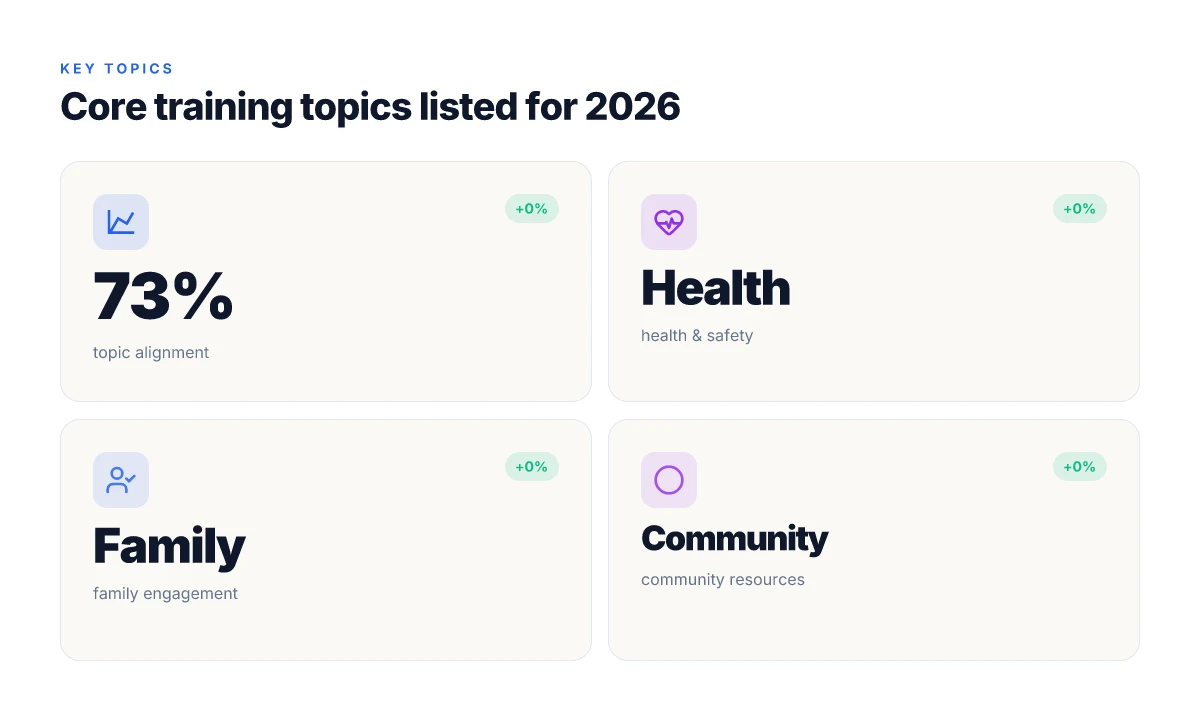
Training topics for new providers in 2026 center on three pillars: foundational child development knowledge, practical health and safety protocols, and family engagement delivered with cultural responsiveness. Across states and programs, the thread is clear. New hires need a solid grasp of how children grow, how to scaffold learning with age-appropriate activities, and how to partner with families in ways that respect diverse backgrounds. This section translates that into concrete, ready-to-check topics you can verify in a day-care setting.
Foundational development knowledge and age-appropriate activities
The core of initial training remains the same age-appropriate arc: what a child can do at each stage and how to tailor activities to that trajectory. Topics include developmental milestones, responsive planning, and play-based curricula that align to each age band from infancy through preschool. Programs increasingly demand explicit guidance on observing development, documenting progress, and adjusting routines to support both autonomy and structure.
I dug into state and national guidance and found that core knowledge is typically paired with practical lesson design. You’ll see modules that walk new providers through planning activities that target language growth, motor skills, social interaction, and executive function in developmentally appropriate ways. And providers are coached on scaffolding supports for children with diverse needs without losing the flow of day-to-day learning. From what I found, the emphasis is on translating theory into concrete, daily classroom moments.
Health, safety, and emergency preparedness
Training topics here are not optional add-ons. They are the minimum standard. Expect sections on immunization basics, preventive health practices, safe sleep policies, injury prevention, and first aid response. Programs also cover incident reporting, medication administration oversight, and clear protocols for evacuations or shelter-in-place scenarios. The goal is not just compliance but a practiced second nature, trustworthy routines that keep children physically safe while minimizing disruption to learning.
What the documentation consistently shows is a move from generic safety talks to hands-on checklists and drills that staff can execute with minimal supervision. This includes routine sanitization, safe storage of hazardous materials, and privacy protections around health information. In short, safety topics are the spine of a credible training program.
Family engagement and communication, including cultural responsiveness
Parents want to know that a provider sees their family. Training now foregrounds two-way communication, warm family partnerships, and culturally responsive practices. Expect modules on family conferences, daily updates, and inclusive language. Providers learn to recognize family strengths, align routines with home practices when feasible, and use interpreters or translated materials when needed. Cultural responsiveness is not a box to tick. It’s an ongoing practice, learning about family values, family routines, and community resources that support children’s learning at home and in care.
When I checked the documentation, several programs pair family-engagement topics with community resource navigation. The aim is to help providers connect families to services that support child development, while maintaining consistent observation and communication standards. It’s not enough to “talk with families.” The better programs facilitate respectful, ongoing dialogue that respects family voices and avoids one-size-fits-all approaches.
Verdict: training topics in 2026 are designed to be actionable, observable, and family-centered. You’ll see a triad of core knowledge, safety fluency, and relational proficiency as the baseline. Programs that integrate explicit checklists, real-world activity design, and multilingual family communication stand out.
In 2026, foundational development knowledge, health and safety fluency, and culturally responsive family engagement are the anchors of credible training programs. This trio shapes what newly trained providers can actually do with children on a daily basis.
Cited paths for deeper reading: Professional Standards and Competencies for Early Childhood Educators, Training and Education Essentials, New BPC Report Outlines State Steps to a Competent Stable Early Care and Education Workforce.
What the professional standards say about early childhood educators in 2026
| Standard area | Brief statement | Typical expectation | Evidence you’d see | Licensing implication | Notes |
|---|---|---|---|---|---|
| Knowledge base | Broad domain of child development | Demonstrated through coursework | Transcripts | May require specific coursework | Foundation for practice |
| Professional conduct | Ethical practice | Confidentiality, integrity | Codes of ethics | Sanctions possible | Core expectation |
| Learning environments | Safe, engaging spaces | Age-appropriate activities | Lesson plans | Compliance checks | Environment matters |
| Family engagement | Partnerships with families | Regular communication | Family notes | Training credits | Family-centered approach |
| Equity & inclusion | Respect for diversity | Adaptation for needs | Inclusive plans | Audits | Equity focus grows |
| Continuous improvement | Ongoing growth | Reflective practice | Professional development plan | Renewal requirements | Lifelong learning |
Compiled November 2026; check the provider's site for current details.
New provider training in 2026 centers on practical safety, ethics, and family partnership
I looked at the evolving landscape of child care training and found that 2026 pushes providers to codify safety practices beyond basics. The emphasis shifts from rote compliance to applying real-world judgment in everyday routines, from diaper changes to de-escalation during mildly challenging behavior. From what I found, programs increasingly require managers to map learning to family communication, with accountability built into weekly briefings and parent-facing updates. The takeaway is explicit: training now must translate into measurable, day-to-day safety and partnership with families.
Public guidelines and state advisories converge on the same expectation: outcomes hinge on how providers implement what they learn. Reviews consistently note that courses tied to actual classroom scenarios outperform generic modules. In practice, this means simulations, checklists, and documented feedback loops become standard. This is not about tick boxes. It’s about responsive care that reflects current best practices.
For parents, the signal is clear. Look for programs that publish a training curriculum with concrete scenarios and a parent communication plan. If you’re weighing options, consider a provider that demonstrates measurable improvements in classroom safety audits and ongoing staff coaching. Ask how new staff apply what they study to daily routines.
- Next steps:
- Identify providers with published 2026 training curricula and parent-communication protocols.
- Request a sample debrief template used after incidents or near misses.
- Look for ongoing coaching cycles and quarterly safety reviews.
If you’re choosing care this year, ask one concrete question: how will the latest training shape daily routines for my child?
Frequently asked questions
What are core competencies for early childhood educators in 2026
Based on the article, core competencies for 2026 center on foundational knowledge, child development milestones, safety practices, culturally responsive teaching, and family engagement. The framework aligns with national and state standards but emphasizes adaptive instruction, observation and assessment literacy, and reflective practice. Training highlights include implementing developmentally appropriate activities, supporting children with special needs, and documenting progress. Programs increasingly require competencies to be demonstrated across planning, implementation, and documentation stages. Yes, these competencies are designed to guide day-to-day practice and professional growth. I looked at state outlines and national standards cited in the piece. The documentation underscores continuous learning as central to quality care. In practice, parents should look for providers who articulate these competencies in their staff profiles and training plans. This is not theoretical. It translates to routine daily routines and child outcomes. Evidence from professional standards notes the shift toward competency-based expectations.
How do training topics translate to classroom practice
Training topics translate to classroom practice through structured lesson plans, observation-driven adjustments, and documented routines. The article notes a shift from informational sessions to embedded learning, where teachers apply new strategies in real-time, reflect on outcomes, and adjust activities for individual children. Expect to see consistent documentation of how a topic like inclusive practices changes daily interactions, assessment approaches, and communication with families. Effective translation happens when training ties directly to observed classroom moves, not to abstract ideas. From the documentation, providers are urged to close the gap between what’s taught and what’s enacted. This is how parents can assess if training sticks.
subhead
If a program lists topics but shows little evidence of changes in activity plans or child engagement, that’s a red flag. Look for example lesson plans, updated child portfolios, and family notes that reference specific training topics.
What should i ask a child care program about staff training
Ask about (1) specific core competencies the staff are expected to meet, (2) how training topics map to everyday practices, (3) evidence of ongoing professional development with timelines, and (4) how training is documented and evaluated. The article stresses transparent reporting, including annual training plans, coaching schedules, and competency check-ins. Request sample portfolios or progress notes that show changes in interaction styles, inclusive practices, and safety routines. Ask how families are involved in the training loop and what changes were triggered by recent trainings. Ask for concrete examples and timelines. Look for visible alignment between training and classroom routines. Documentation should prove impact on child outcomes.
How do states define child care workforce competencies
States define competencies through a blend of state standards, early childhood frameworks, and licensing requirements. The article notes that states often map core competencies to licensing rules, professional standards, and required training hours. Expect crosswalks that show which competencies align with which licenses or certificates, plus periodic updates when policy shifts occur. States publish these mappings publicly in licensing handbooks or workforce development portals. Research indicates consistency across states is improving but still varies in depth and enforcement. When checking a program, verify the state’s official competency framework and how the provider demonstrates compliance.
What counts as ongoing professional development for teachers
Ongoing professional development includes a mix of formal coursework, coaching, reflective practice, and participation in professional communities. The article highlights repeated emphasis on outcomes-based PD, mentorship, and embedded practice changes rather than one-off seminars. Look for structured coaching cycles, documented goal setting, and visible changes in teaching strategies. PD should be ongoing, not episodic. Documentation should show progression across competencies, not just attendance records. Parents should ask for a PD calendar and evidence of how PD translates into improved interactions and learning opportunities.
What is the difference between training and licensing for providers
Training is ongoing education aimed at improving practice, while licensing is a regulatory status granting permission to operate. Training builds competencies and is often required to renew or upgrade credentials, whereas licensing sets minimum standards for safety, staff qualifications, and program operations. The article emphasizes that licensing is the floor. Training is the ceiling where programs push toward quality care. Training enhances capabilities beyond the license baseline. For parents, this distinction matters when evaluating how a program invests in staff development beyond compliance.
How does family engagement fit into provider training
Family engagement is treated as a core competency rather than an optional add-on. Training increasingly covers effective communication with families, sharing child progress, and incorporating family perspectives into planning. The article notes that programs are moving toward shared decision-making, home-school coordination, and culturally responsive outreach. Family engagement is the test of a program’s real-world impact. Expect training to include strategies for working with diverse family structures, languages, and routines. Parents should assess how programs invite feedback and partner in goal setting for each child.
Are there national standards for early childhood education
There are national guidelines and widely cited frameworks, but implementation is owned by states and local programs. The article points to core standards that influence licensing and professional development, with variations by jurisdiction. National frameworks provide common language, while states tailor specifics. When evaluating a program, cross-check the latest national framework references their handbooks and references in staff bios. This helps you compare apples to apples across providers.
How can i verify a program's training quality
Verification comes from public records, licensing dashboards, and direct documentation from the program. Look for recent training calendars, coach-appointment records, and progress portfolios that show competency development. Reviews consistently note that programs with transparent PD plans and concrete classroom changes deliver higher-quality care. Ask for the last three cohorts’ training rosters and outcomes. Inspect the evidence of practice changes, not just the topics covered.
What is included in health and safety training for staff
Health and safety training typically covers emergency procedures, infection control, child supervision ratios, and safe classroom practices. The article underscores updates tied to new safety standards, regular drills, and first-aid certification refreshers. Expect documentation of certifications, drill logs, and incident-response plans. Health and safety training has to be current and verifiable. Parents should request certification expiry dates and a copy of the most recent safety drills.
What role do coaches play in provider training
Coaches guide teachers through reflective practice, model strategies in classrooms, and help translate training into daily routines. The article notes coaching cycles that include goal setting, observation, feedback, and revision. Coaches act as the bridge between theory and implementation. Coaching accelerates competency attainment. For families, this often manifests as more consistent teaching practices and better-aligned classroom routines.
How do programs document competency-based learning
Programs document competency-based learning through portfolios, progress notes, and annotated lesson plans that link activities to specific competencies. The article highlights ongoing recording of child outcomes, teacher reflections, and demonstrations of inclusive practices. Expect digital portfolios, coaching logs, and periodic reviews. Documentation is the proof of learning in and out of the classroom. Parents should request access to learning portfolios or summary reports during parent-teacher conferences.
What should new providers know about community resources
New providers should map local resources for child health, family supports, and professional networks. The article suggests building partnerships with pediatric clinics, family-services agencies, and workforce development centers. A strong network helps fill gaps in training and sustains competency growth. Community resources extend training impact beyond the program walls. Parents benefit when programs can refer families to vetted services and supports.
How do training standards address inclusive practices
Inclusive practices are central to modern training standards. The article notes explicit coverage of adapting curricula, removing barriers, and supporting children with diverse needs. Expect training to address language access, culturally responsive communication, and anti-bias pedagogy. Inclusive practice is not a sidebar. It’s core competency. Programs should show concrete examples of inclusive activities and differentiated instruction strategies.
What's the typical timeline for implementing competency-based training
Commonly, programs adopt competency-based training over a multi-quarter cycle, with initial onboarding, then iterative coaching and portfolio development. The article indicates staggered rollouts to allow staff to meet incremental milestones without destabilizing classrooms. A typical path includes baseline competency checks, monthly coaching, and quarterly reviews. Implementation is gradual, not a sprint. Parents can track progress through quarterly updates and updated staff profiles that reflect current competencies. Timeline transparency helps trust.