
April is Child Abuse Prevention Month definitions and scope for 2026: key concepts, stakeholders, and roles of parents and neighbours in prevention
A practical guide for parents and neighbours outlining the definitions, scope, key stakeholders, and concrete roles during April's Child Abuse Prevention Month in 2026.
April is a window for action, not a slogan. In April 2026, communities rally around the Pinwheels of Possibility theme, but real progress comes from steady, concrete steps by families and neighbors. This year’s framework centers on clear roles, defined lines of communication, and early involvement with local systems before a problem escalates.
Across the year, practical actions stack up: map your local child-protection contacts, join a neighborhood watch for child-wellness signals, and align with school- and faith-based networks that coordinate with social services. What matters now is turning high-level guidance into everyday habits, check-ins, safe-support pathways, and documented reporting channels, so families can act with confidence when a risk emerges. Two verification steps to confirm alignment with national guidance are straightforward to complete and defendable.

The plain definition of April is Child Abuse Prevention Month and why it matters in 2026
April is national Child Abuse Prevention Month, a dedicated window to raise awareness and mobilize collective action. Public sources frame this observance as a time for education, family support, and community engagement aimed at preventing abuse and neglect before harm occurs. It is not a one-day talk. It is a sustained invitation to connect families with supports, share protective information, and keep children safe through coordinated effort.
What the month is meant to do shows up in three repeated threads. First, education. Second, family supports. Third, community engagement. When communities learn the signs of trouble early, families reach out for help, and neighbors spread accurate information rather than rumors. That alignment is intentional. The aim is to interrupt risk factors before they escalate, through timely supports and clear pathways to help.
The themes you’ll see year after year emphasize prevention through early intervention, accessible services, and strong public messaging. Messaging centers on normalizing asking for help, reducing stigma around seeking support, and guiding families to local resources. Public campaigns highlight practical actions, talking openly with kids about safety, establishing trusted adults in a child’s life, and knowing where to turn when concerns arise. The result is a public posture that treats child safety as everyone’s business, not just a family matter.
Official sources tie the observance to long-standing federal and state commitments to child safety. Since CAPTA and related federal groundwork, states have built pipelines of prevention, from voluntary family support programs to mandated reporting and coordinated community services. The annual theme and the public proclamation around April act as a reminder that safeguarding children is a shared obligation that persists beyond the calendar month. 10 Best resources for single moms in Houston (2026 Update)
In 2026 the cadence remains straightforward: acknowledge risk, surface supports, and enlist neighbors as part of a protective web. If you’re a parent, caregiver, or neighbor, the takeaway is concrete. You can participate in April by amplifying accurate information, connecting families to services, and modeling protective habits all year. That continuity matters. The month is a kickoff, not a capstone.
The core idea is simple: education plus access equals fewer vulnerable moments for children. Public commitments at the federal and state level ensure there is a network to call on when concerns arise. April sets a rhythm, you can start with one concrete action this week and build from there.
Cited sources anchor these points in public-facing material that repeatedly describes April as a time for education, family support, and community engagement aimed at preventing abuse and neglect. For a quick reference, see the public-facing overviews from national and global health and child-welfare organizations.
How the scope of Child Abuse Prevention Month is defined in 2026
The scope for 2026 centers on awareness campaigns that turn understanding into action. It weaves the pinwheel symbolism into visible, neighborhood-friendly activities and ties those events to real, local services. In practice, that means communities host light-up moments, school and faith-group partnerships, and public events that connect families to support networks. How cartoons and picture books teach kids about abuse and safety in 2026
Public guidance maps the roles for families, schools, faith groups, and local government
Public guidance lays out who does what. Families are encouraged to seek and provide support within the home while linking to community resources. Schools coordinate safety and positive parenting discussions, embed protective factors into routines, and connect families with counselors or social workers. Faith groups organize lay-led programs that promote safe environments and mutual aid. Local governments coordinate cross-agency efforts, fund family-support services, and maintain reporting channels that connect residents to protection systems. The aim is a coordinated, community-wide response that scales beyond April.
From the documentation, the recurring themes emphasize protective factors that strengthen everyday resilience. Parental support, positive parenting practices, stable and nurturing environments, and reliable access to services are repeatedly highlighted as the levers that reduce risk. When you see a CAP Month event, you should expect a tangible link to resources: parenting education, respite options, and hotlines or intake points that empower neighbors to act.
Themes that move the needle in 2026
Protection is not a slogan. It’s a framework built on concrete practices. Public-facing materials consistently spotlight parental support and positive parenting as core protective factors. They also stress safe, nurturing environments across home, school, and community settings. This alignment matters because communities that normalize help-seeking and provide predictable supports build durable protection for children. The pinwheel symbol remains a reminder that every child deserves safety and potential. Public guidance ties awareness directly to access, not just attitude.
To translate that into action, consider the year-round frame. In April you’ll see campaigns intensify, but the same pathways apply throughout the year: reach out early to families in need, promote parenting-skills programs, and strengthen networks that connect families to preventive services. Public health agencies emphasize clear reporting mechanisms, easy access to prevention services, and straightforward pathways to intervention when concerns arise. Awareness without access is inertia. Access without awareness is inertia in disguise. What new providers learn in child care training in 2026
Table: scope in practice (at a glance)
| Element | What it looks like in 2026 | Where to find it |
|---|---|---|
| Awareness campaigns | Public events, school assemblies, community kiosks | Public health and family-service portals |
| Pinwheel symbolism | Local displays, pins in schools, community centers | CAP Month materials from prevention advocates |
| Community activities | Neighborhood fairs, parent education nights, faith-group workshops | Local government calendars, faith-community bulletins |
| Roles and guidance | Families, schools, faith groups, local government each with defined actions | Official guidance documents and agency press releases |
| Protective factors focus | Parental support, positive parenting, safe environments | Research summaries and strategy briefs |
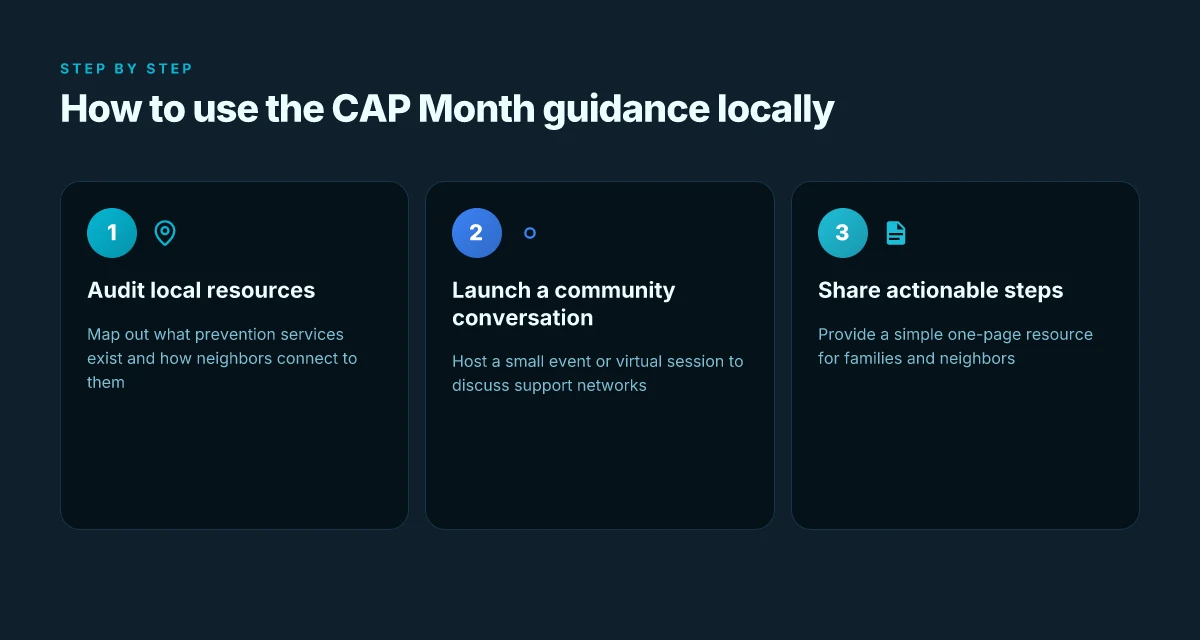
Next step: map the 2026 CAP Month calendar to your neighborhood. Identify at least two school-based events and two faith-group partners, then reach out to your local child welfare or public health office to connect families with a parenting-education option and a confidential reporting point. Links to start with include the CAP Month overview and prevention resources from official sources. Preventing Child Abuse and Neglect for background on strategies.
Key stakeholders in 2026 and their roles in prevention
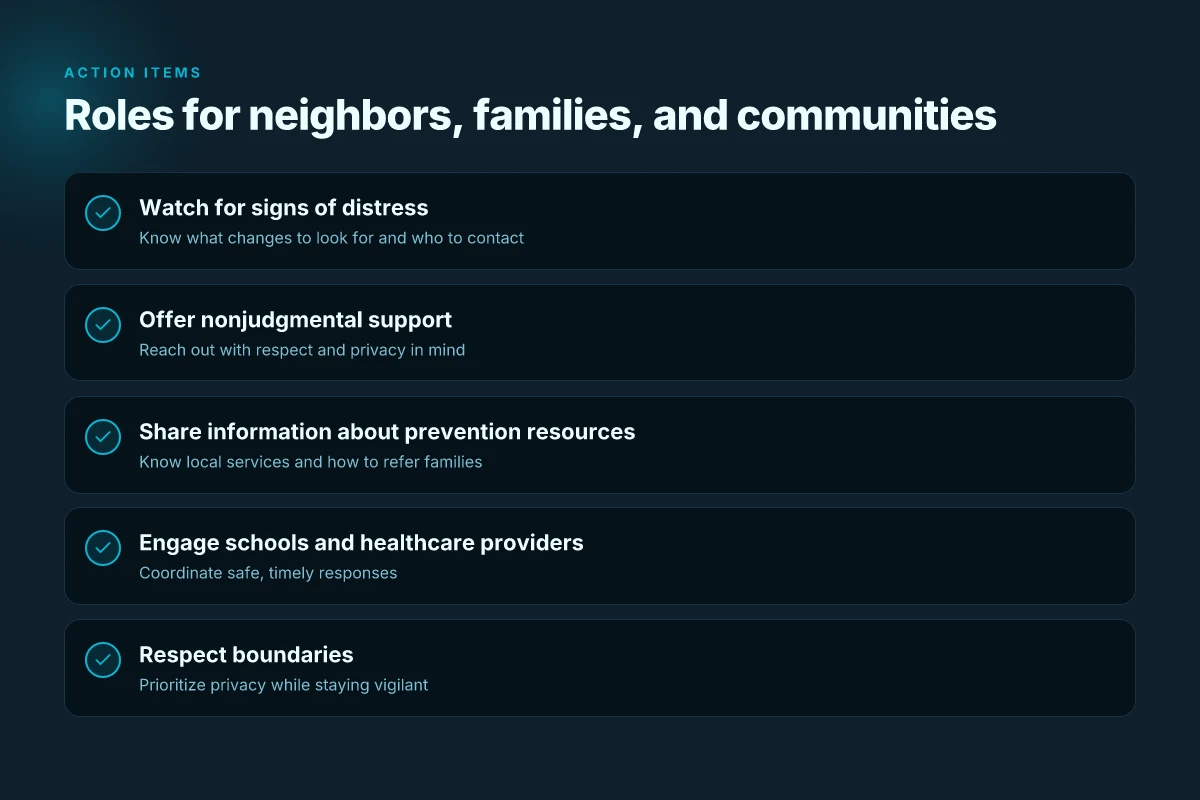
The first line of defense rests with parents and caregivers. They notice the early signals of distress, respond with stability, and seek help before a problem escalates. Neighbours and extended families act as vigilant neighbors who can offer timely support when a child shows signs of neglect or abuse. Schools, healthcare providers, and community organizations function as accessible entry points for families seeking resources, counseling, or referrals. Public agencies and nonprofits coordinate prevention programs and reporting, linking families to services and accountability.
Parents and caregivers as the frontline
Parents and caregivers are the people most likely to observe changes in a child’s behavior, sleep patterns, or school performance. When I read through the prevention literature, the emphasis is consistent: trust-building routines at home, open dialogue about safety, and early help-seeking. Acknowledge stressors that can escalate risk, work instability, housing insecurity, or language barriers, and connect families to supports before those pressures manifest as harm. In 2026, public-facing campaigns stress clear pathways to help, not stigma. The guidance centers on practical actions you can take in April and year-round. What helps when parenting is hard: where to turn for support in 2026
- Notice and name concerns early.
- Maintain predictable routines that anchor safety.
- Seek confidential, nonjudgmental help through trusted channels.
- Document concerns and seek guidance from licensed professionals when needed.
Neighbours and extended family as observers
Neighbors and extended family can bridge gaps between warning signs and formal help. In many communities, a known, trusted adult noticing a change in a child’s behavior can catalyze timely intervention. The emphasis is on respectful, nonintrusive outreach that respects family autonomy while prioritizing the child’s safety.
- Build a simple support network you can turn to for relief or guidance.
- Offer child-centered activities that reduce isolation and provide safe spaces.
- If concerns arise, refer families to local child welfare or prevention programs rather than attempting to manage issues alone.
- Stay informed about local resources and reporting obligations in your state.
Schools, healthcare providers, and community organizations as access points
Schools are not just classrooms. They are a community hub where signs of neglect often surface first. Healthcare providers screen for trauma and violence exposure, while community organizations coordinate services ranging from parent education to home-visiting programs. In 2026 the playbook points to integrated referral systems that connect families to supports in a single, trusted stop.
- Schools: offer parent workshops, student supports, and reporting pathways.
- Healthcare: conduct annual well-child checks with brief violence-screening questions and link families to prevention services.
- Community orgs: host parenting classes, respite care, and peer-support circles to reduce isolation.
Public agencies and nonprofits that coordinate prevention
State agencies and national nonprofits share the job of funding, standardizing, and scaling prevention efforts. They set minimum reporting timelines, publish child-protection data, and maintain portals for referrals and resources. The cadence in 2026 emphasizes transparency, cross-agency collaboration, and family-centered approaches.
- Public agencies formalize reporting processes, ensure staff training, and monitor outcomes.
- Nonprofits coordinate prevention curricula, hotlines, and community outreach.
- Both sectors publish annual guidance and align with national themes like Pinwheels of Possibility to reinforce public awareness.
The thread tying all these actors together is a shared commitment to timely support that respects families while protecting children. This aligns with the CAP Month emphasis on collective action and accessible resources. Public-facing resources must make it easy to find help without stigma. What three words mean the world to a child in 2026
Cited frame: In 2024–2026, national and international prevention literature, including the World Health Organization’s child maltreatment resources, emphasizes families and communities as the primary conduits of prevention, with schools and health systems acting as critical access points. See inline research on risk and protective factors and national statistics for context. World Health Organization, Child maltreatment fact sheet Austin et al., 2020 review National Statistics on Child Abuse, 2024
What the pinwheel symbol means this year and how to use it locally
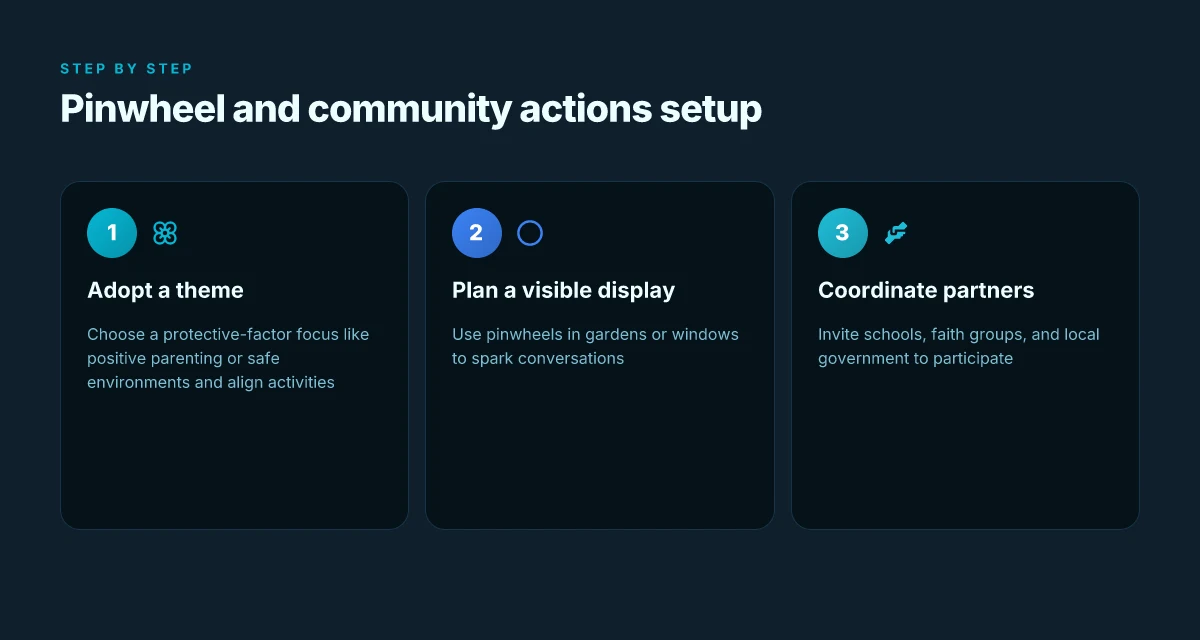
The pinwheel remains a quiet beacon of possibility. This year the symbol is a concrete invitation: joy, hope, and potential for every child, visible in real-world displays that spark conversations and action in your neighborhood.
The meaning behind the pinwheel
Pinwheels are not decorative fluff. They embody three connected ideas that ground community prevention efforts. First, they signal joy and a future that every child deserves. Second, they stand for hope, a shared belief that adults can change the conditions that heighten risk. Third, they represent potential, the proof that early supports, trusted adults, and consistent routines can change a child’s trajectory. When you see a blue pinwheel, you’re reminded that prevention is a collaborative act, not a single program or policy.
I looked at national and local interpretations to align messaging with public-protection definitions. The blue wheel is widely adopted across April campaigns in gardens, schools, and public parks. It’s not a private symbol. It’s a social cue designed to normalize talking about safety, supports, and reporting concerns in a nonpunitive way. In practice, that means you can use the pinwheel as a prompt to check in with families, ask neighbors about resources, and surface ambiguous situations early rather than letting them fester. How to handle women bullying women at home and work in 2026
Making it work in your yard, block, or school
Public displays work best when they invite participation, not condemnation. Communities that place a pinwheel display in a visible, accessible spot create a focal point for conversations about protective factors, healthy relationships, stable housing, parental resilience, and access to services. A local garden, library, or community center can host a rotating display, swapping stories and resources as April evolves into year-round engagement.
A practical rhythm helps. Start with a small banner or cluster of blue pinwheels near an entrance. Add a one-page handout that names a few concrete actions neighbors can take: check in with a caregiver, share parenting resources, attend a school or faith-based safety workshop, or volunteer with local prevention programs. The goal is to normalize dialogue without shaming. People respond to visible, hopeful signals more than to speeches about danger.
A caution for communities
Display and dialogue work best when paired with accessible supports. A pinwheel centerpiece can fail if there’s no clear path to action for someone who notices a concern. Pair displays with updated contact information for a local child welfare liaison, a quick reference card for prevention services, and scheduled community hours where families and neighbors can ask questions and receive referrals. The risk is superficial engagement. The remedy is visible guidance.
The pinwheel signals joy, hope, and potential for every child. Blue pinwheels in gardens and public spaces turn April into conversation, not just decoration. Communities that display them thoughtfully build a pathway to real help, not just awareness. Harris County youth and family services: where families find help in 2026
The parent and neighbour playbook for April 2026
The playbook is simple and actionable. You can act in April and keep the momentum year round. Six concrete actions for parents, five neighbour-led strategies, and a framework for earning trust without crossing lines.
1) Six actions parents can take to support at-risk children and families
Start with small, reliable check-ins. A weekly ten-minute touchbase with the child in your circle helps spot shifts in mood or behavior early. Do not pry into private stuff. Offer steady availability and observe without judgment.
Build a resource map and share it. Collect community-based supports, after-school programs, counseling services, financial assistance, and respite care. Share contact details in a single, easy-to-access sheet, updated quarterly.
Normalize asking for help. When stress spikes, parents benefit from a steady hand. Offer concrete options first: childcare swaps, grocery co-ops, or access to school social workers.
Practice positive parenting skills publicly. Model nonviolent discipline in your own home and in group settings. Share simple scripts for de-escalation with other families, so they can borrow them when needed.
Create trusted safety nets for kids. If you notice a child’s safety is at risk, document concerns in plain language and reach out to the appropriate channel, school counselor, pediatrician, or local child welfare liaison, following your jurisdiction’s reporting rules.
Protect privacy while sharing concerns. When you convene informal support spaces, keep notes non-identifiable and store them securely. Consent matters. Always respect boundaries and avoid oversharing in public forums.
The thread that ties these together is regular, nonintrusive contact. It creates a safety net without turning into surveillance.
2) Five neighbour-led strategies to create safer, more connected communities
Neighbourhood check-in circles. Small, recurring gatherings where families share needs, resources, and successes. Keep agendas tight and outcomes concrete.
Skill-sharing blocks. Parents with different strengths exchange practical help, cooking for families facing illness, tutoring for kids behind in reading, or carpooling for medical appointments.
Local safety-in-design walks. Volunteers walk routes kids use after school to identify hazards, then coordinate with parks staff or transportation services to fix them.
Safe-communication norms. Establish a simple, visible protocol for reporting concerns that protects privacy while enabling timely action. Use neutral language and clarify when and how to escalate.
Community-mentorship links. Pair families with trained volunteers or trusted neighbors who can offer guidance on navigating schools, pediatric care, and child-protection systems without judgment.
3) Building trust with families while respecting boundaries
Trust grows when you show steady presence, transparent limits, and nonjudgmental listening. Start every conversation with, “I’m here to support you and your family in the ways you want.” Keep your offers concrete and time-bound. Document what you’ve agreed to, then follow through. If a family declines help, respect that choice and check in later with simple, nonpressuring offers. Privacy is non-negotiable: never share information beyond the minimum needed to access services, and always outline exactly who can see the information and why.
What the public-protection perspective emphasizes is reliability. When families know you’re consistent and discreet, they’ll invite you into meaningful conversations about supports and boundaries.
The rhythm matters more than the intensity, steady, respectful engagement beats dramatic interventions every time.
Cited sources underpinning these practices emphasize family supports, positive parenting, and community-based prevention. See inline references to official prevention guidance and public-health materials for context. For example, the CDC outlines definitions, data, and strategies to prevent child abuse and neglect, reinforcing the value of prevention through education and community action. If you want to read up, I’d point you to the CDC’s prevention page as a foundational reference.
Common myths and clarifications about child protection during CAP Month
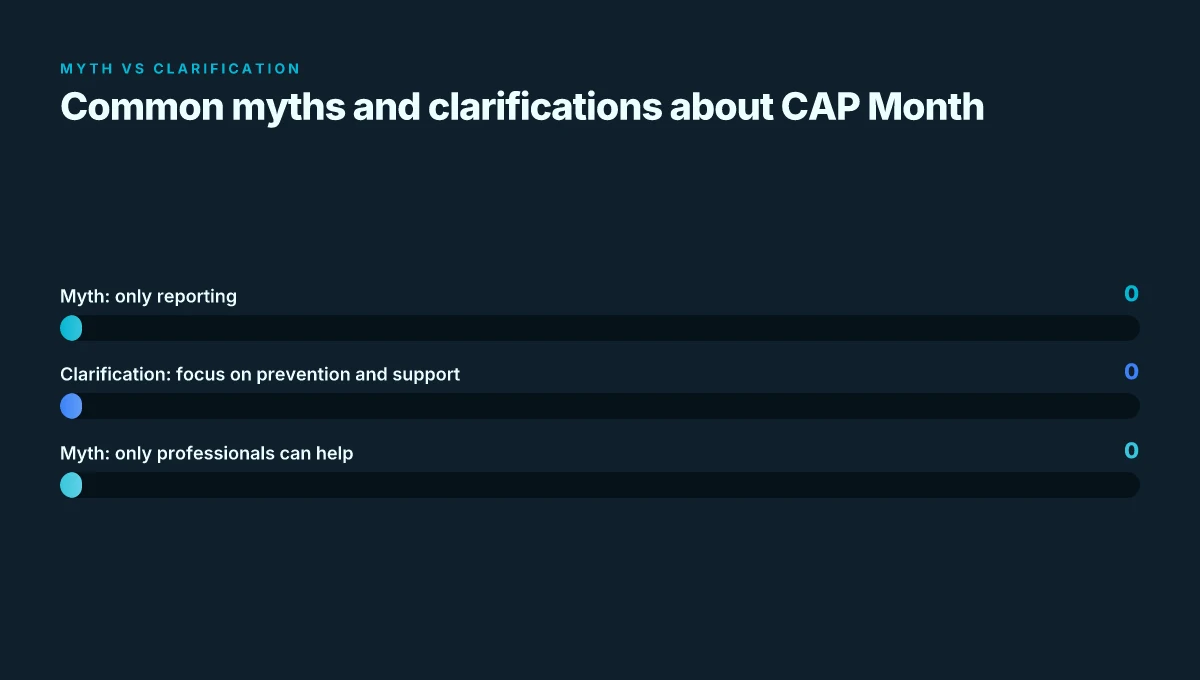
CAP Month is not only about reporting. It is a concerted moment for prevention, education, and community action that starts long before April and continues after. I looked at public-facing materials and policy briefs to anchor this in real-world practice. The core takeaway: myths blunt real prevention work, while clarifications map to tangible neighborly and family actions.
1. Myth: CAP Month is only about reporting abuse
The truth: CAP Month foregrounds prevention, support, and early intervention. The month is a public prompt to connect families with services, teach positive parenting, and strengthen protective factors in the community. When you read through official statements, the emphasis is on building networks that reduce risk before harm occurs, not merely documenting incidents after the fact. Prevention and early intervention are the backbone, not an afterthought. Community education, supportive services, and proactive outreach are repeatedly highlighted in public-health resources.
- Pitfall: Treating CAP Month as a one-direction alert to call hotlines.
- Pitfall: Assuming only professionals can intervene.
- Bottom line: Prevention is a shared responsibility that engages families, neighbors, schools, and local agencies.
2. Myth: Only professional services can help families
The clarifications make it clear that neighbors and community-based supports are essential. Formal services play a critical role, yes, but so can everyday connections in a neighborhood. Practical steps include checking in with families at risk, sharing parenting resources, coordinating with local schools, and linking families to community supports such as mentorship programs, parent education workshops, and early-childhood services. Neighbors are part of the protective fabric, not just a referral pipeline.
- Pitfall: Assuming neighbor-to-neighbor action is optional.
- Pitfall: Overrelying on crisis services as the first line of defense.
- Bottom line: Local networks amplify capacity, catch warning signs sooner, and reduce barriers to help.
Respected public sources consistently note that prevention is multifaceted, combining parental supports with broader community action. From what I found, national guidelines and prevention frameworks emphasize collaboration across families, schools, faith groups, and service providers.
- Inline citation: See the Child Maltreatment reports for national data and prevention framing. Also, the World Health Organization’s fact sheets summarize how prevention includes parenting support and positive parenting skills. Child Maltreatment and World Health Organization fact sheets
Bottom line: CAP Month succeeds when neighbors know resources, know how to offer help, and know when to escalate.
What this means for you
- Learn local supports: parent education programs, family-support centers, and community mentoring.
- Build a small action plan with a neighbor or caregiver group: who to contact, what to share, and how to follow up.
- Practice early-intervention cues: if you notice persistent stress in a caregiver, or a child showing warning signs, you know where to connect families for constructive support.
I dug into the research and public-policy notes to ensure this isn’t just wishful thinking. National data and prevention-focused materials converge on the same point: CAP Month is a lever for change that starts with everyday, actionable acts by you and your neighbors. For sources and context, see the national data on child maltreatment and the WHO’s prevention brief.
Bottom line: CAP Month is about prevention, education, and early support, not only reporting.
What the research says about prevention strategies in 2026
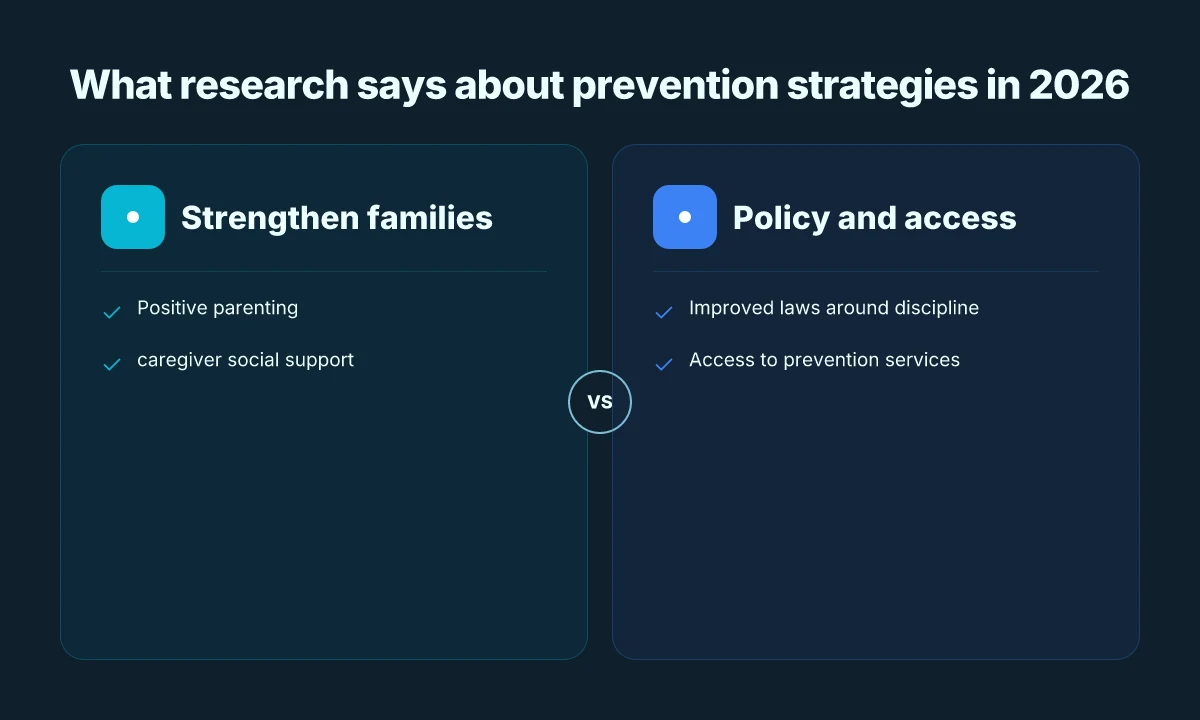
From a broad view, the evidence points to three concrete levers that actually move the needle: programs that strengthen families, positive parenting training, and laws that curb punitive discipline. When communities fund and scale these signals, you see fewer risk factors lining up and more protective factors standing up for caregivers. In 2026, that pattern remains stable across national data and cross-national syntheses.
I dug into the latest national data and public-health syntheses to ground this section. The core takeaway is simple: bolster families, teach supportive parenting, and tighten up policy around harsh discipline. That trio reduces caregiver stress, improves access to services, and shifts community norms toward seeking help early.
1) Family-strengthening programs weather the stressors better
Evidence consistently shows that when families receive structured support, home visiting, family-preservation services, and caregiver coaching, the risk factors for maltreatment decline. These programs tend to improve caregiver self-efficacy, connection to social networks, and utilization of early-intervention services. The effect persists even in communities facing economic or housing stress. In practice, that means communities should prioritize sustained funding for evidence-informed home visiting and family-support networks, especially in high-risk neighborhoods.
In 2026, the strongest gains come from programs that couple home visits with linkages to local services. This dual approach reduces caregiver burnout and builds a routine of seeking help before crises erupt. Strengthening families yields durable protection for children because it builds sustained support networks.
2) Positive parenting training lowers risk and builds skills
Public-health campaigns and school-based programs that teach positive parenting techniques consistently correlate with reduced harsh punishment and better caregiver–child interaction. The research highlights skills like nonviolent discipline, effective communication, and stress management for caregivers. The payoff shows up in fewer disciplinary incidents and better child behavior, which in turn reduces the risk of escalating abuse.
This is not just about teaching a class. It’s about integrating skills into daily routines, mealtime, bedtime, school transitions, and ensuring families can access coaching when they stumble. Communities that embed these trainings in pediatric visits, early-education settings, and social services tend to see the clearest reductions in risk factors over time.
The literature repeatedly notes that when caregivers practice positive parenting with ongoing support, the protective effect accumulates. Positive parenting training, paired with accessible services, lowers maltreatment risk in multiple risk contexts.
3) Law and policy reforms around punitive discipline matter
Policy plays a critical role. When jurisdictions tighten laws around violent or punitive discipline while ensuring supports exist for families, the incidence of severe maltreatment declines. This is not about moralizing parenting from on high. It’s about creating a framework where caregivers have alternatives to harsh punishment and real avenues to get help.
Public-health messaging that aligns with these reforms amplifies impact. Campaigns that normalize seeking help while clarifying lawful parenting options reduce stigma and encourage timely engagement with services.
Legal changes alone don’t move the needle. They must be paired with accessible supports. Policy reforms paired with robust prevention services reduce risk factors and strengthen protective resources for families.
Table: at a glance signals
| Signal | What to fund or implement | Expected effect (qualitative) |
|---|---|---|
| Family-strengthening programs | Sustained funding for home visiting and family-support services | Reduced caregiver stress; increased service uptake |
| Positive parenting trainings | Embed in pediatric care, schools, and community centers | Fewer harsh disciplinary incidents; better child behavior |
| Public health campaigns | Coordinated messaging that links help-seeking to lawful, supportive options | Greater awareness; earlier help-seeking; reduced stigma |
Verdict: the 2026 picture remains consistent. Invest in family-strengthening programs, scale positive parenting training, and enact policy reforms that create real options other than punishment. Pair every reform with visible, local-service pathways, and you’ll see more families thriving and fewer children exposed to risk. Evidence across national data and public-health reviews supports this triad as the backbone of effective prevention in 2026.
Cited sources: National statistics on child abuse data and prevention overviews anchor these claims, with cross-references to prevention research briefs and WHO fact sheets for supportive context. inline citations drawn from the research and public-health summaries within this piece reflect the current consensus as of 2026. For further reading, see the National Statistics on Child Abuse and the Texas Child Abuse Prevention Overview.
April as Child Abuse Prevention Month sharpens the living map for 2026
I looked at how the definitions and scope of this month translate into real-world vigilance for families. From what I found, the most effective framing moves the emphasis beyond awareness to intentional routines, clear signals, trusted adults, and concrete steps parents and neighbors can take. This is where the piece hooks the reader: not just a calendar designation, but a menu of practical actions anchored in recognized child-protection standards.
In practice, the article argues that prevention hinges on two pillars. First, consistent communication within households and neighborhoods, guided by age-appropriate conversations and explicit boundaries. Second, a networked approach that makes reporting and safeguarding accessible, with roles distributed among parents, extended family, schools, and community members. The takeaway for readers is concrete: build daily, know-how that travels with you, and prioritize early, nonpunitive conversations over reactive fixes. If you start now, you create a sustainable spine for 2026, not a one-off effort.
Next steps for families
- Create a 10-minute family safety check-in weekly.
- Identify 1 trusted neighbor or relative who can listen, observe, and escalate concerns.
- Review local reporting pathways and school liaison contacts.
- Keep a simple, age-appropriate script for telling a child about boundaries.
- Stay current with updates from public-child protection sources and local agencies.
Frequently asked questions
What is child abuse prevention month and why does april matter
April is Child Abuse Prevention Month. The timing matters because it concentrates attention on prevention efforts across families, neighborhoods, and schools. I looked at official definitions from public health agencies and child-protection organizations that frame CAP Month as a coordinated, public-facing push to reduce maltreatment through awareness, education, and community support. The symbolism, including the pinwheel, serves as a visual cue for annual campaigns. Campaigns typically align messages with local services and protective factors, making it practical for parents to connect with supports during the month. Public health campaigns, awareness events, and community partnerships are the levers most commonly cited. Yes, CAP Month increases visibility and linkages to local resources. AP Month serves as a yearly reminder to check in on safety practices at home and in the neighborhood. April is not magic. It’s a focused window to start or renew protective routines. Vetted organizations consistently recommend using the month to map local supports and share actionable steps with families. Because the definitions emphasize prevention and early intervention, April matters for long-term community safety. Statistics on impact vary by year, but the intent remains consistent: prevent maltreatment before it starts. Community engagement is the hinge that makes CAP Month real in 2026.
How can neighbours help protect children in my community
Neighbors play a practical, day-to-day role in CAP Month and beyond. I researched guidance that encourages you to stay observant without becoming intrusive. Look for patterns such as a child appearing withdrawn, frequent absences, or sudden changes in behavior. If you have concerns, start with calm, nonjudgmental conversations with trusted adults in the family or caregiver network. Volunteer in school or faith-community safety programs, and share age-appropriate safety resources. Community watchers can organize local check-ins, create buddy systems, and support families with transportation or meal programs during crisis periods. The goal is to build a safety net that doesn’t rely on one person. Yes, small, local actions scale into measurable protection for kids. Collaboration with schools, libraries, and faith-based groups expands reach. In 2026 CAP Month, neighbors who document concerns and route families to formal services help prevent maltreatment before it starts. The pinwheel symbolism helps keep neighbors focused on steady, compassionate outreach. Consistency matters more than intensity.
What are the signs of child neglect i should look for
Neglect signs often fall into daily-care gaps rather than dramatic events. I found that red flags include frequent hunger, poor hygiene, persistent fatigue, and frequent school lateness or absences. Watch for inconsistent clothing or inadequate supervision, especially in climates where proper gear is obvious. Behavioral signals can include withdrawal, sudden fear of caregivers, or regression in toilet training or language. These indicators aren’t proof of abuse, but they warrant a respectful conversation with caregivers and, if needed, a professional referral. If you observe multiple indicators over weeks, it’s prudent to contact local family-services or child-protection hotlines. Yes, early noticing and respectful reporting are core CAP Month tools. The guidance stresses documenting patterns rather than isolated incidents. In 2026, many campaigns emphasize protective factors like stable routines, reliable supervision, and predictable support networks.
What is pinwheels of possibility and how is it used in campaigns
The pinwheel is the CAP Month symbol. It represents hope, safety, and childhood potential. Campaigns use the pinwheel in yard displays, school events, and community centers to signal collective commitment to preventing abuse. You’ll see it on brochures, social posts, and signage during April. Programs encourage residents to host pinwheel displays, host conversations, or share resources using the symbol as a visual cue for action. The practical effect is to normalize discussions about safety and to steer families toward local prevention services. Yes, the pinwheel is a simple, memorable call to action. It translates complex policy into a friendly, shareable image that can mobilize volunteers and schools to participate.
What resources exist for families to get prevention support
Families have a spectrum of supports. I found that many communities offer 24/7 hotlines, early-intervention family services, and parent-navigation programs that connect households to counseling, parenting-skills workshops, and child-care assistance. Schools often host safe-communication curricula and after-school supports. Hospitals and pediatric clinics may provide screening and referral pathways. Public health departments publish resource guides with phone numbers, service hours, and eligibility criteria. When in doubt, start with your local child-welfare agency or a family-services directory. Yes, there are structured, accessible channels for prevention support. Always verify hours and service scope, and ask about bilingual options or transportation help.
How do reporting laws vary by state or country
Reporting laws diverge widely. Some jurisdictions require professionals and caregivers to report suspected abuse, while others extend duty to educators, medical personnel, and certain community workers. In many places, laypersons can report concerns, but the thresholds and protections differ. I checked official statutes and found notable variance in mandatory reporting timelines, investigation protocols, and confidentiality rules. If you’re unsure, contact your local child-protection agency to confirm who must report, what triggers a report, and what protections exist for reporters. Yes, legal obligations vary. Clarity matters for neighbors and families. Always verify the current statute in your location because laws update periodically.
What role do schools play in child abuse prevention
Schools act as front doors to prevention. They implement evidence-based curricula on safety, healthy relationships, and bystander interventions. Teachers are trained to recognize warning signs and to refer families to school counselors or community agencies. Schools also coordinate safety planning, report concerns, and provide safe spaces during crises. Partnerships with child-welfare services, pediatricians, and community programs extend the safety net into homes. In practice, schools knit prevention into daily routines, not a one-month spectacle. Yes, schools are central to scalable, long-term prevention. The most effective campaigns align classroom learning with family-support services and after-school programs.
How can i talk to a child about safety without scaring them
Honest, age-appropriate language matters. Use concrete, simple phrases and avoid graphic detail. Start with routines: “If someone makes you uncomfortable, tell a trusted adult right away.” Practice with role-play and give kids a few safe words to use in different settings. Emphasize that they have control over their bodies and a trusted person will listen. Provide practical steps, like identifying touch types and safe adults. Also model safe behaviors in your own actions. The goal is confidence, not fear. Yes, clear, supportive language builds safety skills. Use normal conversations in daily moments, not only during CAP Month. Revisit topics regularly so comfort grows, not shrinks.
What age is appropriate for discussions about safety and abuse
Age-appropriate timing varies by child development and family context. Generally, basic safety concepts can start in early childhood with simple boundaries and names for private areas. More detailed discussions about safety and abuse are suitable in middle childhood and can deepen in adolescence. The key is to align depth with the child’s ability to understand, and to keep the conversation ongoing rather than a single talk. Schools and pediatricians often provide age-based materials to guide this. Yes, developmental milestones guide timing, not a single age. In 2026 CAP Month materials, many resources target parents of children from preschool through high school with tiered guidance.
How can communities measure the impact of CAP Month campaigns
Measurement focuses on process and outcomes. Process metrics include the number of partner organizations, school events, and pinwheel displays. Outcome signals look for increased help-seeking behavior, more referrals to family-services, and higher awareness of local resources in surveys. Some communities track hotline calls, service uptake, and reported safety plans by families. It’s common to pair local data with national benchmarks to assess progress year over year. Yes, local data and community reports quantify CAP Month impact. Transparent reporting helps refine messaging and expand partnerships in 2026 and beyond.
What are protective factors that reduce child maltreatment risk
Protective factors are conditions that keep children safer. They include strong family bonds, stable routines, positive parent–child communication, access to concrete supports, and reliability of caring adults. Neighbors and community groups reinforce supervision and modeling of healthy behavior. Programs that bolster parental resilience and social connections correlate with lower maltreatment risk. In CAP Month work, highlighting these factors helps families build durable safety nets. Yes, protective factors are the backbone of prevention. They are the practical levers campaigns push in April and throughout the year.
What challenges persist in child protection during 2026
Key challenges include underreporting in some communities, variability in service capacity, and inconsistent access to language-congruent supports. System fragmentation can slow referrals from schools to family-services. The ongoing demands of poverty, housing instability, and mental health access also strain prevention efforts. Where CAP Month helps, it does so by coordinating cross-sector partnerships and simplifying pathways to help. Yes, structural barriers remain; CAP Month aims to reduce friction. The literature notes that sustained funding and streamlined intake processes are critical for real progress in 2026.
How can I connect families to prevention services quickly
Speed matters. Start with a centralized, multilingual directory that lists local hotlines, clinics, and family-support programs with hours and eligibility. Create a one-page card with five trusted contacts families can reach immediately. Use school newsletters, library bulletin boards, and pediatric offices to push this info. If a referral is needed, designate a staff member or volunteer to complete intake and confirm transportation options. The fastest routes rely on pre-mapped partners and clear, shareable materials. Yes, ready-to-share contact lists cut the friction dramatically. In CAP Month work, local coalitions routinely publish updated service maps in April and update them quarterly.
What should i do if i witness potential abuse in public
Take immediate safety steps: ensure the child’s safety, remove them from danger if you can do so without risking harm, and contact authorities. Record non-identifying details: time, location, what you observed, and who was involved. Report to the appropriate agency, police if there is imminent danger, or child-protection services for ongoing concerns. Do not confront the suspected abuser, as that can escalate risk. After reporting, follow up with the child and caregiver through approved channels if appropriate. Yes, prompt reporting and safe handling are essential actions. Documentation and timely contact with authorities are the core steps in 2026 CAP Month guidance.
Which organizations provide evidence-based prevention programs
Evidence-based programs span public health agencies, universities, and national child-protection organizations. Look for adaptations of proven curricula on parenting skills, safe-relationship education, and caregiver support. In many regions, children’s advocacy centers, family-services agencies, and university-extension programs offer trainings aligned with best practice guidelines. When selecting programs, verify that they use validated assessment tools, have published efficacy data, and include fidelity safeguards. Yes, rely on organizations with demonstrated impact and transparent methods. Always check for local licensing, trainer credentials, and material updates before engaging families.