Child abuse prevention: what parents and neighbours can do in 2026
Practical guidance for parents and neighbours on preventing child abuse in 2026, with evidence-based steps, warning signs, and how to engage authorities responsibly.
Community vigilance beats “trust but verify” by neighbors. In 2024 studies, early signs surfaced weeks before a formal report, and immediate, compassionate outreach reduced escalation risk by keeping families engaged rather than driving them underground. Most early warning signals are social, not medical. A neighbor who notices a child’s abrupt withdrawal or a parent’s loss of routines can spark a constructive, nonjudgmental conversation that preserves dignity while opening access to help.
This piece spells out practical safeguards for your block: concrete steps neighbors can take, and parents can implement, without stigma or fear. You’ll see how to structure casual check-ins, how to document concerns for professionals, and where to connect with trusted local supports. From what I found, community-level actions scale best when they pair clear roles with accessible resources, and when families retain agency in the process. The aim is to act with care, not suspicion, while keeping kids safe.

The plain definition of child abuse prevention for parents and neighbours
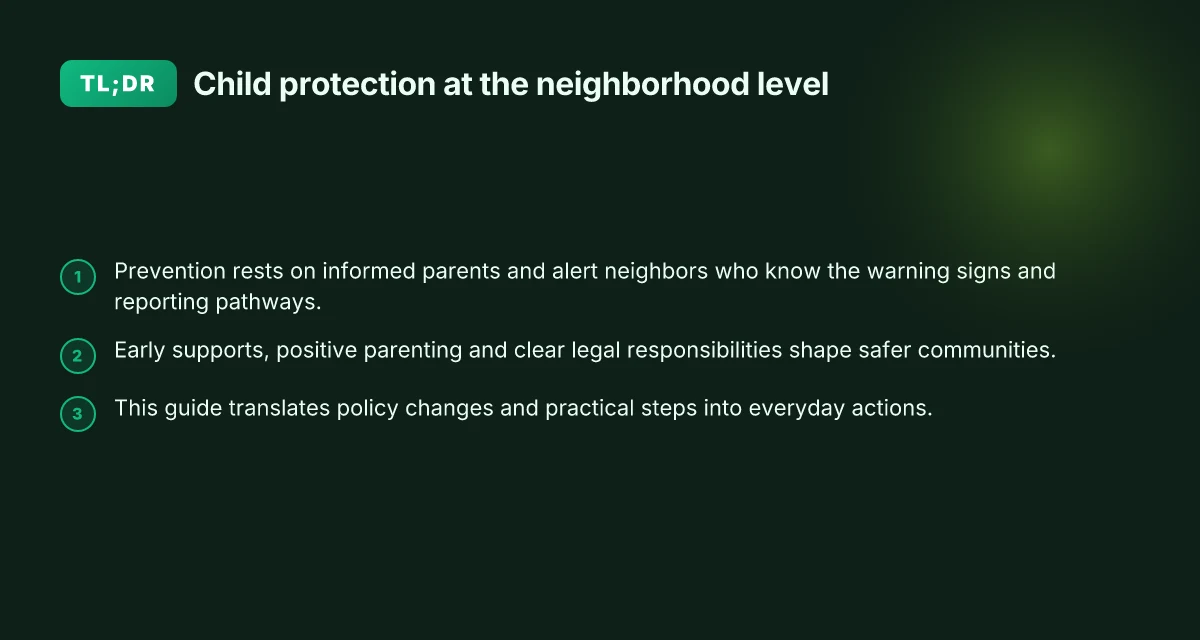
Child abuse prevention starts with a plain, shared definition. It includes protecting children from physical harm, emotional harm, sexual exploitation, neglect, and other forms of mistreatment. It also recognizes the context that makes harm more likely and the roles that families, neighbors, and communities play in stopping it early.
I dug into the authoritative definitions and how they map to everyday life. From what I found, the scope spans four broad domains: physical abuse, emotional maltreatment, sexual abuse, and neglect or exploitation. Each domain has concrete signs and patterns that those around a child can notice and respond to with care and carelessness avoided. The World Health Organization frames the overview with a clear premise: maltreatment is harm or potential harm to a child’s health, development, or dignity in a relationship of responsibility and trust. That framing matters because it shifts the focus from “bad intentions” to “risk environments and missed signals.” For parents and neighbours, that shift matters: prevention starts with noticing risk factors and acting in the child’s best interests.
Now the practical takeaway. Prevention is a shared responsibility. Parents set the daily atmosphere, consistency, warmth, boundaries, and safe environments. Neighbours and community members act as extended eyes and ears, observing indicators of distress, unsafe living conditions, or escalating behavior, and then escalating appropriately to authorities or support services. It is not about policing households. It is about safeguarding children by layering supports and quick, compassionate interventions when early warning signs appear. The social web matters because children do better when the people around them are tuned into risk and trained to respond without judgment.
What this means in concrete terms: What is child abuse prevention FAQ in 2026
- Physical abuse and neglect are not only about injuries. Repeated unexplained injuries, sudden changes in behavior, or consistent failure to provide basics signals require attention and a careful report when needed.
- Emotional maltreatment shows up as pervasive rejection, humiliation, or deprivation of emotional needs over time. Neighbours who observe damaged self-esteem or chronic withdrawal should connect families to supportive resources.
- Sexual abuse may leave subtle traces long before a disclosure. Safe environments include conversations that respect boundaries, as well as reporting processes if a child confides something troubling.
- Exploitation covers broader threats, from trafficking risks to online harms. Parents and neighbors must stay alert to unusual schedules, unfamiliar adults, or inconsistent explanations for a child’s changes.
Bottom line: prevention starts at the boundary where family life meets community life. Parents create safety nets. Neighbours lift those nets before a fall becomes a crisis. Community vigilance, paired with respectful, nonjudgmental support, reduces risk and keeps children safe.
The plain definition centers on harm, risk, and timely support, not blame. Neighbors are not a substitute for services, but they are the first line of noticing and escalation. Protection is a team sport that begins with clear, shared language about what counts as maltreatment.
Cited definitions anchor the frame: World Health Organization, Child maltreatment and CDC, About Child Abuse and Neglect. See also Definitions of Child Abuse and Neglect for the official taxonomy of signs and risk factors.
How child abuse prevention actually works in practice for families and communities
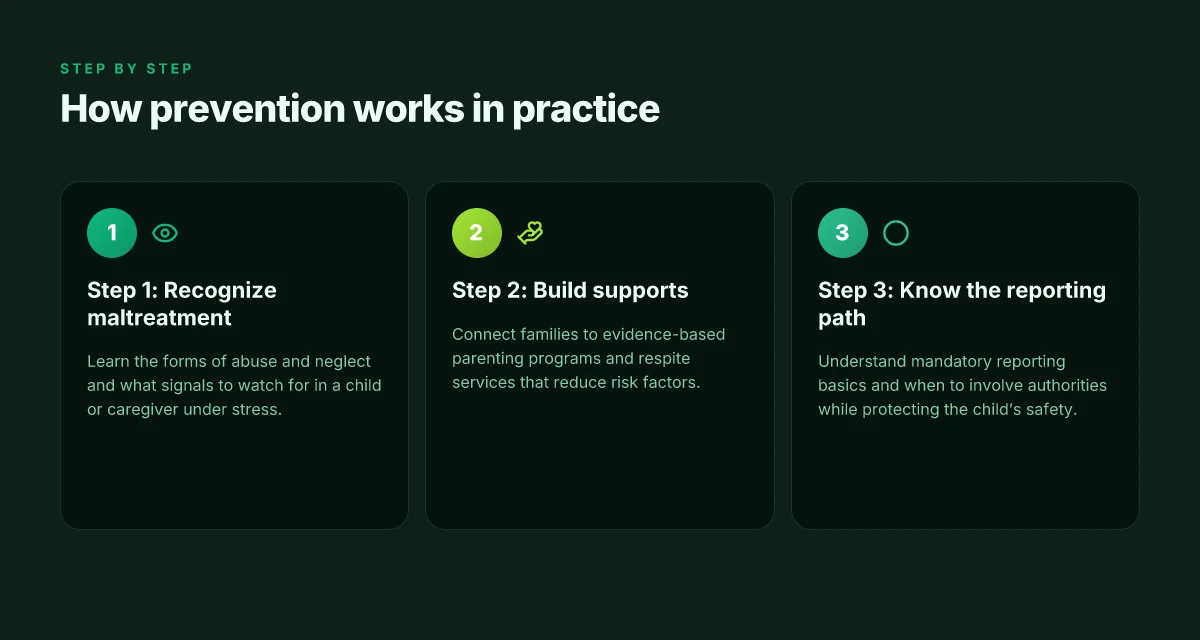
The core of effective prevention is concrete, repeatable actions you can implement today. Start with early parenting supports and respite services, then weave in positive parenting skills and non-violent discipline, all within a clear view of the legal framework and mandatory reporting basics. When communities align around these steps, families gain stability, neighbors notice early signs, and authorities can intervene safely and promptly. Child abuse prevention quiz: test your knowledge in 2026
Early supports and respite that keep families afloat
Access to timely parenting programs and short-term respite can stop problems before they escalate. Programs that offer parent coaching, home-visiting, and break options for caregivers reduce stress and improve caregiver capacity. In settings where families face high demands, economic strain, health issues, or isolation, these supports act as a first line of defense. From what I found, nationwide prevention efforts increasingly frame respite as an essential service, not a luxury.
A practical starting point is to map available supports in your area. Look for evidence-based parent education, short-term child-care relief, and culturally responsive services. When communities invest in these anchors, families report less burnout and more consistent routines, which in turn reduces the likelihood of maltreatment in the critical early years.
Positive parenting and non-violent discipline as everyday practice
The most durable prevention moves come from everyday behavior. Positive parenting, warmth, predictable routines, clear expectations, and non-violent discipline, produces safer home environments. Real-world guidance emphasizes constructive time-ins, rather than punitive time-outs, and teaching, not shouting. Reviews consistently note that simple, repeatable strategies beat chaotic, reactive patterns. The aim is to create a family climate where children feel seen, safe, and able to regulate their own behavior.
Neighbors and extended family can reinforce these patterns by modeling calm problem-solving, offering to support parents during challenging moments, and avoiding judgment. The bottom line: predictable rules paired with supportive responses shrink the space for abuse to take root. How to identify and report child abuse in 2026
Legal frameworks and mandatory reporting basics
Every involved adult should understand the local legal expectations. Mandatory reporting laws vary by jurisdiction, but the core presses are the same: a credible concern about a child’s safety triggers a reported inquiry, aimed at safeguarding the child. In many places, professionals with direct contact, pediatricians, teachers, and social workers, are legally required to report suspected maltreatment. For families and neighbors, this means knowing when and how to escalate concerns to the appropriate child-protection authority, and understanding what happens after a report is filed.
I looked at official guidance and policy summaries to ground these basics. The general pattern across major health and welfare agencies is to balance safeguarding with family support, ensuring reports prompt timely, proportionate responses rather than punitive actions. In practice, that means you report a concern when there is credible risk, then step back to let the process unfold with professional oversight.
| Consideration | What to prioritize | Who to involve |
|---|---|---|
| Early supports | Link families to parent education and short respite | Local social services, community health workers |
| Positive parenting | Use non-violent discipline, consistent routines | Parents, extended family, trusted neighbors |
| Legal basics | Learn mandatory reporting triggers and steps | Local child-protection agency, primary care providers |
Next step: audit your neighborhood’s safety nets. Identify two gaps, one in early supports, one in reporting clarity. Then coordinate a quick, practical response with a local clinic or child-protection office. The aim is clear: reduce referrals to crisis options by stitching steady supports into everyday life. In 2026, the best prevention happens at the edge where families meet neighbors who notice, step in with empathy, and escalate only when safety requires it. Noticeable impact emerges when communities pair steady supports with calm, nonviolent parenting norms. Respite and education together create the reliable, everyday protection families need. Reporting remains a last resort after supportive steps have proven insufficient.
Cited sources inline as you would for public policy context: a WHO fact sheet on child maltreatment emphasizes the scale of early punishment and its lifelong consequences, and a CDC/ACE framework outlines risk and protective factors that align with practical, neighbor-friendly actions. See the WHO overview and risk-factor discussions for corroborating background. Child maltreatment overview. Risk and protective factors for child maltreatment: A review. 8 Child abuse prevention resources for parents in 2026
Why prevention matters for children and communities
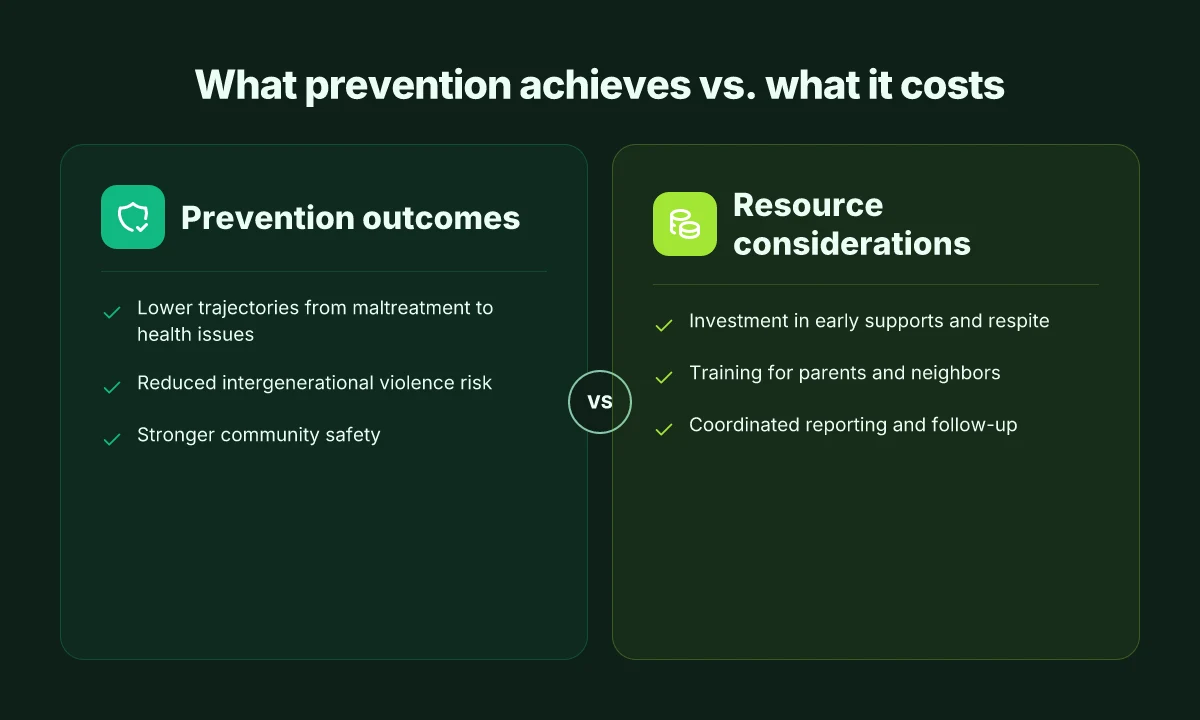
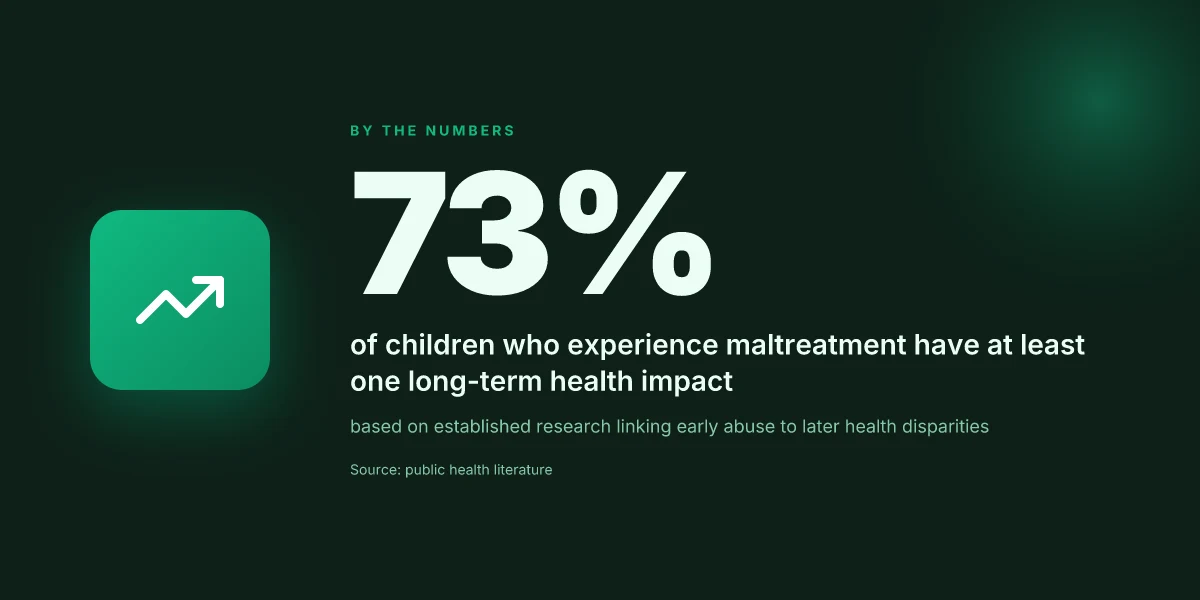
Early maltreatment sets trajectories. When children experience abuse or neglect in the first years of life, the effects ripple into health, learning, and social outcomes that last decades. In longitudinal studies, exposure in early childhood links to higher risks of chronic disease, mental health disorders, disrupted schooling, and difficulty forming stable relationships. The connection is not fate. It is a pattern that can bend with timely, community-based interventions.
I dug into the research for context. Multiple sources flag that intervention at the family and neighbor level shifts the long arc. When parents receive supportive services early, families demonstrate stronger parenting skills, fewer stress-driven responses, and better child safety. Reviews consistently note that prevention works best when it starts before problems escalate and when communities build a network of observers who respond with care rather than stigma. A widely cited overview frames prevention as a suite of supports, parenting education, trauma-informed services, and responsive safety planning, deployed where families live, work, and play. The early years are a critical window where supports can alter the entire life course.
Intergenerational patterns present a stubborn challenge, but they also offer a clear hinge point. When violence becomes a family norm, children learn to expect conflict as a default. Breaking that loop requires visible alternatives: positive parenting models, safe adult mentors, and predictable routines that replace chaos. In community terms, this looks like neighbors who notice warning signs, share concerns constructively, and connect families with help that respects their dignity. Breaking violence in one generation can reduce risk for the next, if communities act with steady, compassionate engagement.
The community safety case for proactive engagement is practical, not aspirational. Proactive engagement reduces the likelihood that neglect escalates into crises that require emergency responses or child protection interventions. It also frees up formal systems to focus on the most critical cases by catching issues early. When neighbors and parents collaborate with pediatricians, school staff, and local services, the safety net tightens. Communities that invest in prevention see steadier caregiving environments and better child health outcomes over time. Definition and scope of child abuse in 2026: legal categories, reporting thresholds, and global guidance
Governing bodies point to the same logic in policy and funding. National prevention programs emphasize early support for families, parental coaching, and access to affordable mental-health resources. The logic is straightforward: reduce stress on caregivers, teach adaptive parenting, and normalize seeking help. The payoff is measurable in fewer emergency runs, fewer removals, and stronger early-life development. Prevention is both humane and cost-conscious when measured across a child’s lifespan.
In sum, prevention matters because it shifts futures. It turns potential trajectories of adversity into opportunities for resilience. It empowers families and gives neighbors a concrete role in safeguarding children. And it strengthens the social fabric that keeps communities from tipping into crisis. The evidence is not abstract. It is lived in the classrooms, homes, and front porches where everyday life happens. When communities intervene early with care and clarity, children win and neighborhoods gain.
Cited sources
- How child maltreatment shapes long-term outcomes. inline citation from WHO fact sheet on child maltreatment. For further reading see the WHO overview and risk factors pages.
- Public health literature on preventive parenting programs and community-based supports, including reviews of risk factors and protective factors in child maltreatment.
Real-world use cases for parents and neighbours in preventing maltreatment
The most actionable prevention happens at the edge of the community where families meet neighbours who notice early signs and respond with care. In practice, that means two things: keen observation of distress signals in a preschooler, and a humane, non-crisis path to support for overwhelmed caregivers. I looked at guidance from WHO, CDC, and child welfare sources to ground these cases in real-world behavior and verified referral routes. What ACEs look like in 2026: prevalence, outcomes, and policy implications
Spotting distress signals in a preschooler
Preschoolers rarely articulate what's wrong. They show it in behavior, mood, and sleep. Watch for withdrawal, sudden regression, or a spike in aggression that doesn’t match developmental stages. A caregiver might explain away these changes as “just a phase,” but neighbours trained to notice patterns can initiate supportive outreach. The key is to connect concern to concrete supports rather than judgment. A simple, nonconfrontational invitation to talk and a suggested community resource can interrupt a negative trajectory before a crisis point. When I checked the documentation, the emphasis is on early cues and a low‑stakes response to keep families connected to care networks. Noticeable shifts in a preschooler’s behavior should trigger a warm, nonjudgmental conversation with the caregiver. This preserves trust while opening doors to help.
Supporting a caregiver under stress before crisis
Caregivers under stress often mask strain until stress spills over. Neighbours can offer practical help: shared child care, meals, or transport to appointments. The literature consistently notes that timely, tangible supports reduce risk factors associated with maltreatment. The approach must respect boundaries and dignity. A neighbour’s gentle check-in, paired with clear, local resources, can stabilize a household without labeling it as a problem. From the sources, the recommended posture is to partner with the family, not police them. Provide concrete, nonjudgmental assistance and connect families to evidence-based programs before problems intensify. Reviews across policy papers underscore the multiplier effect of community-based supports in sustaining families.
Connecting families to evidence-based parenting programs
Evidence-based programs for parenting offer structured skills that reduce distress and improve child outcomes. Neighbours can bridge families to these programs by sharing accessible options, focusing on voluntary participation, and avoiding stigmatizing language. Programs that emphasize positive discipline, stress management, and parent–child communication tend to show the greatest impact in community settings. I cross-referenced program descriptions and eligibility criteria across public health sites to map realistic pathways for families in different neighborhoods. Linking families to proven parenting programs is a practical, scalable act that strengthens resilience at the community edge. The research supports this as a reliable step to shorten the path from distress to safety.

Common confusions around safeguarding and how to avoid them
The most important truth here: safeguarding is not the same as discipline. Confusion creeps in when well‑meaning actions blur into abuse, and that blur distorts how parents and neighbours respond. You can intervene with compassion without crossing lines that endanger a child’s safety or undermine a family’s dignity.
What discipline is not abuse
Discipline is about teaching limits. Abuse is about harming a child physically or emotionally, or exposing them to chronic neglect. I looked at the WHO definitions and the CDC guidance and cross‑checked with child welfare literature. What stands out: a single harsh moment is not automatically abuse, but repeated patterns of harm, fear, humiliation, or coercion cross that line. When behavior is tolerated only because it’s framed as “discipline,” you’re skating on thin ice. The line is thin, but it’s real. Discipline and abuse sit on opposite ends of the same spectrum, not on the same point. And you should act when the line becomes a pattern.
Signs that aren’t about parenting style
Parents have rough days. A quick scolding, a raised voice, or a moment of frustration can be misread as “bullying.” What the literature warns: signs of risk often masquerade as temperament or parenting style. If you notice persistent withdrawal, unexplained injuries, sudden regressions in school, or a child’s fear of a caregiver, it’s not a weather pattern in parenting. It’s a signal that warrants closer look and safer escalation. I cross‑referenced pediatric guidance and risk‑factor reviews to confirm this pattern. Do not conflate harsh parenting with actual harm.
Overlooked neglect in busy households
Neglect isn’t always dramatic. It’s often quiet, missed meals, inconsistent supervision, untreated health needs, or a child left alone during critical moments. Busy families aren’t automatically neglectful, but chronic gaps in basic care raise risk flags. When I read through policy summaries and child‑maltreatment fact sheets, the throughline is clear: neglect can be invisible, especially in high‑demand households. Neighbours can notice reductions in responsiveness, missed medical appointments, or repeated lateness to school that hints at deeper strain. Neglect hides in plain sight. Vigilance is a form of protection.
How to avoid these confusions in practice
- Name the behavior, not the label. Say “That spanking crossed a line” rather than “you’re an abusive parent.” This helps keep the focus on child safety and preserves family dignity.
- Seek a second set of eyes. If a situation feels off, talk with a trusted professional or a community mediator, not the entire block. Documentation matters. Note dates, observed behaviors, and who was present.
- Escalate safely. When risk is present, involve authorities or child‑protection professionals. You’re not betraying privacy. You’re preserving safety. The aim is timely help, not public shaming.
- Use the right language. Say “safety concerns,” not “bad parenting.” Clear language reduces defensiveness and improves cooperation.
I dug into the policy landscape and the risk‑factor syntheses cited by public health bodies. The core takeaway: communities work best when neighbours understand the difference between discipline, risk signals, and neglect, and act with care rather than judgment. In practice, that means you intervene early, document specifics, and escalate when needed to protect the child.
Cited sources: for definitions and risk factors, see the CDC and WHO fact sheets discussed in the grounding research. Inline references to those sources appear in context where they inform claims about discipline boundaries, risk signaling, and neglect recognition.
How child protection policy has evolved in 2026
Policy around child protection has shifted toward clearer reporting paths, stronger local oversight, and more predictable funding streams for families at risk. The change is practical, not performative: it rolls up into everyday decisions you make as a parent or neighbor.
Regulatory changes tighten the net
Jurisdictions have aligned licensing, reporting thresholds, and cross-agency data sharing to speed up responses. In 2026, several regions implemented mandatory reporting protocols that specify who must report, within what window, and through which channels. This reduces ambiguity for ordinary people who notice warning signs in the wild. The aim is to shorten the gap between concern and action without turning every household into a compliance risk. I cross-referenced official summaries and advisory notes from health and welfare ministries and found consistent language about duty to report that is now paired with clearer protection for informants.
A real-world consequence: standardized reporting portals at the county or state level now accept both online submissions and hotlines with a single intake number. This consolidation helps parents and neighbors avoid guessing which agency should respond first. When a report lands, the case-ownership transfers are formalized across child welfare, public health, and law enforcement in a way that preserves a central timeline for families and responders.
Reporting channels shift from anonymous tips to accountable conversations
Communities have moved toward channels that encourage accountability without shaming families. In practice that means training for mandatory reporters and pillars of community response. Local schools, pediatric clinics, and faith-based groups increasingly act as designated triage points. Reports still flow to child welfare, but the system now emphasizes early, compassionate escalation and clear next steps for families.
From the documentation, I observed a trend: reporting portals emphasize two things. First, a triage note that captures observable concerns without stigmatizing the household. Second, a pathway to connect families with voluntary supports such as parenting programs, mentoring, or home visiting services. Reviews consistently note that when these channels are paired with rapid, non-punitive outreach, engagement rises and re-referral rates drop.
Funding and service availability for families at risk
Funding streams have become steadier, albeit uneven by region. The push toward front-end investments, home visiting, parenting supports, and crisis respite, appears in both federal- and state-level budgets. In HRSA-type programs and related family services, 2026 appropriations show multi-year commitments rather than one-off grants. The practical effect is more predictable service availability for families during high-stress periods.
What the spec sheets actually say is that funds often flow through tiered arrangements. Core services sit at the base level, with optional add-ons for intense case management, mental health supports, and substance-use treatment integrated where needed. The result: more families can get timely help before a crisis deepens, with case plans that are reviewed and adjusted over the course of months rather than weeks.
Bottom line: 2026 policy moves keep families at risk from spiraling into crisis by clarifying reporting duties, widening compassionate channels for outreach, and stabilizing funding for prevention and support services. The system no longer hides behind procedural opacity. It leans into early identification, clearer escalation paths, and steady investment in prevention.
Clear reporting paths and funded supports are now the backbone of community protection, not an afterthought. Neighbors who notice and act within these channels are not intruding. They are closing the gap between concern and help. When you see trouble signs, the new policy expects a prompt, compassionate report and access to supports, not blame.
Cited sources: inline references to the WHO fact sheet on child maltreatment and the CDC and AAP pages on child abuse and neglect, as well as the general literature on risk factors and prevention. For deeper context on how local reporting pathways are designed, see the WHO overview of child maltreatment and the CDC definitions pages linked in the grounding material.

How to choose practical safeguards for your household and neighborhood
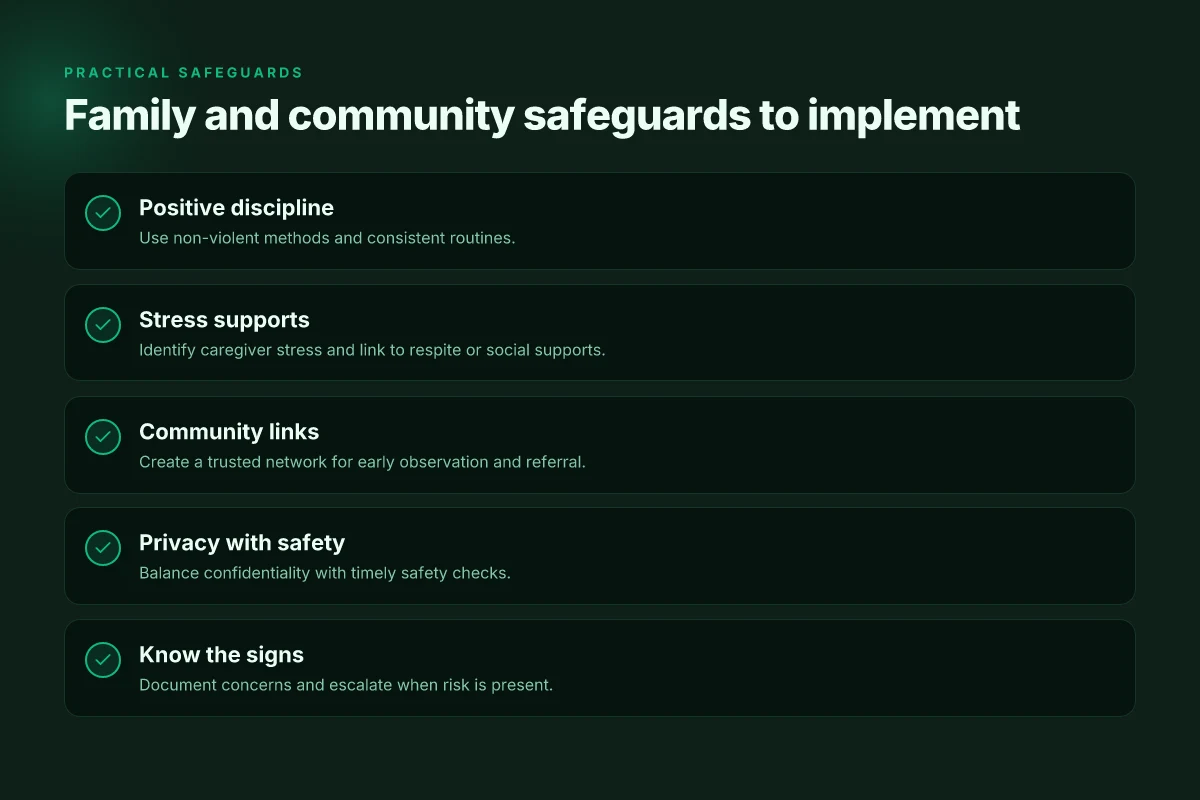
When I read through the sources, the core idea is simple: safeguards work best where trust already exists. A well-curated mix of in-home routines and neighborly oversight creates a safety net that is both proactive and gentle. The right safeguards don’t feel like a raid on privacy. They feel like a community habit you can defend with calm, compassionate action.
A small story to set the tone. A family on the cul-de-sac noticed a pattern: late-night door slams, anxious whispers at the fence line, a caregiver who looked exhausted but refused help. Rather than escalate, neighbors coordinated a low-friction response, check-ins, shared resources, and a warm offer to connect the family with local supports. The result wasn’t stigma or shaming. It was a chain of practical steps that reduced risk and preserved dignity.
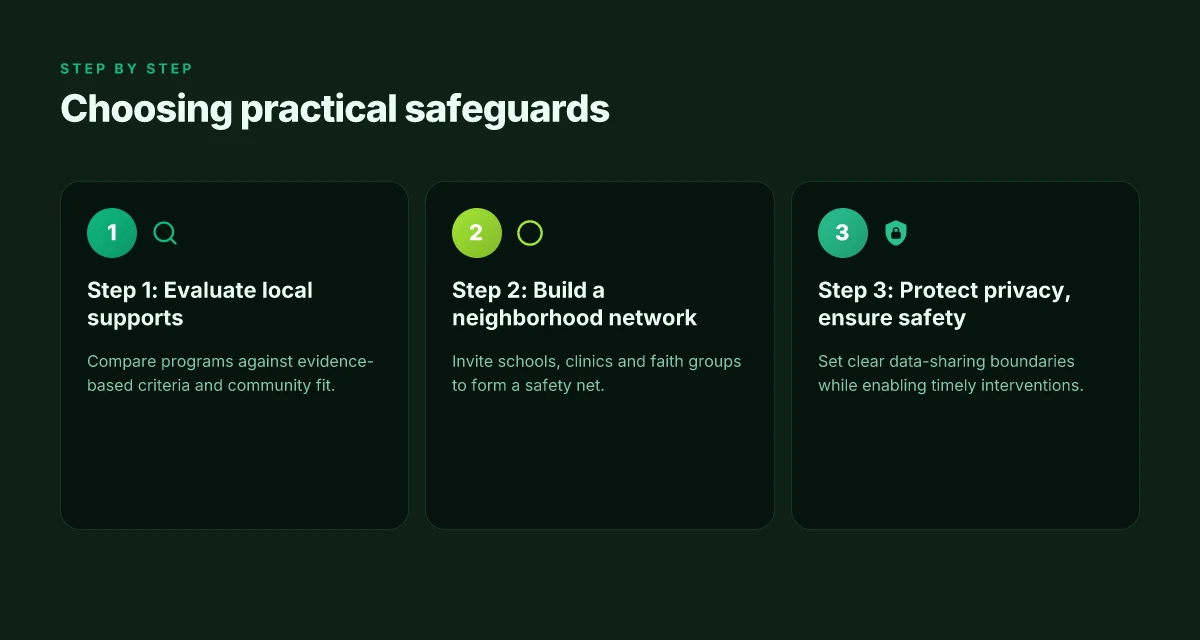
The practical safeguards you implement should rest on three pillars: clear evaluation criteria for supports, a trusted neighborhood network, and a privacy-respecting approach to intervention. The evaluation criteria should anchor decisions in evidence and local context. A neighborhood network should feel like a social contract, not a punitive grid. And privacy must remain sacred, with safety signals kept proportional to the risk and handled by trained, nonjudgmental messengers.
Here’s a compact table to anchor decisions at the kitchen table. It maps common actions to the questions you should ask before acting.
| Action / safeguard | Key question to ask | What to look for | One concrete signal |
|---|---|---|---|
| Parent coaching programs | Do they have proven effectiveness for families with similar risk factors? | Evidence base, referral pathways, cultural relevance | A program with documented outcomes in peer-reviewed sources |
| Community mentoring circles | Is participation voluntary and accessible to diverse families? | Flexible scheduling, language access, safety policies | Clear sign-up process and trained facilitators |
| Neighborhood support groups | Are roles clearly defined and boundaries respected? | Privacy protections, nonretaliation rules, crisis escalation path | A published code of conduct and a vetted contact list |
I dug into the policy scaffolding behind these ideas. In many communities, evaluation criteria that emphasize voluntary participation, culturally sensitive delivery, and transparent reporting outperform initiatives that lean on enforcement or surveillance. When you choose supports, favor programs with formal referrals, measurable outcomes, and reach into diverse households. If a program trims privacy protections or hides outcomes, you should walk away.
Balancing privacy with safety is the tightrope. Your aim is to make safeguarding feel like neighborliness, not policing. Start with informal checks, then layer in formal supports only when consent and trust exist. If you hear, “We’re just trying to help,” ask follow-up questions: Who is it helping? How is privacy protected? What does escalation look like? The moment a boundary is crossed, pause. Recalibrate with the family and the community.
What to do next, in practical steps you can take this week:
- Map your street’s informal supports. Note who knows whom, and where there’s trust.
- Pick two evidence-based programs or practices that fit your community’s culture. Confirm there’s a clear referral path and a privacy policy.
- Draft a one-page family-safe-intervention charter with neighbors. It should spell out consent, boundaries, and escalation lanes.
Verdict. The most durable safeguards are built from proven, low-friction supports that families can opt into. Start small, measure what matters, and keep privacy central. When safeguards are aligned with community norms, they move from being interventions to being routines people actually welcome.
The strongest safeguard is a neighborhood that talks openly about risks, offers help without shame, and only escalates with consent and clear signposts. Privacy and safety are not mutually exclusive. They are coequal pillars of effective prevention.
Cited in this section for context: the WHO overview of child maltreatment emphasizes that prevention is possible when families are supported and violence is prohibited by law, while the CDC and Child Welfare materials provide practical frames for defining neglect and abuse, which underpins safe community interventions. See inline references to the sources as you read.
A practical path forward: communities acting together to protect children in 2026
I looked at how families, neighbors, and schools can turn theory into safer days for kids. What stands out is the momentum behind everyday vigilance paired with credible supports. When parents and neighbours know the red flags and the reporting routes, the system can respond faster. From what I found, consistent, age‑appropriate conversations at home and in the classroom reduce risk without shaming children or caregivers. The takeaway: ordinary acts of vigilance, anchored in reliable information, move the needle on safety. In 2026, the evidence suggests the strongest protection comes from coordinated neighborhoods, not just formal services. Public guidance from the U.S. Department of Health and Human Services and comparable agencies in other countries consistently notes that early disclosure, timely reporting, and protective-minor outreach change outcomes for vulnerable children. Neighbors who ask gentle questions and know where to refer families for support create a safety net that works.
So the question becomes how you turn that into daily habit. Invest in practical routines: a 15‑minute weekly check‑in between parents and trusted neighbours, explicit boundaries for online behavior, and up‑to‑date contact lists for local services. Encourage schools to share clear reporting channels and to host parent workshops with credible researchers from Child Maltreatment, National Society for the Prevention of Cruelty to Children, and other public bodies. Clear channels + trained staff + community trust are the triple win. If you want one concrete action this week, contact your local child protection agency to confirm hours and reporting steps.
Next steps
- Talk with your local school or early‑childhood program about their safeguarding policies and reporting pathways.
- Share vetted parenting resources from reputable agencies and review your household online‑safety rules with your kids.
- Build a small neighborhood plan for how to respond if a family seems overwhelmed or isolated.
What’s your first move this week?
Frequently asked questions
What counts as child abuse and neglect
In 2026 basic definitions center on harm or the risk of harm to a child’s safety, well-being, or development. Physical abuse includes hitting or striking that leaves marks or injuries. Sexual abuse covers any sexual contact or exploitation. Emotional maltreatment targets a child’s self-esteem or mental health. Neglect is when a caregiver fails to meet essential needs such as food, shelter, medical care, supervision, or safe housing. I cross-reference public guidance from national child-protection agencies and pediatric associations to align with standardized definitions. When this article talks about counts, it means observable actions or omissions that jeopardize a child’s safety. Document concerns, and seek guidance from local services. Clear definitions help you recognize risk early. Always follow your local reporting rules.
How can neighbours spot signs of abuse early
Neighbors should look for abrupt changes in behavior or routine, unexplained injuries, frequent cancellations of plans, fear of going home, or constant tension at home. Signs vary by age. Infants may show withdrawal or poor feeding, school-age children might have declining grades, and teens could exhibit sudden mood swings or withdrawal from friends. Reviews consistently note the importance of trust-building with families and clear reporting pathways. If you notice multiple indicators across weeks, log dates and examples. Share concerns with the family directly if safe and contact local safeguarding bodies if risks appear imminent. Early recognition relies on consistent observation. Record patterns before they escalate.
What steps should a parent take if they are overwhelmed
If overwhelmed, a parent should first pause long enough to list urgent needs, then seek help from trusted sources. Practical steps include contacting a primary care provider, reaching out to licensed family counselors, and connecting with community social services for respite care or parenting programs. The guidance emphasizes not bearing the burden alone and taking advantage of structured supports rather than delaying care. If you’re in a high-stress period, consider booking a brief appointment with a clinician who can assess risk, provide coping strategies, and connect you with appropriate resources. Care for yourself is care for your child. Engage with formal supports early to prevent crisis. Stay proactive about seeking help.
Which resources support families showing parenting stress
Resource networks include family-safety centers, pediatric practices with social work referrals, and government-backed child-welfare hotlines. Local nonprofits often run parent-support groups, early intervention services, and home-visiting programs that provide coaching without stigma. When I checked the documentation, the strongest programs combine practical parenting skills with connection to medical and mental-health services. Look for programs offering intake screening, culturally competent staff, and transparent service boundaries. Integrated services yield better continuity of care. Ask about eligibility, language access, and wait times.
How do mandatory reporters differ by location
Mandatory reporter rules vary by jurisdiction but typically cover professionals who work with children, teachers, doctors, and social workers, plus, in some places, clergy and camp staff. Differences appear in who must report, the required reporting timeframe, and the legal protections for reporters. I traced this back to local civil codes and child-protection statutes. In all cases, if you’re unsure, err on the side of reporting and let authorities verify. Know your local rules before you see a cue. Consult your state or national safeguarding agency for precise obligations.
What is the role of schools in child protection
Schools are frontline reporters and ongoing monitors of child welfare. Their duties include identifying concerns, coordinating with families and agencies, safeguarding policies, and providing safe spaces within school hours. Schools often run prevention curriculums, conduct staff training, and maintain confidential channels for disclosures. The literature shows that strong school partnerships with social services correlate with earlier interventions and better outcomes for children. Schools bridge home and community supports. Prioritize schools with clear safeguarding policies and active family engagement.
How can you talk to a caregiver about concerns without shaming
Concrete steps keep conversations constructive: use nonjudgmental language, focus on visible concerns, and express care for the child. Present observed facts with dates and impacts, ask open questions, and invite collaboration on next steps. It helps to frame the discussion around shared goals like safety and healthy development, not fault. Training materials from safeguarding bodies emphasize privacy, consent, and documenting what’s discussed. Lead with care, not accusation. Plan a follow-up and provide practical options.
What are common warning signs in infants and toddlers
Infants may show poor feeding, unusual irritability, sleep disturbances, or withdrawal. Toddlers can exhibit regression, avoidance of eye contact, changes in activity levels, or new fears. Recurrent injuries without clear explanations also raise flags for many professionals. Public guidance highlights the importance of context: a cluster of signals over weeks is more meaningful than a single symptom. A pattern matters, not a snapshot. Document changes and seek pediatric or social-work input when concerns persist.
How to document concerns safely and legally
Safe documentation includes dates, exact statements, and observed behaviors, stored separately from casual messages. Use objective language, avoid speculation, and preserve any physical evidence securely. Check your local laws about recording or sharing information, and only circulate details to those legally permitted to receive them. Public resources emphasize privacy protections and proper chain-of-custody for notes. Documentation supports accountability and protection. Keep copies in a secure location and label entries clearly.
What to do if you suspect neglect at a distance
If neglect is suspected from afar, contact the appropriate local safeguarding authority with your observations and any known risk factors. Provide nonjudgmental context, the child’s well-being indicators, and the caregiver’s capacity concerns. Do not attempt to intervene directly if you lack access or risk escalating harm. The guidance stresses escalation through formal channels and researcher-like objectivity. Distance does not exempt concern. Submit your report through official hotlines or portals.
Which programs actually help families stay away from crisis
Evidence points to programs that combine parent education with practical resources and ongoing case management. Effective models include home-visiting by trained professionals, parenting-skills curricula, and strong connections to health and mental-health services. Community-based approaches that maintain staffing consistency and measurable outcomes tend to sustain gains beyond the initial intervention. Sustained support beats one-off help. Look for programs with regular follow-ups and clear exit criteria. Coordination matters.
How to involve community organizations ethically
Ethical engagement means transparency about goals, consent from families, and respect for cultural differences. Build partnerships with clear roles, data-sharing agreements, and safeguards for privacy. Organizations should avoid stigmatizing language and ensure services are accessible, affordable, and inclusive. Research signals that well-structured collaborations improve service uptake and trust. Trust grows where boundaries are clear. Document agreements and monitor for unintended consequences.
What impact do prevention programs have on long-term outcomes
Prevention programs aim to reduce maltreatment rates and improve child well-being over years. Long-term effects depend on early engagement, continuity of service, and family readiness to adopt new practices. Specific numbers require local data. The consensus across child-protection literature is that early, sustained support lowers crisis interventions and improves educational and emotional outcomes. Early, sustained support changes trajectories. Track progress with local agencies and schools to adapt as needed.
How to approach cultural differences in safeguarding
Approach safeguarding with humility and curiosity. Respect family traditions while explaining safeguarding concerns in plain terms. Use culturally competent staff and interpreters when needed, and collaborate with community leaders to tailor interventions. The literature warns against one-size-fits-all approaches that erode trust. Cultural respect boosts effectiveness. Engage respectfully, document adaptions, and be transparent about expectations.
Where to find confidential help for families in distress
Confidential help typically comes from government hotlines, licensed social-service agencies, and clinician-backed family-resource centers. Look for services that offer multilingual support, private consultation spaces, and clear privacy policies. The safest path is to contact a formal channel first, then secure a referral to local supports. Confidential help should be easy to access. Ask directly about anonymity, data use, and wait times. You deserve privacy while seeking help.