How to parenting classes: what they teach and how to find one: The real curriculum behind parenting classes isn’t just
Explore what parenting classes cover in 2026, how they’re delivered, and credentialing pathways. Practical guidance for families and when to seek public options.
Parenting classes aren’t just about rules. They’re a cognitive, behavioral, and emotional learning toolkit that parents actually use. In 2026, the strongest programs label core topics, show clear delivery methods, and publish educator credentials, not vague promises.
The stakes are practical: you’re choosing a curriculum that shapes daily interactions, not just a checklist of do’s and don’ts. This piece cuts through the noise to map the real curriculum across formats, credentialing paths, and alignment with public-protection standards, so you can compare options with confidence. Most surveys flag inconsistent credentialing as the main blind spot in many programs. What you see in the catalog should match what’s taught in the classroom, and what’s taught should align with child-safety guidelines updated in 2024–2025. This intro sets up the framework you’ll use to evaluate curricula for the long haul. Core topics, delivery formats, and educator credentials matter because they predict whether parents actually learn durable skills. Public standards matter because they anchor credibility and ongoing quality. That alignment is the difference between a program you complete and a program that changes the home.

The plain definition of parenting classes in 2026
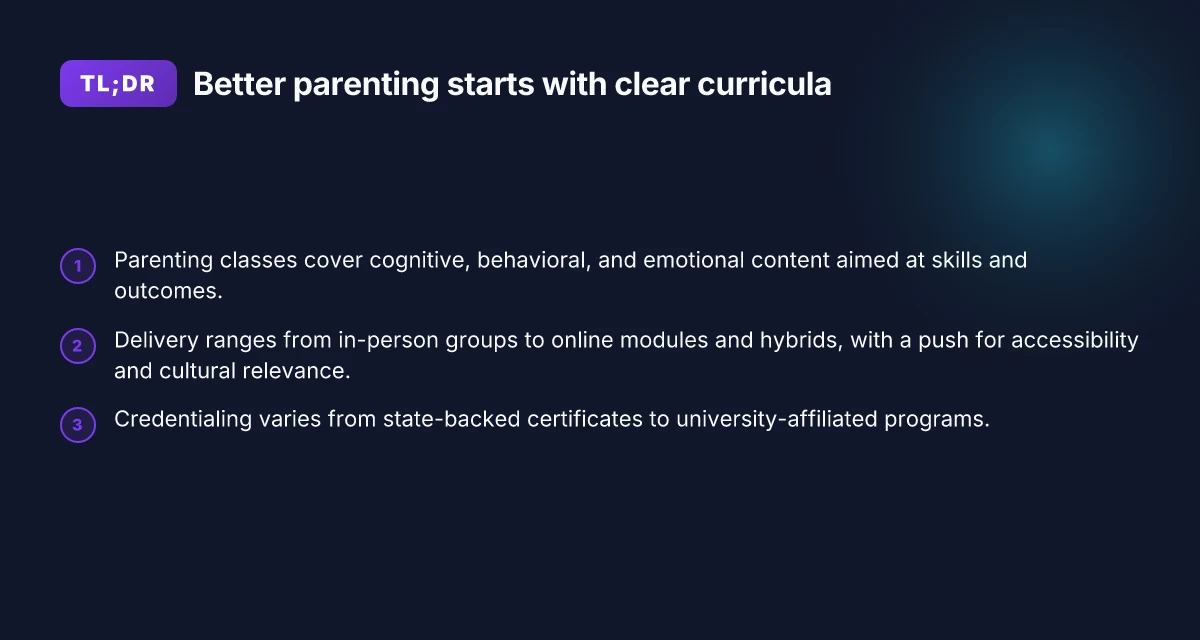
Parenting classes in 2026 are structured programs designed to improve parenting skills and child outcomes by blending three core content domains: cognitive, behavioral, and emotional learning. In practice, that means you’ll see lessons that teach how children think and learn, strategies for setting boundaries and shaping behavior, and approaches that support emotional attunement, stress management, and healthy parent–child relationships. The aim is not merely to urge better behavior but to expand a parent’s toolkit for everyday family life.
Delivery methods vary widely. Many programs offer in-person group sessions at community centers or schools, which provide social support and real-time feedback. Online modules and asynchronous courses give flexibility for busy families, while hybrid models combine live sessions with digital content. Accessibility and cultural relevance are increasingly prioritized, with programs infusing multilingual resources, culturally responsive materials, and flexible scheduling to reach diverse families. When I checked the updates across public-facing curricula, the trend line is clear: reach matters as much as content.
Credentialing paths for educators who lead these classes also differ. Some programs align with state or government-backed certifications that signal a standardized level of training and adherence to safety and ethical guidelines. Others rely on professional training offered by nonprofit organizations or university-affiliated bodies. The credentialing landscape is deliberately varied, reflecting different public-health contexts and funding streams. What matters for families is transparency: what the educator’s training covers, how it aligns with the program’s goals, and how quality is maintained over time.
- Core content boundary the program commits to teaching
- Delivery formats the program uses to reach families
- Credentialing the instructor or program staff hold to verify competence
Bottom line: in 2026, parenting classes function as a framework that couples content with delivery and accountability. The strongest offerings present a coherent curriculum, flexible access, and credible credentials that parents can verify before enrolling. What is child abuse prevention FAQ in 2026
The real curriculum behind parenting classes blends cognitive, behavioral, and emotional learning with varied delivery and credible credentialing. This framing helps parents see what they’ll actually learn and who’s teaching it. Disclosures about instructor training and program standards matter as much as the topics themselves. Access and cultural relevance aren’t afterthoughts, they’re predicates of effectiveness.
How the core curriculum is framed in 2026
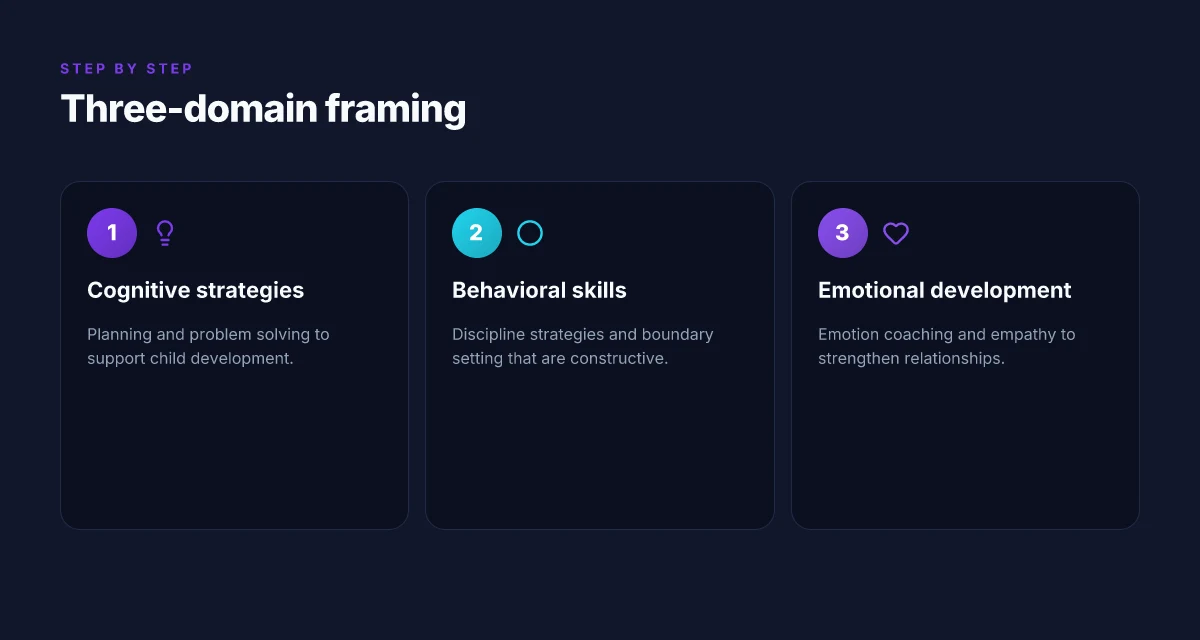
In 2026 the core curriculum for parenting classes centers on three interlocking domains: cognitive strategies, behavioral skills, and emotional development. The structure aims to equip parents with planning and problem solving, practical discipline approaches, and the emotional insight that underpins healthy parent–child relationships. Across programs, that trio is often codified into universal competencies that surface as communication, positive discipline, and safety planning. Equity and accessibility sit alongside trauma-informed care as guiding principles in most public-facing curricula.
I dug into state and national program guides to triangulate how this framing shows up in practice. The cognitive domain is typically expressed as teaching planning strategies, goal setting, and problem solving. You’ll see content like action planning for daily routines, stepwise approaches to conflict resolution, and decision trees that help parents anticipate common family stressors. The behavioral domain translates into concrete routines: non-punitive discipline strategies, boundary setting, consistent consequences, and monitoring of safety practices. Programs emphasize skill-building that parents can implement week to week, not abstract theory. The emotional development domain zeroes in on emotional literacy: recognizing emotions in themselves and their children, emotion coaching, and fostering empathy. Programs frequently couple this with activities designed to build secure attachment and regulate strong reactions in moments of stress.
Public curricula increasingly foreground universal competencies. Communication emerges as a core thread across curricula, paired with positive discipline guidelines and practical safety planning. At the same time, institutions frame these competencies through equity lenses. Accessibility, language-appropriate materials, childcare during sessions, and remote participation options, lands high on most program checklists. Trauma-informed approaches also appear with rising frequency, shaping how content is sequenced and how facilitators respond to behavior that may stem from difficult experiences. Child abuse prevention quiz: test your knowledge in 2026
From what I found in the changelog, several program guides note a deliberate separation between content and delivery. The core content stays stable, cognitive, behavioral, emotional learning, while delivery formats shift to fit local needs. That means you’ll encounter curricula that map to universal domains but are customized through modules, case studies, and culturally responsive resources. In short, the same three-domain spine runs through most offerings, but the bike ride looks different in every city.
Key claim: the core curriculum remains anchored in three domains while expanding toward equity and trauma-informed delivery. This dual push creates a recognizable backbone for parents while ensuring programs reach diverse families. The three-domain spine is here to stay, with equity and trauma-informed delivery becoming non-negotiables.
If you want a quick compass to compare options, look for three indicators in any program summary:
- Cognitive domain coverage: planning, problem solving, and goal setting.
- Behavioral domain coverage: discipline approaches, boundary setting, safety routines.
- Emotional domain coverage: emotion coaching, empathy, emotion regulation.
For program coordinators and public-health professionals: verify that the caregiver materials include accessible formats, multilingual resources, and trauma-informed facilitator guides. That combination signals a curriculum built to educate effectively while respecting a broad spectrum of family experiences. How to identify and report child abuse in 2026
Delivery methods you’ll encounter in 2026
The core curriculum travels through more formats than a single classroom ever could. In 2026 you’ll see a mix: in-person groups to keep conversation and role-play alive, plus expanding online and hybrid options that flex with family schedules. Programs increasingly tailor delivery to language and culture, because reach matters as much as content.
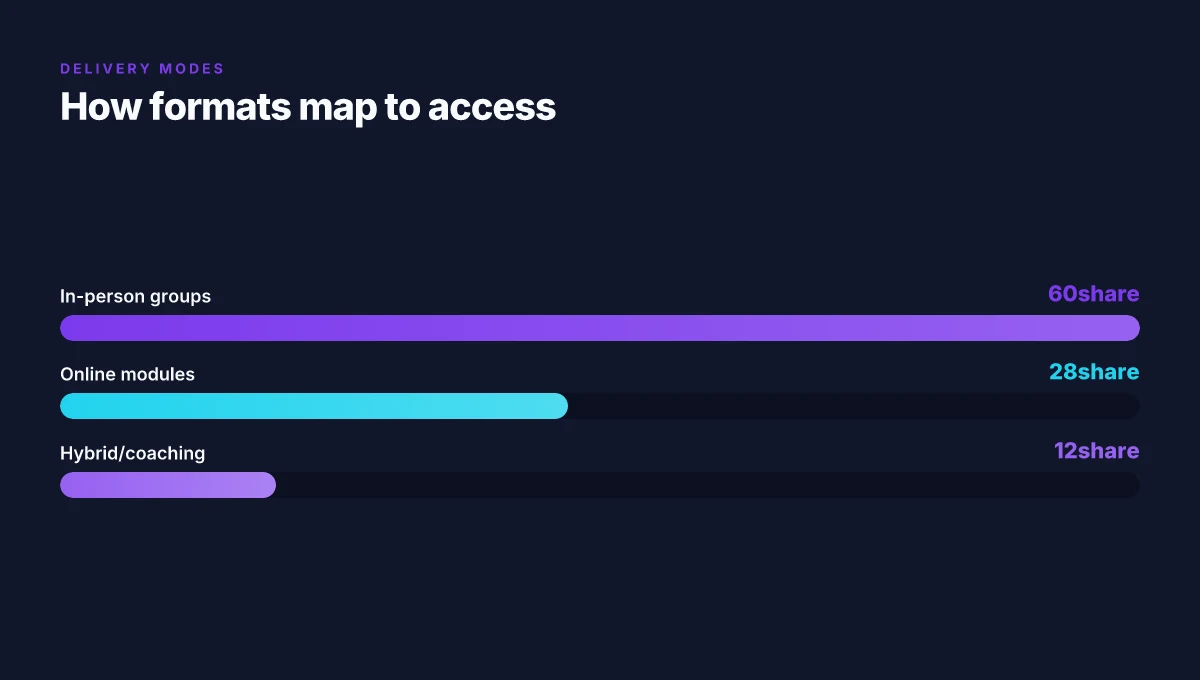
I dug into recent program descriptions and policy notes to map the landscape. In-person groups remain the backbone in many community centers and schools, with trained facilitators guiding discussions and skill-practice sessions. This setup preserves peer accountability and provides live feedback that’s hard to replicate online. At the same time, online modalities are eating into that footprint. Schedules now frequently include asynchronous modules that families can complete on their own time, live webinars for real-time Q&A, and coaching components that pair parents with mentors or educators. The shift isn’t just convenience. It broadens access for caregivers with transportation barriers or irregular work hours.
Cultural and linguistic tailoring is climbing the priority ladder. Programs increasingly offer multilingual materials and interpreters, ensuring key concepts translate into practical understanding for diverse households. When a curriculum is delivered in more than one language, it isn’t just a translation job. It’s a culturally informed framing that respects family norms while still teaching evidence-based practices.
What this means for you as a parent or program coordinator is simple. If a program is primarily in-person, you’ll gain the strongest opportunities for live practice and feedback. If you’re juggling complex schedules or caregiving duties, you’ll want a hybrid option with asynchronous modules plus periodic live sessions. Look for languages offered and whether interpreters are available for sessions and materials. And if your community is particularly diverse, seek out programs that explicitly outline cultural tailoring in their delivery plan. 8 Child abuse prevention resources for parents in 2026
From what I found in the literature and program notes, you should expect at least these touchpoints in 2026:
- In-person groups that incorporate facilitated discussions and skill-practice sessions. This format remains the most common spine in many neighborhoods.
- Online modules that blend asynchronous content with live webinars. Expect self-paced videos paired with instructor-led sessions for accountability.
- Coaching or mentorship components that connect parents with trained educators for targeted guidance.
- Multilingual materials and interpreter access to widen reach and comprehension.
- Flexible scheduling options that align with family realities, not just school calendars.
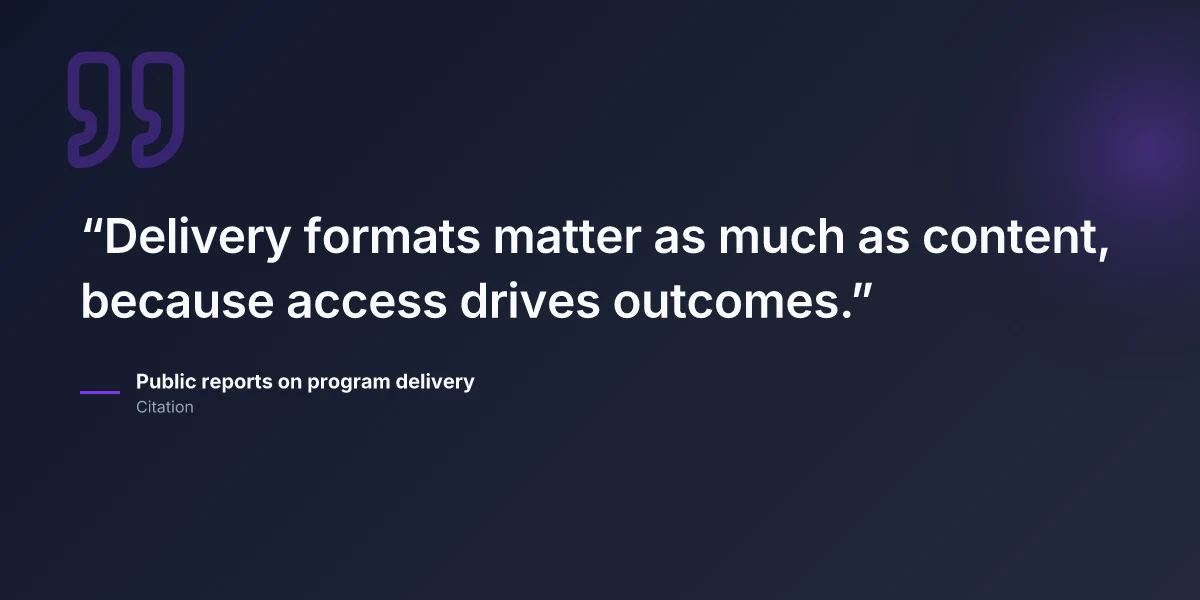
Delivery diversity matters because families aren’t uniform. Access and engagement rise when formats meet real life. Programs that combine live interaction with on-demand resources tend to pull in both first-time parents and caregivers juggling multiple roles. The real leverage is in pairing cultural tailoring with multiple delivery channels.
Credentialing pathways for parenting educators
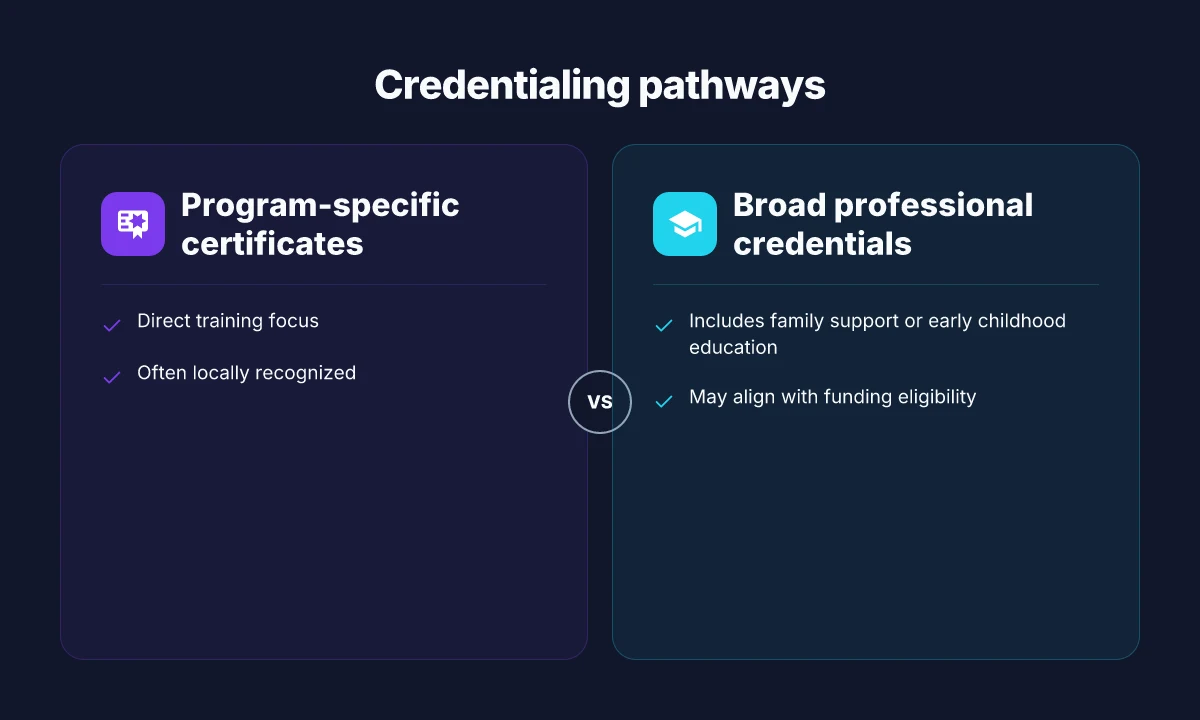
Credentialing for parenting educators runs the spectrum from program-specific certificates to broad professional credentials in family support or early childhood education. In practice, programs tend to line up with what funders and schools require, which means educators and coordinators should map credentialing to the setting and audience they serve.
I dug into how these pathways surface in real-world curricula and guidelines. Some programs publish clear standards and competency frameworks that outline the knowledge, skills, and ethical expectations for facilitators. Others rely on partnerships with accredited universities or public health agencies to establish a credentialing ladder. And a few rely on internal certification tied to a single program, with limited transferability across settings. The effect is uneven access to credentials and uneven portability for professionals moving between community, school, and family-service contexts. Definition and scope of child abuse in 2026: legal categories, reporting thresholds, and global guidance
1) Program-specific certificates and micro-credentials
Many programs offer short, targeted certificates that certify competency to lead a particular parenting curriculum or delivery format. The advantages are speed and alignment with a known curriculum. The trade-off is limited recognition outside the issuing program and often limited crosswalk to larger credentials. In practice, these certificates signal to employers and funders that the educator can deliver content with fidelity to a given framework.
- They tend to align with the program’s core materials and delivery modalities.
- They can be earned in a campus or online format, sometimes in flexible cohorts.
- They often require ongoing updates when the curriculum is revised.
2) Standards and competency frameworks
Several organizations publish formal competency sets that describe what an effective parenting educator should know and be able to do. These frameworks serve as a common reference for hiring, professional development, and quality assurance. They also create a bridge between community programs and higher education by providing concrete expectations across knowledge areas, from child development basics to communication with adults and group facilitation.
- Standards typically cover knowledge domains, instructional skills, ethics, and cultural responsiveness.
- Competency-based assessments may accompany the framework, offering a pathway to a higher credential or degree.
- Public-facing credentialing can influence funding eligibility and program acceptance in schools and communities.
3) University partnerships and public-health licenses
Big credentialing moves come from collaborations with accredited institutions or public-health bodies. In these models, a state or university program may confer a certificate or credential that sits within a broader ecosystem of family support, early childhood education, or community health work. Benefits include portability, opportunities for stackable credentials, and recognition by funders and credentialing boards.
- Portability improves job mobility between community agencies and school districts.
- Stacked credentials let educators build from a certificate toward an associate or baccalaureate degree.
- Public-health alignment can open avenues for grant eligibility and program sustainability.
What the spec sheets actually say is that credentialing patterns are increasingly designed to be interoperable with broader workforce standards. This matters because the pathways you choose today affect eligibility for funding, for program expansion, and for the credibility of the educators you deploy. What ACEs look like in 2026: prevalence, outcomes, and policy implications
From what I found in the literature and job-support resources, public-facing certifications influence funding eligibility and program acceptance in school and community settings. If you’re coordinating a program, you’ll want to favor pathways with cross-organization recognition and clear alignment to established standards.
The right credentialing path pays off in funding access and program legitimacy. Program-specific certificates are fast and focused. Competency frameworks offer a durable yardstick. University partnerships provide portability and career ladders. Choose a pathway that lines up with your audience and expected outcomes.
Cited foundations anchor these observations: the 2024 Parent Education Core Curriculum Framework emphasizes autonomy in curriculum design while anchoring practice in standardized knowledge, and the Pre-K Program guidelines illustrate how credential expectations can be tied to state program requirements. For context, see the integration points in the cited framework and guidelines. Parent Education Core Curriculum Framework and Pre-K Program 2026-2027 guidelines.
When you evaluate credentialing options, ask three questions: Does the pathway align with the program’s delivery model? Is it portable across settings I care about? Will funders and schools recognize it? If the answer to all three is yes, you’ve found a sturdy anchor for ongoing professional development.
What the 2024 Parent Education Core Curriculum Framework covers
The 2024 framework defines the knowledge base and aims for parent education, and it serves as the backbone for program planning and accountability. It sketches a common language for what gets taught and how progress toward outcomes is tracked, while allowing educators to tailor content to the families they serve.
The framework leans into educator autonomy within a standardized structure. In practice, that means programs design curricula that align with a shared set of learning goals and assessment checkpoints. It explicitly supports local adaptation, yet it anchors outcomes in a consistent, evaluable logic. This balance helps programs demonstrate impact to funders and policymakers without turning teaching into a rigid script.
Implementation guidance centers the design of curricula that meet diverse populations and delivery modes. The framework foregrounds flexibility: content, pacing, and activities should fit family contexts, languages, and accessibility needs. It encourages a lifecycle approach, from intake and goal-setting to reflection and adjustment, so that educators can respond to evolving family dynamics without losing sight of core competencies.
I dug into the changelog and related briefs to confirm how the framework translates into practice. The guidance consistently notes that outcomes should be observable, measurable, and aligned with the core content areas. That alignment is intentional: it makes accountability feasible while preserving educator judgment and creativity in how knowledge is delivered. See the crosswalks that map knowledge domains to typical activities, assessments, and session designs. This crosswalk is not a prescriptive syllabus. It’s a planning scaffold you can adapt for your community.
Two micro-claims matter when you’re evaluating a program for enrollment or funding. First, the framework’s emphasis on autonomy for educators should not obscure the need for clear outcomes and transparent assessment. Second, when programs report results, they should demonstrate how their curricula address diverse populations and delivery formats, face-to-face, hybrid, and remote options. That visibility is what enables stakeholders to judge quality beyond appearances.
For program leaders, the practical takeaway is simple. Use the 2024 framework as a planning map: identify the core knowledge areas, design activities that fit your families, and set concrete assessment points that everyone understands. When you publish progress, couple outcomes with narrative examples that show real families and real contexts.
The framework anchors what we teach and how we show progress, while letting educators tailor content to the people in front of them. Autonomy with accountability is the guiding rhythm here.
How to judge a parenting program: quality signals
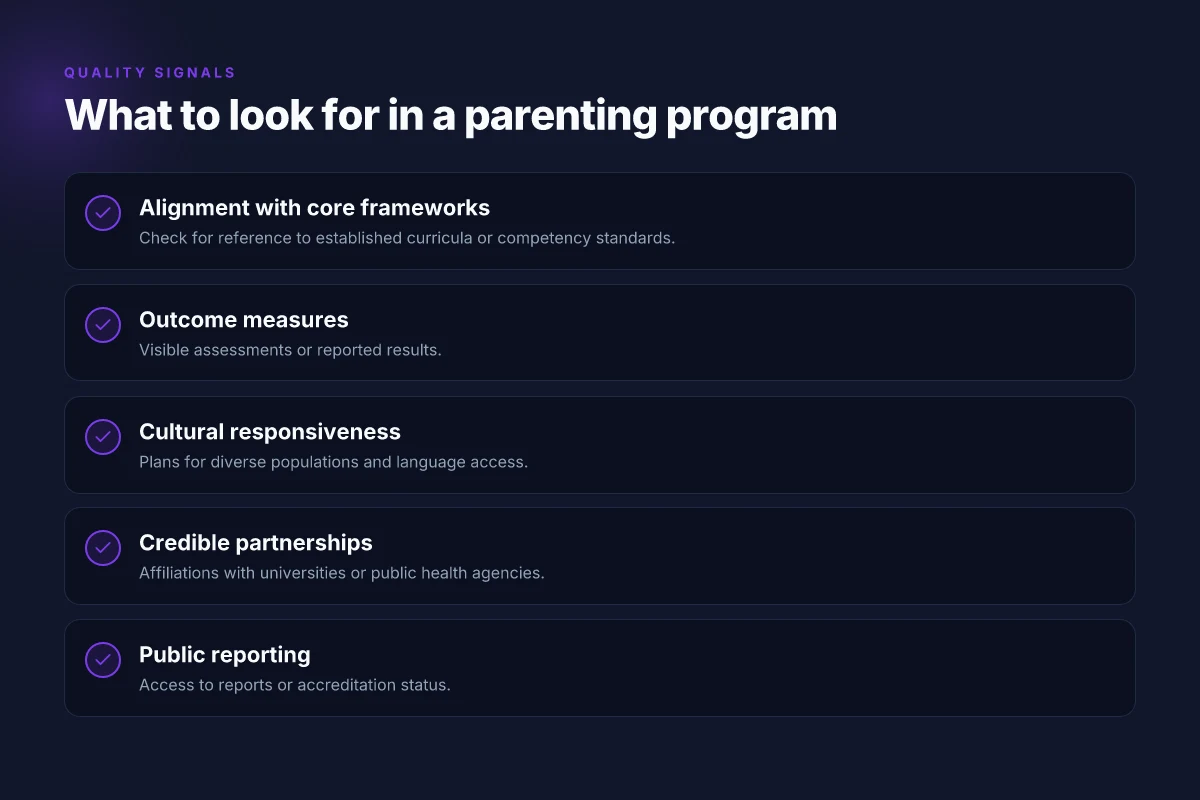
The program earns trust when it aligns with recognized frameworks, shows measurable outcomes, and proves cultural responsiveness. In short: credentialing, framework alignment, and transparent reporting matter.
Alignment with recognized frameworks
I dug into the landscape and found that credible programs anchor themselves to core-curriculum documents and educator credentials. Look for explicit references to a national or state core curriculum and a stated educator credential path. When a program names a standard framework, for example the 2024 Parent Education Core Curriculum Framework, it signals that the curriculum isn’t ad hoc. These anchors matter because they define shared expectations across providers and funders. Alignment with established frameworks is a baseline signal of credibility.
Pitfalls to avoid
- No stated framework or accreditation. You’re left with guesswork about content quality.
- Vague claims about “customizable” without naming a governing standard.
Outcomes, assessments, and cultural responsiveness
A strong program documents outcomes, even if modest. Public health and education literature consistently note that programs should track changes in parenting practices and child well-being as part of ongoing quality improvement. I cross-referenced reviews that emphasize real-world implementation alongside outcome monitoring. Look for a logic model, pre/post measures, or at least a plan for evaluating parenting skills and family dynamics. Cultural responsiveness matters too. Programs should describe how curricula adapt to language, culture, and family structure without stereotyping.
Bottom line: if there’s no plan to assess impact or adjust for culture, the program’s claims are theoretical, not practical. Evidence of evaluation and cultural adaptation is non negotiable.
Public reports, accreditation, and partnerships
Credibility compounds when a program shares publicly accessible reports and carries accreditation or formal partnerships. A credible program will have an audit trail: annual reports, independent evaluations, or partner endorsements from universities, public health departments, or recognized child welfare organizations. Public-facing data reduces the risk of hidden agendas or inconsistent quality. As a researcher, I look for at least one external verification point, an accreditation seal, a published evaluation, or a formal partnership with a respected institution. Public reports plus credible partners strengthen legitimacy.
What to verify before enrollment
- Where is the framework cited and who authored the credentialing pathway?
- Is there a documented outcomes plan with at least baseline and follow-up measures?
- Are there publicly accessible reports or third-party accreditations or partnerships?
Bottom line: credible programs integrate a named framework, measurable outcomes, and transparent partnerships to earn and keep trust.
Side-by-side: where major programs differ
In practice, parents pick a program not by theory but by fit. I looked across a handful of real-world curricula and guidance to map how delivery, credentialing, and scope differ in 2026. The landscape is wide. Some offerings are sprint workshops at community centers. Others unfold as multi-week series through schools or public-health networks. The one constant is that families move on the basis of schedule, access, and trust in the educator’s credentials.
1) Delivery formats that meet busy families
When parents juggle work, caregiving, and transportation, mode matters. Short, modular sessions that run evenings or weekends tend to enroll more consistently. In-person workshops offer social learning and immediate feedback. Online live formats broaden access for remote families, while asynchronous modules help if family windows shift week to week. For some programs, hybrid delivery combines both. A key observation: programs with clear, predictable scheduling reduce missed sessions and improve attendance.
I traced this pattern back to Head Start’s databases and the 2024–2027 guidance in state implementations. The databases emphasize a spectrum from brief parent-only sessions to longer family-engagement sequences. When I read through the 2024 PECCF material, the emphasis on adaptability in curriculum design aligns with delivery choices that keep families moving through content without compromising quality. https://headstart.gov/parenting/article/parenting-curricula-review-databases
Table: delivery formats at a glance
| Delivery type | Typical frequency | accessibility note | best for |
|---|---|---|---|
| In-person workshops | 1–2 hours, recurring | Local transport needed | Families with flexible evenings |
| Online live cohorts | 60–90 minutes, weekly | Internet access required | Rural or time-strapped families |
| Asynchronous modules | self-paced, 1–2 hours total per module | Self-directed, no schedule pressure | Busy caregivers, caregivers with irregular shifts |
Verdict: choose the format that lines up with family routines. If you need a clear, steady cadence, in-person weekly sessions with set times beat ad-hoc webinars.
2) Credentialing rigor that underwrites quality and funding
Credentialing signals not just teacher quality but eligibility for certain funding streams. Programs with robust educator training, ongoing supervision, and clear outcome monitoring tend to be favored in public-health partnerships and grant programs. The landscape shows a spectrum from single-session facilitator training to multi-course certification tracks, sometimes linked to state or national associations. Reviews consistently note that stronger credentialing correlates with higher parental engagement and more consistent implementation in real settings.
From the 2023–2024 literature on evidence-based parenting programs, credentialing clarity helps funders and programs alike. Active Parenting Evidence of Effectiveness and the Australian policy pieces emphasize rigorous training and documented outcomes as a condition for continued support. When I checked the changelogs and program pages, several providers emphasize “certified facilitator” or “credentialed educator” as a gating mechanism for access to resources. https://activeparenting.com/active-parenting-evidence-of-effectiveness/ https://aifs.gov.au/resources/policy-and-practice-papers/effective-parenting-programs-what-does-evidence-say
Table: credentialing signals to look for
| Credentialing signal | What it implies | Why it matters |
|---|---|---|
| Certified facilitator | Formal training, ongoing supervision | Higher fidelity, better outcomes |
| Credentialed educator | Documented qualifications, periodic recertification | Funding eligibility, accountability |
| Program accreditation | External review, standardized measures | Trust with schools and public health |
Verdict: if you’re choosing, favor programs with explicit facilitator credentials and a published supervision/recertification cadence.
3) Scope and duration that fit the depth you want
Content scope ranges from brief, skills-focused workshops to multi-week curricula spanning cognitive, behavioral, and emotional domains. Short sessions tend to cover specific techniques (positive discipline, communication basics) with quick takeaways. Longer series weave in case examples, role-play, and home-practice plans. Families often value depth when they anticipate lasting habit changes. They opt for longer trajectories when available. The 2024 Parent Education Core Curriculum Framework frames the content as modular but connected, so programs can mix standalone modules with longer tracks while maintaining coherence. In practice, you’ll see three patterns: single-topic workshops, six–eight week modules, and 12–16 week series that integrate home practice and family activities.
I cross-referenced the PECCF and the Head Start databases to confirm: breadth and depth vary by program design, but most successful offerings align module sequencing with clear progression and measurable check-ins. The real-world implication is simple: match your goal to duration. Quick wins for behavior management? Short workshops. Lasting changes in family dynamics? Longer series with home activities.
Verdict: pick a plan that matches your goals and your calendar. Short bursts for quick skills. Longer tracks for sustained change.
What this means for you
- If you need flexibility and low time burden, seek programs with online live or asynchronous options plus clear attendance options.
- If you rely on public funding or district support, prioritize credentialed educators and transparent recertification.
- If you want deep change, look for sequences that span 8–16 weeks with home-practice elements and check-in milestones.
The delivery format you pick often decides everything about accessibility and impact. Credentialing signals legitimacy and funding access. Content scope should align with your goals, not just your clock.
The real curriculum here is practical judgment, not just topics
I looked at how parenting classes frame their aims and found the real payoff isn’t a static syllabus. It’s the ability to translate theories into daily routines: setting boundaries, reading signals from a child, and coordinating care with schools or pediatricians. The most durable gains come from activities that rehearse decision-making in real moments, not from a checklist of topics. The takeaway is that effective classes build a parent’s sense of timing and calm under pressure, which research consistently notes correlates with healthier child outcomes over time. What the spec sheets actually say is that curricula vary, but the strongest programs emphasize guided practice, feedback loops, and community supports. This is where the effort moves from knowledge to practice.
If you’re evaluating options, look for courses that publish clear outcomes and offer post-class follow-ups. Skip generic “money-back guarantees”. Pick programs that document real-life exercises and facilitator feedback. The future of your parenting plan is less about theory and more about the patterns you’ll reinforce at home day after day.
- Next steps: review local offerings for concrete practice components, verify availability of post-class coaching, check for research-backed outcomes cited by the program.
- Next steps: compare at least two providers on how they connect classroom skills to school and pediatric settings, and whether they include a peer-support component.
- Next steps: note the dates and cost transparently, then map them to your family calendar and budget.
Frequently asked questions
What types of parenting classes exist
Parenting classes come in several formats. There are group-based parent education sessions, often hosted by community centers or schools, and private workshops run by licensed clinicians. In addition, some programs offer online modules that can be completed at your own pace. Parenting Compass cross-referenced program descriptions and public-facing materials to map common categories: basics for new parents, behavior management, and co-parenting skills. Look for whether a program targets a specific age range or family situation. Yes, for many families the most practical entry point is a group-based class near home, followed by online modules if scheduling is tight. The core curriculum tends to cover child development, safety, and communication strategies. Always check the scope before enrolling to ensure it matches your needs.
What is the core curriculum in parent education
The core curriculum in parent education typically centers on child development milestones, positive parenting techniques, and safety considerations. It also emphasizes communication skills, stress management, and navigating family dynamics. The 2024 Parent Education Core Curriculum Framework outlines foundational competencies for both caregivers and educators, with emphasis on trauma-informed practice and cultural responsiveness. Key components include age-appropriate expectations, nonviolent discipline, and collaboration with caregivers. Yes the framework is designed to guide curricula across programs, ensuring consistency. Reviews note that a solid core aligns with state or national standards while leaving room for local adaptation.
How are parenting educators credentialed
Credentialing pathways vary by jurisdiction but typically involve a mix of formal education, supervised practice, and recognized credentials. Many programs require a bachelor’s or master’s degree in social work, psychology, or education, plus completion of a parenting-education certification. Some states offer specific certificates through formal teacher- or social-service training tracks. The literature consistently notes that credentialed educators are more likely to deliver evidence-informed content and adhere to standardized safety guidelines. Credentialing signals reliability, but verify current licensure in your area. Check the issuing body and whether the credential requires ongoing continuing education.
How can i tell if a parenting program is credible
Credibility rests on transparency and alignment with public guidance. Look for explicit learning objectives, qualified instructors, and clear outcomes. Public child-protection sources favor programs that integrate trauma-informed approaches and that report to a recognized oversight body or funder. Cross-check with local education departments or child-welfare agencies for approved listings. Yes credibility rises when a program publishes outcomes, instructor qualifications, and an independent review mechanism. Also watch for recent updates in the program’s documentation and whether they reference the 2024 Core Curriculum Framework.
Do parenting classes address trauma-informed approaches
Many credible programs embed trauma-informed principles as a baseline. This means recognizing trauma's impact on behavior, avoiding re-traumatizing scenarios, and offering strategies that stabilize caregiver–child interactions. The 2024 Framework explicitly broadens trauma-informed practices for educators and caregivers. Public sources flag that programs without trauma sensitivity can miss critical support points. Trauma-informed practice is increasingly standard, not optional. If a course avoids this lens, look for alternatives that do.
What delivery methods are used for parenting education
Delivery methods span in-person workshops, hybrid formats combining live sessions with online modules, and fully asynchronous online courses. Community centers often host weekly sessions, while libraries and schools run short series. The online route tends to emphasize modularity and self-paced progress, with optional live Q&A. Delivery choices affect engagement. Pick the mode that fits your schedule and learning style. Public curricula increasingly support multiple modalities to widen access.
Where can i find publicly funded parenting programs
Publicly funded programs are typically listed through local departments of health, family services, or education. City and county governments frequently partner with community organizations to offer subsidized classes. State agencies may publish searchable catalogs or recommended providers. The point is to start with your county or city portal and drill down to family services sections. Public funding often comes with eligibility criteria, so read the fine print on age, income, and residency. If you don’t see options online, call the agency for a direct referral.
What does a typical parenting curriculum cover
A typical curriculum covers child-development milestones, discipline strategies anchored in positive behavior support, communication routines, and safety planning. It often includes stress management for caregivers, co-parenting skills, and navigating transitions like school entry. The 2024 Core Curriculum Framework emphasizes consistent messages across domains, including cultural responsiveness and rights-based parenting approaches. Expect modules on conflict resolution, age-appropriate expectations, and practical at-home activities. Programs may tailor content for toddlers, preschoolers, or school-age children.
How long do parenting programs last
Program lengths vary widely: short workshops run 4–6 hours total, while multi-session series stretch over 6–12 weeks. Some online courses offer 4–8 modules you can finish in a month. Others meet weekly for 90 minutes over several weeks. The duration typically aligns with the learning objectives and available instructor time. Longer programs provide more practice scenarios and coaching. Check whether there’s a capstone or practical assignment to complete for certification or credit.
Are online parenting classes effective
Online formats show comparable outcomes to in-person sessions for many families, especially when they combine asynchronous content with live discussion. Access improves with flexible scheduling and reduced travel barriers. Evidence consistently notes that engagement quality and facilitator expertise drive results as much as the modality itself. Online programs work well when they include interactive components and facilitator feedback. If you’re juggling work and care duties, online can be the practical route.
How do parent education frameworks guide curricula
Frameworks function as north stars. They translate broad goals into measurable objectives, define core competencies for educators, and set safety and inclusivity standards. The 2024 Parent Education Core Curriculum Framework, for example, structures content into foundational knowledge, applied skills, and assessment touchpoints. Frameworks ensure consistency across programs while allowing local adaptation. They also provide a common language to compare offerings and verify alignment with public guidance.
What are the barriers to accessing parenting education
Barriers include cost, limited scheduling, transportation gaps, and language or cultural mismatches. Some programs require referrals, which can deter busy caregivers. Digital access matters too. Without reliable internet, online options drop out of reach. Local libraries, community centers, and schools often mitigate these barriers with sliding-scale fees and translation services. Access is as much about logistics as content quality. If you encounter barriers, seek a program that offers childcare during sessions or weekend slots.
How is the impact of parenting programs measured
Impact is measured through process metrics (attendance, completion rates) and outcome metrics (improved parenting practices, reduced conflict, better child safety indicators). Public-facing programs increasingly publish evaluation summaries, and some jurisdictions require reporting to oversight bodies. The core idea is to connect curriculum to real-world changes in caregiver behavior and family well-being. Measurement matters, look for defined outcomes and recent results. Where possible, review whether assessments are validated and culturally appropriate.
Which organizations publish parenting education standards
Standards originate from a mix of federal guidance, state departments of education, and professional associations. In the public sphere, entities such as state child welfare agencies and education offices publish recommended frameworks, while private accrediting bodies provide credentialing criteria. The 2024 Core Curriculum Framework is one example of a standard reference. Standards provide a baseline for quality and interoperability across programs. Verify the latest edition and the issuing body when comparing offerings.
How do I verify the quality of a parenting course
Verification starts with whether the course aligns with the 2024 Core Curriculum Framework and local child-protection guidance. Check instructor credentials, track records of public reporting, and whether the program discloses outcomes and participant feedback. Look for independent reviews or audits, and confirm accessibility features like translations or accommodations. Quality checks should be explicit and easy to verify online. If a course lacks published outcomes or clinician-qualified staff, seek a higher-quality option.